
1 Corinthians 12
12The human body has many parts, but the many parts make up only one body. So it is with the body of Christ. 13Some of us are Jews, some are Gentiles, some are slaves, and some are free. But we have all been baptized into Christ’s body by one Spirit, and we have all received the same Spirit. (1 Corinthians 12:12-13, NLT)
The Daily DAVEotional
It’s a sad reality that many Christians know next to nothing about the Holy Spirit.
I grew up in a baptist tradition and while I had heard of the Holy Spirit, I don’t ever recall a sermon or message teaching on the role or ministry of the Holy Spirit in the life of the believer.
When I recommitted myself to Christ in college, I got involved in Campus Crusade for Christ and someone shared a booklet with me that explained the ministry of the Holy Spirit in the life of the believer, specifically, how I, as a Christian, could be FILLED with the Spirit. (I wrote about what it means to be filled with the Spirit in my blog post “Under the Influence”).
I had been a Christian for 13 years but really had no clue as to how the Holy Spirit could empower me as a believer to live a full and abundant Christian life. This was primarily because of a theological gap that existed between more conservative/fundamentalist traditions like the one I had been raised in, and the more charismatic/Pentecostal traditions regarding the role of the Holy Spirit in the modern church and in the life of the believer.
The charismatic and Pentecostal traditions seemed to over-emphasize the Holy Spirit, with what seemed to many as an extreme emphasis on the gifts of the Spirit in the daily life of the Christian, while the more fundamentalist traditions, many of which taught that the miraculous gifts of tongues and healing were no longer active in the church (a view known as “cessationism”) seemed to ignore the Holy Spirit altogether.
In the 1970’s, with the spread of the Jesus movement, churches like Calvary Chapel created a sort of doctrinal middle ground, helping to bridge the theological gap that existed between the charismatic arm of the church and the more fundamentalist arm of the church. The net result is that over the last 50 years or so, there has been a renewed interest and emphasis on the Holy Spirit within theological traditions that, in the past, had seemingly neglected the Holy Spirit.
Still, despite the fact that the Holy Spirit is no longer seen as just a topic among charismatic believers, I’ve found that the ministry of the Holy Spirit is still a mystery to many Christians. In particular, one of the most confusing concepts for evangelicals related to the Holy Spirit is the baptism of the Spirit.
Many associate the baptism of the Spirit with a charismatic experience because many of the charismatic traditions have taught that the baptism of the Spirit is a second blessing bestowed upon believers that gives them access to the signs and wonders gifts such as tongues, healings, miracles, etc.
This is not what Paul taught regarding the baptism of the Spirit as this passage in 1 Corinthians 12 demonstrates.
Click here to see a A Comprehensive List of Blog Posts Based on Bible Passage Reference
The context of this passage is spiritual gifts. There was a lot of confusion and chaos in the Corinthian church because spiritual gifts were being used improperly, causing disruption and disorder within the church worship service.
Paul is writing this passage to explain the proper use of the different gifts.
He compares the diversity of gifts to a human body. Just as a body has many parts that make up the one body, so the Spirit distributes many different gifts to the members of the one church.
Paul has already made the point that nobody has ALL the gifts and nobody should seek any specific gift.
We are all different and we have different gifts.
BUT.
Why the but?
What is the contrast Paul is trying to make?
We’re all different and we all have different gifts BUT there is ONE way in which we are all the same.
We ALL have been baptized by the Spirit.
According to Paul, the Holy Spirit baptizes ALL believers into the body.
What exactly does that mean?
It means that even though believers get different spiritual gifts, we all get the same Holy Spirit, who baptizes, or identifies us as being part of the body of Christ.
In other words, being baptized by the Spirit is our initiation into the family of God.
The Holy Spirit joins us to the body of Christ and we become a part of the family of God (see John 1:12). The Holy Spirit is our seal (see my post “The Holy Spirit as a Seal”) and our pledge (see my post “The Holy Spirit as a Deposit”) showing that we belong to Christ. It’s like the brand of cattle. It shows ownership. The Holy Spirit, in a way, is like our new family “crest”.
The tense of the verb indicates that this baptism Paul is speaking of is a past action, which means that it is something all believers (even carnal ones) have experienced.
This means that the baptism of the Spirit is not a religious experience that some Christians encounter at some point after coming to faith, giving them the ability to speak in tongues and perform other miraculous signs and wonders. The baptism of the Spirit is something that is common to ALL believers. It’s the moment at which the believer becomes identified with God’s Spirit, uniting them to Christ and ushering them into the family of God (see my post “What is Baptism?”).
Paul says that this baptism, this union, happens at the moment of belief in Christ. In that instant, everything changes. We become adopted sons and daughters in God’s family. We have a new life and a new identity, along with the promise of eternal life.
Did you enjoy this post? I’d love to hear your thoughts! Feel free to like, leave a comment below, and share it with your friends or on social media if you found it helpful or interesting. Your support keeps the conversation going!
Reflection
What is the theological tradition in which you were raised? What did. your tradition teach about the role of the Holy Spirit in the life of the believer?
What do you think are some of the disadvantages of being involved in a tradition that does not emphasize or teach much regarding the nature and ministry of the Holy Spirit?
What do you think are some disadvantages of being involved in a tradition that emphasizes the necessity of the signs and wonders gifts in the every day life of believers?
What do you believe about the baptism of the Spirit? What do you think it means?
How does one come to a biblical understanding of the Holy Spirit and the role of the Spirit while avoiding the dangers of theological extremism?
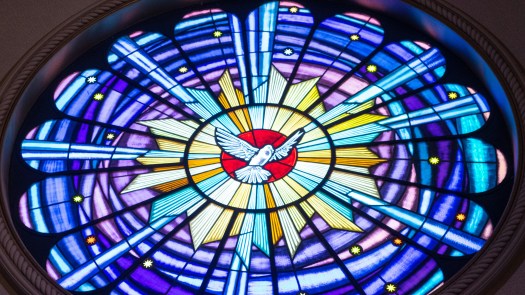
Photo by Mateus Campos Felipe on Unsplash


3 Replies to “What is the Baptism of the Holy Spirit?”