What is the Baptism of the Holy Spirit?

1 Corinthians 12

12The human body has many parts, but the many parts make up only one body. So it is with the body of Christ. 13Some of us are Jews, some are Gentiles, some are slaves, and some are free. But we have all been baptized into Christ’s body by one Spirit, and we have all received the same Spirit. (1 Corinthians 12:12-13, NLT)


The Daily DAVEotional

It’s a sad reality that many Christians know next to nothing about the Holy Spirit.

I grew up in a baptist tradition and while I had heard of the Holy Spirit, I don’t ever recall a sermon or message teaching on the role or ministry of the Holy Spirit in the life of the believer.

When I recommitted myself to Christ in college, I got involved in Campus Crusade for Christ and someone shared a booklet with me that explained the ministry of the Holy Spirit in the life of the believer, specifically, how I, as a Christian, could be FILLED with the Spirit. (I wrote about what it means to be filled with the Spirit in my blog post “Under the Influence”).

I had been a Christian for 13 years but really had no clue as to how the Holy Spirit could empower me as a believer to live a full and abundant Christian life. This was primarily because of a theological gap that existed between more conservative/fundamentalist traditions like the one I had been raised in, and the more charismatic/Pentecostal traditions regarding the role of the Holy Spirit in the modern church and in the life of the believer.

The charismatic and Pentecostal traditions seemed to over-emphasize the Holy Spirit, with what seemed to many as an extreme emphasis on the gifts of the Spirit in the daily life of the Christian, while the more fundamentalist traditions, many of which taught that the miraculous gifts of tongues and healing were no longer active in the church (a view known as “cessationism”) seemed to ignore the Holy Spirit altogether.

In the 1970’s, with the spread of the Jesus movement, churches like Calvary Chapel created a sort of doctrinal middle ground, helping to bridge the theological gap that existed between the charismatic arm of the church and the more fundamentalist arm of the church. The net result is that over the last 50 years or so, there has been a renewed interest and emphasis on the Holy Spirit within theological traditions that, in the past, had seemingly neglected the Holy Spirit.

Still, despite the fact that the Holy Spirit is no longer seen as just a topic among charismatic believers, I’ve found that the ministry of the Holy Spirit is still a mystery to many Christians. In particular, one of the most confusing concepts for evangelicals related to the Holy Spirit is the baptism of the Spirit.

Many associate the baptism of the Spirit with a charismatic experience because many of the charismatic traditions have taught that the baptism of the Spirit is a second blessing bestowed upon believers that gives them access to the signs and wonders gifts such as tongues, healings, miracles, etc.

This is not what Paul taught regarding the baptism of the Spirit as this passage in 1 Corinthians 12 demonstrates.


Click here to see a A Comprehensive List of Blog Posts Based on Bible Passage Reference


The context of this passage is spiritual gifts. There was a lot of confusion and chaos in the Corinthian church because spiritual gifts were being used improperly, causing disruption and disorder within the church worship service.

Paul is writing this passage to explain the proper use of the different gifts.

He compares the diversity of gifts to a human body. Just as a body has many parts that make up the one body, so the Spirit distributes many different gifts to the members of the one church.

Paul has already made the point that nobody has ALL the gifts and nobody should seek any specific gift.

We are all different and we have different gifts.

BUT.

Why the but?

What is the contrast Paul is trying to make?

We’re all different and we all have different gifts BUT there is ONE way in which we are all the same.

We ALL have been baptized by the Spirit.

According to Paul, the Holy Spirit baptizes ALL believers into the body.

What exactly does that mean?

It means that even though believers get different spiritual gifts, we all get the same Holy Spirit, who baptizes, or identifies us as being part of the body of Christ.

In other words, being baptized by the Spirit is our initiation into the family of God.

The Holy Spirit joins us to the body of Christ and we become a part of the family of God (see John 1:12). The Holy Spirit is our seal (see my post “The Holy Spirit as a Seal”) and our pledge (see my post “The Holy Spirit as a Deposit”) showing that we belong to Christ. It’s like the brand of cattle. It shows ownership. The Holy Spirit, in a way, is like our new family “crest”.

The tense of the verb indicates that this baptism Paul is speaking of is a past action, which means that it is something all believers (even carnal ones) have experienced.

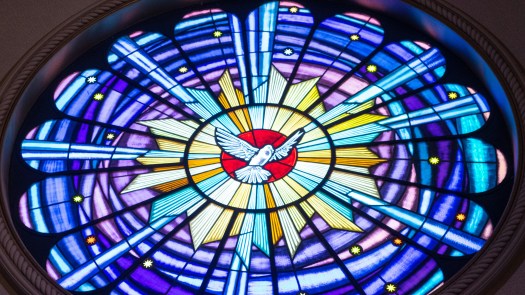
This means that the baptism of the Spirit is not a religious experience that some Christians encounter at some point after coming to faith, giving them the ability to speak in tongues and perform other miraculous signs and wonders. The baptism of the Spirit is something that is common to ALL believers. It’s the moment at which the believer becomes identified with God’s Spirit, uniting them to Christ and ushering them into the family of God (see my post “What is Baptism?”).

Paul says that this baptism, this union, happens at the moment of belief in Christ. In that instant, everything changes. We become adopted sons and daughters in God’s family. We have a new life and a new identity, along with the promise of eternal life.


Did you enjoy this post? I’d love to hear your thoughts! Feel free to like, leave a comment below, and share it with your friends or on social media if you found it helpful or interesting. Your support keeps the conversation going!


Reflection

What is the theological tradition in which you were raised? What did. your tradition teach about the role of the Holy Spirit in the life of the believer?

What do you think are some of the disadvantages of being involved in a tradition that does not emphasize or teach much regarding the nature and ministry of the Holy Spirit?

What do you think are some disadvantages of being involved in a tradition that emphasizes the necessity of the signs and wonders gifts in the every day life of believers?

What do you believe about the baptism of the Spirit? What do you think it means? 

How does one come to a biblical understanding of the Holy Spirit and the role of the Spirit while avoiding the dangers of theological extremism?


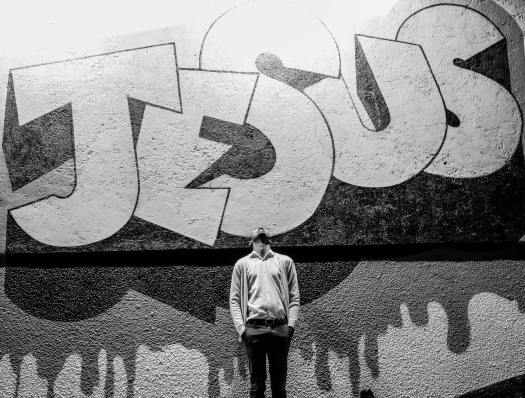
Photo by Mateus Campos Felipe on Unsplash

What Does it Mean to “Pray Without Ceasing”?

1 Thessalonians 5

16Rejoice always; 17pray without ceasing; 18in everything give thanks; for this is God’s will for you in Christ Jesus.

(1 Thessalonians 5:16-18, NASB)


The Daily DAVEotional

I don’t know about you but even though I grew up going to church, as a kid, I was intimidated by prayer. To me, praying seemed like an exercise in giving an ornate speech.

I never really witnessed people praying in normal, everyday language. Instead, prayer always seemed to be a well-prepared, dramatic reading from up front.

As an example, I was recently at a breakfast for the National Day of Prayer. A police chaplain was asked to give the opening prayer. It was a wonderful prayer, but the entire prayer sounded like a carefully-crafted poem or work of prose rather than off the cuff  thoughts you might share if you were conversing with your friend.

My point is NOT to critique the professionally sounding prayers. I actually love hearing people who have given great thought to what they want to say and pray to God. I also think there is great value in thinking deeply and writing out exactly what you want to say to God. I heartily encourage this practice.

However, if that is our only example of what prayer is, and it’s what I mostly heard growing up when I went to church, it can make prayer intimidating for those who haven’t spent much personal time in conversing with the Almighty.

My contention is that while prayer CAN BE an ornate, well-crafted poetic expression to God, it doesn’t have to be.

In these few short verses from 1 Thessalonians 5, Paul gives a number of admonitions as he closes out his letter.

Sandwiched in between the exhortations to “rejoice always” and “in everything give thanks”, Paul commends his audience to “pray without ceasing.”

Have you ever thought of what that means?

If praying is the ornate prayer that I usually heard on Sunday mornings or the pre-planned, written out oration from the National Prayer breakfast, then most everyday people might mistakenly think that prayer doesn’t apply to them.

After all, if that is what prayer is, how can one possibly do that “without ceasing.” One would literally be walking around 24/7 trying to create poetic speeches directed toward God. We would all become full-time, amateur psalmists.

Fortunately, I don’t think that is what Paul means when he commands us to “pray without ceasing.”

What does it mean then?

It means that your thinking becomes a praying process and your praying becomes a thinking process. 

Prayer does not have to be a spoken verbal speech that others hear. Prayer can be a thought that is directed toward God, or an acknowledgement that God is present, or an invitation for God to provide wisdom and clarity.

A great example of this is found in Nehemiah 2. Nehemiah is asked a question by the king and Nehemiah, before responding, PRAYS to God. I wrote about this passage in my blog post, “The Shortest (Non) Prayer in the Bible.”

Clearly in that moment, Nehemiah didn’t pause and go through a formal prayer process while the king was waiting for him to respond to his request. Instead, the prayer was internal and instantaneous – an invitation for God to provide wisdom and favor in the stressful situation in which Nehemiah found himself.

Praying without ceasing means that no matter what I’m doing, I’m aware of God’s presence in my life. It means that I’m acknowledging God’s sovereignty in my life. It means that I’m aware that God has endowed me with the mind of Christ, enabling me to think and reason in a way that honors Him. And most of all, it means that I’m inviting Him into my inner thought chamber and decision-making process.

Ultimately, it means that I’m living in my identity – acknowledging that I am His child, that He’s with me, and that He has pre-eminence in my life.

Praying without ceasing does not mean we are permanently relegated to a pew in a church somewhere offering endless petitions towards an altar placed in front of a stain-glassed window. Instead, praying without ceasing means that my whole life, as much as possible, is oriented around the reality that God is with me and I am in a constant state of awareness and acknowledgment of that fact – whether I am in a church or not, whether I’m attending a religious event or just going about my normal, everyday routine.


Reflection

What has been your experience with prayer?

Do you find prayer difficult or easy? What are the factors that led you to your response?

What do you think it means to “pray without ceasing”?

What are some things you can do to implement Paul’s command to “pray without ceasing?” What specific action steps can you take?


Spiritual Practice

Steve Douglass was the second president of Cru. He shared in a talk one time about an exercise that he did to train his mind to constantly be aware of God’s presence in his life.

He set his watch alarm to beep at regular intervals (every few minutes maybe….I can’t remember the exact frequency). Every time the watch would beep, it would remind him to think about and acknowledge God. That simple activity trained him to always be aware of God no matter what was happening around him.

Think about setting an alarm on your phone or watch to go off at regular intervals. When it goes off, simply acknowledge and think about God. This is one step to begin to train yourself to “pray without ceasing.”


Photo by Arina Krasnikova: https://www.pexels.com/photo/woman-praying-in-church-5417912/

The Most Important Question to Ask Yourself

Mark 10

27Jesus and his disciples left Galilee and went up to the villages of Caesarea Philippi. As they were walking along, he asked them, “Who do people say I am?”

28“Well,” they replied, “some say John the Baptist, some say Elijah, and others say you are one of the other prophets.”

29Then Jesus asked, “Who do you say I am?”

Peter replied, “You are the Messiah.” 30But Jesus warned them not to tell anyone about him. (Mark 8:27-30, NLT)


The Daily DAVEotional

For the first half of the book of Mark, Jesus is revealing to His disciples WHO he is. He’s exposed his disciples to his teachings and many miracles, in which he demonstrates His power over nature, the physical realm and the spiritual realm. In Mark 8:27, Jesus asks the important question, “Who do people say I am?”

He follows up with an even more crucially important question: “Who do YOU say I am?”

When we’re engaging with others who don’t consider themselves followers of Jesus, it’s critically important that we help them come to a Biblical understanding of WHO Jesus is.

In Mark 8:28, Peter says that the main responses people often have about Jesus are “John the Baptist or Elijah, or one of the other prophets.”

People today have a lot of similar ideas about who Jesus is. Some say He’s a good teacher. Some, like Muslims, say He’s a prophet. Still others say He’s a great moral example to follow.

These do not hit the mark. Peter gives the proper response regarding who Jesus is….He is the Messiah (or “the Christ”).

The most important question you can ask yourself (or others)?

Who is Jesus?

As we engage with others regarding the Christian faith, we have to help people come to this understanding of Jesus’s identity. He is not merely a prophet. He is not just a good person or some moral example to follow.

He is God. He is the promised Messiah (the promised deliverer)!


For more information on the Biblical evidence for Jesus’ deity, see my short article “Is Jesus God?”


Did you enjoy this post? I’d love to hear your thoughts! Feel free to like, leave a comment below, and share it with your friends or on social media if you found it helpful or interesting. Your support keeps the conversation going!


Reflection

Who do you think Jesus is? Is He a good teacher? A revolutionary? A great moral example? What title or phrase would you use to describe Jesus to others?

What led you to the conclusion for how you view Jesus?

What do you think it means when Peter calls Jesus the Messiah? What does this say about Jesus?

How can you help others see Jesus’ true identity? 


Photo by Gift Habeshaw on Unsplash