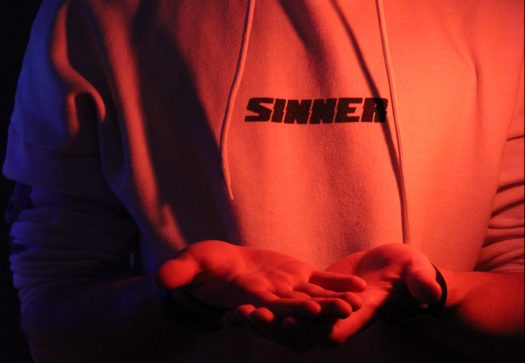
You’re no good, you’re no good, you’re no good, baby, you’re no good!

Romans 3

21But now God has shown us a different way of being right in his sight—not by obeying the law but by the way promised in the Scriptures long ago. 22We are made right in God’s sight when we trust in Jesus Christ to take away our sins. And we all can be saved in this same way, no matter who we are or what we have done.

23For all have sinned; all fall short of God’s glorious standard. 24Yet now God in his gracious kindness declares us not guilty. He has done this through Christ Jesus, who has freed us by taking away our sins. 25For God sent Jesus to take the punishment for our sins and to satisfy God’s anger against us. We are made right with God when we believe that Jesus shed his blood, sacrificing his life for us. God was being entirely fair and just when he did not punish those who sinned in former times. 26And he is entirely fair and just in this present time when he declares sinners to be right in his sight because they believe in Jesus.

27Can we boast, then, that we have done anything to be accepted by God? No, because our acquittal is not based on our good deeds. It is based on our faith. 28So we are made right with God through faith and not by obeying the law. (Romans 3:21-28, NLT)


The Daily DAVEotional

Back in the day there was a popular song by Linda Ronstadt with a chorus that said, “you’re no good, you’re no good, you’re no good, baby, you’re no good”! (see Ronstadt YouTube video here)

It’s doubtful that Ronstadt (or whoever actually wrote the song) had Romans 3 in mind when they penned the words, but this chorus is actually the sentiment of Paul’s message in Romans 3.

Paul has spent the first 2 chapters of Romans outlining how the pagan, the moral person and even the religious person are all sinful and therefore under God’s judgment.

In this chapter, Paul finalizes his argument that all people are no good. It’s doubtful that he could bust out the lyrics as soulfully as Ronstadt but Paul’s message is essentially, “you’re no good, you’re no good, you’re no good….baby you’re no good.”

Perhaps you disagree with this assessment. After all, a lot of people think that people are basically good. And many would argue that at least SOME people are good. So how can Paul say ALL people are NO GOOD?

It all comes down to how you define good. We (people) tend to define good in relative standards that make us look good and feel good about ourselves.

For example, if Hitler is the standard of bad, then I feel good about myself because I’m reasonably confident that I’m a better person than Hitler.

And that’s the problem. Everybody is using a different standard of goodness and each person’s standard tends to be derived in such a way that they themselves end up on the good end of the spectrum.

Is this not blatantly obvious? How many people would actually say they are no good? Very few, in my experience. Even the most hardened criminal is likely to point to someone whom they believe to be a worse person than they are as their comparison for measuring and evaluating goodness.

But God’s standard of goodness is different than ours. God doesn’t use Hitler or Stalin or any other authoritarian tyrant as the standard for what is good. God uses HIMSELF as the standard of goodness.

With God as the standard of goodness, we can see that being good requires us to be as good as God is, which is impossible. This is why Paul says in verse 23 that “all fall short of God’s glorious standard” and it explains how Paul can say that ALL are NO GOOD!

That may seem like really bad news, and it is, but fortunately, that’s not the end of the story. There is good news, really good news actually.

Paul states that God has created a different way for us to be made right in his sight. Before Jesus, Jews tried to maintain a right standing before God by following the Law – the long list of legal requirements as outlined in the Torah – the first 5 books of the Old Testament. Adhering to all these religious requirements (over 600 of them) proved to be impossible for even the most devout God-follower. It simply highlighted the reality that we are sinful and incapable of fully following God’s rules consistently.

God ‘s better way involves us being made right with God when we trust in Jesus to take away our sins. When Jesus died on the cross, he actually was being punished for our sins and, according to verse 25, God’s righteous anger is satisfied as a result of Jesus’s death.

When it says that God’s anger is satisfied, it’s saying that God’s punishment has been poured out on Jesus instead of on us. So when we trust Jesus to pay for our sin, we receive a full pardon from God and there is no longer any punishment reserved for us.

However, we can still choose to reject Jesus and continue to follow the old pattern for achieving a right standard before God. We can choose to be evaluated by our works and our own ability to live up to God’s moral standards. In that scenario, we will be found guilty and we will experience punishment for our sins because we’ve rejected Jesus’s alternate method of paying for the penalty of our sins.

Or we can choose the better way…trust Jesus, receive a full pardon for all of our sin and experience a right standing with God that saves us from the punishment that we actually deserve!

Reflection

What is the standard you have been using for determining goodness? How close is your standard to the one Paul says that God is actually using?

What would you say to a person who claims to be a good person?

What would you say to someone who claims that it’s not fair that God would condemn anyone to an eternity in hell? What arguments would you make to demonstrate that it is fair and just?


Photo by Nick Gavrilov on Unsplash

Brace Yourself!

Job 38

1Then the LORD answered Job from the whirlwind:

2“Who is this that questions my wisdom with such ignorant words? 3Brace yourself, because I have some questions for you, and you must answer them.

4“Where were you when I laid the foundations of the earth? Tell me, if you know so much. 5Do you know how its dimensions were determined and who did the surveying? 6What supports its foundations, and who laid its cornerstone 7as the morning stars sang together and all the angels*shouted for joy?

8“Who defined the boundaries of the sea as it burst from the womb, 9and as I clothed it with clouds and thick darkness? 10For I locked it behind barred gates, limiting its shores. 11I said, ‘Thus far and no farther will you come. Here your proud waves must stop!’

12“Have you ever commanded the morning to appear and caused the dawn to rise in the east? 13Have you ever told the daylight to spread to the ends of the earth, to bring an end to the night’s wickedness? 14For the features of the earth take shape as the light approaches, and the dawn is robed in red. 15The light disturbs the haunts of the wicked, and it stops the arm that is raised in violence.

16“Have you explored the springs from which the seas come? Have you walked about and explored their depths?  17Do you know where the gates of death are located? Have you seen the gates of utter gloom?  18Do you realize the extent of the earth? Tell me about it if you know!

19“Where does the light come from, and where does the darkness go? 20Can you take it to its home? Do you know how to get there? 21But of course you know all this! For you were born before it was all created, and you are so very experienced! (Job 38:1-21, NLT)

Note: Read the entire chapter to see all of the questions God challenges Job with in this chapter.


The Daily DAVEotional

For the first 37 chapters of Job, we’ve listened to Job consistently defend his innocence against God’s so-called attacks on him, while his “friends” form a tag team of truth-tellers insistent on getting Job to admit his unrighteousness and recognize that he’s obviously experiencing punishment for some sinful act.

It’s at this point that God finally steps in and interrupts the conversation.

He begins with these two words:

“Brace yourself!”

God has some hard questions for Job, who, because he doesn’t understand why he is experiencing such calamity despite his sinless ways, concludes that God must get a rise out of bringing pain and hardship on people simply for the fun of it. I wrote about “Job’s Case of Cognitive Dissonance” here.

For the remainder of the chapter, God asks a series of rhetorical questions, the point of which is to underscore the fact that Job (as well as all humans) know almost nothing about God. He is so far above us, so much mightier and more powerful than us, how can we ever begin to think we can understand Him or His ways?

It is fashionable, especially in today’s culture to malign God’s character because His sense of justice or love or fairness does not match exactly with our own understanding.

Many think of God as selfish or narcissistic because He requires that we worship or “pay attention to Him.”

Others think of God as angry, wrathful or evil because he “slaughtered” all those people in the Old Testament.

But the truth is, we know virtually nothing about God. We think we know so much but we know so little. Our knowledge is limited and yet we think that our limited life experience gives us a front row seat to true enlightenment.

Just as God had some choice words for Job, He has those same words to those of us who might question His motives, His intentions and His character.

God created everything. Do YOU know how he did it? NO. Therefore, you can’t possibly understand the power and the process of creating the universe!

In addition to creating the universe, God also oversees the physical processes in the universe. He is in control of the sunrise and sunset.

What physical processes do you control and oversee? NONE!

So how can you criticize someone who is so far above you? You can’t understand the physical processes, but you think you can understand what justice is?

God’s point is that Job is responding from a position of utter ignorance when it comes to evaluating God, His motives, His character and His intentions.

We do the same thing today. We think that our understanding and our version of justice is correct, even though we have such a limited perspective and very little life experience when compared with the entirety of human history.

How arrogant is it to question the character of the God of the universe? It’s so arrogant that God employs sarcasm to illustrate the absurdity of Job’s baseless position:

But of course you know all this! For you were born before it was all created, and you are so very experienced! (Job 38:21, NLT)

In my mind, I imagine God saying what I might say to my kids, “But of course, you know EVERYTHING, don’t you?”

The obvious response to this is, “NO. You know NOTHING!”

Therefore, to take the position Job has taken, and to malign God’s character is nothing short of ridiculous!

Reflection

Have you ever lashed out at God and maligned Him for something you didn’t understand? What were the circumstances?

Why do you think people take the illogical position that our understanding of justice or love, or whatever is correct while God’s version of these qualities is distorted or warped?

What are some ways you can lovingly respond to those who might berate God and impugn His character?


Photo by Guillermo Ferla on Unsplash

Fake News and Cancel Culture in the New Testament

Luke 23

1Then the entire council took Jesus over to Pilate, the Roman governor. 2They began at once to state their case: “This man has been leading our people to ruin by telling them not to pay their taxes to the Roman government and by claiming he is the Messiah, a king.”

3So Pilate asked him, “Are you the King of the Jews?”

Jesus replied, “Yes, it is as you say.”

4Pilate turned to the leading priests and to the crowd and said, “I find nothing wrong with this man!”

5Then they became desperate. “But he is causing riots everywhere he goes, all over Judea, from Galilee to Jerusalem!”

. . . . .

13Then Pilate called together the leading priests and other religious leaders, along with the people, 14and he announced his verdict. “You brought this man to me, accusing him of leading a revolt. I have examined him thoroughly on this point in your presence and find him innocent. 15Herod came to the same conclusion and sent him back to us. Nothing this man has done calls for the death penalty. 16So I will have him flogged, but then I will release him.”

18Then a mighty roar rose from the crowd, and with one voice they shouted, “Kill him, and release Barabbas to us!” 19(Barabbas was in prison for murder and for taking part in an insurrection in Jerusalem against the government.) 20Pilate argued with them, because he wanted to release Jesus. 21But they shouted, “Crucify him! Crucify him!” (Luke 23:1-5; 13-21, NLT)

Acts 24

1Five days later Ananias, the high priest, arrived with some of the Jewish leaders and the lawyer Tertullus, to press charges against Paul.  2When Paul was called in, Tertullus laid charges against Paul in the following address to the governor:

“Your Excellency, you have given peace to us Jews and have enacted reforms for us. 3And for all of this we are very grateful to you. 4But lest I bore you, kindly give me your attention for only a moment as I briefly outline our case against this man. 5For we have found him to be a troublemaker, a man who is constantly inciting the Jews throughout the world to riots and rebellions against the Roman government. He is a ringleader of the sect known as the Nazarenes. 6Moreover he was trying to defile the Temple when we arrested him. 7but Lysias, the commander of the garrison, came and took him violently away from us, commanding his accusers to come before you.8You can find out the truth of our accusations by examining him yourself.”  9Then the other Jews chimed in, declaring that everything Tertullus said was true. (Acts 24:1-9, NLT)


The Daily DAVEotional

One of the advantages of the Grant Horner Bible reading system is that you begin to see how biblical events relate to each other. This is because each day, the reader reads one chapter from 10 different sections of Scripture. Since each section has a unique number of chapters, the number of days it will take the reader to read through each section is different, creating a unique “playlist” of chapters to read each day.

A few days ago, in consecutive days, I read Luke 23 and then Acts 24. I was amazed to see two different scenarios that played out in almost identical fashion.

In the Luke chapter, Jesus is arrested and appears before the Jewish Council, who then take Him before the Roman authorities to plead their case and seek punishment.

The Council leaders create a false narrative in order to see Jesus prosecuted to the fullest. What was Jesus’s crime? Jesus was accused of telling people not to pay their taxes. However, we know this is false. It’s a New Testament version of “fake news.”

In Luke 20:20, the Jewish leaders had sent “secret agents”, who pretended to be honest men, but were really trying to entrap Jesus. They had asked Jesus specifically if it was right to pay taxes to the Roman government. Jesus sees through their deception and tells them to grab a Roman coin.

“Who’s image is on the coin”, Jesus asked.

They replied, “Caesar’s”.

Jesus responds by telling them, “give to Caesar what is belongs to him and everything that belongs to God should be given to God.”

Now here we are, four chapters later and the story is that Jesus tells people not to pay their taxes. In verse 5, the Council’s desperation unfolds as they claim, without evidence, that Jesus is causing riots everywhere he goes.

Later, Pilate declares Jesus innocent of the charge of revolt, mostly because there’s no evidence whatsoever to support the charge. But that no longer matters because by this time, a mob of people have joined in to promote the false accusations, insisting that Jesus be crucified. Pilate, in an act of cowardice and weak leadership, gives in to the mob and allows Jesus, a man he knows to be innocent, to be crucified.

In the Acts story, the names are changed but the scenario unfolds in almost exactly the same way.

Paul is the accused now instead of Jesus. What is Paul accused of? Inciting riots wherever he goes. 

Do you see a pattern here?

After Paul is accused of being a troublemaker and inciting riots, other people chimed in, agreeing that it was true (verse 9).

So, the formula for using a fake narrative to get your enemy canceled seems to be:

    1. Find some powerful or influential people to accuse your enemy of something egregious, even if it’s not true.
    2. Get other people to repeat and vocalize the false narrative, creating a viral effect.
    3. Take the charge to someone who has the power to exact punishment.
    4. Use the power of the mob’s outrage to have your enemy canceled.

A few things I noticed in these two passages:

First, the people leading the charge against the accused are the same, the Jewish leaders. Though they may not be the exact same leaders in both cases, it’s interesting to note that this group of people, who should be the harbingers of truth and justice, ultimately wield their power for their own political purposes.

Secondly, while Jesus doesn’t answer His accusers, Paul speaks out and defends himself (we see this more clearly in the later verses of Acts 24, which were not included in this post for the sake of brevity).

Third, the outcome was slightly different in each case. In the case of Jesus, He is condemned to death mostly because of Pilate’s unwillingness to stand up to the people and do what he knows is right.

Paul’s situation dragged on, not because Felix was standing up to the mob, but because he was greedy and was hoping Paul would pay his way out of his predicament. He also wanted to gain favor with the Jews so he kept Paul’s case open for two years.

The last thing I notice, is that despite the injustice of it all, God uses both situations to fulfill His purposes.  Jesus’s injustice sends Him to the cross where He secures the salvation of the entire human race, while Paul, because of his situation, is able to take the gospel to Rome. Hundreds, if not thousands came to Christ even while Paul was in chains.

Reflection

When have you experienced an injustice that you didn’t understand? How did God use that situation to accomplish greater purposes in you and around you?

What do you think is the appropriate response if you’re being falsely accused? Should you keep quiet, much like Jesus did, or do you think it’s ok to defend yourself as Paul did?

What safety measures can you take to ensure that you don’t unwittingly become part of a mob that unjustly seeks to cancel others?


Photo by Joshua Miranda from Pexels

Are You or Aren’t You?

Luke 22

66At daybreak all the leaders of the people assembled, including the leading priests and the teachers of religious law. Jesus was led before this high council, 67and they said, “Tell us if you are the Messiah.”

But he replied, “If I tell you, you won’t believe me. 68And if I ask you a question, you won’t answer. 69But the time is soon coming when I, the Son of Man, will be sitting at God’s right hand in the place of power.”

70They all shouted, “Then you claim you are the Son of God?”

And he replied, “You are right in saying that I am.”

71“What need do we have for other witnesses?” they shouted. “We ourselves heard him say it.” (Luke 22:66-71, NLT)


The Daily DAVEotional

Have you ever heard people say that Jesus never claimed to be God? It’s a popular view among non-Christian religions and skeptics alike.

There’s just one problem….Jesus clearly DID claim to be God. There are a number of verses and situations that demonstrate this but this passage in Luke is a clear example.

Jesus has been arrested and at his trial, He’s asked directly if He is the Messiah. Jesus, in his typical fashion, doesn’t answer the question directly. It’s this tactic that often gives people the impression that Jesus never claimed deity. The theory is that Jesus is so cryptic and elusive in his responses that he could not be God, as Christians claim. If Jesus really WAS God, then surely he would have been more direct.

Instead of giving a direct answer, Jesus gives a reference to Him being seen sitting at the right hand of God.

The reaction of the Jewish leaders tells you all you need to know about what Jesus was really saying.

The text says they shouted, “Then you claim you are the Son of God?”

The Jewish leaders understood that Jesus’s reference to sitting at the right hand of God was a direct reference to deity. They recognized that Jesus was claiming a special relationship with God that was putting Him on par with God, hence, the claim to deity.

In response to Jesus’s reference and subsequent admission to being the Messiah, the Jewish leaders recognized that they now didn’t need witnesses in order to convict Jesus of blasphemy. They had all the evidence they needed straight from Jesus’s own lips. Jesus was not only claiming to be the Messiah, but was also asserting deity and the Jewish leaders now had the necessary motive and reason to crucify Him.

You can reject Jesus’s claim to deity as perhaps being false, but you cannot say that Jesus never made the claim. For if he didn’t make the claim, the Jewish leaders would not have had a basis to crucify Him.

Reflection

What has been your view of Jesus? Do you see Jesus as a great teacher, or do you recognize Him as God incarnate?

Why do you think Jesus did not always respond directly to the questions people were asking Him? 

Why do you think the Jewish leaders were so set on arresting and killing Jesus instead of embracing Him as the long-awaited Messiah?


Photo by Tingey Injury Law Firm on Unsplash

Access Granted!

Hebrews 10

19And so, dear brothers and sisters, we can boldly enter heaven’s Most Holy Place because of the blood of Jesus. 20This is the new, life-giving way that Christ has opened up for us through the sacred curtain, by means of his death for us.

21And since we have a great High Priest who rules over God’s people, 22let us go right into the presence of God, with true hearts fully trusting him. For our evil consciences have been sprinkled with Christ’s blood to make us clean, and our bodies have been washed with pure water.

23Without wavering, let us hold tightly to the hope we say we have, for God can be trusted to keep his promise. 24Think of ways to encourage one another to outbursts of love and good deeds. 25And let us not neglect our meeting together, as some people do, but encourage and warn each other, especially now that the day of his coming back again is drawing near. (Hebrews 10:19-25, NLT)


The Daily DAVEotional

In my daily DAVEotional entry yesterday from Hebrews 9, I showed how Jesus’s sacrifice is better than the Old Testament sacrificial system for 3 reasons.

In the next chapter, the author of the letter to the Hebrews shares the practical implications of Jesus’s better sacrifice.

You might remember that when Jesus was crucified, immediately after he breathed his last breath, the Scriptures tell us that the veil that separated the most holy place from the Holy of Holies in the Temple was torn in two from top to bottom. I wrote about the significance of that event here.

The author of Hebrews picks up on that theme in verse 20, sharing that this new life Jesus gives us, because of his shed blood, grants us access to the very presence of God. This was a radical shift for the Jewish person of Jesus’s day.

To the Jewish person from the Old Testament through the time of Jesus, God was seen as holy and unapproachable. Coming near to God might result in death. In theological terms, we call this the doctrine of transcendence. The idea is that God is so much higher than us, so much greater than us, so much more righteous than we are, that it is impossible for us to enter His presence.

This idea that God is transcendent is, in fact, the view that many major religions have regarding the nature of God, even today. As an example, one of the reasons Islam rejects the deity of Christ is because it is unthinkable that God could stoop himself to take on human flesh and become a man.

But Jesus flips the doctrine of transcendence on its head, according to the author of Hebrews. Because of His death, and particularly His shed blood, we can now approach God with confidence. We don’t have to be afraid of Him and we have free access without having to jump through any religious hoops.

Theologically, we call this the doctrine of immanence. Whereas most Jews, and other religions for that matter, see God as wholly transcendent and distant, one of the hallmarks of Christianity is the truth that God is not only transcendent, but He is also immanent – he is near and accessible.

As John stated in the first chapter of his gospel:

In the beginning was the Word, and the Word was with God, and the Word was God….And the Word became flesh and dwelt among us (John 1:1, 14, ESV)

This is incredibly good news for those who trust and follow Jesus. God is not the cosmic killjoy that some presume Him to be. He is near. He is accessible. He is compassionate. He is a FATHER and we are His children. And it’s the blood of Jesus that makes it all possible!

Reflection

When you think about God, which of His qualities do you tend to emphasize…the doctrine of transcendence – that He’s holy, righteous, immense and so far beyond us? Or do you tend to emphasize His immanence – the fact that He is near, accessible, approachable, loving and gracious? 

What experiences and factors have influenced your current view of God?

What do you think would be the downsides of emphasizing one of those doctrines too much over the other?

What about this passage do you find most encouraging and what do you find most challenging as it relates to  your view of God?


Photo by Aaron Burden on Unsplash

A Better Sacrifice

Hebrews 9

11When Christ came as high priest of the good things that are already here, he went through the greater and more perfect tabernacle that is not man-made, that is to say, not a part of this creation.  12He did not enter by means of the blood of goats and calves; but he entered the Most Holy Place once for all by his own blood, having obtained eternal redemption. 13The blood of goats and bulls and the ashes of a heifer sprinkled on those who are ceremonially unclean sanctify them so that they are outwardly clean. 14How much more, then, will the blood of Christ, who through the eternal Spirit offered himself unblemished to God, cleanse our consciences from acts that lead to death, so that we may serve the living God!

15For this reason Christ is the mediator of a new covenant, that those who are called may receive the promised eternal inheritance—now that he has died as a ransom to set them free from the sins committed under the first covenant.

16In the case of a will, it is necessary to prove the death of the one who made it, 17because a will is in force only when somebody has died; it never takes effect while the one who made it is living. 18This is why even the first covenant was not put into effect without blood. 19When Moses had proclaimed every commandment of the law to all the people, he took the blood of calves, together with water, scarlet wool and branches of hyssop, and sprinkled the scroll and all the people. 20He said, “This is the blood of the covenant, which God has commanded you to keep.” 21In the same way, he sprinkled with the blood both the tabernacle and everything used in its ceremonies. 22In fact, the law requires that nearly everything be cleansed with blood, and without the shedding of blood there is no forgiveness.

23It was necessary, then, for the copies of the heavenly things to be purified with these sacrifices, but the heavenly things themselves with better sacrifices than these. 24For Christ did not enter a man-made sanctuary that was only a copy of the true one; he entered heaven itself, now to appear for us in God’s presence.  25Nor did he enter heaven to offer himself again and again, the way the high priest enters the Most Holy Place every year with blood that is not his own. 26Then Christ would have had to suffer many times since the creation of the world. But now he has appeared once for all at the end of the ages to do away with sin by the sacrifice of himself. 27Just as man is destined to die once, and after that to face judgment,  28so Christ was sacrificed once to take away the sins of many people; and he will appear a second time, not to bear sin, but to bring salvation to those who are waiting for him. (Hebrews 9:11-28, NLT)


The Daily DAVEotional

The theme of the book of Hebrews is “better”. The author gives a logical argument for why Christ is better than all of the elements of the Jewish religious system. He’s better than Moses; He’s better than the angels; He’s a better high priest and in this chapter, the author outlines why and how Jesus’s sacrifice is a better sacrifice than the Old Testament sacrificial system.

The short answer to why Jesus’s sacrifice is better is: it’s the blood.

In the first 10 verses, which I didn’t list, the author gives a brief description of the layout and function of the earthly temple, including the exact detail of the priestly duties in relation to the Holy of Holies, which the high priest entered only once a year to atone for his own sins and the sins of the people.

The first reason the author gives for Jesus’s sacrifice being better is that Jesus offered his sacrifice in the heavenly temple, not the man-made temple. According to verse 24, the earthly temple was merely a copy of the heavenly temple, and when the earthly high priest made atonement, once a year, he was doing it in the earthly tabernacle, which was merely a symbol of the heavenly temple.

Secondly, when Jesus made atonement, he did it with better blood. The earthly priests offered up sacrifices with the blood of goats, bulls and calves, which are imperfect animals. As a result, the earthly priest made this atonement on an annual basis. There was always a reminder of sin because of the constant need for atonement.

Jesus, on the other hand, offered up his own blood, which is perfect in every way, because he is not only better than an animal, he is God himself. His blood does not come from an imperfect, sinful being.

This logically leads to the final reason Jesus’s sacrifice is better. Jesus’s sacrifice is better than the Old Testament sacrifices because it is FINAL. As has been mentioned, the Old Testament sacrificial system required a constant stream of sacrifices to atone for sins committed. This is because the blood of bulls and goats could not permanently atone for sin.

But Jesus’s blood DOES permanently atone for sins. The author declares in verse 28 that:

Christ was sacrificed once to take away the sins of many people;

The argument the author is making is crucial to his audience, the Hebrews, because there was a strong urge to hold fast to Old Testament rituals and to maintain adherence to the Law, even after trusting in Jesus as the Messiah. It was difficult for these believers to shift their thinking and see that there was no longer a need for the religious rules and rites they had been following for centuries. The author is helping them to see how the Old covenant had a purpose, but Jesus offers a new and BETTER covenant.

He offers this better covenant to us as well as the author notes that “Christ was sacrificed once to take away the sins of many people; and he will appear a second time, not to bear sin, but to bring salvation to those who are waiting for him.”

Reflection

Early Jewish Christians had difficulty discarding their old religious traditions, (namely, the sacrificial system) and putting their trust in Jesus’s sacrifice alone. What religious traditions might be easy for you to subtly make a substitute for Jesus’s sacrifice? In other words, what rules or religious rituals, apart from Jesus,  are you apt to put your hope and trust in as somehow providing a means of forgiveness and atonement?

The author states in verse 27 that man is destined to die once, and then comes the judgment. What is your reaction to the idea that there are no second chances after we die?

What new awareness or insights do you have regarding Jesus’s sacrifice as a result of this chapter of Scripture? How will this new awareness impact your relationship with Christ?


Photo by Dave Lowe

Like Father, Like Son, Like Grandson

Genesis 27

1When Isaac was old and his eyes were so weak that he could no longer see, he called for Esau his older son and said to him, “My son.”

“Here I am,” he answered.

2Isaac said, “I am now an old man and don’t know the day of my death. 3Now then, get your weapons—your quiver and bow—and go out to the open country to hunt some wild game for me. 4Prepare me the kind of tasty food I like* and bring it to me to eat, so that I may give you my blessing* before I die.”

5Now Rebekah was listening as Isaac spoke to his son Esau. When Esau left for the open country to hunt game and bring it back, 6Rebekah said to her son Jacob, “Look, I overheard your father say to your brother Esau, 7‘Bring me some game and prepare me some tasty food to eat, so that I may give you my blessing in the presence of the LORD before I die.’ 8Now, my son, listen carefully and do what I tell you: 9Go out to the flock and bring me two choice young goats, so I can prepare some tasty food for your father, just the way he likes it. 10Then take it to your father to eat, so that he may give you his blessing* before he dies.”

11Jacob said to Rebekah his mother, “But my brother Esau is a hairy man, and I’m a man with smooth skin. 12What if my father touches me? I would appear to be tricking him and would bring down a curse on myself rather than a blessing.”

13His mother said to him, “My son, let the curse fall on me. Just do what I say; go and get them for me.”

14So he went and got them and brought them to his mother, and she prepared some tasty food, just the way his father liked it. 15Then Rebekah took the best clothes of Esau her older son, which she had in the house, and put them on her younger son Jacob. 16She also covered his hands and the smooth part of his neck with the goatskins. 17Then she handed to her son Jacob the tasty food and the bread she had made.

18He went to his father and said, “My father.”

“Yes, my son,” he answered. “Who is it?”

19Jacob said to his father, “I am Esau your firstborn. I have done as you told me. Please sit up and eat some of my game so that you may give me your blessing.”

20Isaac asked his son, “How did you find it so quickly, my son?”

“The LORD your God gave me success,” he replied.

21Then Isaac said to Jacob, “Come near so I can touch you, my son, to know whether you really are my son Esau or not.”

22Jacob went close to his father Isaac, who touched him and said, “The voice is the voice of Jacob, but the hands are the hands of Esau.” 23He did not recognize him, for his hands were hairy like those of his brother Esau; so he blessed him. 24“Are you really my son Esau?” he asked.

“I am,” he replied.

25Then he said, “My son, bring me some of your game to eat, so that I may give you my blessing.”

Jacob brought it to him and he ate; and he brought some wine and he drank. 26Then his father Isaac said to him, “Come here, my son, and kiss me.”

27So he went to him and kissed him. When Isaac caught the smell of his clothes, he blessed him and said,

“Ah, the smell of my son is like the smell of a field that the LORD has blessed.

28May God give you of heaven’s dew and of earth’s richness—an abundance of grain and new wine.

29May nations serve you and peoples bow down to you. Be lord over your brothers, and may the sons of your mother bow down to you. May those who curse you be cursed and those who bless you be blessed.”

30After Isaac finished blessing him and Jacob had scarcely left his father’s presence, his brother Esau came in from hunting. 31He too prepared some tasty food and brought it to his father. Then he said to him, “My father, sit up and eat some of my game, so that you may give me your blessing.”

32His father Isaac asked him, “Who are you?”

“I am your son,” he answered, “your firstborn, Esau.”

33Isaac trembled violently and said, “Who was it, then, that hunted game and brought it to me? I ate it just before you came and I blessed him—and indeed he will be blessed!”

34When Esau heard his father’s words, he burst out with a loud and bitter cry and said to his father, “Bless me—me too, my father!”

35But he said, “Your brother came deceitfully and took your blessing.”

36Esau said, “Isn’t he rightly named Jacob? He has deceived me these two times: He took my birthright, and now he’s taken my blessing!” Then he asked, “Haven’t you reserved any blessing for me?”

37Isaac answered Esau, “I have made him lord over you and have made all his relatives his servants, and I have sustained him with grain and new wine. So what can I possibly do for you, my son?”

38Esau said to his father, “Do you have only one blessing, my father? Bless me too, my father!” Then Esau wept aloud.

39His father Isaac answered him,

“Your dwelling will be away from the earth’s richness, away from the dew of heaven above.

40You will live by the sword and you will serve your brother. But when you grow restless, you will throw his yoke from off your neck.” (Genesis 27:1-40, NLT)


The Daily DAVEotional

In Genesis 27, we encounter a situation that demonstrates how our character traits seem to pass on to the next generation.

If you remember, Abraham was not always as honest and faithful as his reputation might suggest. In Genesis 20, Abraham deceives Abimilech, telling him his wife Sara is actually his sister out of fear that they will kill him to get her if they knew she was his wife. I wrote about this passage in my post “Old Habits are Hard to Break”. This wasn’t the first time Abraham had resorted to deception to alleviate his own fears.

In Genesis 26, Isaac also deceives Abimilech (likely a different ruler with the same name due to it being years later). He claims his wife Rebekah is his sister because he fears that because of her stunning beauty, the locals might kill him to take her if they believed she was his wife.

Now, a few chapters later, Isaac is an old man and he can no longer see. He invites his oldest son Esau to go and kill some wild game and make a delicious meal for him so that he can offer him, his oldest son, his blessing, something that was standard in the Ancient Near Eastern culture.

But Jacob and Rebekah have other plans. Jacob has already enticed Esau, his older twin to sell his birthright for a cup of lentil stew and now, with his mother’s help, he deceives Isaac into giving him the blessing that would normally be given to the older son. In this way, Jacob is establishing himself as the heir instead of Esau.

A few things stand out to me as I read this passage. First, it’s interesting to see that Esau has selective memory. He claims that Jacob had deceived him to get his birthright when the truth of the matter is that Esau didn’t care enough about his birthright and willingly gave it to Jacob in order to satisfy his hunger.

The second thing that stands out is that character traits like deception can be passed along to those around us whom we influence. Rebekah, who saw the deception of her husband in Genesis 25 is a willing accomplice, even the author of the deception that Jacob perpetrates on his father Isaac.

Because of this act, Jacob ends up fleeing his home, out of fear that his brother will kill him. This act takes him away from his family for many years.

Fortunately, Jacob is able to re-write his own story, as all of us are. This one incident doesn’t end up defining Jacob. Instead, God ends up giving Jacob a new name (Israel) and a new destiny, the patriarch of a new people who would be God’s chosen people.

Reflection

What character traits, good or bad, have you picked up from your family?

How can you ensure that you limit the negative traits you pass on to your kids?

What are some incidents in your life that haunt you and tend to define you?

How can you allow God to rewrite your story so you are not defined by that one negative circumstance?


Photo by Jametlene Reskp on Unsplash

A Prophetic Psalm

Psalm 22

1My God, my God! Why have you forsaken me? Why do you remain so distant?Why do you ignore my cries for help?

2Every day I call to you, my God, but you do not answer. Every night you hear my voice, but I find no relief.

3Yet you are holy. The praises of Israel surround your throne.

4Our ancestors trusted in you, and you rescued them.

5You heard their cries for help and saved them. They put their trust in you and were never disappointed.

6But I am a worm and not a man. I am scorned and despised by all!

7Everyone who sees me mocks me. They sneer and shake their heads, saying,

8“Is this the one who relies on the LORD? Then let the LORD save him!If the LORD loves him so much, let the LORD rescue him!”

9Yet you brought me safely from my mother’s womb and led me to trust you when I was a nursing infant.

10I was thrust upon you at my birth. You have been my God from the moment I was born.

11Do not stay so far from me, for trouble is near, and no one else can help me.

12My enemies surround me like a herd of bulls; fierce bulls of Bashan have hemmed me in!

13Like roaring lions attacking their prey, they come at me with open mouths.

14My life is poured out like water, and all my bones are out of joint.My heart is like wax, melting within me.

15My strength has dried up like sunbaked clay. My tongue sticks to the roof of my mouth. You have laid me in the dust and left me for dead.

16My enemies surround me like a pack of dogs; an evil gang closes in on me. They have pierced my hands and feet.

17I can count every bone in my body. My enemies stare at me and gloat.

18They divide my clothes among themselves and throw dice for my garments. (Psalm 22:1-18, NLT)


The Daily DAVEotional

Usually when I read the psalms, I think of poetic arrangements that communicate lament or praise from the author. I often try to put myself in the shoes of the author and imagine similar circumstances I may have experienced. I seek to lament with the psalmist when he laments and rejoice and praise God with the psalmist when he praises God.

On the surface, Psalm 22 may look like a typical psalm of lament or anguish but upon deeper reflection, it turns out to be so much more. I don’t usually think of the Psalms as prophetic, but Psalm 22 provides a number of verses in which David’s experience ultimately foreshadows the experience of the Messiah.

In verse 1, for example, David utters the very words that are expressed by Jesus on the cross in Matthew 27:46, when he cried out, “My God, my God! Why have you forsaken me?”

In verse 7, David’s words accurately describe events that occurred in Matthew 27:39-43, when soldiers mocked Jesus after his arrest and onlookers jeered at Him during His crucifixion.

In verses 14-16, David accurately describes details of a crucifixion, such as extreme thirst, asphyxiation and the trauma to the hands and feet. These verses are all the more amazing because crucifixion as a means of execution was not known until Roman times.

Finally, in verse 18, David’s description of clothes being divided and dispersed by the casting of lots is fulfilled in Matthew 27:35.

All of these events were fulfilled by people who would have had no knowledge of the prophecies concerning Jesus. Yet their actions were accurately described over 1000 years earlier by the very man through whose lineage the Messiah would emerge.

David is not fearful of sharing all his emotions when he pens his words. He is honest with God when he’s sad, lonely and angry. Yet he praises God in spite of his circumstances and in the case of this psalm, his words foreshadow the emergence of the Messiah, the one who ultimately experiences everything David is feeling as he writes those words, yet emerges victorious as the Savior and eternal King!

Reflection

What has been your experience in reading and reflecting on the Psalms? How have they helped you to connect to God on a deeper level?

What is your response to the verses in this Psalm that are Messianic in nature, as they predict events that the promised Messiah would endure?

How do these verses strengthen your faith in the Holy Scriptures as an accurate revelation from God?


Photo by Yannick Pulver on Unsplash


That Feeling of Panic

Luke 15

8“Or suppose a woman has ten valuable silver coins and loses one. Won’t she light a lamp and look in every corner of the house and sweep every nook and cranny until she finds it?9And when she finds it, she will call in her friends and neighbors to rejoice with her because she has found her lost coin. 10In the same way, there is joy in the presence of God’s angels when even one sinner repents.” (Luke 15:8-10, NLT)


The Daily DAVEotional

A few years ago, I had to take my car in for a recall issue. On my way to the dealer I stopped off at a county e-waste facility to drop off a number of used electronic items for recycling.

When I arrived at the e-waste facility, the guy working asked me to stay in the car and he would retrieve the items out of the trunk. I didn’t think anything about it, until I arrived 20 minutes later at the car dealer.

As the service technician grabbed my keys to pull the car into the service bay, I went to the trunk to grab my backpack and computer so I could do some work in the waiting area while my car was being serviced. But I quickly noticed that my computer was not there.

The computer had been in a zipped sleeve next to my backpack. But it was gone. It was at that moment that panic set in as I realized the e-waste worker had grabbed my laptop with all the other electronic waste items.

It was Defcon red in my mind as I thought about losing my computer, which would have been expensive to replace, not to mention all the data that I would have lost forever.

I called my wife who dropped everything to come and get me. That took 15 minutes. I was clenching my fists and my stomach was turning inside out as we drove back to the e-waste center as fast as we could. That took another 20 minutes.

When I arrived back at the e-waste center it had been over an hour since my computer had been accidentally mistaken as e-waste.

I explained my situation to the worker and he asked me to wait a moment while he went to look and see if the computer was still there.

A few moments later, I saw him walk toward me with the computer, still in its zipped sleeve, in hand.

The sense of relief and elation that I had not lost my computer with all of its contents was almost too much to handle. I was so happy and overjoyed that it took quite a while for all the nervous energy to dissipate.

In this passage from Luke, Jesus tells a story about a woman who loses some valuable coins. She goes through the whole house, turning everything inside out and upside down until she finally finds the item of value. She’s elated that the item she thought was lost has now been found.

Jesus uses this illustration to give the listener a slight glimpse into the heart of God. When people turn to Him and put their trust in Him, beginning a relationship with Him and becoming a part of His family, He is elated.

I often think of God as being somewhat stoic and devoid of emotion. But that’s not the case at all. God’s love for you (and me) is immeasurable. And so when someone decides to turn to Him and become a part of His family, He is euphoric. That which was lost (separated from Him) is now found and there is joy in heaven as a result!

Side note: the e-waste worker, upon handing my laptop back to me, told me that if we had arrived any later, my computer would likely be gone as a truck was scheduled to arrive any minute to haul everything away!

Reflection

When have you lost something valuable or important (keys, wallet, money)?

What did it feel like as you searched earnestly for the item?

What feelings did you experience when you found the item (if you did find it)?

How do you tend to think about God and His emotional response to you choosing Him? 


Photo by Markus Spiske on Unsplash

Was it Immoral for God to Ask Abraham to Sacrifice His Son Isaac?

Genesis 22

1Later on God tested Abraham’s faith and obedience. “Abraham!” God called.

“Yes,” he replied. “Here I am.”

2“Take your son, your only son—yes, Isaac, whom you love so much—and go to the land of Moriah. Sacrifice him there as a burnt offering on one of the mountains, which I will point out to you.”

3The next morning Abraham got up early. He saddled his donkey and took two of his servants with him, along with his son Isaac. Then he chopped wood to build a fire for a burnt offering and set out for the place where God had told him to go. 4On the third day of the journey, Abraham saw the place in the distance. 5“Stay here with the donkey,” Abraham told the young men. “The boy and I will travel a little farther. We will worship there, and then we will come right back.”

6Abraham placed the wood for the burnt offering on Isaac’s shoulders, while he himself carried the knife and the fire. As the two of them went on together, 7Isaac said, “Father?”

“Yes, my son,” Abraham replied.

“We have the wood and the fire,” said the boy, “but where is the lamb for the sacrifice?”

8“God will provide a lamb, my son,” Abraham answered. And they both went on together.

9When they arrived at the place where God had told Abraham to go, he built an altar and placed the wood on it. Then he tied Isaac up and laid him on the altar over the wood. 10And Abraham took the knife and lifted it up to kill his son as a sacrifice to the LORD. 11At that moment the angel of the LORD shouted to him from heaven, “Abraham! Abraham!”

“Yes,” he answered. “I’m listening.”

12“Lay down the knife,” the angel said. “Do not hurt the boy in any way, for now I know that you truly fear God. You have not withheld even your beloved son from me.”

13Then Abraham looked up and saw a ram caught by its horns in a bush. So he took the ram and sacrificed it as a burnt offering on the altar in place of his son. 14Abraham named the place “The LORD Will Provide.” This name has now become a proverb: “On the mountain of the LORD it will be provided.” (Genesis 22:1-14, NLT)


The Daily DAVEotional

Genesis 22 is one of the most controversial and objectionable passages to critics of Christianity (and Judaism).

The big question people often have from this passage that can cause doubt and skepticism has to do with this: why would God ask Abraham to sacrifice his son? This seems immoral.

The problem with this thinking is that we are looking at it from the vantage point of our modern day morality. We KNOW that it’s wrong to sacrifice your own child. When we see or hear of religious groups or cults that practice this, we cringe in disgust, precisely BECAUSE we know that this is wrong.

But Abraham lived in a different time and a different culture than we do. Earlier in Genesis, we learn that Abraham came out of Ur of Chaldea. In this Ancient Near Eastern culture, child sacrifice was actually quite common as a means of appeasing various regional deities.

So when the Lord asks Abraham to sacrifice his only son, Abraham would not have had the same visceral reaction that we have today. From Abraham’s perspective, this was an expected act of allegiance to the deity.

So why does God do this if it’s wrong?

God does it precisely to show Abraham how different He is from other so-called gods. He asks Abraham to sacrifice his son as a test of faith and loyalty but then He shows Abraham that He is completely different from how the people in that culture perceived deities. Human sacrifice is not His way. God provides a substitute so that Isaac is spared. This encounter also foreshadows the gospel message – we are spared and an innocent lamb, Jesus, is sacrificed in our place.

In our current culture, God does not need to ask us to sacrifice our child to show our loyalty because He has already revealed His nature on this issue.

So if someone claims that God is asking them to sacrifice their child as a test of faith, or for any other reason, we can be certain that it is NOT the Lord who is making the request, but likely the devil himself!

For more on God’s view of human sacrifice as a form of worship and appeasement, see Jeremiah 19:4-5 and  Jeremiah 32:35.

Reflection

In the past, how have you reconciled or explained this passage to others who object to it as being “immoral”?

What would you say to someone who claims God is asking them to do something that seems to go against Biblical morals and ethics?

What questions or doubts do you have about God’s character or Biblical passages? How can you gain awareness and understanding of those “sticky” passages in order to strengthen your faith?


Photo by Rod Long on Unsplash