Bible References to the Term “Firstborn”


This is a complete list of all Bible verses that contain the word “firstborn”. This list is provided for convenience to those who want to do a word study to determine the meaning and the usage of the word “firstborn”, particularly so you can accurately interpret the meaning of “firstborn” as it relates to Jesus in Colossians 1:15 and Colossians 1:18.

The Jehovah’s Witnesses insist that the meaning of the word “firstborn” in those verses is the normal standard meaning of one born first. Or to put it another way, they claim the word means something like “first in line” or “first in chronology.”

To determine whether their interpretation is correct or even a valid option, it is helpful to see how the word is used throughout Scripture. Specifically, we want to see if the word is ever used with the meaning they attribute in Colossians. If the word is used in other parts of Scripture in the way they define it in Colossians then it lends more credibility to their interpretation.


All references are in the New American Standard Bible, unless otherwise noted

Old Testament

Genesis

  1. Genesis 10:15 – Canaan became the father of Sidon, his firstborn

  2. Genesis 19:31 – Then the firstborn said to the younger, “Our father is old, and there is not a man on earth to come in to us after the manner of the earth.

Lot’s daughter, the firstborn, hatched a plan with her younger sister to get their father to impregnate them in order to ensure that they would have offspring


  1. Genesis 19:33 – So they made their father drink wine that night, and the firstborn went in and lay with her father;

  2. Genesis 19:34 – On the following day, the firstborn said to the younger, “Behold, I lay last night with my father;

  3. Genesis 19:37 – The firstborn bore a son, and called his name Moab

Lot’s oldest bore a son who became the father of the Moabites. The younger daughter bore a son who became the father of the Ammonites.


  1. Genesis 22:20-21 – “Behold, Milcah also has borne children to your brother Nahor: 21Uz his firstborn and Buz his brother

Uz was Abraham’s nephew, the firstborn of Abraham’s brother Nahor


  1. Genesis 25:13 – and these are the names of the sons of Ishmael, by their names, in the order of their birth: Nebaioth, the firstborn of Ishmael, and Kedar and Adbeel and Mibsam

  2. Genesis 27:19 – Jacob said to his father, “I am Esau your firstborn; I have done as you told me. Get up, please, sit and eat of my game, that you may bless me.”

Jacob was deceiving Isaac, pretending to be Esau, the firstborn son


  1. Genesis 27:32 – Isaac his father said to him, “Who are you?” And he said, “I am your son, your firstborn, Esau.”

  2. Genesis 29:26 – But Laban said, “It is not the practice in our place to marry off the younger before the firstborn.

Leah was the firstborn. She was older than Rachel so the custom was that she should be married off first


  1. Genesis 35:23 – the sons of Leah: Reuben, Jacob’s firstborn, then Simeon and Levi and Judah and Issachar and Zebulun;

  2. Genesis 36:15 – The sons of Eliphaz, the firstborn of Esau, are chief Teman, chief Omar, chief Zepho, chief Kenaz

  3. Genesis 38:6 – Now Judah took a wife for Er his firstborn, and her name was Tamar.

  4. Genesis 38:7 – But Er, Judah’s firstborn, was evil in the sight of the LORD, so the LORD took his life.

  5. Genesis 41:51 – Joseph named the firstborn Manasseh,

  6. Genesis 43:33 – Now they were seated before him, the firstborn according to his birthright and the youngest according to his youth, and the men looked at one another in astonishment.

Joseph had seated his brothers according to their birth order. Joseph’s brothers were amazed, as they still were unaware that it was Joseph


  1. Genesis 46:8 – Now these are the names of the sons of Israel, Jacob and his sons, who went to Egypt: Reuben, Jacob’s firstborn.

  2. Genesis 48:14 – But Israel stretched out his right hand and laid it on the head of Ephraim, who was the younger, and his left hand on Manasseh’s head, crossing his hands, although Manasseh was the firstborn.

Jacob intentionally gave Ephraim the blessing of the firstborn even though he was NOT the firstborn


  1. Genesis 48:18 – Joseph said to his father, “Not so, my father, for this one is the firstborn. Place your right hand on his head.”

Joseph tried to correct his father to give the favored blessing to Manasseh, who held that status as the firstborn. In the next verse, Genesis 48:19, Jacob tells Joseph that he realizes Manasseh is the firstborn, yet he knows what he’s doing, so Ephraim received the blessing of the firstborn.


  1. Genesis 49:3-4 – “Reuben, you are my firstborn; My might and the beginning of my strength, Preeminent in dignity and preeminent in power. 4“Uncontrolled as water, you shall not have preeminence, Because you went up to your father’s bed; Then you defiled it —he went up to my couch.

A critical passage in which the definition of “firstborn” is provided by Jacob as he tells Reuben that even though he’s the firstborn, he would not experience the preeminence that is due the firstborn


Exodus

  1. Exodus 4:22 – “Then you shall say to Pharaoh, ‘Thus says the LORD, “Israel is My son, My firstborn. 23“So I said to you, ‘Let My son go that he may serve Me’; but you have refused to let him go. Behold, I will kill your son, your firstborn.”’”

A critical passage in which the term “firstborn” appears twice. The first time, it refers to the nation of Israel. Obviously, the meaning of this first occurrence is NOT that Israel was born first, for Israel was not born in the same sense that people are. They were chosen. It must be stated that Israel was NOT created first. They were NOT the first nation to appear. They were “firstborn” in the sense that they were “preeminent” – they had a special status and unique favor by God as the nation through which God’s blessings would extend to the world.

NOTE that the second occurrence of “firstborn” in this verse is the typical usage – it refers to the literal firstborn son of Pharaoh.


  1. Exodus 4:23 – “So I said to you, ‘Let My son go that he may serve Me’; but you have refused to let him go. Behold, I will kill your son, your firstborn.”’”

  2. Exodus 6:14 – These are the heads of their fathers’ households. The sons of Reuben, Israel’s firstborn: Hanoch and Pallu, Hezron and Carmi; these are the families of Reuben.

  3. Exodus 11:5 – and all the firstborn in the land of Egypt shall die, from the firstborn of the Pharaoh who sits on his throne, even to the firstborn of the slave girl who is behind the millstones; all the firstborn of the cattle as well.

Four occurrences of the term “firstborn”. Notice the first occurrence generally refers to all the firstborn, whether people or animals. The following occurrences serve to clarify or provide more specifics. The second occurrence refers to Pharaoh’s firstborn. The third and fourth occurrences are interesting because this is the first time we see the word “firstborn” used with a prepositional phrase “of….” That does not include the name of the father. We’ve seen “Reuben, firstborn of Jacob” but this is “firstborn of the slave girl” and “firstborn of the cattle”. So we deduce that this refers to the literal first person born of slave girls or cattle. Note though that these are living beings who bear offspring in natural ways. They BIRTH their offspring. Hence, their first offspring can naturally be referred to as “firstborn”. This is noted because the word “firstborn” is not used in this way in Colossians 1.


  1. Exodus 12:12 – ‘For I will go through the land of Egypt on that night, and will strike down all the firstborn in the land of Egypt, both man and beast; and against all the gods of Egypt I will execute judgments—I am the LORD.

  2. Exodus 12:29 – Now it came about at midnight that the LORD struck all the firstborn in the land of Egypt, from the firstborn of Pharaoh who sat on his throne to the firstborn of the captive who was in the dungeon, and all the firstborn of cattle.

  3. Exodus 13:2 – “Sanctify to Me every firstborn, the first offspring of every womb among the sons of Israel, both of man and beast; it belongs to Me.”

After the Passover, God issues a decree that the firstborn of people and cattle should be consecrated to the Lord


  1. Exodus 13:12 (ESV) – you shall set apart to the LORD all that first opens the womb. All the firstborn of your animals that are males shall be the LORD’s.

  2. Exodus 13:13 (ESV) – Every firstborn of a donkey you shall redeem with a lamb, or if you will not redeem it you shall break its neck. Every firstborn of man among your sons you shall redeem.

Another example of the word “firstborn” being used with the phrase “of”. In this case “of man” makes it clear that it’s speaking of the first offspring of all men


  1. Exodus 13:15 – ‘It came about, when Pharaoh was stubborn about letting us go, that the LORD killed every firstborn in the land of Egypt, both the firstborn of man and the firstborn of beast. Therefore, I sacrifice to the LORD the males, the first offspring of every womb, but every firstborn of my sons I redeem.’

  2. Exodus 22:29 – “You shall not delay the offering from your harvest and your vintage. The firstborn of your sons you shall give to Me.

  3. Exodus 34:19 (ESV) – All that open the womb are mine, all your male livestock, the firstborn of cow and sheep.

  4. Exodus 34:20 (ESV) – The firstborn of a donkey you shall redeem with a lamb, or if you will not redeem it you shall break its neck. All the firstborn of your sons you shall redeem. And none shall appear before me empty-handed.

Leviticus

  1. Leviticus 27:26 – However, a firstborn among animals, which as a firstborn belongs to the LORD, no man may consecrate it; whether ox or sheep, it is the LORD’s.

Numbers

  1. Numbers 1:20 – Now the sons of Reuben, Israel’s firstborn, their genealogical registration by their families, by their fathers’ households, according to the number of names, head by head, every male from twenty years old and upward, whoever was able to go out to war,

  2. Numbers 3:2 – These then are the names of the sons of Aaron: Nadab the firstborn, and Abihu, Eleazar and Ithamar.

  3. Numbers 3:12 – “Now, behold, I have taken the Levites from among the sons of Israel instead of every firstborn, the first issue of the womb among the sons of Israel. So the Levites shall be Mine.

  4. Numbers 3:13 – “For all the firstborn are Mine; on the day that I struck down all the firstborn in the land of Egypt, I sanctified to Myself all the firstborn in Israel, from man to beast. They shall be Mine; I am the LORD.”

  5. Numbers 3:40 – Then the LORD said to Moses, “Number every firstborn male of the sons of Israel from a month old and upward, and make a list of their names.

  6. Numbers 3:41 – “You shall take the Levites for Me, I am the LORD, instead of all the firstborn among the sons of Israel, and the cattle of the Levites instead of all the firstborn among the cattle of the sons of Israel.”

  7. Numbers 3:42 – So Moses numbered all the firstborn among the sons of Israel, just as the LORD had commanded him

  8. Numbers 3:43 – and all the firstborn males by the number of names from a month old and upward, for their numbered men were 22,273.

  9. Numbers 3:45 – “Take the Levites instead of all the firstborn among the sons of Israel and the cattle of the Levites. And the Levites shall be Mine; I am the LORD.

  10. Numbers 3:46 – “For the ransom of the 273 of the firstborn of the sons of Israel who are in excess beyond the Levites,

  11. Numbers 8:16 – for they are wholly given to Me from among the sons of Israel. I have taken them for Myself instead of every first issue of the womb, the firstborn of all the sons of Israel.

  12. Numbers 8:17 – “For every firstborn among the sons of Israel is Mine, among the men and among the animals; on the day that I struck down all the firstborn in the land of Egypt I sanctified them for Myself.

  13. Numbers 8:18 – “But I have taken the Levites instead of every firstborn among the sons of Israel.

  14. Numbers 18:15 – “Every first issue of the womb of all flesh, whether man or animal, which they offer to the LORD, shall be yours; nevertheless the firstborn of man you shall surely redeem, and the firstborn of unclean animals you shall redeem.

NOTE the use of firstborn of man, and of animals. These are living creatures that bear offspring through live birth. Hence, firstborn here refers to their FIRST offspring.


  1. Numbers 18:17 – “But the firstborn of an ox or the firstborn of a sheep or the firstborn of a goat, you shall not redeem; they are holy. You shall sprinkle their blood on the altar and shall offer up their fat in smoke as an offering by fire, for a soothing aroma to the LORD.

  2. Numbers 26:5 – Reuben, Israel’s firstborn, the sons of Reuben: of Hanoch, the family of the Hanochites; of Pallu, the family of the Palluites;

Here, Israel refers to Jacob. Reuben was Israel’s (Jacob’s) first born son.


  1. Numbers 33:4 – while the Egyptians were burying all their firstborn whom the LORD had struck down among them. The LORD had also executed judgments on their gods.

Deuteronomy

  1. Deuteronomy 12:6 – “There you shall bring your burnt offerings, your sacrifices, your tithes, the contribution of your hand, your votive offerings, your freewill offerings, and the firstborn of your herd and of your flock.

Herds and flocks are living creatures whose offspring enter via live birth. Hence, the firstborn of herds and flocks refers to the first offspring.


  1. Deuteronomy 12:17 – “You are not allowed to eat within your gates the tithe of your grain or new wine or oil, or the firstborn of your herd or flock, or any of your votive offerings which you vow, or your freewill offerings, or the contribution of your hand.

  2. Deuteronomy 14:23 – “You shall eat in the presence of the LORD your God, at the place where He chooses to establish His name, the tithe of your grain, your new wine, your oil, and the firstborn of your herd and your flock, so that you may learn to fear the LORD your God always.

  3. Deuteronomy 15:19 – “You shall consecrate to the LORD your God all the firstborn males that are born of your herd and of your flock; you shall not work with the firstborn of your herd, nor shear the firstborn of your flock.

  4. Deuteronomy 21:15 – “If a man has two wives, the one loved and the other unloved, and both the loved and the unloved have borne him sons, if the firstborn son belongs to the unloved,

  5. Deuteronomy 21:16 – then it shall be in the day he wills what he has to his sons, he cannot make the son of the loved the firstborn before the son of the unloved, who is the firstborn.

  6. Deuteronomy 21:17 – “But he shall acknowledge the firstborn, the son of the unloved, by giving him a double portion of all that he has, for he is the beginning of his strength; to him belongs the right of the firstborn.

  7. Deuteronomy 25:6 – “It shall be that the firstborn whom she bears shall assume the name of his dead brother, so that his name will not be blotted out from Israel.

  8. Deuteronomy 33:17

“As the firstborn of his ox, majesty is his,

And his horns are the horns of the wild ox;

With them he will push the peoples,

All at once, to the ends of the earth.

And those are the ten thousands of Ephraim,

And those are the thousands of Manasseh.”

This is a prophecy related to Joseph (see Deuteronomy 33:13. Joseph represented Israel’s firstborn ox. Literally, Joseph was Jacob’s strength. His double blessing was represented by Ephraim and Manasseh


Joshua

  1. Joshua 6:26 – Then Joshua made them take an oath at that time, saying, “Cursed before the LORD is the man who rises up and builds this city Jericho; with the loss of his firstborn he shall lay its foundation, and with the loss of his youngest son he shall set up its gates.”

This was a curse…the person who rebuilt Jericho would lose their firstborn. This curse was fulfilled in 1 Kings 16:34


  1. Joshua 17:1 – Now this was the lot for the tribe of Manasseh, for he was the firstborn of Joseph. To Machir the firstborn of Manasseh, the father of Gilead, were allotted Gilead and Bashan, because he was a man of war.

Manasseh was LITERALLY the first one born to Joseph. So yes, he was firstborn in the sense that he was born first. But he was NOT firstborn in the sense of preeminence and favor. That was reserved for Ephraim (see Jeremiah 31:9).


Judges

  1. Judges 8:20 – So he said to Jether his firstborn, “Rise, kill them.” But the youth did not draw his sword, for he was afraid, because he was still a youth.

1 Samuel

  1. 1 Samuel 8:2 – Now the name of his firstborn was Joel, and the name of his second, Abijah; they were judging in Beersheba.

  2. 1 Samuel 14:49 – Now the sons of Saul were Jonathan and Ishvi and Malchi-shua; and the names of his two daughters were these: the name of the firstborn Merab and the name of the younger Michal.

  3. 1 Samuel 17:13 – The three older sons of Jesse had gone after Saul to the battle. And the names of his three sons who went to the battle were Eliab the firstborn, and the second to him Abinadab, and the third Shammah.

The next verse, 1 Samuel 17:14 says that David was the YOUNGEST. Yet Psalm 89:27 says David was the “firstborn”


2 Samuel

  1. 2 Samuel 3:2 – Sons were born to David at Hebron: his firstborn was Amnon, by Ahinoam the Jezreelitess;

1 Kings

  1. 1 Kings 16:34 – In his days Hiel the Bethelite built Jericho; he laid its foundations with the loss of Abiram his firstborn, and set up its gates with the loss of his youngest son Segub, according to the word of the LORD, which He spoke by Joshua the son of Nun.

1 Chronicles

  1. 1 Chronicles 1:13 – Canaan became the father of Sidon, his firstborn, Heth, 14and the Jebusites, the Amorites, the Girgashites, 15the Hivites, the Arkites, the Sinites, 16the Arvadites, the Zemarites and the Hamathites.

Canaan’s firstborn was Sidon, father of the Sidonians. Canaan also fathered, Heth and the various other nations listed. All came from Canaan.


  1. 1 Chronicles 1:29 – These are their genealogies: the firstborn of Ishmael was Nebaioth, then Kedar, Adbeel, Mibsam,

Note that Ishmael was literally the first one born to Isaac but he was NOT the firstborn. Isaac was the firstborn.


  1. 1 Chronicles 2:3 – The sons of Judah were Er, Onan and Shelah; these three were born to him by Bath-shua the Canaanitess. And Er, Judah’s firstborn, was wicked in the sight of the LORD, so He put him to death.

  2. 1 Chronicles 2:13 – and Jesse became the father of Eliab his firstborn, then Abinadab the second, Shimea the third,

The next verse continues and demonstrates that David was the SEVENTH born to Jesse


  1. 1 Chronicles 2:25 – Now the sons of Jerahmeel the firstborn of Hezron were Ram the firstborn, then Bunah, Oren, Ozem and


  2. 1 Chronicles 2:27 – The sons of Ram, the firstborn of Jerahmeel, were Maaz, Jamin and Eker.

  3. 1 Chronicles 2:42 – Now the sons of Caleb, the brother of Jerahmeel, were Mesha his firstborn, who was the father of Ziph; and his son was Mareshah, the father of Hebron.

  4. 1 Chronicles 2:50 – The sons of Hur, the firstborn of Ephrathah, were Shobal the father of Kiriath-jearim,

  5. 1 Chronicles 3:1 – Now these were the sons of David who were born to him in Hebron: the firstborn was Amnon, by Ahinoam the Jezreelitess; the second was Daniel, by Abigail the Carmelitess;

  6. 1 Chronicles 3:15 – The sons of Josiah were Johanan the firstborn, and the second was Jehoiakim, the third Zedekiah, the fourth Shallum.

  7. 1 Chronicles 4:4 – Penuel was the father of Gedor, and Ezer the father of Hushah. These were the sons of Hur, the firstborn of Ephrathah, the father of Bethlehem.

  8. 1 Chronicles 5:1 – Now the sons of Reuben the firstborn of Israel (for he was the firstborn, but because he defiled his father’s bed, his birthright was given to the sons of Joseph the son of Israel; so that he is not enrolled in the genealogy according to the birthright.

  9. 1 Chronicles 5:3 – the sons of Reuben the firstborn of Israel were Hanoch and Pallu, Hezron and Carmi.

  10. 1 Chronicles 6:28 – The sons of Samuel were Joel the firstborn, and Abijah the second.

  11. 1 Chronicles 8:1 – And Benjamin became the father of Bela his firstborn, Ashbel the second, Aharah the third,

  12. 1 Chronicles 8:30 – and his firstborn son was Abdon, then Zur, Kish, Baal, Nadab,

  13. 1 Chronicles 8:39 – he sons of Eshek his brother were Ulam his firstborn, Jeush the second and Eliphelet the third.

  14. 1 Chronicles 9:5 – From the Shilonites were Asaiah the firstborn and his sons.

  15. 1 Chronicles 9:31 – Mattithiah, one of the Levites, who was the firstborn of Shallum the Korahite, had the responsibility over the things which were baked in pans.

  16. 1 Chronicles 9:35-37 – In Gibeon Jeiel the father of Gibeon lived, and his wife’s name was Maacah, 36and his firstborn son was Abdon, then Zur, Kish, Baal, Ner, Nadab, 37Gedor, Ahio, Zechariah and Mikloth.

  17. 1 Chronicles 26:10 – Meshelemiah had sons: Zechariah the firstborn, Jediael the second, Zebadiah the third, Jathniel the fourth,

 2 Chronicles

  1. 2 Chronicles 21:3 – Their father [Jehoshaphat] gave them many gifts of silver, gold and precious things, with fortified cities in Judah, but he gave the kingdom to Jehoram because he was the firstborn.

Nehemiah

  1. Nehemiah 10:36 – and bring to the house of our God the firstborn of our sons and of our cattle, and the firstborn of our herds and our flocks as it is written in the law, for the priests who are ministering in the house of our God.

Job

  1. Job 18:13

“His skin is devoured by disease,

The firstborn of death devours his limbs.


An interesting use of the word “firstborn”. This is part of a larger discourse by Bildad pontificating on the fate of the wicked. Bildad postulates that the wicked ultimate get trapped and they get theirs. He is thus inferring that the reason Job has experienced such calamity is because his wickedness (sin) has finally caught up.

But note the use of the term “firstborn”. It is very similar to Colossians 1:18 in which Paul refers to Jesus as the firstborn from the dead.

Are we to believe that the use of “firstborn” in this case means “first in line”? Clearly, this verse in Job firstborn of death refers to the author of death. Literally, “death devours his limbs”.

Death does not birth anything and does not have a literal first offspring. But death CAN rule. Death can overwhelm. That is the sense that is being conveyed here.


Psalms

  1. Psalms 78:51

And smote all the firstborn in Egypt,

The first issue of their virility in the tents of Ham.


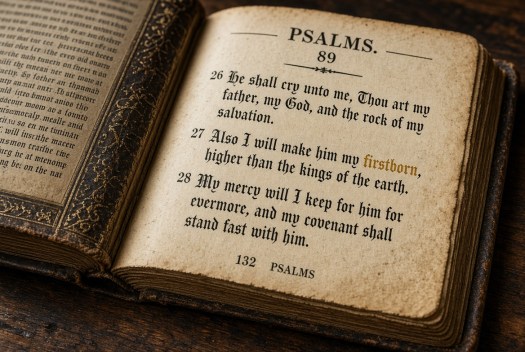
  1. Psalms 89:27

“I also shall make him My firstborn,

The highest of the kings of the earth.

This Psalm is speaking about David, who was NOT the firstborn son of Jesse. David was the SEVENTH son, literally the last son of Jesse.

But God elevated him to the position of preeminence. Hence, David was the firstborn.


  1. Psalms 105:36

He also struck down all the firstborn in their land,

The first fruits of all their vigor.


  1. Psalms 135:8

He smote the firstborn of Egypt,

Both of man and beast.


  1. Psalms 136:10

To Him who smote the Egyptians in their firstborn,

For His lovingkindness is everlasting,


Isaiah

  1. Isaiah 14:30 (ESV)

And the firstborn of the poor will graze,

And the needy lie down in safety;

but I will kill your root with famine,

and your remnant it will slay.

Another interesting use of “firstborn” where it is used in a phrase that does not include a person or animal. Therefore, the “firstborn” CANNOT refer to first offspring.

So what does it mean to be “firstborn of the poor”

The Jehovah’s Witnesses want to twist and stretch the meaning of firstborn in Colossians to mean  something like “first in line” or “first one to experience”. They have to create this meaning in order to make its usage with respect to Jesus fit their theological understanding of his nature, namely that he is NOT God, but is a created being.

So if that is the meaning of the word “firstborn” in that case, then that same meaning and usage should fit here, in a similar usage. Does it work?

Hardly.

What exactly would this mean if its saying the first to be poor? Or how could the Philistines (those to whom this prophecy is directed be the first ones to experience being poor?

The meaning of the word cannot mean what Jehovah’s Witnesses contend. If it did, you would end up with a garbled, incoherent mess.

But if firstborn is taken to mean preeminence or rank, then this verse is saying that those who are supremely poor will be fed. Or another way of thinking about it is “those who are the MOST poor”. This is why the NIV doesn’t even translate the word “firstborn.” It simply says “the poorest of the poor.” The NASB, which is one of the most literal translations doesn’t even use the word “firstborn” for this verse. This verse will not show up in a search of the NASB1995 (though it will in 2020 version). The NASB1995 translates this “those who are most helpless will eat.”


Jeremiah

  1. Jeremiah 31:9

“With weeping they will come,

And by supplication I will lead them;

I will make them walk by streams of waters,

On a straight path in which they will not stumble;

For I am a father to Israel,

And Ephraim is My firstborn.”

An important verse in this discussion. We’ve already seen that Manasseh was Joseph’s first offspring. (See Genesis 48:14 and Genesis 48:18)

Yet even though Manasseh was the firstborn in terms of being the first offspring, Ephraim was the “firstborn” in terms of preeminence.

It’s clear that preeminence is MORE important than birth order. True, the first offspring normally held the preeminent position, but not always.

Hence, when spoken of Christ, who had NO spiritual brothers to share the inheritance, is it more likely that the term “firstborn” is being used to let us know that he was the first in a line of children, or is it more likely that it is being used to let us know that he is preeminent?

I think the answer is obvious. Since he has NO sibling rivals to compete for the birthright, there is no need to inform us that he is the “first offspring”.


Ezekiel

  1. Ezekiel 20:26 – and I pronounced them unclean because of their gifts, in that they caused all their firstborn to pass through the fire so that I might make them desolate, in order that they might know that I am the LORD.’”

The Israelites had offered their firstborn children as sacrifices to pagan idols


Micah

  1. Micah 6:7 –

Does the LORD take delight in thousands of rams,

In ten thousand rivers of oil?

Shall I present my firstborn for my rebellious acts,

The fruit of my body for the sin of my soul?


This verse is akin to the modern day saying, “what do I have to do? Give you my firstborn?”


Zechariah

  1. Zechariah 12:10 – “I will pour out on the house of David and on the inhabitants of Jerusalem, the Spirit of grace and of supplication, so that they will look on Me whom they have pierced; and they will mourn for Him, as one mourns for an only son, and they will weep bitterly over Him like the bitter weeping over a firstborn.

New Testament


Luke

  1. Luke 2:7 – And she gave birth to her firstborn son; and she wrapped Him in cloths, and laid Him in a manger, because there was no room for them in the inn.

Yes, Jesus WAS the firstborn son of Mary. He was literally the first of her offspring

  1. Luke 2:23 – (as it is written in the Law of the Lord, “EVERY firstborn MALE THAT OPENS THE WOMB SHALL BE CALLED HOLY TO THE LORD”),

Romans

  1. Romans 8:29 – For those whom He foreknew, He also predestined to become conformed to the image of His Son, so that He would be the firstborn among many brethren;

What is this verse saying?

It’s saying that those who become children of God are predestined to be conformed to the image of Jesus. That is, we are going to be LIKE him. We will be sinless and holy and righteous in reality. We won’t just be declared righteous, we will BE righteous because in the end, our sin nature will finally be eradicated.

This is the sense that we will fully be Christ’s brethren. But he is the firstborn among all these brethren. Which simply means, he is preeminent. He is supreme.

So this verse, as applied to Jesus does not state that he is the first of Jehovah’s creation. It’s stating that he will have a preeminent position among all the brethren.

This makes sense if we understand that Jesus is a son by nature but we are sons (and daughters) by adoption.


Colossians

  1. Colossians 1:15 – He is the image of the invisible God, the firstborn of all creation.

This is one of the passages in dispute with Jehovah’s Witnesses. They contend that this verse means that Jesus is the first one created by Jehovah. So firstborn here means something like “first in line” or “first one to experience…”

But as we’ve seen, there is no other verse where this is the meaning of “firstborn”, even in verses of similar construction. It cannot mean that Jesus is literally the first offspring of creation for creation cannot have offspring.

Jehovah’s Witnesses claim that the use of firstborn here should carry the normal meaning that is seen in the majority of verses in Scripture. But we’ve seen that the normal usage applies to the first child of normal parents who bore that child through natural child birthing. But this cannot describe Jesus because even if you believe that he was created, he certainly was not birthed in the same way that people are. Jesus did not have a spiritual mother who “bore” him.

Additionally, Jesus has no spiritual siblings. Therefore, there is no need to distinguish him from rival siblings in terms of the firstborn status.

First born does NOT mean first-created. There is a different word that specifically communicates that, and Paul did not use that word to describe Jesus.

Therefore, the logical understanding of the term “firstborn” in this verse is preeminence or rule. The idea is that Jesus reigns over creation. Why? Because he is creator, as the verses that follow teach.


  1. Colossians 1:18 – He is also head of the body, the church; and He is the beginning, the firstborn from the dead, so that He Himself will come to have first place in everything.

The second verse in this passage that uses the term “firstborn”. How do the Jehovah’s Witnesses explain this occurrence?

They pull out their made up meaning of “first in line”. Remember there has been no other occurrence of the term “firstborn” in the more than 100 instances where the idea is anything similar to “first in line.”

Their understanding of this verse is that Jesus was “first in line” to come “from the dead”.

This is faulty for a number of reasons. First of all, Jesus was not the first to die and he was NOT the first to be resurrected.

The response from Jehovah’s Witnesses is that Jesus was the first to be raised to immortality. But this doesn’t make sense within the Jehovah’s Witnesses’ framework, for they do not even believe that Jesus was raised with a physical body. They believe that Jesus was raised from the dead (so was Lazarus) and Jesus now has returned to his pre-incarnate state of being the archangel, Michael. So Jesus is still alive. But so is Moses and Elijah. They appeared with Jesus at the transfiguration.

The Jehovah’s Witnesses’ view here that Jesus was the first to overcome death doesn’t make sense, especially given the statement that follows from Paul, “so that He Himself will come to have first place in everything.”

The meaning of preeminence for the word “firstborn” makes complete sense in this verse, as well as the prior verse and it fits perfectly with the context, including the statement that follows.

Jesus is preeminent over creation, he RULES over creation because he’s the creator. Jesus is preeminent over death, he RULES over death because he CONQUERED death. As a result, He himself will have first place in everything.” Jesus will have supremacy.

See the post “What Does it Mean that Jesus is the Firstborn?”


Hebrews

  1. Hebrews 1:6

And when He again brings the firstborn into the world, He says,

“AND LET ALL THE ANGELS OF GOD WORSHIP HIM.”


This verse is interesting because firstborn clearly refers to Jesus, but does it mean that he was the first offspring?

That is a doubtful interpretation for reasons that have already been enumerated. Jesus was not born. The more logical understanding of this term as applied to Jesus is “preeminent one”.

This makes sense given the context. This passage starting in verse 5 and ending with verse 13 is designed to demonstrate that Jesus is superior (better than) the angels.

So when the firstborn, the preeminent one comes into the world, God says “let all the angels worship Him.”

Now two things should be said about this. First of all, only God should be worshipped. So what does it say about Jesus that God instructs the angels to worship Him?

Secondly, the Jehovah’s Witnesses believe that Jesus is actually the archangel Michael. They believe that he is the highest of angels and God the Father (Jehovah to the Jehovah’s Witnesses) tasked Michael with the task of coming into the world to redeem humanity. Michael took on a human nature and changed his name, for some reason. When his task was complete, he returned to heaven and assumed his prior identity.

So you have an angel coming to earth, taking on a human nature and God the Father is instructing all the other angels to WORSHIP him. This does not sound like an angel or even someone who is god-like, as Jehovah’s Witnesses will say. This sounds like someone who possesses the divine nature. Indeed, this is what Hebrews says in Hebrews 1:3 and 4. Jesus is the EXACT representation of God’s nature AND he is BETTER than the angels. How can he be better than the angels if he himself is an angel?


  1. Hebrews 11:28 – By faith he kept the Passover and the sprinkling of the blood, so that he who destroyed the firstborn would not touch them.

This verse is talking about Moses. Moses was faithful to follow the Passover instructions so that the angel of death would not touch the firstborn children of Israel.


  1. Hebrews 12:23 – to the general assembly and church of the firstborn who are enrolled in heaven, and to God, the Judge of all, and to the spirits of the righteous made perfect,

There is some debate about what the term “church of the firstborn” refers to but we know it does NOT refer to Jesus. It’s referring to a group of people in heaven. It’s also clear that the idea of “first offspring” is not in view here. It cannot mean that because it’s talking about people who are in heaven with the Lord so it doesn’t make sense that it’s referring to people who are born first.


Revelation

  1. Revelation 1:5 – and from Jesus Christ, the faithful witness, the firstborn of the dead, and the ruler of the kings of the earth. To Him who loves us and released us from our sins by His blood—

This is the last occurrence of the term “firstborn” and it is the one occurrence that most resembles the usage of Colossians, especially Colossians 1:18.

So what does this mean?

Jehovah’s Witnesses will argue for the interpretation that they hold for Colossians 1:18, namely that this means that Jesus is the first to overcome death, that Jesus is “first in line”.

But given the context, that John follows this phrase by saying that Jesus is the RULER of the kings of the earth, it makes more sense that John is using the term to communicate that Jesus is the one who is preeminent over death. Jesus rules over death, just as he rules over the kings of earth.

A reminder that Jesus was not born. So what would be the purpose of using the term “firstborn” if it does not apply to Jesus as it applied to Reuben, Manasseh and the hundred other references that referred to the first offspring of some person?

Clearly, John is pointing to Jesus’ special status. To conclude otherwise is to stretch or twist the context of these passages and phrases to unnatural and incoherent meanings.


Image created by Grok
Is Baptism a Part of the Gospel Message?

1 Corinthians 1

10I appeal to you, brothers,] in the name of our Lord Jesus Christ, that all of you agree with one another so that there may be no divisions among you and that you may be perfectly united in mind and thought. 11My brothers, some from Chloe’s household have informed me that there are quarrels among you. 12What I mean is this: One of you says, “I follow Paul”; another, “I follow Apollos”; another, “I follow Cephas’”; still another, “I follow Christ.”

13Is Christ divided? Was Paul crucified for you? Were you baptized into the name of Paul? 14I am thankful that I did not baptize any of you except Crispus and Gaius, 15so no one can say that you were baptized into my name. 16(Yes, I also baptized the household of Stephanas; beyond that, I don’t remember if I baptized anyone else.) 17For Christ did not send me to baptize, but to preach the gospel—not with words of human wisdom, lest the cross of Christ be emptied of its power. (1 Corinthians 1:10-17, NIV)


The Daily DAVEotional

What is required for salvation?

That’s a basic question that every religious system should be able to answer.

Traditional Christianity says that salvation comes to those who place their faith in Jesus, who died on a cross to pay the penalty that we deserve for our sins.

However, there are some within the Christian tradition who hold to the view that baptism is an essential step in the salvation process. So in addition to believing in Jesus, one must also be physically baptized, with water, in order to be fully saved.

Is this true? Does one need to be baptized in order to be saved?

I think this passage in 1 Corinthians gives us some insight to address this question.

The context of this passage is that Paul is addressing some problems in the Corinthian church that were creating divisions.

The source of these divisions is that people in the church were aligning themselves with different leaders. I wrote about this passage and the divisions that we can experience in my blog post  “Name Dropping in the Early Church”as well as my post, “Political Divisions within the Church”.

What’s interesting about this passage, though, is that Paul, while addressing the divisions that were occurring in the church, tangentially speaks to the issue of baptism.


Click here to see a A Comprehensive List of Blog Posts Based on Bible Passage Reference


The source of the divisions is that people in the church were aligning themselves with various leaders. These leaders were becoming the central figure for each faction instead of Jesus being the central figure for the whole church. So in essence, you had the Paul faction, the Apollos faction, the Cephas faction and so on.

Paul’s argument is that Jesus isn’t divided. Therefore, his church shouldn’t be divided into factions of people who are identifying with certain popular figures. Instead, the church should be united with everyone identifying with and following Jesus.

To make his case, Paul asks a number of rhetorical questions:

Was Paul crucified for you? (Obviously, the answer is NO)

Were you baptized into the name of Paul? (Again, the answer is obviously NO)

Paul then makes an interesting statement. He says that he is thankful that he didn’t baptize many of the Corinthians. He is glad about that because then they could not claim to have been baptized into Paul’s name. Paul did not want believers making him more important than Jesus.

This begs the question: if baptism is essential for salvation, why would Paul be thankful and glad that he didn’t baptize many people? Wouldn’t he be sad that he hadn’t been able to save many people?

Paul completes his thought with the following statement:

For Christ did not send me to baptize, but to preach the gospel

it’s easy to gloss over this statement but what’s important is the fact that Paul is claiming that his goal, his mandate, was to preach the gospel.

A question I have often asked people when engaging in this discussion:

If a person responds to the gospel, will they be saved?

I think most Christians would agree that the gospel message contains everything that is necessary for a person to become saved if they respond positively to the message.

In fact, Paul, n Romans 1:16-17 says,

I am not ashamed of the gospel, because it is the power of God for the salvation of everyone who believes: first for the Jew, then for the Gentile. 17For in the gospel a righteousness from God is revealed, a righteousness that is by faith from first to last, just as it is written: “The righteous will live by faith.

According to Paul, the gospel “is the power of God unto salvation.”

Now if the gospel message saves people and Paul says that he was sent by Christ to preach the gospel and NOT baptize people, then clearly, baptism is NOT a part of the salvation message, which means it is NOT necessary for a person to be saved.

This does not mean that baptism is not important or that there isn’t some significance to it. There is. It’s just not necessary to be saved.

To learn more about what baptism is and its significance to the Christian, please read the following related posts:


Did you enjoy this post? I’d love to hear your thoughts! Feel free to like, leave a comment below, and share it with your friends or on social media if you found it helpful or interesting. Your support keeps the conversation going!


Reflection

What do you think are the essential elements of the gospel message? 

If baptism is necessary for salvation why does Paul say that Jesus did not send him to baptize but to preach the gospel?

If baptism is NOT necessary for salvation, what is the purpose? Why is it practiced?

In verse 13, Paul asks the question, “were you baptized into the name of Paul?” What do you think that means? What does it mean to be baptized “into the name” of another person? How does this understanding of the word “baptize” shed light on the issue of whether baptism is necessary for salvation or not?


Photo by Alex Shute on Unsplash

What is Baptism?

Romans 6

1What shall we say, then? Shall we go on sinning so that grace may increase? 2By no means! We died to sin; how can we live in it any longer? 3Or don’t you know that all of us who were baptized into Christ Jesus were baptized into his death? 4We were therefore buried with him through baptism into death in order that, just as Christ was raised from the dead through the glory of the Father, we too may live a new life.

5If we have been united with him like this in his death, we will certainly also be united with him in his resurrection. 6For we know that our old self was crucified with him so that the body of sin might be done away with, that we should no longer be slaves to sin— 7because anyone who has died has been freed from sin.

8Now if we died with Christ, we believe that we will also live with him. 9For we know that since Christ was raised from the dead, he cannot die again; death no longer has mastery over him. 10The death he died, he died to sin once for all; but the life he lives, he lives to God.

11In the same way, count yourselves dead to sin but alive to God in Christ Jesus. (Romans 6:1-11, NIV)


The Daily DAVEotional

Is baptism necessary for salvation?

This is the question I posed in a recent post of the same title.

My prompt for delving into this topic was a recent online conversation I had with a Mormon, who, in making his case for the legitimacy and necessity of the Mormon church, had made the claim that the Bible teaches that baptism is necessary for salvation.

Mormons teach that a great apostasy occurred shortly after the apostles died and the authoritative line for administering baptisms was lost….for nearly 1800 years! (I’ve addressed this theological error in my post “Did Paul Predict an Apostasy in Which the Church Would be Completely Lost?”). But fortunately, according to Mormonism, Jesus supposedly restored the priestly line and authority for baptisms through Joseph Smith and the Mormon church.

I argued in my post “Is Baptism Necessary for Salvation?” that those who hold to this view, that baptism is necessary for salvation, often have an inaccurate understanding of what baptism is.

Many have an understanding of baptism that is informed only by their own religious experience. Hence, they think that any time the word appears in the Bible, it must be referring to the act of immersing someone in water for some efficacious religious purpose, i.e. cleansing of their sins and completing the salvation process.

But the meaning of the word “baptism” is broader than our own religious experience dictates and is often used in the Bible in ways that have nothing to do with any kind of immersive water experience.

So what is baptism exactly?

This passage in Romans is one of the clearest in terms of helping us understand exactly what baptism is and how it was understood by the apostles.

Specifically, there are two parallel statements that give clarification regarding what baptism is.

Verse 3 says, “don’t you know that all of us who were baptized into Christ Jesus were baptized into his death?”

But verse 5 says, “If we have been united with him like this in his death, we will certainly also be united with him in his resurrection.”

Clearly, these two parallel verses demonstrate that to be “baptized into Christ and his death” is to be “united with Christ and His death.”

Hence, baptism is union with Christ.

This fits exactly with the broader biblical meaning of the word “baptize” which is identification. 


Click here to see a A Comprehensive List of Blog Posts Based on Bible Passage Reference


Paul is saying that when one identifies with Christ, they are identified with His death. This is exactly what the gospel teaches. When a person receives Jesus as their Lord and Savior, they experience a change in identity. Instead of being a person who is alienated and separated from God, the new believer enters into a union with Christ that is characterized by a new family relationship – they are now a child of God – an adopted son or daughter.

This new identity takes place at the moment a person believes in Jesus. They receive forgiveness precisely because they are united with Jesus in His death. Simply put, when a person receives Jesus, they are indicating that they want Jesus’ death to pay for their sins instead of having to pay the penalty for their sins on their own, which leads to judgment and eternal death.

Jesus’ death now counts for the believer. His death pays for all their sins and as a result, they experience complete and total forgiveness.

Those who hold to baptismal regeneration (the belief that baptism by immersion is necessary for salvation) might argue that this new identity doesn’t happen until a person is baptized with water by immersion.

But this contradicts what Scripture teaches, which is that a person is justified by faith alone and that believers receive the Holy Spirit (the sign that we are now members of God’s family) at the moment of belief, not at the moment of being baptized.

Furthermore, if the broader understanding of baptism is one of identification, then it makes sense that the purpose of water baptism is not to complete some salvation formula but is simply a way of identifying to the world in a physical way (being immersed in water) to a spiritual reality that has already taken place. The spiritual reality is that the person, based on their belief and trust in Jesus, now identifies with Jesus and Jesus’ death and is now a member of God’s family.

So what is baptism?

Baptism is a union with Jesus that takes place when we put our faith in Him and His death. At the very moment we do that, we become united with Jesus AND we become united with His death. Being united with His death means that His death now pays for my sins, which means I can experience forgiveness and I can escape the punishment I deserve for the sins I’ve committed.

This union with Christ means that I have a new identity – I’m a child of God!


Did you enjoy this post? I’d love to hear your thoughts! Feel free to like, leave a comment below, and share it with your friends or on social media if you found it helpful or interesting. Your support keeps the conversation going!


Reflection

What was your experience with baptism growing up? Were you baptized? If so, what meaning was attributed to this religious ceremony by your religious tradition?

What do you think it means to be united with Christ?

If you think baptism is a religious ceremony that completes the salvation process, what do you think was the reason and purpose for Jesus being baptized? (See my post “Why Was Jesus Baptized?”)

If baptism was necessary for salvation, how do you explain Jesus’ words to the thief on the cross, who was never baptized, but was promised by Jesus that he would be with Jesus in paradise that very day?


Photo by Logan Gutierrez on Unsplash

Should People Take the Mormon “Challenge”?

Galatians 1

6I am shocked that you are turning away so soon from God, who in his love and mercy called you to share the eternal life he gives through Christ. You are already following a different way 7that pretends to be the Good News but is not the Good News at all. You are being fooled by those who twist and change the truth concerning Christ.

8Let God’s curse fall on anyone, including myself, who preaches any other message than the one we told you about. Even if an angel comes from heaven and preaches any other message, let him be forever cursed. 9I will say it again: If anyone preaches any other gospel than the one you welcomed, let God’s curse fall upon that person.

10Obviously, I’m not trying to be a people pleaser! No, I am trying to please God. If I were still trying to please people, I would not be Christ’s servant. (Galatians 1:6-10, NLT)


The Daily DAVEotional

If you haven’t noticed, Mormonism has been a huge topic on social media the last few days. The main topic of discussion and debate has been centered around the question of whether or not Mormons are Christians.

For context, the Department of Defense recently posted a memo regarding new abbreviated codes to identify the many different religious backgrounds that might be represented among the troops.

According to Secretary of War Pete Hegseth, the previous list of religious options was out of control, with over 200 different options. The goal was to simplify the number of codes and options, making it easier for chaplains to do their job of ministering to the troops.

The problem was that the new list had a number of different Christian denominations listed, such as “Christian-Baptist” and “Christian-Presbyterian” but the Mormon Church was not listed as Christian. Instead, it was listed simply as “Latter Day Saint.”

This set off a firestorm among many Mormon influencers and regular Mormon Joes who were offended that the U.S. government apparently didn’t consider Mormons to be Christian.

Chief among those speaking out online were Utah Senator Mike Lee (@basedMikeLee on X), who took every opportunity to post his thoughts and objections to this “egregious error” inflicted on Latter Day Saints.

This incident sparked a lot of online conversations about whether or not Mormons are Christians.

Mormons, of course, believe they ARE Christians, while evangelicals have argued that Mormons are NOT Christians because, despite the fact that Jesus Christ is in their name, they do not hold to the traditional Christian doctrinal views on Jesus, God, the Church, salvation, or the Scriptures.

The online discussion afforded many Mormons, including Senator Lee, the opportunity to inform and proselytize others regarding the Mormon faith.

In one of his posts, Senator Lee offered up what I’m calling the “Mormon challenge”:

This is the Mormon “trump” card so to speak. “Just read the Book of Mormon in it’s entirety”, they say, “and ask God humbly and with sincerity if it’s true.” This challenge is often offered as a gauntlet that is laid down for those who portend to be truth-seekers.

“What do you have to lose”, Mormons ask. The sentiment is, “Don’t be a chicken!”

Millions of Mormons attest that Mormonism is indeed true based on this challenge.

Should Christians accept this challenge?

The answer is a resounding NO.

There are two reasons why Christians should not take this challenge and neither of them have to do with being scared of the outcome.

The first reason you should not take this challenge is because it’s not falsifiable. The challenge is actually like the old “heads I win, tails you lose” proposition, which means that the challenge is designed to “prove” Mormonism is true regardless of the results of your humble and sincere prayer.

Think about it: if you pray and you say that you felt nothing or you didn’t get any firm and obvious confirmation from your prayer, the Mormon can just say that you were obviously not sincere enough, or humble enough or something similar.

Yet if you say that you DID feel something, that emotional response, regardless of how small or incomprehensible, is offered as proof that Mormonism is true.

In other words, the challenge simply appeals to an emotional response as evidence of veracity.

This leads to the second reason one should NOT take this challenge, which is that it’s unbiblical.

Nowhere in Scripture are people encouraged to evaluate truth claims by appealing to an emotional response.

Instead, we are exhorted to test a message against the clear revelation that has already been given by God.

Acts 17 is a good example of this. I have written about this passage in another blog post, “Fact-Checking and Misinformation in the New Testament” in which the Bereans were commended for testing Paul’s message against the Scriptures.

A second clear example of testing a message is in the Galatians passage listed above, in which Paul tells his audience that any “gospel” message that is not in alignment or in agreement with the gospel message he had already preached to them was to be rejected. Paul tells the Galatians that the person giving this false message is to be cursed.

We know exactly what the message was that Paul originally preached to the Galatians because he writes his letter to the Galatians to reinforce the original message and to correct their subsequent misunderstanding brought about by false teachers. The gospel message Paul preached was a message of justification by faith in Christ alone, apart from any works.

Since we already know that the Mormon message is different than Paul’s message on many different levels doctrinally, there is no need to “pray on it.” In fact, reading the Book of Mormon and praying on it could be considered disobedience to Paul’s admonition to outright reject so-called gospel messages that are different from what he taught the Galatians.

The debate about whether Mormons are Christian or not, while interesting, is in many ways irrelevant. The truth is that anyone can identify themselves as a Christian. Yet, it’s not as important what you call yourself as what you believe.

Mormons say they are Christians because they follow Jesus Christ. But so do Jehovah’s Witnesses, Catholics, Evangelical Christians, Liberal Christians and even Progressive Christians. Even Muslims will tell you that they respect and revere Jesus as a prophet.

All these groups, along with Latter Day Saints, have wildly different theological views on God, Jesus, salvation and the nature of the church, and yet, they all consider themselves “Christian”.

Are they Christian? The only way we can really know is to evaluate their beliefs in relation to what the Bible teaches.

With that in mind, I propose an alternate challenge to those who consider themselves Mormons…a challenge that is actually biblical. The challenge is to read the Bible cover to cover. Then compare the teachings of Mormonism with the teachings of the Bible, and specifically, compare the Mormon message with the gospel message taught by Jesus and the apostles in the New Testament.

Then tell me – does Mormonism line up with the already revealed and accepted teachings of Jesus and the apostles?

So Mike Lee (and other Mormons)….will you accept the challenge?


Did you enjoy this post? I’d love to hear your thoughts! Feel free to like, leave a comment below, and share it with your friends or on social media if you found it helpful or interesting. Your support keeps the conversation going!


Reflection

What is your definition of a Christian? According to the Bible and the gospel, how does one become a Christian?

What was the essence of the salvation message taught by Jesus and His disciples? What is the essence of the Mormon message regarding how a person is saved?

What is the traditional Christian teaching on the nature of Jesus? How do Mormons view the nature of Jesus? Are these two views the same? How do they differ?

Do you think it matters what a person believes about Jesus in order to be saved? Or is it simply enough to say you believe in Jesus? 


photo by Dave Lowe

Why Can’t We Be More Like the New Testament Church?

Acts 6

1But as the believers rapidly multiplied, there were rumblings of discontent. Those who spoke Greek complained against those who spoke Hebrew, saying that their widows were being discriminated against in the daily distribution of food. 2So the Twelve called a meeting of all the believers.

“We apostles should spend our time preaching and teaching the word of God, not administering a food program,” they said. 3“Now look around among yourselves, brothers, and select seven men who are well respected and are full of the Holy Spirit and wisdom. We will put them in charge of this business. 4Then we can spend our time in prayer and preaching and teaching the word.”

5This idea pleased the whole group, and they chose the following: Stephen (a man full of faith and the Holy Spirit), Philip, Procorus, Nicanor, Timon, Parmenas, and Nicolas of Antioch (a Gentile convert to the Jewish faith, who had now become a Christian). 6These seven were presented to the apostles, who prayed for them as they laid their hands on them.

7God’s message was preached in ever-widening circles. The number of believers greatly increased in Jerusalem, and many of the Jewish priests were converted, too. (Acts 6:1-7, NLT)


The Daily DAVEotional

The Christian church is a mess. At least that’s what we’re to believe if we look at social media and various news outlets.

Everywhere you look and every time you turn around there’s a church scandal involving a high profile pastor or some popular Christian artist has decided to deconstruct their faith. Sexual immorality, greed, back-stabbing, gossip and slander seemingly abound within the church walls.

So why can’t we be more like the New Testament church?

That’s a question that I hear people say all the time. It’s a question borne out of ignorance and a naive desire for a return to some kind of utopian church state that NEVER existed.

The truth is that the church has ALWAYS had problems and it will CONTINUE to have problems, as long as it is being led by imperfect, corruptible humans.

The pollyannaish view that the New Testament church had it all together while the modern church is full of problems is simply revisionist history.

The early church was full of problems, starting with the issue outlined here in Acts 6.

It’s true that the first few chapters of Acts outline a spiritually robust church that was generous, giving, met often for prayer and was full of faith. However, in Acts 6, we start to see some of the flaws and problems that invaded this early community.

According to the text, an issue arose between two different ethnic communities. Those who spoke Greek complained against those who spoke Hebrew. Their complaint was that their widows were being discriminated against.

Apparently, there was a food distribution program that was being run by the church and those who were non-Jewish culturally were not receiving the same attention and consideration as those who were culturally Jewish.

In other words, there was discrimination and preferential treatment toward one ethic group over another. There was racism in the early church.

It’s not surprising that this issue would exist. After all, for centuries Jews followed the Law of Moses, which taught them that Gentiles were unclean.

This does not mean that the Law taught that Gentiles were not equal to Jews or that somehow God saw them as less than. But over the years, the Jewish view of the Gentile devolved into a state of anti-Gentilism.

This view was not isolated. It is repeated throughout the book of Acts. Jews did not like Gentiles and generally saw them as inferior.

In this passage, there is no indication of what the apostles did to address this false view, In actuality, Peter, in Acts 10, needed a vision from the Lord to break him out of his anti-Gentile trance.

The apostles dealt with the problem as indicated but their solution did not fix the racism that existed within the early church.

What are we to make of this?

It’s clear that many of the great evils and ills that infect our modern church were present in the New Testament church. And yet, God was able to use those feeble, flawed individuals just the same. This means that He can use us as well.

I want to be clear that I’m not saying that we shouldn’t call out sin in the church when we see it. We should. And leaders in the New Testament church did as well. It seems that many of the New Testament epistles were written to point out sin and correct bad theology and wrong orthopraxy.

But we shouldn’t be naive to think that the modern church is any worse than the church has been at any other time.

The modern church is not perfect. It can’t be; it’s being led by and is filled with imperfect and corruptible people. But God is in the business of using broken vessels to fulfill His purposes.

So when someone asks, “why can’t we be more like the New Testament church” my response is: brother, we already are!


Did you enjoy this post? I’d love to hear your thoughts! Feel free to like, leave a comment below, and share it with your friends or on social media if you found it helpful or interesting. Your support keeps the conversation going!


Reflection

What has been your view of the New Testament church compared to the modern evangelical church? How have you tended to compare and contrast them and evaluate them?

What are some of the reasons why people tend to yearn for a New Testament version of the church?

What do you think it is about the New Testament church that causes people to long for a return to that era?

What are some reasons that wishing for a return to the New Testament church era would ultimately be futile.

How should we as Christians approach the fact that there are many problems that afflict the modern church? What do you think are appropriate solutions or courses of action for individuals and for the church as a whole?


Photo by Markus Spiske on Unsplash

How to Study an Epistle

Many people would love to know the Bible better but don’t know where to begin or how to go about it.

The problem with the Bible is that it’s not a book that you can read like a John Grisham or Steven King novel.

The Bible is actually a collection of works written over a long period of time by many different authors in different languages and in different settings.

There are many types of literary genres represented in the Bible. Some of the books are historical narrative while other books are poetry, wisdom literature or books of prophecy.

In the New Testament, the gospels are historical narrative, detailing the life of Jesus from the different perspectives of the 4 different authors, but most of the New Testament comes to us in the form of epistles, or letters that were written to individuals and churches.

How does one study an epistle? Is it different than how one might approach the gospels?

The short answer is that yes, the way one approaches an epistle is different than how one might approach the gospels or some other book that is largely historical narrative.

With historical narrative, like the gospels or the book of Acts, the author is telling you a story, giving you relevant details along the way. The author includes important events and people to make the point he wants to make.

An epistle, on the other hand, is really one side of a two-way conversation.

To illustrate what I mean, consider the following situation. The other day, my wife received a phone call. After answering “hello”, she moved to the other room, but I could still hear everything she was saying.

I wasn’t sure who had called or why, but after about 10-15 minutes of conversation, it was more clear to me who my wife was talking to and what the topic was. I was only hearing one side of the conversation but from that one side, I was able to determine what was being discussed.

Reading and studying a New Testament epistle is much the same. Most of these New Testament letters were written to individuals or churches in response to questions that had been asked or some problem that was being addressed.

Hence, studying an epistle requires some literary detective skills.

Now being a Bible study sleuth takes some practice, but here are a few things that you may find helpful as you get started:

    1. Read the whole letter in one sitting. This will give you a better big picture perspective. This will be easier with shorter letters like 2 Timothy, Colossians or Philippians but will require more time and patience with longer letters like Romans, 1 Corinthians or Hebrews.
    2. Note who the author is and who the audience is.
    3. What is the context for the letter? What is the tone of the letter? What do you know about the audience or the recipient that might be helpful to understanding the contents of the letter?
    4. What are the themes that surface in the letter? What is the main argument being made?

When studying an epistle, you always want to try to determine what is the issue or problem being addressed. What is the reason the author is writing the letter?

Epistles often have a logical argument or a persuasive message. By noticing repeated words and phrases and outlining the message of the letter, you can begin to get a better picture, so to speak, of the author’s intent for writing.

When studying an epistle, it’s helpful to break it down into smaller sections for a deeper dive.

Think of it this way – a lawyer might have 3 or 4 bullet points to support an argument or defend a position. Sometimes, the New Testament writers will have a multi-pronged argument to make their case or defend a thesis. Part of the job of Bible study is determining the logical argument and the bullet points that support the argument.

For some, this might seem like too much work. “I’ll just let the pastor tell me what it says” or “I’ll just read a commentary that explains it”.

That is certainly faster and doesn’t require as much work or effort. But if you want to understand the Bible for yourself, learning some good Bible study skills is essential.

Go ahead and give it a try. Start with a shorter book like Colossians, Philippians, Galatians or Ephesians. These letters are filled with great doctrinal truths and practical instruction for living as Christians but aren’t so long that they’re too difficult to manage. It’s the equivalent of starting out running a mile or two before attempting to run a half-marathon.

Reflection

What has been your experience with studying the Bible? 

How would you rate your desire to study the Bible? How would you rate your experience or skill in being able to study the Bible?

What keeps you from studying the Bible more consistently (time, motivation, fear, etc.)? What would help you become more active in studying the Bible consistently?

What epistles have you studied in depth? What epistles are on your “bucket” list of books you’d like to study?


Photo by Aaron Burden on Unsplash

What Does it Mean to Have Eternal Life?

John 17

1After Jesus said this, he looked toward heaven and prayed:

“Father, the time has come. Glorify your Son, that your Son may glorify you.  2For you granted him authority over all people that he might give eternal life to all those you have given him. 3Now this is eternal life: that they may know you, the only true God, and Jesus Christ, whom you have sent. (John 17:1-3, NIV)


The Daily DAVEotional

An overwhelming number of people in the U.S. believe in an afterlife. According to a major Pew research study in 2023-24 and released in 2025, 70% of Americans believe there is, or there probably is an afterlife.

If there really is an afterlife, what does it look like and, more importantly, how do we experience it?

Christianity teaches that after people die physically, they experience either eternal life or eternal death.

But what exactly is eternal life?

I’ve asked hundreds, if not thousands of people that exact question over the course of my years in ministry and the most common answer I received is that eternal life is “living forever after you die”.

Now that’s obvious isn’t it? The word “eternal” means “forever” and “life” is the opposite of “death” so it kind of seems obvious that “eternal life” must be “living forever” because that’s exactly what the words mean.

Many people are surprised to learn, however, that Jesus actually defined eternal life and his definition doesn’t exactly line up with our traditional understanding of the term.

Most people think of eternal life as something you receive AFTER you die, like going to heaven.

But Jesus defined eternal life as something you can have NOW and then it continues on into eternity.

In John 17:3, Jesus defined eternal life as knowing God – having a relationship with Him. Hence, eternal life is beginning a relationship with Jesus now, on earth, so that when you die, you will live with Him for eternity.

This distinction might seem insignificant but it’s actually quite important.

If eternal life is just going to heaven when I die, then it’s not necessarily something I need to worry about until later in life.

But if eternal life is a relationship with God – something I can experience NOW, then waiting to receive eternal life will result in me missing out on a relationship with God.

Jesus didn’t go to the cross and die for us just so we could go to heaven after we die. Jesus died on the cross to give us LIFE….NOW!

Jesus wants us to know Him and that’s something we can begin to experience now in this life. Knowing Jesus simply means responding to the invitation of forgiveness that He offers through His death on the cross for us.

When we respond to Jesus’ invitation, Jesus comes into our lives and we become adopted sons and daughters in His family.

At that moment, our real life begins. This relationship with Jesus is permanent and never-ending.

Do you want to experience eternal life? You don’t have to wait until you die to experience it. You can experience eternal life right now, simply by entering into a relationship with Jesus, which simply requires that you put your trust in Him.

For more information on what it means to begin a relationship with Jesus, read the short article “FOUR POINTS TO UNDERSTAND HOW TO EXPERIENCE ETERNAL LIFE”.


Did you enjoy this post? I’d love to hear your thoughts! Feel free to like, leave a comment below, and share it with your friends or on social media if you found it helpful or interesting. Your support keeps the conversation going!


Reflection

Before reading this short post, what was your understanding of “eternal life”? How did you define it?

Most people think of eternal life as going to heaven after you die. But Jesus defined eternal life as knowing God and having a relationship with Jesus? How does this difference impact you? In what ways does this change or impact your desire to have eternal life?

On a scale of 0-100 (0 being no desire and 100 being the highest level of desire possible), how would you rate your desire to know God? What factors caused you to choose the number that you did?

On that same scale of 0-100, what do you think is God’s desire for you to know Him?

What would keep you from putting your faith in Jesus and beginning a relationship with Him?


Photo by Jon Tyson on Unsplash

Revisiting the Story of the Prodigal Son

Luke 15

11To illustrate the point further, Jesus told them this story: “A man had two sons. 12The younger son told his father, ‘I want my share of your estate now, instead of waiting until you die.’ So his father agreed to divide his wealth between his sons.

13“A few days later this younger son packed all his belongings and took a trip to a distant land, and there he wasted all his money on wild living. 14About the time his money ran out, a great famine swept over the land, and he began to starve. 15He persuaded a local farmer to hire him to feed his pigs. 16The boy became so hungry that even the pods he was feeding the pigs looked good to him. But no one gave him anything.

17“When he finally came to his senses, he said to himself, ‘At home even the hired men have food enough to spare, and here I am, dying of hunger! 18I will go home to my father and say, “Father, I have sinned against both heaven and you, 19and I am no longer worthy of being called your son. Please take me on as a hired man.”’

20“So he returned home to his father. And while he was still a long distance away, his father saw him coming. Filled with love and compassion, he ran to his son, embraced him, and kissed him. 21His son said to him, ‘Father, I have sinned against both heaven and you, and I am no longer worthy of being called your son.

22“But his father said to the servants, ‘Quick! Bring the finest robe in the house and put it on him. Get a ring for his finger, and sandals for his feet. 23And kill the calf we have been fattening in the pen. We must celebrate with a feast, 24for this son of mine was dead and has now returned to life. He was lost, but now he is found.’ So the party began. (Luke 15:11-24, NLT)


The Daily DAVEotional

Imagine you are the son (or daughter) of a very wealthy man. You have no job and you still live under his roof.

Now imagine you go to your father and you say, “You know what old man? I wish you were dead, and I wish I could cash out my inheritance right now and blow this popsicle stand.”

This is not too far off from the scenario that Jesus paints in the story of the “lost son”, more commonly referred to as the “prodigal son.”

The son in the story doesn’t use the words I’ve chosen but the effect is pretty much the same, for in the Jewish culture, it was the ultimate slap in the face to ask your father for your inheritance while he was still living. It was more than a slap in the face actually. It was the ultimate sign of disrespect, akin to giving the father the finger.

Now if you happened to be living the imagined scenario I painted at the outset, what kind of response might you expect from your father after telling him you wished he was dad and you wanted your money…NOW?

Amazingly, in the story Jesus tells, the father willingly complies. He doesn’t demonstrate anger or resentment or any kind of vindictiveness, all emotions I imagine I’d express if I were the father in this scenario.

So the son gets his wish. And what does he do?

He goes to a distant land and wastes ALL the money on wild living (i.e. partying and prostitutes). In some ways, the story mutes the degree of nastiness in which the son treats his father and exploits his wealth. But make no mistake, the son is the most extreme example of a rebel that you can fathom.

When you have no job and your sole purpose is to experience hedonism to its fullest extent, eventually you run out of money to support that crazy lifestyle. And that’s exactly what happened here too. The son had no money, no plan and no prospects. He was desperate.

He finally gets a job feeding slop to pigs. Take note of this detail. He was feeding PIGS.

Pigs were unclean animals to Jews, which is just one more detail revealing how far off the son had strayed.

It’s at this point that the story turns. The key passage in this whole story comes in verses 17-19, which says:

17“When he finally came to his senses, he said to himself, ‘At home even the hired men have food enough to spare, and here I am, dying of hunger! 18I will go home to my father and say, “Father, I have sinned against both heaven and you, 19and I am no longer worthy of being called your son. Please take me on as a hired man.”’

The son “came to his senses”. This is a biblical picture of repentance. The son came face to face with reality. He had hit rock bottom and he was finally willing to humble himself and admit the stupidity of his decisions that led to his current situation. In short, he finally took responsibility for his actions.

But he didn’t stop there. He humbled himself and was willing to admit his sin to his father. So he swallowed his pride and returned home to face his father.

Imagine if you were the son in that situation. How difficult would it be to face your father and admit you were wrong? Personally, I think a typical father would be angry and I’d expect their response to follow suit. I’d expect to be berated and “made an example of”. I’m certain I’d need to learn my lesson and take my medicine. Essentially, I’d expect to experience some kind of penalty and punishment.

But that’s not what happens in this case. The text says that when the son was still a long way off, the father SAW HIM COMING. That means the father had to be watching and waiting for the son to return.

The father doesn’t react the way we would expect because he’s like no earthly father any of us have ever experienced. The father doesn’t berate his son. He doesn’t say “I told you so”. He doesn’t require any groveling or penance. He just embraces the son and welcomes him back into the family, with full rights and privileges restored.

The story highlights the incredible love and patience God the Father has for His children.

God is not a dictator. He allows us to choose our own path. He doesn’t restrict our choices but he also doesn’t shield us from the consequences of those choices. He patiently waits for us to return. And if and when we do return, He welcomes us back with a lavish love that is beyond any kind of earthly love we could experience.

On the flip side, the son is an example of the most egregious offenses one could commit. And yet, the Father extends His love and immediately forgives and restores the son. It’s incredible.

This tells me a couple of things. First, there is nothing I can do that God won’t forgive. NOTHING. I only need to come to my senses (repent), humble myself and admit my sin, just as the son in the story did.

God doesn’t require us to grovel or do penance to receive His love and forgiveness. He freely gives it to those who come to Him with a humble heart of surrender. His love is infinite and He freely and unconditionally lavishes it on those who come to Him.

Now imagine experiencing the love of THAT Father!


Did you enjoy this post? I’d love to hear your thoughts! Feel free to like, leave a comment below, and share it with your friends or on social media if you found it helpful or interesting. Your support keeps the conversation going!


Reflection

What was your relationship like with your earthly father?

If you had done something wrong that you know he would be offended by, what would it have been like for you to think about approaching Him? What kind of reaction might you expect?

When you think of God, what words come to mind? How would you describe God to someone else?

When you find yourself sinning and “straying” from God’s plan, how easy is it for you to “come to your senses”? What keeps you from coming to your senses and returning to God?

What amazes you most about this story?


Photo by IP Withers on Unsplash – Charlie Mackesy’s Return of the Prodigal Son statue outside HTB Church London

Developing the Habit of Daily Bible Reading

It’s the beginning of the New Year so naturally, many people are thinking about New Year’s resolutions.

Typical resolutions for people include: losing weight, paying down debt,  finishing a degree or improving a job situation.

In the spiritual realm, a very common New Year’s resolution is to read through the Bible in a year.

Over the years, I’ve made this resolution countless times and mostly failed, though I was able to read through the entire Bible once or twice.

As Christians, reading through the Bible in its entirety is a noble goal. Many do it because it seems like an enormous accomplishment, like running a marathon once or hiking Yosemite’s half-dome summit.

But for the Christian, the goal really shouldn’t be to say that we’ve read through the Bible, as if it’s some bucket list item that we can boast about.

The goal is to gain a greater understanding of God’s word so that it impacts us and transforms us at a heart level.

With that in mind, I think a better resolution is to develop consistency in reading God’s Word. The goal is to develop a habit of taking in God’s word; to see it as essential and necessary for your spiritual life as food is daily for your physical life.

To develop a habit, a daily reading program is a must.

If this is all new to you, a few tips might be helpful.

Don’t worry about reading the Bible through chronologically. You can do that if you want but the Bible is not a novel. It’s a collection of books. So it’s not necessary to read through in order.

Shoot for being consistent instead of racing to finish. The goal is not to “finish” per se, because even if and when you do read through the entire Bible, you will still want to keep reading. It is NOT like a novel that you put back on the shelf once you’ve read the final page.

Allot an appropriate amount of time to help you be consistent. Many people start off with 45 minutes to an hour but cannot sustain that and then quickly give up. It’s like a person who’s out of shape and starts running for fitness. They immediately run 5 miles and kill themselves. Start off with a manageable routine that you can repeat consistently.

Recognize that there is a difference between reading and studying the Bible. You want to develop a habit of “reading” consistently, preferably every day. Reading doesn’t mean you have to understand everything you read. You can create longer study periods at other times in order to dive deeper into various sections of God’s word.

Recognize that the Bible is a collection of different types of literature. Some of it is historical narrative, some of it is poetic prayers and wisdom and some of it is direct teaching and instruction. Based on your personality, you will likely find some parts of the Bible easy and enjoyable to read while other sections (the types you don’t normally gravitate toward) you will find more laborious. Start with the types of literature that you would more easily gravitate toward, and then mix in the types that aren’t as easy. Starting off with books that are interesting will help you create momentum which will enable you to begin developing consistency.

Consider following a Daily Devotional program on the YouVersion Bible app. This is a popular app that is free and available for Smartphones in both iOS and Android versions. Not only does this app give you digital access to many different Bible translations, but there are literally thousands of different devotional programs that you can select to follow. The app will enable you follow each day’s content (a mixture of Bible reading often with some brief commentary) until you finish the program. When you finish, you can find another topic or series that interests you.

You may be saying to yourself, “this is all helpful, but I still don’t have any idea where to start.”

That’s a common issue. Here are some ideas to help you know where to begin:

Read through one of the gospels (Matthew, Mark, Luke and John). These books are narratives that each tell the story of the life of Jesus from the perspective of that author. There are similarities and differences between each account as each author reported on those parts of the life of Jesus that were important for the purpose they were writing. Pick one gospel and reach through it. You can read one chapter a day and it will take you 5-10 minutes, maybe even less. Reading through one of the gospel accounts will help you get familiar with the life and teachings of Jesus, who is the Bible’s central character.

Read through the book of Genesis, the first book of the Bible. Genesis is foundational for helping you to understand the context for the whole theme of the Bible. In it, you learn about creation, the Fall of man and then the story of the formation of the nation of Israel, God’s chosen people through whom the promised Messiah would come. Again, read one chapter a day. That should take no more than 5-10 minutes and will take you 50 days as there are 50 chapters.

If you like poetry, read through the Psalms. The Psalms are independent poems and praises that were written by different people to express their thoughts and emotions to God regarding the things they were experiencing. You can read one per day. Some are very short and there’s a few (like Psalm 119) that are extra long. If a Psalm is more than 30 or 40 verses, you might consider breaking it up into multiple days.

Read through the book of Proverbs. This book is what is called Wisdom literature. It’s a collection of sayings that are designed to give instruction and impart wisdom. There are 31 chapters in this book. One strategy is to read whatever Proverb corresponds to the day of the month. Hence, in a month that has 31 days, you will read through the entire book.

Read through the book of Acts, one chapter at a time. The book of Acts is another narrative book that tells the story of the foundation and growth of the early church, just after Jesus’ death, resurrection and ascension. It is filled with stories that demonstrate God’s design for His message of redemption to be taken to the ends of the earth.

Read through some of Paul’s letters. Romans, Galatians, Ephesians, Philippians and Colossians are good starting places. These letters are not narrative but are instructions that Paul is sharing with various New Testament churches. Reading these letters will help you to begin to learn important doctrinal truths about God and your relationship with Him.

Building a habit of daily Bible reading is one of the best practices you can develop if you want to grow and mature as a Christian. God’s Word is our source of life; it’s an instruction manual that teaches us what is right and what is wrong and directs us in how we are to live our lives in connection with God. (For more thoughts on the benefits of reading God’s Word, read my post “Training in Righteousness – Part 2”)

One last suggestion that you may find helpful. Consider signing up for my blog posts where you will get alerted each time a new post is made. Many of my posts are part of what I call the Daily DAVEotional. It’s not exactly daily, but each post has a passage from my own daily reading, along with my commentary on what it means. I end each post with some reflection questions to help you process and apply what you’ve read. Each post will take between 5 and 10 minutes to read, depending on how fast you read and how long you take to reflect on the questions at the end.

Wherever you’re at in your knowledge and understanding of God’s Word, I hope this is a year that you are able to begin to build a habit of daily Bible reading. This one habit practiced over time, can be instrumental in your own spiritual growth and transformation in the months and years to come!

How about you? What has been your experience with New Years’ resolutions and reading through the Bible?

What have you found helpful in your own life for developing consistency in daily Bible reading?

Share your thoughts and comments below!


Photo by Joel Muniz on Unsplash

Fact-Checking and Misinformation in the New Testament

Acts 17

10That very night the believers sent Paul and Silas to Berea. When they arrived there, they went to the synagogue. 11And the people of Berea were more open-minded than those in Thessalonica, and they listened eagerly to Paul’s message. They searched the Scriptures day after day to check up on Paul and Silas, to see if they were really teaching the truth. 12As a result, many Jews believed, as did some of the prominent Greek women and many men. (Acts 17:10-12, NLT)


The Daily DAVEotional

The advent of social media has completely changed the landscape of how information is disseminated to the masses. Prior to social media, people relied primarily on what is now known as “legacy media” – national broadcast news networks and major metropolitan newspapers.

But now with social media, anyone and everyone can be a journalist, investigative reporter, podcaster or blogger. Competing ideas and opinions abound, making it increasingly more difficult to separate fact from fiction.

With such an affluence of free-flowing information, two terms have been introduced into the mainstream cultural vernacular in recent years – misinformation and disinformation. These terms have primarily been used by politicians and pundits on both sides of the aisle to label the speech and narratives of their opponents as false. Alarmingly, our own government has cited “misinformation” as a basis for seeking to censor the speech and thus limit the reach of those whose ideas and beliefs are not aligned with the official position of the party in power.

This effort to limit speech has been evident in the last few political cycles through an increased effort to put pressure on social media platforms to limit and even censor speech that is deemed as “misinformation”.

But who exactly determines what is misinformation?

Social media outlets have employed “fact-checkers” to determine what information is accurate and what should be labeled as “misinformation”.

A fact-checker is someone who evaluates the truthfulness of a statement and then renders a judgment. These fact-checkers are expected to be neutral but the problem, as we’ve seen, is that they’re rarely unbiased. Who then fact-checks the fact-checkers?

In this segment of Acts 17, the Bereans are commended for their ability to fact-check the information that was being promoted.

Paul was a missionary who traveled throughout Asia Minor proclaiming the message of Christ and planting churches among those who believed his message.

But just like today, there was no shortage of ideological grifters and religious charlatans traveling from village to village looking for a market to sell their ideological snake oil.

With so many traveling religious preachers, how does one determine who, if anyone, is telling the truth?

The Bereans were commended because they “fact-checked” Paul’s message by “searching the Scriptures” to determine it’s veracity.

“The Scriptures” in this case refers to the Old Testament. The Bereans listened intently at Paul’s message and “day after day” they checked the message and compared it to what they already knew was true – the Old Testament Scriptures.

Fact-checking is a good thing, as long as the facts are being checked honestly against an objective, truthful standard. As we’ve seen recently, people are often biased, meaning they are rarely objective and often will stretch the truth, or in some cases, even deny the truth in order to fit their own biases.

But God’s word is both objective and true because it is the very word of God, who is by definition, truth.

So if you really want to check your facts, be sure they are not misaligned with what the Scriptures say. If they are, you can be certain that your facts are indeed “misinformation”.


Did you enjoy this post? I’d love to hear your thoughts! Feel free to like, leave a comment below, and share it with your friends or on social media if you found it helpful or interesting. Your support keeps the conversation going!


Reflection

What are some beliefs and ideas that you may tend to hold more because of your own personal  bias than the fact that it is true?

What is the standard that you use to determine if a religious statement is true or not?

What examples have you seen in your own experience of fact-checkers who were too biased to be trusted?

How do you think it’s possible that two different people can evaluate the same “facts” and arrive at completely different conclusions?

How can you ensure that you are not being misled and falling for misinformation when it comes to some of the ideological narratives that are being promoted in our culture?


Photo by Samuel Regan-Asante on Unsplash