January marked the 35th anniversary of me (Dave) being on staff with Cru. As I reflect back on the many years of ministry, I’m amazed at all God has done in the lives of the students, staff and Young Adults to whom we’ve ministered. What follows is the story of one student whose life was impacted at San Jose State University and the many ways he and his family continue to make an impact for the Lord today.
It was the fall of 1990 and we were on campus at San Jose State University for Registration Day, a day when students could change their classes, settle their schedules and get their books for the Fall Semester.
Our goal was to surface students who had a spiritual interest and since we really wanted to engage with freshmen, we set up a large banner that said “Freshmen, Stop Here!”
Over the years, the “Freshmen STOP Here” banner was effective in drawing new students to our table.
We offered ice cold Coca-Cola drinks in exchange for filling out a spiritual interest questionnaire.
One of the students who filled out a card was Dexter. I still remember his bright smile and friendly demeanor. I flagged his card to ensure that I wasted no time in getting back in touch with this potentially “hot” lead.
What I didn’t know was that Dexter wasn’t his real name and the phone number was not his home number. Being a Cru Staff “NEWB”, I wasn’t yet wise to all the tricks that students use to feign interest in order to get free stuff.
Not long afterwards, I called “Dexter” to set up an appointment to meet. Dexter had decided to put his work number down instead of his home number. And instead of using his real name, he gave a stage name that he had used as part of a dance group. He knew that if he got a call at work from someone asking for “Dexter”, he would know it was someone from this “Campus Crusade” group (as we were known back in those days) and he could avoid the call if he desired.
I was oblivious to all of this of course. I just called the number, which turned out to be an Office Club. I didn’t know any better so I asked for Dexter. Someone on the other end put me on hold while Dexter was paged.
Dexter was surprised to hear his stage name being paged. He thought the call would never go through because there were no “Dexters” who worked there. So why the person chose to page for Dexter in the first place remains a mystery.
Dexter ended up answering the phone and amazingly, he agreed to meet with me.
When we met on campus, I learned that Dexter was a fairly new Christian. I also learned that he wasn’t a freshman. He was a sophomore who recently changed majors, so he was a “freshman” in his major. He stretched the truth on the questionnaire so that he could get a free Coke. We had a good laugh about that.
Maricar and Rauderick (Dexter) are actively planting churches, building disciples and reaching the lost around the world.
Dexter (whose real name is Rauderick) and I hit it off and began meeting regularly for discipleship and ministry training. He ended up becoming a leader in the Cru ministry at SJSU.
A few years later when Jen and I moved to Davis to start the Cru ministry there, Rauderick drove over from the Bay Area and brought us an overhead projector from his job at Office Club that we were able to use for our weekly meetings (yes, those were still the days when we used transparencies for worship music!)
Today, Rauderick is living in the South Bay Area with his wife Maricar and their 4 children, three of whom are in college. He works as a clinic director in San Francisco, providing mental health services and care for those who are most marginalized. But that’s just his day job.
For the past 23 years, Rauderick has been living out his passion for the gospel as a bi-vocational pastor, providing spiritual care and direction to those in his congregation.
Rauderick has a passion for making Jesus known. He and Maricar have been involved in numerous church plants and are active in world missions, training missionaries in the Middle East and pastors in Vietnam.
Raud and Maricar also have a heart for families. They love counseling and mentoring couples using HomeBuilders materials produced by Cru’s FamilyLife ministry.
For the past 35 years, we’ve sought to make disciples of all the nations, raising up leaders and laborers who could make an impact for Christ wherever the Lord might lead.
To me, Rauderick (aka Dexter) is an amazing example of a former disciple who exemplifies our vision: to raise up disciples who will walk with Jesus and become life-time laborers, impacting those around them for His kingdom purposes.
Please pray for Rauderick and Maricar as they lead their family and those under their care. And please continue to pray for us as we seek to raise up others in this younger generation who will become life-time laborers, just like Rauderick and Maricar!
The De Silva Family Isabel (front), Gabrielle (middle left), Samuel (back left), Abigail (back middle), Maricar & Rauderick (back right)
3Once we, too, were foolish and disobedient. We were misled by others and became slaves to many wicked desires and evil pleasures. Our lives were full of evil and envy. We hated others, and they hated us.
4But then God our Savior showed us his kindness and love. 5He saved us, not because of the good things we did, but because of his mercy. He washed away our sins and gave us a new life through the Holy Spirit. 6He generously poured out the Spirit upon us because of what Jesus Christ our Savior did. 7He declared us not guilty because of his great kindness. And now we know that we will inherit eternal life. 8These things I have told you are all true. I want you to insist on them so that everyone who trusts in God will be careful to do good deeds all the time. These things are good and beneficial for everyone. (Titus 3:3-8, NLT)
The Daily DAVEotional
Have you ever tried to share your faith with another person? What do you say? How do you go about it?
There are a number of great evangelism tools that have been created over the years to help Christians share the message of Christ to others. There’s the Roman’s Road, the Navigator’s “Bridge to Life” and of course, the old school “Four Spiritual Laws.” (a tool I was trained in)
There are quite a number of newer resources as well, such as The Four Circles by James Chuong, or The Three Circles by Jimmy Scroggins, both of which emphasize sharing the message graphically over sharing a predominantly written narrative.
However, if you want ONE biblical passage from which you can share the gospel message, this passage from Titus 3 is a good choice. Just about every relevant point needed to share the gospel with another person is covered in these six verses. Here’s the summary of what Paul shares:
Our Problem – We were sinners
Many gospel presentations highlight our sinful condition, or in some cases, our brokenness. Paul too highlights our sinful state in verse 3:
Once we, too, were foolish and disobedient. We were misled by others and became slaves to many wicked desires and evil pleasures. Our lives were full of evil and envy. We hated others, and they hated us.
Notice the words and phrases Paul uses to describe us:
foolish and disobedeint
misled by others
slaves to many wicked desires and evil pleasures
lives that are full of evil and envy
hatred towards others
Paul could have just said we were sinful and alienated from God, but instead, he paints a robust picture of the depth and root of our alienation – it comes from our wicked desires and evil nature, which leads to disobedience and ultimately, enmity towards others. In other words, our rebellion is extensive. It doesn’t just affect our relationship with God; it affects our relationships with others as well!
God’s Solution – Jesus Saved Us
Paul spends 4 verses explaining that God saved us from our rebellious condition. These 4 verses are PACKED with information about the nature of God and what He’s done for us. He says:
4But then God our Savior showed us his kindness and love. 5He saved us, not because of the good things we did, but because of his mercy. He washed away our sins and gave us a new life through the Holy Spirit. 6He generously poured out the Spirit upon us because of what Jesus Christ our Savior did. 7He declared us not guilty because of his great kindness. And now we know that we will inherit eternal life.
First and foremost, salvation is rooted in the nature of God. Paul says that God showed us His kindness and love. Salvation is not based on our good works, but because of God’s mercy. Mercy is when something bad that we deserve is withheld. In this case, we deserve punishment, but because God is merciful, he saves us from judgment.
Second, Paul says that salvation involves forgiveness. Verse 5 says that our sins have been washed away, which is another way of saying that our sins have been paid for.
Salvation also involves new life through the Holy Spirit, who has been generously poured out on us.
Lastly, Paul says that salvation involves justification, which simply means that we are declared righteous, or “not guilty”. Because we are no longer under judgment for our sin, Paul says that we can KNOW that we will inherit eternal life.
Our Response
Verse 8 highlights our response. If we want to experience these benefits, Paul says we simply need to trust what Jesus has done for us.
These things I have told you are all true. I want you to insist on them so that everyone who trusts in God will be careful to do good deeds all the time. These things are good and beneficial for everyone.
Interestingly, Paul mentions trusting in God, not Jesus. But it’s clear from this passage (specifically verses 4 and 6) that Jesus IS God. I previously wrote about this in my blog post, “Further Evidence that Jesus is God.” Please read that post for a more detailed explanation of how we know that Jesus is God from this passage.
What I love about these 6 verses is that it hits all the main points you typically would want to share when presenting the gospel to another person:
We are sinful and alienated from God and others (verse 3)
We are slaves to our sinful desires – hence we cannot help ourselves (verse 3)
God is kind, loving and merciful (verses 4, 7)
Salvation is not based on our good works but based on God’s kindness, love and mercy (verse 5)
Our sins have been forgiven and we’ve been declared “not guilty” (verses 5, 7)
We’ve been given new life through the Holy Spirit (verse 5)
Salvation is based on what Jesus did for us (verse 6)
We can KNOW that we have eternal life (verse 7)
Of course there are shortcoming with using these 6 verses alone, just as almost any short evangelistic presentation is incomplete on its own. As much as these 6 verses outline the basic gospel message, we know that the fullest expression of the gospel includes the greater context of God’s original design, the nature and scope of the fall as well as God’s redemptive plan to restore His creation.
The Bible takes a full 66 books to outline the full redemptive narrative.
With that in mind, no five, ten or even thirty minute presentation can share everything that is written in the Bible regarding God’s redemptive plan. But these tools are useful in giving a person a basic framework for the Biblical story and introducing them to a relationship with God.
By highlighting these 6 verses in Titus, I don’t mean to imply that the evangelism tools mentioned at the outset are deficient or ineffective. All of them have actually proven to be helpful and beneficial to many Christians.
However, this passage from Titus is simply a different approach one might use. Instead of being based on a written or graphical presentation, it’s based on ONE six-verse BIBLICAL passage that can be easily shared with anyone.
Reflection
What has been your practice or habit in sharing the gospel with others? What tools or gospel outlines do you use? What do you like about that tool?
What do you think are the relevant points that must be shared in any gospel presentation?
When you think of the main ideas that must be shared when presenting the gospel, which ones are covered by this passage in Titus? Which ones are missing?
What do you see as the main advantages of using this passage as a gospel presentation outline? What are some reasons why you might prefer not to use this passage?
Which of the statements that Paul uses to describe our condition (foolish, disobedient, slaves, etc.) resonate with you the most? Explain.
Can you believe it’s been 17 years since the iPhone was introduced? Technically, the iPhone is not considered the first smart phone. That distinction belongs to a phone designed by IBM in 1992 called the Simon Personal Computer (SPC), which was released in 1994. It’s considered the first smart phone because it was the first phone to include apps.
However, it was really the iPhone that revolutionized cell phones as we know it. Flip phones and Blackberries, which were ubiquitous up until then, are but a memory now.
Back in 2008, when smart phones were still relatively new, Apple embarked on an ad campaign that was highly successful and no doubt aided in the early lead the iPhone had over competitors in the newly created smartphone market.
The theme of the ad campaign was: There’s an app for that! Commercials touted the abundance of apps that were available for the iPhone compared to other smart phone platforms. Just about anything you might need to do with your phone, there was an app available that could do it for you.
Here’s an example of one of those early iPhone commercials:
Recently, I had my own “There’s an app for that” moment.
I was meeting with my friend Mike, a guy I’ve been coaching over the last few years. I met Mike in a grocery store parking lot during the pandemic and we’ve been connecting ever since. You can read about that story here in our January 2021 Newsletter at Lowedown.com.
Mike has a passion for basketball and after spending some time as a high school coach Mike has been trying to make the leap into the difficult world of coaching at the collegiate level.
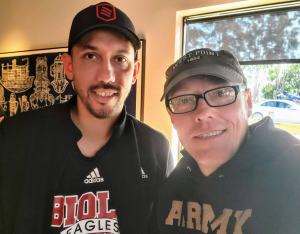
After volunteer coaching for several years at Azusa Pacific, Mike is now an assistant coach for Biola University.
Mike was recently hired as an assistant coach at Biola University, where he now has the opportunity to influence the young men on the team, not just in their basketball skills, but in their spiritual lives as well.
Mike and I were going over some new discipleship material I’ve been developing. The idea is to create a menu of lessons that anyone can use to help another person take concrete steps in their relationship with God. I’ve been going through the content with Mike to get his feedback and to see if this is the kind of material he might be able to use in his basketball ministry.
After we finished the content, Mike told me, “I wish I could translate this into Japanese.” Mike has a significant ministry to Japanese kids and teens both here and in Japan, through the many youth basketball camps he hosts.
He shared how he thought the content we were going over could be super helpful but he wouldn’t be able to share it with a Japanese student because he doesn’t know Japanese well enough to translate the content himself. It launched us into a conversation about how even here in Southern California, there is often a need for material to be available in multiple languages besides English.
The GodTools app is available at the App Store for iOS devices and the Google Play store for Android devices.
Though my content is currently in English only, our conversation made me think about the GodTools app that Cru has created for evangelistic and spiritual conversations.
I had assumed that Mike probably was familiar with the app and probably had it on his phone, but when I mentioned it, I found out that he not only doesn’t have the app, but he was only vaguely familiar with it.
I pulled up the app on my phone and showed him how he could have access to a number of different gospel presentations as well as a presentation on the ministry of the Holy Spirit….all at his fingertips.
To demonstrate, I opened up the Four Spiritual Laws presentation and began to scroll through the pages.
The GodTools app can be shared in 90 different languages and the Parallel feature allows you to toggle between multiple languages at once. You can even share your screen with the person you’re sharing with.
One of the best things about the app though is not just having a gospel tract on you at all times, but the fact that you can share the presentations in any one of 90 languages. And there’s also an option to toggle the screen between 2 languages (English and Japanese for example).
Mike was excited to learn there was an app at his disposal that would allow him to share a number of tools with his Japanese friends in their native tongue and he didn’t have to spend the money to hire a professional to translate it.
It turns out that if you want to share your faith with others, there’s an app for that. And if you need to share it in a foreign language, there’s an app for that as well!
If you haven’t downloaded the GodTools app yourself, consider adding it to the other Bible apps on your phone. Go to GodToolsapp.com for more information on the features of the app and for suggestions on how to use it in your conversations.
Please pray for Mike as he continues to establish himself as a collegiate coach and pray for us as we seek to continue helping Young Professionals multiply their lives into others.
Last month, Jen and I attended a “Weekend to Remember” Getaway Conference sponsored by FamilyLife, which is a ministry of Cru.
We’ve found this weekend conference to be a great way to reflect on and invest in our marriage. It really is one of the best resources our ministry offers.
We’ve attended this conference a few times over our 30 years of marriage but it actually had been over 15 years since our last conference, so it seemed like a good time for a refresher. And being in LaJolla was not a bad selling point!
But we had a secondary reason for attending this particular conference.
Of all the Weekend to Remember Conferences FamilyLife puts on each year, a select few are labeled as “Military Friendly”. What that means is that military couples who attend are given additional opportunities to connect and are provided with additional resources to help navigate the unique challenges that military families experience.
We were able to greet military couples when they arrived, give them a goodie bag and alert them to the lounge and a special breakout session just for them.
Families are extremely important to God. In the Old Testament, God is portrayed as a Father and the Nation of Israel are His people.
The New Testament continues the theme by showing that when people of any race or ethnicity put their faith in Jesus and His death, they are adopted into God’s family as His sons and daughters.
The family unit is an important building block culture. Study after study demonstrates that many of the problems we are experiencing in our culture – the rise in crime, exponential drug use, failing education system, etc. – find their roots in the breakdown of the traditional family. There is no doubt that healthy families result in healthier communities.
Keeping families together is hard enough these days. But military families experience additional challenges that civilian families don’t. From frequent moves to long-term deployments, military families have an added layer of complexity that must be navigated and considered.
We had tons of FREE resources available for military families to help them navigate the specific pressures that come with military service.
Our goal at this conference was simply to be available to military couples and provide resources that might help them in their current situation.
Over 25 military couples attended the conference. We were able to greet couples when they checked in and then alert them to a special lounge we had prepared for their own use during the conference.
In addition, we had a special breakout session for military couples where we were able to highlight resources and opportunities Cru Military provides for Military families beyond the weekend getaway.
It was nice for us to experience a short getaway given all that we’ve experienced this Fall in our own family. It was also nice to be able to meet some military couples who were in attendance, hear their stories and provide encouragement and resources to help them lead their families well while serving our country.
If you’ve never attended a Weekend to Remember Getaway, we highly recommend it. Even if you have done one before, it’s never a bad idea to invest in your marriage.
Reach out to us if you’re interested and we would be glad to give you more information!
Given the choice, would you rather have $1 million given to you in a lump sum or ONE penny that doubles every day for 30 days?
If you’re like me, you might be thinking, “pennies are basically worthless….I’ll take the million dollars, thank you!”
This scenario, however, illustrates the power of multiplication, or, in financial terms, compounding.
Compounding is so powerful that Albert Einstein is famously quoted as saying, “compound interest is the 8th wonder of the world. He who understands it, earns it; he who doesn’t, pays it.”
So what happens if you take the penny? At first, not much. After ten days, you’ll have just $5.12. After 14 days you still have less than $100. But on day 20 you’ll have over $5000. By day 30, due the power of multiplication, you’ll have over $5 million.
This illustration is often used to demonstrate the power of compound interest in building wealth. However, the power of multiplication also extends to ministry – specifically discipleship.
Consider the example of Jesus. From a purely numerical perspective, one might consider Jesus’s ministry to be an abject failure. After all, though he preached and ministered to the masses, at the end of his life, he had only a handful of followers, and they all scattered when he was arrested.
But Jesus’s ministry was never about building the biggest following. Instead, Jesus focused on developing a few key people who would be able to carry on his ministry and provide foundational leadership for the church after he was gone.
The principle of compounding is illustrated in this table, which shows what can happen to a penny that is doubled every day for 30 days.
By investing in and developing a handful of individuals, the early church was able to sustain the explosive growth it experienced at the outset.
In 2 Timothy 2:2, Paul tells Timothy, “And the things you have heard me say in the presence of many witnesses entrust to reliable men who will also be qualified to teach others.”
Paul is instructing Timothy to follow a principle of multiplication in his discipleship efforts. Essentially, he’s saying, “I built into you, and now I want you to take what I’ve taught you and build into others. But don’t just build into anyone. Build into those who will be able to build into others as well.”
In other words, Paul is telling Timothy to be selective into whom he builds.
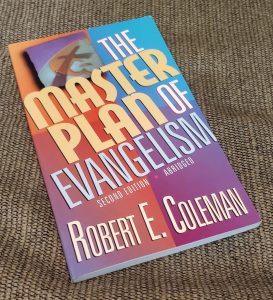
A powerful book that outlines Jesus’s ministry strategy is Robert Coleman’s Master Plan of Evangelism. The book is a short read (only about 100 pages) and the title is a bit of a misnomer because the book is not really a book about evangelism but instead, explains Jesus’s discipleship strategy, which employed the principle of multiplication.
Over the years, we’ve sought to employ this ministry principle in our own discipleship efforts. In fact, when we worked with students, we would often take our young leaders through this same book to teach them the importance of building multiplying disciples.
Robert Coleman first published The Master Plan of Evangelism in 1963. Since then, it has sold over 3.5 million copies.
Now those students are all grown up and living in various places all around the world. It’s amazing for us to see the impact they are having for Christ in the different settings in which God has placed them.
Now our focus is on Young Adults and helping them to walk with God and multiply their lives in a workplace environment. It’s a bit more complicated helping Young adults live out their faith in the big people world but the principles are the same – take the things we’ve learned and pass them along to others who will be able to do the same.
In this way, the number of people who can be a force for good and influence others for Christ will multiply over time. At first, the results might seem insignificant, just like that penny. But over time, it’s amazing how the principle of multiplication takes effect.
Please pray for us as we seek to multiply our lives into this next generation and help them become multiplying disciples for Jesus – men and women who impact others for Christ wherever God places them!
Last month was a significant milestone in our family as we saw both of our boys graduate and commission on consecutive days over Memorial Day weekend.
Jacob receives his diploma from Secretary of Defense, Lloyd Austin
It was definitely a crazy itinerary that required lots of intellectual flexibility and some strategic planning. I’m still not sure how we managed to shove all of our luggage plus 4 years of Jacob’s stuff in the back of his car while driving up and down the Northeast corridor.
After all the ceremonies were over, we all managed to make it home, where we were looking forward to about a month together as a family. Quite honestly, this was going to be the longest extended time together since early 2020 when our boys were forced to finish the school year online because of Covid.
Joshua takes his officer oath of commissioning.
A few days after we returned, Joshua started experiencing some stomach pain. At first, we thought it might have been due to something he ate that didn’t sit right but after about 2 days, it got so bad that he could hardly move. I ended up taking him to the ER where we learned that he had appendicitis and needed an emergency appendectomy.
Joshua recovered fairly quickly but was limited early on in what he was able to do physically. We’re grateful that he’s doing better. The circumstances could have been much worse in terms of the timing and location.
The car is loaded up with a loft bed we found locally in the Monterey area.
Last weekend, we all drove to Monterey to drop Jacob off and help him move into his new apartment. Most of the few days we were there were spent scavenging the area for cheap items to furnish an apartment for 3 guys who literally had nothing but the clothes on their back and a few uniforms. Their apartment is not likely to be featured on an HGTV home show but they’re in a decent situation now. It is truly a bachelor pad.
All true bachelor pads must include a free couch picked up from the side of the road. To be fair, this one was a Crate & Barrel model that was pretty clean. SCORE!
Joshua has about a week left at home before he flies to the East Coast where he’ll spend 3 months at Fort Jackson in South Carolina to be trained as a finance officer. After that, he will report to his first duty station in Vicenza, Italy.
It all sounds very exciting and adventurous but we’re learning very quickly that the life of military families is complicated and filled with hardships that non-military families don’t usually experience.
Military personnel are constantly moving and there is a lot expected of them. They don’t have the same freedoms that others do. Even taking a weekend to get away often requires approval from the chain of command.
For the last year, Jen and I have been thinking and praying about how we can help serve those in our military community. We are especially interested in ministering to those who are Young Adults, since that is our primary audience of ministry already.
Last spring, we reached out to some folks in the Military ministry of Cru to see what it might look like to collaborate and serve those who serve.
It turns out that the largest Marine base in the country is just 30 minutes away from us. Of course, I’ve been aware of Camp Pendleton for years as any time we we trek south down the 5 Freeway, we drive right by the base.
But there is not much of the base that is visible from the highway so one might not realize just how expansive it really is.
Camp Pendleton is located between San Clemente (Orange County) and Oceanside (North San Diego County) and serves about 100,000 people (Marines and their families)
A few months ago, I had the opportunity to take a tour of Camp Pendleton with a new friend of mine who does some volunteer ministry with Cru there. I was amazed at how big the base is and how many people are stationed and live there. I was told that Camp Pendleton serves about 100,000 Marines. Many are not unlike our two boys – thrust into a new situation, feeling out of place, knowing nobody while experiencing the weight of expectation that comes with military duty.
We are not changing jobs, but simply looking at ways to serve a community of young people who live near us whose vocation also happens to be “military”.
Please pray for us as we move forward to see how we might minister to Young Adult military personnel in the same way we continue to serve Young adults in the civilian community.
And please pray for our boys, Jacob and Joshua, as they transition to young officers. Pray for them to adjust well and find strong, spiritual connections that can help them navigate the challenges that await them.
Not long ago, I was on a Zoom call with Edgar (not his real name), a Young adult I’ve had interactions with for the last couple of years.
Edgar was frustrated as things weren’t going the way he had planned. Already in his late 20’s, Edgar was still trying to figure out what his ultimate career would be. One option he was contemplating was grad school, the idea being that it would potentially set him up for a specific job/career he was interested in. But he wasn’t sure he wanted to spend more money on education given how much he had spent on his undergraduate degree and how little he had to show for it.
Edgar was disillusioned. He told me that he felt like he had been sold a bill of goods. Education was supposed to be the avenue to success and happiness and yet, with mounting school loans and no solid, long-term career prospects, Edgar realized that his degree was not the golden ticket he had been promised.
Edgar is not alone. Today’s Young Adults are disillusioned about a lot of things. They are disillusioned about the economy and the “American Dream”. Especially here in California, many of the Young Adults we encounter have no expectation of ever being able to own a home.
They’re disillusioned with the world. They see inequity and injustice and they struggle to make sense of it all.
And many Young Adults are disillusioned with the Church, failing to see its relevance to modern culture.
Our culture is drifting further from its historic Christian roots and each new generation is experiencing less and less influence from traditional Christian teachings and morals.
Young Adults today have grown up in a post-Christian culture, meaning they know very little about who Jesus is or what Christianity is about. Spiritually, they are a blank slate.
Young Adults are increasingly irreligious in their views. Photo by Mitchel Lensink on Unsplash
About 1/3 of Young adults identify as atheist, agnostic or none. They’re not necessarily hostile to Christianity or religion, but they simply have no religious beliefs – it’s simply not important to them.
About 2/3 of Young adults identify as Christian but only 4% have a Christian ethic. Simply put, they consider themselves Christians but their lives don’t necessarily follow traditional Christian moral values.
This is not surprising since only about 6 out of every 10 Young adults believe the Bible is true.
Our culture has been heavily impacted and influenced by postmodernism, which is a philosophy that emphasizes a person’s personal experience as the supreme factor in determining truth. The end result is people who may identify with the Christian faith in a general sense but when it comes to moral values, their own experiences and preferences take priority over any biblical standards, which may be regarded as archaic and outdated.
How do we minister to people who are disillusioned and feeling hopeless when faced with the realities of life?
One of our strategies and priorities is to help Young Adults see that God is ultimately our only source of hope and His Word provides guidelines for successfully navigating life.
One of the ways we’re accomplishing this is by providing premarital mentoring to young Adult couples who are preparing for marriage.
With so much brokenness in families and marriage today, we’ve found Young Adults are eager to hear how biblical principles can help them change the trajectory of their relationships and family history by providing guidance and direction for fulfilling and life-long marriages.
Dave led a group of Young adults through a 9 month curriculum on Biblical Stewardship and Money Management
Another avenue for helping Young Adults see the value of God’s Word in their daily lives is by helping them adopt biblical principles for stewardship and money management. Unfortunately, our consumer and debt-oriented culture doesn’t teach Young adults how to handle money responsibly and many Young adults cite finances as a major source of stress and anxiety in their lives.
Young adults are looking for alternative solutions to experience financial security and experience prosperity. Many are surprised yet excited to learn that the Bible provides incredibly sound advice and wisdom on how to handle money and honor God through our finances and by applying biblical principles to our financial situations, we can experience financial peace.
Ministering to a generation that has become further removed from any biblical foundation is certainly challenging. But the Lord continues to move, directing us to Young Adults who are eager to know God and follow Him.
Thank you for your partnership that allows us to help Young adults begin to experience real spiritual life as they learn to apply God’s word to their lives.
A few weeks ago, in my daily Bible reading, I came across a passage in 2 Timothy 4 in which Paul mentions two different disciples (Mark & Demas) who are going in different directions spiritually. I shared my thoughts in a blog post entitled “It’s Not How you Start but How you Finish” which you can read here.
Not long after, I was faced with a real-life example of this blog post when I had the opportunity to meet my long-time friend Mark Loomis for lunch.
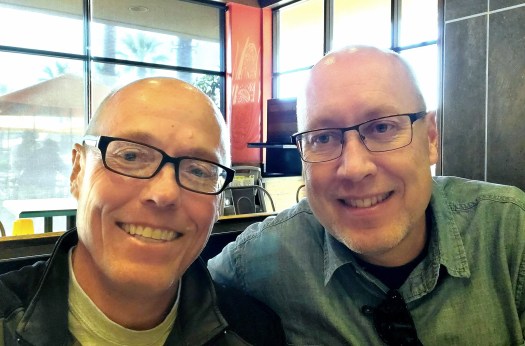
Me and my friend Mark Loomis – 35 years later!
I met Mark when I was a student at Cal Poly, Pomona sometime in the previous Millennium. I had just returned from a Cru sponsored Summer Mission Project in South Lake Tahoe where I experienced amazing community, personal and group discipleship as well as in-depth teaching and training in evangelism.
When I returned for school in the fall, I was eager to make my mark as I entered my 5th and final year.
A couple I knew from the church I had grown up in contacted me to tell me that their son Mark was going to be attending Cal Poly as a freshman. They wondered if I would meet with him and show him around. I was looking to start a small group so I saw this as a potential divine opportunity.
I remember meeting Mark outside the upper level of the student union. I introduced myself and we went inside, grabbed a table and talked for a while.
I told Mark about Cru and that I was starting a small group Bible study for guys who were new to Cru and I wanted him to be a part of it. Like me, Mark commuted to school. Also like me, he didn’t know a lot of people because there weren’t a lot of folks from his high school who ended up at Cal Poly. I had relayed to Mark how difficult it was for me my first year in college precisely because I was not connected to anyone and I didn’t know anyone. If I had to do it over, I would’ve gotten involved with Cru right away instead of waiting until the middle of my 4th year.
Mark took me up on the offer to get involved and he joined my small group, which consisted of 4 guys.
Leading that small group was a pivotal turning point in my own spiritual journey. My experience in leading these men, discipling them and training them in evangelism and discipleship skills was the seed that moved me to give my life to full-time ministry.
Though my time with Mark and the other guys was brief (only 1 year), I’ve maintained a connection with each guy over the years.
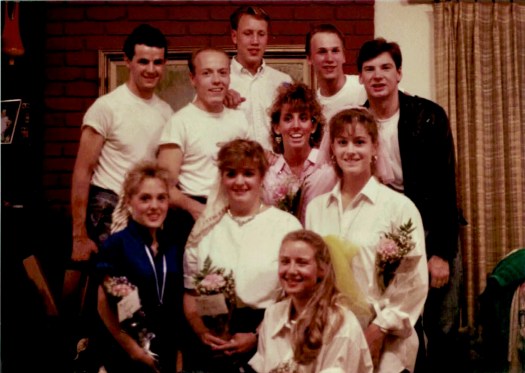
Old school photo of me and my old Cal Poly small group (ca. 1988) on a group outing with some of the Cru women. Mark is in the center and yes, we both had hair back then, though the writing was already on the wall for me!
When I sat down with Mark for lunch, I was encouraged to hear that he and his family remain steadfast in their commitment to walk with the Lord. Mark has served as an elder, small group leader and mentor, and has been committed to taking the gospel to the world through many various avenues and projects.
Yet I was also discouraged when Mark shared with me that another student we both know had recently abandoned the faith in pursuit of a worldly lifestyle.
Unfortunately, this is a story I encounter far too often. The allure of the world is real and it’s becoming increasingly more challenging to walk with Christ in our post-Christian culture.
Our church is engaged in 30 day campaign called One Life. The idea is that one life can have a tremendous impact in the life of another.
The first week in our home group, the central passage was Matthew 28:18-20, which is commonly known as the Great Commission. The primary command Jesus gives is to “Go and make disciples of all the nations.” A disciple is someone who follows Jesus, hopefully for a lifetime.
This has been our mission, to make disciples, whether with students in the past like Mark, who continues to follow Jesus, or in our current ministry with Young Adults who are trying to find their way in this crazy world in which we live.
Please pray for us to remain steadfast in our own relationships with Christ and pray that we would continue to impact Young Professionals as we seek to heed the Great Commission by making disciples!
Have you heard about this person who bought a bust of a man at a thrift store for $35 and it turned out to be a 2000 year-old ancient Roman artifact? (see bit.ly/ThriftFind)
It got me thinking about whether we have unknown valuables stashed somewhere in our house.
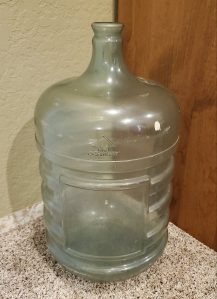
Last fall we had a slab leak at our house and part of the repair process involved replacing the carpet in our house. Tucked in the deep crevices of our closet was a large Arrowhead water bottle I’ve been throwing all my spare change in for years.
This bottle was filled about 35-40% with silver coins and probably weighed at least 75 pounds.
It was about 35% full but when I had to move it to replace the carpet, it was so heavy I thought there was no way I’d be able to move it when it gets full (not to mention at the rate I was going, it might not get filled in my life-time).
The smart person would have taken all the coins to one of those coin counting machines you see at your local grocery store. But I’m not the smart person; I’m the cheap person, unwilling to forfeit 20% of the total value to someone else.
So I got a wad of coin wrappers from my bank and proceeded to count and wrap all the coins myself (there were no pennies; only silver).
As I counted and wrapped, I paid attention to the dates on the coins. I hoped I might find an old coin or two or maybe even some real silver coins hidden in the pile. Perhaps a surprise find that might make me the subject of a sensational headline: “Mission Viejo Man Finds Rare Coin in Closet – Currently Shopping for a Tesla or Range Rover.”
It turned out that most of the coins were fairly recent, less than 30 years old. But I did find a number of nickels and dimes from the 1960’s and 70’s.
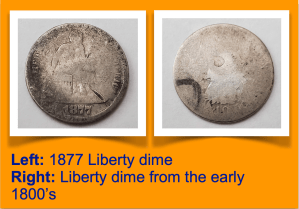
While counting dimes I found two coins that at first glance looked like metal slugs you might find on the ground at a construction site. I came very close to throwing them away.
However, upon further examination, I realized these two coins weren’t slugs at all, but dimes that were older than the typical Roosevelt dimes that have been in circulation since the 1940’s.
One of the dimes is an 1877 Liberty dime and the other coin is so worn that it’s hard to determine the exact date but I’m reasonably certain it’s a Liberty dime from the early 1800’s.
Before you cry “Eureka”, know that I learned that these coins are much too worn to have any substantial value, but they are still interesting finds, nonetheless. It simply confirms to me that you never know what hidden treasures are buried within the landscape of our stuff.
Part of our ministry to Young Professionals is helping them to find their unique place of ministry in God’s Kingdom. Often this involves helping them unearth the hidden treasures of unique talents with which God has blessed them.
Grace and Jen pose together in front of two of Grace’s paintings on display at an AAPI Art Exhibit. Click the photo to go to Grace’s Etsy store.
I think about Grace, a Young Professional Jen has been coaching and mentoring. Grace studied to be an engineer and worked as an Environmental Engineer for several years before getting laid off.
It turns out that Grace is incredibly creative and artistic and she now had the space to explore these talents.
As part of Asian American Pacific Islander Heritage Month, Jen and I attended an Art Exhibit at Saddleback Church, highlighting artists of Asian American/Pacific Islander descent. Grace was one of the highlighted artists.
Imagine the power and freedom when you discover your passions and learn to express your talents in a way that glorifies God and brings joy and blessing to others!
Thank you for your partnership that enables us to minister to Young Professionals, helping them to unleash their incredibly unique talents in new and creative ways.
Two weeks ago, I attended the Q Virtual conference (qideas.org). Q is an organization started a few years ago by Gabe Lyons that seeks to “equip strategically positioned Christian influencers to renew the way they believe, think and act in regard to culture.”
Jen and I attended a live Q conference in Nashville 6 years ago and it was there that Jen first experienced issues that initially led to an overnight stay in the local ER, followed by an eventual diagnosis of vasculitis, a rare auto-immune disorder. We missed most of that conference and have not had an opportunity to return, until this year.
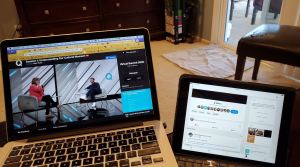
This was my view for two days attending the Q Virtual Conference
The speaker lineup this year was packed with a range of cultural and theological leaders, including Tim Keller, Andy Crouch and Francis Chan.
However, one presenter, Sissy Goff, a mental health professional, spoke about “The Psychological Impact of Social Distancing”.
One of the many salient points Goff made regarding our emotional well-being was that in this time of sheltering in place and social distancing, we need to do one brave thing each day. She then asked, “what is one thing you’ve done in COVID that has required bravery?”
For me, I’ve been trying to be more intentional about slowing down, reflecting, and noticing things around me and capturing those moments with my camera. I’ve taken some steps to stretch myself and grow in my photography skills, including taking an online course and submitting some of my photos on unsplash.com. What follows are a number of images that give a glimpse into what we’ve been experiencing these past 7 weeks of the Covid-19 crisis…
When the shutdown first occurred, I was surprised to show up at our local Wal-mart just after 6:00 in the morning, only to be greeted by a long line of people ahead of me, waiting to get in.
The first time I went shopping during the Covid-19 crisis, I thought I would outsmart everyone by getting up early and getting in and out before the rush. Turns out, everyone else had the same idea and I was greeted to a long line just to get into the store.
In addition to long lines, I found the store to be quite barren of products. Most of the fruits and vegetable bins were completely empty as well as pretty much all dried goods (beans, pasta, rice, etc.) as well as meats, bread and dairy products. I found myself grabbing the most random items as substitutes for the items we really needed. In the end, I had to go to three stores just to get some semblance of groceries for the week.
Training never stops for those in the military!
Did I mention that our boys are home? They are still training and they are still eating…A LOT. That has magnified the grocery issues. After the Wal-Mart incident, Jen decided to start ordering stuff online, but that was hit and miss. Then she started using a grocery service, which worked well for about a week, maybe two, at which point, it became harder and harder to find time slots to get groceries delivered.
We finally got a grocery slot one week but we were told that groceries could be delivered any day between Tuesday and Sunday (which was Easter). No groceries came on Tuesday, Wednesday, Thursday, Friday or Saturday. Finally, on Easter Sunday we were expecting our food to be delivered and boy did we need it. We had gone nearly 2 weeks without shopping.
Have I mentioned that my boys are home during this crisis? Have I mentioned how much they eat?
About mid-day, we got a message from the shopper saying that the store we had ordered food from was closed. They canceled our order and we were left with nothing substantial in the house for Easter dinner. It felt a lot like one of those cooking shows where they give each chef 6 random food items and ask them to make a gourmet meal out of it. Hmmm…what can we make with a can of sardines, a box of gluten-free spaghetti, a lemon from the tree outside, two eggs, a box of granola and a jar of salsa? GO!
This dirt track has been the only place locally that works for a timed workout. Hopefully, high school tracks will open soon!
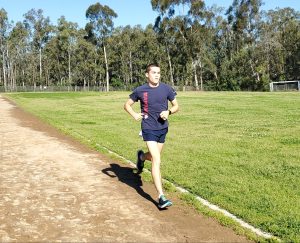
Speaking of training, Jacob is a member of the Naval Academy Cross Country and Track teams. Though the season has been canceled, the athletes are all expected to keep working out in order to maintain their conditioning and long-term training cycle. There really is no break for distance runners.
It has been increasingly harder for Jacob to find places to do his workouts. He needs a track about once or twice a week in order to time his workouts. Other days are casual runs anywhere. Most local high schools are shut down with security keeping people from using the facilities. We were fortunate to find this dirt track locally that is not too crowded and has enabled Jacob to continue his training.
Local park playground structures have been closed off with this caution tape, even though parks in general are open
Initially we thought the lockdown might last just a few weeks or maybe a month. Our boys’ return to their academies was delayed by two weeks but then became indefinite.
As things progressed, businesses began to close and park playgrounds were shut down. We were told masks didn’t work and then a few weeks later, we were told we should wear masks. At first, we were told that social distancing was the primary step to curb the virus, but then the lockdown came and people whose jobs were not considered “essential” were urged to stay at home.
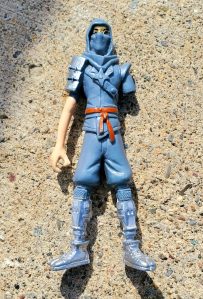
One day, while outside getting exercise, I found this sign laying on the ground in our neighborhood. Im not sure if it fell over on its own or if it was removed by someone protesting the lockdown.One day while walking the dog, I spotted this small action figure lying on the sidewalk. It turns out that during Covid-19, even Action figures are wearing masks!
One of the things we have tried to do regularly to maintain some kind of routine is walk the dog. Most every day, Jen and I will try to get out in the afternoon to take the dog out. We pretty much walk the same route every day. One day while walking the dog, I spotted this small action figure lying on the sidewalk. It turns out that during Covid-19, even action figures are wearing masks!
It’s been interesting to slow down and try to notice things that I never noticed before. It’s amazing how much beauty and creativity is around us that we don’t pay attention to. Now that it’s spring time, we’re starting to see flowers blooming and plants coming alive.
As I’ve ventured out daily with the dog and my camera, I’m trying to notice the things around me that demonstrate life and bring hope during this challenging season.
Flowers are in bloom, the air is clear and the mountains are majestic.
A few weeks ago, in order to avoid an oncoming dog walker and maintain our distance, we darted to the other side of the street. I was walking down the same street but on the other side, and this gave me a slightly different perspective. Had I not gone to the other side, I would have missed the sidewalk chalk message – “Always Stop and smell the Flowers.” Our dog Scout decided to take the advice!
The chalk message says “Always Stop and smell the Flowers.” Our dog is so smart, he complied with the message!
Attending church activities has been different. We are still able to attend our home group and men’s and women’s groups but everything is online now through Zoom and other video platforms.
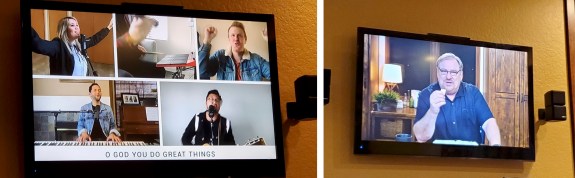
All small groups and the weekly worship service are all meeting online for the forseeable future
We’re able to worship as a family by watching the sermon online every Saturday beginning at 4:00 p.m. at Saddleback.org. The worship team records all of their parts separately and the worship is edited and spliced together to give the feeling of a full live worship set. It’s pretty amazing what technology is enabling us to do. Pastor Rick Warren then gives his sermon online as well.
Signs like this, commemorating major milestones, can be found throughout our neighborhood.
There is so much loss during this crisis. I think about all the high school seniors who have missed out on prom as well as all their other senior traditions, including commencement.
College seniors are also missing one of the biggest days in their lives. We know of weddings that have been postponed or canceled, vacation trips that have been delayed or lost altogether.
In addition, I think about all of the spring sports that have been canceled and all of the athletes who had no idea that their seasons were going to be cut short.
What have you lost as a result of this crisis? What are you grieving?
I think about my friends Jim and Charlotte Van Steenbergen, whom I’ve known for many years. Jim has been in declining health in recent months and I just learned that he passed away peacefully on Cinco de Mayo. Normally, I would have loved to visit and honor my friend in his last days. Unfortunately, that was not possible in this current environment. I grieve that lost opportunity to say goodbye and to thank him for the ministry he’s had in my life over the years.
What have you learned from this crisis? What have you found?
Being forced to slow down has its advantages. All those things you wished for in the past that you never had time for are suddenly available. And yet, I’ve learned that I am not always taking advantage of the extra time to do the things I’ve said I would do IF there was more time. I’ve learned that my heart is not always intentional and honest about my true desires and motivations.
While cleaning out our office closet, I found this box that was the container for my Samsung watch.
I’ve learned to see more of the hidden treasures in life.
Recently, Jen undertook the long desired task of cleaning out the office. There’s a lot of stuff that we don’t use but is taking up space. Interestingly, as we’ve cleared out cabinets and purged the overstocked closet, we’ve actually “found” things we didn’t remember we had.
One of the things I “found” was the box to my Samsung smartwatch that I bought a few years ago. About 6 months ago, the band on the watch broke and I had to buy a new one online. I was planning to throw the box away, thinking I really didn’t need it anymore. But I decided to open it to see if there was anything inside. Low and behold, there was a spare watch band. I had the spare watch band all along but I didn’t realize it was there, so I needlessly bought a new band from an online seller.
I had completely forgotten that when I purchased my watch it came with a replacement band. It was a hidden treasure in my closet
We found many more of these kinds of hidden “treasures” while cleaning out our office. It’s a reminder to me that there are hidden treasures everywhere around us, evidence of God’s creation, power and beauty. I just need to slow down and look around to notice.
Like many of you, we are still able to work from our home. We have been working from home for a number of years so the shift wasn’t too radical for us. However, we were used to meeting people at various places throughout Orange County and beyond. In addition, we have conferences and other events we would typically travel to. All of those things have been either canceled or suspended and the bulk of what we are doing now is finding ways to minister to people online.
Dave connecting with the UCLA Cru director and two of their seniors to talk about the benefits of coaching. Dave was able to coach each senior in a short 15 minute preview session.
We continue to coach folks but we do it virtually instead of in person. We continue to lead groups and host groups online. Training and development conferences we are a part of have been converted to webinars and Zoom discussion groups. We’ve pivoted in a number of ways already but we’re actively seeking new ways to minister to people online in this current environment.
We are grateful for you, our friends, family and partners who have supported and encouraged us to press on, especially as Jen has been immuno-compromised due to a vasculitis flare she’s been experiencing.
We would greatly appreciate your continued prayers for Jen and her health and for us as we continue to navigate life and ministry in this new climate of social distancing, working from home and sheltering in place.
Just as I’ve been more intentional about seeking to recognize the things around us that may easily go unnoticed, please pray that we would “recognize” the ministry opportunities God is placing before us.




 So what happens if you take the penny? At first, not much. After ten days, you’ll have just $5.12. After 14 days you still have less than $100. But on day 20 you’ll have over $5000. By day 30, due the power of multiplication, you’ll have over $5 million.




 However, upon further examination, I realized these two coins weren’t slugs at all, but dimes that were older than the typical Roosevelt dimes that have been in circulation since the 1940’s.

 In addition to long lines, I found the store to be quite barren of products. Most of the fruits and vegetable bins were completely empty as well as pretty much all dried goods (beans, pasta, rice, etc.) as well as meats, bread and dairy products. I found myself grabbing the most random items as substitutes for the items we really needed. In the end, I had to go to three stores just to get some semblance of groceries for the week.