
Isaiah 10
5“Destruction is certain for Assyria, the whip of my anger. Its military power is a club in my hand. 6Assyria will enslave my people, who are a godless nation. It will plunder them, trampling them like dirt beneath its feet. 7But the king of Assyria will not know that it is I who sent him. He will merely think he is attacking my people as part of his plan to conquer the world. 8He will say, ‘Each of my princes will soon be a king, ruling a conquered land. 9We will destroy Calno just as we did Carchemish. Hamath will fall before us as Arpad did. And we will destroy Samaria just as we did Damascus. 10Yes, we have finished off many a kingdom whose gods were far greater than those in Jerusalem and Samaria. 11So when we have defeated Samaria and her gods, we will destroy Jerusalem with hers.’”
12After the Lord has used the king of Assyria to accomplish his purposes in Jerusalem, he will turn against the king of Assyria and punish him—for he is proud and arrogant. 13He boasts, “By my own power and wisdom I have won these wars. By my own strength I have captured many lands, destroyed their kings, and carried off their treasures. 14By my greatness I have robbed their nests of riches and gathered up kingdoms as a farmer gathers eggs. No one can even flap a wing against me or utter a peep of protest.”
15Can the ax boast greater power than the person who uses it? Is the saw greater than the person who saws? Can a whip strike unless a hand is moving it? Can a cane walk by itself?
16Listen now, king of Assyria! Because of all your evil boasting, the Lord, the LORD Almighty, will send a plague among your proud troops, and a flaming fire will ignite your glory. 17The LORD, the Light of Israel and the Holy One, will be a flaming fire that will destroy them. In a single night he will burn those thorns and briers, the Assyrians. 18Assyria’s vast army is like a glorious forest, yet it will be destroyed. The LORD will completely destroy Assyria’s warriors, and they will waste away like sick people in a plague. 19Only a few from all that mighty army will survive—so few that a child could count them! (Isaiah 10:5-19, NLT)
The Daily DAVEotional
Assyria is an ancient nation that at one time was THE biggest, baddest empire around.
As is typical of big, bad empires, they conquered other nations, took captives, plundered and slaughtered people and generally enforced their will wherever they went.
In this chapter of Isaiah, God describes the Assyrians as “the whip of my anger.” Its mighty military power is described by God as “a club in my hand.”
God explains that He is going to use the Assyrians as His tool to punish the Israelites, His people who have continually forsaken Him, despite many warnings about the consequences of abandoning the Lord for other gods.
After the Lord has used the Assyrians to accomplish His purposes, He explains that He will then punish the Assyrians.
Why would He punish the Assyrians if they were simply God’s tool to accomplish His plan of destruction against Israel?
Click here to see a A Comprehensive List of Blog Posts Based on Bible Passage Reference
Verses 12-15 give the answer. The reason Assyria will be punished is because of pride and arrogance. The Assyrian king won’t acknowledge that He is subordinate to God and that the Lord was simply using Him as His vessel of discipline. Instead, the Assyrian king will embrace the belief that everything he’s accomplished is because of his superior nature over those whom he’s subjugated.
The king of Assyria will essentially make himself out to be a god as he mentions all the gods he has conquered from the various lands he now controls.
God reminds the listener that Assyria is no different than an ax, a saw or a cane. They are all just instruments that are completely useless unless there is an active agent to employ the tool for its purpose.
Assyria, at one time, WAS the big bad empire bullying all the surrounding nations of the Ancient Near East. WAS! Somewhere between 612 and 605 BC, Assyria was destroyed. They were overtaken by the next big, bad empire – the Babylonians, but not before God fulfilled His promise of using the Assyrians to discipline and punish His people who had forsaken Him.
Did you enjoy this post? I’d love to hear your thoughts! Feel free to like, leave a comment below, and share it with your friends or on social media if you found it helpful or interesting. Your support keeps the conversation going!
Reflection
Under what circumstances are you tempted to take credit for actions and outcomes that are ultimately orchestrated by God?
The Assyrians were supplanted by the Babylonians, who were supplanted by the Persians, who were supplanted by the Greeks, who were supplanted by the Romans, etc. Why do you suppose empires come and go? What conditions do you think would be necessary for an empire to last?
What do you think is the difference between pride/arrogance/boasting and confidence and self-assurance? How can you ensure that you’re confident in yourself without being boastful or proud?
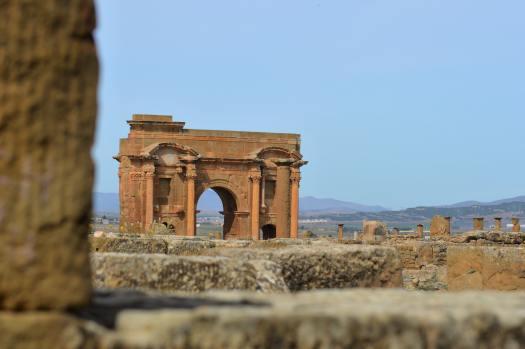
Photo by Jamil Kabar on Unsplash

 The Lowedown