It’s Good Friday….what’s so good about it?

Christians around the world are celebrating Good Friday. But what’s so good about Good Friday?

I’ve written about this before, and you can read about it in my post “What Makes Good Friday “Good”?”

The truth is that while Easter Sunday is one of the most celebrated holidays in the Christian faith, what happened on Good Friday cannot be overstated. Understanding the significance of what Christ accomplished via His death on the cross might be the most important theological concept for Christians to understand.

Essentially, Jesus’s death pays for our sins (see my post mentioned above), the veil in the temple is torn (see my post “The Significance of the Torn Veil”) and access to God is finally granted (see my post “Access Granted!”)

Good Friday is a solemn day to reflect on the sacrifice Jesus made on our behalf. It’s important to recognize the brutal suffering Jesus endured as He was beaten, tortured and ultimately crucified, all on our behalf. What Jesus endured was on our behalf. It should be me on that cross, not Jesus.

Scripture is clear that the effects of Jesus’ death were immediate. Hence, we don’t have to wait until Sunday to celebrate what Jesus secured for all believers on Friday – namely, that sin has been fully atoned, we are completely forgiven and we have free, unobstructed and direct access to God Himself!

Reflection

Why do you think Good Friday is referred to as “Good Friday”?

What do you think Jesus accomplished via His death on the cross?

How do you typically observe Good Friday? What traditions do you practice that you’ve found to be helpful for reflecting on the importance of this day?

If you read the 3 different articles linked in this post, what did you find most helpful or challenging to your understanding?


Photo by Wim van ‘t Einde on Unsplash

The Trilemma of Jesus

Matthew 26

57Then the people who had arrested Jesus led him to the home of Caiaphas, the high priest, where the teachers of religious law and other leaders had gathered. 58Meanwhile, Peter was following far behind and eventually came to the courtyard of the high priest’s house. He went in, sat with the guards, and waited to see what was going to happen to Jesus.

59Inside, the leading priests and the entire high council were trying to find witnesses who would lie about Jesus, so they could put him to death. 60But even though they found many who agreed to give false witness, there was no testimony they could use. Finally, two men were found 61who declared, “This man said, ‘I am able to destroy the Temple of God and rebuild it in three days.’”

62Then the high priest stood up and said to Jesus, “Well, aren’t you going to answer these charges? What do you have to say for yourself?” 63But Jesus remained silent. Then the high priest said to him, “I demand in the name of the living God that you tell us whether you are the Messiah, the Son of God.”

64Jesus replied, “Yes, it is as you say. And in the future you will see me, the Son of Man, sitting at God’s right hand in the place of power and coming back on the clouds of heaven.”

65Then the high priest tore his clothing to show his horror, shouting, “Blasphemy! Why do we need other witnesses? You have all heard his blasphemy. 66What is your verdict?”

“Guilty!” they shouted. “He must die!”

67Then they spit in Jesus’ face and hit him with their fists. And some slapped him, 68saying, “Prophesy to us, you Messiah! Who hit you that time?” (Matthew 26:57-68, NLT)


The Daily DAVEotional

Perhaps the greatest question you can ask and answer is the question, “Who is Jesus?”

Jesus asked this question of His disciples in an encounter that is recorded in Matthew 16:13-20 and also in Mark 8:27-30. I previously wrote about that encounter in a blog post entitled “The Most Important Question to Ask Yourself”.

One of the hallmark doctrines of Christianity is the divinity of Jesus. Christians believe that Jesus is God.

Those who deny the divinity of Jesus, such as Muslims, Jehovah’s Witnesses and others, often will say that divinity was something Jesus’ followers attributed to Him but that He Himself did not claim. To them, Jesus was simply a prophet, a good teacher or something else, but He certainly was not God.

The problem is that there are a number of passages where Jesus clearly identifies Himself as God. One such passage is John 10:30, where Jesus claimed to be “one with the Father”. Jehovah’s Witnesses have an explanation for that passage that I don’t think fits the facts. I wrote about that passage in a blog post “Evidence that Jesus is God”.

The account here in Matthew 26 of Jesus’ trial before the Sanhedrin is another passage that gives strong evidence that Jesus claimed deity for Himself.

How exactly does this passage demonstrate that Jesus claimed divinity for Himself?

In this section, Matthew records the trial of Jesus. After His betrayal and arrest, Jesus appears before the Sanhedrin, which is the Jewish religious authority.

A cursory reading of the gospels makes it clear that the religious rulers were out to get Jesus. They sent experts to try to entrap him, looking for any possible offense that they could use against him.

It’s interesting to see Jesus’ response to the high priest, who demanded that Jesus respond to his question about whether Jesus thought of Himself as the Messiah, the Son of God.

As soon as the high priest makes this demand, Jesus responds in the affirmative. “Yes, it is as you say.”

But Jesus doesn’t stop there. He continues,

And in the future you will see me, the Son of Man, sitting at God’s right hand in the place of power and coming back on the clouds of heaven.

It turns out that Jesus is referencing Daniel 7:13, in which the Messiah receives authority from the Ancient of Days to reign as the supreme king over all the earth.

The high priest had all the evidence he needed. He, along with the other religious leaders were very familiar with the passage Jesus was referencing. Here was Jesus, clearly associating himself as God. The high priest and the ruling religious leaders did not accept that Jesus was divine so they charged Him with blasphemy and sentenced Him to death.

The question that we have to wrestle with is the same one that C.S. Lewis postulated, and that is, who do you think Jesus is?

Regarding Jesus and his identity, Lewis formulated what has come to be known as the trilemma – Lord, Liar or Lunatic.

The basic premise is that when confronted with the person of Jesus, we have only these three possibilities. Either Jesus was a liar,  He was a crazy person (a lunatic) or He is Lord.

“A man who was merely a man and said the sort of things Jesus said would not be a great moral teacher. He would either be a lunatic — on the level with the man who says he is a poached egg — or else he would be the Devil of Hell. You must make your choice. Either this man was, and is, the Son of God, or else a madman or something worse. — C.S. LEWIS, “Mere Christianity”

There can be no doubt that Jesus made claims of deity for himself. This passage is one of the clearest examples and it is the reason why the religious leaders crucified Him. If he was not making direct claims of deity, there would have been no reason to sentence Him.

Since it’s indisputable that Jesus made claims of deity for Himself, we must each decide how to interpret those claims. Was Jesus lying? If you believe He was lying then you cannot call Him a good teacher. Lewis states that it would be more appropriate to call Him the devil, for He convinced people to follow Him, entrusting their eternal destiny to Him and his teachings. That would be the most devious thing one could imagine….to convince others to follow you because you had the power to save them when in reality, you knew that to be false.

The second option is that Jesus was crazy. Lewis says that this level of craziness would be similar to a person who believed himself to be a poached egg.

Does Jesus see Himself as a poached egg? Does He exhibit any of the signs we normally associate with mental instability or cognitive impairment?

Hardly.

Actually, Jesus comes across as the most rational, logical and mentally coherent person who ever lived.

The only other possibility, then, is that Jesus is Lord.

How about you? Who do you think Jesus is?

Reflection

What has been. your understanding of the nature of Jesus before reading this passage and devotional post? How have you characterized the nature of Jesus to others in the past?

How would you respond to someone who did not believe that Jesus was divine? What arguments and passages would you use to demonstrate His divinity?

Explain the argument that if Jesus was lying about His divinity, then He cannot be a “good teacher.”

If Jesus is not God, what reasons would a person have for following Him and trusting Him as Savior?

What other passages, besides this one and the John 10:30 passage mentioned, give evidence that Jesus claimed to be God in human flesh?


Photo by Bree Anne on Unsplash

The Power of Multiplication

Given the choice, would you rather have $1 million given to you in a lump sum or ONE penny that doubles every day for 30 days?

If you’re like me, you might be thinking, “pennies are basically worthless….I’ll take the million dollars, thank you!”

This scenario, however, illustrates the power of multiplication, or, in financial terms, compounding. 

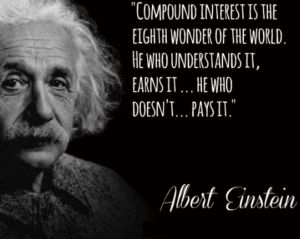
Compounding is so powerful that Albert Einstein is famously quoted as saying, “compound interest is the 8th wonder of the world. He who understands it, earns it; he who doesn’t, pays it.”

So what happens if you take the penny? At first, not much. After ten days, you’ll have just $5.12. After 14 days you still have less than $100. But on day 20 you’ll have over $5000. By day 30, due the power of multiplication, you’ll have over $5 million.

This illustration is often used to demonstrate the power of compound interest in building wealth. However, the power of multiplication also extends to ministry – specifically discipleship. 

Consider the example of Jesus. From a purely numerical perspective, one might consider Jesus’s ministry to be an abject failure. After all, though he preached and ministered to the masses, at the end of his life, he had only a handful of followers, and they all scattered when he was arrested.

But Jesus’s ministry was never about building the biggest following. Instead, Jesus focused on developing a few key people who would be able to carry on his ministry and provide foundational leadership for the church after he was gone.

The principle of compounding is illustrated in this table, which shows what can happen to a penny that is doubled every day for 30 days.

By investing in and developing a handful of individuals, the early church was able to sustain the explosive growth it experienced at the outset.

In 2 Timothy 2:2, Paul tells Timothy, “And the things you have heard me say in the presence of many witnesses entrust to reliable men who will also be qualified to teach others.”

Paul is instructing Timothy to follow a principle of multiplication in his discipleship efforts. Essentially, he’s saying, “I built into you, and now I want you to take what I’ve taught you and build into others. But don’t just build into anyone. Build into those who will be able to build into others as well.”

In other words, Paul is telling Timothy to be selective into whom he builds.

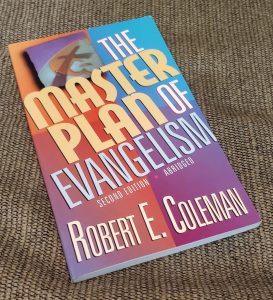
A powerful book that outlines Jesus’s ministry strategy is Robert Coleman’s Master Plan of Evangelism. The book is a short read (only about 100 pages) and the title is a bit of a misnomer because the book is not really a book about evangelism but instead, explains Jesus’s discipleship strategy, which employed the principle of multiplication.

Over the years, we’ve sought to employ this ministry principle in our own discipleship efforts. In fact, when we worked with students, we would often take our young leaders through this same book to teach them the importance of building multiplying disciples.

Robert Coleman first published The Master Plan of Evangelism in 1963. Since then, it has sold over 3.5 million copies.

Now those students are all grown up and living in various places all around the world. It’s amazing for us to see the impact they are having for Christ in the different settings in which God has placed them.

Now our focus is on Young Adults and helping them to walk with God and multiply their lives in a workplace environment. It’s a bit more complicated helping Young adults live out their faith in the big people world but the principles are the same – take the things we’ve learned and pass them along to others who will be able to do the same.

In this way, the number of people who can be a force for good and influence others for Christ will multiply over time. At first, the results might seem insignificant, just like that penny. But over time, it’s amazing how the principle of multiplication takes effect.

Please pray for us as we seek to multiply our lives into this next generation and help them become multiplying disciples for Jesus – men and women who impact others for Christ wherever God places them!

Perfect Vision But Totally Blind

John 9

1As Jesus was walking along, he saw a man who had been blind from birth. 2“Teacher,” his disciples asked him, “why was this man born blind? Was it a result of his own sins or those of his parents?”

3“It was not because of his sins or his parents’ sins,” Jesus answered. “He was born blind so the power of God could be seen in him. 4All of us must quickly carry out the tasks assigned us by the one who sent me, because there is little time left before the night falls and all work comes to an end. 5But while I am still here in the world, I am the light of the world.”

6Then he spit on the ground, made mud with the saliva, and smoothed the mud over the blind man’s eyes. 7He told him, “Go and wash in the pool of Siloam” (Siloam means Sent). So the man went and washed, and came back seeing!

8His neighbors and others who knew him as a blind beggar asked each other, “Is this the same man—that beggar?” 9Some said he was, and others said, “No, but he surely looks like him!”

And the beggar kept saying, “I am the same man!”

10They asked, “Who healed you? What happened?”

11He told them, “The man they call Jesus made mud and smoothed it over my eyes and told me, ‘Go to the pool of Siloam and wash off the mud.’ I went and washed, and now I can see!”

12“Where is he now?” they asked.

“I don’t know,” he replied.

13Then they took the man to the Pharisees. 14Now as it happened, Jesus had healed the man on a Sabbath. 15The Pharisees asked the man all about it. So he told them, “He smoothed the mud over my eyes, and when it was washed away, I could see!”

16Some of the Pharisees said, “This man Jesus is not from God, for he is working on the Sabbath.” Others said, “But how could an ordinary sinner do such miraculous signs?” So there was a deep division of opinion among them.

17Then the Pharisees once again questioned the man who had been blind and demanded, “This man who opened your eyes—who do you say he is?”

The man replied, “I think he must be a prophet.”

18The Jewish leaders wouldn’t believe he had been blind, so they called in his parents. 19They asked them, “Is this your son? Was he born blind? If so, how can he see?”

20His parents replied, “We know this is our son and that he was born blind, 21but we don’t know how he can see or who healed him. He is old enough to speak for himself. Ask him.” 22They said this because they were afraid of the Jewish leaders, who had announced that anyone saying Jesus was the Messiah would be expelled from the synagogue. 23That’s why they said, “He is old enough to speak for himself. Ask him.”

24So for the second time they called in the man who had been blind and told him, “Give glory to God by telling the truth, because we know Jesus is a sinner.”

25“I don’t know whether he is a sinner,” the man replied. “But I know this: I was blind, and now I can see!”

26“But what did he do?” they asked. “How did he heal you?”

27“Look!” the man exclaimed. “I told you once. Didn’t you listen? Why do you want to hear it again? Do you want to become his disciples, too?”

28Then they cursed him and said, “You are his disciple, but we are disciples of Moses. 29We know God spoke to Moses, but as for this man, we don’t know anything about him.”

30“Why, that’s very strange!” the man replied. “He healed my eyes, and yet you don’t know anything about him! 31Well, God doesn’t listen to sinners, but he is ready to hear those who worship him and do his will. 32Never since the world began has anyone been able to open the eyes of someone born blind. 33If this man were not from God, he couldn’t do it.”

34“You were born in sin!” they answered. “Are you trying to teach us?” And they threw him out of the synagogue.

35When Jesus heard what had happened, he found the man and said, “Do you believe in the Son of Man?”

36The man answered, “Who is he, sir, because I would like to.”

37“You have seen him,” Jesus said, “and he is speaking to you!”

38“Yes, Lord,” the man said, “I believe!” And he worshiped Jesus.

39Then Jesus told him, “I have come to judge the world. I have come to give sight to the blind and to show those who think they see that they are blind.”

40The Pharisees who were standing there heard him and asked, “Are you saying we are blind?”

41“If you were blind, you wouldn’t be guilty,” Jesus replied. “But you remain guilty because you claim you can see. (John 9:1-41, NLT)


The Daily DAVEotional

Recently, while driving around town, I was listening to Mason & Ireland, a popular sports talk radio show in Los Angeles.  John Ireland, one of the hosts of the show who also is the radio play-by-play announcer for the Lakers, floated a story that’s going around that says that Stevie Wonder, the grammy award winning musician who has been blind since birth, can actually see. As evidence, he shared incidences from a number of high profile celebrities who all have their own story to reinforce the idea, including this story Shaq told on Inside the NBA:

Now I’m not sure whether Stevie Wonder is blind or not – I just know he makes great music. But in this chapter of John, Jesus encounters a man who, like Stevie Wonder, was blind since birth. What happens next is a case study in three different attitudes and responses to the person of Jesus.

The Pharisees

Jesus heals the man and the Pharisees are incensed because Jesus healed him on the Sabbath.

The Pharisees question the man about the fact that he can now see. Actually, interrogation is probably more accurate.

It’s obvious from the story that the Pharisees have a preconceived idea concerning Jesus that they’re absolutely committed to maintaining. No evidence is going to change their view. Even after questioning the man and hearing from a host of witnesses that the man was blind but has been healed by Jesus, verse 18 says that they wouldn’t believe that the man had been blind, so they brought in the man’s parents.

After the man’s parents confirm that their son was blind and can now see, the Pharisees go back and question the man a second time. They are so committed to their negative view of Jesus that they urge the man to change his story because they “know Jesus is a sinner.”

The Pharisees were unable to discredit the miracle itself so they resorted to a character attack on the person of Jesus. This is a classic form of misdirection that people often resort to when arguing a point. If they cannot dispute the facts of the situation (which would damage their committed belief and position), then they switch to an ad hominem attack, which is an attack on the character of the person.

Unfortunately, their argument doesn’t go over the way they expected as they get some pushback from the man who was formerly blind. When he challenges their assertion that Jesus must be a sinner, the Pharisees resort to name-calling (“you were born in sin. Are you trying to teach us?”). When that doesn’t work, they power-up by using their authority to expel the man from the synagogue.

Jesus issues a stinging rebuke to the Pharisees by saying that they are blind. The problem with the Pharisees is that they saw themselves as people who have 20/20 spiritual vision when in reality, they were spiritually blind. Their exchange with the now healed blind man showed the great lengths they would go to in order to defend their preconceived position that Jesus was NOT the Messiah. Jesus said that they remain guilty because they claimed they had spiritual insight when in reality they were blind.

The response of the Pharisees mirrors many modern day skeptics who, regardless of what evidence is presented to them about Jesus and no matter how much their arguments are shown to be fallacious and illogical, remain committed to their view that Jesus is not the Messiah.

The Parents

Often overlooked in this story are the parents. The parents knew their son was blind and they also knew that their son had been healed. They knew that Jesus was the one who had healed him. But their position on the person of Jesus, when questioned by the Pharisees, was one of deflection and indifference. Essentially, they tell the Pharisees that they don’t know who healed their son and they tell the Pharisees to talk to their son directly.

The issue with the parents was one of fear and comfort. They didn’t want to get involved in the discussion because they were afraid of being expelled from the Synagogue.

I think the parents response mirrors the typical person in our society who may know and understand the truth about Jesus but chooses inaction in order to maintain their current lifestyle choices and preferences.

The Blind Man

The third response is that of the blind man, who is an example of an honest progression that can happen for those who are open and seeking the truth.

Notice that when Jesus encounters the blind man, he puts some mud/spittle mixture on his eyes and tells him to go wash in the pool of Siloam. The man does what he is asked without questioning. There is a willingness to obey.

Later, after he has been healed, the blind man is asked about the identity of his healer. He doesn’t really know. He’s never actually seen Jesus, but he suspects that Jesus must be a prophet (verse 17).

When the Pharisees try to get him to change his story and try to gaslight him on the reality of what he had just experienced, the man sticks to the facts and doesn’t back down. These facts lead him to the conclusion that Jesus must be from God or else he wouldn’t have been able to do what he did – he wouldn’t have been able to miraculously heal him.

Even when threatened with expulsion from the synagogue, the blind man remains steadfast in his assertion: “But I know this: I was blind, and now I can see.”

Jesus hears what happened and finds the man and asks the man if he wants to believe in the Son of Man. The man responds “Yes” and the text says “he worshiped Jesus.”

The blind man went from not knowing Jesus to having an encounter where Jesus opened his eyes physically, leading the man to gain a greater understanding and awareness of who Jesus was. He must be a prophet. He must be sent from God. He is God.

The Pharisees had perfect physical vision but remained totally blind spiritually.

The blind man was totally blind physically but had enough spiritual vision to be able to see Jesus for who he really is – God.

The parents could see physically but ignored the spiritual cues that would have led them to experience Jesus in the way their son had.

The truth is that we are all blind spiritually. Jesus said that he came to give sight to the blind. He’s not just talking about healing people who are blind physically. He’s saying that we are all blind to spiritual realities. Jesus came to open our eyes spiritually so that we would be able to see and experience life as it really is.

The condition of our heart will determine the response we give. If we are hard-hearted, we will respond like the Pharisees, maintaining our blindness in an effort to preserve our power.

If we’re like the parents, we may recognize the spiritual truth that Jesus is God, but we may suppress it in order to maintain the lifestyle we’re currently living.

If we’re like the blind man, our spiritual openness will lead us to worship Jesus for who He is – God!

Reflection

Which of the 3 responses to Jesus are you more inclined to have?

What steps can a person take to be more open spiritually than blind? In other words, how can we avoid being like the Pharisees while having hearts that are more like the blind man?

What are some examples in your own life where you’ve been inclined to ignore truth or compromise what you know to be true because you didn’t want to live with the implications – you didn’t want to have to change?

Why do you think people resort to gaslighting and ad hominem attacks when discussing theological and philosophical viewpoints? What do you think you can do if you encounter someone who uses these tactics?


Photo by Antonio Cruz/ABr, CC BY 3.0 BR <https://creativecommons.org/licenses/by/3.0/br/deed.en&gt;, via Wikimedia Commons

What Makes Good Friday “Good”?

Given that it’s Good Friday, I dug up this post from the past, essentially asking the question, “what’s so good about Good Friday?”

Dave Lowe's avatarThe Lowedown

When you think of the full Easter story, it seems the good part is on Sunday, when Jesus is resurrected.

Photo by Bruno van der Kraan on Unsplash

Have you ever wondered why Christians refer to the Friday before Easter as Good Friday? I never quite understood that myself growing up as a kid even though I went to church and heard the Easter story every year.

Think about the Easter story as a movie. The good part is at the end, when Jesus comes out of the tomb, resurrected! It seems to me that Friday is bad, at least if you’re looking at Jesus as a hero figure. On Friday, he’s dead. How is that good?

To answer that, I want to first ask a different question. Why did Jesus have to die? To put it another way, what was the purpose of Jesus’s death?

It’s an honest question…

View original post 662 more words

The Most Important Question to Ask Yourself

Mark 10

27Jesus and his disciples left Galilee and went up to the villages of Caesarea Philippi. As they were walking along, he asked them, “Who do people say I am?”

28“Well,” they replied, “some say John the Baptist, some say Elijah, and others say you are one of the other prophets.”

29Then Jesus asked, “Who do you say I am?”

Peter replied, “You are the Messiah.” 30But Jesus warned them not to tell anyone about him. (Mark 8:27-30, NLT)


The Daily DAVEotional

For the first half of the book of Mark, Jesus is revealing to His disciples WHO he is. He’s exposed his disciples to his teachings and many miracles, in which he demonstrates His power over nature, the physical realm and the spiritual realm. In Mark 8:27, Jesus asks the important question, “Who do people say I am?”

He follows up with an even more crucially important question: “Who do YOU say I am?”

When we’re engaging with others who don’t consider themselves followers of Jesus, it’s critically important that we help them come to a Biblical understanding of WHO Jesus is.

In Mark 8:28, Peter says that the main responses people often have about Jesus are “John the Baptist or Elijah, or one of the other prophets.”

People today have a lot of similar ideas about who Jesus is. Some say He’s a good teacher. Some, like Muslims, say He’s a prophet. Still others say He’s a great moral example to follow.

These do not hit the mark. Peter gives the proper response regarding who Jesus is….He is the Messiah (or “the Christ”).

The most important question you can ask yourself (or others)?

Who is Jesus?

As we engage with others regarding the Christian faith, we have to help people come to this understanding of Jesus’s identity. He is not merely a prophet. He is not just a good person or some moral example to follow.

He is God. He is the promised Messiah (the promised deliverer)!


For more information on the Biblical evidence for Jesus’ deity, see my short article “Is Jesus God?”


Did you enjoy this post? I’d love to hear your thoughts! Feel free to like, leave a comment below, and share it with your friends or on social media if you found it helpful or interesting. Your support keeps the conversation going!


Reflection

Who do you think Jesus is? Is He a good teacher? A revolutionary? A great moral example? What title or phrase would you use to describe Jesus to others?

What led you to the conclusion for how you view Jesus?

What do you think it means when Peter calls Jesus the Messiah? What does this say about Jesus?

How can you help others see Jesus’ true identity? 


Photo by Gift Habeshaw on Unsplash

What Makes Good Friday “Good”?

When you think of the full Easter story, it seems the good part is on Sunday, when Jesus is resurrected.

Have you ever wondered why Christians refer to the Friday before Easter as Good Friday? I never quite understood that myself growing up as a kid even though I went to church and heard the Easter story every year.

Think about the Easter story as a movie. The good part is at the end, when Jesus comes out of the tomb, resurrected! It seems to me that Friday is bad, at least if you’re looking at Jesus as a hero figure. On Friday, He’s dead. How is that good?

To answer that, I want to first ask a different question. Why did Jesus have to die? To put it another way, what was the purpose of Jesus’s death?

It’s an honest question, really. If Jesus is God, as he claimed, why couldn’t He just declare sins to be forgiven?

I’ve posed this question to many people over the years as I’ve engaged in conversations about Jesus and some people respond that Jesus’s death is an example to us.

I suppose that could be true, but how exactly is it an example?

Perhaps Jesus’s death was simply a demonstration of his love
Photo by Neal E. Johnson on Unsplash

Well, you might respond by pointing to the verse where Jesus says, “Greater love has no one than this, that he lay down his life for his friends.” (John 15:13, NIV)

Yes, it’s true that Jesus’s death does demonstrate the depth of His love for us. But what does that do for us?

Some people have responded to that question (Why did Jesus have to die?) by saying that Jesus’s death was a sacrifice.

Agreed. But what does it mean that His death was a sacrifice? In what way was it a sacrifice?

The simple answer to “Why did Jesus have to die?” is that God’s justice required it.

Romans 6:23 says that “the wages of sin is death.” Since the penalty of sin is death, the only way Jesus could pay for our sin was to die. He couldn’t just declare sin to be paid for because death is required.

I often share this illustration with people when talking about the importance of Jesus’s death on the cross….

In New Testament times people who owed a debt were often thrown into debtors prison until they could pay their debt or until their sentence was complete
Photo by Ashim D’Silva on Unsplash

In New Testament times, when a person committed a crime, the authorities would throw the offender in the dungeon until he made restitution or until his sentence was completed.

On the door of his cell they would list the crimes that he had committed. When he had completed his sentence or paid for his crime, they took the list and wrote ‘tetelestai’ across it, which in greek means “it is finished”, or “paid in full”.

The person would then use this document as a receipt that those specific crimes had been paid for. He could not be accused of those crimes again.

We are separated from God because of the debt that we owe as a result of our sin. The debt we owe for our sin must be paid for.

Now think about the Easter story again. Jesus is arrested, tried and crucified. The last words Jesus uttered before dying were, “it is finished” (tetelestai).

Here’s what Paul said to the Colossians about the importance of Jesus’s death:

He forgave us all our sins, having canceled the written code, with its regulations,  that was against us and that stood opposed to us; he took it away, nailing it to the cross. (Colossians 2:13-14)

Why did Jesus have to die?
Photo by Jon Tyson on Unsplash

The picture here is that Jesus had a written list of all of your sins and all of my sins and He nailed that list of all of our iniquities to the cross. Just before He died, He uttered “it is finished”, meaning that sin had been “paid in full”.

It’s as if Jesus, in his last dying breath was taking a big rubber stamp to that list and stamping it “PAID” so that we would know that sin was paid for and therefore forgiveness could be granted.

So when you think of the full Easter story, it doesn’t appear that Friday is good. It seems rather bad, if you are looking from the perspective of Jesus as the hero.

But if you realize what Jesus meant to accomplish – the redemption of mankind, the forgiveness of sins – through that lens, it’s clear that Good Friday is indeed good. Actually, it’s rather GREAT for us! Sin is paid for. We are forgiven!

Good Friday is indeed GOOD! And, that’s not even the end of the story….