Haters Gonna Hate, Hate, Hate

John 15

18“When the world hates you, remember it hated me before it hated you. 19The world would love you if you belonged to it, but you don’t. I chose you to come out of the world, and so it hates you. 20Do you remember what I told you? ‘A servant is not greater than the master.’ Since they persecuted me, naturally they will persecute you. And if they had listened to me, they would listen to you! 21The people of the world will hate you because you belong to me, for they don’t know God who sent me. 22They would not be guilty if I had not come and spoken to them. But now they have no excuse for their sin. 23Anyone who hates me hates my Father, too. 24If I hadn’t done such miraculous signs among them that no one else could do, they would not be counted guilty. But as it is, they saw all that I did and yet hated both of us—me and my Father. 25This has fulfilled what the Scriptures said: ‘They hated me without cause.’ 26“But I will send you the Counselor—the Spirit of truth. He will come to you from the Father and will tell you all about me. 27And you must also tell others about me because you have been with me from the beginning.

(John 15:18-27, NLT)


The Daily DAVEotional

Have you noticed that there is a lot of hate in our culture today. A LOT.

What I find interesting is that our culture seems to have redefined what the word hate even means. If you disagree with someone, you are quickly labeled a “hater.”

This is very problematic for Christians because we believe that Jesus has given us moral guidelines to live by and to promote as good for our society at large.

But many of the moral guidelines Christians hold to are not accepted by our culture. So what is the response? Christians are labeled as haters.

There are lots of names that can be found in the hate bucket. Racist, Sexist, Misogynist. Homophobic. Transphobic. Judgmental. Hypocritical.

There is no doubt that there are those who identify as Christians who are racist, or sexist or judgmental, or any number of other labels. ALL have sinned. ALL do sin. We should be honest about that and appeal to Jesus to not only forgive but transform.

Still, no matter what you say or do, some are going to hate you. This should not surprise us as Jesus Himself warned that this would be the case.

And yet, I find that many Christians cannot stomach the fact that the world hates them. So what is the response? For many, the response is accommodation. I see quite a number of Christians, churches and denominations who are changing their theology, their moral stances and in some cases, their entire worldview – all so that they won’t be hated by others.

And while the culture has redefined what hate is, I think many believers have redefined what love is. In a desperate attempt to not be seen as any of the “hate” words listed above, I see long-standing, biblical beliefs and moral principles being accommodated and compromised, in the name of “love”. The thinking for many is that if others hate you, then you must not be “loving.”

Nothing could be further from the truth. Loving people has nothing to do with getting them to like you. This passage is a proof text for that. Jesus was and is the most loving person who ever lived and yet He was hated so much that He was crucified by His haters. His love for them was not enough to get them to “like” Him.

In this passage, Jesus implores His followers to recognize this same principle. Some people are so hard-hearted toward God that anyone who represents Him or reflects His moral guidance is a target for personal wrath and ire. We cannot avoid this. We simply must endure it.

Fortunately, Jesus sends us the Counselor, the Spirit of TRUTH, who gives us the courage to tell others about Jesus and empowers us with the strength to endure the hatred that may be directed toward us.

Reflection

As Christians, we are commanded to love others. What do you think that looks like? How do you love people who hate you and what you stand for?

When Jesus says that the world will hate His followers, what do you think that means?

How do you think Christians should respond to hate they experience from the world? 

Do you think it’s possible for Christians to be liked by the world? Why or why not? 

Jesus says that we are to tell others about Him. What exactly about Jesus do you think we are to communicate? What do you think are the best ways to communicate about Jesus to others?


Photo by Andre Hunter on Unsplash

What About Those Who’ve Never Heard of Jesus?

Romans 2

1You may be saying, “What terrible people you have been talking about!” But you are just as bad, and you have no excuse! When you say they are wicked and should be punished, you are condemning yourself, for you do these very same things. 2And we know that God, in his justice, will punish anyone who does such things. 3Do you think that God will judge and condemn others for doing them and not judge you when you do them, too? 4Don’t you realize how kind, tolerant, and patient God is with you? Or don’t you care? Can’t you see how kind he has been in giving you time to turn from your sin?

5But no, you won’t listen. So you are storing up terrible punishment for yourself because of your stubbornness in refusing to turn from your sin. For there is going to come a day of judgment when God, the just judge of all the world, 6will judge all people according to what they have done. 7He will give eternal life to those who persist in doing what is good, seeking after the glory and honor and immortality that God offers. 8But he will pour out his anger and wrath on those who live for themselves, who refuse to obey the truth and practice evil deeds. 9There will be trouble and calamity for everyone who keeps on sinning—for the Jew first and also for the Gentile. 10But there will be glory and honor and peace from God for all who do good—for the Jew first and also for the Gentile. 11For God does not show favoritism.

12God will punish the Gentiles when they sin, even though they never had God’s written law. And he will punish the Jews when they sin, for they do have the law. 13For it is not merely knowing the law that brings God’s approval. Those who obey the law will be declared right in God’s sight. 14Even when Gentiles, who do not have God’s written law, instinctively follow what the law says, they show that in their hearts they know right from wrong. 15They demonstrate that God’s law is written within them, for their own consciences either accuse them or tell them they are doing what is right. 16The day will surely come when God, by Jesus Christ, will judge everyone’s secret life. This is my message.  (Romans 2:1-16, NLT)


The Daily DAVEotional

One of the biggest criticisms against Christianity is its exclusive claims. Christianity claims that it is only through Jesus Christ and His atoning sacrifice that people can be reconciled to God and experience eternity in heaven.

The response many people have is “what about those who’ve never heard of Jesus?”

The people making this claim almost certainly HAVE heard of Jesus, so the question is almost always a smokescreen. In other words, the people asking this question aren’t typically concerned with the distant jungle tribes who have had no contact with modern civilization and hence would not have ever had the opportunity to know about Jesus.

This question usually comes from a person who is using it as a way to defend their worldview and life choices. If it can be demonstrated that the Christian message and method of salvation is faulty, then one can dismiss it and effectively ignore it.

So what about the person who has never heard of Jesus? Does this argument negate the Christian message of salvation through Christ alone?

On its surface, it doesn’t seem fair that someone who has never been exposed to the person of Jesus and the sacrifice He’s made on our behalf would be penalized at the Pearly gates for not having responded to an invitation that they were completely unaware of.

And yet, Paul, in these first few chapters of Romans, addresses this very issue. In Romans 1, Paul says that people are without excuse because God’s presence and power are plainly visible through general revelation that is available to everyone just by looking at creation. I wrote about this in a blog post entitled “Where Did that Ball Come From?” , where I outline the lengths that people go to dismiss God and attempt to eliminate Him from their lives.

Paul continues his argument that people are without excuse regarding the existence of God here in Romans 2.

In this chapter, Paul says that nobody is without excuse because EVERYONE sins.

But how do we know we sin?

Paul says that Jews know they are sinning because they have the Law which is a moral code given to them by God Himself through Moses. Whenever these moral guidelines are violated, it is sin, and according to God’s justice, it deserves to be punished.

But what about Gentiles? They never had the Law.

Notice that this is the exact same argument that was posed at the outset – what about those who have never heard of Jesus (or had the law)?

It’s true that Gentiles were not given the Law. Paul stipulates to this. There is no argument regarding this fact.

But Paul continues in verses 14 and 15, saying

Even when Gentiles, who do not have God’s written law, instinctively follow what the law says, they show that in their hearts they know right from wrong. 15They demonstrate that God’s law is written within them, for their own consciences either accuse them or tell them they are doing what is right.

Everyone has a conscience which tells us, generally speaking, that some things are right and other things are wrong. Paul’s argument is that a person’s conscience functions as a written code. Have you ever violated your own standards? Of course you have. Everyone has done things that they KNEW to be wrong. Hence, even if you didn’t have the Law that the Israelites did, if you’ve ever violated your own standards of what you thought was right and wrong, then you have sinned.

EVEN IF YOUR STANDARDS OF RIGHT AND WRONG ARE DIFFERENT FROM WHAT THE LAW SAYS.

This last statement is crucial because it demonstrates that no matter what your moral values are, if you are incapable of upholding them 100% of the time (and nobody is) it demonstrates that you are a sinner. You are broken and you are in need of help.

The message of the Bible is that no one is without excuse. All have sinned. And all are in need of a savior.

Those who recognize this problem in their own lives can appeal to God to save them. God will either lead them to Jesus or, by His grace, He will apply the sacrifice of Jesus to those who appeal to Him by faith, even if they weren’t aware of Jesus’ sacrifice specifically.

But God is under no obligation to reveal more truth about Jesus to those who have rejected the truth about God that has already been revealed.

Reflection

Have you ever done something that violated your conscience? What was the situation? What feelings and emotions did it produce? How did you respond?

Do you think it’s fair that the only way a person can be saved is through Jesus? How would you respond to someone who asks you what happens to the people who’ve never heard of Jesus? 

What thoughts and feelings do you experience from Paul’s statement that “The day will surely come when God, by Jesus Christ, will judge everyone’s secret life.”? 

Paul says, “there is going to come a day of judgment when God, the just judge of all the world, will judge all people according to what they have done.” How do you reconcile God’s judgment with His divine attribute of love? Do you think it is a contradiction that God is love but also exercises judgment and punishment on people? Why or why not?


Photo by Dilara Albamya: https://www.pexels.com/photo/skull-with-dusk-on-tribal-hut-11239181/

What Would You Do for a Klondike Bar….or a Coke?

January marked the 35th anniversary of me (Dave) being on staff with Cru. As I reflect back on the many years of ministry, I’m amazed at all God has done in the lives of the students, staff and Young Adults to whom we’ve ministered. What follows is the story of one student whose life was impacted at San Jose State University and the many ways he and his family continue to make an impact for the Lord today.


It was the fall of 1990 and we were on campus at San Jose State University for Registration Day, a day when students could change their classes, settle their schedules and get their books for the Fall Semester.

Our goal was to surface students who had a spiritual interest and since we really wanted to engage with freshmen, we set up a large banner that said “Freshmen, Stop Here!”

Over the years, the “Freshmen STOP Here” banner was effective in drawing new students to our table.

We offered ice cold Coca-Cola drinks in exchange for filling out a spiritual interest questionnaire.

One of the students who filled out a card was Dexter. I still remember his bright smile and friendly demeanor. I flagged his card to ensure that I wasted no time in getting back in touch with this potentially “hot” lead.

What I didn’t know was that Dexter wasn’t his real name and the phone number was not his home number. Being a Cru Staff “NEWB”, I wasn’t yet wise to all the tricks that students use to feign interest in order to get free stuff.

Not long afterwards, I called “Dexter” to set up an appointment to meet. Dexter had decided to put his work number down instead of his home number. And instead of using his real name, he gave a stage name that he had used as part of a dance group. He knew that if he got a call at work from someone asking for “Dexter”, he would know it was someone from this “Campus Crusade” group (as we were known back in those days) and he could avoid the call if he desired.

I was oblivious to all of this of course. I just called the number, which turned out to be an Office Club. I didn’t know any better so I asked for Dexter. Someone on the other end put me on hold while Dexter was paged.

Dexter was surprised to hear his stage name being paged. He thought the call would never go through because there were no “Dexters” who worked there. So why the person chose to page for Dexter in the first place remains a mystery. 

Dexter ended up answering the phone and amazingly, he agreed to meet with me.

When we met on campus, I learned that Dexter was a fairly new Christian. I also learned that he wasn’t a freshman. He was a sophomore who recently changed majors, so he was a “freshman” in his major. He stretched the truth on the questionnaire so that he could get a free Coke. We had a good laugh about that.

Maricar and Rauderick (Dexter) are actively planting churches, building disciples and reaching the lost around the world.

Dexter (whose real name is Rauderick) and I hit it off and began meeting regularly for discipleship and ministry training. He ended up becoming a leader in the Cru ministry at SJSU.

A few years later when Jen and I moved to Davis to start the Cru ministry there, Rauderick drove over from the Bay Area and brought us an overhead projector from his job at Office Club that we were able to use for our weekly meetings (yes, those were still the days when we used transparencies for worship music!)

Today, Rauderick is living in the South Bay Area with his wife Maricar and their 4 children, three of whom are in college. He works as a clinic director in San Francisco, providing mental health services and care for those who are most marginalized. But that’s just his day job.

For the past 23 years, Rauderick has been living out his passion for the gospel as a bi-vocational pastor, providing spiritual care and direction to those in his congregation.

Rauderick has a passion for making Jesus known. He and Maricar have been involved in numerous church plants and are active in world missions, training missionaries in the Middle East and pastors in Vietnam.

Raud and Maricar also have a heart for families. They love counseling and mentoring couples using HomeBuilders materials produced by Cru’s FamilyLife ministry.

For the past 35 years, we’ve sought to make disciples of all the nations, raising up leaders and laborers who could make an impact for Christ wherever the Lord might lead.

To me, Rauderick (aka Dexter) is an amazing example of a former disciple who exemplifies our vision: to raise up disciples who will walk with Jesus and become life-time laborers, impacting those around them for His kingdom purposes.

Please pray for Rauderick and Maricar as they lead their family and those under their care. And please continue to pray for us as we seek to raise up others in this younger generation who will become life-time laborers, just like Rauderick and Maricar!

The De Silva Family
Isabel (front), Gabrielle (middle left), Samuel (back left), Abigail (back middle), Maricar & Rauderick (back right)


Header photo by Mahbod Akhzami on Unsplash

Freshmen Stop Here photo by Dave Lowe

Other photos courtesy of Rauderick and Maricar De Silva

A Biblical Gospel Presentation in ONE Six-verse Passage

Titus 3

3Once we, too, were foolish and disobedient. We were misled by others and became slaves to many wicked desires and evil pleasures. Our lives were full of evil and envy. We hated others, and they hated us.

4But then God our Savior showed us his kindness and love. 5He saved us, not because of the good things we did, but because of his mercy. He washed away our sins and gave us a new life through the Holy Spirit. 6He generously poured out the Spirit upon us because of what Jesus Christ our Savior did. 7He declared us not guilty because of his great kindness. And now we know that we will inherit eternal life. 8These things I have told you are all true. I want you to insist on them so that everyone who trusts in God will be careful to do good deeds all the time. These things are good and beneficial for everyone. (Titus 3:3-8, NLT)


The Daily DAVEotional

Have you ever tried to share your faith with another person? What do you say? How do you go about it?

There are a number of great evangelism tools that have been created over the years to help Christians share the message of Christ to others. There’s the Roman’s Road, the Navigator’s “Bridge to Life” and of course, the old school “Four Spiritual Laws.”  (a tool I was trained in)

There are quite a number of newer resources as well, such as The Four Circles by James Chuong, or The Three Circles by Jimmy Scroggins, both of which emphasize sharing the message graphically over sharing a predominantly written narrative.

However, if you want ONE biblical passage from which you can share the gospel message, this passage from Titus 3 is a good choice. Just about every relevant point needed to share the gospel with another person is covered in these six verses. Here’s the summary of what Paul shares:

Our Problem – We were sinners

Many gospel presentations highlight our sinful condition, or in some cases, our brokenness. Paul too highlights our sinful state in verse 3:

Once we, too, were foolish and disobedient. We were misled by others and became slaves to many wicked desires and evil pleasures. Our lives were full of evil and envy. We hated others, and they hated us.

Notice the words and phrases Paul uses to describe us:

    • foolish and disobedeint
    • misled by others
    • slaves to many wicked desires and evil pleasures
    • lives that are full of evil and envy
    • hatred towards others

Paul could have just said we were sinful and alienated from God, but instead, he paints a robust picture of the depth and root of our alienation – it comes from our wicked desires and evil nature, which leads to disobedience and ultimately, enmity towards others. In other words, our rebellion is extensive. It doesn’t just affect our relationship with God; it affects our relationships with others as well!

God’s Solution – Jesus Saved Us

Paul spends 4 verses explaining that God saved us from our rebellious condition. These 4 verses are PACKED with information about the nature of God and what He’s done for us. He says:

4But then God our Savior showed us his kindness and love. 5He saved us, not because of the good things we did, but because of his mercy. He washed away our sins and gave us a new life through the Holy Spirit. 6He generously poured out the Spirit upon us because of what Jesus Christ our Savior did. 7He declared us not guilty because of his great kindness. And now we know that we will inherit eternal life.

First and foremost, salvation is rooted in the nature of God. Paul says that God showed us His kindness and love. Salvation is not based on our good works, but because of God’s mercy. Mercy is when something bad that we deserve is withheld. In this case, we deserve punishment, but because God is merciful, he saves us from judgment.

Second, Paul says that salvation involves forgiveness. Verse 5 says that our sins have been washed away, which is another way of saying that our sins have been paid for.

Salvation also involves new life through the Holy Spirit, who has been generously poured out on us.

Lastly, Paul says that salvation involves justification, which simply means that we are declared righteous, or “not guilty”. Because we are no longer under judgment for our sin, Paul says that we can KNOW that we will inherit eternal life.

Our Response

Verse 8 highlights our response. If we want to experience these benefits, Paul says we simply need to trust what Jesus has done for us.

These things I have told you are all true. I want you to insist on them so that everyone who trusts in God will be careful to do good deeds all the time. These things are good and beneficial for everyone.

Interestingly, Paul mentions trusting in God, not Jesus. But it’s clear from this passage (specifically verses 4 and 6) that Jesus IS God. I previously wrote about this in my blog post, “Further Evidence that Jesus is God.” Please read that post for a more detailed explanation of how we know that Jesus is God from this passage.

What I love about these 6 verses is that it hits all the main points you typically would want to share when presenting the gospel to another person:

    • We are sinful and alienated from God and others (verse 3)
    • We are slaves to our sinful desires – hence we cannot help ourselves (verse 3)
    • God is kind, loving and merciful (verses 4, 7)
    • Salvation is not based on our good works but based on God’s kindness, love and mercy (verse 5)
    • Our sins have been forgiven and we’ve been declared “not guilty” (verses 5, 7)
    • We’ve been given new life through the Holy Spirit (verse 5)
    • Salvation is based on what Jesus did for us (verse 6)
    • We can KNOW that we have eternal life (verse 7)

Of course there are shortcoming with using these 6 verses alone, just as almost any short evangelistic presentation is incomplete on its own. As much as these 6 verses outline the basic gospel message, we know that the fullest expression of the gospel includes the greater context of God’s original design, the nature and scope of the fall as well as God’s redemptive plan to restore His creation.

The Bible takes a full 66 books to outline the full redemptive narrative.

With that in mind, no five, ten or even thirty minute presentation can share everything that is written in the Bible regarding God’s redemptive plan. But these tools are useful in giving a person a basic framework for the Biblical story and introducing them to a relationship with God.

By highlighting these 6 verses in Titus, I don’t mean to imply that the evangelism tools mentioned at the outset are deficient or ineffective. All of them have actually proven to be helpful and beneficial to many Christians.

However, this passage from Titus is simply a different approach one might use. Instead of being based on a written or graphical presentation, it’s based on ONE six-verse BIBLICAL passage that can be easily shared with anyone.

Reflection

What has been your practice or habit in sharing the gospel with others? What tools or gospel outlines do you use? What do you like about that tool? 

What do you think are the relevant points that must be shared in any gospel presentation?

When you think of the main ideas that must be shared when presenting the gospel, which ones are covered by this passage in Titus? Which ones are missing?

What do you see as the main advantages of using this passage as a gospel presentation outline? What are some reasons why you might prefer not to use this passage?

Which of the statements that Paul uses to describe our condition (foolish, disobedient, slaves, etc.) resonate with you the most? Explain.


Photo by Jon Tyson on Unsplash

The Trilemma of Jesus

Matthew 26

57Then the people who had arrested Jesus led him to the home of Caiaphas, the high priest, where the teachers of religious law and other leaders had gathered. 58Meanwhile, Peter was following far behind and eventually came to the courtyard of the high priest’s house. He went in, sat with the guards, and waited to see what was going to happen to Jesus.

59Inside, the leading priests and the entire high council were trying to find witnesses who would lie about Jesus, so they could put him to death. 60But even though they found many who agreed to give false witness, there was no testimony they could use. Finally, two men were found 61who declared, “This man said, ‘I am able to destroy the Temple of God and rebuild it in three days.’”

62Then the high priest stood up and said to Jesus, “Well, aren’t you going to answer these charges? What do you have to say for yourself?” 63But Jesus remained silent. Then the high priest said to him, “I demand in the name of the living God that you tell us whether you are the Messiah, the Son of God.”

64Jesus replied, “Yes, it is as you say. And in the future you will see me, the Son of Man, sitting at God’s right hand in the place of power and coming back on the clouds of heaven.”

65Then the high priest tore his clothing to show his horror, shouting, “Blasphemy! Why do we need other witnesses? You have all heard his blasphemy. 66What is your verdict?”

“Guilty!” they shouted. “He must die!”

67Then they spit in Jesus’ face and hit him with their fists. And some slapped him, 68saying, “Prophesy to us, you Messiah! Who hit you that time?” (Matthew 26:57-68, NLT)


The Daily DAVEotional

Perhaps the greatest question you can ask and answer is the question, “Who is Jesus?”

Jesus asked this question of His disciples in an encounter that is recorded in Matthew 16:13-20 and also in Mark 8:27-30. I previously wrote about that encounter in a blog post entitled “The Most Important Question to Ask Yourself”.

One of the hallmark doctrines of Christianity is the divinity of Jesus. Christians believe that Jesus is God.

Those who deny the divinity of Jesus, such as Muslims, Jehovah’s Witnesses and others, often will say that divinity was something Jesus’ followers attributed to Him but that He Himself did not claim. To them, Jesus was simply a prophet, a good teacher or something else, but He certainly was not God.

The problem is that there are a number of passages where Jesus clearly identifies Himself as God. One such passage is John 10:30, where Jesus claimed to be “one with the Father”. Jehovah’s Witnesses have an explanation for that passage that I don’t think fits the facts. I wrote about that passage in a blog post “Evidence that Jesus is God”.

The account here in Matthew 26 of Jesus’ trial before the Sanhedrin is another passage that gives strong evidence that Jesus claimed deity for Himself.

How exactly does this passage demonstrate that Jesus claimed divinity for Himself?

In this section, Matthew records the trial of Jesus. After His betrayal and arrest, Jesus appears before the Sanhedrin, which is the Jewish religious authority.

A cursory reading of the gospels makes it clear that the religious rulers were out to get Jesus. They sent experts to try to entrap him, looking for any possible offense that they could use against him.

It’s interesting to see Jesus’ response to the high priest, who demanded that Jesus respond to his question about whether Jesus thought of Himself as the Messiah, the Son of God.

As soon as the high priest makes this demand, Jesus responds in the affirmative. “Yes, it is as you say.”

But Jesus doesn’t stop there. He continues,

And in the future you will see me, the Son of Man, sitting at God’s right hand in the place of power and coming back on the clouds of heaven.

It turns out that Jesus is referencing Daniel 7:13, in which the Messiah receives authority from the Ancient of Days to reign as the supreme king over all the earth.

The high priest had all the evidence he needed. He, along with the other religious leaders were very familiar with the passage Jesus was referencing. Here was Jesus, clearly associating himself as God. The high priest and the ruling religious leaders did not accept that Jesus was divine so they charged Him with blasphemy and sentenced Him to death.

The question that we have to wrestle with is the same one that C.S. Lewis postulated, and that is, who do you think Jesus is?

Regarding Jesus and his identity, Lewis formulated what has come to be known as the trilemma – Lord, Liar or Lunatic.

The basic premise is that when confronted with the person of Jesus, we have only these three possibilities. Either Jesus was a liar,  He was a crazy person (a lunatic) or He is Lord.

“A man who was merely a man and said the sort of things Jesus said would not be a great moral teacher. He would either be a lunatic — on the level with the man who says he is a poached egg — or else he would be the Devil of Hell. You must make your choice. Either this man was, and is, the Son of God, or else a madman or something worse. — C.S. LEWIS, “Mere Christianity”

There can be no doubt that Jesus made claims of deity for himself. This passage is one of the clearest examples and it is the reason why the religious leaders crucified Him. If he was not making direct claims of deity, there would have been no reason to sentence Him.

Since it’s indisputable that Jesus made claims of deity for Himself, we must each decide how to interpret those claims. Was Jesus lying? If you believe He was lying then you cannot call Him a good teacher. Lewis states that it would be more appropriate to call Him the devil, for He convinced people to follow Him, entrusting their eternal destiny to Him and his teachings. That would be the most devious thing one could imagine….to convince others to follow you because you had the power to save them when in reality, you knew that to be false.

The second option is that Jesus was crazy. Lewis says that this level of craziness would be similar to a person who believed himself to be a poached egg.

Does Jesus see Himself as a poached egg? Does He exhibit any of the signs we normally associate with mental instability or cognitive impairment?

Hardly.

Actually, Jesus comes across as the most rational, logical and mentally coherent person who ever lived.

The only other possibility, then, is that Jesus is Lord.

How about you? Who do you think Jesus is?

Reflection

What has been. your understanding of the nature of Jesus before reading this passage and devotional post? How have you characterized the nature of Jesus to others in the past?

How would you respond to someone who did not believe that Jesus was divine? What arguments and passages would you use to demonstrate His divinity?

Explain the argument that if Jesus was lying about His divinity, then He cannot be a “good teacher.”

If Jesus is not God, what reasons would a person have for following Him and trusting Him as Savior?

What other passages, besides this one and the John 10:30 passage mentioned, give evidence that Jesus claimed to be God in human flesh?


Photo by Bree Anne on Unsplash

Can Revelation 3:20 be Used in Evangelism to Non-Christians?

Revelation 3

14“To the angel of the church in Laodicea write:

The Amen, the faithful and true Witness, the Beginning of the creation of God, says this:

15‘I know your deeds, that you are neither cold nor hot; I wish that you were cold or hot. 16‘So because you are lukewarm, and neither hot nor cold, I will spit you out of My mouth. 17‘Because you say, “I am rich, and have become wealthy, and have need of nothing,” and you do not know that you are wretched and miserable and poor and blind and naked, 18I advise you to buy from Me gold refined by fire so that you may become rich, and white garments so that you may clothe yourself, and that the shame of your nakedness will not be revealed; and eye salve to anoint your eyes so that you may see. 19‘Those whom I love, I reprove and discipline; therefore be zealous and repent. 20‘Behold, I stand at the door and knock; if anyone hears My voice and opens the door, I will come in to him and will dine with him, and he with Me. 21‘He who overcomes, I will grant to him to sit down with Me on My throne, as I also overcame and sat down with My Father on His throne. 22‘He who has an ear, let him hear what the Spirit says to the churches.’”  (Revelation 3:14-22, NASB)


The Daily DAVEotional

I recently wrote about how this message to the church at Laodicea might be the most well-known of the seven messages in Revelation 2 and 3 because it’s the origin of the phrase “lukewarm Christian”. You can read my post here.

But there’s another reason why this passage may be the most well-known of the seven church messages. In Revelation 3:20, Jesus is famously quoted as saying,

Behold, I stand at the door and knock; if anyone hears My voice and opens the door, I will come in to him and will dine with him, and he with Me. (NASB)

This particular verse has been used by many Christians around the world, in tracts and evangelistic presentations, to invite those who don’t know Christ to respond to Jesus’s offer of salvation.

“Jesus wants to begin a relationship with you”, the Christian might say to the non-Christian. “He’s standing outside the door of your life and He’s knocking. He wants to come in. But you have to open the door.”

I myself have used this verse with thousands of people as I’ve shared the gospel with them, inviting them to respond to God’s offer of love and forgiveness. I’ve echoed these exact words more times than I can count.

But there’s a potential problem with using this verse in an evangelistic setting.

A few years ago I was taking an online theology course. The professor wanted to create a virtual dialogue, so part of the grade required students to respond to discussion questions he posted online. In order to gain full credit, students were required to respond thoughtfully to each discussion question AND we were also required to respond at least one time to another student’s post. These responses created a sort of “class discussion” but in an online thread.

I vividly remember engaging in a robust exchange with another student who argued that because the message to the church at Laodicea was a message to believers, Revelation 3:20 could not be used as an invitation to non-Christians. In other words, it was argued that Jesus’s invitation in Revelation 3:20 was an invitation for Christians who were worldly to get right with God; it was not an invitation for non-believers to enter into a relationship with God.

It created a very lively class discussion, especially since many of us in the class had been trained to share our faith with others using tracts and presentations that used Revelation 3:20 in precisely the way our classmate was arguing against.

Is what this other person shared true? Are all the evangelistic tracts that utilize Revelation 3:20 as an invitation for non-believers to invite Jesus to come into their life theologically incorrect?

There is no doubt that when Jesus was talking to the church at Laodicea, He was addressing real churches that existed at that time. Therefore we must assume that they were believers.

HOWEVER, just because Jesus was addressing Christians does not mean that we can only quote Revelation 3:20 when we are talking to other Christians.

The truth is that Jesus died for EVERYONE. We all know this. John 3:16, perhaps the most popular verse in the whole Bible, clearly states “For God so loved THE WORLD…” (emphasis mine)

In addition, in 2 Peter 3:9, Peter says, “The Lord is not slow in keeping his promise, as some understand slowness. He is patient with you, not wanting anyone to perish, but EVERYONE to come to repentance.” (NIV, emphasis mine)

Many more verses demonstrate God’s desire for ALL people to come to know Him, including Mark 10:45, Luke 19:10, John 10:10 and 1 Timothy 4:10.

Consequently, since Scripture teaches that God’s desire is for ALL people to be in an intimate fellowship with Him (not just Christians), it is appropriate to use Revelation 3:20 with non-believers, even though it was initially written to a group of believers.

As Dr. Thomas Constable says in his Bible notes on Revelation 3:20;

“This verse expresses a truth taught elsewhere in Scripture, namely, that Jesus Christ desires intimate fellowship with all people (cf. Song 5:2-6; Mk 10:45; Lk 19:10; Jn 10:10; 1Ti 4:10). Consequently, I believe it is appropriate to use it in evangelism. It expresses God’s universal desire very graphically, by way of application, not interpretation.”

In other words, the imagery of Revelation 3:20 expresses a truth that can be applied beyond the context for which it was written. Since we know from Scripture that God’s desire is for intimate fellowship with ALL people, the image conveyed in this verse can be extended beyond the initial context.

Reflection

What has been your experience with evangelistic conversations?

Do you think it is wrong to use Revelation 3:20 in an evangelistic conversation? Why or why not?

If you believe that Revelation 3:20 should not be used when sharing the gospel with others, how would you go about sharing God’s desire to enter into a relationship with the non-believer?

What illustrations could you use to graphically illustrate to a non-believer that God desires to come into their life but it is their decision to let Him in?


Photo by valérie faiola on Unsplash

There’s an App for That!

Can you believe it’s been 17 years since the iPhone was introduced? Technically, the iPhone is not considered the first smart phone. That distinction belongs to a phone designed by IBM in 1992 called the Simon Personal Computer (SPC), which was released in 1994. It’s considered the first smart phone because it was the first phone to include apps.

However, it was really the iPhone that revolutionized cell phones as we know it. Flip phones and Blackberries, which were ubiquitous up until then, are but a memory now.

Back in 2008, when smart phones were still relatively new, Apple embarked on an ad campaign that was highly successful and no doubt aided in the early lead the iPhone had over competitors in the newly created smartphone market.

The theme of the ad campaign was: There’s an app for that! Commercials touted the abundance of apps that were available for the iPhone compared to other smart phone platforms. Just about anything you might need to do with your phone, there was an app available that could do it for you.

Here’s an example of one of those early iPhone commercials:

Recently, I had my own “There’s an app for that” moment.

I was meeting with my friend Mike, a guy I’ve been coaching over the last few years. I met Mike in a grocery store parking lot during the pandemic and we’ve been connecting ever since. You can read about that story here in our January 2021 Newsletter at Lowedown.com.

Mike has a passion for basketball and after spending some time as a high school coach Mike has been trying to make the leap into the difficult world of coaching at the collegiate level.

After volunteer coaching for several years at Azusa Pacific, Mike is now an assistant coach for Biola University.

Mike was recently hired as an assistant coach at Biola University, where he now has the opportunity to influence the young men on the team, not just in their basketball skills, but in their spiritual lives as well.

Mike and I were going over some new discipleship material I’ve been developing. The idea is to create a menu of lessons that anyone can use to help another person take concrete steps in their relationship with God. I’ve been going through the content with Mike to get his feedback and to see if this is the kind of material he might be able to use in his basketball ministry.

After we finished the content, Mike told me, “I wish I could translate this into Japanese.” Mike has a significant ministry to Japanese kids and teens both here and in Japan, through the many youth basketball camps he hosts.

He shared how he thought the content we were going over could be super helpful but he wouldn’t be able to share it with a Japanese student because he doesn’t know Japanese well enough to translate the content himself. It launched us into a conversation about how even here in Southern California, there is often a need for material to be available in multiple languages besides English.

The GodTools app is available at the App Store for iOS devices and the Google Play store for Android devices.

Though my content is currently in English only, our conversation made me think about the GodTools app that Cru has created for evangelistic and spiritual conversations. 

I had assumed that Mike probably was familiar with the app and probably had it on his phone, but when I mentioned it, I found out that he not only doesn’t have the app, but he was only vaguely familiar with it.

I pulled up the app on my phone and showed him how he could have access to a number of different gospel presentations as well as a presentation on the ministry of the Holy Spirit….all at his fingertips. 

To demonstrate, I opened up the Four Spiritual Laws presentation and began to scroll through the pages.

The GodTools app can be shared in 90 different languages and the Parallel feature allows you to toggle between multiple languages at once. You can even share your screen with the person you’re sharing with.

One of the best things about the app though is not just having a gospel tract on you at all times, but the fact that you can share the presentations in any one of 90 languages. And there’s also an option to toggle the screen between 2 languages (English and Japanese for example). 

Mike was excited to learn there was an app at his disposal that would allow him to share a number of tools with his Japanese friends in their native tongue and he didn’t have to spend the money to hire a professional to translate it.

It turns out that if you want to share your faith with others, there’s an app for that. And if you need to share it in a foreign language, there’s an app for that as well!

If you haven’t downloaded the GodTools app yourself, consider adding it to the other Bible apps on your phone. Go to GodToolsapp.com for more information on the features of the app and for suggestions on how to use it in your conversations. 

Please pray for Mike as he continues to establish himself as a collegiate coach and pray for us as we seek to continue helping Young Professionals multiply their lives into others.

The Power of Multiplication

Given the choice, would you rather have $1 million given to you in a lump sum or ONE penny that doubles every day for 30 days?

If you’re like me, you might be thinking, “pennies are basically worthless….I’ll take the million dollars, thank you!”

This scenario, however, illustrates the power of multiplication, or, in financial terms, compounding. 

Compounding is so powerful that Albert Einstein is famously quoted as saying, “compound interest is the 8th wonder of the world. He who understands it, earns it; he who doesn’t, pays it.”

So what happens if you take the penny? At first, not much. After ten days, you’ll have just $5.12. After 14 days you still have less than $100. But on day 20 you’ll have over $5000. By day 30, due the power of multiplication, you’ll have over $5 million.


This illustration is often used to demonstrate the power of compound interest in building wealth. However, the power of multiplication also extends to ministry – specifically discipleship. 

Consider the example of Jesus. From a purely numerical perspective, one might consider Jesus’s ministry to be an abject failure. After all, though he preached and ministered to the masses, at the end of his life, he had only a handful of followers, and they all scattered when he was arrested.

But Jesus’s ministry was never about building the biggest following. Instead, Jesus focused on developing a few key people who would be able to carry on his ministry and provide foundational leadership for the church after he was gone.

The principle of compounding is illustrated in this table, which shows what can happen to a penny that is doubled every day for 30 days.

By investing in and developing a handful of individuals, the early church was able to sustain the explosive growth it experienced at the outset.

In 2 Timothy 2:2, Paul tells Timothy, “And the things you have heard me say in the presence of many witnesses entrust to reliable men who will also be qualified to teach others.”

Paul is instructing Timothy to follow a principle of multiplication in his discipleship efforts. Essentially, he’s saying, “I built into you, and now I want you to take what I’ve taught you and build into others. But don’t just build into anyone. Build into those who will be able to build into others as well.”

In other words, Paul is telling Timothy to be selective into whom he builds.

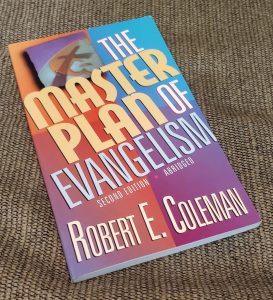
A powerful book that outlines Jesus’s ministry strategy is Robert Coleman’s Master Plan of Evangelism. The book is a short read (only about 100 pages) and the title is a bit of a misnomer because the book is not really a book about evangelism but instead, explains Jesus’s discipleship strategy, which employed the principle of multiplication.

Over the years, we’ve sought to employ this ministry principle in our own discipleship efforts. In fact, when we worked with students, we would often take our young leaders through this same book to teach them the importance of building multiplying disciples.

Robert Coleman first published The Master Plan of Evangelism in 1963. Since then, it has sold over 3.5 million copies.

Now those students are all grown up and living in various places all around the world. It’s amazing for us to see the impact they are having for Christ in the different settings in which God has placed them.

Now our focus is on Young Adults and helping them to walk with God and multiply their lives in a workplace environment. It’s a bit more complicated helping Young adults live out their faith in the big people world but the principles are the same – take the things we’ve learned and pass them along to others who will be able to do the same.

In this way, the number of people who can be a force for good and influence others for Christ will multiply over time. At first, the results might seem insignificant, just like that penny. But over time, it’s amazing how the principle of multiplication takes effect.

Please pray for us as we seek to multiply our lives into this next generation and help them become multiplying disciples for Jesus – men and women who impact others for Christ wherever God places them!

Finishing the Task

Matthew 24

1As Jesus was leaving the Temple grounds, his disciples pointed out to him the various Temple buildings. 2But he told them, “Do you see all these buildings? I assure you, they will be so completely demolished that not one stone will be left on top of another!”

3Later, Jesus sat on the slopes of the Mount of Olives. His disciples came to him privately and asked, “When will all this take place? And will there be any sign ahead of time to signal your return and the end of the world?”

4Jesus told them, “Don’t let anyone mislead you. 5For many will come in my name, saying, ‘I am the Messiah.’ They will lead many astray. 6And wars will break out near and far, but don’t panic. Yes, these things must come, but the end won’t follow immediately. 7The nations and kingdoms will proclaim war against each other, and there will be famines and earthquakes in many parts of the world. 8But all this will be only the beginning of the horrors to come.

9“Then you will be arrested, persecuted, and killed. You will be hated all over the world because of your allegiance to me. 10And many will turn away from me and betray and hate each other. 11And many false prophets will appear and will lead many people astray.12Sin will be rampant everywhere, and the love of many will grow cold. 13But those who endure to the end will be saved. 14And the Good News about the Kingdom will be preached throughout the whole world, so that all nations will hear it; and then, finally, the end will come. (Matthew 24:1-14, NLT)


The Daily DAVEotional

Last weekend at Saddleback Church, there was a Rick Warren sighting. If you didn’t know, Rick Warren stepped down as the Lead pastor of Saddleback Church last August (2022) after more than 40 years at the helm of one of the largest churches in America. I wrote about Pastor Rick’s replacement in a blog post here.

Pastor Rick showed up in a video at church sharing about some of the current needs of the Finishing the Task initiative of which he has taken oversight.

Finishing the Task is a network comprised of hundreds of churches, denominations and missions organizations that are all committed to “finishing the task” that was given to the church 2000 years ago when Jesus commissioned his first disciples to “go and make disciples of every nation…” This task is commonly referred to as the Great Commission.

Matthew 24 is one of the few passages where Jesus speaks prophetically about future events. In this passage, the disciples point out to Jesus the various temple buildings and Jesus uses this as a launching pad to share with his disciples about future events.

The first thing Jesus points out is that the Temple buildings that his disciples are so fondly admiring would one day be completely demolished. This actually happened not long after Jesus’s death and resurrection as the Temple was completely destroyed in 70 A.D. and has never been rebuilt.

Later, at the Mount of Olives, the disciples ask Jesus the question of timing: “When will all this take place? And what signs will accompany your return?”

Jesus responds with some general information about the state of the world that would precipitate His return. He says the following things will be true before His return:

    • There will be many false prophets…many who will claim to be the Messiah and will lead many astray
    • There will be wars and rumors of wars among the nations
    • There will be famines and earthquakes

There is no doubt that this list so far has been fulfilled as these conditions have been true for many years. Yet Jesus says that these conditions are only the beginning of the horrors. In other words, these signs alone aren’t enough to signal that the end is near. There are additional signs that will signal the nearness of Jesus’s return:

    • Christians will be arrested, persecuted, killed and hated for their allegiance to Jesus.
    • Many followers will fall away and more false prophets will lead others astray
    • Sin will be rampant everywhere.

These additional conditions begin to bring more focus to the state the world will be in before Jesus returns. One only has to take a cursory glance at daily headlines to see that Christians are being persecuted and killed around the world. Sin is rampant everywhere and many Christians, in an effort to placate the culture, are compromising on Biblical standards of morality and ethics.

Still, whether or not the stage is set for Jesus’s imminent return is still somewhat of a subjective evaluation. One could claim, in just about any decade since Jesus uttered the words of Matthew 24, that these conditions have been met.

Yet Jesus gives one more condition that must be met before His return will be imminent, a condition that is not subjective but can be objectively evaluated . That condition relates to the spread of the gospel around the world. Jesus says that this gospel of the kingdom will be preached around the world so that all the nations will hear it, and THEN the end will come.

So even though all the conditions seem ripe for Jesus’s return we know that His return is not imminent until this final condition is met – the gospel must be preached so that all the nations (people groups) hear it. Once that happens, we know that Jesus’s return is imminent.

This doesn’t mean that Jesus will return the instant the last people group hears. It simply means that the stage is set and we have no reason to doubt that he may come at any moment.

What’s exciting is that the Finishing the Task initiative, which was launched in 2000 as a cooperative, collaborative effort between hundreds of churches, denominations and missions organizations, has made amazing progress in taking the gospel to the remaining 3500 people groups that were previously unengaged. This YouTube video from 2020 not only gives a history of the Finishing the Task initiative, but also highlights the progress made in the 20 years since the group was formed.

And now, Rick Warren has made it his remaining life mission to give leadership to this network as they push to reach every remaining unengaged people group within the next 10 years. As he says in this short video, “it’s time for Finishing the Task 2.0”

We are living in exciting times as we are quite possibly the generation who will be alive to see the fulfillment of Jesus’s command to take the gospel to all people groups and make disciples of all the nations.

Lord, may you mobilize your people and empower us by your Holy Spirit to fulfill the command that you gave to your initial disciples 2000 years ago!

Amen.


Did you enjoy this post? I’d love to hear your thoughts! Feel free to like, leave a comment below, and share it with your friends or on social media if you found it helpful or interesting. Your support keeps the conversation going!


Reflection

Are you familiar with the idea of the Great Commission? What has been your experience in making disciples and going to the nations?

What thoughts and feelings do you have when you think about the idea that Christ could return, possibly in your lifetime?

One of the things Jesus says is true of the world just before he returns is that there are many false prophets and many will fall away. What do you think makes someone a false prophet? In other words, how can you tell if someone is a false teacher? 

What steps can you take to ensure that you are not one of the faithful followers who is led astray? 

What do you think are some practical ways you could be involved in helping to “finish the task”?


Logo from the Finishing the Task website


The “Born Again” Redundancy

John 3

1After dark one evening, a Jewish religious leader named Nicodemus, a Pharisee, 2came to speak with Jesus. “Teacher,” he said, “we all know that God has sent you to teach us. Your miraculous signs are proof enough that God is with you.”

3Jesus replied, “I assure you, unless you are born again, you can never see the Kingdom of God.”

4“What do you mean?” exclaimed Nicodemus. “How can an old man go back into his mother’s womb and be born again?”

5Jesus replied, “The truth is, no one can enter the Kingdom of God without being born of water and the Spirit. 6Humans can reproduce only human life, but the Holy Spirit gives new life from heaven. 7So don’t be surprised at my statement that you must be born again. 8Just as you can hear the wind but can’t tell where it comes from or where it is going, so you can’t explain how people are born of the Spirit.” (John 3:1-8, NLT)


The Daily DAVEotional

One year, back in the 1970’s, my parents gave me a necklace for Christmas. It was a stainless steel chain with a large metal, rectangular tag hanging from it with the words “Born Again” stenciled in black. It looked something like the dog tags one might find a soldier wearing to identify themselves in the case of some tragic accident.

I never really wore the necklace too much for reasons I will allow Kevin McCallister to explain in the following short video clip:

The phrase “born again Christian” was quite popular back then as it served as a way to identify a certain segment of the Christian crowd.

If you’ve ever wondered where the term “born again Christian” came from or what it means, this is the passage.

The text says that Nicodemus came to Jesus by night. Nicodemus was a Pharisee and if you know anything about the Pharisees, they didn’t exactly get along with Jesus. But unlike most of his religious brethren, who were hard-hearted and saw Jesus as a threat, Nicodemus was open and spiritually curious. So he found a way to meet with Jesus in private where he acknowledged what most Pharisees were unwilling to even consider – that Jesus was indeed sent from God.

I’m sure Jesus’s reply was not what Nicodemus was expecting as he gives this rather strange response about the need for one to be “born again” to see the kingdom of God.

Nicodemus, like many people today, was confused by the phrase “born again”. He gives a bewildered response, “how can an old man go back into his mother’s womb and be born again?” as well as the equally puzzling, “will being born again give me TWO belly buttons?” Ok, I added that last phrase but both statements show a fundamental lack of understanding in what Jesus was communicating.

Jesus explains to Nicodemus that to enter the kingdom of heaven one must be born of water and of spirit. He continues by adding that “humans can reproduce only human life, but the Holy Spirit gives new life from heaven.”

So what’s he saying?

Everyone experiences a physical birth. In theological terms, we call that generation. There isn’t a person who’s ever lived who did not experience a physical birth. So, the first condition to making it into the kingdom of heaven is one must have experienced a physical birth.

But there is a second condition that’s required to make it into the kingdom of heaven. In addition to being born physically one must also experience a spiritual birth. This second birth is what Jesus is referring to when he says “you must be born again.”

The Bible tells us that even though people are alive physically, because of sin, we are dead spiritually (separated from God). Therefore, in order to be reconciled to God, we must become alive spiritually by experiencing a spiritual birth. We call this regeneration.

Regeneration is the role of the Holy Spirit and it occurs when a person receives the free gift of forgiveness that Jesus offers through His death on the cross.

Receiving this free gift is simply a matter of:

    1. Recognizing that I am a sinner
    2. Acknowledging that Jesus died on the cross for my sins
    3. Trusting Jesus to come into my life and provide forgiveness

When someone responds in faith to Jesus’s offer of forgiveness, an amazing thing happens. God’s Holy Spirit comes into that person’s life and gives them new spiritual life. This is the spiritual birth that Jesus is referring to and it’s what is meant by the term “born again.”

The thing is, it’s impossible to enter the kingdom of heaven unless you’re born again. In other words, you cannot be a Christian unless you are born again because being a Christian means you’ve accepted Jesus’s free gift and the Holy Spirit has come into your life to make you alive spiritually.

So the phrase “born again Christian” is a redundancy, akin to saying “I’m a Christian Christian.”

So why use the term “born again Christian” if it’s a redundancy?

The term became popular as a way for those who have accepted Jesus into their life to distinguish themselves from those who call themselves Christians but have never responded to Jesus’s offer. Many people identify as Christians simply because they go to church or they believe in the God of the Bible. But none of this means a person is a Christian. A person becomes a Christian the moment they experience this second birth, just as Jesus described to Nicodemus.

Reflection

Do you consider yourself a Christian? What is it that makes you a Christian?

Jesus said that a person must be “born again” to experience the kingdom of heaven. Have you experienced a “second birth”? What were the circumstances that led you to make that decision?

The term “born again Christian” is not as popular today as it was in the 1970’s, partly because many who are not Christians began to associate the term with religious fundamentalism and other caricatures of Christianity that most true Christians would reject. What terms do you currently use to identify your Christian faith and tradition to others?

The danger for many Christians is that we can become religious over time. What steps can you take to ensure your heart remains open and curious, like Nicodemus, instead of hard and callous like the other Pharisees?


Photo by Dave Lowe