Why Does My Fruit Tree Have no Fruit?

Luke 13

6Then Jesus used this illustration: “A man planted a fig tree in his garden and came again and again to see if there was any fruit on it, but he was always disappointed. 7Finally, he said to his gardener, ‘I’ve waited three years, and there hasn’t been a single fig! Cut it down. It’s taking up space we can use for something else.’

8“The gardener answered, ‘Give it one more chance. Leave it another year, and I’ll give it special attention and plenty of fertilizer. 9If we get figs next year, fine. If not, you can cut it down.’” (Luke 13:6-9, NLT)


The Daily DAVEotional

(This blog post was initially titled “A Tree with No Fruit!”)

In the first house we owned we had a tangerine tree in the back yard. It was awesome. There’s nothing like fresh squeezed tangerine juice.

When we moved to our current location, I dreamed of having a tangerine tree so we could have fresh squeezed juice just about whenever we wanted.

It took a couple of years to clear some of the bushes and get the back yard exactly the way we wanted but we finally bought a dwarf tangerine tree and planted it in the corner.

The first year there was no fruit, but I figured it was still growing. The next year, it looked like it was ready to start producing as I could see a couple of tiny tangerines beginning to grow.

And then we got a puppy.

If you know anything about puppies, they like to chew things and one of the things our dog chewed on was that tangerine tree. (For more on doggie destructiveness, read my post: Life Lessons From Our Dog).  I put some mesh wiring around the base of the tree to keep the dog from destroying the tree but I wasn’t sure if it was too little too late.

Lo and behold, the tree was saved and it began to grow back (see photo on top left). But it’s been almost five years since then and we still haven’t seen one piece of fruit.

This passage from Luke reminds me of my tangerine tree. I’m about ready to toss it out and get another tree, perhaps one that is more fully developed – one that I know will yield me the fruit that I’m so often craving.

Henry Cloud appeals to this passage to illustrate what he refers to as “The Growth Model.”

When you’re thinking about growth and development, Dr. Cloud says there are three ingredients that are necessary: grace, truth and time.

In this example, the tree is not producing fruit. That is the reality. The owner wants to chop it down and put something else in its place, something that will produce fruit.

The gardener urges the owner to give the tree “one more chance”. The gardener wants to intentionally apply these 3 necessary ingredients for growth to see if the tree will respond and begin to produce fruit.

The time is the extra year. What is the truth in this scenario? The truth is the special attention gardener promises to give the tree.

But what is the grace?

We often think of grace as unmerited favor – the free gift of salvation that is given to us by Jesus through His sacrificial death on the cross.

In this illustration, the grace is the fertilizer. It’s the ingredient the tree cannot provide for itself that comes from an outside source.

Like that tree, we also need grace, truth and time in order to grow and develop. Truth is reality. It’s the realization that we have an issue or problem we need to work through.

Grace is the ingredient that you cannot provide for yourself. It may come in the form of support or motivation or help from someone else.

If we have appropriate levels of grace and truth in our lives applied over time, we can experience growth. We will be like the tangerine tree, producing sweet fruit that is evident and enjoyed by many!

NOTE: For a real life example of how grace and truth helps promote growth and change, read my post from December 15 on “Discipleship and Change Through Coaching.”

Reflection

Which of the three elements do you need in your life to experience growth in an area where you may have struggled to see improvement?

What are some areas of your life where you’ve struggled to experience real change?

How can you apply the principles from this passage to help you see progress?


Photos by Dave Lowe


Old Habits are Hard to Break

Genesis 20

1Now Abraham moved south to the Negev and settled for a while between Kadesh and Shur at a place called Gerar. 2Abraham told people there that his wife, Sarah, was his sister. So King Abimelech sent for her and had her brought to him at his palace.

3But one night God came to Abimelech in a dream and told him, “You are a dead man, for that woman you took is married.”

4But Abimelech had not slept with her yet, so he said, “Lord, will you kill an innocent man? 5Abraham told me, ‘She is my sister,’ and she herself said, ‘Yes, he is my brother.’ I acted in complete innocence!”

6“Yes, I know you are innocent,” God replied. “That is why I kept you from sinning against me; I did not let you touch her. 7Now return her to her husband, and he will pray for you, for he is a prophet. Then you will live. But if you don’t return her to him, you can be sure that you and your entire household will die.”

8Abimelech got up early the next morning and hastily called a meeting of all his servants. When he told them what had happened, great fear swept through the crowd. 9Then Abimelech called for Abraham. “What is this you have done to us?” he demanded. “What have I done to you that deserves treatment like this, making me and my kingdom guilty of this great sin? This kind of thing should not be done! 10Why have you done this to us?”

11“Well,” Abraham said, “I figured this to be a godless place. I thought, ‘They will want my wife and will kill me to get her.’ 12Besides, she is my sister—we both have the same father, though different mothers—and I married her. 13When God sent me to travel far from my father’s home, I told her, ‘Wherever we go, have the kindness to say that you are my sister.’”

14Then Abimelech took sheep and oxen and servants—both men and women—and gave them to Abraham, and he returned his wife, Sarah, to him. 15“Look over my kingdom, and choose a place where you would like to live,” Abimelech told him. 16Then he turned to Sarah. “Look,” he said, “I am giving your ‘brother’ a thousand pieces of silver to compensate for any embarrassment I may have caused you. This will settle any claim against me in this matter.”

17Then Abraham prayed to God, and God healed Abimelech, his wife, and the other women of the household, so they could have children. 18For the LORD had stricken all the women with infertility as a warning to Abimelech for having taken Abraham’s wife. (Genesis 20, NLT)


The Daily DAVEotional

In Genesis 20, we find Abraham resorting to one of his old habits – deception. Abraham, fearing the locals, convinces his wife to go along with his story that Sarah is his sister, which is technically true, but still deceptive because Sarah is actually Abraham’s wife.

If you’ve followed the story of Abraham, you know that he did the same thing with the Egyptian Pharaoh in Genesis 12:10-20.

In both cases, Abraham feared for his life, thinking that if people knew Sarah was his wife, they would kill him to get her.

Throughout the Bible, Abraham is regarded as a great man of faith, and yet we see him resorting to deception on multiple occasions in order to protect himself.

What are we to make of this?

First of all, Abraham is not innocent. Abimelech pleads his innocence to the Lord, to which the Lord replies, “I know you are innocent….that is why I kept you from sinning against me.”

Secondly, Abraham does not demonstrate much faith in this situation or the situation in Genesis 12. In both cases, Abraham resorts to deception because he’s afraid that the locals will kill him because of Sarah’s beauty.

Yet Abraham had been promised by God that he would become the father of many nations. In fact, God changes his name from Abram, which means “exalted father”, to Abraham, which means “father of many”. In addition, God had promised that his wife Sarah would bear him a son and it would be through that son that his covenant promises would emerge (see Genesis 17).

If Abraham was such a great man of faith, why does he resort to deception to save himself? Wouldn’t a man of faith tell the truth and trust that the Lord would provide? Wouldn’t a great man of faith trust the Lord to save him from the locals instead of taking matters into his own hands?

The reality is that Abraham was just like us. We often see Abraham taking matters into his own hands, as he does in this situation and also when he decided to father a child through his wife’s maid, Hagar, instead of trusting the Lord to provide a child through his wife.

The story of Abraham gives me hope to know that I don’t need to be perfect in order to receive God’s blessing. Abraham doesn’t always demonstrate faith and he often falls into old sinful habits, but he’s regarded as a great man of faith, not because of these incidents, but because of how he responds to the Lord’s leading and direction and how he finishes his life.

Reflection

What are some of your old habits that you are prone to fall back into?

In what kinds of situations do you find it difficult to trust God for the outcome?

What steps or habits can you implement in your life to ensure you are regarded as a person of faith?


Photo by Basil MK from Pexels


What Does it Look Like to Follow Jesus?

Luke 9

57As they were walking along someone said to Jesus, “I will follow you no matter where you go.”

58But Jesus replied, “Foxes have dens to live in, and birds have nests, but I, the Son of Man, have no home of my own, not even a place to lay my head.”

59He said to another person, “Come, be my disciple.”

The man agreed, but he said, “Lord, first let me return home and bury my father.”

60Jesus replied, “Let those who are spiritually dead care for their own dead. Your duty is to go and preach the coming of the Kingdom of God.”

61Another said, “Yes, Lord, I will follow you, but first let me say good-bye to my family.”

62But Jesus told him, “Anyone who puts a hand to the plow and then looks back is not fit for the Kingdom of God.” (Luke 9:57-62, NLT)


The Daily DAVEotional

At the end of Luke chapter 9, someone tells Jesus he will follow Him wherever He goes. Jesus then lays out some requirements for truly following Him.

The first thing he says, in verse 58, is that “Foxes have dens to live in, and birds have nests, but I, the Son of Man, have no home of my own, not even a place to lay my head.”

What’s he saying? Jesus is saying that following Him may be uncomfortable and will require sacrifice. Are you willing to give up a life of comfort and ease in order to follow me?

Another person responded to Jesus’s call to discipleship by saying he wanted to first go home and bury his father. Jesus responds, in verse 60, saying “Let those who are spiritually dead care for their own dead. Your duty is to go and preach the coming of the Kingdom of God.”

Is Jesus against family responsibilities?

No. It’s unlikely the person’s father was already dead for if he was, the man would not likely have been there in the first place to interact with Jesus. What the man was really saying is that he would follow Jesus at a later date, when life circumstances are different. Jesus responds by saying that following Him means making Him a priority over everything else, including family.

Finally, a third person says he will follow Jesus but only after saying goodbye to his family.

Jesus responds by saying, “Anyone who puts a hand to the plow and then looks back is not fit for the Kingdom of God.”

Again, Jesus is not against families. He’s merely pointing out that following Him means enduring to the end.

If you think about it, following Jesus is like a marriage.

What does this have to do with marriage?

Well, if you’ve ever been to a wedding ceremony, it’s traditional for the officiant to lead the bride and groom in an exchange of vows. Usually, the official will ask each participant if they will commit themselves to the other person and stay committed through a variety of life’s conditions, including:

    • For richer for poorer (sacrifice)
    • In sickness and in health (priority)
    • ’til death do us part (endurance)

Notice that these conditions are the same conditions that Jesus set forth as necessary to be His follower. If you want to follow Jesus, it will take sacrifice; He must be your priority and you must endure to the end.

If you think about it, Jesus is asking us to marry Him. Not literally, of course. But to be a follower of Jesus carries that same level of commitment, dedication and intentionality.

Reflection

What do you think about the idea that when Jesus invites you to follow Him, it’s like He’s asking you to marry Him?

Which of the three conditions Jesus lays out for following Him do you struggle with the most?

What would keep you from committing yourself to Jesus in the way He invites His true followers?


Photo by Sandy Millar on Unsplash

A Contradictory Psalm

The Daily Daveotional

Psalm 13

For the choir director: A psalm of David.

1O LORD, how long will you forget me? Forever? How long will you look the other way?

2How long must I struggle with anguish in my soul, with sorrow in my heart every day? How long will my enemy have the upper hand?

3Turn and answer me, O LORD my God! Restore the light to my eyes, or I will die.

4Don’t let my enemies gloat, saying, “We have defeated him!” Don’t let them rejoice at my downfall.

5But I trust in your unfailing love. I will rejoice because you have rescued me.

6I will sing to the LORD because he has been so good to me.

(Psalm 13, NLT)


In this Psalm, David cries out to the Lord as his soul is in deep anguish. He feels defeated by his enemies and he feels abandoned by God.

But by the end of the Psalm, David says that he trusts in God’s unfailing love, rejoices that God has rescued him and sings to the Lord because God has been so good to him.

On the surface, this Psalm seems like a contradiction in perspective. One moment, David is complaining that the Lord has abandoned him and in the next moment, he’s praising God for rescuing him and being so good to him.

Which is it?  It’s as if David is shifting back and forth between alternate universes in real time. Is he hallucinating? Is he disconnected from reality? Or is there some other explanation?

The truth is that David IS in anguish. He DOES feel abandoned. He DOES feel like his enemies are overtaking him.

These are real emotions David is experiencing and they are are all true.

But what is also true is God’s sovereignty, love and goodness. David recognizes these things too and is able to acknowledge their reality.

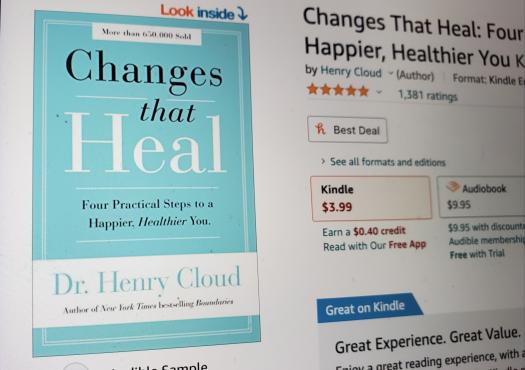
This is what Henry Cloud, in his book “Changes That Heal”, calls sorting the good and bad. People who do this well recognize that there is both good and bad in our world. They are able to deal with the reality that both exist in a way that doesn’t allow negative outcomes to become the consuming focus of their reality.

People who don’t do this well tend to go all bad if one little thing goes wrong.

What do I mean by going “all bad”?

Going all bad occurs when we allow a negative experience or circumstance to so consume us that we begin to project our negative emotion on all aspects of our reality. Our attitude and judgment is clouded in such a way that we can only see and focus on things that are negative while being purposely blind to any good elements in our reality.

David doesn’t do this. He recognizes the bad circumstances he’s in and he’s honest about his emotions. But David also acknowledges the good that still exists, namely, the reality that God is good and loving.

Reflection

What keeps you from being completely honest with God about your emotions? 

When have you gone all bad as a result of an undesired circumstance? What was the situation you were in and how did your emotions affect your perception of reality?

What do you think are some practical ways you can develop in your ability to sort the good and bad?

What are 10 things you can think of right now that are positive about your current life situation?


Photo of “Changes That Heal” from Amazon website – by Dave Lowe

The Whip of God’s Anger!

Isaiah 10

5“Destruction is certain for Assyria, the whip of my anger. Its military power is a club in my hand. 6Assyria will enslave my people, who are a godless nation. It will plunder them, trampling them like dirt beneath its feet. 7But the king of Assyria will not know that it is I who sent him. He will merely think he is attacking my people as part of his plan to conquer the world. 8He will say, ‘Each of my princes will soon be a king, ruling a conquered land. 9We will destroy Calno just as we did Carchemish. Hamath will fall before us as Arpad did. And we will destroy Samaria just as we did Damascus. 10Yes, we have finished off many a kingdom whose gods were far greater than those in Jerusalem and Samaria. 11So when we have defeated Samaria and her gods, we will destroy Jerusalem with hers.’”

12After the Lord has used the king of Assyria to accomplish his purposes in Jerusalem, he will turn against the king of Assyria and punish him—for he is proud and arrogant. 13He boasts, “By my own power and wisdom I have won these wars. By my own strength I have captured many lands, destroyed their kings, and carried off their treasures. 14By my greatness I have robbed their nests of riches and gathered up kingdoms as a farmer gathers eggs. No one can even flap a wing against me or utter a peep of protest.”

15Can the ax boast greater power than the person who uses it? Is the saw greater than the person who saws? Can a whip strike unless a hand is moving it? Can a cane walk by itself?

16Listen now, king of Assyria! Because of all your evil boasting, the Lord, the LORD Almighty, will send a plague among your proud troops, and a flaming fire will ignite your glory. 17The LORD, the Light of Israel and the Holy One, will be a flaming fire that will destroy them. In a single night he will burn those thorns and briers, the Assyrians. 18Assyria’s vast army is like a glorious forest, yet it will be destroyed. The LORD will completely destroy Assyria’s warriors, and they will waste away like sick people in a plague. 19Only a few from all that mighty army will survive—so few that a child could count them! (Isaiah 10:5-19, NLT)


Assyria is an ancient nation that at one time was THE biggest, baddest empire around.

As is typical of big, bad empires, they conquered other nations, took captives, plundered and slaughtered people and generally enforced their will wherever they went.

In this chapter of Isaiah, God describes the Assyrians as “the whip of my anger.” Its mighty military power is described by God as “a club in my hand.”

God explains that He is going to use the Assyrians as His tool to punish the Israelites, His people who have continually forsaken Him, despite many warnings about the consequences of abandoning the Lord for other gods.

After the Lord has used the Assyrians to accomplish His purposes, He explains that He will then punish the Assyrians.

Why would He punish the Assyrians if they were simply God’s tool to accomplish His plan of destruction against Israel?

Verses 12-15 give the answer. The reason Assyria will be punished is because of pride and arrogance. The Assyrian king won’t acknowledge that He is subordinate to God and that the Lord was simply using Him as His vessel of discipline. Instead, the Assyrian king will embrace the belief that everything he’s accomplished is because of his superior nature over those whom he’s subjugated.

The king of Assyria will essentially make himself out to be a god as he mentions all the gods he has conquered from the various lands he now controls.

God reminds the listener that Assyria is no different than an ax, a saw or a cane. They are all just instruments that are completely useless unless there is an active agent to employ the tool for its purpose.

Assyria, at one time, WAS the big bad empire bullying all the surrounding nations of the Ancient Near East. WAS! Somewhere between 612 and 605 BC, Assyria was destroyed. They were overtaken by the next big, bad empire – the Babylonians, but not before God fulfilled His promise of using the Assyrians to discipline and punish His people who had forsaken Him.

Reflection

Under what circumstances are you tempted to take credit for actions and outcomes that are ultimately orchestrated by God?

The Assyrians were supplanted by the Babylonians, who were supplanted by the Persians, who were supplanted by the Greeks, who were supplanted by the Romans, etc. Why do you suppose empires come and go? What conditions do you think would be necessary for an empire to last?

What do you think is the difference between pride/arrogance/boasting and confidence and self-assurance? How can you ensure that you’re confident in yourself without being boastful or proud?


Photo by Jamil Kabar on Unsplash

Is God Against Construction Projects?

Genesis 11

1At one time the whole world spoke a single language and used the same words. 2As the people migrated eastward, they found a plain in the land of Babylonia and settled there. 3They began to talk about construction projects. “Come,” they said, “let’s make great piles of burnt brick and collect natural asphalt to use as mortar. 4Let’s build a great city with a tower that reaches to the skies—a monument to our greatness! This will bring us together and keep us from scattering all over the world.”

5But the LORD came down to see the city and the tower the people were building. 6“Look!” he said. “If they can accomplish this when they have just begun to take advantage of their common language and political unity, just think of what they will do later. Nothing will be impossible for them! 7Come, let’s go down and give them different languages. Then they won’t be able to understand each other.”

8In that way, the LORD scattered them all over the earth; and that ended the building of the city. 9That is why the city was called Babel, because it was there that the LORD confused the people by giving them many languages, thus scattering them across the earth. (Genesis 11:1-9, NLT)


The Daily DAVEotional

Genesis 11 documents a pivotal scene in the advancement of the human race.

The text says that the people gathered together and began to talk about construction projects. The Lord responds by scattering the people, making them unable to accomplish their objective.

Is God against construction projects?

NO.

The first problem here is not that people are building things but that God’s stated command that people “be fruitful and multiply and fill the earth” wasn’t being fulfilled.

Instead, the people are congregating together.

It’s clear that some were aware of God’s mandate to fill the earth because it is stated that the reason they want to congregate together and build this tower is to “keep us from scattering all over the world.”

The second problem is that they were building “a monument to our greatness.”

There is no doubt that when people work together and put their minds to something, the possibilities of what can be accomplished are limitless. There is no end to the number of examples of human cooperation and ingenuity, including space exploration and sending astronauts to the moon, the development of vaccines and medication to combat disease, industrial and other technological inventions…the list goes on and on.

But one of the potential downsides of human ingenuity is the propensity of humankind to take credit for their achievements and forget the role God has played in our lives and in the universe. It’s as if the more we advance, the more enamored we become with ourselves. We become the center of our own universe as we begin to worship our achievements and magnify our greatness. In short, we become gods unto ourselves!

This is the ultimate form of idolatry and it’s rampant in our culture. Philosophically, secular humanism is the idea that puts man at the center of a society that excludes God. In a world without God, man becomes the ultimate authority on what is good and bad, what is right and wrong, and what is moral and immoral.

With people in control instead of God, what could go wrong?

God is not against construction projects and He’s not against people working together to advance human objectives, particularly those that benefit the common good. However, He IS against man making Himself god and putting himself at the center of the universe, a position that is exclusively reserved for God Himself.

Reflection

What are some examples of humanistic philosophy have you seen  in our culture today?

In what ways are you tempted to neglect God and “make a name for yourself?”

What steps or practices can you implement to ensure that God is at the center instead of you?


Photo by Viktor Jakovlev on Unsplash

Who Knows?

Isaiah 8

11The LORD has said to me in the strongest terms: “Do not think like everyone else does. 12Do not be afraid that some plan conceived behind closed doors will be the end of you. 13Do not fear anything except the LORD Almighty. He alone is the Holy One. If you fear him, you need fear nothing else. 14He will keep you safe. But to Israel and Judah he will be a stone that causes people to stumble and a rock that makes them fall. And for the people of Jerusalem he will be a trap that entangles them. 15Many of them will stumble and fall, never to rise again. Many will be captured.”

16I will write down all these things as a testimony of what the LORD will do. I will entrust it to my disciples, who will pass it down to future generations. 17I will wait for the LORD to help us, though he has turned away from the people of Israel. My only hope is in him. 18I and the children the LORD has given me have names that reveal the plans the LORD Almighty has for his people. 19So why are you trying to find out the future by consulting mediums and psychics? Do not listen to their whisperings and mutterings. Can the living find out the future from the dead? Why not ask your God?

20“Check their predictions against my testimony,” says the LORD. “If their predictions are different from mine, it is because there is no light or truth in them. 21My people will be led away as captives, weary and hungry. And because they are hungry, they will rage and shake their fists at heaven and curse their king and their God. 22Wherever they look, there will be trouble and anguish and dark despair. They will be thrown out into the darkness.” (Isaiah 8:11-22, NLT)


The Daily DAVEotional

We are obsessed with the future. It seems like half of the movies and TV shows being released these days depict some sort of dystopian future.

Doomsday prophets seem to fill the airwaves and the media platforms with predictions of the earth’s and mankind’s demise.

My e-mail inbox is flooded with people who want me to pay them for financial advice because they claim to be better than others at predicting the future of the stock market or the technology sector, or the energy industry, or the….well, you get the picture.

The truth is that we are not that great at predicting the future. It’s interesting to watch older movies that are set in a future that is equivalent to our modern day. It’s never close to being right.

Sure, we can plan for the future and we can take all the relevant information at our disposal and make educated guesses about what we think will happen, but there are just too many variables for anyone to be able to make accurate predictions about the future with any degree of consistency.

This is why God, via the prophet Isaiah, asks the question in verse 19:

So why are you trying to find out the future by consulting mediums and psychics?

God is the only person who can tell the future, and that’s because He’s sovereign over everything, including time.

If you’re comparing track records, nobody even comes close as He’s 100% accurate.

Some of our obsession with the future is due to fear. We’re afraid of what might happen to us, to our loved ones and to our community. If this is you, listen again to these words from the prophet Isaiah to the people of God:

Do not be afraid that some plan conceived behind closed doors will be the end of you. Do not fear anything except the LORD Almighty. He alone is the Holy One. If you fear him, you need fear nothing else. He will keep you safe… (Isaiah 8:12-14a, NLT)

Reflection

When have you been tempted to rely on a psychic or medium for advice or information?

When you think of the future, what fears do you have?

What are some practical tips or ideas that will enable you to connect with the Lord and trust Him for your future?


Photo by Dave Lowe

Rotten to the Core!

Ephesians 4

17With the Lord’s authority let me say this: Live no longer as the ungodly do, for they are hopelessly confused. 18Their closed minds are full of darkness; they are far away from the life of God because they have shut their minds and hardened their hearts against him. 19They don’t care anymore about right and wrong, and they have given themselves over to immoral ways. Their lives are filled with all kinds of impurity and greed.

20But that isn’t what you were taught when you learned about Christ. 21Since you have heard all about him and have learned the truth that is in Jesus, 22throw off your old evil nature and your former way of life, which is rotten through and through, full of lust and deception. 23Instead, there must be a spiritual renewal of your thoughts and attitudes. 24You must display a new nature because you are a new person, created in God’s likeness—righteous, holy, and true. (Ephesians 4:17-24, NLT)


The Daily DAVEotional

Chapter 4 of Ephesians is packed with theological truths that are vitally important for followers of Christ to understand.

Paul exhorts the Ephesians to live differently by contrasting the characteristics of the ungodly versus the characteristics of those who are in Jesus.

Paul describes the ungodly as darkened in their understanding because of their hardened hearts. A person with a hardened heart is someone who has made a decision of the will to live the way they want to and this shows up in their morals – they no longer care about right and wrong and their lives are filled with “all kinds of impurity and greed”.

Does this sound familiar?

But this shouldn’t be how the Christian lives. Paul admonishes us to throw off our old evil nature and former way of life which is rotten through and through. (vs 22). So according to Paul, you’re a rotten person! (I am too).

I love how the NIV states verse 22. It says:

22You were taught, with regard to your former way of life, to put off your old self, which is being corrupted by its deceitful desires; (Ephesians 4:22, NIV)

That phrase “being corrupted” is in the present tense, which indicates an action that is ongoing. What this means is that your sinful nature is not just sinful, but it’s continuing in its corruption – it’s getting worse!

How are we to combat a sin nature that’s actually getting worse?

Paul says there must be a spiritual renewal of your thoughts and attitudes. And since the old nature is continually being corrupted, our new nature must continually be renewed!

The Christian life, contrary to what some might believe, is not a one-time decision. Yes, our decision to accept Christ as our Savior brings us forgiveness and adoption and a myriad of other spiritual blessings. It’s the start of our new life in a relationship with Christ. But to follow Christ requires a constant renewal of our thoughts and attitudes. If we neglect to do this, our sin nature will take over, and since it is being corrupted, we are at risk of living more like the ungodly than the righteous.

Reflection

What areas of your life are you most likely to see as “being corrupted”?

What are some practical ways you can renew your thoughts and attitudes?

What is your reaction to the idea that the Christian life is not a “one-time” decision, but rather, it’s a daily, even moment-by-moment decision to reject ungodliness and pursue righteousness?


Photo by Anita Jankovic on Unsplash

The Consequences of Not Checking Your Facts!

1Now all the kings west of the Jordan heard about what had happened. (These were the kings of the Hittites, Amorites, Canaanites, Perizzites, Hivites, and Jebusites, who lived in the hill country, in the western foothills, and along the coast of the Mediterranean Sea as far north as the Lebanon mountains.)  2These kings quickly combined their armies to fight against Joshua and the Israelites.

3But when the people of Gibeon heard what had happened to Jericho and Ai, 4they resorted to deception to save themselves. They sent ambassadors to Joshua, loading their donkeys with weathered saddlebags and old patched wineskins. 5They put on ragged clothes and worn-out, patched sandals. And they took along dry, moldy bread for provisions. 6When they arrived at the camp of Israel at Gilgal, they told Joshua and the men of Israel, “We have come from a distant land to ask you to make a peace treaty with us.”

7The Israelites replied to these Hivites, “How do we know you don’t live nearby? For if you do, we cannot make a treaty with you.”

8They replied, “We will be your servants.”

“But who are you?” Joshua demanded. “Where do you come from?”

9They answered, “We are from a very distant country. We have heard of the might of the LORD your God and of all he did in Egypt.  10We have also heard what he did to the two Amorite kings east of the Jordan River—King Sihon of Heshbon and King Og of Bashan (who lived in Ashtaroth). 11So our leaders and our people instructed us, ‘Prepare for a long journey. Go meet with the people of Israel and declare our people to be their servants, and ask for peace.’

12“This bread was hot from the ovens when we left. But now, as you can see, it is dry and moldy. 13These wineskins were new when we filled them, but now they are old and cracked. And our clothing and sandals are worn out from our long, hard trip.”

14So the Israelite leaders examined their bread, but they did not consult the LORD. 15Then Joshua went ahead and signed a peace treaty with them, and the leaders of Israel ratified their agreement with a binding oath.

16Three days later, the facts came out—these people of Gibeon lived nearby! 17The Israelites set out at once to investigate and reached their towns in three days. The names of these towns were Gibeon, Kephirah, Beeroth, and Kiriath-jearim. 18But the Israelites did not attack the towns, for their leaders had made a vow to the LORD, the God of Israel.


In Joshua 9, we see Joshua, the new leader of the Israelites committing a rookie mistake of leadership – check your facts!

The Israelites had spent 40 years wandering in the desert and when they finally crossed the Jordan river into the land of Canaan, they had a simple directive from the Lord – destroy the cities of the Canaanites who inhabited the land.

At this point in the narrative, the Israelites have removed the cities of Jericho and Ai. The Gibeonites hear about what happened to Jericho and Ai, and fearing for their own lives, they resort to deception to save themselves.

When they arrive on the scene, they tell Joshua and the other leaders that they’ve heard about the Lord’s amazing miracles in delivering the Israelites from the Egyptians and also His deeds in subduing the Amorite kings on the east side of the Jordan River. Cleverly, the Gibeonites make no mention of the recent conquests of Jericho and Ai, for that would likely reveal their ruse.

Joshua’s mistake is revealed in verse 14 where it says that he examined the bread but he didn’t consult the Lord.

How often have you neglected to consult the Lord when confronted with a critical decision or an important issue?

The facts came out just a few days later that the towns of the Gibeonites were close by, only a three days journey in fact.

If Joshua had paused to check the facts before signing the treaty, he could’ve learned that the information he was being fed wasn’t true and that the people were in fact part of the contingent of people that the Lord had directed them to remove from the land.

How exactly would Joshua have checked the facts? He didn’t have Google or Snopes.com.

The Lord was Joshua’s fact checker. Joshua was being directed by the Lord and his unique relationship gave him access to God’s insight and wisdom. But instead of checking with the Lord, Joshua instead chose to rush to judgment.

I see this rush to judgment play out all the time, even today. For example, have you ever received an e-mail from someone that shares some important information urging you to pass it on to everyone you know, only to find out, after checking Snopes.com or some other fact-check website that the information was completely false?

We live in an age of urgency, where people have a desire to be the first to get the scoop or demonstrate to others that we’re in the know. As a result, disinformation is rampant.

This passage reminds me that it’s important to verify information before passing it on and before acting on it. We have lots of tools at our disposal that allow us to verify the facts of a story or situation. When facts are in question or tools aren’t available to help us, we still can consult the Lord and ask for wisdom.

When we rush to make decisions without examining the facts or consulting the Lord, we’re more likely to make rash decisions that we later come to regret.

Reflection

When have you experienced the result of someone who neglected to “check the facts” before passing on misinformation?

What safeguards can you put in place to ensure that you aren’t unknowingly an agent of misinformation?

What are some simple ways you can “consult the Lord” in  your decisions?


Photo by Dave Lowe

The Significance of the Torn Veil

Mark 15

33At the sixth hour darkness came over the whole land until the ninth hour. 34And at the ninth hour Jesus cried out in a loud voice, “Eloi, Eloi, lama sabachthani?”—which means, “My God, my God, why have you forsaken me?”

35When some of those standing near heard this, they said, “Listen, he’s calling Elijah.”

36One man ran, filled a sponge with wine vinegar, put it on a stick, and offered it to Jesus to drink. “Now leave him alone. Let’s see if Elijah comes to take him down,” he said.

37With a loud cry, Jesus breathed his last.

38The curtain of the temple was torn in two from top to bottom. 39And when the centurion, who stood there in front of Jesus, heard his cry and saw how he died, he said, “Surely this man was the Son of God!”

40Some women were watching from a distance. Among them were Mary Magdalene, Mary the mother of James the younger and of Joses, and Salome. 41In Galilee these women had followed him and cared for his needs. Many other women who had come up with him to Jerusalem were also there. (Mark 15:33-41, NIV)


The Daily DAVEotional

Mark 15 documents the climactic struggle of Jesus on the cross. Jesus shouts out something in Hebrew and those who are watching assume that He’s appealing to Elijah to save Him.

Jesus breathes His last breath before succumbing to the brutal effects of crucifixion, a torturous method of execution that is designed to slowly suffocate its victims.

And then comes verse 38. It’s so easy to gloss over because before this verse you have people standing around wondering if Jesus is appealing to Elijah and then immediately after this verse the focus shifts back to a centurion who had witnessed Jesus’s ordeal and who concludes that, “surely this man was the Son of God!”

So what’s the deal with verse 38? It seems so out of place to mention that the veil in the temple was torn in two right in the midst of describing Jesus’s death on the cross. It’s almost like the subliminal message that briefly interrupts the flow of the video you’re watching. If you’re not paying attention, you hardly notice it.

Yet this verse is extremely significant. If you’re familiar with the importance of the temple to Jewish religious life, the significance of this verse is probably evident. But if you’re not familiar with the role the temple played in the lives of the Israelites, let me give you some information that may shed new light on this passage.

The temple was THE center of religious life for the Israelites because it represented the very dwelling place of God. The temple was where Jews brought their sacrifices as an act of worship to God.

Inside the temple was a section called the Holy Place, which was separated by another room called the Holy of Holies. The Holy of Holies contained only one item, the Ark of the Covenant. The Holy of Holies was a room that could only be entered once per year, on Yom Kippur, by the high priest, who would enter the room and sprinkle the blood of an unblemished sacrifice on the mercy seat of the Ark of the Covenant in order to atone for the sins of the people.

The Holy of Holies was separated by a large thick veil, a curtain that created a barrier between the Holy Place and the Holy of Holies. The significance of this veil cannot be underscored. It represented the idea that God is holy and man is not and therefore, God is not accessible to man because of his sin.

Yet immediately upon Jesus’s death on the cross, this tiny, easy to overlook verse says that this veil was torn in two, giving access to the very presence of God. The text specifically says the veil was torn from top to bottom, which is no accident. The symbolism is clear – the veil was torn by God Himself, giving access to His presence that was previously unavailable.

The heart of the gospel message is this: Jesus died on a cross, atoning for the sins of the world and giving sinful humanity access to Holy God. We no longer need to make yearly sacrifices because of the sacrifice Jesus has already made on our behalf.

We have two possible responses. We can respond like the centurion, who recognized Jesus is the Son of God, or we can respond like the religious leaders, who took the torn veil, sewed it up and reattached it, thus ignoring the sacrifice that Jesus had made.

Reflection

What is your response to the death of Jesus and the tearing of the veil? Are you more like the centurion, who recognized Jesus as the Son of God? Or are you more like the Jewish religious leaders who preferred to dismiss Jesus’s sacrifice in favor of their former way of life?

What are the veils (barriers) that you put up in your life that keep you from entering into the presence of God? 

For more details about the layout of the temple click here.


Photo by Nikola Bikar on Unsplash