Fact-Checking and Misinformation in the New Testament

Acts 17

10That very night the believers sent Paul and Silas to Berea. When they arrived there, they went to the synagogue. 11And the people of Berea were more open-minded than those in Thessalonica, and they listened eagerly to Paul’s message. They searched the Scriptures day after day to check up on Paul and Silas, to see if they were really teaching the truth. 12As a result, many Jews believed, as did some of the prominent Greek women and many men. (Acts 17:10-12, NLT)


The Daily DAVEotional

The advent of social media has completely changed the landscape of how information is disseminated to the masses. Prior to social media, people relied primarily on what is now known as “legacy media” – national broadcast news networks and major metropolitan newspapers.

But now with social media, anyone and everyone can be a journalist, investigative reporter, podcaster or blogger. Competing ideas and opinions abound, making it increasingly more difficult to separate fact from fiction.

With such an affluence of free-flowing information, two terms have been introduced into the mainstream cultural vernacular in recent years – misinformation and disinformation. These terms have primarily been used by politicians and pundits on both sides of the aisle to label the speech and narratives of their opponents as false. Alarmingly, our own government has cited “misinformation” as a basis for seeking to censor the speech and thus limit the reach of those whose ideas and beliefs are not aligned with the official position of the party in power.

This effort to limit speech has been evident in the last few political cycles, through an increased effort to put pressure on social media platforms to limit and even censor speech that is deemed as “misinformation”.

But who exactly determines what is misinformation?

Social media outlets have employed “fact-checkers” to determine what information is accurate and what should be labeled as “misinformation”.

A fact-checker is someone who evaluates the truthfulness of a statement and then renders a judgment. These fact-checkers are expected to be neutral but the problem, as we’ve seen, is that they’re rarely unbiased. Who then fact-checks the fact-checkers?

In this segment of Acts 17, the Bereans are commended for their ability to fact-check the information that was being promoted.

Paul was a missionary who traveled throughout Asia Minor proclaiming the message of Christ and planting churches among those who believed his message.

But just like today, there was no shortage of ideological grifters and religious charlatans traveling from village to village looking for a market to sell their ideological snake oil.

With so many traveling religious preachers, how does one determine who, if anyone, is telling the truth?

The Bereans were commended because they “fact-checked” Paul’s message by “searching the Scriptures” to determine it’s veracity.

“The Scriptures” in this case refers to the Old Testament. The Bereans listened intently at Paul’s message and “day after day” they checked the message and compared it to what they already knew was true – the Old Testament Scriptures.

Fact-checking is a good thing, as long as the facts are being checked honestly against an objective, truthful standard. As we’ve seen recently, people are often biased, meaning they are rarely objective and often will stretch the truth, or in some cases, even deny the truth in order to fit their own biases.

But God’s word is both objective and true because it is the very word of God, who is by definition, truth.

So if you really want to check your facts, be sure they are not misaligned with what the Scriptures say. If they are, you can be certain that your facts are indeed “misinformation”.


Did you enjoy this post? I’d love to hear your thoughts! Feel free to like, leave a comment below, and share it with your friends or on social media if you found it helpful or interesting. Your support keeps the conversation going!


Reflection

What are some beliefs and ideas that you may tend to hold more because of your own personal  bias than the fact that it is true?

What is the standard that you use to determine if a religious statement is true or not?

What examples have you seen in your own experience of fact-checkers who were too biased to be trusted?

How do you think it’s possible that two different people can evaluate the same “facts” and arrive at completely different conclusions?

How can you ensure that you are not being misled and falling for misinformation when it comes to some of the ideological narratives that are being promoted in our culture?


Photo by Samuel Regan-Asante on Unsplash

What Does it Mean That All Scripture is God-Breathed?

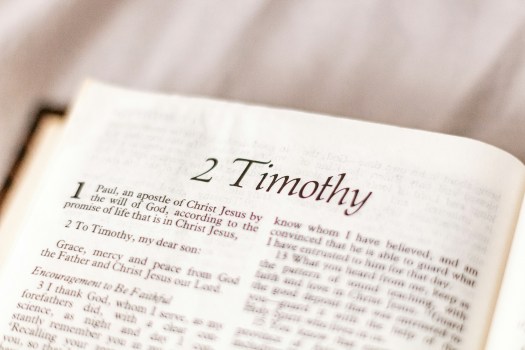
2 Timothy 3

14But as for you, continue in what you have learned and have become convinced of, because you know those from whom you learned it, 15and how from infancy you have known the holy Scriptures, which are able to make you wise for salvation through faith in Christ Jesus. 16All Scripture is God-breathed and is useful for teaching, rebuking, correcting and training in righteousness, 17so that the man of God may be thoroughly equipped for every good work.

(2 Timothy 3:14-17, NIV)


The Daily DAVEotional

A few months ago, I published a post entitled, “Can You Make the Bible an Idol?” which referenced Psalm 119.

The “inspiration” (you will see why this pun is intended) for that post was a series of online interactions I saw on X.com (formerly Twitter) in which a certain online influencer who identifies as a former evangelical was making the case that Christians should not make the Bible an idol.

The idea that one could make the Bible an idol seemed odd and confusing to me. I’d never heard anyone make such an admonition. I soon learned why as I fell further down an online rabbit hole exploring the theological views of Progressive Christianity.

Progressive Christians have a view and understanding of God that is in stark contrast to the traditional orthodox understanding. Whereas the traditional Christian view of God is that He’s immutable, which is to say He is unchanging, the progressive view of God is that He is evolving.

I explain the ramifications of this differing foundational belief in my previous post, but the summary is that if God is evolving then His standards are also evolving. And if God’s standards have evolved, then perhaps some of those behaviors that you were once told were “sinful” aren’t really sinful any longer.

The end result is that the Progressive ends up creating a God whose moral standards amazingly mimic their own lifestyle choices and preferences.

But how does the Progressive get around the clear teachings of Scripture that might restrict some of their life choices? To put it another way, how does the Progressive Christian deal with Biblical passages that seem to indicate that certain behaviors are wrong?

The simple answer is that the Progressive Christian doesn’t view the Bible as “God’s Word”. Hence, passages that seem to indicate certain actions as “sin” aren’t authoritative to them.

What? How can that be? Doesn’t the Bible clearly identify itself as “God’s Word”?

The argument made by Progressives is the same argument which is promoted by non-Christians, which is that the Bible wasn’t actually written by God but by fallible men.

And that leads us to our passage for today.

In this passage of 2 Timothy, Paul is exhorting Timothy to continue in what he has learned before. Timothy had grown up with an understanding of the Scriptures, which at that time was what we know as the Old Testament.

According to Paul, following these “Scriptures” would make Timothy wise unto salvation through faith in Jesus Christ.

Paul then follows with this oft-quoted verse:

All Scripture is God-breathed and is useful for teaching, rebuking, correcting and training in righteousness (2 Timothy 3:16)

This verse is often cited by Christians to demonstrate that the Bible is God’s Word and therefore authoritative for our lives.

According to this verse, the Bible (Scripture) has four main functions in our lives. I wrote about and explained these four functions in a previous post entitled “Training in Righteousness (Part 2).”

The question I want to focus on here is what does it mean when it says that “all Scripture is God-breathed?”

The greek word used here by Paul is theopneustos, which is a compilation of two separate words, theo = God and pneustos = breath.

This verse is the only place in Scripture where this particular word (theopneustos) is used. So what does it mean?

Most bible translations translate this verse as “all scripture is inspired by God…”

The idea is that God Himself has breathed His life into these words, making them inspired and useful for the purposes listed. Hence, the words are God’s words.

The response I have often seen online from Progressives is that the Bible was written by men, not by God. It is “inspired” only in the sense that it inspires people by bringing life to things that were lifeless.

This line of reasoning does not seem faithful to the text. Paul does not say that Scripture is inspiring, though that is almost certainly true as a by-product. What he says is that Scripture is inspired BY GOD. The difference in this wording may seem subtle and inconsequential but the difference in the resultant meanings is enormous.

In one view, the Progressive view, Scripture is the subject and it does the inspiring on the object, people who read it. This makes the Bible a book that is sort of like an ancient “Chicken Soup for Soul” to the reader. It’s a guidebook that one may utilize for navigating life’s journey, but it is certainly not the only tool one might consult.

In the other view, the traditional view, God is the subject who does the inspiring on the object, the Scriptures. Because God Himself has inspired the words, using various authors to communicate the message He desired and intended, it is indeed a guidebook for life and is useful for teaching, rebuking, correcting and training in righteousness.

The bottom line is that, according to Paul, the Scriptures are divinely inspired by God. This means that the words are God’s words; they are the words He intended the authors to write. For this reason, we refer to the Bible as “the Word of God”. Because the Bible is “the Word of God”, it’s not just an inspiring read, it’s authoritative. It alone contains the final word on the rule of life, including morality and our understanding of what is right and what is wrong.

The implications of this are massive. If the Bible is a book that is not written or authored by God, but is simply “inspiring” in some way, then I can pick and choose the parts that actually inspire me to feel good, and I can ignore the parts that I disagree with or that make me feel uncomfortable or “uninspired.”

But if the Bible is God’s Word and therefore authoritative, then I must relent to its position on all matters pertaining to faith and morality. According to Paul, as he made his charge to Timothy, when we acquiesce to God’s standards as outlined in the Scriptures, we’ll not only experience salvation through Jesus, but our lives will be transformed as we allow God’s Word to train us in righteous living, the fruit of which will be good works that glorify God.


Did you enjoy this post? I’d love to hear your thoughts! Feel free to like, leave a comment below, and share it with your friends or on social media if you found it helpful or interesting. Your support keeps the conversation going!


Reflection

What has been your position on the Bible? Do you believe it is God’s Word and therefore authoritative or is it something else? What are the reasons that support your position?

What are some of the things in the Bible that you struggle to agree with in terms of their moral implications? 

In what ways do you need to give the Scriptures authority in your life?

Paul’s charge to Timothy was to “continue what you have learned and become convinced of.” What can you do this week to “continue” your learning and conviction of the Scriptures?


Photo by Sincerely Media on Unsplash

Whatever Became of Sin?

Isaiah 6

1In the year King Uzziah died, I saw the Lord. He was sitting on a lofty throne, and the train of his robe filled the Temple. 2Hovering around him were mighty seraphim, each with six wings. With two wings they covered their faces, with two they covered their feet, and with the remaining two they flew. 3In a great chorus they sang, “Holy, holy, holy is the LORD Almighty! The whole earth is filled with his glory!” 4The glorious singing shook the Temple to its foundations, and the entire sanctuary was filled with smoke.

5Then I said, “My destruction is sealed, for I am a sinful man and a member of a sinful race. Yet I have seen the King, the LORD Almighty!”

6Then one of the seraphim flew over to the altar, and he picked up a burning coal with a pair of tongs. 7He touched my lips with it and said, “See, this coal has touched your lips. Now your guilt is removed, and your sins are forgiven.”

8Then I heard the Lord asking, “Whom should I send as a messenger to my people? Who will go for us?”

And I said, “Lord, I’ll go! Send me.”

(Isaiah 6:1-8, NLT)


The Daily DAVEotional

Have you noticed that sin is not talked about that much anymore? It’s almost like it’s a dirty word – too offensive to mention to those outside of a church setting.

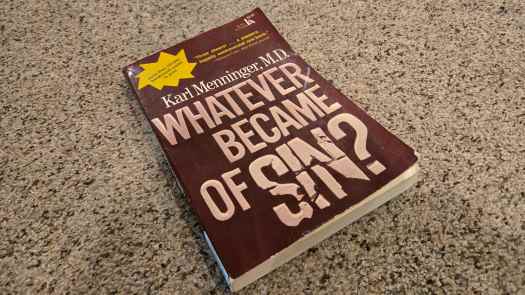
In 1973, Psychologist Karl Menninger published an important work, “Whatever Became of Sin?” in which he reflected on the diminishing concept of sin in our modern culture. His thesis was that the concept of sin as immoral behavior was being replaced by medical and psychological labels that reduced moral responsibility.

Though Menninger draws upon Christian as well as other religious traditions to support his thesis, his book is not a biblical exposition on the subject. Still, his thoughts on this issue, which were printed over 50 years ago, now seem prophetic in nature.

So whatever became of sin? Why has the concept diminished in our culture and what are the reasons for its demise?

The 6th chapter of Isaiah provides an answer for us. This chapter marks a pivotal moment in the life and calling of the prophet. In this chapter, Isaiah has a vision of the Lord in all of His splendor and glory.

The opening verse gives us a time stamp to date the events that follow. Uzziah had been the king of Israel for 52 years, a full life-time for many of his subjects. While Uzziah was one of the better kings of Judah early on, things did not end well for him. Toward the end of his reign, he stubbornly tried to enter the temple and perform rites that were reserved only for the priests, and as a result, he contracted leprosy and was forced to finish out his days in exile.

At Uzziah’s death, with no king to rule, Isaiah goes to the temple and experiences a vision of the true king, the Lord God Himself. Isaiah catches a rare glimpse of God as He really is, a picture of His absolute holiness.

What’s interesting about this encounter is the text says that when Isaiah sees the Lord in His holiness, he cries out, “my destruction is sealed, for I am a sinful man and a member of a sinful race.”

Some translations use the word “ruined” or “undone” to describe Isaiah’s emotional response.

Isaiah, when confronted with the perfect righteousness of God almighty, is brought to his knees as he recognizes his own sinfulness in light of holy God.

One of the reasons sin is not talked about much these days is because we don’t talk about God’s holiness so much these days. These two concepts are intertwined and interdependent – we don’t see sin so much if we don’t see God as holy and righteous.

Over the last 50 years or more, our culture has done all that it can to soften God’s divine attributes to make Him more palatable to our own personal preferences. In short, we’ve made God less like God and more like us.

For the atheist, dismissing God altogether means that there is no objective anchor or standard by which actions can be judged or labeled as “sin”.

“Who are you to tell me that my behaviors are wrong?” is a common refrain.

In many Christian circles, especially among progressives, God is not so much eliminated as much as He’s recreated or reimagined in a way that better fits the person’s lifestyle choices and behaviors.

One of the ways we often see this is in the elevation of the kind-hearted, compassionate New Testament version of God that we see in Jesus while dismissing or diminishing the “judgmental, ego-maniacal” Old Testament picture of God that seems too harsh and exacting. Some may go so far as to claim that the Bible describes two completely different Gods. I wrote recently about this in my blog post, “Is the Old Testament God a Bloodthirsty, Genocidal Psychopath?”

In light of the stark differences between the Old Testament perception of God and the New Testament portrayal of God in the person of Jesus, one inevitably chooses the deity that is more preferable and less restrictive to their own life choices.

The problem with this approach, as I outlined in my blog post, “Can You Make the Bible an Idol?”  is it essentially results in a form of idol worship, where my image of God is created according to my personal choices and inclincations instead of forming a picture of God that represents the fullness of how He has been revealed to us through His holy word.

If we want to talk about sin and the need for a savior, we must highlight God’s absolute holiness and righteousness. If a person doesn’t see God as infinitely holy, they’re more likely to overlook or dismiss their sinfulness as mere character flaws or innocent mistakes. If sin is not seen as an egregious offense against God’s very nature, there is less likelihood of coming to the realization that we are utterly lost and in need of a divine savior.

So whatever became of sin? It fell out of favor, just as God’s holiness has.


Did you enjoy this post? I’d love to hear your thoughts! Feel free to like, leave a comment below, and share it with your friends or on social media if you found it helpful or interesting. Your support keeps the conversation going!


Reflection

Describe  a time when you encountered the power and presence of God in your life as Isaiah did. In other words, when have you had an “Isaiah” moment with God? What was that like emotionally? 

What is your concept of sin? How would you define it? In what ways have you seen our culture minimize sin and personal responsibility?

In what ways have you created an image of God that is not fully reflective of how God has revealed Himself in both the Old and New Testaments?

How can. you ensure that your view of God is not just a personal image that you created to suit your own preferences?


Photo by Dave Lowe


Can You Make the Bible an Idol?

Psalm 119

16I delight in your decrees; I will not neglect your word.

20My soul is consumed with longing for your laws at all times.

24Your statutes are my delight; they are my counselors.

40How I long for your precepts! Preserve my life in your righteousness.

43Do not snatch the word of truth from my mouth, for I have put my hope in your laws.

47for I delight in your commands because I love them.

48I lift up my hands to your commands, which I love, and I meditate on your decrees.

70Their hearts are callous and unfeeling, but I delight in your law.

72The law from your mouth is more precious to me than thousands of pieces of silver and gold.

77Let your compassion come to me that I may live, for your law is my delight.

92If your law had not been my delight, I would have perished in my affliction.

97Oh, how I love your law! I meditate on it all day long.

103How sweet are your words to my taste, sweeter than honey to my mouth!

111Your statutes are my heritage forever; they are the joy of my heart.

113I hate double-minded men, but I love your law.

119All the wicked of the earth you discard like dross; therefore I love your statutes.

120My flesh trembles in fear of you; I stand in awe of your laws.

127Because I love your commands more than gold, more than pure gold,

129Your statutes are wonderful; therefore I obey them.

140Your promises have been thoroughly tested, and your servant loves them.

143Trouble and distress have come upon me, but your commands are my delight.

159See how I love your precepts; preserve my life, O LORD, according to your love.

163I hate and abhor falsehood but I love your law.

165Great peace have they who love your law, and nothing can make them stumble.

167I obey your statutes, for I love them greatly.

174I long for your salvation, O LORD, and your law is my delight.

(Psalm 119 – selected verses, NLT)

NOTE: Psalm 119 is the longest chapter in the entire Bible. I’ve included selected verses that reflect the content of this blog post


The Daily DAVEotional

A while back, I read a social media post from a person with a sizable following in which he exhorted people, “Don’t make the Bible an idol.”

My first thought was, “what does that even mean?”

Is it possible to make the Bible an idol? What would that even look like?

I immediately thought about this Psalm (119), which is the longest chapter in the entire Bible and is an extended discourse on the wonders and virtues of God’s word. I’ve written about this Psalm before in my post “The Endless Virtues of God’s Word.”

It’s well worth your time to read the entire Psalm but due to the sheer length of the text, I’ve only included selected verses that highlight the devotion, awe and love that the psalmist has for God’s word.

If ever someone might be accused of worshiping God’s Word and making it an idol, it would be the author of Psalm 119. Notice some of the language he uses to express his feelings about God’s laws, statutes and precepts.

Words like delight, love, long, hope, consumed, sweet, joy, precious and awe are all used to describe how the psalmist feels about God’s laws.

There is clearly a reverence and respect and a deep LOVE for God’s word. But does that equate to idol worship?

To answer that question, we need to understand what idol worship is.

I wrote in a previous blog post, “A Discourse on the Foolishness of Idols” that an idol can be thought of as a substitutionary object of trust. Instead of trusting in God as your deliverer, your provider, your protector, your source of life, your savior, etc, you transfer that trust to something or someone else.

But you can also think of an idol as anything that takes priority or precedence in your heart over God.

So how about this Psalmist? Is he guilty of idol worship? Is it possible to elevate the Bible to a position over God in our lives?

I suppose that if I were to worship the physical book of the Bible as if it were a deity itself, I could be accused of idol worship. But I don’t think that is what’s happening with the psalmist.

The word of the Lord – his law, precepts, ordinances and statutes – are all merely an extension of God Himself. They are not God, but they are a revelation of the character of the true God.

When the psalmist says he loves God’s law, and he delights in His word, he’s making a statement about God’s character. He’s acknowledging that God’s word is a source of revelation about God’s nature and in it, God has provided wisdom and instruction for righteous living.

God’s word tells us who He is and how we’re to live. The psalmist simply acknowledges these facts. Moreover, he’s speaking directly to God when he makes these statements. Therefore, the praise and adoration is directed toward God and not some inanimate scroll.

Think of it this way – let’s say you read a book that you really loved. Then one day you meet the author at a book signing. While you’re at the table, you go on and on about how much you loved the book. You share that the character development, plot lines and context were all relatable and engrossing. Do you think the author will be offended because you praised his/her work and not the author directly? No, the book is an extension of them and it is obvious to all that your praise is directed toward the author.

That is exactly what is happening in this psalm. The psalmist is simply recognizing that God’s laws and statutes are righteous and life-giving.

So why would this online social media influencer bark out that we should not make the Bible an idol? Why is this even a concern?

My desire to answer this question led me down an online rabbit hole. This particular influencer, and others who also warn that we should not make the Bible an idol, belongs to a strain of religious faith that is known as Progressive Christianity.

Progressive Christianity uses the word “Christianity” but it is hardly Christian. While they utilize the same language and reference the same characters as traditional Christianity, they redefine the meaning of words, concepts and even characters in order to suit their own theological preferences.

Progressive Christians occupy a broad spectrum of beliefs but there are some things that tend to be common among most who identify themselves as being a part of this camp.

Perhaps the hallmark value of Progressive Christianity is their view that God is always evolving. Hence, there is an emphasis on searching and questioning, while those claiming to know truth may be labeled as unenlightened or immature.

Progressive Christianity tends to be very ecumenical, embracing all faith religions and ideologies as equally valid and helpful. Loving others means you shouldn’t offend others by telling them that their beliefs might be wrong. Hence, Jesus has been recast from His role as exclusive Savior of the world to that of a moral teacher whose example we’re to follow.

Standing in contrast to Progressive Christianity is Orthodox Christianity, which teaches that God can be known because He has revealed Himself to us through His word and through the person of Jesus.

In addition, orthodox Christianity teaches that God is NOT evolving. He has laid out for us in His word what His standards are for living and because God doesn’t change, the standards and statutes set forth in His word apply to us today.

Perhaps you are starting to see the problem. If God doesn’t change, then that means His moral code and His rules for righteous living are not optional and must be obeyed today.

The Progressive Christian attempts to get around this by doubling down on the assertion that God IS evolving while adding the caveat that the Bible is not written by God.

Their claim is that the Bible we have is simply a record of writings by fallible men; they are NOT God’s spoken words. While the Bible may be helpful and inspiring, it is only a tool that you may choose to use; it is NOT authoritative for our lives. If the Bible lacks authority, then it logically follows that I don’t have to abide by all of its restrictive and antiquated rules and regulations.

This is where the rubber meets the road. For the evangelical (orthodox) believer, the Bible is authoritative, for it reveals God’s very nature to us and it contains His laws, statutes, precepts and ordinances for righteous living. This is what the psalmist was extolling in Psalm 119.

The Progressive Christian denies that God is the author of Scripture and so for anyone who believes in the authority of Scripture, they are told by the Progressive Christian, “Don’t make the Bible an idol.”

So you see that this whole argument is based on a completely different foundational view of God’s nature and how he reveals Himself to mankind. The Progressive Christian denies that the Bible is an authoritative tome that accurately reflects God’s nature and provides rules and guidance for living. To them, there are many other ways God may communicate to us apart from the Bible, including other faith traditions.

This denigration of the authority of Scripture allows the Progressive Christian to decide for himself which of the statutes in the Bible are valid for today and which ones aren’t. Conveniently, this allows the Progressive Christian to formulate a view of God that matches their preferences and proclivities exactly, which, strangely, is exactly the definition of forming an idol.

Amazingly, we’ve come full circle. The Progressive Christian tells us not to make the Bible an idol because doing so limits God and restricts our view of Him to how He is portrayed in Scripture.

Meanwhile, the Progressive Christian untethers themselves from the shackles of Biblical revelation of God as an immutable template for representing who God is, opting instead for the freedom to develop an image of God that is highly influenced by their own experiences and preferences.

Ironically, that sounds like idol worship to me.


To learn more about Progressive Christianity and what they believe, watch this 12 minute video from apologist Alisa Childers


Reflection

What is your view of the Bible? Do you see it as God’s word or a collection of writings written by fallible men?

What is the source of your information about God? How can you know if your view of God is accurate to who God really is rather than just an image you developed about Him that suits your preferences?

Do you think that the commands of the Bible are valid for people today or are they optional? What are the reasons for your position?

What has been your experience with Progressive Christianity? Do you think Progressive Christianity is compatible with traditional, orthodox Christianity? Why or why not?

Why do you think people opt for a Progressive version of Christianity instead of traditional, orthodox Christianity? What do you think are some of the main reasons and driving forces?


Photo by Pixabay on Pexels.com

I Put a Spell on You

Deuteronomy 21

22“If someone has committed a crime worthy of death and is executed and then hanged on a tree, 23the body must never remain on the tree overnight. You must bury the body that same day, for anyone hanging on a tree is cursed of God. Do not defile the land the LORD your God is giving you as a special possession. (Deuteronomy 21:22-23, NLT)

Galatians 3

1Oh, foolish Galatians! What magician has cast an evil spell on you? For you used to see the meaning of Jesus Christ’s death as clearly as though I had shown you a signboard with a picture of Christ dying on the cross. 2Let me ask you this one question: Did you receive the Holy Spirit by keeping the law? Of course not, for the Holy Spirit came upon you only after you believed the message you heard about Christ. 3Have you lost your senses? After starting your Christian lives in the Spirit, why are you now trying to become perfect by your own human effort? 4You have suffered so much for the Good News. Surely it was not in vain, was it? Are you now going to just throw it all away?

5I ask you again, does God give you the Holy Spirit and work miracles among you because you obey the law of Moses? Of course not! It is because you believe the message you heard about Christ.

6In the same way, “Abraham believed God, so God declared him righteous because of his faith.” 7The real children of Abraham, then, are all those who put their faith in God.

8What’s more, the Scriptures looked forward to this time when God would accept the Gentiles, too, on the basis of their faith. God promised this good news to Abraham long ago when he said, “All nations will be blessed through you.” 9And so it is: All who put their faith in Christ share the same blessing Abraham received because of his faith.

10But those who depend on the law to make them right with God are under his curse, for the Scriptures say, “Cursed is everyone who does not observe and obey all these commands that are written in God’s Book of the Law.” 11Consequently, it is clear that no one can ever be right with God by trying to keep the law. For the Scriptures say, “It is through faith that a righteous person has life.” 12How different from this way of faith is the way of law, which says, “If you wish to find life by obeying the law, you must obey all of its commands.” 13But Christ has rescued us from the curse pronounced by the law. When he was hung on the cross, he took upon himself the curse for our wrongdoing. For it is written in the Scriptures, “Cursed is everyone who is hung on a tree.” 14Through the work of Christ Jesus, God has blessed the Gentiles with the same blessing he promised to Abraham, and we Christians receive the promised Holy Spirit through faith. (Galatians 3:1-14, NLT)


The Daily DAVEotional

In 1956, Jalacy “Screamin’ Jay” Hawkins recorded his most famous song, “I Put a Spell on You.” The song (which you can listen to here) became a cult classic that’s been covered by a number of artists over the years, including Nina Simone, Annie Lennox and Alan Price.

For me, I grew up listening to the Creedence Clearwater Revival Rendition of the song. It was classic rock at its best.

To have a spell put on you means that you’re completely held by something, whether a person or an idea. Dictionary.com describes it as “a state of being enchanted, entranced or fascinated.”

In this 3rd chapter of Paul’s letter to the Galatians, Paul is asking the question, “who put a spell on you?” Paul is so dumbfounded by the change he has seen in how the Galatians are living out the Christian life that it’s as if they have been put in a trance by an evil trickster posing as a servant of Christ.

The issue that Paul was addressing is highlighted in verse 3 where Paul says, “Have you lost your senses? After starting your Christian lives in the Spirit, why are you now trying to become perfect by your own human effort?” [emphasis added]

This problem is one that is actually pretty commonplace among believers even today. Many Christians place their faith in Christ to BEGIN the Christian life, and then resort to a works based system in order to MAINTAIN the Christian life.

Paul is saying that this approach to the Christian life is so contrary to the actual gospel message that it’s EVIL.

Twice in the first 5 verses Paul asks the question: did you receive the Holy Spirit by keeping the Law? The question is rhetorical in nature, but Paul answers it anyway with an emphatic NO!

How does a person receive the Holy Spirit?  Through belief, or “by faith”.

If you are a Christian, you came to Christ by placing your faith, or trust, in Jesus to pardon your debt of sin and provide forgiveness through His death on the cross. This is why Paul, in the very first verse, references the cross of Christ. Every Christian who has ever existed has come to Christ in the same way, by believing in Jesus and His death on the cross as a payment for personal sin.

According to Ephesians 1:13, at the moment of belief in Christ, all Christians receive the promised Holy Spirit, who comes to live inside the life of the new believer.

The problem for many Christians is what follows that initial conversion experience. After beginning the Christian life by placing their faith in Christ, many Christians fail to continue the Christian life in faith, empowered by the Spirit. Instead, they opt for a rules-based approach in which they seek to please God through their “human effort” (see verse 3).

This was not just a problem with the Galatians. Paul also addressed this issue in Romans 4. I wrote about it in my blog post, “How Good Do You Have to Be to Be Saved?”

This problem persists today as well.

In our rebelliousness, we desire to make ourselves the center of the universe. Most religions are man-centered, meaning that the religion is centered around human effort and good deeds.

Biblical Christianity, on the other hand, is God-centered. It is the ONE major religion or philosophy that does not depend on what man DOES but is instead ordered around what God DID via Christ’s death on the cross.

The issue with the Galatians was that while they began the Christian life in the Spirit by faith, they sought to maintain their standing with God by following the Law, the Jewish religious code.

Paul reasons that if you didn’t come to Christ by adhering to the Law, why are you trying to maintain your relationship with God by adhering to the Law?

Essentially, Paul is saying that you can’t mix and match these two approaches. They started out with a God-centered approach based on faith but then shifted to a man-centered approach based on human effort. This makes no sense. If you want to base it it on adhering to the Law, you will have to obey the whole Law. Otherwise, you are under a curse.

The other option is to base your approach on faith, which is preferable, because in this approach, Jesus was a curse for us via his death on the cross (see verse 13).

By switching from a God-centered approach back to a man-centered religion (the Law) as a means of seeking God’s approval, you are invalidating the whole reason why Christ was necessary in the first place, which is why Paul asks the Galatians, “Are you now going to just throw it all away?”

The Christian life is a life of faith. We don’t just come to Christ by faith. We live the Christian life by faith as well. In this way, God is the center at all times.

If you are under the impression that we come to Jesus by placing our faith in Him but then we must follow some sort of religious moral code in order to keep our standing with God, well then Paul’s question to the Galatians extends to you – who put a spell on you? That is not just a minor misunderstanding or small theological difference of opinion. Paul says this ideology is evil and man-centered, designed to keep people living as slaves instead of living in freedom and experiencing true transformation.

Reflection

What is your reaction to the idea that we are under the curse of the Law, but Jesus, by hanging on a tree, became a curse for us? What imagery does this create in your mind? What thoughts and emotions does it provoke?

What do you think are the reasons why Paul calls the Galatians approach to the Christian life evil?

What are some examples you can think of in which people tend to make Christianity man-centered instead of faith-based and centered on God?

What do you think it looks like practically to continue the Christian life in faith instead of human effort?


Photo by Dollar Gill on Unsplash


Is the Old Testament God a Bloodthirsty, Genocidal Psychopath?

Psalm 106

34Israel failed to destroy the nations in the land,

as the LORD had told them to.

35Instead, they mingled among the pagans

and adopted their evil customs.

36They worshiped their idols,

and this led to their downfall.

37They even sacrificed their sons

and their daughters to the demons.

38They shed innocent blood,

the blood of their sons and daughters.

By sacrificing them to the idols of Canaan,

they polluted the land with murder.

39They defiled themselves by their evil deeds,

and their love of idols was adultery in the LORD’s sight.

40That is why the LORD’s anger burned against his people,

and he abhorred his own special possession.

41He handed them over to pagan nations,

and those who hated them ruled over them.

42Their enemies crushed them

and brought them under their cruel power.

43Again and again he delivered them,

but they continued to rebel against him,

and they were finally destroyed by their sin.

44Even so, he pitied them in their distress

and listened to their cries.

45He remembered his covenant with them

and relented because of his unfailing love.

46He even caused their captors

to treat them with kindness.

47O LORD our God, save us!

Gather us back from among the nations,

so we can thank your holy name

and rejoice and praise you.

48Blessed be the LORD, the God of Israel,

from everlasting to everlasting!

Let all the people say, “Amen!”

Praise the LORD!

(Psalm 106:34-48, NLT)


The Daily DAVEotional

Have you ever heard someone question the morality of God as He is portrayed in the Old Testament?

Perhaps you (or someone you know) have wondered if the Bible is actually describing two different gods, since God as He is depicted in the Old Testament seems so different than how He is portrayed in the New Testament in the person of Jesus.

Some might go so far as to deny the God of the Old Testament, using words like “blood-thirsty”, “genocidal” and even “psychopathic” to describe His behavior.

In a previous blog post entitled “Is the God of the Old Testament Petty“, I wrote about how some people view the Old Testament God as petty or jealous.

The bottom line is that many people simply cannot reconcile the actions of God in the Old Testament with the teachings of Jesus in the New Testament. How is it possible, the reasoning goes, that Jesus could teach about the need to love others while the God of the Old Testament routinely wipes out whole cultures and whimsically punishes people for no apparent reason? That doesn’t seem very loving. Ergo, many simply dismiss the Old Testament entirely since it paints a picture of God that is inconsistent with their view and understanding of who they think God is or should be.

The primary reason that people cannot reconcile the God of the Old Testament with the God of the New Testament (Jesus) is because they have created a caricature of each that is based on limited information and a false understanding of God’s nature.

These caricatures often set up the Old Testament God as being a bloodthirsty God of vengeance while depicting Jesus as mild-mannered and universally accepting of all peoples. It’s no wonder people are confused. Both versions and understandings of God are wrong and incomplete.

Regarding the God of the Old Testament, here are a few things people don’t often recognize:

First, God expelled the people who inhabited the land that Israel occupied because they were extremely wicked. This Psalm passage says that they even sacrificed their sons and daughters to the idols of Canaan. The land was desecrated and they defiled themselves.

Should God not bring punishment on the wicked?

The Israelites ultimately adopted the same wicked practices of the people they displaced, and despite God’s numerous warnings, their lack of repentance led to the same fate – punishment.

The second thing people don’t realize about the Old Testament is that the events portrayed extend out over a span of thousands of years. Yes, there is judgment, but it is not the constant rampage that people have depicted, as if God is out of control and in a continual fit of rage.

The Old Testament God is actually quite patient and reserved, if you think about the time frame related to the events. Over, and over and over and over again, God warns his people about impending judgment and punishment that will come as a result of their sin and wickedness. He provides many, many, many opportunities over years and years and years for them to humble themselves and repent. And yet, he doesn’t just talk a big talk. He delivers on his promised retribution.

The perception of Jesus, however, is that he doesn’t exhibit any of the out-of-control jealousy and rage that the Old Testament God does. Jesus is seemingly patient and kind, without a mean bone in his body. Jesus is often seen as someone who exhibits the pacifism of Ghandi, the esoteric teachings and pithy proverbs of Buddha and the generous giving spirit of Santa Claus, all at once.

But this caricature of Jesus is also false and incomplete.

Jesus affirmed the teachings of the Old Testament as being the authoritative words of God (see John 5:39, Matthew 5:17 and Luke 24:44-46). Additionally, Jesus quoted from the Old Testament and referenced many of the stories as if they were real. There is no indication that Jesus disputed any of the stories, writings or teachings of the Old Testament. If Jesus is so different than the God of the Old Testament, in terms of their nature and purpose, wouldn’t we expect Jesus to note that? Shouldn’t we expect that Jesus would point out the flaws in the Old Testament version of God and demonstrate where and how He is superior? He doesn’t.

In addition, the idea that Jesus is a kind, grandfatherly figure who never utters a harsh word is also false. Jesus had many harsh words, particularly for the religious elites of the day. Jesus demonstrated kindness and gentleness to those who were humble and those who were in despair, but for those who were arrogant and thought of themselves as sinless, Jesus often took a different tone – one of rebuke.

Jesus came to the earth to offer humanity the opportunity to partake in the kingdom of God, which required Him to go to the cross and secure payment for the sins of the world. It is clear that Jesus’ first advent was not as judge, but as a prophet and priest.

However, Jesus himself acknowledged and taught that He would come again, but this time, He would be coming as a conquering king, bringing judgment to the world. This is most clear in his extended discourse on the future in Matthew 24 and Matthew 25, but also in Revelation 19:11-21, which depicts Jesus on a white horse with the armies of heaven behind him as he defeats his enemies.

Jesus is in perfect alignment with God as He is portrayed in the Old Testament. He claimed to be sent from the Father and He also affirmed their unity of purpose.

Much more could be said to demonstrate this but that is beyond the scope of this limited blog post.

Suffice it to say, the idea that the God of the Old Testament is a vile, evil, rageaholic, while Jesus is Mr. Rogers on steroids is a false caricature that is based on limited information and personal preferences rather than an accurate reading and understanding of the Biblical texts.

Reflection

How would you respond to someone who says the God of the Old Testament is a different god than Jesus?

How have you reconciled in your heart and mind the differences in the Old Testament depiction of God and the New Testament portrayal of Jesus?

In what ways do you think your views and understanding of God might be deficient or incomplete? 

What steps do you think you and others can take to reconcile the supposed differences between the God of the Old Testament and the person of Jesus?


Image created by Grok-2 Ai generator on X.com

How Do You Prepare for God’s Final Exam?

1 John 5

11And this is what God has testified: He has given us eternal life, and this life is in his Son. 12So whoever has God’s Son has life; whoever does not have his Son does not have life.

13I write this to you who believe in the Son of God, so that you may know you have eternal life. (1 John 5:11-13, NLT)


The Daily DAVEotional

When I was in college, on the last day of instruction for every class I ever took, someone would ask the professor what was going to be on the final exam.

It makes sense. Everyone wants to know what is going to be tested so they can adequately prepare for the test. Can you imagine not having any idea how the instructor was going to evaluate your knowledge and progress?

Nobody studies for a test by just guessing what will be covered on the exam and how they will be evaluated. It’s actually quite foolish.

And yet, this is exactly how many people approach life.

According to Pew Research in December 2023, over 70% of Americans believe in an afterlife, while over 60% of Americans believe in hell.

(https://www.pewresearch.org/religion/2023/12/07/spirituality-among-americans/)

How exactly though does one determine whether they will go to heaven or hell?

In my many years of ministry, I have engaged with thousands of people regarding issues of spirituality and the afterlife. When asking people the question of whether they think they will go to heaven when they die, I found that most people think they will make it. But when asked the follow-up question of how God decides who makes it into heaven and who doesn’t, most people aren’t quite sure.

It’s interesting to me that most people aren’t sure how God decides who makes it into heaven, but they’re fairly certain that they will make it to heaven.

This is because people overwhelmingly believe that getting into heaven is a matter of being a good person and most people think of themselves as good.

But is this how God evaluates a person’s eternal destination – their goodness? And if so, what is the threshold of “good” that is needed? What kind of goodness score must one get in order to pass the test and make it into heaven? How would a person even evaluate their own level of goodness?

You would never study for a final without knowing what is going to be on the test and how your grade is going to be tabulated, but concerning one’s eternal destiny, which is a far more important outcome than your grade in a class, many people simply guess and make assumptions about how God evaluates them.

Fortunately for us, we don’t have to guess how God evaluates eligibility to enter heaven. He doesn’t make us wonder what His standards are. Here in 1 John 5, He tells us quite explicitly how He decides. In fact, we’re told that we can KNOW for certain whether we have eternal life or not.

What is the standard? It’s not what most people think. It’s not goodness, which is really just a subjective spectrum that most people have erected in such a way that no matter what bad things they have done, they think of themselves as good.

According to this passage, eternal life is based on the Son, Jesus. Those who have Jesus have eternal life. Those who do NOT have Jesus don’t have eternal life.

This standard is actually a lot easier to evaluate than some subjective idea of goodness. You either have the Son or you don’t. If you have the Son, John tells us that you can KNOW that you have eternal life. You can be 100% certain.

But if you don’t have the Son, you can be 100% certain that you don’t have eternal life.

The question for us then is how do we get the Son? Stay tuned.

Reflection

Do you believe there is an afterlife? What does the afterlife look like? What is the source of your information about the afterlife?

How do you define goodness? What makes a person “good”? How do you think God defines goodness? How good do you think a person needs to be to make it into heaven and live with God for eternity?

If you were to die tonight, how sure are you (on a scale of 0-100%) that you would make it into heaven and live with God for eternity? How would you rate your chances?

This passage says that eternal life is based on the Son, Jesus. How do you think a person can “have” the Son? What do you think is involved in getting the Son and having eternal life?


Photo by RDNE Stock project: https://www.pexels.com/photo/teacher-proctoring-his-students-during-an-examination-7092593/

An Ancient Example of Cancel Culture

Esther 3

1Some time later, King Xerxes promoted Haman son of Hammedatha the Agagite to prime minister, making him the most powerful official in the empire next to the king himself.  2All the king’s officials would bow down before Haman to show him respect whenever he passed by, for so the king had commanded. But Mordecai refused to bow down or show him respect.  3Then the palace officials at the king’s gate asked Mordecai, “Why are you disobeying the king’s command?”  4They spoke to him day after day, but still he refused to comply with the order. So they spoke to Haman about this to see if he would tolerate Mordecai’s conduct, since Mordecai had told them he was a Jew.  5When Haman saw that Mordecai would not bow down or show him respect, he was filled with rage.  6So he decided it was not enough to lay hands on Mordecai alone. Since he had learned that Mordecai was a Jew, he decided to destroy all the Jews throughout the entire empire of Xerxes.  7So in the month of April, during the twelfth year of King Xerxes’ reign, lots were cast (the lots were called purim) to determine the best day and month to take action. And the day selected was March 7, nearly a year later.  8Then Haman approached King Xerxes and said, “There is a certain race of people scattered through all the provinces of your empire. Their laws are different from those of any other nation, and they refuse to obey even the laws of the king. So it is not in the king’s interest to let them live.  9If it please Your Majesty, issue a decree that they be destroyed, and I will give 375 tons of silver to the government administrators so they can put it into the royal treasury.”  10The king agreed, confirming his decision by removing his signet ring from his finger and giving it to Haman son of Hammedatha the Agagite—the enemy of the Jews. 11“Keep the money,” the king told Haman, “but go ahead and do as you like with these people.” (Esther 3:1-11, NLT)


The Daily DAVEotional

Have you heard of this social phenomenon called “cancel culture”? It’s when someone commits an offense, whether intentional or unintentional, that so offends another person that they seek retributive justice in the form of public shaming and ridicule, often for the purpose of seeking a viral response of outrage that might lead to larger consequences, such as loss of job or livelihood.

As I read the third chapter of Esther, it occurred to me that this phenomenon of cancel culture isn’t new. In fact, it has existed for centuries, even millennia.

Haman is actually an ancient example of cancel culture. He gets so offended by the fact that Mordecai won’t bow to him that he decides that it’s not enough to punish Mordecai, but Haman decides to eradicate, erase, yes CANCEL, anyone even associated with Mordecai. (Does this sound familiar?) Hence, Haman approaches the king and arranges for the execution of all Jews throughout the empire on a determined date about a year into the future.

What motivates a person to want to completely cancel or even eradicate another person or race? Verse 5 gives a clue as it says that Haman was “filled with rage.”

Unfortunately, we live in a culture where many people are filled with rage. We can easily become offended and demonstrate unloving and unforgiving behavior towards others (see my post on January 3, 2021 regarding “Online Interactions”). When offended, our tendency is to react and seek immediate justice instead of slowing down and responding in a loving and gracious way.

Cancel culture is real and it’s a symptom of a greater problem – humankind’s sinfulness and self-centeredness. Contrary to what we might think, it’s been around for a long time, and I suspect it won’t be going away any time soon!

Reflection

When have you experienced cancel culture, either as the recipient or initiator?

What issues might cause the kind of outrage in you that would lead to wanting to cancel others?

How can you invite the Lord to develop within you the kind of heart that would demonstrate love, grace and forgiveness to others?


Photo by Markus Winkler: https://www.pexels.com/photo/a-typewriter-with-the-word-cancel-culture-written-on-it-18500633/