Where Did that Ball Come From?

Romans 1

18But God shows his anger from heaven against all sinful, wicked people who push the truth away from themselves. 19For the truth about God is known to them instinctively. God has put this knowledge in their hearts. 20From the time the world was created, people have seen the earth and sky and all that God made. They can clearly see his invisible qualities—his eternal power and divine nature. So they have no excuse whatsoever for not knowing God.

21Yes, they knew God, but they wouldn’t worship him as God or even give him thanks. And they began to think up foolish ideas of what God was like. The result was that their minds became dark and confused. 22Claiming to be wise, they became utter fools instead. 23And instead of worshiping the glorious, ever-living God, they worshiped idols made to look like mere people, or birds and animals and snakes.

24So God let them go ahead and do whatever shameful things their hearts desired. As a result, they did vile and degrading things with each other’s bodies. 25Instead of believing what they knew was the truth about God, they deliberately chose to believe lies. So they worshiped the things God made but not the Creator himself, who is to be praised forever. Amen.

26That is why God abandoned them to their shameful desires. Even the women turned against the natural way to have sex and instead indulged in sex with each other. 27Note And the men, instead of having normal sexual relationships with women, burned with lust for each other. Men did shameful things with other men and, as a result, suffered within themselves the penalty they so richly deserved.

28When they refused to acknowledge God, he abandoned them to their evil minds and let them do things that should never be done. 29Their lives became full of every kind of wickedness, sin, greed, hate, envy, murder, fighting, deception, malicious behavior, and gossip. 30They are backstabbers, haters of God, insolent, proud, and boastful. They are forever inventing new ways of sinning and are disobedient to their parents. 31They refuse to understand, break their promises, and are heartless and unforgiving. 32They are fully aware of God’s death penalty for those who do these things, yet they go right ahead and do them anyway. And, worse yet, they encourage others to do them, too. (Romans 1:18-32, NLT)


The Daily DAVEotional

I heard a humorous story a long time ago that goes like this:

A guy is talking to his atheist friend and poses this series of questions:

“You’re walking along the beach and you see a tennis ball. What do you assume? Is it the product of random ocean forces that somehow mixed random ocean materials together to create a tennis ball and then washed it up onto the shore?

“NO! It’s a tennis ball. I assume someone left it here after playing with it on the beach.”

“Ok. Let’s say you’re walking along the beach and you see a bigger ball, like a soccer ball. What do you conclude? Was it designed or did it create itself through some random process?”

“It was obviously designed and placed there by someone.”

“Ok. Let’s say you’re walking along the beach and you see an even BIGGER ball, like a weather balloon. What do you conclude?”

“Well, since a weather balloon has purpose, it must have been created by someone who understood that purpose.”

“Great. What about an even BIGGER ball? What if you’re walking along and you see the EARTH? What do you conclude? Was it the product of an intelligent designer?”

“Oh no. The Earth was not created by an intelligent being. It’s the product of billions of years of random chance processes.”


Click here to see a A Comprehensive List of Blog Posts Based on Bible Passage Reference


Romans 1 is the classic Bible chapter outlining the process by which people, in the futility of their own mind, devolve into the depths of their own sinfulness.

Paul speaks to the fictional exchange above in verses 18-20, which state that it’s obvious when you look around that there must be some powerful, creative force behind all that we see. Given our own understanding and experience with creating and designing advanced, complex machines and electronics, how could anyone come to the conclusion that something like our universe, which is so intricately, beautifully and purposefully designed is the result of random chance?

It really makes no logical sense.

William Paley, in the early 1800’s, posed this scenario when he developed his “Watchmaker” analogy. In his analogy, he said in effect,

If I stumbled upon a stone and asked how it got there, I would think the question is absurd. It has been there forever. But if I stumbled upon a watch and asked how it got there, the answer would be different, for a watch is obviously designed with purpose, showing evidence of a designer.

So what is the reason people will acknowledge that man-made items such as watches, computers and automobiles are obviously designed, yet something much larger, more complex and intricate that includes biological living things and entire eco-systems, is NOT the product of a designer?

Paul’s answer in this chapter is spelled out in the first verse of this section (verse 18), when he says:

“But God shows his anger from heaven against all sinful, wicked people who push the truth away from themselves.

The short answer is that people suppress the truth that is inherently obvious to them. To suppress truth is to deny it and reject it.

Paul’s discourse outlines the depth of the problem of sin. Sin is not just doing bad things or saying bad things, but sin has penetrated to the very depths of our heart.

The heart represents our will, our most inner motives and desires. Paul is saying that though God’s qualities are obvious to all through creation, people end up suppressing (rejecting) this truth through a downward spiraling pattern of inner rebellion.

How does this happen?

It starts when people who know God, or at least know there is a God, refuse to give thanks to God or acknowledge His role in our lives. Next, people develop an image of God that matches their own preferences. They fail to acknowledge God as He is, but instead begin to create a god in their mind who matches their own desires and inclinations.

As people begin to follow and worship their own view of god, their hearts become darkened. Why? Because they are not following the truth but they’re following a distorted and false image of god that represents their own preferences and desires. In effect, people begin to train and condition their own moral values away from God’s standards and towards their own sinful desires.

As people continue on this course, God gives them over to their own base desires. In other words, He gives people the freedom to follow their choices and also experience the natural consequences of those choices. People’s thoughts, attitudes and actions become more and more vile and wicked as they reject God’s standards of morality and choose to follow their own inclinations.

The end result is that people develop their own moral values that contradict and oppose God’s values in varying degrees. What sinful humanity now thinks and calls normal and good, God views as wickedness. These rebellious acts show up in every possible area of our lives, from the way we talk to others, the way we conduct our business, our sexual practices, etc.

The final stage in this rebellion is a declaration that our sinful acts are righteous (thus, morality is redefined) along with an encouragement for others to follow these new moral guidelines.

In order to justify the new moral order, people either eliminate God altogether (atheism) or they re-create God in such a way that He actually advocates and endorses these attitudes and behaviors that have traditionally been seen as sinful (paganism/idolatry).

I think verse 31 is a fitting summary that characterizes the attitude of the person Paul is describing, when he says,

“They refuse to understand, break their promises, and are heartless and unforgiving.”

This sounds a lot like our current culture to me, and the thing is, none of us are immune to these outcomes. If we are not intentional about caring for our spiritual life, we may find ourselves, over time, slowly drifting away from God until one day we resemble the person described in Romans 1:28-32.

How can we avoid this?

I’m sure there are many practical steps that could help but if we did these three things consistently: acknowledge God, give thanks to Him for His goodness, and worship Him for who He is, we would likely safeguard ourselves from entering the downward spiral which starts the progression.


Did you enjoy this post? I’d love to hear your thoughts! Feel free to like, leave a comment below, and share it with your friends or on social media if you found it helpful or interesting. Your support keeps the conversation going!


Reflection

What are the typical reasons you hear people giving to reject God and His existence?

What examples can you see in our current culture where people are redefining morality and changing their view of God in order to accommodate their own life choices and preferences?

What biblical moral standards do you struggle with the most? What do you think are the reasons you (and others) struggle with those particular moral values?  

In what ways are you most tempted to re-define God in order to meet your own personal moral preferences?


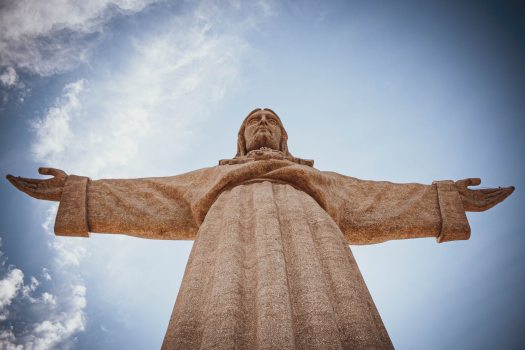
Photo by Kevin Mueller on Unsplash

Which Hoax Do You Believe?

Matthew 27

62The next day—on the first day of the Passover ceremonies*—the leading priests and Pharisees went to see Pilate. 63They told him, “Sir, we remember what that deceiver once said while he was still alive: ‘After three days I will be raised from the dead.’ 64So we request that you seal the tomb until the third day. This will prevent his disciples from coming and stealing his body and then telling everyone he came back to life! If that happens, we’ll be worse off than we were at first.”

65Pilate replied, “Take guards and secure it the best you can.” 66So they sealed the tomb and posted guards to protect it. (Matthew 27:62-66, NLT)

. . . . . . . . . . . .

Matthew 28

11As the women were on their way into the city, some of the men who had been guarding the tomb went to the leading priests and told them what had happened. 12A meeting of all the religious leaders was called, and they decided to bribe the soldiers. 13They told the soldiers, “You must say, ‘Jesus’ disciples came during the night while we were sleeping, and they stole his body.’ 14If the governor hears about it, we’ll stand up for you and everything will be all right.” 15So the guards accepted the bribe and said what they were told to say. Their story spread widely among the Jews, and they still tell it today. (Matthew 28:11-15, NLT)


The Daily DAVEotional

Christianity stands or falls on the resurrection of Jesus Christ. Even Paul, in 1 Corinthians 15 says that if Jesus has not been raised from the dead, we are still in our sins. Hence, if you can disprove the resurrection, you can disprove the entire Christian faith.

The early church could have been squashed before it even got off the ground if the religious leaders did just one simple thing – produce the body of Jesus, thereby demonstrating that Jesus had not risen from the dead but was still resting in the tomb exactly where he had been laid.

The religious leaders were aware of Jesus’ prediction that he would rise from the dead on the third day, so they went to Pilate to secure reinforcements and armed security at the tomb to make sure that the disciples wouldn’t be able to steal the body and perpetuate a hoax on the people.

But as it turns out, Jesus rose from the dead anyway, and with his body now gone, the religious leaders found themselves in an unusual predicament. One option is they could realize that Jesus must be who He claimed to be all along and repent of their hard-heartedness and wickedness that led them to crucify Jesus.

Or they could go the other route, which is to do whatever is necessary to maintain their power and position over the people they lead.

Not surprisingly, the religious leaders chose the second route, which included bribing the soldiers who guarded the tomb to tell people that the disciples had stolen the body while they were sleeping.

The irony of this whole situation is that the religious leaders secured the tomb site in order to prevent the disciples from being able to perpetuate a hoax, but instead, the religious leaders ended up creating and perpetuating a different hoax of their own.

This story – that the disciples stole the body and then claimed that Jesus had been resurrected – is still being promoted today among those who staunchly dispute that Jesus was resurrected.

Though it’s a popular theory that seeks to explain the empty tomb, this story has so many holes in it that it is easily debunked.

First off, if the soldiers were sleeping, how would they know who it was that supposedly stole the body?

Second, how likely is it that all the guards were sleeping at the same time? Given that sleeping while on duty was punishable by death, what is the likelihood that JUST ONE of them had fallen asleep? VERY LOW.

Now what is the likelihood that ALL of them were asleep at the same time? EXTREMELY LOW.

And if they were to have fallen asleep, how is it that the disciples were able to move a HUGE stone (estimated to be at least 2000 pounds or more) without waking any of these guards?

It takes more faith to believe this story than it does to believe that Jesus rose from the dead, removed the stone and emerged from the tomb alive!

In addition to the details of their story not lining up, this explanation also requires us to believe that the disciples, who had all scattered when Jesus was arrested, somehow came together and mustered up the bravery to steal the body of Jesus so that they could perpetuate a resurrection narrative that they not only knew to be false, but that brought persecution upon them and ultimately led to their death.

Most people will do whatever it takes to save themselves from pain and death. It is simply not believable that all the disciples were willing to die for something that they knew to be a lie.

Lastly, this theory doesn’t explain the many post-resurrection appearances Jesus made. It’s reported that after His resurrection, Jesus made multiple appearances to many different people and once appeared to more than 500 people at the same time.

So in the end, we must decide which hoax fits the facts more reasonably.

Is it more believable that the disciples are the ones perpetuating an elaborate hoax that has deceived billions of people over the centuries? This hoax requires us to believe that trained soldiers fell asleep on the job, yet still somehow knew that the disciples were the ones who stole the body.

Furthermore, what was the motive of the disciples’ fabrication? This hoax requires us to believe that these disciples, who were afraid for their lives when Jesus was arrested, suddenly became brave enough to steal the body of Jesus and declare Him to be resurrected to an unsuspecting populace. This elaborate deception resulted, not only in intense ongoing persecution, but ultimately in their deaths.

Or is it more believable that the religious leaders are the ones who perpetuated a hoax for the purpose of maintaining their power and authority over the people? The Scriptures tell us that they bribed the soldiers and told them to propagate the stolen body story in order to explain the empty tomb.

In the end, the religious leader’s hoax is the more likely hoax because the one thing it requires me to believe is eminently believable – that people are selfish and will often go to great lengths to maintain their power and authority over others.

Reflection

Which of these two hoaxes do you think is more believable and why?

Describe a time when you lied in order to protect yourself? Conversely, when is a time you lied for the purpose of bringing about great pain and hardship?

Given the circumstances, why do you think the religious leaders continued to resist Jesus as the Messiah?

Can you think of a time in your life when your stubbornness caused you to act irrationally? What was the situation? How did you overcome your stubbornness? What happened to help change your attitude?


Photo by Karolina Grabowska from Pexels


He is Risen Indeed!

Christianity stands or falls on the fact of the resurrection of Jesus Christ. Even the apostle Paul, in his 1st letter to the Corinthians, said

“and if Christ has not been raised, your faith is worthless; you are still in your sins.” [i]

According to the Biblical record, three days after being crucified, Jesus overcame death and was resurrected. He then appeared to many of his followers in several different settings and on several different occasions. During this period, Jesus issued the command for His followers to go and tell the world about Himself, His love for mankind and His resurrection from the dead. It was from this foundation that Christianity began to spread throughout the Roman world.

Many who oppose the Christian faith discount the resurrection. Yet the fact remains that on the third day, the tomb where Jesus lay was empty. If Jesus was not resurrected, what happened to the body?

Over the centuries, there have been numerous theories presented to try to explain the empty tomb in a way that would make a bodily resurrection unnecessary.

Maybe the Disciples Stole the Body!

Some believe that the disciples stole the body and fabricated the resurrection story in order to gain followers in their new “Christian” religion. The theory alleges that Jesus Himself had predicted His own death and resurrection. The disciples then stole the body so that they could claim that Jesus had indeed risen.

This theory really makes no sense when you consider all of the facts. Jesus’ disciples all deserted Him when He was arrested. Why? It’s because they were afraid (see Matthew 26:56). Also, the Jewish and Roman authorities took precautions to prevent the body from being stolen.

62 Now on the next day, which is the one after the preparation, the chief priests and the Pharisees gathered together with Pilate, 63 and said, “Sir, we remember that when He was still alive that deceiver [referring to Jesus] said, ‘After three days I am to rise again.’ 64 “Therefore, give orders for the grave to be made secure until the third day, lest the disciples come and steal Him away and say to the people, ‘He has risen from the dead,’ and the last deception will be worse than the first.” 65 Pilate said to them, “You have a guard; go, make it as secure as you know how.” 66 And they went and made the grave secure, and along with the guard they set a seal on the stone. [ii]

In order to prevent the body from being stolen, a Roman guard was placed at the tomb with the Roman seal. A Roman guard consisted of anywhere from 4 to 16 men. For the disciples to have stolen the body, they would’ve had to overcome at least four highly trained military men, roll away a 4000 pound stone, and carry away a dead cadaver covered with over 100 pounds of grave wrappings.

But maybe the Roman guards fell asleep!

It’s highly unlikely that the Roman soldiers would’ve fallen asleep on duty. The Roman soldiers of the day were an elite group of fighting men who were highly trained and extremely well disciplined. The punishment for falling asleep on duty was death. Considering the consequences, it’s improbable that even one soldier would fall asleep. For all of them to fall asleep on duty at the same time is next to impossible. Besides, even if the whole guard had fallen asleep, it’s not likely that they would’ve remained asleep while the disciples struggled to move a two-ton stone away from the tomb entrance.

What makes this theory even more unbelievable is that after stealing the body, the disciples then supposedly fabricated a resurrection story for the purpose of gaining followers. What would be the motive for recruiting people to something which you knew was a lie? It’s interesting to note that none of the disciples ever denied this “resurrection story” even though for most of them, it led to their own execution. Not many people will die for something they know to be untrue. A whole crowd of people dying for something that they know to be a lie is even more unbelievable.

Maybe the Jewish leaders or the Roman authorities stole the body!

Why would the Jewish and Roman authorities steal the body? What would be their motive for doing such a thing? Neither the Jewish leaders nor the Roman authorities had anything to gain by stealing the body. Remember that the Jews were afraid of what a missing body might mean to the public. The reason they wanted to get rid of Jesus in the first place was so that they could neutralize His teachings and the following that He had. They recognized that a resurrected Jesus would not neutralize Jesus’ following, but instead would energize His cause. That’s why they had a Roman guard placed at the entrance of the tomb to protect the body from being stolen.

What if the Jews and Romans moved the body to protect it from being stolen?

If the Jews or Romans had moved the body as a precautionary measure, they could’ve easily produced the body at the first moment that someone claimed that Jesus had resurrected. Yet they never did. Christianity could’ve been diffused before it ever got off the ground simply by producing the body.

One more problem with the stolen body theory is that it doesn’t explain the many eyewitness accounts of the resurrected Jesus. Weekend at Bernie’s may have been a funny movie, but I doubt that the disciples could’ve passed a dead Jesus off as a resurrected Savior to an unsuspecting crowd.

Maybe the eyewitnesses never really did see Jesus. Maybe they were just hallucinating.

Remember that Jesus appeared to many different people on many different occasions. He even “appeared to more than five hundred brethren at one time” [iii]. It’s highly unlikely that 500 people would all hallucinate the same thing at the same time. Even so, the authorities still did not produce a body to refute the peoples’ claims that they had seen Jesus.

Maybe Jesus never died in the first place.

 One of the more popular theories to explain the empty tomb and resurrection sightings is what’s known as the Swoon theory. This theory hypothesizes that Jesus never actually died on the cross, but only fainted (or swooned). Later, the cool air of the tomb revived Him. After regaining consciousness, Jesus appeared from the tomb and declared Himself resurrected to His followers.

The Swoon theory is an attempt to explain the empty tomb apart from supernatural intervention but ignores many of the facts surrounding the case.

The historical record clearly indicates that Jesus was dead, not just fainted. John gives this account of the crucifixion:

32 The soldiers therefore came, and broke the legs of the first man, and of the other man who was crucified with Him; 33 but coming to Jesus, when they saw that He was already dead, they did not break His legs; [iv]

 Crucifixion is one of the cruelest forms of execution ever devised. It was a prolonged death by asphyxiation. In order to breathe, one would have to push himself up with his feet in order to give the lungs an opportunity to expand. It was not too uncommon for some crucifixions to last for hours, as the victim would continually struggle to push himself up and breathe. Occasionally, the soldiers would grow tired of waiting for the person to die and so, in order to hasten death, they would break the victim’s legs, making it impossible to push up and breathe. Once the legs were broken, death was almost immediate.

The account of Jesus shows that the two criminals who were crucified with Him both had their legs broken but Jesus’ legs weren’t broken. This is because they realized that His legs didn’t need to be broken. He was already dead.

Maybe the soldiers made a mistake!

 Is it possible that the soldiers thought Jesus was dead but were mistaken? It’s not likely. Even though the soldiers didn’t break Jesus’ legs, one of them did thrust a spear into His side:

34 but one of the soldiers pierced His side with a spear, and immediately there came out blood and water. [v]

 The description of “blood and water” is incredibly important from a medical standpoint because it demonstrates that Jesus was indeed dead. In discussing this topic, Josh McDowell quotes C. Truman Davis, a medical doctor:

“…there was an escape of watery fluid from the sac surrounding the heart. We, therefore, have rather conclusive post-mortem evidence that [Christ] died, not the usual crucifixion death by suffocation, but of heart failure due to shock and constriction of the heart by fluid in the pericardium.” [vi]

McDowell goes on to say, “Pilate required certification of Christ’s death before the body could be turned over to Joseph of Arimathea. He consented to Christ’s being removed from the cross only after four executioners had certified His death.” [vii]

What makes the Swoon theory particularly unbelievable is how it deals with facts of the story after Jesus was buried in the tomb.

If the Swoon theory were accurate , we would need to believe that Jesus was beaten, scourged, and whipped to the point that He was hardly recognizable. He then endured a lengthy ordeal on the cross and was even pierced in the side with a soldier’s spear. Yet Jesus did not die, he merely fainted. Though not dead, Jesus was wrapped with about 100 pounds of spices and linen. Jesus was then laid in a tomb with a two-ton stone placed at the entrance while a guard was placed in front of the tomb to protect it from robbers.

Even though Jesus was critically injured and had no medical attention or food for three days, He was able to breathe through his wrappings and regain consciousness and the strength needed to shed His grave clothes and hobble over to the tomb’s entrance. He then mustered up the strength to move a two-ton stone by Himself. Upon exiting the tomb, Jesus either slipped past the guards undetected, or He was able to overcome them in a physical struggle after which He reentered Jerusalem and rejoined His followers, who mistakenly believed that He had been resurrected.

Believing the Swoon Theory takes more faith than believing in the actual resurrection!

Isn’t it irrational to believe that Jesus was resurrected?

 It’s not irrational to believe that Jesus was resurrected because the evidence overwhelmingly supports that conclusion.

Simon Greanleaf, a man who is credited with helping the Harvard Law school achieve it’s stature, “concluded that the resurrection of Christ was one of the best supported events in history, according to the laws of legal evidence administered in courts of justice.” [viii]

While it’s not irrational to believe something that is supported by the facts, it is irrational to believe a theory that cannot be completely reconciled with the facts.

One professor came up with just such a theory, explaining that “Jesus must’ve had a twin brother that no one (not even Mary) knew about. After Jesus’ death, the twin appeared and claimed to be the resurrected Jesus.” *  Not only does this theory violate many of the facts in the case (i.e. if there was a twin, then Jesus’ body would still be in the ground. Still, no one ever produced the body, etc.), but it is harder to believe than an actual resurrection. It’s amazing the lengths to which some people will go to explain away the resurrection.

Reflection

Have you already made up your mind that Jesus Christ could not have been resurrected?

If so, how do you explain the empty tomb?

Is your explanation more believable than a resurrection itself? 


End Notes

[i] 1 Corinthians 15:17, The New American Standard Bible, (La Habra, California: The Lockman Foundation) 1977.

[ii] Matthew 27:62-66, The New American Standard Bible, (La Habra, California: The Lockman Foundation) 1977.

[iii] 1 Corinthians 15:6, The New American Standard Bible, (La Habra, California: The Lockman Foundation) 1977.

[iv] John 19:32, 33, The New American Standard Bible, (La Habra, California: The Lockman Foundation) 1977.

[v] John 19:34, The New American Standard Bible, (La Habra, California: The Lockman Foundation) 1977.

[vi] McDowell, Josh. A Ready Defense. Nashville: Thomas Nelson Publishers, 1993, p. 224

[vii] Ibid.

[viii] McDowell, Josh. More Than a Carpenter, Wheaton: Tyndale House Publishers, 1977, p. 97.

* This story was related by Dr. Paul Cox, a professor at Biola University, for a class on Christian World View, which was conducted for Campus Crusade for Christ. The class was held at Colorado State University during the summer of 1997.


Empty Tomb Photo by Pisit Heng on Unsplash

When Someone DEMANDS Evidence!

Matthew 16

1One day the Pharisees and Sadducees came to test Jesus’ claims by asking him to show them a miraculous sign from heaven.

2He replied, “You know the saying, ‘Red sky at night means fair weather tomorrow, 3red sky in the morning means foul weather all day.’ You are good at reading the weather signs in the sky, but you can’t read the obvious signs of the times! 4Only an evil, faithless generation would ask for a miraculous sign, but the only sign I will give them is the sign of the prophet Jonah.” Then Jesus left them and went away. (Matthew 16:1-4, NLT)


The Daily DAVEotional

A few weeks ago, I was engaged in an online discussion with an atheist regarding the existence of God. It started off civil but at one point, even after I had presented several sound scientific and logical arguments for God’s existence, the atheist chirped back that I needed to present IRREFUTABLE evidence for God’s existence, otherwise, his assertion that all gods are imaginary would stand. (Yes, the word “irrefutable” was typed in all caps)

I’ve conversed and debated with a fair number of atheists over the years and it is not uncommon for them to demand evidence, even after evidence is presented.

One person with whom I was recently conversing told me I needed to provide “evidence” for God’s existence. I responded by asking, “what would constitute evidence to you?”

Their response was that the evidence they required was the kind I likely could not provide, as they rely on science for their evidence. It was a subtle back-handed jab that implied I must not be smart enough or scientific enough to provide the “real” kind of proof that educated people who have advanced beyond the childish fairy tale stage engage in.

I proceeded to lay out an argument for God’s existence that is based on the scientifically accepted fact of the Big Bang, which states that all matter, space, time and energy came into existence at a point around 13.7 billion years ago. Since the universe is not eternal, it must be created. Anything that is created must have a creator. That creator must be something that exists outside of space, time matter and energy. In other words, the creator must be immaterial and timeless. These qualities of this creative entity accurately describe God.

What was the person’s response to my argument, which included the kind of evidence they required? This person rejected my argument and asserted that the universe itself must be eternal.

What is the point of all this and how does this relate to the passage above?

The point is that when people demand evidence and resort to arguing, yelling, and name-calling while expecting unreasonable levels of proof in order to even consider your position to be reasonable, that’s a clear sign that they actually require NO evidence because they have already made up their mind on the matter.

People like this are not actually looking for honest debate or civil discourse. They are more likely looking for an argument in which they can embarrass the other person or trap them in a faulty line of reasoning.

This was the situation Jesus was in with this group of Pharisees and Sadducees in Matthew 16. Their issue wasn’t belief in God but whether Jesus was the Messiah. They came to Jesus, asking him to show them some miraculous sign despite the fact that they had first hand knowledge of all of Jesus’ teachings and miraculous deeds up to that point.

Jesus often spoke of the stubbornness and hard-heartedness of the religious leaders and this was just another example. Their request is the same as the atheist who declares to his audience, “if God exists, he will appear right here and right now before us on this stage”, and then when it doesn’t happen, wryly concludes, “Well there you have it folks; God must not exist!”

How does Jesus respond to these hard-hearted leaders?

Jesus tells them that just as people have the tools that enable them to predict the weather for that day, so they have all the tools to make a determination concerning Jesus and His identity. After all, they are the religious leaders and they have the Law and the prophets which gave them all the signs regarding when the Messiah would come, where He would be and what He would do.

Jesus rebukes these leaders for their faithlessness and capricious demands and he tells them that the only sign they will get from him is the sign of the prophet Jonah.

Now if you don’t know who Jonah is, Jesus’ words might be lost on you.

The short version of the story is that Jonah was an Old Testament prophet who ran away when God commanded him to go to the city of Nineveh and preach a message of judgment for their wickedness. In the course of fleeing God, Jonah got thrown off of the ship he was on which was going in the opposite direction. God caused a big fish to swallow Jonah, thus sparing his life and redirecting him to the mission to which God had called him.

Jonah spent 3 nights in the belly of the fish. So when Jesus says he will give them the sign of Jonah, he is referring to his death and the 3 days he would spend lying in the ground before being resurrected on the third day.

Jesus wasn’t going to respond to their request as if he were a genie who just emerged from 1000 years in a lamp. If you want evidence, look around you, there’s plenty of evidence for you to examine. But if you require evidence on demand, well, sorry, there is no dog and pony show for you. You get the same evidence everyone else gets. Jesus’ death and resurrection should be enough evidence for anyone.

Sadly though, many of the people of Jesus’ day rejected this evidence just as people still do today.

Notice what Jesus did next. He left them and went away. There is no point in engaging those whose only aim is to entrap you.

When a person has already decided what they think about an issue and it’s obvious from their tone and their rhetoric that their heart is not open for discussion, then there is no point in debating or trying to reason.

As Jonathan Swift once famously said, “Reasoning will never make a Man correct an ill Opinion, which by Reasoning he never acquired.”


Did you enjoy this post? I’d love to hear your thoughts! Feel free to like, leave a comment below, and share it with your friends or on social media if you found it helpful or interesting. Your support keeps the conversation going!


Reflection

When is a time in your life when you were stubborn and proud and wouldn’t listen to reason? What were the circumstances? What caused your heart to change (assuming it did)?

What are some qualities or indicators that a person has a hard heart and is not really interested in honest, open discourse? (Tone, actions, words, etc)

What do you think is the reason some people demand evidence even when it is presented? What causes a person’s heart to become hard?

What do you think are some ways we can and should respond to people who are not open to reason and demand irrefutable evidence?


Photo by Nick Fewings on Unsplash


The Implications of Belief in No God!

Psalm 53

1Only fools say in their hearts,“ There is no God.” They are corrupt, and their actions are evil; no one does good!

2God looks down from heaven on the entire human race; he looks to see if there is even one with real understanding, one who seeks for God.

3But no, all have turned away from God; all have become corrupt. No one does good, not even one!

4Will those who do evil never learn? They eat up my people like bread; they wouldn’t think of praying to God.

5But then terror will grip them, terror like they have never known before. God will scatter the bones of your enemies. You will put them to shame, for God has rejected them.

6Oh, that salvation would come from Mount Zion to rescue Israel! For when God restores his people, Jacob will shout with joy, and Israel will rejoice.

(Psalm 53:1-6, NLT)


The Daily DAVEotional

In this Psalm, David is pondering the moral implications of life without God.

Two observations are worth noting.

First, David plainly states that only a fool says in their heart that there is no God.

It’s interesting to notice that the fool doesn’t conclude God’s non-existence through reason or evidence but what makes a person a fool is that they say “in their heart” that there is no God.

What exactly is meant by this phrase “in their heart”?

I think the best way to think of the heart is the will – the control center of a person’s life. Your will, which equates to your desires, will motivate and compel you to act in ways that are contrary to reason and what you know is right. If you decide “in your heart” that you want to pursue a certain course of action (whether good or bad), nothing will convince you otherwise.

So in this context, the fool is someone who has decided that there is no God, despite whatever evidence may be presented. Reason and facts don’t matter because he or she has already made a decision of their will (a decision of the heart) what they intend to believe and how they intend to respond and move forward.

David says that the belief that there is no God is foolish. Why? Because it is a denial of that which is observably apparent, namely that we exist and the universe exists and that something grander and larger and much more powerful than the universe must have created it.

The second thing that David addresses is the moral implications of believing in no God.

Without God, there is no moral foundation. Hence, the actions of the atheist ultimately devolve to evil. It doesn’t mean that people who believe there is no god are not capable of doing good – they are. It does mean, however, that without the moral foundation that God alone provides, there is no anchor to call anything good. Therefore, moral values can easily shift, where things that were once considered evil are now considered acceptable, even good.

The implications of this are huge. David says that when God looks down on the human race he cannot find anyone who is truly good. This certainly contradicts the prevailing view on morality in today’s culture.

In our culture today, it’s popular to hold the belief that people are generally good and only do bad things because they are exposed to evil, corrupt or unfair environments.

These verses (particularly verse 3) explicitly refute this ideology, affirming that NO ONE is good. This does not mean that people are incapable of doing good things. What it means, however, is that no one is able to meet the standard of goodness as defined by God.

What is God’s standard of goodness?

God’s standard of goodness is himself – perfect righteousness. Humans are not able to meet this standard. Hence no one is good, not even one.

By the way, those who claim that people are good and only do evil things because of the influence of their environment, never explain how those environments were able to corrupt people in the first place.

In other words, if man is basically good, how did the environment that supposedly caused his negative actions become bad enough to influence his negative actions? This is never explained by those who believe in man’s goodness.

So to summarize, David says that  someone who makes a decision of the heart to believe in no God is a fool. It’s foolish because it defies logic and reason and that which is observably apparent.

Secondly, without God, there is no basis to call anything good and therefore, people will make their own standards for what they think is right and wrong. These standards will be constantly shifting and fall far short of God’s standard for goodness, which is Himself. As a result, God says NO ONE is good. NOT ONE. We are all sinful and corrupt and have turned away from God.

As I look at the culture we live in today, I’d say David’s words look more like prophecy than ancient poetry.


Did you enjoy this post? I’d love to hear your thoughts! Feel free to like, leave a comment below, and share it with your friends or on social media if you found it helpful or interesting. Your support keeps the conversation going!


Reflection

What has been your standard of goodness that you’ve used to evaluate your own life?

What is your response to the idea that someone who decides “in their heart” that God doesn’t exist is a fool? 

How would you respond to someone who makes the claim that people are basically good but they only do bad things because of the negative influences of their environment?

What would you say to someone who doesn’t believe in God but believes that they can be moral?


Photo by Dave Lowe

The Most Important Question to Ask Yourself

Mark 10

27Jesus and his disciples left Galilee and went up to the villages of Caesarea Philippi. As they were walking along, he asked them, “Who do people say I am?”

28“Well,” they replied, “some say John the Baptist, some say Elijah, and others say you are one of the other prophets.”

29Then Jesus asked, “Who do you say I am?”

Peter replied, “You are the Messiah.” 30But Jesus warned them not to tell anyone about him. (Mark 8:27-30, NLT)


The Daily DAVEotional

For the first half of the book of Mark, Jesus is revealing to His disciples WHO he is. He’s exposed his disciples to his teachings and many miracles, in which he demonstrates His power over nature, the physical realm and the spiritual realm. In Mark 8:27, Jesus asks the important question, “Who do people say I am?”

He follows up with an even more crucially important question: “Who do YOU say I am?”

When we’re engaging with others who don’t consider themselves followers of Jesus, it’s critically important that we help them come to a Biblical understanding of WHO Jesus is.

In Mark 8:28, Peter says that the main responses people often have about Jesus are “John the Baptist or Elijah, or one of the other prophets.”

People today have a lot of similar ideas about who Jesus is. Some say He’s a good teacher. Some, like Muslims, say He’s a prophet. Still others say He’s a great moral example to follow.

These do not hit the mark. Peter gives the proper response regarding who Jesus is….He is the Messiah (or “the Christ”).

The most important question you can ask yourself (or others)?

Who is Jesus?

As we engage with others regarding the Christian faith, we have to help people come to this understanding of Jesus’s identity. He is not merely a prophet. He is not just a good person or some moral example to follow.

He is God. He is the promised Messiah (the promised deliverer)!


For more information on the Biblical evidence for Jesus’ deity, see my short article “Is Jesus God?”


Did you enjoy this post? I’d love to hear your thoughts! Feel free to like, leave a comment below, and share it with your friends or on social media if you found it helpful or interesting. Your support keeps the conversation going!


Reflection

Who do you think Jesus is? Is He a good teacher? A revolutionary? A great moral example? What title or phrase would you use to describe Jesus to others?

What led you to the conclusion for how you view Jesus?

What do you think it means when Peter calls Jesus the Messiah? What does this say about Jesus?

How can you help others see Jesus’ true identity? 


Photo by Gift Habeshaw on Unsplash