Is it Possible to Cheat God?

6“I am the LORD, and I do not change. That is why you descendants of Jacob are not already completely destroyed. 7Ever since the days of your ancestors, you have scorned my laws and failed to obey them. Now return to me, and I will return to you,” says the LORD Almighty.

“But you ask, ‘How can we return when we have never gone away?’

8“Should people cheat God? Yet you have cheated me!

“But you ask, ‘What do you mean? When did we ever cheat you?’

“You have cheated me of the tithes and offerings due to me.  9You are under a curse, for your whole nation has been cheating me.  10Bring all the tithes into the storehouse so there will be enough food in my Temple. If you do,” says the LORD Almighty, “I will open the windows of heaven for you. I will pour out a blessing so great you won’t have enough room to take it in! Try it! Let me prove it to you!  11Your crops will be abundant, for I will guard them from insects and disease. Your grapes will not shrivel before they are ripe,” says the LORD Almighty.  12“Then all nations will call you blessed, for your land will be such a delight,” says the LORD Almighty. (Malachi 3:6-12, NLT)
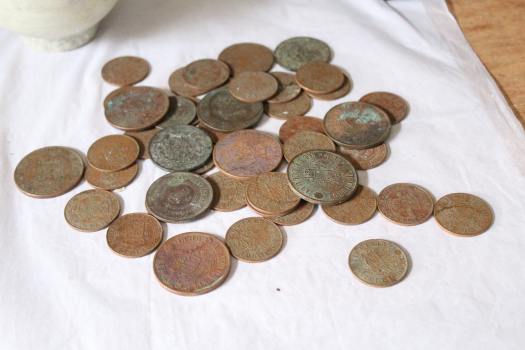

If you’ve ever been to a church and heard a sermon on tithing, you have probably heard this passage preached.

Malachi was a prophet who lived about 400 years before the time of Christ. He wrote to Jews who had very recently returned from being in exile (taken captive by the Babylonian empire).

Malachi was rebuking the people for their neglect of the temple. In this passage, he specifically addresses the people for their neglect of the tithe.

What is the tithe?

The word tithe literally means a tenth. When the Israelites entered the promised land of Canaan, every tribe was alotted an area of land as an inheritance , except for the Levites. The Levites were the tribe of Moses and his brother Aaron. The Levites were commissioned by God to be the priests who would lead worship and administer the temple sacrifices and act as mediators between the Lord and the people.

Because the Levites had no land, and their job was essentially religious clergy, they had no means of sustaining themselves. The tithe was implemented to take care of the Levites, who in turn were responsible for caring for the spiritual needs of the people.

When the Jewish people neglected the tithes, the Levites were forced to care for themselves in other ways and with other jobs. Therefore, the duties of the temple were neglected. It is in this way that the Lord is saying that the people had cheated Him. Because the tithes weren’t given, the priestly duties were neglected and therefore God was robbed of the worship that is rightly His.

It’s important to realize that the tithe wasn’t just money. It could be grain or some other portion of a harvest. This is why the author mentions the storehouse. The storehouse was a physical room in the temple that was used for storing the grain and other produce that the people brought into the temple as part of their tithe.

The principle of the tithe is still valid in the church today. Essentially, the Lord is asking His people, as an act of faith and worship, to give back to Him a portion of what He has given to us.

When we give a tithe, we are expressing to the Lord that we acknowledge that everything we have comes from Him. We also are trusting that He is able to sustain us on the portion that is left over.

In this passage, The Lord invites us to test Him. He says that if we give to Him the first fruits of our labor, He will richly bless us and the balance of our resources will be more than enough to provide for us.

This sounds counter-intuitive to our finite minds. It seems logical to us that if we keep all of our resources, we will have more wealth to spend and invest. But in God’s economy, He promises that if we give to Him first, we will actually end up with more because He will bless the balance of our resources and we will see a greater return on that smaller portion than if we had kept the whole for ourselves.

Reflection

What role has tithing played in your own spiritual life? How have you been able to integrate tithing (giving) into your spiritual practice?

If you have struggled to implement tithing as a spiritual practice, what are the factors that keep you from taking that step of faith? What experiences with the Lord can you draw upon in order to help you take a small step of faith?


Photo by Istiqamatunnisak on Unsplash

Building a New Temple

The Dome of the Rock sits on the site where the Jewish Temple once stood and where some religious leaders expect a new temple to some day be built.
Photo by Dave Lowe

1 Peter

4Come to Christ, who is the living cornerstone of God’s temple. He was rejected by the people, but he is precious to God who chose him.

5And now God is building you, as living stones, into his spiritual temple. What’s more, you are God’s holy priests, who offer the spiritual sacrifices that please him because of Jesus Christ.  6As the Scriptures express it,

“I am placing a stone in Jerusalem, a chosen cornerstone, and anyone who believes in him will never be disappointed.”

(1 Peter 2:4-6, NLT)


The Daily DAVEotional

In this passage, Peter uses imagery of the temple, which would have been very familiar to his audience.

In the Old Testament, the temple was a place – a building made with stones, where God was worshiped.

Here Peter says that you, as Christians, are being built into a new temple, with Jesus as the cornerstone.

In masonry, the cornerstone is the most important stone in the building of a structure. The cornerstone is foundational. All other stones are set in reference to the cornerstone.


Click here to see a A Comprehensive List of Blog Posts Based on Bible Passage Reference


Peter is saying that God is building a new temple that’s not a physical temple, but a spiritual temple. It’s not made with physical stones but instead, it consists of spiritual stones made up of people. Jesus is the foundational stone and those who follow Jesus are the stones God is using to build this new spiritual temple.

The implications of what Peter is sharing are huge.  Instead of going to a place to worship God, you can worship God all the time, with your life, since you are the temple and God is with you all the time.

Additionally, in the Old Testament, the priest was integral to the act of worship. The priest administered the sacrifices on behalf of the worshiper.

Now that Christ has come, you are the priest. A mediator is no longer necessary.

Verse 5 says that we offer spiritual sacrifices that please him.

What are those sacrifices?

Our lives are the sacrifices. Go, therefore, and worship the Lord with your life!


Did you enjoy this post? I’d love to hear your thoughts! Feel free to like, leave a comment below, and share it with your friends or on social media if you found it helpful or interesting. Your support keeps the conversation going!


Reflection

In your view, what does it mean to worship God and what is the way in which a person worships God?

Does your religious tradition utilize a priest? If so, what is your response to Peter’s assertion that you, as a follower of Christ, are a holy priest who offers spiritual sacrifices to God?

In what ways can you offer up your life to God as a spiritual sacrifice?

Are You an Idol Worshiper?

For my daily devotional reading, I’ve been following the Grant Horner Bible reading plan. I’m in my third year of following this plan, which invites the reader to read one chapter a day from each of 10 different segments of the Bible (Gospels, Old Testament Pentateuch, New Testament Letters #1, New Testament Letters #2, Wisdom Literature, Psalms, Proverbs, Old Testament History, Old Testament Prophets and finally, the book of Acts) for a total of 10 chapters each day.

One of the unique elements to this plan is that you begin to see how the scriptures are related to each other as you see certain themes and topics show up in completely different segments of your Bible reading. This was again the case for me a few days ago when I read the following similar verses from completely different chapters and segments of the Bible:

The idols of the nations are silver and gold, made by the hands of men. 16They have mouths, but cannot speak, eyes, but they cannot see; 17they have ears, but cannot hear, nor is there breath in their mouths. 18Those who make them will be like them, and so will all who trust in them. (Psalms 135:15-18)

They told Aaron, ‘Make us gods who will go before us. As for this fellow Moses who led us out of Egypt—we don’t know what has happened to him!’** 41That was the time they made an idol in the form of a calf. They brought sacrifices to it and held a celebration in honor of what their hands had made.  (Acts 7:40-41)

Idols have always been an issue with people. We see the theme of idols repeatedly throughout Scripture. In the Psalms passage (and many other locations in Scripture) the author writes about the sheer irony of a person fashioning a figurine out of metal or wood or some other material – giving it eyes and ears and a mouth, even though it cannot see, hear or speak, and then bowing to that figurine as if it had some power to grant to us whatever we might request. It’s utter foolishness. To do this, the Psalmist says, will make you just as senseless as the idols you’ve created.

In the Acts passage, Stephen, who is about to be stoned, is giving a short history of the nation of Israel when he recounts this incident that occurred while Moses was on Mt. Sinai communing with God and receiving the 10 commandments. The people weren’t sure what happened to Moses or why it was taking him so long to come down from the mountain so they asked Aaron to fashion a gold calf which they subsequently began to worship as their God.

It’s easy to read passages like these and wonder how the Israelites could be so dumb to think that something they have just created with their own hands is somehow a god that will do your bidding! How can something you have created have the power to give you whatever you want and do whatever you ask?

People today are still in the habit of creating idols. We may not fashion figurines that we place on the mantel and worship, as we see in the Scriptures, but we create an idol any time our image of God suits our preferences instead of reality.

Think about it this way – in the Bible, we see people fashioning idols to represent gods the way they see them, whether they are in the form of an animal (calf) or people (eyes, ears, mouth). Even if we don’t create a physical representation of God via some figurine, we are still creating an idol any time we create a mental image of God that doesn’t comply with how God is revealed to us in the Bible.

In today’s world, it’s easier than ever to appeal to a “god” that bends to my political views and my cultural preferences.

Because God is infinite, there is always going to be a sense in which our views of Him are not completely accurate. So how can we avoid worshiping an idol? The key is our heart. God doesn’t expect that we would know everything about Him perfectly but He does exhort us to seek him with our whole heart and to worship Him as He’s been revealed.

This is another reason why it’s so important to read and understand God’s Word, for it’s the primary source for truthful information about who God is and what He’s like.

Reflection:

What are some ways you may be tempted to bend your understanding of God and His nature to fit your own views or preferences?

What is the source of information you have about God?

What steps can you take to increase your understanding of who God is so you are worshiping Him in spirit and truth?


To learn more about the Grant Horner daily Bible reading plan, you can google it, or go to this blog post, which I found to have a very thorough description.