What Does it Mean That All Scripture is God-Breathed?

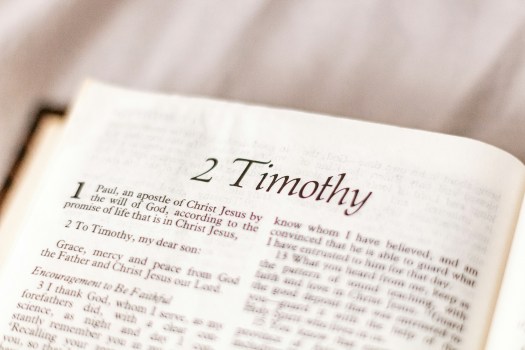
2 Timothy 3

14But as for you, continue in what you have learned and have become convinced of, because you know those from whom you learned it, 15and how from infancy you have known the holy Scriptures, which are able to make you wise for salvation through faith in Christ Jesus. 16All Scripture is God-breathed and is useful for teaching, rebuking, correcting and training in righteousness, 17so that the man of God may be thoroughly equipped for every good work.

(2 Timothy 3:14-17, NIV)


The Daily DAVEotional

A few months ago, I published a post entitled, “Can You Make the Bible an Idol?” which referenced Psalm 119.

The “inspiration” (you will see why this pun is intended) for that post was a series of online interactions I saw on X.com (formerly Twitter) in which a certain online influencer who identifies as a former evangelical was making the case that Christians should not make the Bible an idol.

The idea that one could make the Bible an idol seemed odd and confusing to me. I’d never heard anyone make such an admonition. I soon learned why as I fell further down an online rabbit hole exploring the theological views of Progressive Christianity.

Progressive Christians have a view and understanding of God that is in stark contrast to the traditional orthodox understanding. Whereas the traditional Christian view of God is that He’s immutable, which is to say He is unchanging, the progressive view of God is that He is evolving.

I explain the ramifications of this differing foundational belief in my previous post, but the summary is that if God is evolving then His standards are also evolving. And if God’s standards have evolved, then perhaps some of those behaviors that you were once told were “sinful” aren’t really sinful any longer.

The end result is that the Progressive ends up creating a God whose moral standards amazingly mimic their own lifestyle choices and preferences.

But how does the Progressive get around the clear teachings of Scripture that might restrict some of their life choices? To put it another way, how does the Progressive Christian deal with Biblical passages that seem to indicate that certain behaviors are wrong?

The simple answer is that the Progressive Christian doesn’t view the Bible as “God’s Word”. Hence, passages that seem to indicate certain actions as “sin” aren’t authoritative to them.

What? How can that be? Doesn’t the Bible clearly identify itself as “God’s Word”?

The argument made by Progressives is the same argument which is promoted by non-Christians, which is that the Bible wasn’t actually written by God but by fallible men.

And that leads us to our passage for today.

In this passage of 2 Timothy, Paul is exhorting Timothy to continue in what he has learned before. Timothy had grown up with an understanding of the Scriptures, which at that time was what we know as the Old Testament.

According to Paul, following these “Scriptures” would make Timothy wise unto salvation through faith in Jesus Christ.

Paul then follows with this oft-quoted verse:

All Scripture is God-breathed and is useful for teaching, rebuking, correcting and training in righteousness (2 Timothy 3:16)

This verse is often cited by Christians to demonstrate that the Bible is God’s Word and therefore authoritative for our lives.

According to this verse, the Bible (Scripture) has four main functions in our lives. I wrote about and explained these four functions in a previous post entitled “Training in Righteousness (Part 2).”

The question I want to focus on here is what does it mean when it says that “all Scripture is God-breathed?”

The greek word used here by Paul is theopneustos, which is a compilation of two separate words, theo = God and pneustos = breath.

This verse is the only place in Scripture where this particular word (theopneustos) is used. So what does it mean?

Most bible translations translate this verse as “all scripture is inspired by God…”

The idea is that God Himself has breathed His life into these words, making them inspired and useful for the purposes listed. Hence, the words are God’s words.

The response I have often seen online from Progressives is that the Bible was written by men, not by God. It is “inspired” only in the sense that it inspires people by bringing life to things that were lifeless.

This line of reasoning does not seem faithful to the text. Paul does not say that Scripture is inspiring, though that is almost certainly true as a by-product. What he says is that Scripture is inspired BY GOD. The difference in this wording may seem subtle and inconsequential but the difference in the resultant meanings is enormous.

In one view, the Progressive view, Scripture is the subject and it does the inspiring on the object, people who read it. This makes the Bible a book that is sort of like an ancient “Chicken Soup for Soul” to the reader. It’s a guidebook that one may utilize for navigating life’s journey, but it is certainly not the only tool one might consult.

In the other view, the traditional view, God is the subject who does the inspiring on the object, the Scriptures. Because God Himself has inspired the words, using various authors to communicate the message He desired and intended, it is indeed a guidebook for life and is useful for teaching, rebuking, correcting and training in righteousness.

The bottom line is that, according to Paul, the Scriptures are divinely inspired by God. This means that the words are God’s words; they are the words He intended the authors to write. For this reason, we refer to the Bible as “the Word of God”. Because the Bible is “the Word of God”, it’s not just an inspiring read, it’s authoritative. It alone contains the final word on the rule of life, including morality and our understanding of what is right and what is wrong.

The implications of this are massive. If the Bible is a book that is not written or authored by God, but is simply “inspiring” in some way, then I can pick and choose the parts that actually inspire me to feel good, and I can ignore the parts that I disagree with or that make me feel uncomfortable or “uninspired.”

But if the Bible is God’s Word and therefore authoritative, then I must relent to its position on all matters pertaining to faith and morality. According to Paul, as he made his charge to Timothy, when we acquiesce to God’s standards as outlined in the Scriptures, we’ll not only experience salvation through Jesus, but our lives will be transformed as we allow God’s Word to train us in righteous living, the fruit of which will be good works that glorify God.


Did you enjoy this post? I’d love to hear your thoughts! Feel free to like, leave a comment below, and share it with your friends or on social media if you found it helpful or interesting. Your support keeps the conversation going!


Reflection

What has been your position on the Bible? Do you believe it is God’s Word and therefore authoritative or is it something else? What are the reasons that support your position?

What are some of the things in the Bible that you struggle to agree with in terms of their moral implications? 

In what ways do you need to give the Scriptures authority in your life?

Paul’s charge to Timothy was to “continue what you have learned and become convinced of.” What can you do this week to “continue” your learning and conviction of the Scriptures?


Photo by Sincerely Media on Unsplash

Training in Righteousness – Part 2

2 Timothy 3

14But you must remain faithful to the things you have been taught. You know they are true, for you know you can trust those who taught you. 15You have been taught the holy Scriptures from childhood, and they have given you the wisdom to receive the salvation that comes by trusting in Christ Jesus. 16All Scripture is inspired by God and is useful to teach us what is true and to make us realize what is wrong in our lives. It straightens us out and teaches us to do what is right. 17It is God’s way of preparing us in every way, fully equipped for every good thing God wants us to do.
(2 Timothy 3:14-17, NLT)


The Daily DAVEotional

A few weeks ago, I shared a post with some devotional thoughts from Proverbs 11:17, entitled, “Can Golf Nourish Your Soul”.

The idea behind that post is that we can actually train ourselves to live righteously. Just as a golfer takes thousands of practice swings in order to perfect their technique and ensure proper form when they’re out on the course, we too can train our souls to act righteously by doing the right thing, even when we might not feel like it.

But that begs the question: how do we know what the right thing is?

Paul gives the answer to Timothy in this passage, which includes the popular verse:

All Scripture is inspired by God and is useful to teach us what is true and to make us realize what is wrong in our lives. It straightens us out and teaches us to do what is right.
(2 Timothy 3:16)

This verse tells us that there are 4 functions of God’s word:

    1. God’s word teaches us what is true. We know what is right and what is wrong because God’s word tells us. By reading God’s word, we get insight into what God says is right and what is wrong.
    2. God’s word shows us what is wrong in our lives. With God’s word as our barometer for truth, we can determine when and where we’ve strayed off course.
    3. God’s word tells us how to straighten out our lives. When we stray off course, God’s word gives us the blueprint for how to get back on the right path.
    4. God’s word teaches us what is right. Some versions say that God’s word is useful for “training in righteousness”.  In other words, just as a golfer can create muscle memory in his or her swing through increased repetition and practice, so we too can train ourselves to respond the right way through repetition and practice, creating habits that are imprinted upon our character.

We know what the right thing is based on what God’s word (Scripture) tells us.

The Scriptures give us insight into God’s character and direction regarding what is moral and true.

By aligning our lives and our actions with God’s word and its description of moral truth, we can train ourselves to be righteous.

One of the problems in our culture today, however, is that everyone has their own view and understanding of what is right and what is moral. Even many Christians dismiss portions of Scripture that don’t align with their preferred morality in order to support their own life choices.

Whatever standard of morality one chooses to adopt and follow will shape their soul and their character. If we adopt God’s standard as outlined in the Scriptures and consistently obey and follow his guidelines and statues, we will be training our hearts and souls to live righteously.

However, if we adopt some other standard of morality, whether it’s one promoted by the culture, or even a personal standard that is only loosely based on Scripture, we will be training our hearts and souls to live unrighteously.

In some circles, Christians talk about making Christ Lord, not just Savior. The idea is that Jesus, through his death on the cross, saves us from eternal condemnation and punishment. But if we want to experience the full spiritual life that Jesus desires for us, we must submit our will to His, making Him Lord in all areas, including the area of personal morality.

Reflection

What is the basis for your own personal moral views? What is the source for how you determine what is true and right?

Trusting Jesus for salvation is only one component of the Christian life. It “saves” us from eternal punishment but if we want to experience true spiritual life now, we must make Jesus Lord. Is Jesus Lord of your life? If not, why not? What keeps you from submitting to Jesus fully and completely?

In what ways have you seen Christians compromise their morality, dismissing biblical views for their own personal morals that are contrary to the Scriptures?

What are some practical steps you can take to begin to adopt a moral understanding of truth and righteousness that aligns with God? 


Photo by Aaron Burden on Unsplash

Can Golf Nourish Your Soul?

Proverbs 11

17Your own soul is nourished when you are kind, but you destroy yourself when you are cruel. (Proverbs 11:17, NLT)


The Daily DAVEotional

It’s summer time so of course for thousands of kids, that means summer camp. When my kids were in high school, we were alerted to all kinds of “camps” that we could pay money to send our kids to – soccer camps, baseball camps, basketball camps and even music camps. Some are even hosted by famous athletes and celebrities.

It’s interesting that these experiences are often called “camps” because there’s very little “camping” that happens. I think a better term for these week-long adventures is “clinic”. The purpose of these “clinics” is to hone skills and become better at whatever the craft is.

The truth is that any professional athlete, whether it’s a golfer, basketball player, baseball player or just about any other sport, spends hours upon hours doing drills. A golfer will take thousands of practice swings in order to perfect his or her technique.

A basketball player will dribble a ball up and down the court, switching hands and navigating through cones, just to perfect command of the ball.

Kobe Bryant was noted for his work ethic, shooting hundreds of balls every day in order to perfect his jump shot.

The purpose of training is to create muscle memory and develop habits so that when you’re in a game or in a live situation, you don’t have to think twice about how to act or what to do. Your body automatically taps into the hours of practice and you simply repeat what you’ve done thousands of times.

In this single proverb, we see a biblical example of what the scriptures refer to as “training in righteousness.”

What is training in righteousness?

Training in righteousness is a process by which you train yourself to do the right thing and thus live righteously, even when circumstances are against you.

Just as a golfer doesn’t perfect his swing without hours of practice swings, we don’t live righteously unless we train ourselves to make righteous choices.

According to this proverb, our soul is actually nourished when we act kindly. You might say that when we make a righteous choice, like acting kindly, it feeds our soul. But when we make an unrighteous choice, like acting with cruelty, it starves our soul.

If we make right choices over and over, we train our soul to live righteously. It becomes a habit and our lives will begin to bear fruits of righteousness, which will become evident to others.

However, if we make unrighteous choices over and over, we train our soul to live unrighteously. Living sinful lives will become second nature to us and our lives will bear unrighteous fruit.

So remember this the next time you are conflicted about how to act in a certain situation or how to respond to another person – by responding with kindness, you are feeding your soul and training yourself to live righteously. But by responding unkindly or acting cruelly, you will have the opposite effect – you will actually be training yourself to live unrighteously.

Reflection

What are some examples in your own life, whether sports, or music or some other discipline, where you have practiced drills in order to increase your skill level and your performance?

Can you think of any situations where a person can experience growth and development without undergoing some kind of training routine?

What are some ideas you have for cultivating your own soul and training yourself to live righteously?

What are some things that might be helpful to eliminate in your life that are actually starving your soul and making it harder to train yourself in righteousness?


Photo by Courtney Cook on Unsplash