

Colossians 3
15Let the peace of Christ rule in your hearts, since as members of one body you were called to peace. And be thankful. 16Let the word of Christ dwell in you richly as you teach and admonish one another with all wisdom, and as you sing psalms, hymns and spiritual songs with gratitude in your hearts to God. 17And whatever you do, whether in word or deed, do it all in the name of the Lord Jesus, giving thanks to God the Father through him. (Colossians 3:15-17, NIV)
The Daily DAVEotional
If you haven’t noticed, we are experiencing an epidemic of anxiety in our country. The American Psychiatric Association’s annual mental health poll indicated a sharp rise in anxiety levels among American adults.
Young adults are even more likely to report high levels of anxiety these days according to a Pew survey cited in this article.
There’s even been a popular book written about “The Anxious Generation.” In this book, author Jonathan Haidt argues that smartphones, social media, and helicopter parenting has contributed to an increased level of anxiety and depression among today’s youth.
Experiencing peace seems as elusive as sighting a unicorn.
So how exactly can we experience peace?
In his letter to the Colossians, Paul gives some insight into experiencing peace.
The first thing he says is that we should let peace “rule” in our hearts. The Greek word for “rule” means “arbitration”. The idea is that peace should govern our hearts.
Ok. But how do we do that? It’s not like most people can turn peace on and off like a light switch.
Fortunately, there are some key words in this passage that help us to understand a potential pathway to peace.
Three times in this passage, Paul uses the similar words “thankful” (verse 15), “gratitude” (verse 16), and “thanks” (verse 17).
Philippians 4:6-7 is perhaps the most oft-quoted passage regarding peace. Paul says,
6Do not be anxious about anything, but in everything, by prayer and petition, with thanksgiving, present your requests to God. 7And the peace of God, which transcends all understanding, will guard your hearts and your minds in Christ Jesus.
It’s interesting to note that in this passage, Paul also talks about thanksgiving. When we share our anxieties with God, and we do it with an attitude of thanksgiving, Paul says that we will experience the peace of God in a way that transcends our understanding.
I might not be able to manufacture peace on demand. But I can choose my attitude and what I will allow my mind to dwell on.
Paul tells us to be thankful and to offer up our anxieties to the Lord in prayer with an attitude of thanksgiving and gratitude.
Something happens when we choose to be grateful. You see, we can’t be grateful unless we stop and think about the things we should be grateful for. Doing this refocuses our attention on God’s goodness and it gets our minds off of the negative thoughts that are the root of our anxieties.
My wife and I recently saw the movie “Soul on Fire”, which is the real-life story of John O’Leary, who, as a child, suffered burns over his entire body when he accidentally set his family’s house on fire. It’s a powerful story of identity, redemption and forgiveness.
As an adult, John decides he can use his story to make a difference in the lives of others as a motivational speaker.
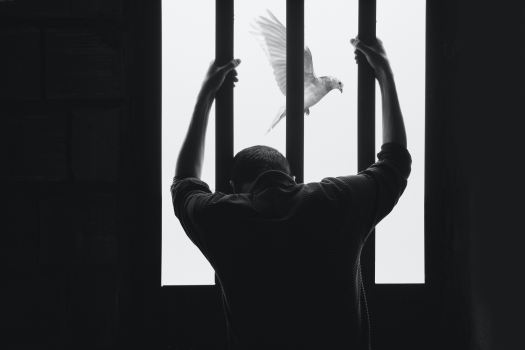
In one of his first speaking engagements he finds himself talking to a group of hardened criminals in a state prison. His main message is about the importance of gratitude. He then invites the prisoners to share something they’re grateful for.
At first, nobody speaks. They’re mostly skeptical and wondering what they’re even doing there. Finally, one prisoner stands up and says:
“I’m grateful for prison, because if I wasn’t here, I’d be dead. And here’s what else I’m grateful for:
-
- Heat in the winter.
- Air-conditioning in the summer.
- Three square meals a day—no cooking, no dishes.
- A clean bed every night.
- Laundry service—I never had that on the outside.
- Medical care, even if it’s basic.
- A library full of books I never read before.
- Time to think, really think about my life.
- Brothers here who get it, who share my struggles.
- Letters from my kids—I miss ’em, but they keep comin’.
- The chaplain who prays with us.
- Fresh coffee in the morning.
- Outdoor rec time—blue sky, even behind fences.
- A job, Payin’ a little, but it’s honest work.
- No bills pilin’ up.
- Safety from the streets I ran on
- Programs to learn skills, like anger management.
- Holidays with visits from family.
- Music on the radio—reminds me of better days.
- Clean water, hot showers.
- Counselors who listen without judgin’.
- The chance to apologize to folks I hurt.
- Faith groups—Bible study saved my soul.
- Exercise yard—keeps me strong.
- Mail call—somethin’ to look forward to.
- No more chasin’ highs that wrecked me.
- Rules that keep me from hurtn’ others.
- Dreams at night—hope for what’s next.
- Laughter with the guys—ain’t nothin’ like it.
- This talk today—remindin’ me gratitude changes everything.
- And God… for second chances.”
Later in the movie, John is struggling, feeling sorry for himself and the situation he’s in. He can motivate others through his speaking but, like us, he often struggles to apply the principles of his own TED talk.
There’s a scene where he visits his family. His dad is in a wheel chair, suffering from the effects of advanced Parkinson’s disease. And yet, his father is joyful, positive and at peace.
John asks his father, “How can you be so positive?”
His dad responds “John, how can I complain when my life is so good, when I’m just so blessed?”
John is confused. He’s thinking, “how can you see yourself as blessed when you’re in this horrible condition?” It’s really a victim mentality. And we all can tend towards this, can’t we?
His dad then elaborates on his gratitude, listing reasons like the extra time he has for reflection, the deeper family bonds he’s developed, his appreciation for caregivers and the empathy he’s developed for the struggles of others. Gratitude has enabled him to transform his limitations and potential sources of anxiety into sources of joy and peace.
There is no doubt that we live in a complex and chaotic world that’s filled with challenges that can produce anxieties of all kinds – health, job, finances and family issues, just to name a few.
However, even though we can’t produce peace in our hearts on demand, we can choose to be thankful and grateful for the good things that God has provided for us. If we make this our regular pattern, our lives will be less anxious and we’ll begin to experience more peace in our hearts.
By the way, you can read my review of the movie Sarah’s Oil here.
Did you enjoy this post? I’d love to hear your thoughts! Feel free to like, leave a comment below, and share it with your friends or on social media if you found it helpful or interesting. Your support keeps the conversation going!
Reflection
What are the things creating anxiety in your life right now? What keeps you from sharing those things with the Lord?
What have you found helpful in your own life to get your mind off of your problems and anxieties and onto the positive things in your life?
If you were to create a list of things you’re grateful for, like the prisoner did, what would be on your list? What are the things in your life that you can express gratitude for?
Photo by Tom Shakir on Unsplash
 The Lowedown