Who is this Melchizedek Character?

Genesis 14

17As Abram returned from his victory over Kedorlaomer and his allies, the king of Sodom came out to meet him in the valley of Shaveh (that is, the King’s Valley). 18Then Melchizedek, the king of Salem and a priest of God Most High, brought him bread and wine. 19Melchizedek blessed Abram with this blessing:

“Blessed be Abram by God Most High,

Creator of heaven and earth.

20And blessed be God Most High,

who has helped you conquer your enemies.”Then Abram gave Melchizedek a tenth of all the goods he had recovered. (Genesis 14:17-20, NLT)

. . . . . . . . . . . . .

Hebrews 7

1This Melchizedek was king of the city of Salem and also a priest of God Most High. When Abraham was returning home after winning a great battle against many kings, Melchizedek met him and blessed him. 2Then Abraham took a tenth of all he had won in the battle and gave it to Melchizedek. His name means “king of justice.” He is also “king of peace” because Salem means “peace.” 3There is no record of his father or mother or any of his ancestors—no beginning or end to his life. He remains a priest forever, resembling the Son of God.

4Consider then how great this Melchizedek was. Even Abraham, the great patriarch of Israel, recognized how great Melchizedek was by giving him a tenth of what he had taken in battle. 5Now the priests, who are descendants of Levi, are commanded in the law of Moses to collect a tithe from all the people, even though they are their own relatives. 6But Melchizedek, who was not even related to Levi, collected a tenth from Abraham. And Melchizedek placed a blessing upon Abraham, the one who had already received the promises of God. 7And without question, the person who has the power to bless is always greater than the person who is blessed.

8In the case of Jewish priests, tithes are paid to men who will die. But Melchizedek is greater than they are, because we are told that he lives on. 9In addition, we might even say that Levi’s descendants, the ones who collect the tithe, paid a tithe to Melchizedek through their ancestor Abraham. 10For although Levi wasn’t born yet, the seed from which he came was in Abraham’s loins when Melchizedek collected the tithe from him.

11And finally, if the priesthood of Levi could have achieved God’s purposes—and it was that priesthood on which the law was based—why did God need to send a different priest from the line of Melchizedek, instead of from the line of Levi and Aaron?

12And when the priesthood is changed, the law must also be changed to permit it. 13For the one we are talking about belongs to a different tribe, whose members do not serve at the altar. 14What I mean is, our Lord came from the tribe of Judah, and Moses never mentioned Judah in connection with the priesthood.

15The change in God’s law is even more evident from the fact that a different priest, who is like Melchizedek, has now come. 16He became a priest, not by meeting the old requirement of belonging to the tribe of Levi, but by the power of a life that cannot be destroyed. 17And the psalmist pointed this out when he said of Christ,

“You are a priest forever

in the line of Melchizedek.”

18Yes, the old requirement about the priesthood was set aside because it was weak and useless. 19For the law made nothing perfect, and now a better hope has taken its place. And that is how we draw near to God.

20God took an oath that Christ would always be a priest, but he never did this for any other priest. 21Only to Jesus did he say,

“The Lord has taken an oath

and will not break his vow:

‘You are a priest forever.’”22Because of God’s oath, it is Jesus who guarantees the effectiveness of this better covenant. (Hebrews 7:1-22, NLT)


The Daily DAVEotional

One of the great themes of the book of Genesis and really the whole Bible, is the Abrahamic covenant, which is introduced in Genesis 12 and is repeated again in Genesis 15. In this covenant, God promises to bless Abraham, so that he, through his descendants, would be a blessing to the nations. This promise sets the backdrop for God’s biblical redemptive plan, which unfolds throughout the Scriptures.

In the chapters that provide the filling for this Abrahamic Covenant sandwich (Genesis 13 and 14), Moses tells the story of how Abram and Lot decide to separate, mainly because they both had grown their personal wealth so much, there was no suitable land that could accommodate both of them with all of their flocks and herds.

Now that Lot is no longer under Abram’s protection, he finds himself the innocent victim of what amounts to a local political rebellion. The end result is that Lot, along with others, is taken captive by a local ruler who did not take kindly to the uprising of his subjects.

Abram gets wind of the situation and launches a rescue operation, which is highly successful. Not only does he get Lot back, but he retrieves ALL of those who have been captured, along with all of their possessions which had been looted.

On his way back from victory, Abram encounters a local king named Melchizedek. To the unschooled reader, Melchizedek seems like just another insignificant local political leader with a name that’s hard to pronounce. There really isn’t much reason to think this guy is that important to the overall biblical narrative, until of course, you get to the book of Hebrews.

Everything we know about Melchizedek comes from just 3 verses in Genesis 14. Here is what we know:

    • Melchizedek was the king of Salem, which means “king of peace.”
    • Melchizedek was also “king of righteousness” since the name “Melchizedek” means “my king is righteousness.”
    • Melchizedek was a priest of the most High God – he apparently followed the one true God.
    • Melchizedek blessed Abram
    • Abram gives Melchizedek a tenth of all the goods he recovered. He paid a tithe to Melchizedek.

Here’s a guy who gets a mere 3 verses of attention in Genesis but then later, is a major source of discussion for 3 chapters in the book of Hebrews. What is really going on here?

If you know anything about the book of Hebrews, the theme is the idea of “Better”. The author advances a series of arguments to show how Jesus is better.

Better than what?

Better than everything!

Jesus is better than angels. Jesus is better than Moses. Jesus is a better priest because He belongs to a better priesthood. Jesus offers a better sacrifice because Jesus’ sacrifice is built on better blood.

Everything about Jesus is better. Including the fact that Jesus is the guarantor of a better covenant.

Hebrews was written to Jewish Christians who were beginning to forsake their new faith in Christ in favor of reverting back to their Jewish religious practices. The author pens his letter to demonstrate why that is not advisable. I’ve written about that in my blog post “Better Than…” as well as another post “A Better Sacrifice”.

In this section of Hebrews, the writer uses Melchizedek as an illustration to make the argument that Jesus is the author of a better covenant.

How exactly does he make his case?

The author first demonstrates that Melchizedek was greater than Abram. He does this by pointing out that Melchizedek blessed Abram and also received a tithe from Abram. He argues that the person who blesses is always greater than the person being blessed and the person who receives a tithe generally has a higher status than the person paying the tithe. Hence, Melchizedek is greater than Abram.

If Melchizedek is greater than Abram, then he’s also greater than Levi, who came from Abram. The writer points out that even though Levi, who is the basis for the Old Testament priesthood, was not yet born, his seed was within Abram when Abram paid the tithe to Melchizedek.

We know also that Melchizedek was a priest of the most high God just as Levi was. But since the Levitical priesthood had not even been implemented yet, Melchizedek’s priesthood must be of a different order. This order is different in one very obvious respect – this priesthood allowed kings to function as priests. This was not allowed in the Levitical priesthood which kept the roles of priests, who were the mediators, separate from the roles of kings, who were the rulers. (See my post, “Whatever Became of Sin?” to see an example of what happens when a king tries to perform priestly functions in the Levitical priesthood system.)

The author then gives another reason for the superiority of Melchizedek’s priesthood over Levi’s – Melchizedek’s priesthood is eternal while Levi’s was temporary.

The author reasons that alhough Melchizedek was a real person, his genealogy is not mentioned anywhere. We don’t know where he came from and there is no mention of him after these few verses in Genesis 14. It’s as if he never died.

The writer uses this as an analogy of sorts. Melchizedek appears on the scene out of nowhere and since we have no record of his death, it’s as if he lives on forever. Melchizedek, therefore, is a priest forever.

The argument then is that Jesus’ priesthood is more like Melchizedek’s priesthood than it is like Levi’s.  How?

Jesus descends from Judah, not from Levi. Therefore, Jesus is not even eligible to be a priest within the Levitical system.

Also, Jesus is a priest AND a king, just as Melchizedek was.

Finally, Jesus’ priesthood is eternal, just like Melchizedek’s appeared to be. Unlike Levitical priests, who died and had to be replaced by new priests, Jesus lives on forever and therefore is NEVER replaced.

We’ve already established that Melchizedek is greater (better) than Levi and since Jesus’ priesthood resembles Melchizedek’s not Levi’s, it logically follows that Jesus’ priesthood is better than Levi’s.

And because Jesus’ priesthood is better, the covenant which He introduces must also be better. So why would you then go back to the Old Covenant which was clearly inferior?

So there you have it. Melchizedek, who is just a blip on the screen in the Old Testament, becomes a central figure of the New Testament.

In theological terms, we say that Melchizedek is a “type” of Christ, which simply means that his existence and what we know of him figuratively resembles what we know to be true of Jesus. Hence, even though it may seem, on the surface, like Melchizedek is just a hired extra in the background of a major Hollywood movie scene, he turns out to be much more important than that. His mention is made to prefigure the coming of Jesus.

Now you know.


Did you enjoy this post? I’d love to hear your thoughts! Feel free to like, leave a comment below, and share it with your friends or on social media if you found it helpful or interesting. Your support keeps the conversation going!


Reflection

What has been your understanding of Melchizedek before reading this blog? Who did you think he was and what importance did you think he had to the overall message of Scripture?

What do you think are some of the reasons the audience of the book of Hebrews may have been forsaking their faith? What are some things that can tend to draw you away from the faith and back into your former lifestyle?

Of the characteristics of Melchizedek that resemble Jesus, which one stands out to you the most and why?

Jesus is the author of a better covenant. The old covenant was based on the Law. How would you explain to another person that the new covenant is better than the old covenant? What are some of the ways that it is better?


AI image of Abram paying a tithe to Melchizedek created by Grok
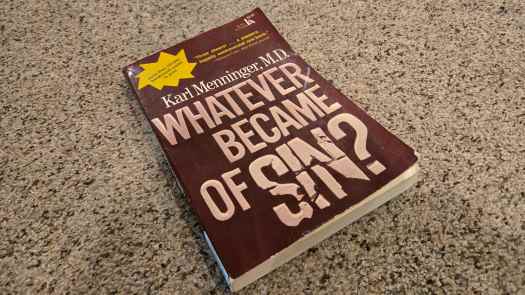
Whatever Became of Sin?

Isaiah 6

1In the year King Uzziah died, I saw the Lord. He was sitting on a lofty throne, and the train of his robe filled the Temple. 2Hovering around him were mighty seraphim, each with six wings. With two wings they covered their faces, with two they covered their feet, and with the remaining two they flew. 3In a great chorus they sang, “Holy, holy, holy is the LORD Almighty! The whole earth is filled with his glory!” 4The glorious singing shook the Temple to its foundations, and the entire sanctuary was filled with smoke.

5Then I said, “My destruction is sealed, for I am a sinful man and a member of a sinful race. Yet I have seen the King, the LORD Almighty!”

6Then one of the seraphim flew over to the altar, and he picked up a burning coal with a pair of tongs. 7He touched my lips with it and said, “See, this coal has touched your lips. Now your guilt is removed, and your sins are forgiven.”

8Then I heard the Lord asking, “Whom should I send as a messenger to my people? Who will go for us?”

And I said, “Lord, I’ll go! Send me.”

(Isaiah 6:1-8, NLT)


The Daily DAVEotional

Have you noticed that sin is not talked about that much anymore? It’s almost like it’s a dirty word – too offensive to mention to those outside of a church setting.

In 1973, Psychologist Karl Menninger published an important work, “Whatever Became of Sin?” in which he reflected on the diminishing concept of sin in our modern culture. His thesis was that the concept of sin as immoral behavior was being replaced by medical and psychological labels that reduced moral responsibility.

Though Menninger draws upon Christian as well as other religious traditions to support his thesis, his book is not a biblical exposition on the subject. Still, his thoughts on this issue, which were printed over 50 years ago, now seem prophetic in nature.

So whatever became of sin? Why has the concept diminished in our culture and what are the reasons for its demise?

The 6th chapter of Isaiah provides an answer for us. This chapter marks a pivotal moment in the life and calling of the prophet. In this chapter, Isaiah has a vision of the Lord in all of His splendor and glory.

The opening verse gives us a time stamp to date the events that follow. Uzziah had been the king of Israel for 52 years, a full life-time for many of his subjects. While Uzziah was one of the better kings of Judah early on, things did not end well for him. Toward the end of his reign, he stubbornly tried to enter the temple and perform rites that were reserved only for the priests, and as a result, he contracted leprosy and was forced to finish out his days in exile.

At Uzziah’s death, with no king to rule, Isaiah goes to the temple and experiences a vision of the true king, the Lord God Himself. Isaiah catches a rare glimpse of God as He really is, a picture of His absolute holiness.

What’s interesting about this encounter is the text says that when Isaiah sees the Lord in His holiness, he cries out, “my destruction is sealed, for I am a sinful man and a member of a sinful race.”

Some translations use the word “ruined” or “undone” to describe Isaiah’s emotional response.

Isaiah, when confronted with the perfect righteousness of God almighty, is brought to his knees as he recognizes his own sinfulness in light of holy God.

One of the reasons sin is not talked about much these days is because we don’t talk about God’s holiness so much these days. These two concepts are intertwined and interdependent – we don’t see sin so much if we don’t see God as holy and righteous.

Over the last 50 years or more, our culture has done all that it can to soften God’s divine attributes to make Him more palatable to our own personal preferences. In short, we’ve made God less like God and more like us.

For the atheist, dismissing God altogether means that there is no objective anchor or standard by which actions can be judged or labeled as “sin”.

“Who are you to tell me that my behaviors are wrong?” is a common refrain.

In many Christian circles, especially among progressives, God is not so much eliminated as much as He’s recreated or reimagined in a way that better fits the person’s lifestyle choices and behaviors.

One of the ways we often see this is in the elevation of the kind-hearted, compassionate New Testament version of God that we see in Jesus while dismissing or diminishing the “judgmental, ego-maniacal” Old Testament picture of God that seems too harsh and exacting. Some may go so far as to claim that the Bible describes two completely different Gods. I wrote recently about this in my blog post, “Is the Old Testament God a Bloodthirsty, Genocidal Psychopath?”

In light of the stark differences between the Old Testament perception of God and the New Testament portrayal of God in the person of Jesus, one inevitably chooses the deity that is more preferable and less restrictive to their own life choices.

The problem with this approach, as I outlined in my blog post, “Can You Make the Bible an Idol?”  is it essentially results in a form of idol worship, where my image of God is created according to my personal choices and inclincations instead of forming a picture of God that represents the fullness of how He has been revealed to us through His holy word.

If we want to talk about sin and the need for a savior, we must highlight God’s absolute holiness and righteousness. If a person doesn’t see God as infinitely holy, they’re more likely to overlook or dismiss their sinfulness as mere character flaws or innocent mistakes. If sin is not seen as an egregious offense against God’s very nature, there is less likelihood of coming to the realization that we are utterly lost and in need of a divine savior.

So whatever became of sin? It fell out of favor, just as God’s holiness has.


Did you enjoy this post? I’d love to hear your thoughts! Feel free to like, leave a comment below, and share it with your friends or on social media if you found it helpful or interesting. Your support keeps the conversation going!


Reflection

Describe  a time when you encountered the power and presence of God in your life as Isaiah did. In other words, when have you had an “Isaiah” moment with God? What was that like emotionally? 

What is your concept of sin? How would you define it? In what ways have you seen our culture minimize sin and personal responsibility?

In what ways have you created an image of God that is not fully reflective of how God has revealed Himself in both the Old and New Testaments?

How can. you ensure that your view of God is not just a personal image that you created to suit your own preferences?


Photo by Dave Lowe


Is Extreme Wealth Evil?

Job 1

1There was a man named Job who lived in the land of Uz. He was blameless, a man of complete integrity. He feared God and stayed away from evil. 2He had seven sons and three daughters. 3He owned seven thousand sheep, three thousand camels, five hundred teams of oxen, and five hundred female donkeys, and he employed many servants. He was, in fact, the richest person in that entire area.

4Every year when Job’s sons had birthdays, they invited their brothers and sisters to join them for a celebration. On these occasions they would get together to eat and drink. 5When these celebrations ended—and sometimes they lasted several days—Job would purify his children. He would get up early in the morning and offer a burnt offering for each of them. For Job said to himself, “Perhaps my children have sinned and have cursed God in their hearts.” This was Job’s regular practice.

6One day the angels came to present themselves before the LORD, and Satan the Accuser came with them. 7“Where have you come from?” the LORD asked Satan.

And Satan answered the LORD, “I have been going back and forth across the earth, watching everything that’s going on.”

8Then the LORD asked Satan, “Have you noticed my servant Job? He is the finest man in all the earth—a man of complete integrity. He fears God and will have nothing to do with evil.”

9Satan replied to the LORD, “Yes, Job fears God, but not without good reason! 10You have always protected him and his home and his property from harm. You have made him prosperous in everything he does. Look how rich he is! 11But take away everything he has, and he will surely curse you to your face!” (Job 1:1-11, NLT)


The Daily DAVEotional

What does the Bible say about money and wealth? Actually, the Bible says a lot about money and riches, but what the Bible says may surprise you.

In today’s culture, there are many who decry wealth as being evil. Politically, there is a whole movement that seeks to take from those who have and redistribute it to those who don’t have.

Some have argued that God is “against the wealthy” and “for the poor”. I’ve argued extensively against this thinking in a number of posts that explain key biblical texts on money and wealth. You can read some of my thoughts, here, here, here and here.

So what does any of this have to do with Job?

Job actually provides an interesting example of how God views rich people. Some people assume that God is automatically against the wealthy, because, well, they’re wealthy and God must hate wealth.

But nothing could be further from the truth.

In this opening chapter of Job, we find out some interesting things about the man. The first thing stated about him is that “he was blameless, a man of complete integrity.”

The second thing we learn about Job is that he was extremely wealthy. He owned land and livestock and the text says that “He was, in fact, the richest person in that entire area.” In today’s vernacular, we might say that he was INSANELY rich!

Another thing we learn from this passage is that God does not consider wealth evil. Notice in verse 8 that God tells Satan that Job is “the finest man in all the earth – a man of complete integrity.” God continues, saying that Job “fears God and will have nothing to do with evil.”

If God opposes wealth because it is evil, He could not claim that Job, who was in fact the richest man in the entire area, will have nothing to do with evil.

It’s clear from this passage that God does not consider wealth to be evil.

It’s also interesting to note that Satan himself recognized that Job was wealthy because God had made him prosperous.

For those who consider wealth to be bad or even evil, how is this explained? How is it that God could make Job the most prosperous man in the entire area and yet call him blameless – a man of complete integrity who will have nothing to do with evil?

Clearly, wealth is not evil.

I sometimes encounter others who will stipulate that wealth is not evil but what they really believe is that having SOME wealth is ok but having EXTREME wealth is bad. They may hesitate to call extreme wealth evil, knowing that nowhere in the Bible does God condemn wealth but they’ll use other words such as insane, outrageous or even “filthy rich”.

The truth is that we don’t understand what we haven’t experienced ourselves. I think it’s common for people to want to make themselves the norm and anything that is outside that norm is an easy target for criticism.

For example, I live in a South Orange County, an area that is known for it’s wealth. That doesn’t mean everyone who lives in this area is extremely wealthy but there are many communities in this area that are known to be areas where extremely wealthy people reside.

I find that it’s easy to criticize the person who lives in the “extremely wealthy” community and ask questions like, “why does that person need to drive that expensive kind of car when a less expensive car will do just fine?” Or, “why does a person need a house with 7 bedrooms and 5 bathrooms?” Or, “why does anyone need to own a vacation home, or a boat, or a yacht, etc.?”

This line of questioning and reasoning is senseless and meaningless. It tells us nothing about real people. After all, while you are questioning why a person in that rich community needs to live in a 4000 square foot house with 7 bedrooms, 5 bathrooms and a 4 car garage, there’s another guy, in the next town over, who is questioning why you need to live in a 2500 sqare foot house with 4 bedrooms and 3 baths when he himself is only living in an 1850 square foot house with 3 bedrooms and 2 baths.

The truth is that nobody really NEEDS to own those things. Plenty of people get along just fine without them.

I think our sin nature causes us to view those who have more than we do as ostentatious and we can question their motives and integrity.

Job teaches us a valuable lesson about this. First off, Job certainly didn’t NEED all the things he owned but God blessed him in such a way that he was EXTREMELY wealthy. God gave him way more than he actually needed and didn’t consider it bad or evil. Apparently, God doesn’t evaluate our integrity based on how much. or how little we have.

This was actually the nature of the the challenge Satan posed to God. He insisted that Job’s integrity was a result of his wealth. He contended that Job was not righteous at his core but it was simply an act based on the fact that he was well off. God allowed Satan to test Job in order to demonstrate that Job’s integrity was not dependent on his wealth and his circumstances.

So where does that leave us?

It leaves us with this conclusion: wealth is not bad. And EXTREME wealth is not bad either. Our integrity is not determined by how wealthy or poor we are.

Hence, there may be some extremely wealthy people who lack integrity and demonstrate an evil heart, but it is not the wealth that made them that way. At the same time, there are plenty of people who are extremely wealthy who have integrity and are blameless, wanting nothing to do with evil, just like Job.

Reflection

What are your thoughts and feelings towards people who are EXTREMELY wealthy? Do you have a hard time thinking that they could be godly people who are blameless and have integrity? If so, why do you think you struggle with those views?

Why do you think God would allow people to have enormous amounts of material possessions well beyond what they actually NEED? 

If God doesn’t evaluate integrity based on wealth, how do you think He makes that determination?

What do you think are the reasons that many people (Christians included) oppose those who are rich? What are some possible reasons driving those views?


Photo by Anastase Maragos on Unsplash

Are You Good Enough?

Mark 10

17As Jesus started on his way, a man ran up to him and fell on his knees before him. “Good teacher,” he asked, “what must I do to inherit eternal life?”

18“Why do you call me good?” Jesus answered. “No one is good—except God alone. 19You know the commandments: ‘Do not murder, do not commit adultery, do not steal, do not give false testimony, do not defraud, honor your father and mother.’”

20“Teacher,” he declared, “all these I have kept since I was a boy.”

21Jesus looked at him and loved him. “One thing you lack,” he said. “Go, sell everything you have and give to the poor, and you will have treasure in heaven. Then come, follow me.”

22At this the man’s face fell. He went away sad, because he had great wealth.

23Jesus looked around and said to his disciples, “How hard it is for the rich to enter the kingdom of God!”

24The disciples were amazed at his words. But Jesus said again, “Children, how hard it is to enter the kingdom of God! 25It is easier for a camel to go through the eye of a needle than for a rich man to enter the kingdom of God.”

26The disciples were even more amazed, and said to each other, “Who then can be saved?”

27Jesus looked at them and said, “With man this is impossible, but not with God; all things are possible with God.” (Mark 10:17-27, NLT)


The Daily DAVEotional

This story in Mark 10 is also shared by Matthew in the 19th chapter of his account of the life of Jesus. I wrote about this story about a year ago here, in which I addressed the question of whether or not Jesus requires rich people to give up their possessions in order to be saved.

You can read my thoughts about that in the previous blog post as I’m not intending to regurgitate all my thoughts again here. Instead, I want to focus on an often overlooked part of the exchange Jesus has with this person of extreme wealth.

The passage starts with the man coming to Jesus and asking Jesus what is required to inherit eternal life. But what is often overlooked is how he addresses Jesus. He calls Jesus “good teacher”.

Jesus picks up on this and replies in verse 18, “Why do you call me good?….No one is good except God alone.”

You almost never hear any sermon that focuses on this verse or gives any explanation of why it’s there. In fact, if you just eliminated verse 18 from the story altogether, the main idea and explanation seems to remain unchanged. In other words. Jesus’ response to how the man addressed him does not appear to be central to the main point of the story, which is the idea that coming to Jesus and inheriting eternal life requires us to recognize our spiritual brokenness and our need for a savior.

So if Jesus’ response is not important to the main idea in the story, why is it there?

Jesus is using this exchange to fundamentally change our idea of what is considered good.

Think about it. Almost everyone everywhere thinks that making it to heaven is a matter of being a good person and I’ve never met a person who, no matter what bad things they may have done in their lives, didn’t consider themselves to be good. Jesus’s response alters the equation of what is required to gain eternal life, which is the central query of the rich young ruler.

Do you think you’re a good person? Jesus says that ONLY GOD is good. Jesus also indirectly points to his own deity in the process when he asks, “why do you call me good….no one is good except God.” Jesus is pressing the implication that calling him good is tantamount to calling him God, since only God is good.

The rest of the story is simply a process by which Jesus reveals to the rich young ruler that he does not measure up to the standard of goodness (perfection) that is required to gain eternal life.

The disciples asked, “Who then can be saved?”

Jesus responded that with man, it is impossible. Why? Because no man can achieve the perfect goodness required to save himself.

But all things are possible with God. Jesus makes the impossible possible through His death on the cross!

Reflection

What has been your concept of goodness in the past? What is the standard you use to determine whether a person is good or not?

Do you agree with people who say that most people are basically good? Why or why not?

Do you think it’s possible for people to save themselves?

What do you think is required to inherit eternal life? How would you explain it to someone else?


Photo by Hello I’m Nik on Unsplash

Training in Righteousness – Part 2

2 Timothy 3

14But you must remain faithful to the things you have been taught. You know they are true, for you know you can trust those who taught you. 15You have been taught the holy Scriptures from childhood, and they have given you the wisdom to receive the salvation that comes by trusting in Christ Jesus. 16All Scripture is inspired by God and is useful to teach us what is true and to make us realize what is wrong in our lives. It straightens us out and teaches us to do what is right. 17It is God’s way of preparing us in every way, fully equipped for every good thing God wants us to do.
(2 Timothy 3:14-17, NLT)


The Daily DAVEotional

A few weeks ago, I shared a post with some devotional thoughts from Proverbs 11:17, entitled, “Can Golf Nourish Your Soul”.

The idea behind that post is that we can actually train ourselves to live righteously. Just as a golfer takes thousands of practice swings in order to perfect their technique and ensure proper form when they’re out on the course, we too can train our souls to act righteously by doing the right thing, even when we might not feel like it.

But that begs the question: how do we know what the right thing is?

Paul gives the answer to Timothy in this passage, which includes the popular verse:

All Scripture is inspired by God and is useful to teach us what is true and to make us realize what is wrong in our lives. It straightens us out and teaches us to do what is right.
(2 Timothy 3:16)

This verse tells us that there are 4 functions of God’s word:

    1. God’s word teaches us what is true. We know what is right and what is wrong because God’s word tells us. By reading God’s word, we get insight into what God says is right and what is wrong.
    2. God’s word shows us what is wrong in our lives. With God’s word as our barometer for truth, we can determine when and where we’ve strayed off course.
    3. God’s word tells us how to straighten out our lives. When we stray off course, God’s word gives us the blueprint for how to get back on the right path.
    4. God’s word teaches us what is right. Some versions say that God’s word is useful for “training in righteousness”.  In other words, just as a golfer can create muscle memory in his or her swing through increased repetition and practice, so we too can train ourselves to respond the right way through repetition and practice, creating habits that are imprinted upon our character.

We know what the right thing is based on what God’s word (Scripture) tells us.

The Scriptures give us insight into God’s character and direction regarding what is moral and true.

By aligning our lives and our actions with God’s word and its description of moral truth, we can train ourselves to be righteous.

One of the problems in our culture today, however, is that everyone has their own view and understanding of what is right and what is moral. Even many Christians dismiss portions of Scripture that don’t align with their preferred morality in order to support their own life choices.

Whatever standard of morality one chooses to adopt and follow will shape their soul and their character. If we adopt God’s standard as outlined in the Scriptures and consistently obey and follow his guidelines and statues, we will be training our hearts and souls to live righteously.

However, if we adopt some other standard of morality, whether it’s one promoted by the culture, or even a personal standard that is only loosely based on Scripture, we will be training our hearts and souls to live unrighteously.

In some circles, Christians talk about making Christ Lord, not just Savior. The idea is that Jesus, through his death on the cross, saves us from eternal condemnation and punishment. But if we want to experience the full spiritual life that Jesus desires for us, we must submit our will to His, making Him Lord in all areas, including the area of personal morality.

Reflection

What is the basis for your own personal moral views? What is the source for how you determine what is true and right?

Trusting Jesus for salvation is only one component of the Christian life. It “saves” us from eternal punishment but if we want to experience true spiritual life now, we must make Jesus Lord. Is Jesus Lord of your life? If not, why not? What keeps you from submitting to Jesus fully and completely?

In what ways have you seen Christians compromise their morality, dismissing biblical views for their own personal morals that are contrary to the Scriptures?

What are some practical steps you can take to begin to adopt a moral understanding of truth and righteousness that aligns with God? 


Photo by Aaron Burden on Unsplash