
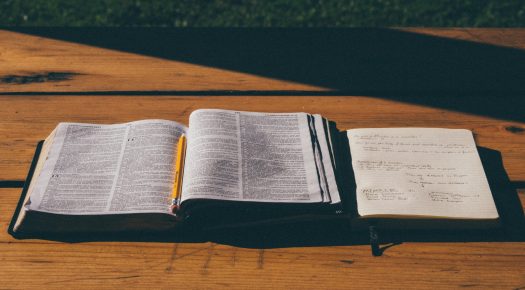
Many people would love to know the Bible better but don’t know where to begin or how to go about it.
The problem with the Bible is that it’s not a book that you can read like a John Grisham or Steven King novel.
The Bible is actually a collection of works written over a long period of time by many different authors in different languages and in different settings.
There are many types of literary genres represented in the Bible. Some of the books are historical narrative while other books are poetry, wisdom literature or books of prophecy.
In the New Testament, the gospels are historical narrative, detailing the life of Jesus from the different perspectives of the 4 different authors, but most of the New Testament comes to us in the form of epistles, or letters that were written to individuals and churches.
How does one study an epistle? Is it different than how one might approach the gospels?
The short answer is that yes, the way one approaches an epistle is different than how one might approach the gospels or some other book that is largely historical narrative.
With historical narrative, like the gospels or the book of Acts, the author is telling you a story, giving you relevant details along the way. The author includes important events and people to make the point he wants to make.
An epistle, on the other hand, is really one side of a two-way conversation.
To illustrate what I mean, consider the following situation. The other day, my wife received a phone call. After answering “hello”, she moved to the other room, but I could still hear everything she was saying.
I wasn’t sure who had called or why, but after about 10-15 minutes of conversation, it was more clear to me who my wife was talking to and what the topic was. I was only hearing one side of the conversation but from that one side, I was able to determine what was being discussed.
Reading and studying a New Testament epistle is much the same. Most of these New Testament letters were written to individuals or churches in response to questions that had been asked or some problem that was being addressed.
Hence, studying an epistle requires some literary detective skills.
Now being a Bible study sleuth takes some practice, but here are a few things that you may find helpful as you get started:
-
- Read the whole letter in one sitting. This will give you a better big picture perspective. This will be easier with shorter letters like 2 Timothy, Colossians or Philippians but will require more time and patience with longer letters like Romans, 1 Corinthians or Hebrews.
- Note who the author is and who the audience is.
- What is the context for the letter? What is the tone of the letter? What do you know about the audience or the recipient that might be helpful to understanding the contents of the letter?
- What are the themes that surface in the letter? What is the main argument being made?
When studying an epistle, you always want to try to determine what is the issue or problem being addressed. What is the reason the author is writing the letter?
Epistles often have a logical argument or a persuasive message. By noticing repeated words and phrases and outlining the message of the letter, you can begin to get a better picture, so to speak, of the author’s intent for writing.
When studying an epistle, it’s helpful to break it down into smaller sections for a deeper dive.
Think of it this way – a lawyer might have 3 or 4 bullet points to support an argument or defend a position. Sometimes, the New Testament writers will have a multi-pronged argument to make their case or defend a thesis. Part of the job of Bible study is determining the logical argument and the bullet points that support the argument.
For some, this might seem like too much work. “I’ll just let the pastor tell me what it says” or “I’ll just read a commentary that explains it”.
That is certainly faster and doesn’t require as much work or effort. But if you want to understand the Bible for yourself, learning some good Bible study skills is essential.
Go ahead and give it a try. Start with a shorter book like Colossians, Philippians, Galatians or Ephesians. These letters are filled with great doctrinal truths and practical instruction for living as Christians but aren’t so long that they’re too difficult to manage. It’s the equivalent of starting out running a mile or two before attempting to run a half-marathon.
Reflection
What has been your experience with studying the Bible?
How would you rate your desire to study the Bible? How would you rate your experience or skill in being able to study the Bible?
What keeps you from studying the Bible more consistently (time, motivation, fear, etc.)? What would help you become more active in studying the Bible consistently?
What epistles have you studied in depth? What epistles are on your “bucket” list of books you’d like to study?
Photo by Aaron Burden on Unsplash

 The Lowedown