The Allure of Cheap Substitutes

Jeremiah 2

1The LORD gave me another message. He said, 2“Go and shout in Jerusalem’s streets: ‘This is what the LORD says: I remember how eager you were to please me as a young bride long ago, how you loved me and followed me even through the barren wilderness. 3In those days Israel was holy to the LORD, the first of my children. All who harmed my people were considered guilty, and disaster fell upon them. I, the LORD, have spoken!’”

4Listen to the word of the LORD, people of Jacob—all you families of Israel! 5This is what the LORD says: “What sin did your ancestors find in me that led them to stray so far? They worshiped foolish idols, only to become foolish themselves. 6They did not ask, ‘Where is the LORD who brought us safely out of Egypt and led us through the barren wilderness—a land of deserts and pits, of drought and death, where no one lives or even travels?’

7“And when I brought you into a fruitful land to enjoy its bounty and goodness, you defiled my land and corrupted the inheritance I had promised you. 8The priests did not ask, ‘Where is the LORD?’ The judges ignored me, the rulers turned against me, and the prophets spoke in the name of Baal, wasting their time on nonsense. 9Therefore, I will bring my case against you and will keep on accusing you, even against your children’s children in the years to come. I, the LORD, have spoken!

10“Go west to the land of Cyprus; go east to the land of Kedar. Think about what you see there. See if anyone has ever heard of anything as strange as this. 11Has any nation ever exchanged its gods for another god, even though its gods are nothing? Yet my people have exchanged their glorious God for worthless idols! 12The heavens are shocked at such a thing and shrink back in horror and dismay, says the LORD. 13For my people have done two evil things: They have forsaken me—the fountain of living water. And they have dug for themselves cracked cisterns that can hold no water at all! (Jeremiah 2:1-13, NLT)


The Daily DAVEotional

Jeremiah was a prophet of Judah who prophesied from about 627 B.C. to 587 B.C. He is known as the “weeping prophet” because he expressed deep sorrow in his writings over the sins of his people toward God.

You may remember that the Jewish nation was divided in two after Solomon’s reign. The northern kingdom, known as Israel in the Old Testament historical books, was conquered by the Assyrians in about 722 B.C. and many of it’s inhabitants were exiled.

The southern kingdom was known as Judah. This was the royal line of David and Solomon. The southern kingdom was invaded by Babylon in 605 BC at which time they became a vassal state, though the kings of Judah continued to resist Babylonian control. It was during this period that Jeremiah prophesied to the kings of Judah with a message that they should concede to Babylonian rule as their punishment for their continued sins of rebellion and rejection of God.

And just what did they do to sin against and reject God? Verse 11 demonstrates that the major sin was that they exchanged their allegiance to the one true God, the God who delivered them from the Egyptians and brought them into the promised land, for “worthless gods” who are “nothing.”

God’s people were guilty of idol worship. This was a recurring issue with God’s people that happened over, and over and over again. They were constantly forsaking God in order to worship idols in the form of regional gods of the people they had displaced as well as the gods of people who lived in proximity to them.

I’ve written many times about the problem of idol worship within the Israelite communities, including here, and here.

Jeremiah gives an illustration to demonstrate just how foolish the people of Judah had been. In verse 13, he states,

For my people have done two evil things: They have forsaken me—the fountain of living water. And they have dug for themselves cracked cisterns that can hold no water at all!

The climate in Israel was hot and arid and they depended on rainfall for drinking water and the development of their crops.

A cistern was used as a way of collecting water during the rainy season to use later when it was dry.

A cistern is not a well. It’s more like an underground storage tank. While there were different methods for constructing a cistern, a common cistern was a masonry cistern which allowed for more versatility in terms of the shape and size of the storage area.

Basically a large cavity or hole was unearthed and then quarried stones or bricks were used with mortar to create the structure – the walls and the floor. The structure was then sealed with plaster to prevent leaks.

So now that you know what a cistern is, let’s look at what the charge is against God’s people.

God says HIs people have rejected Him, the fountain of living water.

This right here is key. It’s easy to overlook the importance of water to the people in ancient Israel. Water represents life. You cannot live without water. You will die of thirst or of starvation if there is no water to drink and grow your crops.

In our modern society, we just go into the bathroom or kitchen and we turn on the faucet, and out comes the water – as much as we want. Most of us haven’t had to think at all about where our water will come from for that day.

But in the Ancient Near East, water was vital, and thinking about water was paramount. Water had to be retrieved on a daily basis for life’s needs – whether it was for drinking, cooking, cleaning or growing crops.

Retrieving water was not as easy as turning on a faucet and streaming water out of a hose into a bucket or cooking pot. One had to walk to wherever the well was located or wherever there was a cistern. Water had to painstakingly be lifted up out of the well or cistern. If you did happen to live near a river, you would have to walk to retrieve it and whatever you retrieved you’d have to carry back. The larger the bucket, the heavier the load. The smaller the bucket, the more times you had to visit the water source to retrieve the amount of water you needed.

To us, we can easily take water for granted. In that culture, nobody took water for granted. It was everything.

God says that He is like a fountain of living water. Since water is essential for life, God is saying that He is like a fountain of life. He is the one who sustains life.

Instead of coming to this source of pure living water, God’s people have chosen to retrieve their water from cisterns that are cracked. A cracked cistern not only would leak its water, which made for an unreliable source, but it would also allow earth sediment to leak in via the cracks so that whatever water remained would be dirty and impure.

This is what we tend to do as humans. On the one hand, there exists a fountain of pure water that never runs dry. On the other hand, there’s a cracked cistern that may have some water in it. It’s unreliable because it leaks. If there is water in it, it’s dirty and stagnant.

Now imagine you’re really thirsty. From which source do you choose to retrieve water to satisfy your thirst?

You’d think that we would choose the fountain of pure living water every time. But we don’t. We consistently choose cheap substitutes that we think will give us life but ultimately, doesn’t quench our thirst.

The Israelites were constantly worshiping false gods and idols that they created out of wood, stone and various metals. These idols could not save them, nor could they protect them, nor could they provide for them. Only God could do that.

We may not be carving idols out of wood, clay, stone and metal and then worshiping them. But we do make this same exchange that Jeremiah warns about. Anything in our life that we turn to in order to provide for us can be an idol.

What is it that you have exchanged for God in your life? What is it that you turn to in order to provide joy, happiness or contentment? Where do you go when you’re sad, anxious or lonely? If you don’t turn to God and trust Him for these things, it’s possible that you are settling for a cheap substitute that cannot quench your real thirst or satisfy your deepest need. Only God can do that.


Did you enjoy this post? I’d love to hear your thoughts! Feel free to like, leave a comment below, and share it with your friends or on social media if you found it helpful or interesting. Your support keeps the conversation going!


Reflection

How do you see people in today’s culture forsaking God? What does forsaking God look like today?

What are some typical things people today tend to turn to for fulfillment, joy and satisfaction in life?

What would you say is your deepest need? How can God help you meet that need?

How can you safeguard your life to ensure you don’t exchange God for some cheap substitute that cannot ultimately provide for your deepest needs?


Photo by Seval Torun on Unsplash

Who is this Melchizedek Character?

Genesis 14

17As Abram returned from his victory over Kedorlaomer and his allies, the king of Sodom came out to meet him in the valley of Shaveh (that is, the King’s Valley). 18Then Melchizedek, the king of Salem and a priest of God Most High, brought him bread and wine. 19Melchizedek blessed Abram with this blessing:

“Blessed be Abram by God Most High,

Creator of heaven and earth.

20And blessed be God Most High,

who has helped you conquer your enemies.”Then Abram gave Melchizedek a tenth of all the goods he had recovered. (Genesis 14:17-20, NLT)

. . . . . . . . . . . . .

Hebrews 7

1This Melchizedek was king of the city of Salem and also a priest of God Most High. When Abraham was returning home after winning a great battle against many kings, Melchizedek met him and blessed him. 2Then Abraham took a tenth of all he had won in the battle and gave it to Melchizedek. His name means “king of justice.” He is also “king of peace” because Salem means “peace.” 3There is no record of his father or mother or any of his ancestors—no beginning or end to his life. He remains a priest forever, resembling the Son of God.

4Consider then how great this Melchizedek was. Even Abraham, the great patriarch of Israel, recognized how great Melchizedek was by giving him a tenth of what he had taken in battle. 5Now the priests, who are descendants of Levi, are commanded in the law of Moses to collect a tithe from all the people, even though they are their own relatives. 6But Melchizedek, who was not even related to Levi, collected a tenth from Abraham. And Melchizedek placed a blessing upon Abraham, the one who had already received the promises of God. 7And without question, the person who has the power to bless is always greater than the person who is blessed.

8In the case of Jewish priests, tithes are paid to men who will die. But Melchizedek is greater than they are, because we are told that he lives on. 9In addition, we might even say that Levi’s descendants, the ones who collect the tithe, paid a tithe to Melchizedek through their ancestor Abraham. 10For although Levi wasn’t born yet, the seed from which he came was in Abraham’s loins when Melchizedek collected the tithe from him.

11And finally, if the priesthood of Levi could have achieved God’s purposes—and it was that priesthood on which the law was based—why did God need to send a different priest from the line of Melchizedek, instead of from the line of Levi and Aaron?

12And when the priesthood is changed, the law must also be changed to permit it. 13For the one we are talking about belongs to a different tribe, whose members do not serve at the altar. 14What I mean is, our Lord came from the tribe of Judah, and Moses never mentioned Judah in connection with the priesthood.

15The change in God’s law is even more evident from the fact that a different priest, who is like Melchizedek, has now come. 16He became a priest, not by meeting the old requirement of belonging to the tribe of Levi, but by the power of a life that cannot be destroyed. 17And the psalmist pointed this out when he said of Christ,

“You are a priest forever

in the line of Melchizedek.”

18Yes, the old requirement about the priesthood was set aside because it was weak and useless. 19For the law made nothing perfect, and now a better hope has taken its place. And that is how we draw near to God.

20God took an oath that Christ would always be a priest, but he never did this for any other priest. 21Only to Jesus did he say,

“The Lord has taken an oath

and will not break his vow:

‘You are a priest forever.’”22Because of God’s oath, it is Jesus who guarantees the effectiveness of this better covenant. (Hebrews 7:1-22, NLT)


The Daily DAVEotional

One of the great themes of the book of Genesis and really the whole Bible, is the Abrahamic covenant, which is introduced in Genesis 12 and is repeated again in Genesis 15. In this covenant, God promises to bless Abraham, so that he, through his descendants, would be a blessing to the nations. This promise sets the backdrop for God’s biblical redemptive plan, which unfolds throughout the Scriptures.

In the chapters that provide the filling for this Abrahamic Covenant sandwich (Genesis 13 and 14), Moses tells the story of how Abram and Lot decide to separate, mainly because they both had grown their personal wealth so much, there was no suitable land that could accommodate both of them with all of their flocks and herds.

Now that Lot is no longer under Abram’s protection, he finds himself the innocent victim of what amounts to a local political rebellion. The end result is that Lot, along with others, is taken captive by a local ruler who did not take kindly to the uprising of his subjects.

Abram gets wind of the situation and launches a rescue operation, which is highly successful. Not only does he get Lot back, but he retrieves ALL of those who have been captured, along with all of their possessions which had been looted.

On his way back from victory, Abram encounters a local king named Melchizedek. To the unschooled reader, Melchizedek seems like just another insignificant local political leader with a name that’s hard to pronounce. There really isn’t much reason to think this guy is that important to the overall biblical narrative, until of course, you get to the book of Hebrews.

Everything we know about Melchizedek comes from just 3 verses in Genesis 14. Here is what we know:

    • Melchizedek was the king of Salem, which means “king of peace.”
    • Melchizedek was also “king of righteousness” since the name “Melchizedek” means “my king is righteousness.”
    • Melchizedek was a priest of the most High God – he apparently followed the one true God.
    • Melchizedek blessed Abram
    • Abram gives Melchizedek a tenth of all the goods he recovered. He paid a tithe to Melchizedek.

Here’s a guy who gets a mere 3 verses of attention in Genesis but then later, is a major source of discussion for 3 chapters in the book of Hebrews. What is really going on here?

If you know anything about the book of Hebrews, the theme is the idea of “Better”. The author advances a series of arguments to show how Jesus is better.

Better than what?

Better than everything!

Jesus is better than angels. Jesus is better than Moses. Jesus is a better priest because He belongs to a better priesthood. Jesus offers a better sacrifice because Jesus’ sacrifice is built on better blood.

Everything about Jesus is better. Including the fact that Jesus is the guarantor of a better covenant.

Hebrews was written to Jewish Christians who were beginning to forsake their new faith in Christ in favor of reverting back to their Jewish religious practices. The author pens his letter to demonstrate why that is not advisable. I’ve written about that in my blog post “Better Than…” as well as another post “A Better Sacrifice”.

In this section of Hebrews, the writer uses Melchizedek as an illustration to make the argument that Jesus is the author of a better covenant.

How exactly does he make his case?

The author first demonstrates that Melchizedek was greater than Abram. He does this by pointing out that Melchizedek blessed Abram and also received a tithe from Abram. He argues that the person who blesses is always greater than the person being blessed and the person who receives a tithe generally has a higher status than the person paying the tithe. Hence, Melchizedek is greater than Abram.

If Melchizedek is greater than Abram, then he’s also greater than Levi, who came from Abram. The writer points out that even though Levi, who is the basis for the Old Testament priesthood, was not yet born, his seed was within Abram when Abram paid the tithe to Melchizedek.

We know also that Melchizedek was a priest of the most high God just as Levi was. But since the Levitical priesthood had not even been implemented yet, Melchizedek’s priesthood must be of a different order. This order is different in one very obvious respect – this priesthood allowed kings to function as priests. This was not allowed in the Levitical priesthood which kept the roles of priests, who were the mediators, separate from the roles of kings, who were the rulers. (See my post, “Whatever Became of Sin?” to see an example of what happens when a king tries to perform priestly functions in the Levitical priesthood system.)

The author then gives another reason for the superiority of Melchizedek’s priesthood over Levi’s – Melchizedek’s priesthood is eternal while Levi’s was temporary.

The author reasons that alhough Melchizedek was a real person, his genealogy is not mentioned anywhere. We don’t know where he came from and there is no mention of him after these few verses in Genesis 14. It’s as if he never died.

The writer uses this as an analogy of sorts. Melchizedek appears on the scene out of nowhere and since we have no record of his death, it’s as if he lives on forever. Melchizedek, therefore, is a priest forever.

The argument then is that Jesus’ priesthood is more like Melchizedek’s priesthood than it is like Levi’s.  How?

Jesus descends from Judah, not from Levi. Therefore, Jesus is not even eligible to be a priest within the Levitical system.

Also, Jesus is a priest AND a king, just as Melchizedek was.

Finally, Jesus’ priesthood is eternal, just like Melchizedek’s appeared to be. Unlike Levitical priests, who died and had to be replaced by new priests, Jesus lives on forever and therefore is NEVER replaced.

We’ve already established that Melchizedek is greater (better) than Levi and since Jesus’ priesthood resembles Melchizedek’s not Levi’s, it logically follows that Jesus’ priesthood is better than Levi’s.

And because Jesus’ priesthood is better, the covenant which He introduces must also be better. So why would you then go back to the Old Covenant which was clearly inferior?

So there you have it. Melchizedek, who is just a blip on the screen in the Old Testament, becomes a central figure of the New Testament.

In theological terms, we say that Melchizedek is a “type” of Christ, which simply means that his existence and what we know of him figuratively resembles what we know to be true of Jesus. Hence, even though it may seem, on the surface, like Melchizedek is just a hired extra in the background of a major Hollywood movie scene, he turns out to be much more important than that. His mention is made to prefigure the coming of Jesus.

Now you know.


Did you enjoy this post? I’d love to hear your thoughts! Feel free to like, leave a comment below, and share it with your friends or on social media if you found it helpful or interesting. Your support keeps the conversation going!


Reflection

What has been your understanding of Melchizedek before reading this blog? Who did you think he was and what importance did you think he had to the overall message of Scripture?

What do you think are some of the reasons the audience of the book of Hebrews may have been forsaking their faith? What are some things that can tend to draw you away from the faith and back into your former lifestyle?

Of the characteristics of Melchizedek that resemble Jesus, which one stands out to you the most and why?

Jesus is the author of a better covenant. The old covenant was based on the Law. How would you explain to another person that the new covenant is better than the old covenant? What are some of the ways that it is better?


AI image of Abram paying a tithe to Melchizedek created by Grok

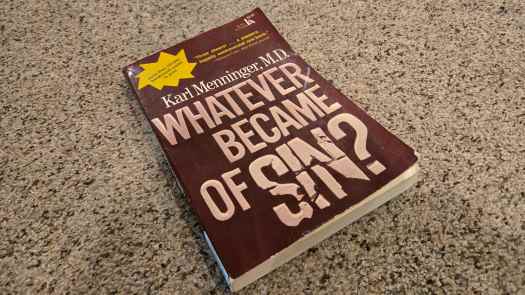
Whatever Became of Sin?

Isaiah 6

1In the year King Uzziah died, I saw the Lord. He was sitting on a lofty throne, and the train of his robe filled the Temple. 2Hovering around him were mighty seraphim, each with six wings. With two wings they covered their faces, with two they covered their feet, and with the remaining two they flew. 3In a great chorus they sang, “Holy, holy, holy is the LORD Almighty! The whole earth is filled with his glory!” 4The glorious singing shook the Temple to its foundations, and the entire sanctuary was filled with smoke.

5Then I said, “My destruction is sealed, for I am a sinful man and a member of a sinful race. Yet I have seen the King, the LORD Almighty!”

6Then one of the seraphim flew over to the altar, and he picked up a burning coal with a pair of tongs. 7He touched my lips with it and said, “See, this coal has touched your lips. Now your guilt is removed, and your sins are forgiven.”

8Then I heard the Lord asking, “Whom should I send as a messenger to my people? Who will go for us?”

And I said, “Lord, I’ll go! Send me.”

(Isaiah 6:1-8, NLT)


The Daily DAVEotional

Have you noticed that sin is not talked about that much anymore? It’s almost like it’s a dirty word – too offensive to mention to those outside of a church setting.

In 1973, Psychologist Karl Menninger published an important work, “Whatever Became of Sin?” in which he reflected on the diminishing concept of sin in our modern culture. His thesis was that the concept of sin as immoral behavior was being replaced by medical and psychological labels that reduced moral responsibility.

Though Menninger draws upon Christian as well as other religious traditions to support his thesis, his book is not a biblical exposition on the subject. Still, his thoughts on this issue, which were printed over 50 years ago, now seem prophetic in nature.

So whatever became of sin? Why has the concept diminished in our culture and what are the reasons for its demise?

The 6th chapter of Isaiah provides an answer for us. This chapter marks a pivotal moment in the life and calling of the prophet. In this chapter, Isaiah has a vision of the Lord in all of His splendor and glory.

The opening verse gives us a time stamp to date the events that follow. Uzziah had been the king of Israel for 52 years, a full life-time for many of his subjects. While Uzziah was one of the better kings of Judah early on, things did not end well for him. Toward the end of his reign, he stubbornly tried to enter the temple and perform rites that were reserved only for the priests, and as a result, he contracted leprosy and was forced to finish out his days in exile.

At Uzziah’s death, with no king to rule, Isaiah goes to the temple and experiences a vision of the true king, the Lord God Himself. Isaiah catches a rare glimpse of God as He really is, a picture of His absolute holiness.

What’s interesting about this encounter is the text says that when Isaiah sees the Lord in His holiness, he cries out, “my destruction is sealed, for I am a sinful man and a member of a sinful race.”

Some translations use the word “ruined” or “undone” to describe Isaiah’s emotional response.

Isaiah, when confronted with the perfect righteousness of God almighty, is brought to his knees as he recognizes his own sinfulness in light of holy God.

One of the reasons sin is not talked about much these days is because we don’t talk about God’s holiness so much these days. These two concepts are intertwined and interdependent – we don’t see sin so much if we don’t see God as holy and righteous.

Over the last 50 years or more, our culture has done all that it can to soften God’s divine attributes to make Him more palatable to our own personal preferences. In short, we’ve made God less like God and more like us.

For the atheist, dismissing God altogether means that there is no objective anchor or standard by which actions can be judged or labeled as “sin”.

“Who are you to tell me that my behaviors are wrong?” is a common refrain.

In many Christian circles, especially among progressives, God is not so much eliminated as much as He’s recreated or reimagined in a way that better fits the person’s lifestyle choices and behaviors.

One of the ways we often see this is in the elevation of the kind-hearted, compassionate New Testament version of God that we see in Jesus while dismissing or diminishing the “judgmental, ego-maniacal” Old Testament picture of God that seems too harsh and exacting. Some may go so far as to claim that the Bible describes two completely different Gods. I wrote recently about this in my blog post, “Is the Old Testament God a Bloodthirsty, Genocidal Psychopath?”

In light of the stark differences between the Old Testament perception of God and the New Testament portrayal of God in the person of Jesus, one inevitably chooses the deity that is more preferable and less restrictive to their own life choices.

The problem with this approach, as I outlined in my blog post, “Can You Make the Bible an Idol?”  is it essentially results in a form of idol worship, where my image of God is created according to my personal choices and inclincations instead of forming a picture of God that represents the fullness of how He has been revealed to us through His holy word.

If we want to talk about sin and the need for a savior, we must highlight God’s absolute holiness and righteousness. If a person doesn’t see God as infinitely holy, they’re more likely to overlook or dismiss their sinfulness as mere character flaws or innocent mistakes. If sin is not seen as an egregious offense against God’s very nature, there is less likelihood of coming to the realization that we are utterly lost and in need of a divine savior.

So whatever became of sin? It fell out of favor, just as God’s holiness has.


Did you enjoy this post? I’d love to hear your thoughts! Feel free to like, leave a comment below, and share it with your friends or on social media if you found it helpful or interesting. Your support keeps the conversation going!


Reflection

Describe  a time when you encountered the power and presence of God in your life as Isaiah did. In other words, when have you had an “Isaiah” moment with God? What was that like emotionally? 

What is your concept of sin? How would you define it? In what ways have you seen our culture minimize sin and personal responsibility?

In what ways have you created an image of God that is not fully reflective of how God has revealed Himself in both the Old and New Testaments?

How can. you ensure that your view of God is not just a personal image that you created to suit your own preferences?


Photo by Dave Lowe


A Tale of Two Sisters

Ezekiel 23

1This message came to me from the LORD: 2“Son of man, once there were two sisters who were daughters of the same mother. 3They became prostitutes in Egypt. Even as young girls, they allowed themselves to be fondled and caressed. 4The older girl was named Oholah, and her sister was Oholibah. I married them, and they bore me sons and daughters. I am speaking of Samaria and Jerusalem, for Oholah is Samaria and Oholibah is Jerusalem.

5“Then Oholah lusted after other lovers instead of me, and she gave her love to the Assyrians, her neighbors. 6They were all attractive young men, captains and commanders dressed in handsome blue, dashing about on their horses. 7And so she prostituted herself with the most desirable men of Assyria, worshiping their idols and defiling herself. 8For when she left Egypt, she did not leave her spirit of prostitution behind. She was still as lewd as in her youth, when the Egyptians satisfied their lusts with her and robbed her of her virginity. 9And so I handed her over to her Assyrian lovers, whom she desired so much. 10They stripped her and killed her and took away her children as their slaves. Her name was known to every woman in the land as a sinner who had received what she deserved.

11“Yet even though Oholibah saw what had happened to Oholah, her sister, she followed right in her footsteps. And she was even more depraved, abandoning herself to her lust and prostitution. 12She fawned over her Assyrian neighbors, those handsome young men on fine horses, those captains and commanders in handsome uniforms—all of them desirable. 13I saw the way she was going, defiling herself just like her older sister.

14“Then she carried her prostitution even further. She fell in love with pictures that were painted on a wall—pictures of Babylonian*[Or Chaldean.] military officers, outfitted in striking red uniforms. 15Handsome belts encircled their waists, and flowing turbans crowned their heads. They were dressed like chariot officers from the land of Babylonia.*[Or Chaldea; also in 23:16.] 16When she saw these paintings, she longed to give herself to them, so she sent messengers to Babylonia to invite them to come to her. 17So they came and committed adultery with her, defiling her in the bed of love. But later, she became disgusted with them and broke off their relationship.

18“So I became disgusted with Oholibah, just as I was with her sister, because she flaunted herself before them and gave herself to satisfy their lusts. 19But that didn’t bother her. She turned to even greater prostitution, remembering her youth when she was a prostitute in Egypt. 20She lusted after lovers whose attentions were gross and bestial. 21And so, Oholibah, you celebrated your former days as a young girl in Egypt, when you first allowed yourself to be fondled and caressed.  (Ezekiel 23: 1-21, NLT)


The Daily DAVEotional

The prophet Ezekiel is one of the major prophets of the Old Testament. He was exiled to Babylon along with other Jews living in the nation of Judah. His ministry was primarily to those living in Babylonian exile and his message was a reminder of the sins that the nation and people had committed that led to them being conquered by the Babylonians and taken into exiled captivity.

In this chapter, Ezekiel receives a message from the Lord in the form of a parable. Two sisters (from the same mother) both become prostitutes in Egypt and then later marry the same man (God, in the parable). We’re told clearly that the two sisters represent Samaria, the northern kingdom of Israel, and Judah, the southern kingdom. The parable serves as an illustration of the unfaithfulness of these two related kingdoms, which resulted in the conquering and captivity of its people.

There are a number of interesting things to note from this parable.

First of all, the relationship between God and His people (the separate kingdoms of Samaria and Judah) is likened to a marriage. This was true of His people in the Old Testament and it’s true of His people now. I wrote about God’s desire that we would essentially enter into a marriage covenant with Him here.

Secondly, the imagery of prostitution or adultery is often used to depict the unfaithfulness of God’s people to their covenant relationship with Him. The unfaithfulness of God’s people is often demonstrated through their worship of idols and false gods. This was a recurring problem amongst the Israelites and it became a constant theme in many Old Testament writings, some of which I’ve written about here and here.

The parable mentions early prostitution in Egypt, “allowing themselves to be fondled and caressed.” This is clearly a reference to Exodus 32, when Aaron, with the help of the people, made a calf of gold, which the people promptly began worshiping as God.

However, prostitution in this parable refers more to the two nations’ desires to align themselves politically with these foreign powers rather than rely on God alone for protection and provision. Oholah (Samaria) was enamored with Assyria and was eventually overrun and conquered by the very nation with whom they sought an alliance. Likewise, Oholibah (Judah) was enamored politically by both Assyria, by whom they avoided conquest, and later Babylon, who eventually conquered them and took many of their citizens into exile. It is many of these exiles who Ezekiel is addressing with his prophetic messages.

Third, Oholoh, which represents Samaria, is listed as the older sister. Why is that? If you don’t know anything about the history of Samaria and Judah, here are some relevant bullet points:

    • Israel was one unified kingdom through the reign of Solomon. But because Solomon was unfaithful to the Lord at the end of his life, the Lord, as a consequence, promised to divide his kingdom.
    • Rehoboam was Solomon’s son. He decided he would rule as an iron-fisted tyrant and that ticked off all of the northern tribes, who revolted and elected their own king. Rehoboam remained the king over the Southern kingdom, which included the tribes of Judah and Benjamin. All the other tribes became loyal to Jeroboam, who was anointed as the king of Israel (the northern kingdom).
    • The Northern kingdom became associated with Samaria when King Omri made Samaria the capital of the northern kingdom.

If royal succession were being used as a determining factor, Judah would be considered older, since Samaria represents a splintering or off-shoot of the royal dynasty.

However, in the parable, it appears that Oholah (Samaria) is considered the older sister since she was the first to be taken into captivity.

Fourth, Judah, who avoided captivity by the Assyrians only to later be conquered and exiled by the Babylonians, is considered in the parable as the greater offender, largely because she did not learn from the fate of her older sister (Samaria) when she was taken into captivity by the Assyrians.

The message of the Lord in this parable is that Judah saw what happened to Samaria and should have learned from her mistakes. Instead, Judah followed down the same path of destruction by committing the same sins of idolatry and political unfaithfulness that Samaria had committed.

I think there’s a relevant lesson here for us today. There’s a danger in life when people take the attitude “that can’t happen to me”, which seems to be the posture that Judah took when Samaria was being overrun by the Assyrians. But, as Judah soon found out, it can happen, especially if we forsake the Lord’s protection and provision to pursue the affection of others.

Reflection

What do you think unfaithfulness to the Lord looks like in our culture today?

What are the idols or potential idols in your life that might draw you away from worshiping God alone?

One of the messages of the parable is that unfaithfulness is not just worshiping idols or false gods. In the case of Samaria and Judah, it was also seeking protection and provision from others besides the Lord via political alliances instead of depending on the Lord alone. Who or what are you prone to seek for protection, provision and security instead of the Lord?

What are some practical ways you can ensure that you are less likely be unfaithful to the Lord?


Photo by Benjamin Grull on Unsplash

An Old Testament Echo Chamber

We create an echo chamber when we manipulate our environment in such a way that we avoid any opposing views while engaging only with those who agree with us.

1 Kings 22

1For three years there was no war between Aram and Israel. 2Then during the third year, King Jehoshaphat of Judah went to visit King Ahab of Israel. 3During the visit, Ahab said to his officials, “Do you realize that the Arameans are still occupying our city of Ramoth-gilead? And we haven’t done a thing about it!” 4Then he turned to Jehoshaphat and asked, “Will you join me in fighting against Ramoth-gilead?”

And Jehoshaphat replied to King Ahab, “Why, of course! You and I are brothers, and my troops are yours to command. Even my horses are at your service.” 5Then Jehoshaphat added, “But first let’s find out what the LORD says.”

6So King Ahab summoned his prophets, about four hundred of them, and asked them, “Should I go to war against Ramoth-gilead or not?”

They all replied, “Go right ahead! The Lord will give you a glorious victory!”

7But Jehoshaphat asked, “Isn’t there a prophet of the LORD around, too? I would like to ask him the same question.”

8King Ahab replied, “There is still one prophet of the LORD, but I hate him. He never prophesies anything but bad news for me! His name is Micaiah son of Imlah.”

“You shouldn’t talk like that,” Jehoshaphat said. “Let’s hear what he has to say.”

9So the king of Israel called one of his officials and said, “Quick! Go and get Micaiah son of Imlah.”

10King Ahab of Israel and King Jehoshaphat of Judah, dressed in their royal robes, were sitting on thrones at the threshing floor near the gate of Samaria. All of Ahab’s prophets were prophesying there in front of them. 11One of them, Zedekiah son of Kenaanah, made some iron horns and proclaimed, “This is what the LORD says: With these horns you will gore the Arameans to death!”

12All the other prophets agreed. “Yes,” they said, “go up to Ramoth-gilead and be victorious, for the LORD will give you victory!”

13Meanwhile, the messenger who went to get Micaiah said to him, “Look, all the prophets are promising victory for the king. Be sure that you agree with them and promise success.”

14But Micaiah replied, “As surely as the LORD lives, I will say only what the LORD tells me to say.”

15When Micaiah arrived before the king, Ahab asked him, “Micaiah, should we go to war against Ramoth-gilead or not?”

And Micaiah replied, “Go right ahead! The LORD will give the king a glorious victory!”

16But the king replied sharply, “How many times must I demand that you speak only the truth when you speak for the LORD?”

17So Micaiah told him, “In a vision I saw all Israel scattered on the mountains, like sheep without a shepherd. And the LORD said, ‘Their master has been killed. Send them home in peace.’”

18“Didn’t I tell you?” the king of Israel said to Jehoshaphat. “He does it every time. He never prophesies anything but bad news for me.”

19Then Micaiah continued, “Listen to what the LORD says! I saw the LORD sitting on his throne with all the armies of heaven around him, on his right and on his left. 20And the LORD said, ‘Who can entice Ahab to go into battle against Ramoth-gilead so that he can be killed there?’ There were many suggestions, 21until finally a spirit approached the LORD and said, ‘I can do it!’

22“‘How will you do this?’ the LORD asked.

“And the spirit replied, ‘I will go out and inspire all Ahab’s prophets to speak lies.’

“‘You will succeed,’ said the LORD. ‘Go ahead and do it.’

23“So you see, the LORD has put a lying spirit in the mouths of your prophets. For the LORD has determined disaster for you.”

24Then Zedekiah son of Kenaanah walked up to Micaiah and slapped him across the face. “When did the Spirit of the LORD leave me to speak to you?” he demanded.

25And Micaiah replied, “You will find out soon enough when you find yourself hiding in some secret room!”

26King Ahab of Israel then ordered, “Arrest Micaiah and take him back to Amon, the governor of the city, and to my son Joash. 27Give them this order from the king: ‘Put this man in prison, and feed him nothing but bread and water until I return safely from the battle!’”

28But Micaiah replied, “If you return safely, the LORD has not spoken through me!” Then he added to those standing around, “Take note of what I have said.” (1 Kings 22:1-28, NLT)


The Daily DAVEotional

In this digital age of social media and misinformation, the term “echo chamber” has become popularized. It refers to the scenario where a person only encounters information and only engages with opinions that reinforce their own views.

In this chapter of 1 Kings, we see an ancient example of the echo chamber. The nation of Israel had become divided after the reign of Solomon, resulting in two kingdoms – the southern kingdom consisting of the tribe of Judah, and the northern kingdom that consisted of the rest of the tribes of Israel.

Though these two related nations were often at odds, at this point in time, there is peace between them. Ahab, the king of Israel (the northern kingdom) asks Jehoshaphat, the king of Judah (the southern kingdom) if he will join him in going to war against the Arameans.

Jehoshaphat agrees but first asks if they could hear from the Lord on the matter.

Ahab summons 400 of his prophets to come and tell them if the Lord will give them victory over the Arameans. All of the prophets concur that the Lord will give them a “glorious victory.”

Jehoshaphat must realize that these prophets are not spokesmen for the true God because he asks Ahab if there is not a prophet of the Lord available that they could consult.

Ahab says there is one guy, Micaiah, but since he never gives good news, Ahab doesn’t listen to him.

This is an ancient example of the modern phenomenon we call the “echo chamber.” Ahab had already decided what he wanted to do and he was going to do it no matter what. His prophets had learned to tell him what he wanted to hear. This is obvious as Micaiah enters the scene and Ahab’s messenger tells him:

“Look, all the prophets are promising victory for the king. Be sure that you agree with them and promise success.”

Ahab is not really interested in knowing what the Lord thinks or says about the matter. Instead, he surrounded himself with so-called prophets who simply validated the plans he was going to implement anyway.

Unfortunately, we do the same thing today that Ahab does in this passage. Whether it’s our social media feeds, our network of facebook friends, the books we read, the news we consume or the people we choose to actively connect with, we often shield ourselves from people and opinions that might contradict or challenge our views, while at the same time, listening only to those people who will put a rubber stamp of approval on anything we might say or do.

This method of manipulating the counsel we receive is an indication of a proud spirit and a stubborn heart.  It demonstrates that the person’s will is not inclined to the Lord and is not open to truth.

And when a person is not open to the truth, Jesus says that person is actually evil (see John 8)!

Reflection

What are some current issues or topics where you might be susceptible to living in an echo chamber instead of engaging with opposing views?

Describe a time when someone asked for your advice but ignored it, doing what they wanted to do anyway. How did that make you feel?

Why do you think people tend to ask for advice from only those people they know will agree with them?

What are some steps you can take to avoid living in an echo chamber? How can you ensure that your heart doesn’t become hardened and resistant to truth? How can you cultivate a heart and spirit that is open to the Lord?


Photo by Andi Mihailescu on Unsplash

The Prayer of Rebellion

Jeremiah 44

11“Therefore, the LORD Almighty, the God of Israel, says: I have made up my mind to destroy every one of you! 12I will take this remnant of Judah that insisted on coming here to Egypt, and I will consume them. They will fall here in Egypt, killed by war and famine. All will die, from the least to the greatest. They will be an object of damnation, horror, cursing, and mockery. 13I will punish them in Egypt just as I punished them in Jerusalem, by war, famine, and disease. 14Of those who fled to Egypt with dreams of returning home to Judah, only a handful will escape.”

15Then all the women present and all the men who knew that their wives had burned incense to idols—a great crowd of all the Judeans living in Pathros, the southern region of Egypt—answered Jeremiah, 16“We will not listen to your messages from the LORD! 17We will do whatever we want. We will burn incense to the Queen of Heaven and sacrifice to her just as much as we like—just as we and our ancestors did before us, and as our kings and princes have always done in the towns of Judah and in the streets of Jerusalem. For in those days we had plenty to eat, and we were well off and had no troubles! 18But ever since we quit burning incense to the Queen of Heaven and stopped worshiping her, we have been in great trouble and have suffered the effects of war and famine.”

19“And,” the women added, “do you suppose that we were worshiping the Queen of Heaven, pouring out drink offerings to her, and making cakes marked with her image, without our husbands knowing it and helping us? Of course not!”

20Then Jeremiah said to all of them, men and women alike, who had given him that answer, 21“Do you think the LORD did not know that you and your ancestors, your kings and officials, and all the people were burning incense to idols in the towns of Judah and in the streets of Jerusalem? 22It was because the LORD could no longer bear all the evil things you were doing that he made your land an object of cursing—a desolate ruin without a single inhabitant—as it is today. 23The very reason all these terrible things have happened to you is because you have burned incense to idols and sinned against the LORD, refusing to obey him and follow his instructions, laws, and stipulations.”

24Then Jeremiah said to them all, including the women, “Listen to this message from the LORD, all you citizens of Judah who live in Egypt. 25The LORD Almighty, the God of Israel, says: You and your wives have said that you will never give up your devotion and sacrifices to the Queen of Heaven, and you have proved it by your actions. Then go ahead and carry out your promises and vows to her!

26“But listen to this message from the LORD, all you Judeans now living in Egypt: I have sworn by my great name, says the LORD, that my name will no longer be spoken by any of the Judeans in the land of Egypt. None of you may invoke my name or use this oath: ‘As surely as the Sovereign LORD lives!’ 27For I will watch over you to bring you disaster and not good. You will suffer war and famine until all of you are dead.

28“Only a small number will escape death and return to Judah from Egypt. Then all those who came to Egypt will find out whose words are true, mine or theirs! 29And this is the proof I give you, says the LORD, that all I have threatened will happen to you and that I will punish you here: 30I will turn Pharaoh Hophra, king of Egypt, over to his enemies who want to kill him, just as I turned King Zedekiah of Judah over to King Nebuchadnezzar of Babylon. I, the LORD, have spoken!” (Jeremiah 44:11-30, NLT)


The Daily DAVEotional

Jeremiah was an Old Testament prophet who lived about 2600 years ago. The book of Jeremiah chronicles the many prophecies he gave to the people of Judah in which the Lord promised to punish the people for their continued unfaithfulness and wickedness. This punishment would come at the hands of the Babylonians who would invade the land, overtake the capital city of Jerusalem and take the majority of its citizens back to Babylon as captives of war.

Throughout the book, many false prophets opposed Jeremiah, claiming that he had not heard from the Lord. These false prophets predicted that Babylon would not invade and if they did, they predicted that God would protect His people and enable them to withstand and resist any invading army.

At this point in the book, all of Jeremiah’s prophecies have come true. The Babylonians have come and laid siege to Jerusalem, overtaking its walled barriers and taking its people back to Babylon as prisoners of war.

However, a remnant of people are left in Judah to tend to the land and continue living under a Babylonian appointed governor.

It’s at this point that those who are left decide that they would be better off fleeing to Egypt and living under the rule of Pharaoh instead of living in their own land under Babylonian occupation.

Jeremiah comes to this group and gives them the Lord’s directive, which is to stay in the land and NOT flee to Egypt. God’s reasons are clear: He is going to punish the Egyptians by the very army that He used to punish the Israelites. If this remnant of Jews decides to flee to Egypt, they will only be putting themselves in the very harm’s way that they are trying to escape.

This chapter outlines the conversation Jeremiah has with key leaders of this remnant group which has made its way to Egypt. Jeremiah explicitly states that the Lord has decided that because this group has insisted on rejecting His direct command to stay in Judah, they will all die from the very things from which they fled, namely war and famine.

What is the response of the people?

You would hope that they would listen to Jeremiah and the word of the Lord. You would think that maybe they would repent and follow, for once, the command of the Lord.

But that’s not what happens. Instead, their response is:

“We will not listen to your messages from the LORD! 17We will do whatever we want. We will burn incense to the Queen of Heaven and sacrifice to her just as much as we like—just as we and our ancestors did before us, and as our kings and princes have always done in the towns of Judah and in the streets of Jerusalem. For in those days we had plenty to eat, and we were well off and had no troubles! 18But ever since we quit burning incense to the Queen of Heaven and stopped worshiping her, we have been in great trouble and have suffered the effects of war and famine.”

God’s response to this overt rebelliousness and rejection of Him is to allow them to experience the consequences of their choices and actions. By rebelling against the Lord, they were unknowingly putting their lives in danger by subjecting themselves to forces and circumstances that they could not possibly have seen or predicted on their own.

It seems to me that I often act just like this group of Judeans.

God no longer sends physical prophets like Jeremiah to speak to His people and warn them of potential disaster. He doesn’t need prophets to communicate these messages of warning because He has His holy Word that speaks for Him.

God’s word functions as the prophet in our current environment. Everything God wants us to know about righteous and wise living is summed up in His word. And yet, I often fail to consult His word to get input and wise advice concerning the issues I’m facing.

Often times, I don’t just ignore what God’s word says, I KNOW what it says and choose to overtly rebel anyway. I follow the pattern of rebellion these women modeled as I say to the Lord:

I will not listen to your messages, LORD! 17 I will do whatever I want. I will burn incense to whatever God or deity I want and sacrifice to her just as much as I like—just as we and our ancestors did before us, and as our leaders have always done in our towns and communities.

This is what I call the prayer of rebellion, in which I vocalize my rejection of God’s commands and His will for my life and I exert my own stubborn independence to live apart from Him.

Though Jeremiah lived 2600 years ago in a time and era that was much different than today, one thing is still the same – people are still rebelling against God’s word and will and living instead for their own personal desires and preferences.

We may not be taken into captivity by an invading army but by resisting the Lord’s will and disobeying Him, we most certainly will experience negative consequences and even disaster in our lives.

Reflection

These women made a habit of burning incense to a foreign god. They were putting their trust in a foreign deity and false god instead of God Himself. What are some potential idols in your own life that you are tempted to trust in place of God?

What are some times in your life where you have expressed “the prayer of rebellion” towards God. What were the circumstances?

In what ways can you prepare yourself from drifting and serving other gods or idols in your life? What are some practical tips that might keep you from experiencing spiritual drift?

What can you learn from this passage about the importance of being yoked (married) to someone who shares your same spiritual values and commitment to the Lord? 


Photo by Jakayla Toney on Unsplash