What Does it Mean to Walk in the Spirit?

Galatians 5

16But I say, walk by the Spirit, and you will not carry out the desire of the flesh. 17For the flesh sets its desire against the Spirit, and the Spirit against the flesh; for these are in opposition to one another, so that you may not do the things that you please. 18But if you are led by the Spirit, you are not under the Law. 19Now the deeds of the flesh are evident, which are: immorality, impurity, sensuality, 20idolatry, sorcery, enmities, strife, jealousy, outbursts of anger, disputes, dissensions, factions, 21envying, drunkenness, carousing, and things like these, of which I forewarn you, just as I have forewarned you, that those who practice such things will not inherit the kingdom of God. 22But the fruit of the Spirit is love, joy, peace, patience, kindness, goodness, faithfulness, 23gentleness, self-control; against such things there is no law. 24Now those who belong to Christ Jesus have crucified the flesh with its passions and desires.

25If we live by the Spirit, let us also walk by the Spirit. 26Let us not become boastful, challenging one another, envying one another.

(Galatians 5:16-26, NASB)


The Daily DAVEotional

The letter to the Galatians was written to a church that was struggling with Jewish legalism. Some Pharisees who had accepted Jesus as the Messiah were telling the Galatians that it wasn’t enough to believe in Jesus to be saved; they were teaching these recent Gentile converts that they must also adopt all of the Jewish legal rituals as well. Basically, they were telling them that they needed to convert to Judaism if they wanted the Jewish Messiah to be valid for them.

This was a huge controversy in the early church. The issue revolved around what is necessary to be saved. The essential question that needed to be answered was, “do Gentiles have to become Jewish in order to accept Jesus as their Messiah?”

This controversy became so polarizing that the early church convened a Council to address the issue and decide on the matter. I wrote about that in my blog post “A Pivotal Council in the Early Church”. The summary is that the early church leaders unanimously agreed that Gentile converts did not need to become Jewish in order to be saved. Jesus was enough and adherence to all of the Old Testament rituals and legal requirements was not necessary.

That didn’t stop these false teachers though from infiltrating churches and spreading their skewed version of the gospel, which was not really good news at all.

In this section of his letter, Paul is expounding on his argument that following the Law could never save anyone, which is why Jesus came in the first place.

We really have only two choices when it comes to salvation. We can seek to gain God’s favor through our own human efforts, our flesh, or we can seek God’s favor by following the Spirit. Paul says that these two options are diametrically opposed to one another and they yield completely different results.

In fact, the only way one can experience real transformation is by following the Spirit, or, as Paul puts it, walking in the Spirit. What exactly does it mean to walk in the Spirit?

There are three words and phrases in this passage that give clarity to the idea of walking in the spirit.

In verse 16, Paul says that if we “walk by the Spirit” we “will not carry out the desire of the flesh.” The NIV translation is slightly different, encouraging us to “live by the Spirit”.

What comes to your mind when you think about going on a walk? Typically, I think about a relaxing walk in nature or on the beach or in a serene location with my wife or a trusted friend. The idea is that there is a connection and a reliance on God when we are walking with Him.

The second word that gives clarity to walking in the spirit is in verse 18, which says “if you are led by the Spirit, you are not under the Law.”

The Holy Spirit is a guide. He leads us. I think about being on a hike in a national park where there is an experienced guide leading us along a path. Because they are familiar with the terrain and all of the trails, they serve as a leader, showing us the way to our destination while alerting us to dangers and pitfalls along the way.

The third word that gives clarity to “walking in the Spirit” is in verse 25, which says, “If we live by the Spirit, let us also walk by the Spirit.” Interestingly, the word “walk” in this verse is not the same word used for “walk” in verse 16. The NIV translates it this way:

Since we live by the Spirit, let us keep in step with the Spirit.

This word translated “walk” in the NASB is translated “keep in step” by the NIV. The word is really a military term that describes soldiers as they are marching together.

If you’ve ever seen a military parade, or even a marching band, you know that there is a leader, a drill sergeant or a drum major, who is giving commands that others follow. There is a rhythm and a synchronicity that exists between the leader and the followers.

Walking in the Spirit is a conscious act whereby we, as followers, willingly put ourselves in a subservient position, taking our cues from the Lord as our companion and guide. We don’t resist or question His orders and directives, but we keep in step and rhythm with where He’s going and what He’s doing.

Paul says that the natural result of walking in the spirit is that we will bear the fruit of the Spirit – our character will begin to transform, taking on God’s selfless character instead of the selfish, ungodly character that our flesh produces.

Reflection

How is life like a walk?

Think about a time you went on a relaxing walk. Who was with you? Where were you? What words would describe your emotions and your demeanor.  What made it so refreshing?

What does it mean to be led by someone? What is required on our part in order to be led by someone else?

What characterizes soldiers as they march? How do you think you can “march” in step with the Spirit?


Photo by Henry Xu on Unsplash


I Put a Spell on You

Deuteronomy 21

22“If someone has committed a crime worthy of death and is executed and then hanged on a tree, 23the body must never remain on the tree overnight. You must bury the body that same day, for anyone hanging on a tree is cursed of God. Do not defile the land the LORD your God is giving you as a special possession. (Deuteronomy 21:22-23, NLT)

Galatians 3

1Oh, foolish Galatians! What magician has cast an evil spell on you? For you used to see the meaning of Jesus Christ’s death as clearly as though I had shown you a signboard with a picture of Christ dying on the cross. 2Let me ask you this one question: Did you receive the Holy Spirit by keeping the law? Of course not, for the Holy Spirit came upon you only after you believed the message you heard about Christ. 3Have you lost your senses? After starting your Christian lives in the Spirit, why are you now trying to become perfect by your own human effort? 4You have suffered so much for the Good News. Surely it was not in vain, was it? Are you now going to just throw it all away?

5I ask you again, does God give you the Holy Spirit and work miracles among you because you obey the law of Moses? Of course not! It is because you believe the message you heard about Christ.

6In the same way, “Abraham believed God, so God declared him righteous because of his faith.” 7The real children of Abraham, then, are all those who put their faith in God.

8What’s more, the Scriptures looked forward to this time when God would accept the Gentiles, too, on the basis of their faith. God promised this good news to Abraham long ago when he said, “All nations will be blessed through you.” 9And so it is: All who put their faith in Christ share the same blessing Abraham received because of his faith.

10But those who depend on the law to make them right with God are under his curse, for the Scriptures say, “Cursed is everyone who does not observe and obey all these commands that are written in God’s Book of the Law.” 11Consequently, it is clear that no one can ever be right with God by trying to keep the law. For the Scriptures say, “It is through faith that a righteous person has life.” 12How different from this way of faith is the way of law, which says, “If you wish to find life by obeying the law, you must obey all of its commands.” 13But Christ has rescued us from the curse pronounced by the law. When he was hung on the cross, he took upon himself the curse for our wrongdoing. For it is written in the Scriptures, “Cursed is everyone who is hung on a tree.” 14Through the work of Christ Jesus, God has blessed the Gentiles with the same blessing he promised to Abraham, and we Christians receive the promised Holy Spirit through faith. (Galatians 3:1-14, NLT)


The Daily DAVEotional

In 1956, Jalacy “Screamin’ Jay” Hawkins recorded his most famous song, “I Put a Spell on You.” The song (which you can listen to here) became a cult classic that’s been covered by a number of artists over the years, including Nina Simone, Annie Lennox and Alan Price.

For me, I grew up listening to the Creedence Clearwater Revival Rendition of the song. It was classic rock at its best.

To have a spell put on you means that you’re completely held by something, whether a person or an idea. Dictionary.com describes it as “a state of being enchanted, entranced or fascinated.”

In this 3rd chapter of Paul’s letter to the Galatians, Paul is asking the question, “who put a spell on you?” Paul is so dumbfounded by the change he has seen in how the Galatians are living out the Christian life that it’s as if they have been put in a trance by an evil trickster posing as a servant of Christ.

The issue that Paul was addressing is highlighted in verse 3 where Paul says, “Have you lost your senses? After starting your Christian lives in the Spirit, why are you now trying to become perfect by your own human effort?” [emphasis added]

This problem is one that is actually pretty commonplace among believers even today. Many Christians place their faith in Christ to BEGIN the Christian life, and then resort to a works based system in order to MAINTAIN the Christian life.

Paul is saying that this approach to the Christian life is so contrary to the actual gospel message that it’s EVIL.

Twice in the first 5 verses Paul asks the question: did you receive the Holy Spirit by keeping the Law? The question is rhetorical in nature, but Paul answers it anyway with an emphatic NO!

How does a person receive the Holy Spirit?  Through belief, or “by faith”.

If you are a Christian, you came to Christ by placing your faith, or trust, in Jesus to pardon your debt of sin and provide forgiveness through His death on the cross. This is why Paul, in the very first verse, references the cross of Christ. Every Christian who has ever existed has come to Christ in the same way, by believing in Jesus and His death on the cross as a payment for personal sin.

According to Ephesians 1:13, at the moment of belief in Christ, all Christians receive the promised Holy Spirit, who comes to live inside the life of the new believer.

The problem for many Christians is what follows that initial conversion experience. After beginning the Christian life by placing their faith in Christ, many Christians fail to continue the Christian life in faith, empowered by the Spirit. Instead, they opt for a rules-based approach in which they seek to please God through their “human effort” (see verse 3).

This was not just a problem with the Galatians. Paul also addressed this issue in Romans 4. I wrote about it in my blog post, “How Good Do You Have to Be to Be Saved?”

This problem persists today as well.

In our rebelliousness, we desire to make ourselves the center of the universe. Most religions are man-centered, meaning that the religion is centered around human effort and good deeds.

Biblical Christianity, on the other hand, is God-centered. It is the ONE major religion or philosophy that does not depend on what man DOES but is instead ordered around what God DID via Christ’s death on the cross.

The issue with the Galatians was that while they began the Christian life in the Spirit by faith, they sought to maintain their standing with God by following the Law, the Jewish religious code.

Paul reasons that if you didn’t come to Christ by adhering to the Law, why are you trying to maintain your relationship with God by adhering to the Law?

Essentially, Paul is saying that you can’t mix and match these two approaches. They started out with a God-centered approach based on faith but then shifted to a man-centered approach based on human effort. This makes no sense. If you want to base it it on adhering to the Law, you will have to obey the whole Law. Otherwise, you are under a curse.

The other option is to base your approach on faith, which is preferable, because in this approach, Jesus was a curse for us via his death on the cross (see verse 13).

By switching from a God-centered approach back to a man-centered religion (the Law) as a means of seeking God’s approval, you are invalidating the whole reason why Christ was necessary in the first place, which is why Paul asks the Galatians, “Are you now going to just throw it all away?”

The Christian life is a life of faith. We don’t just come to Christ by faith. We live the Christian life by faith as well. In this way, God is the center at all times.

If you are under the impression that we come to Jesus by placing our faith in Him but then we must follow some sort of religious moral code in order to keep our standing with God, well then Paul’s question to the Galatians extends to you – who put a spell on you? That is not just a minor misunderstanding or small theological difference of opinion. Paul says this ideology is evil and man-centered, designed to keep people living as slaves instead of living in freedom and experiencing true transformation.

Reflection

What is your reaction to the idea that we are under the curse of the Law, but Jesus, by hanging on a tree, became a curse for us? What imagery does this create in your mind? What thoughts and emotions does it provoke?

What do you think are the reasons why Paul calls the Galatians approach to the Christian life evil?

What are some examples you can think of in which people tend to make Christianity man-centered instead of faith-based and centered on God?

What do you think it looks like practically to continue the Christian life in faith instead of human effort?


Photo by Dollar Gill on Unsplash


Haters Gonna Hate, Hate, Hate

John 15

18“When the world hates you, remember it hated me before it hated you. 19The world would love you if you belonged to it, but you don’t. I chose you to come out of the world, and so it hates you. 20Do you remember what I told you? ‘A servant is not greater than the master.’ Since they persecuted me, naturally they will persecute you. And if they had listened to me, they would listen to you! 21The people of the world will hate you because you belong to me, for they don’t know God who sent me. 22They would not be guilty if I had not come and spoken to them. But now they have no excuse for their sin. 23Anyone who hates me hates my Father, too. 24If I hadn’t done such miraculous signs among them that no one else could do, they would not be counted guilty. But as it is, they saw all that I did and yet hated both of us—me and my Father. 25This has fulfilled what the Scriptures said: ‘They hated me without cause.’ 26“But I will send you the Counselor—the Spirit of truth. He will come to you from the Father and will tell you all about me. 27And you must also tell others about me because you have been with me from the beginning.

(John 15:18-27, NLT)


The Daily DAVEotional

Have you noticed that there is a lot of hate in our culture today. A LOT.

What I find interesting is that our culture seems to have redefined what the word hate even means. If you disagree with someone, you are quickly labeled a “hater.”

This is very problematic for Christians because we believe that Jesus has given us moral guidelines to live by and to promote as good for our society at large.

But many of the moral guidelines Christians hold to are not accepted by our culture. So what is the response? Christians are labeled as haters.

There are lots of names that can be found in the hate bucket. Racist, Sexist, Misogynist. Homophobic. Transphobic. Judgmental. Hypocritical.

There is no doubt that there are those who identify as Christians who are racist, or sexist or judgmental, or any number of other labels. ALL have sinned. ALL do sin. We should be honest about that and appeal to Jesus to not only forgive but transform.

Still, no matter what you say or do, some are going to hate you. This should not surprise us as Jesus Himself warned that this would be the case.

And yet, I find that many Christians cannot stomach the fact that the world hates them. So what is the response? For many, the response is accommodation. I see quite a number of Christians, churches and denominations who are changing their theology, their moral stances and in some cases, their entire worldview – all so that they won’t be hated by others.

And while the culture has redefined what hate is, I think many believers have redefined what love is. In a desperate attempt to not be seen as any of the “hate” words listed above, I see long-standing, biblical beliefs and moral principles being accommodated and compromised, in the name of “love”. The thinking for many is that if others hate you, then you must not be “loving.”

Nothing could be further from the truth. Loving people has nothing to do with getting them to like you. This passage is a proof text for that. Jesus was and is the most loving person who ever lived and yet He was hated so much that He was crucified by His haters. His love for them was not enough to get them to “like” Him.

In this passage, Jesus implores His followers to recognize this same principle. Some people are so hard-hearted toward God that anyone who represents Him or reflects His moral guidance is a target for personal wrath and ire. We cannot avoid this. We simply must endure it.

Fortunately, Jesus sends us the Counselor, the Spirit of TRUTH, who gives us the courage to tell others about Jesus and empowers us with the strength to endure the hatred that may be directed toward us.

Reflection

As Christians, we are commanded to love others. What do you think that looks like? How do you love people who hate you and what you stand for?

When Jesus says that the world will hate His followers, what do you think that means?

How do you think Christians should respond to hate they experience from the world? 

Do you think it’s possible for Christians to be liked by the world? Why or why not? 

Jesus says that we are to tell others about Him. What exactly about Jesus do you think we are to communicate? What do you think are the best ways to communicate about Jesus to others?


Photo by Andre Hunter on Unsplash

The Holy Spirit as a Seal

Ephesians 1

13And you also were included in Christ when you heard the word of truth, the gospel of your salvation. Having believed, you were marked in him with a seal, the promised Holy Spirit, (Ephesians 1:13, NIV)

Ephesians 4

30And do not grieve the Holy Spirit of God, with whom you were sealed for the day of redemption. (Ephesians 4:30, NIV)


The Daily DAVEotional

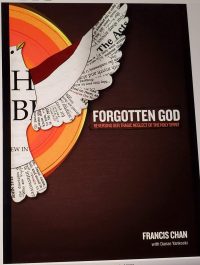
In 2009, popular speaker and Christian author Francis Chan wrote and released his book “Forgotten God.” The book was an aptly titled treatise on the Holy Spirit, the often misunderstood and neglected third member of the Trinity.

Many Christians are confused about the role of the Holy Spirit. We understand God the Father. We imagine Moses talking to the Father as he encounters the burning bush. Or we think of the Old Testament prophets communicating with “The Father”.

We also understand Jesus because we read about Him in the gospels and the New Testament epistles. In our minds, we see the actions of Jesus and we hear His words as He teaches the crowds and interacts with His disciples.

But who is this Holy Spirit character? We know He’s a part of the Trinity but we often don’t know what He does or why He’s important.

I wrote about the nature of the Holy Spirit in my blog post “Is the Holy Spirit like the Force in Star Wars“, demonstrating that the Holy Spirit is God!

Beyond knowing that the Holy Spirit is a person and that He is God, what exactly is the role of the Holy Spirit in my life? What does He do? Does it even matter?

There’s a whole theology built around understanding the nature and the person of the Holy Spirit. It’s called Pneumatology, The Greek word “pneuma” (pronounced “nooma”) means “breath, wind, or spirit.” Hence, pneumatology is the study of the Holy Spirit.

To understand the Holy Spirit completely would take more time than just a brief blog post, but we do learn something specific about the role of the Holy Spirit in the life of believers from these two verses in Ephesians.

From these two verses, we learn that the Holy Spirit is a seal. What exactly does that mean?

A seal has many purposes.

For one, a seal was used to demonstrate ownership. In modern times, ranchers will brand their cattle and livestock with a branding iron, which is like a seal. This brand is a specific logo or emblem that represents that ranch and all livestock branded with that emblem are owned by that ranch.

Ephesians 1:13 says that we “were marked in Him with a seal, the promised Holy Spirit.” One role of The Holy Spirit then is to act as a seal, essentially imprinting a God-tattoo on our soul, demonstrating that we now belong to God.

A second purpose of the seal is to demonstrate authority.

In ancient times, a seal was used to identify an individual. The seal authenticated a person via an emblem or a device that could be used to make an impression in wax or clay.


Genesis 38 tells the story of Tamar who disguises herself as a prostitute in order to sleep with her father-in-law, Judah. When Judah asks her what he can give her as security while she waits for payment for services rendered, she replies,

“I want your identification seal, your cord, and the walking stick you are carrying.” So Judah gave these items to her. She then let him sleep with her, and she became pregnant. (Genesis 38:18, NLT)

In today’s culture, a seal is often used by official entities (like the government) to demonstrate the authority and authenticity of a document. As I look at my driver’s license, for example, it is embossed with the “Great Seal of the State of California”, which demonstrates that the identification is authentic and legal.

So the Holy Spirit is given to us as believers to authenticate our relationship with God. It is real. It is authentic. It is officially from God.

A third purpose of a seal is one of security. A seal was often used in official communication to ensure the security of the message. A document would be folded and a piece of wax or clay would be used to “seal” the fold. The seal of the person (often a signet ring) was used to press into the wax and create an official image that represented that person. If the seal was broken before reaching the recipient, the recipient would know that the communication was perhaps compromised.

According to Ephesians 4:30, the Holy Spirit “seals” the believer for the day of redemption. What that means is that the Holy Spirit is given to believers to secure all of the promised elements related to our future salvation.

Of course there’s a lot more to know and understand about the role the Holy Spirit plays in our lives as believers. But one important role is that He is a seal, which shows that we now belong to God, we are authentic members of His family and that all of God’s future promises related to salvation are secure.

Reflection

At the outset, it was suggested that the Holy Spirit is the often over-looked, misunderstood third member of the Trinity (the Forgotten God). What has been your understanding and experience with the Holy Spirit as a believer? Before reading this post, what has been your relationship with the Holy Spirit in your daily Christian life?

What are some examples in your own experience of a seal?

One purpose of the seal is to show ownership, like a brand on livestock. When you think about being “owned” by God, how does this affect you as a follower of Christ? What impact, either positive or negative, does this have on you as you seek to live out the Christian life?

Another purpose of a seal is security. What do you think it means that the Holy Spirit secures all of the promises related to our future salvation? What exactly is He securing? What difference does this make in how you live out your faith?


Photo by Anna Tarazevich: https://www.pexels.com/photo/close-up-photo-of-a-stamp-on-a-paper-5425648/

Weaponizing our Words


James 3

2We all stumble in many ways. If anyone is never at fault in what he says, he is a perfect man, able to keep his whole body in check.

3When we put bits into the mouths of horses to make them obey us, we can turn the whole animal. 4Or take ships as an example. Although they are so large and are driven by strong winds, they are steered by a very small rudder wherever the pilot wants to go. 5Likewise the tongue is a small part of the body, but it makes great boasts. Consider what a great forest is set on fire by a small spark. 6The tongue also is a fire, a world of evil among the parts of the body. It corrupts the whole person, sets the whole course of his life on fire, and is itself set on fire by hell.

7All kinds of animals, birds, reptiles and creatures of the sea are being tamed and have been tamed by man, 8but no man can tame the tongue. It is a restless evil, full of deadly poison.

9With the tongue we praise our Lord and Father, and with it we curse men, who have been made in God’s likeness. 10Out of the same mouth come praise and cursing. My brothers, this should not be. 11Can both fresh water and salt water flow from the same spring? 12My brothers, can a fig tree bear olives, or a grapevine bear figs? Neither can a salt spring produce fresh water. (James 3:2-12, NIV)


The Daily DAVEotional

Growing up, there was almost nothing more exciting than checking the daily mail. This was before the internet and personal computers. We had no email, no social media, no cell phones. The only way to communicate with someone was either a personal phone call (using our rotary phones) or via old-fashioned snail mail.

Junk mail wasn’t as prevalent back then so when something came that had your name on it, there was excitement – just like Ralphie in this clip from A Christmas Story.

One day when I was in junior high, I checked the mail after school, and low and behold, there was a letter with my name on it.

There it was….a small white envelope with my name handwritten right in the center! There was no return address so I wasn’t sure who it was from.

Immediately I began to ponder in my mind what was inside and who it was from. I speculated that the letter could be from a secret admirer, a girl no doubt, who wanted to express her affection for me.

However, when I opened the envelope, it wasn’t what I expected. There was no note of affection or admiration from a secret admirer. In fact, there was no letter at all. It was just a 3×5 index card with the following Bible verse written on it:

6The tongue also is a fire, a world of evil among the parts of the body. It corrupts the whole person, sets the whole course of his life on fire, and is itself set on fire by hell.

I was perplexed. What was the purpose of this note and why was it sent to me? And more importantly, WHO would send me a Bible verse on an index card? Why this particular verse?

I never did find out who sent me that card and to be honest, I didn’t reflect much on the meaning of the verse or what the anonymous sender was trying to say to me.

Growing up, I was always extremely small for my age. As a result, I was an easy target for bullying and intimidation. I quickly learned that in the school playground jungle, what one lacked in size and strength could be made up with words. I learned the art of using quick zingers and snappy comebacks to make fun of others and cut them down to size.

My verbal skills of sarcasm, put downs and quick wit became well-known, not only amongst my family and friends in my childhood years, but later with my co-workers and managers at work. I remember more than once a manager at the Target store I worked at in college telling me that I was a smart-a**.

What I think that anonymous note sender was trying to say, though I didn’t digest it until much later, is that I had a sharp tongue and my words could easily damage others. Of course I knew this intellectually. I had often been the recipient of teasing and verbal jabs. I wrote here in a previous blog post about how words have the power to heal or hurt.

In this passage, James is telling his audience that our tongues are an indication of our overall ability to control ourselves.

Our tongue may seem insignificant but it can have an enormous effect in how it is used. It can do tremendous damage. James notes three things about the tongue.

First, the tongue is small but it can do GREAT damage. Just as a small spark can result in a large fire, so even the smallest and seemingly innocuous of words spoken by our tongues can do enormous harm to others.

Secondly, James says that the tongue is evil and poisonous. When we use our tongue in the wrong way, we actually corrupt our entire body. This is because the tongue is the vehicle by which people share their thoughts. If their thoughts are evil, the tongue exposes the person to be corrupt and evil.

Thirdly, James points out that the tongue is inconsistent. It can be used for praising God on one hand and cursing those made in the image of God on the other hand.

James is noting that if we praise God on one hand and curse people made in the image of God in the next breath, there is a problem. Jesus taught that this inconsistency is the result of our evil heart.

Unfortunately, when we come to know Jesus, the evil in our heart is not completely eradicated. As a result, we may find ourselves still having trouble controlling our tongue. This is why James says that the tongue cannot be tamed.

So what are we to do? To gain control of our tongue we actually must yield control of our heart and will to the Holy Spirit who resides in us. It’s only by the power of God’s Spirit that we can experience transformation of our hearts resulting in a change in our behaviors.

For more information on how we can yield control of our lives to the Holy Spirit, see the following blog posts:

An Issue of Control – Romans 8

Under the Influence – Ephesians 5


Reflection

In what ways do you find yourself misusing your tongue (your words and language)?

Think of a time when you used your tongue (either spoken or written words) for good or when you were the recipient of someone else’s healing words? How did that feel? What did you experience?

Think of a time when you were harmed or hurt by the words of another (written or spoken)? What emotions did you feel?

What steps can you take to ensure that your tongue is used for godly purposes instead of for hurtful purposes?


Photo by Keira Burton: https://www.pexels.com/photo/diverse-multiracial-male-students-intimidating-ethnic-female-classmate-on-street-6147114/


Is the Holy Spirit like “The Force” in Star Wars?


Acts 5

1There was also a man named Ananias who, with his wife, Sapphira, sold some property. 2He brought part of the money to the apostles, but he claimed it was the full amount. His wife had agreed to this deception.

3Then Peter said, “Ananias, why has Satan filled your heart? You lied to the Holy Spirit, and you kept some of the money for yourself. 4The property was yours to sell or not sell, as you wished. And after selling it, the money was yours to give away. How could you do a thing like this? You weren’t lying to us but to God.”

5As soon as Ananias heard these words, he fell to the floor and died. Everyone who heard about it was terrified. 6Then some young men wrapped him in a sheet and took him out and buried him.

7About three hours later his wife came in, not knowing what had happened. 8Peter asked her, “Was this the price you and your husband received for your land?”

“Yes,” she replied, “that was the price.”

9And Peter said, “How could the two of you even think of doing a thing like this—conspiring together to test the Spirit of the Lord? Just outside that door are the young men who buried your husband, and they will carry you out, too.”

10Instantly, she fell to the floor and died. When the young men came in and saw that she was dead, they carried her out and buried her beside her husband. 11Great fear gripped the entire church and all others who heard what had happened. (Acts 5:1-11, NLT)


The Daily DAVEotional

During Covid I started running. I hated it at first but I kept at it and now I typically run about 6 miles per day. Most days I tend to run the same route that includes a 3.1 mile loop around Lake Mission Viejo, a small man-made lake in our community.

One interesting piece of trivia is that the 1984 Olympic Cycling event included a segment around this lake that I run almost every single day. In fact, the finish line for that race is memorialized, not only in the street, with a cement strip that says “Finish” but also on the sidewalk with benches and a plaque that gives tribute to the 20th anniversary of the Olympic event.

Finish Line for the 1984 Olympic Cycling Event
Memorial marking the 20th anniversary of the 1984 Olympic Cycling event, which took place in Mission Viejo, CA

Occasionally, when I run by this spot on the loop I will see some members of the Jehovah’s Witnesses sitting on the bench with a portable kiosk filled with religious paraphernalia. Their hope, I’m sure, is that people walking the loop might stop and take some religious material or even engage in some spiritual conversation.

If you’re not familiar with the Jehovah’s Witnesses, they are a religious group based in New York. Their roots are in Christianity but they are NOT a Christian group.

One of the main differences between traditional, orthodox Christianity and the Jehovah’s Witnesses is that they reject the doctrine of the divinity of Jesus. I wrote about the Jehovah’s Witnesses misunderstanding of Jesus in some previous blog posts here (A Modern Day Version of an Ancient Heresy) and here (Evidence that Jesus is God).

Another main difference between Jehovah’s Witness teachings and traditional Christianity is their rejection of the doctrine of the trinity, which they believe was a pagan belief introduced to the church by Constantine early in the 4th century.

While the church teaches that God is triune – that is, the Father is God, the Son is God and the Holy Spirit is God, and yet there is only ONE God, the Jehovah’s Witnesses teach that Jesus is a created being and the Holy Spirit is a force, not a person.

In the book “You Can Live Forever in Paradise on Earth”, the Holy Spirit is described as God’s active force and is compared to an electrical power grid that provides electricity to an entire suburb from a nearby power source.

Is this an accurate depiction of the Holy Spirit? Is the Holy Spirit God’s active force, much like “The Force” in Star Wars?

According to this passage in Acts 5, the answer is clearly “NO”.

This passage tells the story of Ananias and Sapphira, a husband and wife who sold some property and gave the proceeds to the church. But they lied about how much they made and as a result, they both were struck dead. In a previous post, I wrote about why they experienced such harsh consequences for what seems like a minor offense.

While this text is often used to highlight the serious quest for righteousness and purity in the early church, there is an often overlooked theological nugget in this passage that aids in our understanding regarding the nature of the Holy Spirit.

Look at verse 3, in which Peter says, ““Ananias, why has Satan filled your heart? You lied to the Holy Spirit, and you kept some of the money for yourself.”

First off, notice that Peter tells Ananias that he lied to the Holy Spirit when he kept some of the money for himself. This is clear evidence that the Holy Spirit is a person, not a force, because you cannot lie to something that is inanimate, such as a force or an electrical power grid. You can only lie to a person, and since Ananias lied to the Holy Spirit, then clearly, the Holy Spirit must be a person.

Secondly, look at the end of verse 4, in which Peter says to Ananias, “How could you do a thing like this? You weren’t lying to us but to God.

In verse 3, Peter says that Ananias lied to the Holy Spirit, and then in verse 4 Peter says that Ananias lied to GOD!

There’s the smoking gun right there. Clear evidence that Peter, one of the foremost apostles of the New Testament church, believed that the Holy Spirit was God.

Perhaps you’ve never given much thought to the Holy Spirit – who He is or what He is. One thing is certain – the Holy Spirit is NOT a force, as the Jehovah’s Witnesses teach. The Bible clearly teaches that the Holy Spirit is a person, and He is God!

Reflection

Traditional Christianity teaches that God is a triune God, or a trinity? What do you think that means? How would you explain the triune nature of God to someone else?

The author asserts that lying to the Holy Spirit is clear evidence that the Holy Spirit is a person? Do you agree that you can only lie to a person? What other attributes would demonstrate personhood? In other words, what are some attributes that only PEOPLE  can have and what are some actions that only PEOPLE can commit?

What has been your understanding of the Holy Spirit in the past?

Do you agree that the Holy Spirit is God? If not, why not? 


Photos by Dave Lowe


The “Born Again” Redundancy

John 3

1After dark one evening, a Jewish religious leader named Nicodemus, a Pharisee, 2came to speak with Jesus. “Teacher,” he said, “we all know that God has sent you to teach us. Your miraculous signs are proof enough that God is with you.”

3Jesus replied, “I assure you, unless you are born again, you can never see the Kingdom of God.”

4“What do you mean?” exclaimed Nicodemus. “How can an old man go back into his mother’s womb and be born again?”

5Jesus replied, “The truth is, no one can enter the Kingdom of God without being born of water and the Spirit. 6Humans can reproduce only human life, but the Holy Spirit gives new life from heaven. 7So don’t be surprised at my statement that you must be born again. 8Just as you can hear the wind but can’t tell where it comes from or where it is going, so you can’t explain how people are born of the Spirit.” (John 3:1-8, NLT)


The Daily DAVEotional

One year, back in the 1970’s, my parents gave me a necklace for Christmas. It was a stainless steel chain with a large metal, rectangular tag hanging from it with the words “Born Again” stenciled in black. It looked something like the dog tags one might find a soldier wearing to identify themselves in the case of some tragic accident.

I never really wore the necklace too much for reasons I will allow Kevin McCallister to explain in the following short video clip:

The phrase “born again Christian” was quite popular back then as it served as a way to identify a certain segment of the Christian crowd.

If you’ve ever wondered where the term “born again Christian” came from or what it means, this is the passage.

The text says that Nicodemus came to Jesus by night. Nicodemus was a Pharisee and if you know anything about the Pharisees, they didn’t exactly get along with Jesus. But unlike most of his religious brethren, who were hard-hearted and saw Jesus as a threat, Nicodemus was open and spiritually curious. So he found a way to meet with Jesus in private where he acknowledged what most Pharisees were unwilling to even consider – that Jesus was indeed sent from God.

I’m sure Jesus’s reply was not what Nicodemus was expecting as he gives this rather strange response about the need for one to be “born again” to see the kingdom of God.

Nicodemus, like many people today, was confused by the phrase “born again”. He gives a bewildered response, “how can an old man go back into his mother’s womb and be born again?” as well as the equally puzzling, “will being born again give me TWO belly buttons?” Ok, I added that last phrase but both statements show a fundamental lack of understanding in what Jesus was communicating.

Jesus explains to Nicodemus that to enter the kingdom of heaven one must be born of water and of spirit. He continues by adding that “humans can reproduce only human life, but the Holy Spirit gives new life from heaven.”

So what’s he saying?

Everyone experiences a physical birth. In theological terms, we call that generation. There isn’t a person who’s ever lived who did not experience a physical birth. So, the first condition to making it into the kingdom of heaven is one must have experienced a physical birth.

But there is a second condition that’s required to make it into the kingdom of heaven. In addition to being born physically one must also experience a spiritual birth. This second birth is what Jesus is referring to when he says “you must be born again.”

The Bible tells us that even though people are alive physically, because of sin, we are dead spiritually (separated from God). Therefore, in order to be reconciled to God, we must become alive spiritually by experiencing a spiritual birth. We call this regeneration.

Regeneration is the role of the Holy Spirit and it occurs when a person receives the free gift of forgiveness that Jesus offers through His death on the cross.

Receiving this free gift is simply a matter of:

    1. Recognizing that I am a sinner
    2. Acknowledging that Jesus died on the cross for my sins
    3. Trusting Jesus to come into my life and provide forgiveness

When someone responds in faith to Jesus’s offer of forgiveness, an amazing thing happens. God’s Holy Spirit comes into that person’s life and gives them new spiritual life. This is the spiritual birth that Jesus is referring to and it’s what is meant by the term “born again.”

The thing is, it’s impossible to enter the kingdom of heaven unless you’re born again. In other words, you cannot be a Christian unless you are born again because being a Christian means you’ve accepted Jesus’s free gift and the Holy Spirit has come into your life to make you alive spiritually.

So the phrase “born again Christian” is a redundancy, akin to saying “I’m a Christian Christian.”

So why use the term “born again Christian” if it’s a redundancy?

The term became popular as a way for those who have accepted Jesus into their life to distinguish themselves from those who call themselves Christians but have never responded to Jesus’s offer. Many people identify as Christians simply because they go to church or they believe in the God of the Bible. But none of this means a person is a Christian. A person becomes a Christian the moment they experience this second birth, just as Jesus described to Nicodemus.

Reflection

Do you consider yourself a Christian? What is it that makes you a Christian?

Jesus said that a person must be “born again” to experience the kingdom of heaven. Have you experienced a “second birth”? What were the circumstances that led you to make that decision?

The term “born again Christian” is not as popular today as it was in the 1970’s, partly because many who are not Christians began to associate the term with religious fundamentalism and other caricatures of Christianity that most true Christians would reject. What terms do you currently use to identify your Christian faith and tradition to others?

The danger for many Christians is that we can become religious over time. What steps can you take to ensure your heart remains open and curious, like Nicodemus, instead of hard and callous like the other Pharisees?


Photo by Dave Lowe


An Issue of Control

Romans 8

1So now there is no condemnation for those who belong to Christ Jesus. 2For the power of the life-giving Spirit has freed you through Christ Jesus from the power of sin that leads to death. 3The law of Moses could not save us, because of our sinful nature. But God put into effect a different plan to save us. He sent his own Son in a human body like ours, except that ours are sinful. God destroyed sin’s control over us by giving his Son as a sacrifice for our sins. 4He did this so that the requirement of the law would be fully accomplished for us who no longer follow our sinful nature but instead follow the Spirit.

5Those who are dominated by the sinful nature think about sinful things, but those who are controlled by the Holy Spirit think about things that please the Spirit. 6If your sinful nature controls your mind, there is death. But if the Holy Spirit controls your mind, there is life and peace. 7For the sinful nature is always hostile to God. It never did obey God’s laws, and it never will. 8That’s why those who are still under the control of their sinful nature can never please God.

9But you are not controlled by your sinful nature. You are controlled by the Spirit if you have the Spirit of God living in you. (And remember that those who do not have the Spirit of Christ living in them are not Christians at all.) 10Since Christ lives within you, even though your body will die because of sin, your spirit is alive because you have been made right with God. 11The Spirit of God, who raised Jesus from the dead, lives in you. And just as he raised Christ from the dead, he will give life to your mortal body by this same Spirit living within you. (Romans 8:1-11, NLT)


The Daily DAVEotional

Today I got a Facebook message from a person in Africa who connected with me through our website: everyperson.com.

This person wanted to know how he could receive the Holy Spirit.

I asked him if he had accepted Jesus as his savior, to which he replied, “Yes.’

“Great”, I replied. Then you already have the Holy Spirit living inside you.

The Holy Spirit is absolutely critical to our growth as Christians, yet so many believers are completely unaware of who the Holy Spirit is or what role He plays in our daily lives.

In this passage, Paul communicates several important truths about the Holy Spirit, including the following:

    • The freedom we experience as Christ-followers is because of the work of the Holy Spirit, who freed us from the power of sin and death and gave us new spiritual life. The result is that we are no longer living under condemnation.
    • The mark of the Christian is that they have the Holy Spirit living in them. Paul states in Romans 8:9 that if you do not have the Spirit of Christ in you then you are not a believer at all. This means that to be a believer, you must have the Holy Spirit. Paul states in Ephesians 1:13 that the Holy Spirit is gifted by God to the believer at the moment of belief. Therefore, when one places their faith in Jesus and His death on the cross, the Holy Spirit comes into their life.
    • As Christians, we have two natures warring within our bodies. There is the old sinful nature and there is the new spiritual nature. We can be controlled by either of these natures. When we’re controlled by our sinful nature, we think about sinful things and we likely are going to engage in sinful activities. Paul says that this leads to death. When he talks about death he does not mean you will physically die. What he means is that spiritually you will experience death, which means separation. Hence, those Christians who are controlled by their sin nature will experience a disconnectedness from God. However, when we are controlled by the Holy Spirit, we will think about spiritual things and we will experience life and peace.

Understanding the Holy Spirit and His role in our lives as Christians, often, for many believers is the difference between growing as a Christian and staying stagnant.

Peace, life, and ultimately our growth as Christians is dependent on whether we yield control of our lives to God’s Spirit living within us or whether we continue to be controlled by our own selfish desires.

Reflection

What has been your understanding of the Holy Spirit in the past? Who is He? What has been. your understanding concerning the role of the Holy Spirit in the life of Christians?

Based on this passage and your understanding of the Bible, what do you think is required to receive the Holy Spirit? 

What helps you to yield control of your life to the Holy Spirit? 

What are the things that make it easier for you to be controlled by your sinful nature?


Photo by Sunguk Kim on Unsplash

How Can You Know if You’re Really a True Christian?

Photo by Jon Tyson on Unsplash

1 John 2

7Dear friends, I am not writing a new commandment, for it is an old one you have always had, right from the beginning. This commandment—to love one another—is the same message you heard before. 8Yet it is also new. This commandment is true in Christ and is true among you, because the darkness is disappearing and the true light is already shining.

9If anyone says, “I am living in the light,” but hates a Christian brother or sister, that person is still living in darkness. 10Anyone who loves other Christians is living in the light and does not cause anyone to stumble. 11Anyone who hates a Christian brother or sister is living and walking in darkness. Such a person is lost, having been blinded by the darkness.
(1 John 2:7-11, NLT – emphasis added)

1 John 3

11This is the message we have heard from the beginning: We should love one another12We must not be like Cain, who belonged to the evil one and killed his brother. And why did he kill him? Because Cain had been doing what was evil, and his brother had been doing what was right. 13So don’t be surprised, dear brothers and sisters, if the world hates you.

14If we love our Christian brothers and sisters, it proves that we have passed from death to eternal life. But a person who has no love is still dead. 15Anyone who hates another Christian is really a murderer at heart. And you know that murderers don’t have eternal life within them. 16We know what real love is because Christ gave up his life for us. And so we also ought to give up our lives for our Christian brothers and sisters. 17But if anyone has enough money to live well and sees a brother or sister in need and refuses to help—how can God’s love be in that person?

18Dear children, let us stop just saying we love each other; let us really show it by our actions. 19It is by our actions that we know we are living in the truth, so we will be confident when we stand before the Lord, 20even if our hearts condemn us. For God is greater than our hearts, and he knows everything.
(1 John 3:11-20, NLT – emphasis added)


The Daily DAVEotional

How can you know for sure if you’re really a Christian?

Perhaps you’ve grown up going to church and you can’t ever remember a time when you weren’t a Christian. Or maybe you drifted away from God but have recently turned back to the Lord and you’re wondering if God still accepts you.

John’s short letter of 1 John is packed with a number of “identifying markers” that are good indicators that you are indeed “in the faith.”

In 1 John chapters 2 and 3, John gives another of his litmus tests that are designed to give his audience confidence that they truly are a part of God’s family.

In this particular passage, John says that the proof “that we have passed from death to eternal life” is our love for other Christians.

John’s argument can be summarized as follows:

    • We’ve been given a new command to love one another
    • This command to love is based on the example of Jesus, who demonstrated his love by dying for us
    • Jesus is light and in him there is no darkness, so living for Jesus is “living in the light”
    • Since Jesus died for us (all of us), it means he loves us (all of us). Therefore, to be living in the light of Jesus means we should love people as Jesus loves

The real litmus test then is how do you think and feel about other Christians? Do you love them as Jesus loves them? John says that those who say they love God but hate their Christian brother or sister is “living and walking in darkness.”

Darkness is always used by John in reference to sin or disconnected fellowship with God. Hence, the person who says they love God but hates their fellow Christian, for whatever reason, is not connected to God.

John takes the illustration even further when he says that “Anyone who hates another Christian is really a murderer at heart.” OUCH!

So one of the identifying markers of a true follower of Christ is their love of other Christians.

Yes, I know! Some “other” Christians are not easy to love. Perhaps they share different political views than you or they’re involved in activities of which you don’t approve. Maybe they just have an annoying personality that rubs you the wrong way.

Regardless, John’s logic is irrefutable: Jesus loved us all, which is amazing because we were not very lovable. In fact, Jesus loved us in spite of the fact that our sin made us his enemies.

Since Jesus is able to love “the unloveable”, we should be able to as well, since we have His Holy Spirit living within us.

Therefore, we should demonstrate love to everyone, even those whom we might consider “difficult to love”, for whatever reason.

Our ability to love other Christians is an evidence of God’s work in our life and provides strong evidence that you really are a part of God’s eternal family!

Reflection

If someone were to come to you with doubts about whether or not they were genuinely a Christian, what would you tell them? How would you go about helping them to affirm their place in God’s family?

John specifically talks about our need to love other Christians. Why do you think he emphasizes the need to love other believers but doesn’t mention non-believers?

Some people are easier to love than others. What are some possible reasons why you might be challenged to demonstrate “love to some people?

John urges us to “really show it [our love for others] by our actions.” What actions show love to you? What are some actions you could begin to implement in your spheres as a means of demonstrating love toward other believers?

Suppose someone says to you, “I love Jesus, I just can’t stand his followers.” What would you say to this person? Do you think this person can be a Christian? Why or why not?


Photo by Jon Tyson on Unsplash

Are you a Slave or a Son?

Galatians 4

1What I am saying is that as long as the heir is a child, he is no different from a slave, although he owns the whole estate. 2He is subject to guardians and trustees until the time set by his father. 3So also, when we were children, we were in slavery under the basic principles of the world. 4But when the time had fully come, God sent his Son, born of a woman, born under law, 5to redeem those under law, that we might receive the full rights of sons. 6Because you are sons, God sent the Spirit of his Son into our hearts, the Spirit who calls out, “Abba, Father.” 7So you are no longer a slave, but a son; and since you are a son, God has made you also an heir. (Galatians 4:1-7, NLT)


The Daily DAVEotional

Previously in the letter to the Galatians, I wrote about how Paul has asked his readers if they’ve been bewitched. He wants to know if they’ve been theologically scammed because even though they started out trusting Jesus and his death alone as the source of their right standing before God, it’s clear that they have since fallen back into a works-based system where adherence to the law became paramount in maintaining God’s favor.

Now, in chapter 4, Paul continues his explanation of why it’s foolish to try to earn God’s favor by keeping the law. He does so by giving the illustration of sons vs. slaves.

Remember that Paul’s audience is not Jewish, so he must use illustrations and explanations that are familiar to his audience.

In the very first verse, Paul says that in Roman culture, children were no better than slaves, even though they may be entitled to the inheritance.

In Roman law, sons had no real rights regarding their future estate until they were to come of age. This happened at the discretion of the father, unlike Jewish culture where a boy became a “man” at a certain age.

Paul’s point is that while the boy was still a child, he was viewed almost the same as a slave. He had no say or rights to the estate, even though it would become his at some point.

The law has that same effect. While under the law, we were not free. We were no better off than slaves and the law could not provide the promised inheritance. It was simply like a guardian to keep us until we would come to Christ, who alone provides the promised inheritance.

In verse 3, Paul says that when we were children, that is, when we were under the law, we were in slavery to the basic principles of the world.

The term “basic principles of the world”, or in some versions “the elemental principles” refers to basic religious principles, practices and systems from which we seek to derive our righteousness and acceptance before God. In this case, it was a Jewish system but it could be any religious system. They all lead to bondage because they are based on human effort vs Christ’s atoning sacrifice.

Verse 4 delivers the big “But”. It shows a contrast and what is being contrasted is our relationship as a slave versus our relationship with God as a son!

Jesus died to redeem us, to free us from slavery and to make us adopted children in God’s family.

The proof that God has redeemed us and brought us into His family is the Holy Spirit, who is given to those who believe in Jesus.

The fact that we have God’s Holy Spirit in us proves that God considers us his sons and daughters.

If we are sons then we are also heirs. Our inheritance is eternal life, something that the law could never provide for us.

Do you want to inherit eternal life? Then you must become an heir. You become an heir by becoming a son, or daughter. You become a son, or daughter, the moment you place your faith in Christ and receive the gift of the Holy Spirit.

If we insist on staying in some kind of religious rules-based system in order to gain favor with God, whether it’s the Old Testament law or some other religious system, then we are choosing to remain slaves who have no legitimate claim to an inheritance.

Reflection

 What do you think is the allure for people to follow a rules-based system when it cannot provide us an inheritance?

In what ways are you tempted to act like a slave instead of a son or daughter?

What are some of the “basic principles of the world” that we can get enslaved to? 

What steps can you take to ensure you continue to live as sons instead of as slaves? What do you think is the key to living out our freedom?


Photo by Jose Fontano on Unsplash