
The Story of the “Other” Son

Luke 15

25“Meanwhile, the older son was in the fields working. When he returned home, he heard music and dancing in the house, 26and he asked one of the servants what was going on. 27‘Your brother is back,’ he was told, ‘and your father has killed the calf we were fattening and has prepared a great feast. We are celebrating because of his safe return.’

28“The older brother was angry and wouldn’t go in. His father came out and begged him, 29but he replied, ‘All these years I’ve worked hard for you and never once refused to do a single thing you told me to. And in all that time you never gave me even one young goat for a feast with my friends. 30Yet when this son of yours comes back after squandering your money on prostitutes, you celebrate by killing the finest calf we have.’

31“His father said to him, ‘Look, dear son, you and I are very close, and everything I have is yours. 32We had to celebrate this happy day. For your brother was dead and has come back to life! He was lost, but now he is found!’” (Luke 15:25-32, NLT)


The Daily DAVEotional

In a previous post, Revisiting the Story of the Prodigal Son, I shared what the story of the Prodigal Son reveals to us about God, particularly the depth of His love.

In that story, the younger son commits the most egregious act of disrespect imaginable. The father does not stop him, but simply allows him to follow his own path. The father also does not shield his son from the consequences of his misguided choices.

The younger son pursues a life of hedonism, squandering all of his father’s money and wasting his life. But the text says that “he came to his senses”, which means that he repented.

He returned to his father fully expecting to be admonished and punished. Instead, he’s greeted with joy and a loving embrace. He was immediately reconciled and fully restored positionally in the family.

The point of the story is to demonstrate the incredible depth of God’s love and compassion for us. There is nothing we can do that would be so bad that God would not run to us with open arms if we were simply to “come to our senses” and return to Him.

But there’s more to this story, and that’s what this post is about. The younger son was the rebel, the black sheep of the family. But there’s another son, the older son. The loyal and dutiful son.

While the younger son completely disrespected his father and blew his father’s wealth on wild living, the older son stayed home, submissively serving his father as cultural etiquette required.

So what’s the problem? It seems like the older son is the example we’re supposed to follow.

Not exactly.

Have you ever wondered why this part of the story is included? If Jesus simply wanted to illustrate the depth of God’s love, why not just end the story after the younger son returns and is accepted back into the fold by the father?

Jesus clearly had more to say about who He is AND who we are and there’s a reason why Jesus gives us this insight into the older son.

You see, the younger son was the rebel, the wild child. A select group of people will read this story and see themselves as the younger son. But not everyone identifies as a black sheep within their family. Hence Jesus gives us another son in the story, one who is NOT a black sheep at all.

The older son is not lifted up in this story as someone we should emulate because he actually suffers the SAME problem as the younger son. Both sons are disconnected from their father – they just express it in different ways.

While the younger son is brash and disrespectful, the older son is reserved and compliant, But the older son clearly did not demonstrate love and appreciation for his father. That becomes quite evident as soon as the younger son returns home.

Notice the older son’s reaction. The text says he’s angry. I imagine the older son as the type who always does what he’s told but doesn’t express much emotion, until something triggering occurs that causes him to erupt.

That’s the scenario here. The older son isn’t happy the younger son returned, nor is he happy that his father is joyful at his brother’s return. He’s upset at the whole thing, jealous really, that his brother is getting so much favorable treatment.

What’s telling about the older son is what he valued. He’s upset that he never got to have a party with his friends, but his younger brother, the black sheep, is being celebrated for bad behavior.

Have you ever experienced that?

You work your tail off but don’t get the results you want. Meanwhile, some knucklehead you know screws around and seems to break all the rules, and they somehow get rewarded despite their indiscretions.

It doesn’t seem fair does it?

But that’s exactly what Jesus is trying to highlight. The older son stayed with the father, which really is its own reward. The older son missed it completely. The father is the treasure, but the older son was hoping for some other material treasure instead.

The older son suffers from a lack of perspective. The father tells him, “look you and I are very close, and everything I have is yours.”

The father is reminding his son that he has an inheritance.

The older son was not looking toward his future inheritance. Instead, he was coveting some present material reward.

So there you have it. There’s a younger son who is the screw up and there’s the older son who is privately jealous and envious. Both take their relationship with their father for granted. Instead of enjoying the relationship with their loving father, each seeks contentment and pleasure through material means. The younger son is overt in his desire to “live it up” while the older son is more indirect in his thirst for worldly satisfaction.

Which of the sons are you?


Did you enjoy this post? I’d love to hear your thoughts! Feel free to like, leave a comment below, and share it with your friends or on social media if you found it helpful or interesting. Your support keeps the conversation going!


Reflection

When is a time in your life when you rebelled against God and went your own way? What prompted you to wander away?

What keeps you from “coming to your senses” when you find yourself disconnected from God?

Which son do you resonate with more – the younger son or the older son? What are some reasons for your choice?

God is the treasure in this story, though neither son really saw their relationship with their father as something to cherish. How would you rate your own relationship with God? How much do you see God as a treasure? 

In what ways can you cultivate a relationship with God that is not centered on duty? How do you think you can develop your heart and passion to see God as a treasure, instead of viewing Him as someone who can help you in some material way?


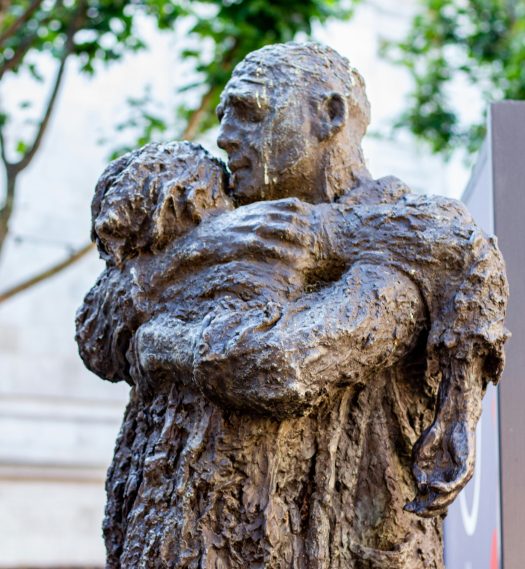
Photo by Muhmed Alaa El-Bank on Unsplash
Revisiting the Story of the Prodigal Son

Luke 15

11To illustrate the point further, Jesus told them this story: “A man had two sons. 12The younger son told his father, ‘I want my share of your estate now, instead of waiting until you die.’ So his father agreed to divide his wealth between his sons.

13“A few days later this younger son packed all his belongings and took a trip to a distant land, and there he wasted all his money on wild living. 14About the time his money ran out, a great famine swept over the land, and he began to starve. 15He persuaded a local farmer to hire him to feed his pigs. 16The boy became so hungry that even the pods he was feeding the pigs looked good to him. But no one gave him anything.

17“When he finally came to his senses, he said to himself, ‘At home even the hired men have food enough to spare, and here I am, dying of hunger! 18I will go home to my father and say, “Father, I have sinned against both heaven and you, 19and I am no longer worthy of being called your son. Please take me on as a hired man.”’

20“So he returned home to his father. And while he was still a long distance away, his father saw him coming. Filled with love and compassion, he ran to his son, embraced him, and kissed him. 21His son said to him, ‘Father, I have sinned against both heaven and you, and I am no longer worthy of being called your son.

22“But his father said to the servants, ‘Quick! Bring the finest robe in the house and put it on him. Get a ring for his finger, and sandals for his feet. 23And kill the calf we have been fattening in the pen. We must celebrate with a feast, 24for this son of mine was dead and has now returned to life. He was lost, but now he is found.’ So the party began. (Luke 15:11-24, NLT)


The Daily DAVEotional

Imagine you are the son (or daughter) of a very wealthy man. You have no job and you still live under his roof.

Now imagine you go to your father and you say, “You know what old man? I wish you were dead, and I wish I could cash out my inheritance right now and blow this popsicle stand.”

This is not too far off from the scenario that Jesus paints in the story of the “lost son”, more commonly referred to as the “prodigal son.”

The son in the story doesn’t use the words I’ve chosen but the effect is pretty much the same, for in the Jewish culture, it was the ultimate slap in the face to ask your father for your inheritance while he was still living. It was more than a slap in the face actually. It was the ultimate sign of disrespect, akin to giving the father the finger.

Now if you happened to be living the imagined scenario I painted at the outset, what kind of response might you expect from your father after telling him you wished he was dad and you wanted your money…NOW?

Amazingly, in the story Jesus tells, the father willingly complies. He doesn’t demonstrate anger or resentment or any kind of vindictiveness, all emotions I imagine I’d express if I were the father in this scenario.

So the son gets his wish. And what does he do?

He goes to a distant land and wastes ALL the money on wild living (i.e. partying and prostitutes). In some ways, the story mutes the degree of nastiness in which the son treats his father and exploits his wealth. But make no mistake, the son is the most extreme example of a rebel that you can fathom.

When you have no job and your sole purpose is to experience hedonism to its fullest extent, eventually you run out of money to support that crazy lifestyle. And that’s exactly what happened here too. The son had no money, no plan and no prospects. He was desperate.

He finally gets a job feeding slop to pigs. Take note of this detail. He was feeding PIGS.

Pigs were unclean animals to Jews, which is just one more detail revealing how far off the son had strayed.

It’s at this point that the story turns. The key passage in this whole story comes in verses 17-19, which says:

17“When he finally came to his senses, he said to himself, ‘At home even the hired men have food enough to spare, and here I am, dying of hunger! 18I will go home to my father and say, “Father, I have sinned against both heaven and you, 19and I am no longer worthy of being called your son. Please take me on as a hired man.”’

The son “came to his senses”. This is a biblical picture of repentance. The son came face to face with reality. He had hit rock bottom and he was finally willing to humble himself and admit the stupidity of his decisions that led to his current situation. In short, he finally took responsibility for his actions.

But he didn’t stop there. He humbled himself and was willing to admit his sin to his father. So he swallowed his pride and returned home to face his father.

Imagine if you were the son in that situation. How difficult would it be to face your father and admit you were wrong? Personally, I think a typical father would be angry and I’d expect their response to follow suit. I’d expect to be berated and “made an example of”. I’m certain I’d need to learn my lesson and take my medicine. Essentially, I’d expect to experience some kind of penalty and punishment.

But that’s not what happens in this case. The text says that when the son was still a long way off, the father SAW HIM COMING. That means the father had to be watching and waiting for the son to return.

The father doesn’t react the way we would expect because he’s like no earthly father any of us have ever experienced. The father doesn’t berate his son. He doesn’t say “I told you so”. He doesn’t require any groveling or penance. He just embraces the son and welcomes him back into the family, with full rights and privileges restored.

The story highlights the incredible love and patience God the Father has for His children.

God is not a dictator. He allows us to choose our own path. He doesn’t restrict our choices but he also doesn’t shield us from the consequences of those choices. He patiently waits for us to return. And if and when we do return, He welcomes us back with a lavish love that is beyond any kind of earthly love we could experience.

On the flip side, the son is an example of the most egregious offenses one could commit. And yet, the Father extends His love and immediately forgives and restores the son. It’s incredible.

This tells me a couple of things. First, there is nothing I can do that God won’t forgive. NOTHING. I only need to come to my senses (repent), humble myself and admit my sin, just as the son in the story did.

God doesn’t require us to grovel or do penance to receive His love and forgiveness. He freely gives it to those who come to Him with a humble heart of surrender. His love is infinite and He freely and unconditionally lavishes it on those who come to Him.

Now imagine experiencing the love of THAT Father!


Did you enjoy this post? I’d love to hear your thoughts! Feel free to like, leave a comment below, and share it with your friends or on social media if you found it helpful or interesting. Your support keeps the conversation going!


Reflection

What was your relationship like with your earthly father?

If you had done something wrong that you know he would be offended by, what would it have been like for you to think about approaching Him? What kind of reaction might you expect?

When you think of God, what words come to mind? How would you describe God to someone else?

When you find yourself sinning and “straying” from God’s plan, how easy is it for you to “come to your senses”? What keeps you from coming to your senses and returning to God?

What amazes you most about this story?


Photo by IP Withers on Unsplash – Charlie Mackesy’s Return of the Prodigal Son statue outside HTB Church London