How Good do you Have to Be to Be Saved?

Romans 4

1Abraham was, humanly speaking, the founder of our Jewish nation. What were his experiences concerning this question of being saved by faith? 2Was it because of his good deeds that God accepted him? If so, he would have had something to boast about. But from God’s point of view Abraham had no basis at all for pride. 3For the Scriptures tell us, “Abraham believed God, so God declared him to be righteous.”

4When people work, their wages are not a gift. Workers earn what they receive. 5But people are declared righteous because of their faith, not because of their work.

6King David spoke of this, describing the happiness of an undeserving sinner who is declared to be righteous:

7“Oh, what joy for those whose disobedience is forgiven, whose sins are put out of sight.

8Yes, what joy for those whose sin is no longer counted against them by the Lord.”

9Now then, is this blessing only for the Jews, or is it for Gentiles, too? Well, what about Abraham? We have been saying he was declared righteous by God because of his faith. 10But how did his faith help him? Was he declared righteous only after he had been circumcised, or was it before he was circumcised? The answer is that God accepted him first, and then he was circumcised later!

11The circumcision ceremony was a sign that Abraham already had faith and that God had already accepted him and declared him to be righteous—even before he was circumcised. So Abraham is the spiritual father of those who have faith but have not been circumcised. They are made right with God by faith. 12And Abraham is also the spiritual father of those who have been circumcised, but only if they have the same kind of faith Abraham had before he was circumcised.

13It is clear, then, that God’s promise to give the whole earth to Abraham and his descendants was not based on obedience to God’s law, but on the new relationship with God that comes by faith. 14So if you claim that God’s promise is for those who obey God’s law and think they are “good enough” in God’s sight, then you are saying that faith is useless. And in that case, the promise is also meaningless. 15But the law brings punishment on those who try to obey it. (The only way to avoid breaking the law is to have no law to break!)

(Romans 4:1-15, NLT)


The Daily DAVEotional

What is required to be saved? How good do you have to be? If you fail to live up to the law, does that disqualify you from going to heaven?

These are the kinds of questions Paul is answering in Romans 4 and he uses Abraham as his prime example to explain that faith is the key to being saved, NOT obedience to the law.

You might remember that in Acts 15, there was a pivotal moment in the early church where this issue of circumcision was debated. I wrote about this critical issue in a previous blog post here, but the summary is that some Pharisees who had been converted argued that Gentiles had to become circumcised AND adhere to the law in order to be saved. Faith in Jesus was not enough.

Paul and Barnabas argued against this view and it was brought before all of the early church leaders at what has come to be known as “the Council of Jerusalem.” Long story short, all of the church leaders agreed with Paul and Barnabas and it was determined that circumcision was not a requirement for salvation.

In this chapter of Romans, Paul makes the argument for his position. Though the details of the debate that took place at the Jerusalem Council are not revealed, Paul’s outline in this chapter could very well have been the centerpiece of his defense against circumcision as a requirement for salvation.

Paul’s argument is as follows:

    1. Abraham was justified (declared righteous) by God BEFORE he was circumcised. Circumcision was a sign that Abraham had faith and that God had accepted him.
    2. If Abraham was accepted by God before being circumcised, then the acceptance (justification) is not dependent on being circumcised. It is based on the faith that came before the circumcision.
    3. Hence, Gentiles, who are not circumcised, can also be accepted (justified) by God  based on their faith.
    4. Therefore, circumcision is not required for Gentiles to be accepted.
    5. In the same way, Jews are also accepted by God based on their faith in Jesus, not on their circumcision, since Abraham was declared righteous as a result of his faith, NOT based on his circumcision.

What does this mean for us today?

It’s not likely that many of us think about circumcision as a requirement for salvation, so what are we to make of this passage?

Though we may not be advocating for circumcision as a requirement for salvation, we have a tendency, as humans do, of adding all kinds of work-related requirements to the salvation “formula”.

We have a tendency to think that salvation is secured by placing our faith in Jesus but then it is maintained by keeping a set of religious rules, which may vary depending on your denominational or family upbringing. In this scenario, if you break one of the rules, your spirituality or even your standing in God’s family may be questioned.

If you think about it, adding any kind of religious requirement to faith is no different than adding circumcision to faith as a requirement for acceptance.

Paul’s argument stands for circumcision or any other work you might be tempted to add. Just replace the word “circumcision” with your religious rule in the outline above and Paul’s argument still holds.

The bottom line is that faith alone justifies a person in God’s eyes, not adherence to the Old Testament law or any other modern day religious code that we might be tempted to concoct. The truth is that Jesus came to die for us precisely because we are incapable of living up to any religious code, ancient or modern.

So let’s dispel the myth that Christians must practice a, b or c rituals to become saved, or that Christians cannot participate in x, y, or z activities or they will lose their salvation. Faith in Jesus is the key, just as it has always been.


Did you enjoy this post? I’d love to hear your thoughts! Feel free to like, leave a comment below, and share it with your friends or on social media if you found it helpful or interesting. Your support keeps the conversation going!


Reflection

What religious rules are you tempted to want to add as a requirement for salvation? What is the basis for emphasizing those rules (church you grew up in, family environment, general culture, etc.)?

What activities are on your “prohibited” list of things Christians shouldn’t do. For example, I grew up in a church that generally frowned upon drinking, dancing, rock music, etc. 

Why do you think we have this tendency to add requirements to the process of becoming saved or for keeping our salvation?

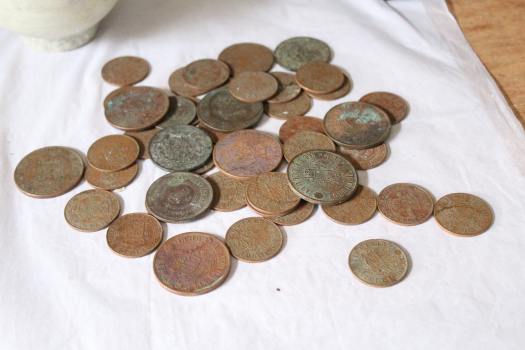
 

Photo by Joshua Miranda from Pexels

Old Habits are Hard to Break

Genesis 20

1Now Abraham moved south to the Negev and settled for a while between Kadesh and Shur at a place called Gerar. 2Abraham told people there that his wife, Sarah, was his sister. So King Abimelech sent for her and had her brought to him at his palace.

3But one night God came to Abimelech in a dream and told him, “You are a dead man, for that woman you took is married.”

4But Abimelech had not slept with her yet, so he said, “Lord, will you kill an innocent man? 5Abraham told me, ‘She is my sister,’ and she herself said, ‘Yes, he is my brother.’ I acted in complete innocence!”

6“Yes, I know you are innocent,” God replied. “That is why I kept you from sinning against me; I did not let you touch her. 7Now return her to her husband, and he will pray for you, for he is a prophet. Then you will live. But if you don’t return her to him, you can be sure that you and your entire household will die.”

8Abimelech got up early the next morning and hastily called a meeting of all his servants. When he told them what had happened, great fear swept through the crowd. 9Then Abimelech called for Abraham. “What is this you have done to us?” he demanded. “What have I done to you that deserves treatment like this, making me and my kingdom guilty of this great sin? This kind of thing should not be done! 10Why have you done this to us?”

11“Well,” Abraham said, “I figured this to be a godless place. I thought, ‘They will want my wife and will kill me to get her.’ 12Besides, she is my sister—we both have the same father, though different mothers—and I married her. 13When God sent me to travel far from my father’s home, I told her, ‘Wherever we go, have the kindness to say that you are my sister.’”

14Then Abimelech took sheep and oxen and servants—both men and women—and gave them to Abraham, and he returned his wife, Sarah, to him. 15“Look over my kingdom, and choose a place where you would like to live,” Abimelech told him. 16Then he turned to Sarah. “Look,” he said, “I am giving your ‘brother’ a thousand pieces of silver to compensate for any embarrassment I may have caused you. This will settle any claim against me in this matter.”

17Then Abraham prayed to God, and God healed Abimelech, his wife, and the other women of the household, so they could have children. 18For the LORD had stricken all the women with infertility as a warning to Abimelech for having taken Abraham’s wife. (Genesis 20, NLT)


The Daily DAVEotional

In Genesis 20, we find Abraham resorting to one of his old habits – deception. Abraham, fearing the locals, convinces his wife to go along with his story that Sarah is his sister, which is technically true, but still deceptive because Sarah is actually Abraham’s wife.

If you’ve followed the story of Abraham, you know that he did the same thing with the Egyptian Pharaoh in Genesis 12:10-20.

In both cases, Abraham feared for his life, thinking that if people knew Sarah was his wife, they would kill him to get her.

Throughout the Bible, Abraham is regarded as a great man of faith, and yet we see him resorting to deception on multiple occasions in order to protect himself.

What are we to make of this?

First of all, Abraham is not innocent. Abimelech pleads his innocence to the Lord, to which the Lord replies, “I know you are innocent….that is why I kept you from sinning against me.”

Secondly, Abraham does not demonstrate much faith in this situation or the situation in Genesis 12. In both cases, Abraham resorts to deception because he’s afraid that the locals will kill him because of Sarah’s beauty.

Yet Abraham had been promised by God that he would become the father of many nations. In fact, God changes his name from Abram, which means “exalted father”, to Abraham, which means “father of many”. In addition, God had promised that his wife Sarah would bear him a son and it would be through that son that his covenant promises would emerge (see Genesis 17).

If Abraham was such a great man of faith, why does he resort to deception to save himself? Wouldn’t a man of faith tell the truth and trust that the Lord would provide? Wouldn’t a great man of faith trust the Lord to save him from the locals instead of taking matters into his own hands?

The reality is that Abraham was just like us. We often see Abraham taking matters into his own hands, as he does in this situation and also when he decided to father a child through his wife’s maid, Hagar, instead of trusting the Lord to provide a child through his wife.

The story of Abraham gives me hope to know that I don’t need to be perfect in order to receive God’s blessing. Abraham doesn’t always demonstrate faith and he often falls into old sinful habits, but he’s regarded as a great man of faith, not because of these incidents, but because of how he responds to the Lord’s leading and direction and how he finishes his life.

Reflection

What are some of your old habits that you are prone to fall back into?

In what kinds of situations do you find it difficult to trust God for the outcome?

What steps or habits can you implement in your life to ensure you are regarded as a person of faith?


Photo by Basil MK from Pexels


Is it Possible to Cheat God?

6“I am the LORD, and I do not change. That is why you descendants of Jacob are not already completely destroyed. 7Ever since the days of your ancestors, you have scorned my laws and failed to obey them. Now return to me, and I will return to you,” says the LORD Almighty.

“But you ask, ‘How can we return when we have never gone away?’

8“Should people cheat God? Yet you have cheated me!

“But you ask, ‘What do you mean? When did we ever cheat you?’

“You have cheated me of the tithes and offerings due to me.  9You are under a curse, for your whole nation has been cheating me.  10Bring all the tithes into the storehouse so there will be enough food in my Temple. If you do,” says the LORD Almighty, “I will open the windows of heaven for you. I will pour out a blessing so great you won’t have enough room to take it in! Try it! Let me prove it to you!  11Your crops will be abundant, for I will guard them from insects and disease. Your grapes will not shrivel before they are ripe,” says the LORD Almighty.  12“Then all nations will call you blessed, for your land will be such a delight,” says the LORD Almighty. (Malachi 3:6-12, NLT)


If you’ve ever been to a church and heard a sermon on tithing, you have probably heard this passage preached.

Malachi was a prophet who lived about 400 years before the time of Christ. He wrote to Jews who had very recently returned from being in exile (taken captive by the Babylonian empire).

Malachi was rebuking the people for their neglect of the temple. In this passage, he specifically addresses the people for their neglect of the tithe.

What is the tithe?

The word tithe literally means a tenth. When the Israelites entered the promised land of Canaan, every tribe was alotted an area of land as an inheritance , except for the Levites. The Levites were the tribe of Moses and his brother Aaron. The Levites were commissioned by God to be the priests who would lead worship and administer the temple sacrifices and act as mediators between the Lord and the people.

Because the Levites had no land, and their job was essentially religious clergy, they had no means of sustaining themselves. The tithe was implemented to take care of the Levites, who in turn were responsible for caring for the spiritual needs of the people.

When the Jewish people neglected the tithes, the Levites were forced to care for themselves in other ways and with other jobs. Therefore, the duties of the temple were neglected. It is in this way that the Lord is saying that the people had cheated Him. Because the tithes weren’t given, the priestly duties were neglected and therefore God was robbed of the worship that is rightly His.

It’s important to realize that the tithe wasn’t just money. It could be grain or some other portion of a harvest. This is why the author mentions the storehouse. The storehouse was a physical room in the temple that was used for storing the grain and other produce that the people brought into the temple as part of their tithe.

The principle of the tithe is still valid in the church today. Essentially, the Lord is asking His people, as an act of faith and worship, to give back to Him a portion of what He has given to us.

When we give a tithe, we are expressing to the Lord that we acknowledge that everything we have comes from Him. We also are trusting that He is able to sustain us on the portion that is left over.

In this passage, The Lord invites us to test Him. He says that if we give to Him the first fruits of our labor, He will richly bless us and the balance of our resources will be more than enough to provide for us.

This sounds counter-intuitive to our finite minds. It seems logical to us that if we keep all of our resources, we will have more wealth to spend and invest. But in God’s economy, He promises that if we give to Him first, we will actually end up with more because He will bless the balance of our resources and we will see a greater return on that smaller portion than if we had kept the whole for ourselves.

Reflection

What role has tithing played in your own spiritual life? How have you been able to integrate tithing (giving) into your spiritual practice?

If you have struggled to implement tithing as a spiritual practice, what are the factors that keep you from taking that step of faith? What experiences with the Lord can you draw upon in order to help you take a small step of faith?


Photo by Istiqamatunnisak on Unsplash