Evidence that Jesus is God – Part 2

John 10

22Then came the Feast of Dedication at Jerusalem. It was winter, 23and Jesus was in the temple area walking in Solomon’s Colonnade. 24The Jews gathered around him, saying, “How long will you keep us in suspense? If you are the Christ, tell us plainly.”

25Jesus answered, “I did tell you, but you do not believe. The miracles I do in my Father’s name speak for me, 26but you do not believe because you are not my sheep. 27My sheep listen to my voice; I know them, and they follow me. 28I give them eternal life, and they shall never perish; no one can snatch them out of my hand. 29My Father, who has given them to me, is greater than all; no one can snatch them out of my Father’s hand. 30I and the Father are one.”

31Again the Jews picked up stones to stone him, 32but Jesus said to them, “I have shown you many great miracles from the Father. For which of these do you stone me?”

33“We are not stoning you for any of these,” replied the Jews, “but for blasphemy, because you, a mere man, claim to be God.”

34Jesus answered them, “Is it not written in your Law, ‘I have said you are gods’? 35If he called them ‘gods,’ to whom the word of God came—and the Scripture cannot be broken— 36what about the one whom the Father set apart as his very own and sent into the world? Why then do you accuse me of blasphemy because I said, ‘I am God’s Son’? 37Do not believe me unless I do what my Father does. 38But if I do it, even though you do not believe me, believe the miracles, that you may know and understand that the Father is in me, and I in the Father.” 39Again they tried to seize him, but he escaped their grasp. (John 10:22-39, NIV)


The Daily DAVEotional

Lately I’ve had a number of online conversations with some Jehovah’s Witnesses regarding the nature of Jesus. Most of the discussions have come about as a result of a Jehovah’s Witness responding to one of my many blog posts on the topic, including the following:

One recent discussion has centered around my blog post “Evidence that Jesus is God” which is based on Jesus’ interaction with the religious leaders in John 10:22-33.

I encourage you to read the entire post to get the full argument, but the summary of that post is as follows:

    1. Jesus claimed that he and the Father are one which I argued was a clear claim of divinity by Jesus.
    2. Jehovah’s Witnesses typically respond that Jesus was only claiming to be “one in purpose” with the Father – he was not claiming deity.
    3. But the context of the passage shows that the explanation offered by the Jehovah’s Witnesses is unlikely as the Jewish leaders picked up stones to kill him.
    4. When Jesus asks why they want to stone him, they respond, “for blasphemy – you being a mere man claim to be God.” It’s clear from the context that the Jewish religious leaders understood Jesus to be making a claim of deity. Why else would they accuse him of blasphemy?
    5. I point out that if Jesus was only “one in purpose” with the Father, if he was NOT claiming to be God, then why did Jesus not correct their misunderstanding as Paul and Barnabas did in Acts 14 when the locals mistook them for gods?
    6. I argued that the reason Jesus didn’t correct the religious leaders was because their understanding of the claim he was making was clearly correct.

In this recent online encounter, a committed Jehovah’s Witness responded to my post by quoting the fuller text of John 10:22-38, arguing that in the verses that followed (which I had not included in my original post) Jesus DID correct their misunderstanding by claiming to be a “little g” god instead of a “big G” God.

His argument is that Jesus explained to these Jewish leaders that he is God’s son in the same way that others in the Old Testament were called “gods.” This is conclusive proof, according to this Jehovah’s Witness, that Jesus has defined for us what he means when he calls himself the Son of God – he does NOT claim equality with the Father, but is simply claiming a status as a “little g” god, which has been attributed to many other “mere men” in the past.

What are we to make of this argument? Is he on to something that has been overlooked and ignored by the traditional church for the last 2000 years?

I think the answer is clearly NO, and I’ll explain why.

As you read through the gospels, it’s apparent that the Jewish religious leaders are opposed to Jesus. They don’t like him and in fact, they resort to seeking to kill him.

The deeper question is why don’t they like him? Why are they so opposed to him? Regardless of what you believe about Jesus’ nature, most agree that he was the greatest moral teacher to ever live. Jesus traveled around healing and helping people. Isn’t that a good thing? So why are these religious leaders so intent on killing him?

In Jesus’ encounters with the religious leaders there is one thing in common – he seeks to expose their hard-heartedness. He does this in various ways by unmasking their selfishness, their hypocrisy and their duplicitous nature.

Jesus’ harshest words are reserved for these very religious leaders, who not only opposed him but are often seen trying to entrap him into saying or doing something that could be used against him.

Though Jesus has healed the sick, raised the dead, exorcised the demon-possessed and performed numerous miracles, they still come to him demanding a sign. I wrote about their unreasonable demands and Jesus’ response in my blog post “When Someone DEMANDS Evidence!”


Click here to see a A Comprehensive List of Blog Posts Based on Bible Passage Reference


So what is Jesus doing in this passage? What’s he saying to these religious leaders?

Jesus is setting a logical trap for these religious leaders.

How exactly does he do this?

Let’s look at the full interaction.

Jesus is walking around minding his own business when he’s encountered by the religious leaders who once again ask,

“how long will you keep us in suspense? If you’re the Christ, tell us plainly.”

Jesus responds that he’s already told them plainly but they just don’t want to believe. He then appeals to the many miracles he had done in the Father’s name, evidence which he says speaks for itself.

The next two verses are important to the foundation Jesus is laying for the intellectual trap that he’s setting: Jesus says that the reason they don’t believe is because they are NOT his sheep. His sheep hear his voice and follow him, but they’re incapable of hearing his voice and following him because they are NOT his sheep.

Remember, he had a similar encounter with the religious leaders just two chapters earlier in John 8, where Jesus told them that their true father is the devil. I wrote about this critical exchange in my post “Who’s Your Daddy?”

Jesus is addressing the hardness of their heart. They see the miracles just like everyone else yet it has no effect. They come to Jesus and demand more evidence, more miracles, more proof. Jesus isn’t playing their game. He’s telling them that the miracles he has done speak for themselves and so he has no need to provide any more evidence.

In verse 28, Jesus continues speaking about his sheep, his true followers, saying that he gives them eternal life, they will never perish and that no one can snatch them out of his hand.

Who but God can grant eternal life and promise eternal protection for his followers?

Jesus is telling these religious leaders that he performs activities that are attributed only to God. This is an additional evidence for Jesus’ deity. Not only does Jesus make direct claims of deity, but he performs acts and possesses qualities that can only be attributed to God.

Jesus then says that the Father has given him the sheep and no one can snatch them out of the Father’s hand. So in two consecutive verses, Jesus has said that no one can snatch the followers out of his hand AND no one can snatch them out of the Father’s hand.

In the very next verse (John 10:30) Jesus says,

I and the Father are one.

This is not simply “oneness of purpose” as Jehovah’s Witnesses argue. This is oneness of essence and activity. Jesus is appealing to a special relational unity.

It’s clear from the response that the Jewish religious leaders understood what Jesus was saying as they picked up stones to stone him. When Jesus asks why they’re picking up stones, they reply that it’s not because of his works,

but for blasphemy, because you, a mere man, claim to be God.

Now this is where we get into the response from my recent online conversation with a Jehovah’s Witness.

He argues that what follows in the text is Jesus’ explanation of his true nature, that he is just a man who is a servant of God and so when he calls himself the son of God, it’s just like Psalm 82:6 (which Jesus himself references) when other men were called “gods”.

Unfortunately, my online Jehovah’s Witness friend completely misunderstands and misinterprets what is happening in this exchange.

Remember, Jesus’ encounters with the religious leaders often showed him exposing the hardness of their heart – their greed, their selfishness, their hypocrisy, their lust for power, their stubborn unwillingness to believe. This encounter is no different. Jesus has now set the trap that will reveal their true intentions.

How so?

They’ve already said that they believe that Jesus is a mere man who is claiming to be God. This was their basis for charging him with blasphemy. So Jesus appeals to Psalm 82:6 and essentially says, “well if I’m just a man, what reason do you have to accuse me of blasphemy? Wouldn’t I be just like these other ‘mere men’ who were servants of God?”

For emphasis, Jesus adds “this is in your Law!”

The argument made by my online Jehovah’s Witness opponent is that Jesus has just admitted to being a “mere man” who is a servant of God. Therefore, he is a “little g” god. This fits perfectly with the doctrine of Jehovah’s Witnesses, which denies that Jesus is God but says that he’s “god-like”.

But Jesus has not stated that he’s a “little g” god. He has simply referenced a passage from Psalm 82:6 in order to set the trap.

Jesus continues with his response by saying that if the Scriptures, which cannot be broken, called these other people “gods” then

“what about the one whom the Father set apart as his very own and sent into the world?”

Instead of calling himself a “god”, Jesus has just established that he’s superior to the so-called “gods” of Psalm 82:6 by virtue of his unique and special relationship with the Father. Jesus then reasserts that he does what the Father does.

Jesus then tells these religious leaders essentially, “look, if you don’t believe what I say, at least believe the miracles that I’m doing. This should prove to you that the Father is in me, and I in the Father.

This last statement is another declaration of the special unity that Jesus has with the Father. This is more than just “oneness of purpose” as if Jesus has simply adopted allegiance to a corporate mission statement.

Jesus has consistently communicated a unity with the Father that the religious leaders interpreted as a claim of deity. This is clear throughout the gospels as Jesus encounters the religious leaders. And it’s the exact reason why they sought to kill him and eventually did kill him.

Verse 39 makes this clear as it says,

Again they tried to seize him, but he escaped their grasp.

The point that was made in the initial post, “Evidence that Jesus is God” still stands. Jesus made a statement about himself that his opponents interpreted as a claim of deity. Jesus does not correct their misunderstanding. Yes, Jesus refers to Psalm 82:6, which references people as “gods” but he does so as a tactic to reveal to the religious leaders that their problem was not that Jesus wasn’t clear and it was not that he hadn’t provided enough evidence of who he was.

Their problem was that their will (heart) refused to believe what their minds knew to be true. This is hard-heartedness, which will cause us to defy logic and all rationality in our attempt to hold to a pre-suppositional belief.

The Jewish religious leaders are an illustration for humanity – we have been given all the evidence we need to believe that Jesus is the Messiah, the Son of God, God in the flesh, and yet if we refuse to believe, it’s because we don’t want to. That is the very definition of a hard heart.


Did you enjoy this post? I’d love to hear your thoughts! Feel free to like, leave a comment below, and share it with your friends or on social media if you found it helpful or interesting. Your support keeps the conversation going!


Reflection

When is a time that you did not want to believe a truth that was clearly presented to you? What are examples in your own life where you’ve demonstrated a hardness of your heart?

If Jesus did admit to the religious leaders that he was not deity, but only a “god” in the sense demonstrated in Psalm 82:6, as Jehovah’s Witnesses contend, how do you explain the Jewish leaders’ continued desire to seize him and kill him for blasphemy?

What do you think Jesus means when he claims that he and the Father are one? 

What do you think Jesus means when he says “that the Father is in me, and I in the Father”?

What do you think is the benefit of engaging in this kind of discussion about the nature of Jesus? Do you think it really matters how we view him? Why or why not?


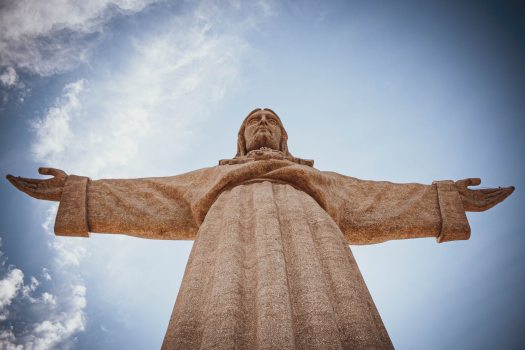
Photo by Tim Hüfner on Unsplash

He is Risen….Why Does it Matter?

Mark 16

1The next evening, when the Sabbath ended, Mary Magdalene and Salome and Mary the mother of James went out and purchased burial spices to put on Jesus’ body. 2Very early on Sunday morning, just at sunrise, they came to the tomb. 3On the way they were discussing who would roll the stone away from the entrance to the tomb. 4But when they arrived, they looked up and saw that the stone—a very large one—had already been rolled aside. 5So they entered the tomb, and there on the right sat a young man clothed in a white robe. The women were startled, 6but the angel said, “Do not be so surprised. You are looking for Jesus, the Nazarene, who was crucified. He isn’t here! He has been raised from the dead! Look, this is where they laid his body. 7Now go and give this message to his disciples, including Peter: Jesus is going ahead of you to Galilee. You will see him there, just as he told you before he died!” 8The women fled from the tomb, trembling and bewildered, saying nothing to anyone because they were too frightened to talk. (Mark 16:1-6, NLT)


The Daily DAVEotional

Today Christians around the world celebrate Easter Sunday, the day Jesus rose from the dead. But what if Jesus never rose from the dead? Would it really matter?

Many years ago, when I was a new staff member with Cru, we decided to organize an outreach event that we called “Christianity on Trial.” It was a mock trial designed to present the evidence for the resurrection. The hope was to demonstrate that the resurrection isn’t some mythical, fairy tale, but that it was a real, historical event which is supported by a tremendous amount of evidence. Hence, it is rational to believe.

As we thought about how to advertise and promote this event, we had the idea to publicize it within the religious studies department. After all, it seemed logical that students in this major would be interested in an event that highlighted the climactic moment from the world’s largest religion.

We set up an appointment to meet with one of the religious studies professors, hoping that he might give a shout-out to our event and mention it to his students. If we were really lucky, he’d make our event an assignment for his students or maybe even offer extra credit for attending the event.

But when we met with the professor, who was also an ordained minister, his response to our event was not what I expected. I remember him commenting that he was not sure why we were bothering with our event. He said, “if archaeologists unearthed a body that had a toe tag that said ‘Jesus of Nazareth’, it would not change my faith one bit. My faith is not dependent on the resurrection at all.”

I was a bit surprised, as I had always thought that the Christian faith was centered around the resurrection. It seemed to me that if the resurrection never happened, then Christianity could not be true. But here was a professor, and an ordained minister to boot, telling me that it didn’t matter.

Was he right? Does it really matter? If Jesus never raised from the dead, would it really change Christianity? According to this professor, it wouldn’t change his faith, which was more rooted in the teachings and life example of Jesus. According to him, there was nothing special about a resurrection and therefore, it doesn’t really matter if it happened.

Actually, nothing could be further from the truth.

Paul, in 1 Corinthians 15:16-19 said:

If there is no resurrection of the dead, then Christ has not been raised. 17And if Christ has not been raised, then your faith is useless, and you are still under condemnation for your sins. 18In that case, all who have died believing in Christ have perished! 19And if we have hope in Christ only for this life, we are the most miserable people in the world.

According to Paul, a resurrection-less faith is a useless faith because it means that our sins have not been forgiven and we are still under condemnation.

I’ve had hundreds of conversations with people regarding the death and resurrection of Jesus and I have often shared this illustration to emphasize the importance of the resurrection to the Christian faith.

Imagine that you owe someone a million dollars. You don’t have the money to pay them and so they tell you that you have 24 hours to pay the debt or else they are going to send some goons after you – and you’re not going to like what they may do to you.

You’re feeling kind of down when your friend comes along, notices your dejectedness and asks you what the problem is. After explaining your situation, your friend tells you that he wants to help. He pulls out his checkbook and writes you a check for $1 million dollars. He insists that you consider it a free gift and that you will not owe him anything. You gratefully accept his generous offer. You then you go and sign the check over to the guy to whom you owe the money. Here’s the question: Is your debt to that person now paid?

It depends. The debt will only be paid if the check is good. If there is enough money in the bank account, then the check will “clear” demonstrating that the check was valid. If there is not enough money in the account, then the check will “bounce”, showing that the check wasn’t good. Even though your friend had good intentions, the check is not good unless the money is there to cover the check.

Whenever you owe a debt you can’t pay, the only person who can help you is someone who has no debt and actually has the resources to cover your debt.

Now consider God. Everyone owes a debt to God. The debt is sin. The debt is so huge that you are unable to pay it yourself (because God is so righteous). The only person who can pay your debt of sin is someone who is sinless. The only person who can pay for everyone’s debt of sin is someone who is both sinless and infinitely righteous. By definition, only God is both sinless and infinitely righteous.

The Bible says that Jesus’ death accomplished several things, including securing forgiveness through His shed blood on the cross. I’ve written about this in my post “What Makes Good Friday ‘Good’?”

When Jesus rose from the dead, it demonstrated that He is God. Therefore, it also demonstrates that Jesus’ death actually pays for sin. It was a valid payment. Jesus’ resurrection was like the check “clearing” the bank, showing that a valid payment was made.

So on Good Friday, Jesus wrote the check that paid for sin and secured our forgiveness. Good Friday is indeed “good” because Jesus made a payment for sin.

But on Easter Sunday, Jesus rose from the dead, proving that He was indeed the Son of God by overcoming death. This proves that He was sinless and therefore His death was a valid payment for sin.

If Jesus did not raise from the dead then it means He was subject to the penalty of death Himself because of sin. This means that He was not sinless and therefore could not offer Himself up as a perfect substitute for the sins of the world. That means that His death was no different than any of the endless Old Testament sacrifices that were offered up daily as a means of atoning for sin.

Hence, if Jesus was not raised from the dead, our sin has NOT BEEN PAID FOR. We are NOT forgiven and we are still under condemnation. According to Paul,  a Jesus who has not resurrected is a Jesus who is not able to save us.

This is why Pauls says in 1 Corinthians 15:19 that “If only for this life we have hope in Christ, we are to be pitied more than all men.”

If you need evidence to support the fact of the resurrection, check out my post “He is Risen Indeed!”


Did you enjoy this post? I’d love to hear your thoughts! Feel free to like, leave a comment below, and share it with your friends or on social media if you found it helpful or interesting. Your support keeps the conversation going!


Reflection

In your opinion, what is the significance of the resurrection? Do you agree with the professor that it does not matter whether or not Jesus was actually raised from the dead? Why or why not?

If Jesus was not resurrected, how does that change the Christian faith?

What do you think are some reasons why people don’t believe in the resurrection? Why would someone deny it?

What do you think is the strongest evidence to support the resurrection?


Photo by Cody Hiscox on Unsplash

Evidence that Jesus is God

John 10

22It was now winter, and Jesus was in Jerusalem at the time of Hanukkah. 23He was at the Temple, walking through the section known as Solomon’s Colonnade. 24The Jewish leaders surrounded him and asked, “How long are you going to keep us in suspense? If you are the Messiah, tell us plainly.”

25Jesus replied, “I have already told you, and you don’t believe me. The proof is what I do in the name of my Father. 26But you don’t believe me because you are not part of my flock. 27My sheep recognize my voice; I know them, and they follow me. 28I give them eternal life, and they will never perish. No one will snatch them away from me, 29for my Father has given them to me, and he is more powerful than anyone else. So no one can take them from me. 30The Father and I are one.”

31Once again the Jewish leaders picked up stones to kill him. 32Jesus said, “At my Father’s direction I have done many things to help the people. For which one of these good deeds are you killing me?”

33They replied, “Not for any good work, but for blasphemy, because you, a mere man, have made yourself God.” (John 10:22-33, NLT)

Acts 14

8While they were at Lystra, Paul and Barnabas came upon a man with crippled feet. He had been that way from birth, so he had never walked. 9He was listening as Paul preached, and Paul noticed him and realized he had faith to be healed. 10So Paul called to him in a loud voice, “Stand up!” And the man jumped to his feet and started walking.

11When the listening crowd saw what Paul had done, they shouted in their local dialect, “These men are gods in human bodies!” 12They decided that Barnabas was the Greek god Zeus and that Paul, because he was the chief speaker, was Hermes. 13The temple of Zeus was located on the outskirts of the city. The priest of the temple and the crowd brought oxen and wreaths of flowers, and they prepared to sacrifice to the apostles at the city gates.

14But when Barnabas and Paul heard what was happening, they tore their clothing in dismay and ran out among the people, shouting, 15“Friends, why are you doing this? We are merely human beings like yourselves! We have come to bring you the Good News that you should turn from these worthless things to the living God, who made heaven and earth, the sea, and everything in them. 16In earlier days he permitted all the nations to go their own ways, 17but he never left himself without a witness. There were always his reminders, such as sending you rain and good crops and giving you food and joyful hearts.” 18But even so, Paul and Barnabas could scarcely restrain the people from sacrificing to them.

(Acts 14:8-18, NLT)


The Daily DAVEotional

A number of years ago, I had some conversations with two Jehovah’s Witnesses who came to my door seeking to proselytize me. I wrote about that encounter in a previous post here.

The Jehovah’s Witnesses are a religious group that has its roots in Christianity but is not Christian in their theology. That’s because they deny both the traditional Christian doctrine of the trinity, which they believe is rooted in paganism, and the doctrine of the divinity of Christ, which they assert was not the belief of the early church but was introduced as a false doctrine by Constantine at the Council of Nicea.

Jehovah’s Witnesses believe that Jesus is a created being and they argue that Jesus never claimed deity for himself and nowhere in Scripture does it even hint at this “false” teaching.

In my conversation with the Jehovah’s Witnesses who came to my door, I referenced this passage in John 10 and asked, “what do you make of John 10:30, where Jesus says, ‘I and the Father are one?’ Isn’t this an evidence of Jesus’ divinity?”

Their response was interesting. They said, “Jesus was only claiming to be one in purpose with God the Father. He was not claiming divinity.”

My response was, “the context doesn’t support your view. Look at verse 31. It says that the Jewish leaders picked up stones to kill him. Why would they want to kill him if he was simply stating that he was one in purpose with God the Father? Aren’t you one in purpose with God the Father?”


Click here to see a A Comprehensive List of Blog Posts Based on Bible Passage Reference


They responded by saying that the Jewish leaders had misunderstood what Jesus was saying. Yes, they picked up stones to kill him but it was because they THOUGHT that Jesus was asserting equality with God but he really wasn’t.

If this was really the case, that the leaders simply misunderstood what Jesus was saying, then why didn’t Jesus correct their false understanding?

Think about it.

Jesus makes a statement about being unified with God in purpose and suddenly a mob is trying to kill him. Jesus asks, “why are you trying to kill me?” and they tell him it’s for blasphemy…that he, being a mere man has made himself God!

If Jesus WASN’T God, as the Jehovah’s Witnesses assert, why did Jesus not correct their misunderstanding?

Interestingly, in Acts 14, Paul and Barnabas heal a crippled man and the crowd is so amazed at the miracle they had performed that they determined Paul and Barnabas must be gods in human form. They are prepared to make sacrifices to them at the city gates when Paul and Barnabas realize what’s happening. What do they do?

They don’t allow their misunderstanding about who they are to go uncorrected. They plainly and directly explain that they are NOT gods and that they should not be worshiped. Instead, they tell their audience that they are simply messengers sent to explain to them about the God they SHOULD worship – Jesus.

So the Jehovah’s Witness argument doesn’t make sense. They say that Jesus was only claiming to be one in purpose with God but the religious leaders misunderstood what Jesus meant and so they decided to stone him for blasphemy. If Jesus were not God he would have corrected their misunderstanding just as Paul and Barnabas did with those who mistook them for Greek gods. Yet Jesus didn’t correct their supposed misunderstanding. The simple explanation for why He didn’t is because they DIDN’T misunderstand what He was saying. He really was claiming equality with God the Father.

The context of this passage clearly communicates that Jesus believed He was equal with God and He communicated that belief to others. That is why the Jewish leaders picked up stones to kill him. They clearly didn’t believe Jesus was God but they clearly understood Jesus was making the claim. That is why they picked up stones to kill Him. They believed He was guilty of blasphemy.

To reach the Jehovah’s Witnesses understanding of this passage requires one to add details to the narrative that simply are not there. The text doesn’t say anywhere that the leaders had misunderstood Jesus. The Jehovah’s Witnesses though are forced to embrace this false narrative because it is the only way to hold to their preconceived view of Jesus – namely, their belief that Jesus is not God and never claimed to be.

The Jehovah’s Witness’s understanding and explanation of this passage fails. It fails because they deny what the passage clearly and plainly teaches and they add details that aren’t there in order to change the meaning of the passage  so that it fits their preconceived theological bias.


To read a response to this post from a Jehovah’s Witness, along with my rebuttal, please read the follow-up blog post, “Evidence that Jesus is God – Part 2”


Did you enjoy this post? I’d love to hear your thoughts! Feel free to like, leave a comment below, and share it with your friends or on social media if you found it helpful or interesting. Your support keeps the conversation going!


Reflection

What do you think Jesus meant when He said “I and the Father are one”?

How likely do you think it is that the religious leaders simply misunderstood what Jesus was saying?

If Jesus was simply misunderstood. what reasons can you think of to explain why He didn’t correct this misunderstanding?

What is your view of Jesus? Do you believe He is God, as traditional Christianity teaches or do you think He is simply a created being as the Jehovah’s Witnesses teach?

Do you think it even matters what we believe about Jesus? Why do you think our understanding of the nature of Jesus is important? What difference do you think it makes?


Photo by Tim Hüfner on Unsplash

When Someone DEMANDS Evidence!

Matthew 16

1One day the Pharisees and Sadducees came to test Jesus’ claims by asking him to show them a miraculous sign from heaven.

2He replied, “You know the saying, ‘Red sky at night means fair weather tomorrow, 3red sky in the morning means foul weather all day.’ You are good at reading the weather signs in the sky, but you can’t read the obvious signs of the times! 4Only an evil, faithless generation would ask for a miraculous sign, but the only sign I will give them is the sign of the prophet Jonah.” Then Jesus left them and went away. (Matthew 16:1-4, NLT)


The Daily DAVEotional

A few weeks ago, I was engaged in an online discussion with an atheist regarding the existence of God. It started off civil but at one point, even after I had presented several sound scientific and logical arguments for God’s existence, the atheist chirped back that I needed to present IRREFUTABLE evidence for God’s existence, otherwise, his assertion that all gods are imaginary would stand. (Yes, the word “irrefutable” was typed in all caps)

I’ve conversed and debated with a fair number of atheists over the years and it is not uncommon for them to demand evidence, even after evidence is presented.

One person with whom I was recently conversing told me I needed to provide “evidence” for God’s existence. I responded by asking, “what would constitute evidence to you?”

Their response was that the evidence they required was the kind I likely could not provide, as they rely on science for their evidence. It was a subtle back-handed jab that implied I must not be smart enough or scientific enough to provide the “real” kind of proof that educated people who have advanced beyond the childish fairy tale stage engage in.

I proceeded to lay out an argument for God’s existence that is based on the scientifically accepted fact of the Big Bang, which states that all matter, space, time and energy came into existence at a point around 13.7 billion years ago. Since the universe is not eternal, it must be created. Anything that is created must have a creator. That creator must be something that exists outside of space, time matter and energy. In other words, the creator must be immaterial and timeless. These qualities of this creative entity accurately describe God.

What was the person’s response to my argument, which included the kind of evidence they required? This person rejected my argument and asserted that the universe itself must be eternal.

What is the point of all this and how does this relate to the passage above?

The point is that when people demand evidence and resort to arguing, yelling, and name-calling while expecting unreasonable levels of proof in order to even consider your position to be reasonable, that’s a clear sign that they actually require NO evidence because they have already made up their mind on the matter.

People like this are not actually looking for honest debate or civil discourse. They are more likely looking for an argument in which they can embarrass the other person or trap them in a faulty line of reasoning.

This was the situation Jesus was in with this group of Pharisees and Sadducees in Matthew 16. Their issue wasn’t belief in God but whether Jesus was the Messiah. They came to Jesus, asking him to show them some miraculous sign despite the fact that they had first hand knowledge of all of Jesus’ teachings and miraculous deeds up to that point.

Jesus often spoke of the stubbornness and hard-heartedness of the religious leaders and this was just another example. Their request is the same as the atheist who declares to his audience, “if God exists, he will appear right here and right now before us on this stage”, and then when it doesn’t happen, wryly concludes, “Well there you have it folks; God must not exist!”

How does Jesus respond to these hard-hearted leaders?

Jesus tells them that just as people have the tools that enable them to predict the weather for that day, so they have all the tools to make a determination concerning Jesus and His identity. After all, they are the religious leaders and they have the Law and the prophets which gave them all the signs regarding when the Messiah would come, where He would be and what He would do.

Jesus rebukes these leaders for their faithlessness and capricious demands and he tells them that the only sign they will get from him is the sign of the prophet Jonah.

Now if you don’t know who Jonah is, Jesus’ words might be lost on you.

The short version of the story is that Jonah was an Old Testament prophet who ran away when God commanded him to go to the city of Nineveh and preach a message of judgment for their wickedness. In the course of fleeing God, Jonah got thrown off of the ship he was on which was going in the opposite direction. God caused a big fish to swallow Jonah, thus sparing his life and redirecting him to the mission to which God had called him.

Jonah spent 3 nights in the belly of the fish. So when Jesus says he will give them the sign of Jonah, he is referring to his death and the 3 days he would spend lying in the ground before being resurrected on the third day.

Jesus wasn’t going to respond to their request as if he were a genie who just emerged from 1000 years in a lamp. If you want evidence, look around you, there’s plenty of evidence for you to examine. But if you require evidence on demand, well, sorry, there is no dog and pony show for you. You get the same evidence everyone else gets. Jesus’ death and resurrection should be enough evidence for anyone.

Sadly though, many of the people of Jesus’ day rejected this evidence just as people still do today.

Notice what Jesus did next. He left them and went away. There is no point in engaging those whose only aim is to entrap you.

When a person has already decided what they think about an issue and it’s obvious from their tone and their rhetoric that their heart is not open for discussion, then there is no point in debating or trying to reason.

As Jonathan Swift once famously said, “Reasoning will never make a Man correct an ill Opinion, which by Reasoning he never acquired.”


Did you enjoy this post? I’d love to hear your thoughts! Feel free to like, leave a comment below, and share it with your friends or on social media if you found it helpful or interesting. Your support keeps the conversation going!


Reflection

When is a time in your life when you were stubborn and proud and wouldn’t listen to reason? What were the circumstances? What caused your heart to change (assuming it did)?

What are some qualities or indicators that a person has a hard heart and is not really interested in honest, open discourse? (Tone, actions, words, etc)

What do you think is the reason some people demand evidence even when it is presented? What causes a person’s heart to become hard?

What do you think are some ways we can and should respond to people who are not open to reason and demand irrefutable evidence?


Photo by Nick Fewings on Unsplash