Theological Lessons from the Movie “Trading Places”

Psalm 51

1Be gracious to me, O God, according to Your lovingkindness;

According to the greatness of Your compassion blot out my transgressions.

2Wash me thoroughly from my iniquity

And cleanse me from my sin.

3For I know my transgressions,

And my sin is ever before me.

4Against You, You only, I have sinned

And done what is evil in Your sight,

So that You *[Or may be in the right]are justified when You speak

And blameless when You judge.

5Behold, I was brought forth in iniquity,

And in sin my mother conceived me.

6Behold, You desire truth in the innermost being,

And in the hidden part You will make me know wisdom.

7Purify me with hyssop, and I shall be clean;

Wash me, and I shall be whiter than snow.

8Make me to hear joy and gladness,

Let the bones which You have broken rejoice.

9Hide Your face from my sins

And blot out all my iniquities.

10Create in me a clean heart, O God,

And renew a steadfast spirit within me.

11Do not cast me away from Your presence

And do not take Your Holy Spirit from me.

12Restore to me the joy of Your salvation

And sustain me with a willing spirit.

13Then I will teach transgressors Your ways,

And sinners will be converted to You. (Psalm 51:1-13, NASB)


The Daily DAVEotional

In the 1980’s movie Trading Places, two wealthy, elderly brothers (the Duke brothers) engage in the age old debate concerning the nature of man. One brother argues that man is corrupted by nature, while the other brother believes that the corruption of man is the result of environmental factors (nurture).

With each brother equally convinced that his position is correct, they agree to an experiment to decide the matter once and for all. With a $1 bet as incentive, they embark on a plan to completely ruin the life and reputation of their sophisticated Wall Street executive assistant played by Dan Akroyd. At the same time, they exalt a crooked street bum, played by Eddie Murphy, to Akroyd’s former position. Only after seeing how each person responds can they settle the bet and the debate.

Not long after being promoted to a position well beyond his education, Murphy begins to become the sophisticated, educated person that his position requires. At the same time, Akroyd, having lost it all, begins to turn into the common criminal that Murphy once was.

The movie ends up portraying a view of man that is commonly believed in society today—that man is basically a product of the negative forces in his environment. Yet this view is in stark opposition to what the Bible teaches about the nature of man.

The Bible says that man was originally created in the image of God (see Genesis 1:26, 27). The phrase “image of God” refers to man’s ability to reveal and represent what God is like. Exactly how man reveals the image of God has been debated over the years. However, many believe that two categories that reflect God’s image in man are man’s ability to make moral decisions, and the dominion that was given to man by God.

Before Adam and Eve sinned, the “image of God” in man was perfect. Man walked with God, had dominion over the earth and every decision man made was morally representative of God’s nature. This is because man was completely dependent on God for moral direction and guidance.

However, when Adam & Eve sinned, this image became corrupted. Specifically, man was corrupted in several ways:

1. Intellectually, man’s mind became depraved.

21 For even though they knew God, they did not honor Him as God, or give thanks; but they became futile in their speculations, and their foolish heart was darkened.22 Professing to be wise, they became fools,…28 And just as they did not see fit to acknowledge God any longer, God gave them over to a depraved mind, to do those things which are not proper, (Romans 1:21,22,28, NASB)

2. Emotionally, man became perverted.

24 Therefore God gave them over in the lusts of their hearts to impurity, that their bodies might be dishonored among them…26 For this reason God gave them over to degrading passions; for their women exchanged the natural function for that which is unnatural (Romans 1:24, 26, NASB)

3. Volitionally, man’s will became enslaved to sin.

17 For the flesh sets its desire against the Spirit, and the Spirit against the flesh; for these are in opposition to one another, so that you may not do the things that you please. (Galatians 5:17, NASB)

Though none of these verses demonstrate man’s condition when he’s born, the Bible clearly communicates that man is morally depraved from birth.

In Psalm 51, David is confessing and repenting of his egregious sin of adultery with Bathsheba followed by the cover-up murder of her husband, Uriah the Hittite.

In his confession, David reveals an important truth about the nature of man when he says in verse 5:

“Behold, I was brought forth in iniquity, and in sin did my mother conceive me.”

Similarly, in Psalm 58:3, David said,

“the wicked go astray from the womb, they err from their birth, speaking lies.”

The apostle Paul agrees when he says in Ephesians 2:3,

“we are by nature children of wrath”

These verses all clearly teach that man is born with a sin nature, which produces in him a propensity toward sin.

Conversely, if one holds to the position that corruption, or sin is simply the product of one’s negative environment, how does one explain David’s reprehensible actions? He had everything he could want and certainly wasn’t in a position of need or desperation. It’s hard to argue that his environment “forced” him to do what he did. It’s more reasonable to explain his behavior as selfishness resulting from an inner compulsion towards evil.

It is obvious then, that the progressive’s idealistic Star Trek world where man’s goodness evolves over time is but a myth. The Bible clearly teaches that man was originally created in God’s image. However, that image was corrupted when Adam and Eve sinned.

Every person since Adam and Eve, with the exception of Jesus, has inherited a corrupted sin nature that exists within the person from birth. To argue otherwise is simply to deny the clear teaching of the Word of God.


Did you enjoy this post? I’d love to hear your thoughts! Feel free to like, leave a comment below, and share it with your friends or on social media if you found it helpful or interesting. Your support keeps the conversation going!


Reflection

Do you think man is basically good, and only does bad things because of the negative impact of his environment, or do you think man is innately bad, having been corrupted by his sin nature? What are the reasons for the position you hold?

For those who argue that man is only bad because of the negative effects of his environment, how do you explain the negative environment? In other words, how do you think the environment became negative in the first place?

What do you think it means that man was created in the “image of God”?

If man’s nature was perfect before sin, how exactly did their nature become corrupted? (See my blog post, “Why Did God Forbid This One Fruit?”

Why do you think this issue of nature vs. nurture is important? What are the implications of each position over the other? 


Photo: Screenshot from the movie “Trading Places”


The Last Supper and the Human Condition

Last month, Jen and I took a break from our daily routine and traveled to Italy to visit our son Joshua, who is an Army officer stationed there.

It was a great to visit him and see what his world is like. It was also fun to get a taste (literally) of Italy, though we only saw a small portion of the country.

Enjoying lunch in a Vicenza cafe with our son Joshua

In addition to spending a day in Venice and a few days in Florence, where we saw Michelangelo’s famous statue of David, Jen and I also took a day trip to Milan, where we experienced a very informative walking tour through parts of the city that included seeing the Duomo di Milano (Milan Cathedral) as well as the famous DaVinci masterpiece “The Last Supper”. 

I have to admit that the Last Supper was not exactly what I expected. It looked a little different than all the photos you see. It turns out that there’s a reason for that.

Venice was exactly how I imagined it from watching movies like “The Italian Job”
Joshua and Jen at dusk in Florence on a bridge overlooking the Arno river
Jen and Dave pose with the Duomo di Milano (Milan Cathedral) in the background

Our guide explained that when DaVinci was commissioned to make the painting, he decided against the tried and true traditional Fresco style of painting, which creates a permanent image because the painting is all done in wet plaster.

The downside of this technique is that you have to paint very quickly before the plaster dries. DaVinci wanted to take his time and create a painting with more intricate detail than the fresco technique would allow, so he developed a completely new technique that allowed him to take his time.

Michaelangelos famous statue of “David” is located in Florence

The result was an undisputed masterpiece. However, it became more clear, over time, that DaVinci’s novel new technique was flawed, as parts of the painting literally began to flake away from the wall.

To fix this problem, other painters were often called in to fill in the gaps and “restore” those portions to match copies that demonstrated the original image.

Fast forward hundreds of years and the image on the wall has been painted over dozens of times. The original image is actually lost as many of the finer details, such as facial expressions, don’t look exactly as Leonardo had painted them.

In 1977, it was decided that the painting would go through a restoration process whereby all the extra layers of paint would be removed so that the image that remained would be only what Leonardo had painted. It was risky because they weren’t sure if ANYTHING would be left when they removed all the layers.

Fortunately, there was still plenty of Leonardo’s original image still intact when all of the extraneous layers were removed. At that point, what was left underwent an extensive 25 year restoration process to ensure that the image would not experience further decay. In fact, our guide told us that Leonardo’s masterpiece should remain intact for another 500 years!

What remains is still amazing but it is not exactly the original. There are parts that have faded or flaked away. We have a good idea of what the original looked like based on copies that were created when it was more complete.

I think the Last Supper illustrates the human condition. The Bible tells us that we are God’s masterpiece, but it also says that we’re broken because of sin. 

Just as the Last Supper was in a constant state of decay, so too are we. Without outside intervention, the Last Supper was doomed to decay into, at best, a muted reflection of the original masterpiece and at worst, nothingness!

The Last Supper by Leonardo DaVinci

The same is true with us. Without God’s intervention, we have no hope of reflecting the true masterpiece that God says we are. And even in this life, the best we can hope for is a muted, partial reflection of God’s artistry. 

The Last Supper will never be restored to the original image that Leonardo painted. But we, as believers, have the hope and assurance that one day, we will experience the final restoration of our bodies and our souls. Sin will be eradicated and we will no longer experience death or decay!

THAT is good news and it’s amazing!

Thank you for your partnership with us, which allows us to help others realize that we are all “masterpieces” in need of restoration!

Arrivederci!

Jen and I loved hanging out with our son Joshua in Italy, where he is serving as an officer in the U.S. Army.

Follow the Science

Psalm 19

1The heavens tell of the glory of God. The skies display his marvelous craftsmanship.

2Day after day they continue to speak; night after night they make him known.

3They speak without a sound or a word; their voice is silent in the skies;

4yet their message has gone out to all the earth, and their words to all the world. The sun lives in the heavens where God placed it.

5It bursts forth like a radiant bridegroom after his wedding. It rejoices like a great athlete eager to run the race.

6The sun rises at one end of the heavens and follows its course to the other end. Nothing can hide from its heat. (Psalm 19:1-6, NLT)


The Daily DAVEotional

One of the great gifts that 2020 gave us all is the phrase, “Follow the Science”!  (#Sarcasm)

What does it mean exactly to “follow the science”? What is science?

Science is a method of determining how the natural world around us functions based on repeated observations and experimentation. If you make enough observations, you begin to notice patterns. If a pattern is established, you can develop a hypothesis regarding the natural order of the physical universe. Further observations and testing will either substantiate the hypothesis or refute it.

So to “follow the science” really just means that one should follow the evidence or the data to its logical conclusion.

In Psalm 19, David is following the science. David gazes wonderfully on the celestial beauty in the skies. Based on his own repeated observations and the observations of others over thousands of years, David concludes that the heavens are the result of a magnificent creator. David sees the design of the universe and assumes that it must have a designer. Have you ever seen something that looked designed and assumed that it came into existence without a designer?

Philosophers call this argument the teleological argument for God’s existence, which basically says that because the universe is designed, it must have a designer.

Atheists and skeptics have argued over the years that the universe isn’t really designed, but only appears to be designed. Just because one might attribute elements of design to something they see doesn’t mean it is designed. It could just be a naturally occurring phenomenon. But often, these conclusions, ironically, are not following the science, for they immediately dismiss the most logical and obvious explanation for the world and universe which we observe.

If you walk into Best Buy and see a case full of cell phones, what do you conclude? You conclude that those phones were designed and then manufactured by intelligent people who created them for that purpose.

If you walk onto a car lot, what do you assume about the wide array of vehicles you might decide to purchase? You assume that they were designed by intelligent teams of people who created them for the purpose of transporting people and goods.

Everywhere you go, you see things that are designed and built by people…intelligent people.

Now look at our world, its ecosystems and its incredibly diverse array of animals and plants. Beyond our world is the vastness of space with its trillions of stars and galaxies, all of which we can observe.

Whenever we observe something intricate that has purpose, we assume it has a designer because our experience dictates that intricate, complex systems that have functional purposes are designed by intelligent beings, usually humans.

So why would we look at the earth and the universe and conclude something different?

If we’re following the science, as David did, our conclusion should be the same as his conclusion – that “the heavens declare the glory of God” and “the skies declare his marvelous craftsmanship.”

Reflection

What has been your understanding of the phrase “follow the science?” What do you think it means to “follow the science?”

What has been your experience with scientific observation? What are some science classes you’ve taken and what kinds of things did you observe?

Do you think it’s possible to prove God’s existence “scientifically?” How would you go about it?

What is your understanding of the teleological argument for God’s existence? How would you explain it someone else?

What do you think is the best explanation for the physical universe? How do you explain all that you see in creation and the night sky?


Photo by Greg Rakozy on Unsplash


Two Opposite Pictures of Leadership

Mark 10

35Then James and John, the sons of Zebedee, came over and spoke to him. “Teacher,” they said, “we want you to do us a favor.”

36“What is it?” he asked.

37“In your glorious Kingdom, we want to sit in places of honor next to you,” they said, “one at your right and the other at your left.”

38But Jesus answered, “You don’t know what you are asking! Are you able to drink from the bitter cup of sorrow I am about to drink? Are you able to be baptized with the baptism of suffering I must be baptized with?”

39“Oh yes,” they said, “we are able!”

And Jesus said, “You will indeed drink from my cup and be baptized with my baptism, 40but I have no right to say who will sit on the thrones next to mine. God has prepared those places for the ones he has chosen.”

41When the ten other disciples discovered what James and John had asked, they were indignant. 42So Jesus called them together and said, “You know that in this world kings are tyrants, and officials lord it over the people beneath them. 43But among you it should be quite different. Whoever wants to be a leader among you must be your servant, 44and whoever wants to be first must be the slave of all. 45For even I, the Son of Man, came here not to be served but to serve others, and to give my life as a ransom for many.”
(Mark 10:35-45, NLT)

2 Samuel 11

1The following spring, the time of year when kings go to war, David sent Joab and the Israelite army to destroy the Ammonites. In the process they laid siege to the city of Rabbah. But David stayed behind in Jerusalem.

2Late one afternoon David got out of bed after taking a nap and went for a stroll on the roof of the palace. As he looked out over the city, he noticed a woman of unusual beauty taking a bath. 3He sent someone to find out who she was, and he was told, “She is Bathsheba, the daughter of Eliam and the wife of Uriah the Hittite.” 4Then David sent for her; and when she came to the palace, he slept with her. (She had just completed the purification rites after having her menstrual period.) Then she returned home. 5Later, when Bathsheba discovered that she was pregnant, she sent a message to inform David.

6So David sent word to Joab: “Send me Uriah the Hittite.” 7When Uriah arrived, David asked him how Joab and the army were getting along and how the war was progressing. 8Then he told Uriah, “Go on home and relax.” David even sent a gift to Uriah after he had left the palace. 9But Uriah wouldn’t go home. He stayed that night at the palace entrance with some of the king’s other servants.

10When David heard what Uriah had done, he summoned him and asked, “What’s the matter with you? Why didn’t you go home last night after being away for so long?”

11Uriah replied, “The Ark and the armies of Israel and Judah are living in tents, and Joab and his officers are camping in the open fields. How could I go home to wine and dine and sleep with my wife? I swear that I will never be guilty of acting like that.”

12“Well, stay here tonight,” David told him, “and tomorrow you may return to the army.” So Uriah stayed in Jerusalem that day and the next. 13Then David invited him to dinner and got him drunk. But even then he couldn’t get Uriah to go home to his wife. Again he slept at the palace entrance.

14So the next morning David wrote a letter to Joab and gave it to Uriah to deliver. 15The letter instructed Joab, “Station Uriah on the front lines where the battle is fiercest. Then pull back so that he will be killed.” 16So Joab assigned Uriah to a spot close to the city wall where he knew the enemy’s strongest men were fighting. 17And Uriah was killed along with several other Israelite soldiers. (2 Samuel 11:1-17, NLT)

Philippians 2

5Your attitude should be the same that Christ Jesus had. 6Though he was God, he did not demand and cling to his rights as God. 7He made himself nothing; he took the humble position of a slave and appeared in human form. 8And in human form he obediently humbled himself even further by dying a criminal’s death on a cross. 9Because of this, God raised him up to the heights of heaven and gave him a name that is above every other name, 10so that at the name of Jesus every knee will bow, in heaven and on earth and under the earth, 11and every tongue will confess that Jesus Christ is Lord, to the glory of God the Father. (Philippians 2:5-11, NLT)


The Daily DAVEotional

Today’s installment of the Daily DAVEotional includes 3 related passages that all appeared in the same daily reading based on the Grant Horner Reading Plan, which I’ve mentioned a number of times, including here, here and here.

Amazingly, these 3 different passages from different parts of the Bible provide an interesting commentary on one another, starting with the passage in Mark.

In this passage, Jesus is teaching His disciples a lesson about leadership. It actually starts in the verses prior to what I’ve listed here, when Jesus is talking again to His disciples about His death.

Immediately after this, James and John approach Jesus and instead of asking follow-up questions regarding what Jesus has just said, that He’ll be betrayed and killed before rising again three days later, these brothers begin jockeying for key positions of power in Jesus’ kingdom.

The other disciples catch wind of what James and John are talking to Jesus about and while they are indignant externally, internally they are probably kicking themselves for being beaten to the punch.

Jesus sees what’s going on and, of course He knows what’s going on in their hearts and minds, so He takes the opportunity to share a lesson on leadership in God’s kingdom.

The headline is this: Leadership in God’s kingdom is completely opposite of what you’d expect based on leadership in the world.

In the world’s system, kings (and officials) act like tyrants, using their power to get whatever they want in whatever way they deem necessary.

The passage in 2 Samuel 11, which happened to be part of the same daily reading, provided the perfect biblical example to illustrate what Jesus is saying. King David is known as a good king and was even said by God to be “a man after my own heart.”  But even though David is a good king overall, he has some major flaws, and in this situation, he uses his power to get something he wants regardless of whether it’s wrong or who it hurts.

David sees a beautiful woman bathing and he desires her, so he has her brought to him and despite knowing that she is the wife of one of his elite fighting men, he sleeps with her anyway.

His indiscretion backfires when Bathsheba reveals that she is pregnant. In an effort to cover up his sin, David has Uriah recalled from the battle field, hoping that he will sleep with his wife and thus think that the child is his.

But Uriah doesn’t comply with David’s scheme so David sends him back to the battle field carrying a message with the very command that gets him killed. What is often overlooked in this passage is that by having the front line attackers pull back so that Uriah would be killed, the text says that others were killed as well. So David, by his tyrannical actions, ends up taking another man’s wife, and murdering several people in order to cover it up.

This is the kind of leadership we see in the world even today. Though we have few monarchies, there can be no doubt that even in our current system, elected officials often take special privileges and enact rules on others that don’t apply to themselves. We shouldn’t be surprised, however, because Jesus tells us that “kings are tyrants and officials lord it over the people beneath them.”

This is how most leaders think and act – the people under them are there to serve them and their needs.

But leadership in God’s kingdom is 180 degrees different than what we see in the world. In God’s kingdom, leaders are servants whose purpose is actually to serve those under them. It’s completely flipped!

The Philippians passage, also appearing on the same day, provides a biblical example of servant leadership that is perfectly illustrated by the life of Jesus.

Jesus’ leadership was characterized first and foremost by humility. As God, one might expect that Jesus would come and demand worship and the kind of allegiance and attention that royals traditionally receive.

But Jesus didn’t come and start exerting His power and authority in order to serve Himself. The text says He gave up His rights in order to serve others. Jesus didn’t demand the worship and the kind of attention and fanfare that He deserves but instead, He fulfilled a mission of service, namely, going to the cross to die for the sins of humanity so that we might escape eternal judgment and be reconciled to God.

This is the kind of leadership Jesus tells us that we, as His followers, should exhibit. It’s a selfless leadership. It’s not self-serving or self-promoting. It seeks the needs of others and puts their needs and welfare above our own. As I look around the current cultural landscape, it seems to me that we could use more of this kind of leadership and a lot less of the worldly kind of leadership.

Reflection

What are some examples you’ve seen of the kind of worldly leadership Jesus describes, where kings (and officials) seek to serve themselves instead of their subjects?

What are some examples you’ve seen of leaders who exhibit the kind of godly, kingdom-oriented leadership that Jesus says His followers should exhibit?

What do you think are some reasons that make this selfless, servant leadership that Jesus promoted so difficult for people, even those within the church?

What are some steps or actions that would make servant leadership more likely for those who are in positions of leadership?

If you are in a position of leadership, are you using your power and authority to serve yourself or others?

What do you personally need to address in your own life in order to become the kind of servant leader who emulates Jesus’ example instead of David’s example?


Photo by Samantha Sophia on Unsplash

The Implications of Belief in No God!

Psalm 53

1Only fools say in their hearts,“ There is no God.” They are corrupt, and their actions are evil; no one does good!

2God looks down from heaven on the entire human race; he looks to see if there is even one with real understanding, one who seeks for God.

3But no, all have turned away from God; all have become corrupt. No one does good, not even one!

4Will those who do evil never learn? They eat up my people like bread; they wouldn’t think of praying to God.

5But then terror will grip them, terror like they have never known before. God will scatter the bones of your enemies. You will put them to shame, for God has rejected them.

6Oh, that salvation would come from Mount Zion to rescue Israel! For when God restores his people, Jacob will shout with joy, and Israel will rejoice.

(Psalm 53:1-6, NLT)


The Daily DAVEotional

In this Psalm, David is pondering the moral implications of life without God.

Two observations are worth noting.

First, David plainly states that only a fool says in their heart that there is no God.

It’s interesting to notice that the fool doesn’t conclude God’s non-existence through reason or evidence but what makes a person a fool is that they say “in their heart” that there is no God.

What exactly is meant by this phrase “in their heart”?

I think the best way to think of the heart is the will – the control center of a person’s life. Your will, which equates to your desires, will motivate and compel you to act in ways that are contrary to reason and what you know is right. If you decide “in your heart” that you want to pursue a certain course of action (whether good or bad), nothing will convince you otherwise.

So in this context, the fool is someone who has decided that there is no God, despite whatever evidence may be presented. Reason and facts don’t matter because he or she has already made a decision of their will (a decision of the heart) what they intend to believe and how they intend to respond and move forward.

David says that the belief that there is no God is foolish. Why? Because it is a denial of that which is observably apparent, namely that we exist and the universe exists and that something grander and larger and much more powerful than the universe must have created it.

The second thing that David addresses is the moral implications of believing in no God.

Without God, there is no moral foundation. Hence, the actions of the atheist ultimately devolve to evil. It doesn’t mean that people who believe there is no god are not capable of doing good – they are. It does mean, however, that without the moral foundation that God alone provides, there is no anchor to call anything good. Therefore, moral values can easily shift, where things that were once considered evil are now considered acceptable, even good.

The implications of this are huge. David says that when God looks down on the human race he cannot find anyone who is truly good. This certainly contradicts the prevailing view on morality in today’s culture.

In our culture today, it’s popular to hold the belief that people are generally good and only do bad things because they are exposed to evil, corrupt or unfair environments.

These verses (particularly verse 3) explicitly refute this ideology, affirming that NO ONE is good. This does not mean that people are incapable of doing good things. What it means, however, is that no one is able to meet the standard of goodness as defined by God.

What is God’s standard of goodness?

God’s standard of goodness is himself – perfect righteousness. Humans are not able to meet this standard. Hence no one is good, not even one.

By the way, those who claim that people are good and only do evil things because of the influence of their environment, never explain how those environments were able to corrupt people in the first place.

In other words, if man is basically good, how did the environment that supposedly caused his negative actions become bad enough to influence his negative actions? This is never explained by those who believe in man’s goodness.

So to summarize, David says that  someone who makes a decision of the heart to believe in no God is a fool. It’s foolish because it defies logic and reason and that which is observably apparent.

Secondly, without God, there is no basis to call anything good and therefore, people will make their own standards for what they think is right and wrong. These standards will be constantly shifting and fall far short of God’s standard for goodness, which is Himself. As a result, God says NO ONE is good. NOT ONE. We are all sinful and corrupt and have turned away from God.

As I look at the culture we live in today, I’d say David’s words look more like prophecy than ancient poetry.

Reflection

What has been your standard of goodness that you’ve used to evaluate your own life?

What is your response to the idea that someone who decides “in their heart” that God doesn’t exist is a fool? 

How would you respond to someone who makes the claim that people are basically good but they only do bad things because of the negative influences of their environment?

What would you say to someone who doesn’t believe in God but believes that they can be moral?


Photo by Dave Lowe

A Prophetic Psalm

Psalm 22

1My God, my God! Why have you forsaken me? Why do you remain so distant?Why do you ignore my cries for help?

2Every day I call to you, my God, but you do not answer. Every night you hear my voice, but I find no relief.

3Yet you are holy. The praises of Israel surround your throne.

4Our ancestors trusted in you, and you rescued them.

5You heard their cries for help and saved them. They put their trust in you and were never disappointed.

6But I am a worm and not a man. I am scorned and despised by all!

7Everyone who sees me mocks me. They sneer and shake their heads, saying,

8“Is this the one who relies on the LORD? Then let the LORD save him!If the LORD loves him so much, let the LORD rescue him!”

9Yet you brought me safely from my mother’s womb and led me to trust you when I was a nursing infant.

10I was thrust upon you at my birth. You have been my God from the moment I was born.

11Do not stay so far from me, for trouble is near, and no one else can help me.

12My enemies surround me like a herd of bulls; fierce bulls of Bashan have hemmed me in!

13Like roaring lions attacking their prey, they come at me with open mouths.

14My life is poured out like water, and all my bones are out of joint.My heart is like wax, melting within me.

15My strength has dried up like sunbaked clay. My tongue sticks to the roof of my mouth. You have laid me in the dust and left me for dead.

16My enemies surround me like a pack of dogs; an evil gang closes in on me. They have pierced my hands and feet.

17I can count every bone in my body. My enemies stare at me and gloat.

18They divide my clothes among themselves and throw dice for my garments. (Psalm 22:1-18, NLT)


The Daily DAVEotional

Usually when I read the psalms, I think of poetic arrangements that communicate lament or praise from the author. I often try to put myself in the shoes of the author and imagine similar circumstances I may have experienced. I seek to lament with the psalmist when he laments and rejoice and praise God with the psalmist when he praises God.

On the surface, Psalm 22 may look like a typical psalm of lament or anguish but upon deeper reflection, it turns out to be so much more. I don’t usually think of the Psalms as prophetic, but Psalm 22 provides a number of verses in which David’s experience ultimately foreshadows the experience of the Messiah.

In verse 1, for example, David utters the very words that are expressed by Jesus on the cross in Matthew 27:46, when he cried out, “My God, my God! Why have you forsaken me?”

In verse 7, David’s words accurately describe events that occurred in Matthew 27:39-43, when soldiers mocked Jesus after his arrest and onlookers jeered at Him during His crucifixion.

In verses 14-16, David accurately describes details of a crucifixion, such as extreme thirst, asphyxiation and the trauma to the hands and feet. These verses are all the more amazing because crucifixion as a means of execution was not known until Roman times.

Finally, in verse 18, David’s description of clothes being divided and dispersed by the casting of lots is fulfilled in Matthew 27:35.

All of these events were fulfilled by people who would have had no knowledge of the prophecies concerning Jesus. Yet their actions were accurately described over 1000 years earlier by the very man through whose lineage the Messiah would emerge.

David is not fearful of sharing all his emotions when he pens his words. He is honest with God when he’s sad, lonely and angry. Yet he praises God in spite of his circumstances and in the case of this psalm, his words foreshadow the emergence of the Messiah, the one who ultimately experiences everything David is feeling as he writes those words, yet emerges victorious as the Savior and eternal King!

Reflection

What has been your experience in reading and reflecting on the Psalms? How have they helped you to connect to God on a deeper level?

What is your response to the verses in this Psalm that are Messianic in nature, as they predict events that the promised Messiah would endure?

How do these verses strengthen your faith in the Holy Scriptures as an accurate revelation from God?


Photo by Yannick Pulver on Unsplash


A Contradictory Psalm

The Daily Daveotional

Psalm 13

For the choir director: A psalm of David.

1O LORD, how long will you forget me? Forever? How long will you look the other way?

2How long must I struggle with anguish in my soul, with sorrow in my heart every day? How long will my enemy have the upper hand?

3Turn and answer me, O LORD my God! Restore the light to my eyes, or I will die.

4Don’t let my enemies gloat, saying, “We have defeated him!” Don’t let them rejoice at my downfall.

5But I trust in your unfailing love. I will rejoice because you have rescued me.

6I will sing to the LORD because he has been so good to me.

(Psalm 13, NLT)


In this Psalm, David cries out to the Lord as his soul is in deep anguish. He feels defeated by his enemies and he feels abandoned by God.

But by the end of the Psalm, David says that he trusts in God’s unfailing love, rejoices that God has rescued him and sings to the Lord because God has been so good to him.

On the surface, this Psalm seems like a contradiction in perspective. One moment, David is complaining that the Lord has abandoned him and in the next moment, he’s praising God for rescuing him and being so good to him.

Which is it?  It’s as if David is shifting back and forth between alternate universes in real time. Is he hallucinating? Is he disconnected from reality? Or is there some other explanation?

The truth is that David IS in anguish. He DOES feel abandoned. He DOES feel like his enemies are overtaking him.

These are real emotions David is experiencing and they are are all true.

But what is also true is God’s sovereignty, love and goodness. David recognizes these things too and is able to acknowledge their reality.

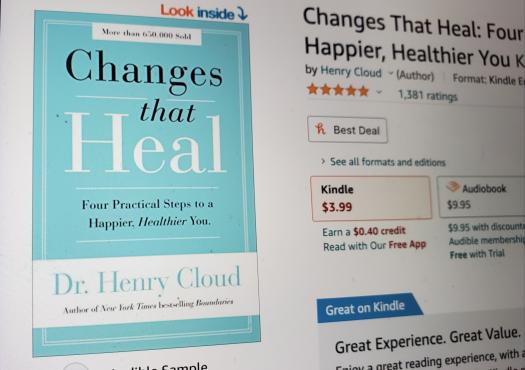
This is what Henry Cloud, in his book “Changes That Heal”, calls sorting the good and bad. People who do this well recognize that there is both good and bad in our world. They are able to deal with the reality that both exist in a way that doesn’t allow negative outcomes to become the consuming focus of their reality.

People who don’t do this well tend to go all bad if one little thing goes wrong.

What do I mean by going “all bad”?

Going all bad occurs when we allow a negative experience or circumstance to so consume us that we begin to project our negative emotion on all aspects of our reality. Our attitude and judgment is clouded in such a way that we can only see and focus on things that are negative while being purposely blind to any good elements in our reality.

David doesn’t do this. He recognizes the bad circumstances he’s in and he’s honest about his emotions. But David also acknowledges the good that still exists, namely, the reality that God is good and loving.

Reflection

What keeps you from being completely honest with God about your emotions? 

When have you gone all bad as a result of an undesired circumstance? What was the situation you were in and how did your emotions affect your perception of reality?

What do you think are some practical ways you can develop in your ability to sort the good and bad?

What are 10 things you can think of right now that are positive about your current life situation?


Photo of “Changes That Heal” from Amazon website – by Dave Lowe

A Covid Cave Prayer!

Psalm 142

A psalm of David, regarding his experience in the cave. A prayer.

1I cry out to the LORD; I plead for the LORD’s mercy.

2I pour out my complaints before him and tell him all my troubles.

3For I am overwhelmed, and you alone know the way I should turn. Wherever I go, my enemies have set traps for me.

4I look for someone to come and help me, but no one gives me a passing thought! No one will help me; no one cares a bit what happens to me.

5Then I pray to you, O LORD. I say, “You are my place of refuge. You are all I really want in life.

6Hear my cry, for I am very low. Rescue me from my persecutors, for they are too strong for me.

7Bring me out of prison so I can thank you. The godly will crowd around me, for you treat me kindly.” (Psalm 142, NLT)


The Daily DAVEotional

Like many people in our country, my wife and I have been locked down at home during this pandemic. We’re working from home, we don’t go out much and besides virtual meetings, we’re pretty much disconnected physically from others.

Our home has been what I call our “Covid Cave.”

Psalm 142 is a psalm of David when he was on the run and in hiding from Saul, who wanted to kill him. This psalm was of particular interest to me because he’s writing about his experience hiding out in a cave.

It’s not likely that the circumstances of your experience mirror David’s. Most of us don’t have enemies chasing us and wanting to kill us. And even though I’ve jokingly referred to my home as a “cave”, I at least have a working toilet, running water and internet streaming services, none of which David enjoyed in his situation.

Still, the circumstances surrounding this pandemic have been mentally traumatizing for many, and the resultant emotions may be similar to David’s. Just look at how David describes his situation:

He felt overwhelmed (Verse 3).

He felt trapped (Verse 3).

He felt disconnected and isolated from others (Verse 4).

He felt helpless…like nobody cared about him (Verse 4).

He felt like his life situation was too strong for him (Verse 6).

He felt imprisoned (Verse 7).

Can you resonate with these emotions? If so, you’re not alone.

How did David deal with these emotions?

First of all, David recognized his utter dependence and need for the Lord. He cried out to the Lord. He pleaded with Him for mercy. He poured out his complaints and told Him his troubles.

Secondly, David recognized that the Lord is the only one to whom he could truly turn. He recognized that the Lord alone is his refuge and the only person that he really wants or needs in life.

Who knows how much longer we will be in this situation. Hopefully, things will turn around soon. Until things change though, and life returns to some sense of normalcy, I echo David’s prayer to the Lord that He would bring me out of prison so I can thank Him!

Reflection

What personal struggles have you experienced during this pandemic?

What emotions have these struggles produced in you?

How can David’s “Cave Prayer” help you during your “Covid Cave” experience?


Photo by Ksenia Kudelkina on Unsplash