
Theological Lessons from the Movie “Trading Places”

Psalm 51

1Be gracious to me, O God, according to Your lovingkindness;

According to the greatness of Your compassion blot out my transgressions.

2Wash me thoroughly from my iniquity

And cleanse me from my sin.

3For I know my transgressions,

And my sin is ever before me.

4Against You, You only, I have sinned

And done what is evil in Your sight,

So that You *[Or may be in the right]are justified when You speak

And blameless when You judge.

5Behold, I was brought forth in iniquity,

And in sin my mother conceived me.

6Behold, You desire truth in the innermost being,

And in the hidden part You will make me know wisdom.

7Purify me with hyssop, and I shall be clean;

Wash me, and I shall be whiter than snow.

8Make me to hear joy and gladness,

Let the bones which You have broken rejoice.

9Hide Your face from my sins

And blot out all my iniquities.

10Create in me a clean heart, O God,

And renew a steadfast spirit within me.

11Do not cast me away from Your presence

And do not take Your Holy Spirit from me.

12Restore to me the joy of Your salvation

And sustain me with a willing spirit.

13Then I will teach transgressors Your ways,

And sinners will be converted to You. (Psalm 51:1-13, NASB)


The Daily DAVEotional

In the 1980’s movie Trading Places, two wealthy, elderly brothers (the Duke brothers) engage in the age old debate concerning the nature of man. One brother argues that man is corrupted by nature, while the other brother believes that the corruption of man is the result of environmental factors (nurture).

With each brother equally convinced that his position is correct, they agree to an experiment to decide the matter once and for all. With a $1 bet as incentive, they embark on a plan to completely ruin the life and reputation of their sophisticated Wall Street executive assistant played by Dan Akroyd. At the same time, they exalt a crooked street bum, played by Eddie Murphy, to Akroyd’s former position. Only after seeing how each person responds can they settle the bet and the debate.

Not long after being promoted to a position well beyond his education, Murphy begins to become the sophisticated, educated person that his position requires. At the same time, Akroyd, having lost it all, begins to turn into the common criminal that Murphy once was.

The movie ends up portraying a view of man that is commonly believed in society today—that man is basically a product of the negative forces in his environment. Yet this view is in stark opposition to what the Bible teaches about the nature of man.

The Bible says that man was originally created in the image of God (see Genesis 1:26, 27). The phrase “image of God” refers to man’s ability to reveal and represent what God is like. Exactly how man reveals the image of God has been debated over the years. However, many believe that two categories that reflect God’s image in man are man’s ability to make moral decisions, and the dominion that was given to man by God.

Before Adam and Eve sinned, the “image of God” in man was perfect. Man walked with God, had dominion over the earth and every decision man made was morally representative of God’s nature. This is because man was completely dependent on God for moral direction and guidance.

However, when Adam & Eve sinned, this image became corrupted. Specifically, man was corrupted in several ways:

1. Intellectually, man’s mind became depraved.

21 For even though they knew God, they did not honor Him as God, or give thanks; but they became futile in their speculations, and their foolish heart was darkened.22 Professing to be wise, they became fools,…28 And just as they did not see fit to acknowledge God any longer, God gave them over to a depraved mind, to do those things which are not proper, (Romans 1:21,22,28, NASB)

2. Emotionally, man became perverted.

24 Therefore God gave them over in the lusts of their hearts to impurity, that their bodies might be dishonored among them…26 For this reason God gave them over to degrading passions; for their women exchanged the natural function for that which is unnatural (Romans 1:24, 26, NASB)

3. Volitionally, man’s will became enslaved to sin.

17 For the flesh sets its desire against the Spirit, and the Spirit against the flesh; for these are in opposition to one another, so that you may not do the things that you please. (Galatians 5:17, NASB)

Though none of these verses demonstrate man’s condition when he’s born, the Bible clearly communicates that man is morally depraved from birth.

In Psalm 51, David is confessing and repenting of his egregious sin of adultery with Bathsheba followed by the cover-up murder of her husband, Uriah the Hittite.

In his confession, David reveals an important truth about the nature of man when he says in verse 5:

“Behold, I was brought forth in iniquity, and in sin did my mother conceive me.”

Similarly, in Psalm 58:3, David said,

“the wicked go astray from the womb, they err from their birth, speaking lies.”

The apostle Paul agrees when he says in Ephesians 2:3,

“we are by nature children of wrath”

These verses all clearly teach that man is born with a sin nature, which produces in him a propensity toward sin.

Conversely, if one holds to the position that corruption, or sin is simply the product of one’s negative environment, how does one explain David’s reprehensible actions? He had everything he could want and certainly wasn’t in a position of need or desperation. It’s hard to argue that his environment “forced” him to do what he did. It’s more reasonable to explain his behavior as selfishness resulting from an inner compulsion towards evil.

It is obvious then, that the progressive’s idealistic Star Trek world where man’s goodness evolves over time is but a myth. The Bible clearly teaches that man was originally created in God’s image. However, that image was corrupted when Adam and Eve sinned.

Every person since Adam and Eve, with the exception of Jesus, has inherited a corrupted sin nature that exists within the person from birth. To argue otherwise is simply to deny the clear teaching of the Word of God.


Did you enjoy this post? I’d love to hear your thoughts! Feel free to like, leave a comment below, and share it with your friends or on social media if you found it helpful or interesting. Your support keeps the conversation going!


Reflection

Do you think man is basically good, and only does bad things because of the negative impact of his environment, or do you think man is innately bad, having been corrupted by his sin nature? What are the reasons for the position you hold?

For those who argue that man is only bad because of the negative effects of his environment, how do you explain the negative environment? In other words, how do you think the environment became negative in the first place?

What do you think it means that man was created in the “image of God”?

If man’s nature was perfect before sin, how exactly did their nature become corrupted? (See my blog post, “Why Did God Forbid This One Fruit?”

Why do you think this issue of nature vs. nurture is important? What are the implications of each position over the other? 


Photo: Screenshot from the movie “Trading Places”
 

Why Don’t Christians Pray?

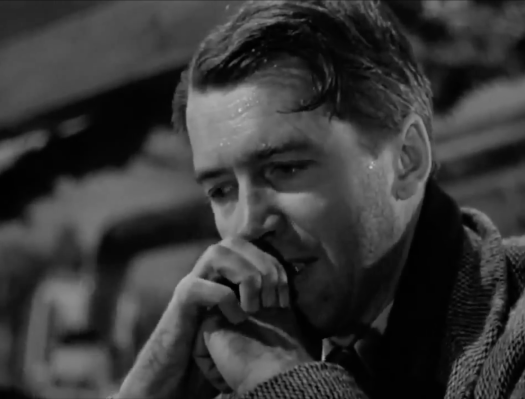
In the classic Christmas movie, “It’s a Wonderful Life”, George Bailey, played by Jimmy Stewart, is portrayed as a moral, selfless family man and a pillar of the community, who alone stands against the greedy and ruthless town banker, Henry Potter, a selfish opportunist who seeks to control the town of Bedford Falls through his wealth and financial might.

Through no fault of his own, George finds himself in a desperate financial situation. Though he’s portrayed as an upright man of moral character, he’s not a particularly religious person.

Yet, in a moment of absolute despair, George Bailey turns to God and utters this prayer: “Dear God…dear Father in heaven…I’m not a praying man but if you’re up there and you can hear me, show me the way. I’m at the end of my rope. Show me the way God.”

For many, this is exactly how they tend to think of prayer – as a desperate cry for help when all personal efforts have failed and every other conceivable avenue for addressing an issue has been exhausted. It’s a last-ditch effort to change an undesired situation by appealing to “the man upstairs”.

This view of prayer is rooted in a fundamental misconception and misunderstanding of the nature of God. This view sees God as all-powerful but distant. The God of “hail-Mary” prayers is not intimate and close; He’s impersonal and far away, too busy to be concerned with insignificant people and inconsequential matters.

But Christianity doesn’t view God as distant and impersonal. In fact, one of the major differences between Christianity and all other religions and philosophies is the idea that God is personal and He wants you to KNOW Him.

As John 1:14 states:

“And the Word became flesh and DWELT among us.”

And yet, even though Christianity sees God as intimate and personal, many Christians don’t pray regularly.

Renowned British Preacher Leonard Ravenhill penned it this way:

“The church has many organizers, but few agonizers;
many who pay, but few who pray;
many resters, but few wrestlers;
many who are enterprising, but few who are interceding.
People who are not praying and praying.
The secret of praying is praying in secret.
A worldly Christian will stop praying and a praying Christian will stop worldliness.
Tithes may build a church, but tears will give it life.
That is the difference between the modern church and the early church.
In the matter of effective praying, never have so many left so much to so few.”

As Christians, we recognize that prayer is an essential part of the Christian life; we know it’s “important”, yet we don’t pray. Why is that?

One reason, undoubtedly, is that we’re influenced by our culture to be self-reliant and self-sufficient, which probably explains why people turn to God only when they’re unable to handle their issues and problems on their own.

However, I think another reason why Christians don’t pray is that we don’t understand the many benefits of prayer.

What exactly are the benefits of prayer?

 Prayer is Our Primary Means of Developing Intimacy with God.

First of all, prayer is the primary means by which we maintain our intimacy with God. James 4:8 says,

“Draw near to God and He will draw near to you.”

How, exactly, do we draw near to God? Through prayer. Prayer is an extremely personal exercise. When you pray, you’re communicating with the sovereign God of the Universe, who desires to spend time with you.

Prayer enables you to build intimacy with Jesus so that

“Christ may dwell in your heart through faith; and that you, being rooted and grounded in love, may be able to comprehend with all the saints what is the breadth and length and height and depth, and to know the love of Christ which surpasses knowledge, that you may be filled up to all the fullness of God.” (Ephesians 3:17-19)

Prayer is also the chief means by which we maintain our fellowship with God. For those times when we’ve done something we know isn’t right, or when we’ve moved away from that intimate relationship with God, prayer is how we get back on track. 1 John 1:9 says,

“If we confess our sins, He is faithful and righteous to forgive us our sins and to cleanse us from all unrighteousness.”

Prayer enables us to confess our sin and experience God’s forgiveness, resulting in continued fellowship with God.

Prayer Helps Us Overcome Temptation

A second benefit of prayer is that it helps us overcome temptation. Just before Jesus was arrested, he told his disciples in Mark 14 that they would all fall away because of Him. Peter’s response is probably one that I would be inclined to give. He emphatically says, “I won’t fall away. Even if everyone else abandons you, I won’t.”

Later, Jesus is in the Garden of Gethsemane praying. His disciples are all with Him, including Peter. They’re supposed to be keeping watch, but instead, they’re sleeping. In vs. 38 Jesus says:

“Keep watching and praying, that you may not come into temptation; the spirit is willing, but the flesh is weak.”

Jesus understood the dichotomy that exists between the sinful nature and the spiritual nature. When we pray, our focus is on God, whose power enables us to overcome sin. The disciples didn’t understand this. So instead of praying that they might not come into temptation and fall away, they slept. As a result of Christ’s arrest. v. 50 says:

“And they all left Him and fled.”

Prayer helps us overcome temptation. Even as you’re facing a temptation, getting your eyes off the temptation long enough to talk to God, can bring His help right when you need it.

Prayer Helps Us Determine God’s Will

A third benefit of prayer is that it helps us determine God’s will. In Luke chapter 6, Jesus spends all night praying to God about who He should choose to be His disciples. The next day, Jesus chose 12 men to be with Him. Jesus understood the benefit of prayer in helping to determine God’s will.

When you pray to God, you’re consulting someone who knows everything there is to know about your situation. Not only that, but He’s in complete control of your situation. Doesn’t it make sense to consult Him when you make decisions in your life?

When I was growing up, my dad was a private pilot, licensed to fly small aircraft, but only in visual flying conditions. On a cross country trip to visit some relatives in another state, we were following a two-lane highway below. From my view high above I could see the many cars and trucks traveling along the road below. In some cases, I noticed cars that were impeded by larger, slower-moving trucks in front of them. It occurred to me that if the drivers of these cars could see things from my perspective, it would be much easier for them to know when and where it would be safe to enter the lane of on-coming traffic to pass the trucks that were blocking their way.

God, of course, has a perspective that is even more expansive than my view was. He sees the complete picture of any situation we may be facing. His perfect knowledge is exactly what we need to guide our life. As we pray to God, and as we learn to listen to Him, we’ll find the direction we seek.

Prayer Allows Us to Intercede for Others

Still another benefit of prayer is that it allows us to intercede for others. Did you know that through prayer, we have the opportunity to impact the lives of others?

Jesus, in John 17, prayed for his disciples. Paul, likewise, in Ephesians 1:15-19 and Colossians 1:9-12 prayed for the young believers in those fledgling churches. We too can pray for others, and our prayers can have a powerful effect.

A story from World Christian Digest illustrates this point. Two missionaries in Malaysia had to go to the nearest town across some pretty rough country to collect some money which had come through for them at the bank there. It was a considerable distance away so they set off on foot early in the morning, hoping to return the same day.

They arrived at the town, collected the money and then set off again on their return trek, only to find that they were too tired and too far away to reach their station that night. So they set up camp on a hillside and, committing themselves to God, they fell asleep.

When morning came, they were surprised that they hadn’t been disturbed by bandits or wild animals. They went on their way without incident and arrived safely at their mission station later that day.

A few weeks later, a man came into the hospital for treatment. He stared at the missionary who attended him and said, “I’ve seen you before.”

“I don’t think we’ve met,” the missionary replied.

“No, I’m sure we have,” said the man. “You were camping on the hillside at such and such a place a few weeks back.”

“That’s right,” said the missionary. “How did you know? We didn’t see anyone.”

“I followed you with some others from the town. We had seen you in the bank and we knew you had money on you. We waited until dark to sneak up on you. We were intending to rob you, but we didn’t attack because of the soldiers.”

“Soldiers?” The missionary laughed. “There were no soldiers with us, my friend.”

The bandit was adamant. “There were – we counted them. There were sixteen of them, and they had swords too.”

The missionary humored the man and passed it off as a hallucination.

Sometime later, when he came home on furlough to England, the missionary was sharing the incident at a gathering in his home town. After the meeting, a man came up to him.

“What was the date that you camped on the hillside?”

Looking at his journal, the missionary said, “It was on such and such a night.”

The questioner also looked at his journal. “That night,” he said, “we had our weekly prayer meeting. Your name was brought forward by someone for prayer and,” he paused, “there were sixteen of us at the meeting.” [1]

Just like the 16 people who prayed for the missionaries, we too, through prayer, can enter into the spiritual battle and intercede on the behalf of others.

So why don’t Christians pray?

One reason is that we don’t see the many benefits of prayer. But there’s another reason why Christians often don’t pray.

The Power of Prayer

For many Christians, prayer is simply a mindless, rote activity. Many Christians don’t really believe that there is power in prayer.

It’s easy for us to be like the man who got lost deep in the woods while hiking alone. Later, in describing the experience, he shared about how frightened he was and how he had prayed to God to rescue him. “Did God answer your prayer?” someone asked. “Oh, no!” he replied. “Before God had a chance, a guide came along and showed me the path.” [2]

There’s an old story about some Christians who were upset that a tavern was being built in their small village. Up until then, the town had been dry. These concerned believers began an all-night prayer meeting, asking God to intervene.

As it happened, not long after, lightning struck the tavern building, and it burned to the ground. The owner brought a lawsuit against the church, claiming they were responsible. The Christians hired a lawyer, claiming that they weren’t responsible. The judge, in reviewing the case said, “No matter how this case comes out, one thing is clear. The tavern owner believes in prayer and the Christians do not.” [3]

Many of us don’t really believe that prayer makes a difference. Often, when God does meet our needs, we don’t attribute it to prayer, but instead to mere coincidence and circumstance.

The fact is, of course, that God is capable of handling any problem we could bring him. Creating planets isn’t much of a problem for him. Nothing is too difficult for God to handle – but He’s waiting for us to recognize his power and ask for his help. God DOES answer prayer.

Howard Hendricks, the long-time professor of theology at Dallas Theological Seminary, shares an amazing story of how God answered prayer. Shortly after Dallas Seminary was founded in 1924, it came to the point of bankruptcy. All the creditors were going to foreclose at noon on a certain day. That morning, the founders of the school met in the president’s office to pray that God would provide. One of the men in that prayer meeting was Harry Ironside. When it was his turn to pray, Dr. Ironside prayed in his characteristically refreshing manner: “Lord, we know that the cattle on a thousand hills are yours. Please sell some of them and send us the money.”

While they were still praying, a tall Texan came into the business office and said, “I just sold two carloads of cattle in Fort Worth. I’ve been trying to make a business deal go through and it won’t work, and I sense that God is compelling me to give this money to the Seminary. I don’t know if you need it or not, but here’s the check.”

A secretary took the check and, knowing something of the financial seriousness of the hour, went to the door of the prayer meeting and timidly tapped. When she finally got a response, Dr. Lewis Chafer took the check out of her hand; it was for the exact amount of the debt. When he looked at the signature, he recognized the name of the cattle rancher. Turning to Dr. Ironside, he said, “Harry, God sold the cattle!” [4]

God is the same yesterday, today, and forever. The same God who parted the Red Sea, the same God who caused the sun to stand still while Joshua and the Israelites routed their enemies, the same God who fed the 5000; this same God is able to handle all of your problems today. He is completely able. We simply need to go to Him in prayer.

Here are a few closing suggestions. Put prayer time into your schedule or you’ll never do it. Start small, but be consistent. Keep a journal of answered prayer. Your faith will increase as you see God answer your prayers, and as a result, you’ll be motivated to pray more.


[1] Naismith, Archibald. 2400 Outlines, Notes, Quotes and Anecdotes for Sermons. vol. 2 – Notes, Quotes and Anecdotes, Baker Book House, 1991. p. 182.

[2] Illustrations for Biblical Preaching. Edited by Michael P. Green, Baker Book House, 1991. p. 282.

[3] Illustrations for Biblical Preaching. Edited by Michael P. Green, Baker Book House, 1991. p. 275.

[4] Hendricks, Howard. “Selling Cattle.” Bible.Org, 20 Jul. 2009, bible.org/illustration/selling-cattle. Accessed 30 Aug. 2025 – (Dr. Howard Hendricks, Stories of the Heart, compiled by Alice Gray, Portland, Multnomah Press, 1996, p. 272)


Photo: Screenshot by Dave Lowe from the movie “It’s a Wonderful Life”

The Decisive Issue in Following Christ

Matthew 7

21“Not all people who sound religious are really godly. They may refer to me as ‘Lord,’ but they still won’t enter the Kingdom of Heaven. The decisive issue is whether they obey my Father in heaven. 22On judgment day many will tell me, ‘Lord, Lord, we prophesied in your name and cast out demons in your name and performed many miracles in your name.’ 23But I will reply, ‘I never knew you. Go away; the things you did were unauthorized.’ (Matthew 7:21-23, NLT)


The Daily DAVEotional

Matthew 7 is part of a larger discourse known as the Sermon on the Mount, which begins in Matthew chapter 5.

In this section of scripture, Jesus gives many well-known teachings related to the theme of righteous living.

In this particular passage, Jesus highlights a key characteristic of those who claim to be His followers. “The decisive issue”, Jesus says, “is whether they obey my Father in heaven.”

Think about it. Many people today claim to be Christians and devout followers of Christ. Yet Jesus explicitly says that there will be many people who called Him ‘Lord’ who will not enter the Kingdom of Heaven. How is this possible? Don’t people simply have to confess Jesus is Lord and then they’re saved from the punishment of hell?

Yes, and no.

Yes it’s true that we cannot be saved unless we put our trust in Jesus. But Jesus is saying that just because someone makes the claim that Jesus is Lord doesn’t mean that He really IS their Lord.

If Jesus is your Lord then that means He is your master. And if Jesus is your master then that means you are His slave, or as Paul puts it, His bondservant. If Jesus is the master and I am the slave, then that implies that what He says goes. Jesus makes the rules and He is the ruler. We are subservient to Him AND His rules.

Yet according to Jesus, many people who call Jesus Lord are not really obeying the Father. They have a duplicitous nature, claiming that Jesus is Lord, but not fully obeying Jesus and the Father.

The critical issue in following Jesus is obedience. Unfortunately, many people who go to church and act religious are not truly following. In today’s culture, it is quite common for people to claim to be Christians but not do what Jesus says. There may be no area more apparent with this issue than the sexual arena.

You might be thinking, “well nobody is perfect! How can we possibly be expected to live up to some idealistic standard?”

We’re not meant or expected to live up to some ideal. We will sin. That’s not really the issue. Jesus has paid for sin and we can experience ongoing forgiveness by bringing our sin to the cross and confessing it. See my blog post “Walking in the Light Simplified.”

The issue is when we deny that we’ve sinned. In 1 John 1:10 (from my post “Walking in the Light Simplified”), John says:

“if we claim we have not sinned, we make Him out to be a liar and His word has no place in our lives.”

The problem is when we change the rules so that we don’t agree that what we’re doing is sinful. In this scenario, we don’t confess our sins to Jesus because we no longer believe these actions or attitudes are sinful.

This is what I refer to as “Salad Bar Religion”, which I wrote about here. Salad Bar religion occurs when we pick and choose the things we want to obey while discarding the things we don’t want to obey.

Jesus’ words may seem harsh to some but He’s crystal clear on this: we are not authorized to change His rules and guidelines for what constitutes righteous living. Those who do change His rules in order to suit their own personal preferences may find themselves in the unenviable position of being rejected by Jesus when the time comes to give an account of our life and our choices.

Reflection

In what areas of Scripture do you find it most difficult to obey? What are some of the “rules” that you are most tempted to neglect, ignore or change?

What is your response to the thought that Jesus may reject entrance to the Kingdom of heaven to some people who have claimed to be Christians in this life?

If obedience is the decisive issue, how do you account for the fact that all of us as Christians still disobey God at times? How would you explain to someone who argues that you are being legalistic by setting up an impossible standard that cannot be met?

What steps can you take to ensure that you are not a follower with a duplicitous nature, claiming to follow Jesus verbally but internally, following your own preferred rules of living?


Photo by Helena Lopes from Pexels

Why Some Christians Never Grow

2 Peter 1

3His divine power has given us everything we need for life and godliness through our knowledge of him who called us by his own glory and goodness. 4Through these he has given us his very great and precious promises, so that through them you may participate in the divine nature and escape the corruption in the world caused by evil desires.

5For this very reason, make every effort to add to your faith goodness; and to goodness, knowledge; 6and to knowledge, self-control; and to self-control, perseverance; and to perseverance, godliness;  7and to godliness, brotherly kindness; and to brotherly kindness, love.  8For if you possess these qualities in increasing measure, they will keep you from being ineffective and unproductive in your knowledge of our Lord Jesus Christ.  9But if anyone does not have them, he is nearsighted and blind, and has forgotten that he has been cleansed from his past sins. (2 Peter 1:3-9, NIV)


The Daily DAVEotional

Have you ever wondered why some people who have been Christians for a long time never seem to get past the initial stages of Christian development?  Perhaps you count yourself in this group. Maybe you’ve been a consistent church-goer for years and even attended the occasional small group, but you’ve never felt like you were really progressing as a Christian.

I think a lot of people get to this point and begin to wonder if there isn’t something more to the Christian life. Some who are discontented may half-heartedly trudge along in their Christian experience, while others choose to walk away, assuming that their spiritual “experiment” was just a phase.

In this passage of 2 Peter, the author (Peter) gives the reason why people are not growing and developing in their spiritual lives.

But first notice that in verses 3-4, Peter tells his audience that God has already given them everything they need to live the Christian life and experience godliness. There’s no special enlightenment or advanced teaching a person needs in order to experience the Christian life as it was meant. This means that no matter where you are at, whether you are brand new in the faith or if you’ve been a believer for many years, you already possess everything you need to experience all Christ wants for you.

What is it that Christ wants for you?

Starting in verse 5, Peter reels off a list of virtues that we’re to add to our character. It’s easy to look at this list and get overwhelmed, thinking there is a lot of pressure to manufacture these qualities in our lives. But don’t get overwhelmed. In fact, I want you to take a deep breath as we look at this list a bit differently than maybe you’ve looked at it before.

What is the starting point of the list?

Faith.

If you’re a Christian, you already have faith, so you’re good. All believers start with a basic faith in God and Jesus.

What is the ending point of the list?

Love.

The goal of all Christian growth is to learn to love God and others more deeply and effectively. Everything in between Faith and Love in this list is simply a process of growing character qualities that helps us to become more loving people.

In verse 8, Peter says that if you possess these qualities and they are increasing (i.e. you’re growing in them or developing them in your life), you’ll be productive and effective in your knowledge of the Lord.

In other words, if you’re growing in these character qualities, you’ll become a more loving person towards God and others and you’ll therefore have the kind of influence and impact God desires for you. You won’t be stagnant or ineffective and you won’t be wondering, as so many immature Christians do, why the Christian life is not as exciting and adventurous as you thought it would be when you first came to Christ.

So why is it that some people never grow?

Peter addresses this in verse 9. He says that the person who is lacking these qualities, the person who is not growing in these character qualities and not becoming a more loving person, is near-sighted and blind. Peter then explains that what makes them near-sighted and blind is that they have forgotten that they’ve been cleansed from their past sins.

The reason so many Christians aren’t experiencing growth is sin!

I’m sorry to disappoint you if you were hoping for or expecting something more profound. But it really is that simple.

Look, we all sin, even the most mature believers. Sin is simply a thought, a word or action that is in rebellion toward God and His values. When we sin, we are choosing to go our own way, and as a result, we are disconnecting ourselves from God, who is the source of spiritual life. The moment any living thing becomes disconnected from its life source, it begins to experience decay.

The person who is growing is the person who, when they do sin, always remembers that Jesus has died for that sin and has paid for that sin. The person who is consistently growing remembers what Jesus has done for them and whenever they sin, they take that sin to the cross, claiming the forgiveness that Jesus has already provided and repenting in their heart for their thoughts, words or actions.

The biblical term for this process is confession. By actively confessing sin whenever you are aware of it, you’re admitting that you need to experience Jesus’ forgiveness every day, not just the one time you decided to become His follower. The net result is that you stay connected to Jesus, the source of spiritual life.

By engaging with Jesus every day, you’ll become more aware of the areas of your life that don’t reflect Him so well and you’ll invite Him to change you in those areas. Before you know it, you’ll be developing those character qualities that Peter lists in verses 5-7 and the end result is you’ll be a more loving person who is thriving spiritually and experiencing genuine transformation.

Reflection

What has been your understanding and view of what it means to grow as a Christian? How have you generally viewed the goal of Christian growth? In other words, what has been your past standard for measuring and evaluating growth as a Christian?

What has been your experience as a Christian with growth? If you were talking to someone who asked you to chronicle your life as a Christian, highlighting the growth and development you’ve experienced since you became a Christian, what would you say? 

When you look at the list of qualities Peter mentions, what is your response or reaction? Does the list create excitement or anxiety? Explain.

What are practical steps you can take to become a more loving person? Who do you know who can be a resource or mentor as you seek to grow as a Christian?


Photo by Silvestri Matteo on Unsplash


The Importance of Conditioning

1 Corinthians 9

24Remember that in a race everyone runs, but only one person gets the prize. You also must run in such a way that you will win. 25All athletes practice strict self-control. They do it to win a prize that will fade away, but we do it for an eternal prize. 26So I run straight to the goal with purpose in every step. I am not like a boxer who misses his punches. 27I discipline my body like an athlete, training it to do what it should. Otherwise, I fear that after preaching to others I myself might be disqualified.
(1 Corinthians 9:24-27, NLT)


The Daily DAVEotional

A few days ago, I wrote a blog post about spankings and discipline that included passages from Proverbs 23 and 1 Samuel 3. I also included a related story about a box of Lemonheads. If you’re wondering what that’s all about, you can read about it here.

The big idea was about discipline and how we tend to think of discipline as punishment, but the broader idea behind discipline is the idea of training.

In today’s reading, Paul provides the classic passage regarding discipline as training.

Paul compares the Christian life to a race that we run. But this race is not a sprint or a relay; it’s more like a marathon.

I have twin boys who were distance runners in high school. In the Fall, they competed in Cross Country and in the Spring, they ran track.

For distance runners, training is year-round. Even in the off-season, they are still running 5-6 days a week.

Some sports require a lot of what I call “skill acquisition.” Think about baseball and the hand and eye coordination needed to hit a 90 mile per hour fastball.

Or think about a golfer who has to learn the exact right mechanics of his or her body to be able to hit a golf ball off a tee in order to make it fly 250 yards down the green. These are not easy skills to acquire. It takes time and patience and repetition. But if you get injured and have to take several weeks or a month off, when you resume, you can often pick up right where you left off. You haven’t lost the skill.

But this isn’t the case with a distance runner because their success is not so dependent on acquiring certain skills as much as it’s dependent on developing their level of conditioning. To miss a week of training means your conditioning suffers and when you resume, you will not be able to pick up where you left off. There is often ground that needs to be made up to get back to where you were.

This is the idea Paul is presenting when he says we should train like an athlete. He’s talking about training like an endurance runner. This kind of training takes focus, intentionality and consistency. There are no short-cuts and it is hard work.

Can you imagine a distance runner who only trains one or two days a week? Or how about an Olympic marathon hopeful who rarely runs 26 miles in a week, let alone 26 miles in one race! What kind of results would you expect for the person who approaches running with this kind of mentality?

And yet, many Christians approach the Christian life by investing in their personal spiritual development only once or twice a week. This kind of haphazard approach will never yield the kind of conditioning necessary to compete in and finish the race.

For the distance runner who is not properly conditioned, one of two things will generally happen when they run in a race. He or she will fall so far behind the rest of the group that functionally, they are not even in the race. There  is ZERO measurable impact.

The other potential outcome is they may give up and drop out of the race altogether. Paul equates this with a person who ultimately abandons the faith, walking away from the Lord.

This was Paul’s biggest fear. You probably know people who once called themselves Christians but who have abandoned the faith, forsaking the person and the cause of Christ.

If we don’t want that fate to befall us, we have to discipline ourselves, training and conditioning ourselves spiritually to be able to handle whatever course we run with whatever obstacles we may encounter.

Reflection

What kinds of activities or hobbies have you engaged in that required discipline (sports, music, mental, etc.)?

When is a time you engaged in an activity where you didn’t have adequate conditioning? What were the circumstances? What were the results?

What has been your practice for training yourself spiritually? 

What are some steps you could take to develop a more focused, intentional and consistent approach to your spiritual development and training?


Photo by Jenny Hill on Unsplash

Faulty Earbuds?

My typical running gear includes dri-fit shirt, sunglasses, running hat and earbuds to listen to audiobooks or music.
Photo by Dave Lowe

A few weeks ago, I left the house for my daily run. I had my phone to track my route and also provide the tunes to keep me moving during the 6 mile trek.

As I was nearing the end of my run, I noticed I was not getting any sound out of my left earbud.

I tried pushing the earpiece harder into my ear, but that didn’t work. I wondered if maybe the earphone jack was not in all the way. No, that wasn’t the problem.

I jiggled the wire, thinking maybe there was a short. That didn’t work either. I started thinking maybe these earbuds had reached the end of their lifespan and I was bummed at the thought of having to buy new ones. I’ve been told I’m cheap that way!

When I finally got home, I thought I’d try one more thing. Perhaps it was a software issue. I figured a reboot of my phone would solve it if that was the issue. But that didn’t work either.

I had one more idea to determine if it was a problem with my phone or the earbuds. I decided to plug the earbuds into my computer and listen to some music. If the earbuds still only gave sound out of only one ear, then I would know it’s the earbuds and not the phone.

However, as I was getting ready to plug the earbuds into my computer, I looked more closely at the earpiece that wasn’t producing sound and I quickly realized the issue. There, in the small opening where the sound was supposed to come out, was a small glob of ear wax that was fully covering the opening.

The opening on these earbuds is small. It doesn’t take much to clog the opening, making it harder for sound to come through.
Photo by Dave Lowe

Yes, I know it’s kind of gross, but we all produce the stuff, and to be honest, I really can’t tell you the purpose. I just know that when I removed the small piece plugging the hole, I was suddenly able to hear perfectly again out of both earbuds.

I had a problem hearing and all of my initial thoughts were that it was a problem with something else – my phone, the earbuds, the jack, the wire, etc. The reality is that I was having issues hearing clearly because of me – something I produced and wasn’t even aware of.

I think there’s a spiritual illustration here. Often I’m wanting to hear from the Lord and He’s not responding, at least not the way I want. I wonder why He’s not answering my prayers or responding clearly to my requests.

Sometimes, the reason I’m not hearing from God is because of me. Sometimes the Lord IS wanting to speak to me but my attitude, or my heart blocks my spirit from hearing the Lord.

I’ve found that there are often several reasons why I’m not hearing from the Lord.

A primary way the Lord speaks to us is through His Word. Yet, it’s easy to get distracted by other things.
Photo by Nick Bondarev from Pexels

One reason I sometimes don’t hear from God is because of unconfessed sin in my heart. Psalm 66:18 says “If I had not confessed the sin in my heart, my Lord would not have listened.”

Sometimes, I’m not even fully aware of my own sin, such as unresolved conflict or anger. This is why it’s so important to invite the Lord to examine our hearts and reveal to us any areas in our lives and hearts that may be keeping us from experiencing His presence (See Psalm 139:23, 24).

A second reason I may not be hearing from the Lord is distractions. Sometimes Jen will be telling me something important but my focus is on something else, like my computer screen or the TV. I find that when I’m not fully engaged in what she’s saying I often have to ask her to repeat what she’s just said.

I often do the same thing with the Lord. I read my Bible but my mind is thinking about something else. I’m spending time in prayer but distracted by notifications that are popping up on my phone.

I cannot always expect to hear directly from the Lord when I want. But as a follower of Christ, I can make sure that the airways are clear and that there are no impediments that would keep me from hearing His voice when He does speak to me.

What keeps you from hearing clearly from the Lord?

What have you found to be helpful in keeping you focused and tuned in to hearing the Lord’s voice?

We appreciate your continued prayers for us as we continue to wait on the Lord during this challenging season!

If you’d like us to pray for you, click on the Prayer tab and send us your request!