2 Thessalonians 2
1Concerning the coming of our Lord Jesus Christ and our being gathered to him, we ask you, brothers, 2not to become easily unsettled or alarmed by some prophecy, report or letter supposed to have come from us, saying that the day of the Lord has already come. 3Don’t let anyone deceive you in any way, for until the rebellion occurs and the man of lawlessness is revealed, the man doomed to destruction. 4He will oppose and will exalt himself over everything that is called God or is worshiped, so that he sets himself up in God’s temple, proclaiming himself to be God.
5Don’t you remember that when I was with you I used to tell you these things? 6And now you know what is holding him back, so that he may be revealed at the proper time. 7For the secret power of lawlessness is already at work; but the one who now holds it back will continue to do so till he is taken out of the way. 8And then the lawless one will be revealed, whom the Lord Jesus will overthrow with the breath of his mouth and destroy by the splendor of his coming. 9The coming of the lawless one will be in accordance with the work of Satan displayed in all kinds of counterfeit miracles, signs and wonders, 10and in every sort of evil that deceives those who are perishing. They perish because they refused to love the truth and so be saved. 11For this reason God sends them a powerful delusion so that they will believe the lie 12and so that all will be condemned who have not believed the truth but have delighted in wickedness. (2 Thessalonians 2:1-13, NIV)
The Daily DAVEotional
Not long ago, I was engaged in an online conversation with a Mormon who was explaining the necessity and legitimacy of the Mormon church.
You can read about the larger context that prompted this discussion in my blog post “Should People Take the Mormon Challenge?”
If you’re not familiar with Mormonism, you should know that it is not just another of the many Christian denominations that exist. It is something entirely different from the traditional Christianity that is represented by the many mainline Christian denominations and traditions.
Mormonism was founded in 1830 by Joseph Smith, who, according to his testimony, was confused by the many different Christian denominations in place at the time. He sought to determine which one was right so he could know which one he should follow.
Joseph Smith claims that he received a revelation directly from God the Father and Jesus, in which he was told that NONE of the denominations were correct and that he should not follow any of them.
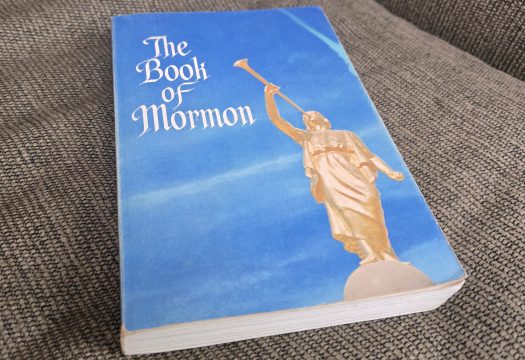
Supposedly, Joseph Smith was later directed by an angel to some buried golden plates, which were subsequently translated into “The Book of Mormon”. Not long after, the Church of Jesus Christ of Latter Day Saints (Mormonism) was formed as the re-establishment of the true church that had allegedly been lost ever since the original apostles died off.
Interestingly, Mormonism today seeks to be known as “Christian” even though all of the Christian denominations of today were apparently labeled by Jesus himself as wrong.
Naturally, most Christians today do not think that they’re wrong, nor do they believe that they have fallen off the path, as Joseph Smith maintains that Jesus told him.
Hence, there is genuine debate regarding the origins of Mormonism and the truthfulness of its claims.
Click here to see a A Comprehensive List of Blog Posts Based on Bible Passage Reference
A key argument that Mormons make to support their claim that Jesus visited Joseph Smith is the assertion that the original New Testament church fell into apostasy and the original church teachings and church authority were lost….for nearly 1800 years!
This passage in 2 Thessalonians is often used as one proof text to assert that Paul himself predicted that the church would fall into apostasy.
If the church indeed fell into apostasy and it can be demonstrated that even the apostles knew this would happen, then the idea that Jesus would appear at some point to someone to re-establish the true church seems at least plausible, if not inevitable.
Unfortunately, there are quite a number of problems with the Mormon teaching on this passage as it relates to their view of a universal and cataclysmic apostasy of the church.
First of all, how does one reconcile the Mormon view that the church fell into apostasy and was lost with Jesus’ teaching in Matthew 16, in which he said that he would establish his church and the gates of hell would not prevail against it? Jesus taught that nothing could ultimately eliminate his church. Yet Mormons teach that the gates of hell could prevail against Christ’s church and indeed DID prevail….for nearly 1800 years!
Secondly, if the church DID fall into apostasy and was completely lost (which we assert is not possible according to Jesus), why would Jesus wait 1800 years to re-establish His church? That’s an awfully long time with a lot of lost people who ultimately had no hope, given the complete absence of the church.
Third, Mormons make the interpretive error of eisegesis (reading their preferred interpretation into the text) when they assume that passages which warn of false teachers and ideologies are evidence of a universal apostasy in which the church would be lost. While Jesus and the apostles often warned of false teachers and frequently pointed to our sinful tendencies to pursue worldly desires at the expense of following Christ and obeying His Great Commission, there are NO passages where Jesus or any of his apostles predict that the universal church and its teachings would be completely lost.
Finally, this passage in 2 Thessalonians 2 is offered up as one of several primary passages that speak to this alleged apostasy. According to Mormon teaching, Jesus, Paul and others all KNEW that the church would fall into apostasy and spoke openly about it.
The problem for Mormons is that this passage says nothing about the church being lost, nor does it even hint that there would be a universal apostasy shortly after the apostles left the scene. In short, this passage doesn’t teach what Mormons say it teaches.
It’s clear from the very first verse of this chapter that Paul is speaking about the 2nd coming of Christ. Paul had taught the Thessalonians about this subject on many occasions, as he states in verse 5.
The Thessalonians were confused about the timing of the 2nd coming and were anxious because of false reports coming from would-be prophets and random itinerant preachers who claimed that the day of the Lord had already occurred.
The Thessalonians were worried that perhaps they had missed the big day and had been left behind. Paul assures them that the “day of the Lord”, which refers to the 2nd coming of Christ, had NOT happened yet and would not happen until certain visible and identifiable events had taken place.
Paul lists these events, including the “man of lawlessness” entering the temple and calling himself god.
This event clearly has not happened yet and when it does happen, it will not lead to an apostasy of the church as Mormons claim, but it will lead to the 2nd coming of Christ as is clear from verse 1.
Since it’s clear from the text that the events Paul is talking about are STILL future events, this passage cannot be legitimately offered up as evidence that the church was lost shortly after the apostles died off and therefore needed to be restored nearly 1800 years later.
The truth is, there is no evidence that the church of the New Testament was ever lost. Sure, there have been many within the church who have been led to follow a path of false teachings. That has always been the case. Even in the time of the apostles we see that there were many false teachers and many false teachings. We even see devout disciples who are led astray. But none of this proves that the church as a whole was fully and fundamentally lost.
Additionally, there is no evidence that the New Testament church’s teachings and structure resembled anything remotely mirroring the current Mormon church.
The New Testament documents are fairly well preserved and we can trace the traditions and the teachings of not only the apostles but the early church fathers. Historically, we can trace theological heresies as well as denominational splinter groups. We can compare all of it with the teachings of the New Testament to determine what is accurate and what is not.
Mormonism wants you to believe that Jesus told Joseph Smith that all the Christian denominations were wrong and that Mormonism is right.
The problem is that we cannot verify that Joseph Smith ever had a real encounter with Jesus, but we can evaluate Mormon teachings to those of Jesus and the New Testament apostles. By that metric, Mormonism fails because it teaches a gospel message that is in stark contrast to that which we know was taught by Jesus and his disciples.
Did you enjoy this post? I’d love to hear your thoughts! Feel free to like, leave a comment below, and share it with your friends or on social media if you found it helpful or interesting. Your support keeps the conversation going!
Reflection
Mormons claim that this passage teaches a universal apostasy of the church shortly after the apostles died off. Based on the plain reading of the text, do you agree that this is what Paul is teaching? Why or why not?
Mormons say that church authority and structure were lost when the church fell into apostasy. Yet Jesus taught that the gates of hell could not prevail against His church. How does one ultimately determine which view is correct? What standards or protocols do you think are needed to evaluate the veracity of each sides’ claims?
We have a record of Jesus’ teachings and the teachings of many of His disciples. We call this the New Testament. Do you think the New Testament has been accurately preserved? In other words, do you believe that the New Testament is an accurate reflection of the account of Jesus’ life and ministry as well as an accurate account of the New Testament church and its teachings? What are the reasons for the position you hold?
If the church did fall into apostasy and was completely lost as Mormons claim, when and where did the “man of lawlessness” event take place? To what is Paul referring to?
Paul says that “the secret power of lawlessness is already at work”? What is Paul referring to? What does that mean? Paul also says that “the one who now holds it back will continue to do so till he is taken out of the way.” Who do you think is the one who now holds back the secret power of lawlessness?
Image created by Grok