
Numbers 22
1Then the people of Israel traveled to the plains of Moab and camped east of the Jordan River, across from Jericho. 2Balak son of Zippor, the Moabite king, knew what the Israelites had done to the Amorites. 3And when they saw how many Israelites there were, he and his people were terrified. 4The king of Moab said to the leaders of Midian, “This mob will devour everything in sight, like an ox devours grass!”
So Balak, king of Moab, 5sent messengers to Balaam son of Beor, who was living in his native land of Pethor*[Or who was at Pethor in the land of the Amavites.] near the Euphrates River.*[Hebrew the river.] He sent this message to request that Balaam come to help him:
“A vast horde of people has arrived from Egypt. They cover the face of the earth and are threatening me. 6Please come and curse them for me because they are so numerous. Then perhaps I will be able to conquer them and drive them from the land. I know that blessings fall on the people you bless. I also know that the people you curse are doomed.”
7Balak’s messengers, officials of both Moab and Midian, set out and took money with them to pay Balaam to curse Israel. They went to Balaam and urgently explained to him what Balak wanted. 8“Stay here overnight,” Balaam said. “In the morning I will tell you whatever the LORD directs me to say.” So the officials from Moab stayed there with Balaam.
9That night God came to Balaam and asked him, “Who are these men with you?”
10So Balaam said to God, “Balak son of Zippor, king of Moab, has sent me this message: 11‘A vast horde of people has come from Egypt and has spread out over the whole land. Come at once to curse them. Perhaps then I will be able to conquer them and drive them from the land.’”
12“Do not go with them,” God told Balaam. “You are not to curse these people, for I have blessed them!”
13The next morning Balaam got up and told Balak’s officials, “Go on home! The LORD will not let me go with you.”
14So the Moabite officials returned to King Balak and reported, “Balaam refused to come with us.” 15Then Balak tried again. This time he sent a larger number of even more distinguished officials than those he had sent the first time. 16They went to Balaam and gave him this message:
“This is what Balak son of Zippor says: Please don’t let anything stop you from coming. 17I will pay you well and do anything you ask of me. Just come and curse these people for me!”
18But Balaam answered them, “Even if Balak were to give me a palace filled with silver and gold, I would be powerless to do anything against the will of the LORD my God. 19But stay here one more night to see if the LORD has anything else to say to me.”
20That night God came to Balaam and told him, “Since these men have come for you, get up and go with them. But be sure to do only what I tell you to do.”
21So the next morning Balaam saddled his donkey and started off with the Moabite officials. 22But God was furious that Balaam was going, so he sent the angel of the LORD to stand in the road to block his way. As Balaam and two servants were riding along,
23Balaam’s donkey suddenly saw the angel of the LORD standing in the road with a drawn sword in his hand. The donkey bolted off the road into a field, but Balaam beat it and turned it back onto the road. 24Then the angel of the LORD stood at a place where the road narrowed between two vineyard walls. 25When the donkey saw the angel of the LORD standing there, it tried to squeeze by and crushed Balaam’s foot against the wall. So Balaam beat the donkey again. 26Then the angel of the LORD moved farther down the road and stood in a place so narrow that the donkey could not get by at all. 27This time when the donkey saw the angel, it lay down under Balaam. In a fit of rage Balaam beat it again with his staff.
28Then the LORD caused the donkey to speak. “What have I done to you that deserves your beating me these three times?” it asked Balaam.
29“Because you have made me look like a fool!” Balaam shouted. “If I had a sword with me, I would kill you!”
30“But I am the same donkey you always ride on,” the donkey answered. “Have I ever done anything like this before?”
“No,” he admitted.
31Then the LORD opened Balaam’s eyes, and he saw the angel of the LORD standing in the roadway with a drawn sword in his hand. Balaam fell face down on the ground before him.
32“Why did you beat your donkey those three times?” the angel of the LORD demanded. “I have come to block your way because you are stubbornly resisting me. 33Three times the donkey saw me and shied away; otherwise, I would certainly have killed you by now and spared the donkey.”
(Numbers 22:1-33, NLT)
The Daily DAVEotional
Have you ever heard someone accuse the God of the Old Testament of being petty? Or genocidal? Or narcissistic?
It’s a common argument that people make, particularly if you want to discard portions of the Biblical text that don’t suit your moral preferences. After all, if we can discredit the God who is portrayed in the Bible, why should we be required to adhere to any of his commands or statutes?
This passage from Numbers may be cited by some as an example of the “pettiness” or fickle nature of the Old Testament God.
The argument may go something like this:
-
- Some men come and ask Balaam to go and curse the Israelites. He will be rewarded if he does.
- Balaam tells the men that he must inquire of the Lord and can only do what God tells him to do.
- God tells Balaam not to go.
- Balaam tells the people that he cannot go and sends them home.
- A bigger delegation comes a second time offering more riches
- Balaam tells them he is powerless to do anything against the will of the the Lord but he invites them to wait and see if God might have more to say on the matter.
- This second time, God tells Balaam to go, which he does.
- God is then mad at Balaam for going.
On the surface, this story seems to show God as being a fickle, petty whiner. Balaam does EXACTLY what God asks him to do. He goes. So why in the world would God be mad? How in the world COULD God be mad? It doesn’t seem to make any sense.
But as ESPN College Football Analyst Lee Corso says, “Not so fast, my friend.”
There’s more going on than what we might notice on the surface. First of all, while it appears that Balaam is doing EXACTLY what God has asked, we cannot see what is going on under the surface, that is, in his heart.
For example, if Balaam is so committed to following the Lord’s command, why does he invite the delegation to stay another night so that he may inquire of the Lord further? He has already heard the Lord’s directive on the issue.
Verse 32 confirms this suspicion as the angel of the Lord says that Balaam is “stubbornly resisting me.” Balaam confesses his sin and agrees to “go back home if you are against my going.”
This indicates that while Balaam said the right things, in his heart, he really wanted to go, as indicated by his decision to inquire of the Lord AGAIN. God allows him to go but He realizes that Balaam is resisting Him internally.
God uses Balaam’s donkey to teach him a lesson, which is that we don’t always see what is happening around us. We see the obvious, surface level stuff, but we have no idea what is happening under the surface. But God does.
There is more to the story surrounding Balaam but the main idea here is that God is not petty, nor is He fickle. He judges our motives as well as our actions because He sees and is aware of EVERYTHING.
By contrast, we tend to evaluate God and judge His motives with limited information and understanding. We are like Balaam in the story. We are mad at the donkey, or the circumstances that we wrongly interpret as being unjust, unfair or immoral, all the while we’re completely oblivious to the unseen world and forces around us.
God’s message to us is “Open your eyes!”
Reflection
What has been your opinion or understanding of the God of the Old Testament?
What would you say to someone who claims that the God of the Old Testament is petty?
What is a situation when you rushed to judgment or jumped to a conclusion, only to realize later that you didn’t have all the information?
Balaam said the right things but internally he was resisting God. What does it look like for you when you are resisting God? What steps can you take to ensure your inner heart toward God matches your outer actions?
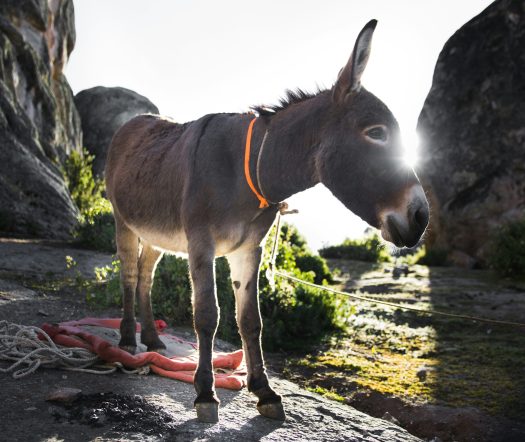
Photo by Alfredo Mora on Unsplash

 The Lowedown