On Thursday, October 26th, we said goodbye to my father-in-law, Cliff Bloom.
While his passing was somewhat sudden at the end, in many ways it was a long goodbye, as Cliff suffered from the cruel disease of Alzheimers which forces its victims to endure a slow demise mentally.
Classic Cliff – a big smile and ready to greet you with a hug!
Even though Cliff’s cognitive abilities were in decline over the last several years, his long-term memory remained mostly intact.
Cliff was born in the Philadelphia area and thanks to his dad’s employment as a civilian engineer with the Army Corps of engineers, Cliff lived an adventurous life growing up in various parts of the world that most people only read about.
Cliff loved to regale others with stories of what it was like living in Morocco or Turkey as a teenager, or the camaraderie he enjoyed with fellow cadets at Sewanee Military Academy where he attended high school.
Cliff started college at Georgetown but when his parents settled in Oklahoma he ended up transferring to Southeastern Oklahoma University. When asked how he ended up at such a small school that was off the beaten path, Cliff told the story:
“I set out in the car from my parents house and I wasn’t sure where I was going. I happened upon this small school where I saw a bunch of students who were having fun. A bunch of students were standing in a line and when I asked what they were in line for, they said they were registering for classes. I got in line and registered myself.”
Joshua (left) and Jacob pose with their grandpa (ca. 2007)
Upon graduation, Cliff attended Officer Candidate School where he commissioned as an officer in the Navy, serving our country for several years during the Viet Nam war.
Cliff was extremely patriotic and loved history and learning about other cultures. He was a people person. To Cliff, strangers were just friends he hadn’t met yet.
Less than 2 years after Jen and I were married, we learned that Cliff was diagnosed with a brain tumor. Though it was benign, he developed a serious infection as a result of the surgery and it left him partially disabled. Life suddenly changed for Cliff, who was no longer able to do the active things he enjoyed, like cycling and golf.
I never once heard Cliff complain about his situation. He was an extremely positive person who loved to laugh and joke around with others. He always sought to make the best of his circumstances.
Family Christmas photo (December 2015) Front (L-R): Susan, Cliff, Jen, Dave. Back (L-R): Kyle and Thomas (our nephews), Jacob, Joshua, Debbie (Jen’s sister), Steve (brother-in-law)
Whenever we would visit Jen’s family, Cliff was always there to greet us with a big smile and big hug. He had a way of making you feel loved and special. He was an encourager at heart and he would often tell his kids and grandkids how proud he was of them.
The beauty of the gospel is that there is hope beyond this life. Though Cliff will be sorely missed, we take comfort in knowing that He is with Jesus now and he is no longer suffering from any of the health or memory complications that afflicted him in recent years. He is alive and fully redeemed!
We would greatly appreciate your prayers for us and our family as we grieve Cliff’s passing and seek to celebrate his life and legacy!
A.W. Tozer is famously quoted as saying, “what comes into our minds when we think about God is the most important thing about us.”
What do you think about when you think about God? What do you think God is like? How would you describe Him? What are some of his attributes?
How we think about God is extremely important. In fact, the second of the ten commandments says that we are not to fashion an idol in the form of an animal and worship it (see Exodus 20). This is because God is not an animal. Since God created all the animals, God is GREATER than any animal. Hence, it is demeaning to think of God as an animal – something that he actually created.
So what is God like?
The psalmist paints a partial picture of God with some incredible attributes, including the following:
“Before the creation of the world, you are God”. In other words, God existed before the world did, which means that He is distinct from His creation.
“For a thousand years in your sight are like a day that has just gone by.” What this means is that God is not subject to the same laws of time as we are. God is outside of time. Hence, a day is like a thousand years and a thousand years is like a day.
The psalmist is accurately describing the eternal first cause.
Philosophers understand that when thinking about the origin of the universe, there must be an eternal first cause or else you run into the problem of infinite regression.
What is infinite regression?
Infinite regression is when you find yourself caught in an infinite series of questions and responses concerning the creation. For example, suppose a 5-year old asks, “where did I come from?”
You answer, “from your parents.” He follows up by asking, “but where did they come from?”
You reply, “from their parents.”
He replies to your reply with the same question, “but where did they come from?” And you reply each time with the same response, “from their parents.”
This chain of questions and responses regarding origins could go on forever – to infinity, UNLESS you arrive at a first cause that was itself eternal and uncaused.
For years, scientists and philosophers assumed that the universe itself was eternal, that it has ALWAYS existed. In that case, when one asks, “but where did the universe come from?” the answer is that it didn’t come from anyone or anywhere. It has always existed. It has always been there. Since it has always existed, we do not need to answer the question, “where did it come from?”
The problem is that we now know scientifically that the universe is NOT eternal. We know that it had a beginning. In fact, the Big Bang states that all matter, energy, space AND TIME came into existence at a point about 13.7 billion years ago. This demonstrates that the universe itself is NOT eternal.
So we are back to the question, “where did the universe come from?”
According to the psalmist, the universe came from God, who existed BEFORE the universe was created and BEFORE the concept of time. Hence, two major attributes of God are that 1) He is outside of space (creation) and 2) He is outside of time.
There is much more that could be said about God and his attributes but these two characteristics of God are foundational to understanding who He is. If he is outside of creation (space) and outside of time, then God must be eternally self-existent and He must be infinitely greater than any of us can even imagine. This is why any attempt to depict him in a way that is finite, such as a created animal, is demeaning to God. It is an offense to His very nature.
Reflection
What is your concept of God? What words and phrases would you use to describe Him?
Tozer says that what we think about God is the most important thing about us. Do you agree? Why or why not?
What reasons would you give someone when explaining why it is wrong to worship a created image?
The Big Bang states that the universe came into existence about 13.7 billion years ago. How does this scientific fact provide evidence for God’s existence?
1Some time later, Pharaoh’s chief cup-bearer and chief baker offended him. 2Pharaoh became very angry with these officials, 3and he put them in the prison where Joseph was, in the palace of Potiphar, the captain of the guard. 4They remained in prison for quite some time, and Potiphar assigned Joseph to take care of them.
5One night the cup-bearer and the baker each had a dream, and each dream had its own meaning. 6The next morning Joseph noticed the dejected look on their faces. 7“Why do you look so worried today?” he asked.
8And they replied, “We both had dreams last night, but there is no one here to tell us what they mean.”
“Interpreting dreams is God’s business,” Joseph replied. “Tell me what you saw.”
9The cup-bearer told his dream first. “In my dream,” he said, “I saw a vine in front of me. 10It had three branches that began to bud and blossom, and soon there were clusters of ripe grapes. 11I was holding Pharaoh’s wine cup in my hand, so I took the grapes and squeezed the juice into it. Then I placed the cup in Pharaoh’s hand.”
12“I know what the dream means,” Joseph said. “The three branches mean three days. 13Within three days Pharaoh will take you out of prison and return you to your position as his chief cup-bearer. 14And please have some pity on me when you are back in his favor. Mention me to Pharaoh, and ask him to let me out of here. 15For I was kidnapped from my homeland, the land of the Hebrews, and now I’m here in jail, but I did nothing to deserve it.”
16When the chief baker saw that the first dream had such a good meaning, he told his dream to Joseph, too. “In my dream,” he said, “there were three baskets of pastries on my head. 17In the top basket were all kinds of bakery goods for Pharaoh, but the birds came and ate them.”
18“I’ll tell you what it means,” Joseph told him. “The three baskets mean three days. 19Three days from now Pharaoh will cut off your head and impale your body on a pole. Then birds will come and peck away at your flesh.”
20Pharaoh’s birthday came three days later, and he gave a banquet for all his officials and household staff. He sent for his chief cup-bearer and chief baker, and they were brought to him from the prison. 21He then restored the chief cup-bearer to his former position, 22but he sentenced the chief baker to be impaled on a pole, just as Joseph had predicted. 23Pharaoh’s cup-bearer, however, promptly forgot all about Joseph, never giving him another thought.(Genesis 40:1-23, NLT)
The Daily DAVEotional
Genesis 40 is a critical chapter in the story of Joseph and shows that God’s hand is on Joseph’s life despite the unfavorable circumstances in which he finds himself.
Whatever situation Joseph encounters, he thrives. Even in prison, he separates himself as highly proficient and trustworthy, putting himself in a position of authority over others.
When the chief baker and chief cupbearer end up in prison, Joseph is assigned to oversee them.
After some time, they both come to Joseph to interpret dreams that they each had. Joseph’s interpretations are spot on – events unfold exactly as Joseph predicts based on his interpretation of the dreams.
After giving the cup-bearer a positive interpretation of his dream, Joseph implores the cup-bearer to “please have some pity on me when you are back in his [Pharaoh’s] favor. Mention me to Pharaoh, and ask him to let me out of here.”
However, after the cup-bearer is restored to his previous position of service to Pharaoh, the text says that he “promptly forgot all about Joseph, never giving him another thought.”
It’s amazing to me that the cup-bearer could so quickly forget about Joseph and his uncanny ability to interpret dreams. I think this passage illustrates a principle of human nature, which is that we are inclined to forget the role others play in the blessings we experience.
Personally, I tend to attribute successes in life to my own hard work, ingenuity and perseverance while often explaining my failures and short-comings as being the result of the incompetence or inadequacies of others.
The truth is that in our human pride and arrogance, we can tend to overemphasize our own abilities and efforts while minimizing the impact and contribution of others.
The cup-bearer illustrates how many people react when things go well – they go on their merry way without giving any thought to how they got where they’re at and who may have contributed to the blessings they are experiencing.
Joseph, by contrast, recognizes that God is the one who has gifted him with the ability to interpret dreams and he’s is quick to credit God instead of lifting himself up.
Reflection
In what ways can you relate to Joseph and in what ways can you relate to the Cup-bearer?
What is generally your response when things are going well? Do you tend to recognize the positive role others played in your circumstances or are you more likely to take the full credit for your good fortune?
Who is someone in your life that you have “promptly forgotten” in terms of recognizing the positive role they have played in your life? What steps can you take to ensure you recognize and acknowledge the roles God and others have played in your life’s circumstances?
Given the choice, would you rather have $1 million given to you in a lump sum or ONE penny that doubles every day for 30 days?
If you’re like me, you might be thinking, “pennies are basically worthless….I’ll take the million dollars, thank you!”
This scenario, however, illustrates the power of multiplication, or, in financial terms, compounding.
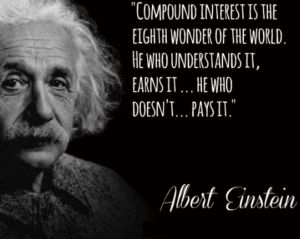
Compounding is so powerful that Albert Einstein is famously quoted as saying, “compound interest is the 8th wonder of the world. He who understands it, earns it; he who doesn’t, pays it.”
So what happens if you take the penny? At first, not much. After ten days, you’ll have just $5.12. After 14 days you still have less than $100. But on day 20 you’ll have over $5000. By day 30, due the power of multiplication, you’ll have over $5 million.

This illustration is often used to demonstrate the power of compound interest in building wealth. However, the power of multiplication also extends to ministry – specifically discipleship.
Consider the example of Jesus. From a purely numerical perspective, one might consider Jesus’s ministry to be an abject failure. After all, though he preached and ministered to the masses, at the end of his life, he had only a handful of followers, and they all scattered when he was arrested.
But Jesus’s ministry was never about building the biggest following. Instead, Jesus focused on developing a few key people who would be able to carry on his ministry and provide foundational leadership for the church after he was gone.
The principle of compounding is illustrated in this table, which shows what can happen to a penny that is doubled every day for 30 days.
By investing in and developing a handful of individuals, the early church was able to sustain the explosive growth it experienced at the outset.
In 2 Timothy 2:2, Paul tells Timothy, “And the things you have heard me say in the presence of many witnesses entrust to reliable men who will also be qualified to teach others.”
Paul is instructing Timothy to follow a principle of multiplication in his discipleship efforts. Essentially, he’s saying, “I built into you, and now I want you to take what I’ve taught you and build into others. But don’t just build into anyone. Build into those who will be able to build into others as well.”
In other words, Paul is telling Timothy to be selective into whom he builds.
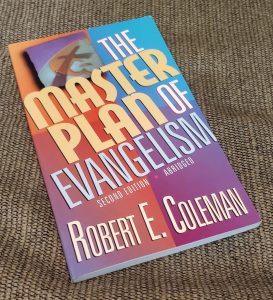
A powerful book that outlines Jesus’s ministry strategy is Robert Coleman’s Master Plan of Evangelism. The book is a short read (only about 100 pages) and the title is a bit of a misnomer because the book is not really a book about evangelism but instead, explains Jesus’s discipleship strategy, which employed the principle of multiplication.
Over the years, we’ve sought to employ this ministry principle in our own discipleship efforts. In fact, when we worked with students, we would often take our young leaders through this same book to teach them the importance of building multiplying disciples.
Robert Coleman first published The Master Plan of Evangelism in 1963. Since then, it has sold over 3.5 million copies.
Now those students are all grown up and living in various places all around the world. It’s amazing for us to see the impact they are having for Christ in the different settings in which God has placed them.
Now our focus is on Young Adults and helping them to walk with God and multiply their lives in a workplace environment. It’s a bit more complicated helping Young adults live out their faith in the big people world but the principles are the same – take the things we’ve learned and pass them along to others who will be able to do the same.
In this way, the number of people who can be a force for good and influence others for Christ will multiply over time. At first, the results might seem insignificant, just like that penny. But over time, it’s amazing how the principle of multiplication takes effect.
Please pray for us as we seek to multiply our lives into this next generation and help them become multiplying disciples for Jesus – men and women who impact others for Christ wherever God places them!
Last month was a significant milestone in our family as we saw both of our boys graduate and commission on consecutive days over Memorial Day weekend.
Jacob receives his diploma from Secretary of Defense, Lloyd Austin
It was definitely a crazy itinerary that required lots of intellectual flexibility and some strategic planning. I’m still not sure how we managed to shove all of our luggage plus 4 years of Jacob’s stuff in the back of his car while driving up and down the Northeast corridor.
After all the ceremonies were over, we all managed to make it home, where we were looking forward to about a month together as a family. Quite honestly, this was going to be the longest extended time together since early 2020 when our boys were forced to finish the school year online because of Covid.
Joshua takes his officer oath of commissioning.
A few days after we returned, Joshua started experiencing some stomach pain. At first, we thought it might have been due to something he ate that didn’t sit right but after about 2 days, it got so bad that he could hardly move. I ended up taking him to the ER where we learned that he had appendicitis and needed an emergency appendectomy.
Joshua recovered fairly quickly but was limited early on in what he was able to do physically. We’re grateful that he’s doing better. The circumstances could have been much worse in terms of the timing and location.
The car is loaded up with a loft bed we found locally in the Monterey area.
Last weekend, we all drove to Monterey to drop Jacob off and help him move into his new apartment. Most of the few days we were there were spent scavenging the area for cheap items to furnish an apartment for 3 guys who literally had nothing but the clothes on their back and a few uniforms. Their apartment is not likely to be featured on an HGTV home show but they’re in a decent situation now. It is truly a bachelor pad.
All true bachelor pads must include a free couch picked up from the side of the road. To be fair, this one was a Crate & Barrel model that was pretty clean. SCORE!
Joshua has about a week left at home before he flies to the East Coast where he’ll spend 3 months at Fort Jackson in South Carolina to be trained as a finance officer. After that, he will report to his first duty station in Vicenza, Italy.
It all sounds very exciting and adventurous but we’re learning very quickly that the life of military families is complicated and filled with hardships that non-military families don’t usually experience.
Military personnel are constantly moving and there is a lot expected of them. They don’t have the same freedoms that others do. Even taking a weekend to get away often requires approval from the chain of command.
For the last year, Jen and I have been thinking and praying about how we can help serve those in our military community. We are especially interested in ministering to those who are Young Adults, since that is our primary audience of ministry already.
Last spring, we reached out to some folks in the Military ministry of Cru to see what it might look like to collaborate and serve those who serve.
It turns out that the largest Marine base in the country is just 30 minutes away from us. Of course, I’ve been aware of Camp Pendleton for years as any time we we trek south down the 5 Freeway, we drive right by the base.
But there is not much of the base that is visible from the highway so one might not realize just how expansive it really is.
Camp Pendleton is located between San Clemente (Orange County) and Oceanside (North San Diego County) and serves about 100,000 people (Marines and their families)
A few months ago, I had the opportunity to take a tour of Camp Pendleton with a new friend of mine who does some volunteer ministry with Cru there. I was amazed at how big the base is and how many people are stationed and live there. I was told that Camp Pendleton serves about 100,000 Marines. Many are not unlike our two boys – thrust into a new situation, feeling out of place, knowing nobody while experiencing the weight of expectation that comes with military duty.
We are not changing jobs, but simply looking at ways to serve a community of young people who live near us whose vocation also happens to be “military”.
Please pray for us as we move forward to see how we might minister to Young Adult military personnel in the same way we continue to serve Young adults in the civilian community.
And please pray for our boys, Jacob and Joshua, as they transition to young officers. Pray for them to adjust well and find strong, spiritual connections that can help them navigate the challenges that await them.
It seems like just yesterday we were dropping off our boys at their respective academies for a 47-month adventure that is culminating this weekend with graduation ceremonies at the Naval Academy (Friday, 5/26 at 9:00 a.m. EASTERN TIME) and at West Point (Saturday, 5/27 at 9:00 a.m. EASTERN TIME).
Though it wasn’t an option for us to invite you all to be here in person, there is the opportunity to livestream these events, in the comfort of your own home.
If you’d like to livestream the Naval Academy Graduation and Commissioning Ceremony, you can do so via the following YouTube link:
Unfortunately, the West Point livestream link has still not been provided so I will endeavor to send a follow-up email with that link tomorrow night. However, after the Navy ceremony, we will need to make our way to West Point on Friday afternoon of Memorial Day weekend. The trip is normally about 5 hours. I’m anticipating a much longer drive because of the holiday weekend. I will do my best to get the link to you as soon as I have it.
Above is a screenshot of the Graduation Timeline
Jacob will be in the group of Distinguished Graduates (Top 100) who get their diplomas first, starting at 10:55. They will go in order of merit (class standing). Jacob is 66th in his class so he should be the 66th Midshipman announced.
Above is a screenshot of the Graduation layout
“DG” stands for Distinguished Grads. Jacob will be in this group, most likely in the second row stage left.
The numbers represent the individual companies (there are 30 companies). Most Mids will get their diplomas with their company. Jacob is in 30th company so instead of being one of the last to get called, he will be one of the first.
Also, most Midshipman will shake the hand of one person as they get their diploma. However, distinguished graduates get to shake the hands of all dignitaries on the stage as they receive their diplomas.
Some Praises and Prayer Requests
We made it here safely and are enjoying our time in Annapolis.
Joshua got approval to leave West Point this week to join us in Annapolis to see Jacob graduate. He arrived in Annapolis Wednesday mid-day. He will need to report to West Point very early Saturday morning for graduation.
We were able to ship out 3 very large boxes of Jacob’s personal items back to our home in Mission Viejo. Cost a small fortune but it’s definitely a weight off the shoulders as we navigate this weekend.
About 75% of the Mids who are graduating (Jacob included) still don’t have their orders. This complicates things with shipping of items and so forth. Jacob is trusting that he will be able to get reimbursed for shipping his stuff home. Pray that ALL Mids would get their orders via email before graduation.
Pray for us to enjoy all of the festivities this weekend. Pray for flexibility and patience. We have a tight window to get to West Point and a very busy schedule.
My Uncle and Aunt are attending the West Point ceremony with us. We will need to coordinate meeting up before-hand. Pray for everything to work out logistically.
Did I mention praying for patience and flexible attitudes?
Not long ago, I was on a Zoom call with Edgar (not his real name), a Young adult I’ve had interactions with for the last couple of years.
Edgar was frustrated as things weren’t going the way he had planned. Already in his late 20’s, Edgar was still trying to figure out what his ultimate career would be. One option he was contemplating was grad school, the idea being that it would potentially set him up for a specific job/career he was interested in. But he wasn’t sure he wanted to spend more money on education given how much he had spent on his undergraduate degree and how little he had to show for it.
Edgar was disillusioned. He told me that he felt like he had been sold a bill of goods. Education was supposed to be the avenue to success and happiness and yet, with mounting school loans and no solid, long-term career prospects, Edgar realized that his degree was not the golden ticket he had been promised.
Edgar is not alone. Today’s Young Adults are disillusioned about a lot of things. They are disillusioned about the economy and the “American Dream”. Especially here in California, many of the Young Adults we encounter have no expectation of ever being able to own a home.
They’re disillusioned with the world. They see inequity and injustice and they struggle to make sense of it all.
And many Young Adults are disillusioned with the Church, failing to see its relevance to modern culture.
Our culture is drifting further from its historic Christian roots and each new generation is experiencing less and less influence from traditional Christian teachings and morals.
Young Adults today have grown up in a post-Christian culture, meaning they know very little about who Jesus is or what Christianity is about. Spiritually, they are a blank slate.
Young Adults are increasingly irreligious in their views. Photo by Mitchel Lensink on Unsplash
About 1/3 of Young adults identify as atheist, agnostic or none. They’re not necessarily hostile to Christianity or religion, but they simply have no religious beliefs – it’s simply not important to them.
About 2/3 of Young adults identify as Christian but only 4% have a Christian ethic. Simply put, they consider themselves Christians but their lives don’t necessarily follow traditional Christian moral values.
This is not surprising since only about 6 out of every 10 Young adults believe the Bible is true.
Our culture has been heavily impacted and influenced by postmodernism, which is a philosophy that emphasizes a person’s personal experience as the supreme factor in determining truth. The end result is people who may identify with the Christian faith in a general sense but when it comes to moral values, their own experiences and preferences take priority over any biblical standards, which may be regarded as archaic and outdated.
How do we minister to people who are disillusioned and feeling hopeless when faced with the realities of life?
One of our strategies and priorities is to help Young Adults see that God is ultimately our only source of hope and His Word provides guidelines for successfully navigating life.
One of the ways we’re accomplishing this is by providing premarital mentoring to young Adult couples who are preparing for marriage.
With so much brokenness in families and marriage today, we’ve found Young Adults are eager to hear how biblical principles can help them change the trajectory of their relationships and family history by providing guidance and direction for fulfilling and life-long marriages.
Dave led a group of Young adults through a 9 month curriculum on Biblical Stewardship and Money Management
Another avenue for helping Young Adults see the value of God’s Word in their daily lives is by helping them adopt biblical principles for stewardship and money management. Unfortunately, our consumer and debt-oriented culture doesn’t teach Young adults how to handle money responsibly and many Young adults cite finances as a major source of stress and anxiety in their lives.
Young adults are looking for alternative solutions to experience financial security and experience prosperity. Many are surprised yet excited to learn that the Bible provides incredibly sound advice and wisdom on how to handle money and honor God through our finances and by applying biblical principles to our financial situations, we can experience financial peace.
Ministering to a generation that has become further removed from any biblical foundation is certainly challenging. But the Lord continues to move, directing us to Young Adults who are eager to know God and follow Him.
Thank you for your partnership that allows us to help Young adults begin to experience real spiritual life as they learn to apply God’s word to their lives.
I remember the first time I encountered Ed Stevens. I was asked to teach a Wednesday night class at church on evangelism. Ed was an older gentleman in the back who stood out to me because, with his wiry white hair, cargo shorts, tube socks and old worn out polo shirt, complete with a pocket protector, he looked to me like a shorter, stouter version of Doc Brown from the Back to the Future movies.
Ed Stevens loved the Lord and he loved people! Click the photo to read his obituary.
Some time later I started attending the mid-week prayer service at church, which was very sparsely attended. To be honest, I attended out of convenience since I normally dropped my boys off for the middle school youth group and it seemed like a waste of time and gas to drive 20 minutes home only to leave 15 minutes later for the 20 minute return trip to pick them up. Ed was there out of conviction. He just loved to pray.
Ed was a classic example of “don’t judge a book by its cover.” Ed didn’t make any fashion statements and if you didn’t know him, you might make the mistake of thinking he was a guy who was a bit down on his luck.
It turns out that Ed was a rather brilliant guy. He had an engineering degree from Rice University and worked over 50 years for Parker Hannifin (an aerospace company in Irvine). He had many patents credited to his name.
In addition, Ed was extremely knowledgeable biblically, having earned a Masters Degree in Theology from Dallas Theological Seminary. Ed loved music and loved to worship by singing and playing trumpet.
One night, at the end of our prayer meeting, Ed asked me if I would consider teaching a Sunday school class for seniors. Ed had started the class 40 years earlier and had been the primary Bible teacher all those years. He decided that maybe it was time to take a break and he approached me about taking over for him. I wasn’t sure I had the time and of course, seniors were well beyond the target age of Young Adults, which was the audience on which our ministry was focused.
I shared my hesitation with Ed and to address my concerns he proposed that I tag team the teaching duties with another guy who also attended the mid-week prayer time. Ed was so affable that it was hard to say no to him.
Nearly every Sunday at the end of the class, Ed would ask, “who’s going to lunch with me?” As many of the other class members would politely decline for various reasons, I often found myself joining Ed so he wouldn’t have to go to lunch by himself. Ed’s restaurant of choice was almost always The Snooty Fox, a local breakfast joint that was lacking in decor but was always packed because the food was good.
Ed knew all the workers by name and would often greet others who were waiting to be seated with a friendly story, a Bible verse or a corny joke. He always had an arsenal of gospel tracts and booklets on hand that he would hand out to people he had just met.
What stood out most to me about Ed was his positive attitude. He exuded joy. When I first met him, he was wheeling his wife Liza around in a wheel chair. She was in the advanced stages of Alzheimers and by the time I met her she was not able to speak. Ed took care of her for over 14 years and never complained or even hinted that the situation he was in was anything other than a privilege.
Ed talked dotingly about his wife – what a great mother she was and how she had introduced hundreds, if not thousands of kids to Jesus through a Good News Club she had started and kept active for years. Liza passed away shortly after I began teaching in the Living Light Sunday school class.
Over the years, the class dwindled as members passed one by one. Not long before the pandemic, the class Ed had started 45 years earlier finally got so small that they merged with another class of seniors at the church. That class already had a teacher and so my Senior Sunday School teaching duties came to an end.
Recently, I had lunch with my old teaching partner whom I hadn’t connected with since before the pandemic. It was good to see him and catch up. I asked him, “have you heard from Ed?” He told me he hadn’t. A few minutes later he pulled up Ed’s obituary on his phone. Ed was almost 89 years old when he passed away last year after a short bout with Covid.
To me, Ed epitomized the Great Commandment because he truly loved the Lord with all his heart, soul, strength and mind and he loved people.
As the classic Foreigner rock ballad says, “I want to know what love is….I want you to show me.” Ed Stevens showed us, by his life and his words, what love is.
Please pray that we would be able to know and experience God’s love ourselves and that we would be able to show it to others through our lives and ministry.
1As Jesus was leaving the Temple grounds, his disciples pointed out to him the various Temple buildings. 2But he told them, “Do you see all these buildings? I assure you, they will be so completely demolished that not one stone will be left on top of another!”
3Later, Jesus sat on the slopes of the Mount of Olives. His disciples came to him privately and asked, “When will all this take place? And will there be any sign ahead of time to signal your return and the end of the world?”
4Jesus told them, “Don’t let anyone mislead you. 5For many will come in my name, saying, ‘I am the Messiah.’ They will lead many astray. 6And wars will break out near and far, but don’t panic. Yes, these things must come, but the end won’t follow immediately. 7The nations and kingdoms will proclaim war against each other, and there will be famines and earthquakes in many parts of the world. 8But all this will be only the beginning of the horrors to come.
9“Then you will be arrested, persecuted, and killed. You will be hated all over the world because of your allegiance to me. 10And many will turn away from me and betray and hate each other. 11And many false prophets will appear and will lead many people astray.12Sin will be rampant everywhere, and the love of many will grow cold. 13But those who endure to the end will be saved. 14And the Good News about the Kingdom will be preached throughout the whole world, so that all nations will hear it; and then, finally, the end will come. (Matthew 24:1-14, NLT)
The Daily DAVEotional
Last weekend at Saddleback Church, there was a Rick Warren sighting. If you didn’t know, Rick Warren stepped down as the Lead pastor of Saddleback Church last August (2022) after more than 40 years at the helm of one of the largest churches in America. I wrote about Pastor Rick’s replacement in a blog post here.
Pastor Rick showed up in a video at church sharing about some of the current needs of the Finishing the Task initiative of which he has taken oversight.
Finishing the Task is a network comprised of hundreds of churches, denominations and missions organizations that are all committed to “finishing the task” that was given to the church 2000 years ago when Jesus commissioned his first disciples to “go and make disciples of every nation…” This task is commonly referred to as the Great Commission.
Matthew 24 is one of the few passages where Jesus speaks prophetically about future events. In this passage, the disciples point out to Jesus the various temple buildings and Jesus uses this as a launching pad to share with his disciples about future events.
The first thing Jesus points out is that the Temple buildings that his disciples are so fondly admiring would one day be completely demolished. This actually happened not long after Jesus’s death and resurrection as the Temple was completely destroyed in 70 A.D. and has never been rebuilt.
Later, at the Mount of Olives, the disciples ask Jesus the question of timing: “When will all this take place? And what signs will accompany your return?”
Jesus responds with some general information about the state of the world that would precipitate His return. He says the following things will be true before His return:
There will be many false prophets…many who will claim to be the Messiah and will lead many astray
There will be wars and rumors of wars among the nations
There will be famines and earthquakes
There is no doubt that this list so far has been fulfilled as these conditions have been true for many years. Yet Jesus says that these conditions are only the beginning of the horrors. In other words, these signs alone aren’t enough to signal that the end is near. There are additional signs that will signal the nearness of Jesus’s return:
Christians will be arrested, persecuted, killed and hated for their allegiance to Jesus.
Many followers will fall away and more false prophets will lead others astray
Sin will be rampant everywhere.
These additional conditions begin to bring more focus to the state the world will be in before Jesus returns. One only has to take a cursory glance at daily headlines to see that Christians are being persecuted and killed around the world. Sin is rampant everywhere and many Christians, in an effort to placate the culture, are compromising on Biblical standards of morality and ethics.
Still, whether or not the stage is set for Jesus’s imminent return is still somewhat of a subjective evaluation. One could claim, in just about any decade since Jesus uttered the words of Matthew 24, that these conditions have been met.
Yet Jesus gives one more condition that must be met before His return will be imminent, a condition that is not subjective but can be objectively evaluated . That condition relates to the spread of the gospel around the world. Jesus says that this gospel of the kingdom will be preached around the world so that all the nations will hear it, and THEN the end will come.
So even though all the conditions seem ripe for Jesus’s return we know that His return is not imminent until this final condition is met – the gospel must be preached so that all the nations (people groups) hear it. Once that happens, we know that Jesus’s return is imminent.
This doesn’t mean that Jesus will return the instant the last people group hears. It simply means that the stage is set and we have no reason to doubt that he may come at any moment.
What’s exciting is that the Finishing the Task initiative, which was launched in 2000 as a cooperative, collaborative effort between hundreds of churches, denominations and missions organizations, has made amazing progress in taking the gospel to the remaining 3500 people groups that were previously unengaged. This YouTube video from 2020 not only gives a history of the Finishing the Task initiative, but also highlights the progress made in the 20 years since the group was formed.
And now, Rick Warren has made it his remaining life mission to give leadership to this network as they push to reach every remaining unengaged people group within the next 10 years. As he says in this short video, “it’s time for Finishing the Task 2.0”
We are living in exciting times as we are quite possibly the generation who will be alive to see the fulfillment of Jesus’s command to take the gospel to all people groups and make disciples of all the nations.
Lord, may you mobilize your people and empower us by your Holy Spirit to fulfill the command that you gave to your initial disciples 2000 years ago!
Amen.
Did you enjoy this post? I’d love to hear your thoughts! Feel free to like, leave a comment below, and share it with your friends or on social media if you found it helpful or interesting. Your support keeps the conversation going!
Reflection
Are you familiar with the idea of the Great Commission? What has been your experience in making disciples and going to the nations?
What thoughts and feelings do you have when you think about the idea that Christ could return, possibly in your lifetime?
One of the things Jesus says is true of the world just before he returns is that there are many false prophets and many will fall away. What do you think makes someone a false prophet? In other words, how can you tell if someone is a false teacher?
What steps can you take to ensure that you are not one of the faithful followers who is led astray?
What do you think are some practical ways you could be involved in helping to “finish the task”?
2We all stumble in many ways. If anyone is never at fault in what he says, he is a perfect man, able to keep his whole body in check.
3When we put bits into the mouths of horses to make them obey us, we can turn the whole animal. 4Or take ships as an example. Although they are so large and are driven by strong winds, they are steered by a very small rudder wherever the pilot wants to go. 5Likewise the tongue is a small part of the body, but it makes great boasts. Consider what a great forest is set on fire by a small spark. 6The tongue also is a fire, a world of evil among the parts of the body. It corrupts the whole person, sets the whole course of his life on fire, and is itself set on fire by hell.
7All kinds of animals, birds, reptiles and creatures of the sea are being tamed and have been tamed by man, 8but no man can tame the tongue. It is a restless evil, full of deadly poison.
9With the tongue we praise our Lord and Father, and with it we curse men, who have been made in God’s likeness. 10Out of the same mouth come praise and cursing. My brothers, this should not be. 11Can both fresh water and salt water flow from the same spring? 12My brothers, can a fig tree bear olives, or a grapevine bear figs? Neither can a salt spring produce fresh water. (James 3:2-12, NIV)
The Daily DAVEotional
Growing up, there was almost nothing more exciting than checking the daily mail. This was before the internet and personal computers. We had no email, no social media, no cell phones. The only way to communicate with someone was either a personal phone call (using our rotary phones) or via old-fashioned snail mail.
Junk mail wasn’t as prevalent back then so when something came that had your name on it, there was excitement – just like Ralphie in this clip from A Christmas Story.
One day when I was in junior high, I checked the mail after school, and low and behold, there was a letter with my name on it.
There it was….a small white envelope with my name handwritten right in the center! There was no return address so I wasn’t sure who it was from.
Immediately I began to ponder in my mind what was inside and who it was from. I speculated that the letter could be from a secret admirer, a girl no doubt, who wanted to express her affection for me.
However, when I opened the envelope, it wasn’t what I expected. There was no note of affection or admiration from a secret admirer. In fact, there was no letter at all. It was just a 3×5 index card with the following Bible verse written on it:
6The tongue also is a fire, a world of evil among the parts of the body. It corrupts the whole person, sets the whole course of his life on fire, and is itself set on fire by hell.
I was perplexed. What was the purpose of this note and why was it sent to me? And more importantly, WHO would send me a Bible verse on an index card? Why this particular verse?
I never did find out who sent me that card and to be honest, I didn’t reflect much on the meaning of the verse or what the anonymous sender was trying to say to me.
Growing up, I was always extremely small for my age. As a result, I was an easy target for bullying and intimidation. I quickly learned that in the school playground jungle, what one lacked in size and strength could be made up with words. I learned the art of using quick zingers and snappy comebacks to make fun of others and cut them down to size.
My verbal skills of sarcasm, put downs and quick wit became well-known, not only amongst my family and friends in my childhood years, but later with my co-workers and managers at work. I remember more than once a manager at the Target store I worked at in college telling me that I was a smart-a**.
What I think that anonymous note sender was trying to say, though I didn’t digest it until much later, is that I had a sharp tongue and my words could easily damage others. Of course I knew this intellectually. I had often been the recipient of teasing and verbal jabs. I wrote here in a previous blog post about how words have the power to heal or hurt.
In this passage, James is telling his audience that our tongues are an indication of our overall ability to control ourselves.
Our tongue may seem insignificant but it can have an enormous effect in how it is used. It can do tremendous damage. James notes three things about the tongue.
First, the tongue is small but it can do GREAT damage. Just as a small spark can result in a large fire, so even the smallest and seemingly innocuous of words spoken by our tongues can do enormous harm to others.
Secondly, James says that the tongue is evil and poisonous. When we use our tongue in the wrong way, we actually corrupt our entire body. This is because the tongue is the vehicle by which people share their thoughts. If their thoughts are evil, the tongue exposes the person to be corrupt and evil.
Thirdly, James points out that the tongue is inconsistent. It can be used for praising God on one hand and cursing those made in the image of God on the other hand.
James is noting that if we praise God on one hand and curse people made in the image of God in the next breath, there is a problem. Jesus taught that this inconsistency is the result of our evil heart.
Unfortunately, when we come to know Jesus, the evil in our heart is not completely eradicated. As a result, we may find ourselves still having trouble controlling our tongue. This is why James says that the tongue cannot be tamed.
So what are we to do? To gain control of our tongue we actually must yield control of our heart and will to the Holy Spirit who resides in us. It’s only by the power of God’s Spirit that we can experience transformation of our hearts resulting in a change in our behaviors.
For more information on how we can yield control of our lives to the Holy Spirit, see the following blog posts:
In what ways do you find yourself misusing your tongue (your words and language)?
Think of a time when you used your tongue (either spoken or written words) for good or when you were the recipient of someone else’s healing words? How did that feel? What did you experience?
Think of a time when you were harmed or hurt by the words of another (written or spoken)? What emotions did you feel?
What steps can you take to ensure that your tongue is used for godly purposes instead of for hurtful purposes?