What Does it Mean to Have Eternity in The Human Heart?

Ecclesiastes 3

9What do people really get for all their hard work? 10I have thought about this in connection with the various kinds of work God has given people to do. 11God has made everything beautiful for its own time. He has planted eternity in the human heart, but even so, people cannot see the whole scope of God’s work from beginning to end. 12So I concluded that there is nothing better for people than to be happy and to enjoy themselves as long as they can. 13And people should eat and drink and enjoy the fruits of their labor, for these are gifts from God. (Ecclesiastes 3:9-13, NLT)


The Daily DAVEotional

In Ecclesiastes 3, Solomon contemplates the meaning and purpose of work by asking the question, “what do people really get for all their hard work?”

Solomon’s answer is interesting as he states that “people cannot see the whole scope of God’s work from beginning to end.”

Basically, people are too limited in their comprehension and their perspective to fully know and understand God and His purposes.

But in his response, Solomon uses an interesting phrase to make his point about meaning and purpose. He says that God “has planted eternity in the human heart,..”

What exactly does that mean?

I think it means that God has placed within people this innate understanding that we are eternal beings and that we have been created with purpose and meaning.

Think about it. Just the fact that Solomon is able to contemplate the purpose and meaning of work, as all humans are, is something that sets us apart from animals. We may not completely understand everything around us, like the purpose and meaning of our work, but we DO understand that there is something that sets us apart and gives us meaning and value.

Don Richardson, a famous missionary and author, takes this phrase even deeper. In his book “Eternity in their Hearts”, Richardson argues that within every people group and culture, God has placed a redemptive analogy that will enable them to understand and accept the gospel more readily.

In the book, he supports his premise with many stories of how the gospel has been communicated to various peoples and tribes.

In one story, he tells about the Sawi tribe of Indonesia. They were one of only a few tribes globally that practiced both head-hunting and cannibalism.

When they were approached by missionaries and the gospel story was communicated to them, there was a very unexpected response. The Sawi actually thought that Judas was the hero.

This was because the Sawi admired the characteristic of treachery. They would often deceive people into a friendship all the while they were only fattening their future victims.

The Sawi had an interesting tradition, however, to avoid acts of treachery from being performed on them. A Sawi chief would offer his child to another chief as a “peace child.” Acts of war and aggression would be avoided in the future because to attack that tribe might result in the death of your own son.

When the missionaries learned of this tradition, they had their redemptive analogy in hand. They then re-explained the gospel message,  presenting Jesus as the ultimate Peace Child. This time, the Sawi understood and they did not look at Judas as the hero, for to betray a Peace Child was considered the ultimate offense.

With this new understanding of Jesus, it wasn’t long before the Sawi accepted Jesus as their Peace Child.

So what does it mean that God has placed eternity in the human heart? At minimum, it means that people have an inner sense that we are not finite creatures and that we have been created by someone greater than us for a greater purpose.

This inner “understanding” means that the gospel message can be explained and understood by people around the world in a way that uniquely helps them understand the person and nature of Jesus as their Creator and Savior.

Reflection

What do you think it means that God has placed eternity in the human heart?

Author Don Richardson contends that God has placed a redemptive analogy within each people group to make the gospel more readily understandable and acceptable to them. Do you agree with Richardson’s assertion? Why or why not? How do you think this view lines up with other Biblical passages?

How would you answer Solomon’s initial question – what do people really get for all their hard work? What do you think is the purpose of work?

Solomon says that even though God has placed eternity with the human heart, “people cannot see the whole scope of God’s work from beginning to end.” What do you think he means by this statement? How would you explain its meaning to someone else?


Photo by Chang Duong on Unsplash

Photo – Text added by Dave Lowe

Seeing Work as Meaningful

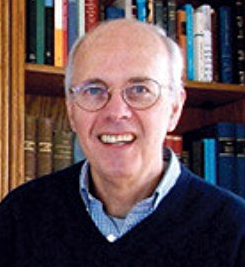
It was 1991 and I was tasked to spend the summer in Colorado working as part of the Summer Cru conference team. It was NOT my first choice for a summer mission but as luck would have it, I was assigned to work as a Teacher’s Assistant for Dr. John Sailhamer, who was teaching a two-week survey course on the Old Testament.

One of my duties was picking up Dr. Sailhamer in the morning and bringing him to campus so he could eat breakfast in the dining hall before class. This provided me the opportunity to get to know him in a casual environment. I found out he was a baseball fan and surprisingly very down to earth. When he found out that a group of us young, single, Cru staff guys were all going to see the new Terminator 2 movie that had just come out, he joined the group and enjoyed the movie as much as the rest of us.

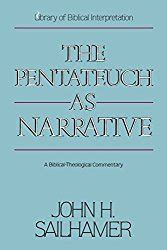
The Pentateuch as Narrative by John Sailhamer was published in 1995.

At the time, Dr. Sailhamer was working on a book entitled “The Pentateuch as Narrative”. It was more of a scholarly work that wasn’t quite completed but it was fascinating to hear him share his thoughts, particularly his perspective on work. He contended that God had given Adam work to do BEFORE the fall and therefore work was good and meaningful. This challenged my perspective, which had always associated work with labor and toil and more of a penalty that resulted from the Fall.

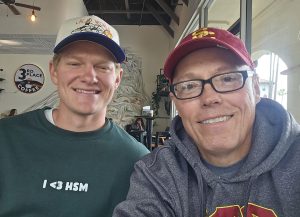
A few months ago, while I was in the Sacramento area visiting friends and ministry partners, I had lunch with my friend Scott Agee, who has worked as a Civil Engineer for many years. I was interested in learning more about his job and what he does since my twins have shown interest in pursuing engineering as a possible major in college.

Scott Agee owns his own Civil Engineering firm, where he serves his customers, and the Lord by designing industrial laundries. To read Scott’s thoughts and guiding principles on the Theology of Work go to: http://bit.ly/SAgeeWork

As we talked, Scott made a comment that stuck with me. He said, “my job might not seem interesting to a lot of people…I design industrial laundry facilities…but I like to think I’m really providing a service to people…after all, everyone needs clean laundry.”

Scott, to me, is a great example of someone who loves what he does and through his work, finds tangible ways to meet people’s needs, while looking for opportunities to minister to them as God provides.

As we work with Young Professionals, one of our challenges is to help them to see their work as valuable. Sometimes, we can fall into the trap of believing that only those who are in full-time ministry, directly helping to meet other’s spiritual needs, are doing significant work.

Part of our role is what we call Vocational Discipleship – to help others to see that their work is important and meaningful and can be used by God to advance His kingdom purposes just as much, and perhaps even more, than those who are in full-time vocational ministry.

We’re still learning the best ways to impart these values and ideas to Young Professionals so we would greatly appreciate your prayers as we continue to dream and create the kind of environment that would help Young Professionals to thrive spiritually and live with purpose.

Thank you for your prayers and your partnership as we seek to ensure that Christ is exalted among this current generation of Young Professionals!


To see more of Scott’s thoughts on work and guiding business principles, go to:  http://bit.ly/SAgeeWork