Can Revelation 3:20 be Used in Evangelism to Non-Christians?

Revelation 3

14“To the angel of the church in Laodicea write:

The Amen, the faithful and true Witness, the Beginning of the creation of God, says this:

15‘I know your deeds, that you are neither cold nor hot; I wish that you were cold or hot. 16‘So because you are lukewarm, and neither hot nor cold, I will spit you out of My mouth. 17‘Because you say, “I am rich, and have become wealthy, and have need of nothing,” and you do not know that you are wretched and miserable and poor and blind and naked, 18I advise you to buy from Me gold refined by fire so that you may become rich, and white garments so that you may clothe yourself, and that the shame of your nakedness will not be revealed; and eye salve to anoint your eyes so that you may see. 19‘Those whom I love, I reprove and discipline; therefore be zealous and repent. 20‘Behold, I stand at the door and knock; if anyone hears My voice and opens the door, I will come in to him and will dine with him, and he with Me. 21‘He who overcomes, I will grant to him to sit down with Me on My throne, as I also overcame and sat down with My Father on His throne. 22‘He who has an ear, let him hear what the Spirit says to the churches.’”  (Revelation 3:14-22, NASB)


The Daily DAVEotional

I recently wrote about how this message to the church at Laodicea might be the most well-known of the seven messages in Revelation 2 and 3 because it’s the origin of the phrase “lukewarm Christian”. You can read my post here.

But there’s another reason why this passage may be the most well-known of the seven church messages. In Revelation 3:20, Jesus is famously quoted as saying,

Behold, I stand at the door and knock; if anyone hears My voice and opens the door, I will come in to him and will dine with him, and he with Me. (NASB)

This particular verse has been used by many Christians around the world, in tracts and evangelistic presentations, to invite those who don’t know Christ to respond to Jesus’s offer of salvation.

“Jesus wants to begin a relationship with you”, the Christian might say to the non-Christian. “He’s standing outside the door of your life and He’s knocking. He wants to come in. But you have to open the door.”

I myself have used this verse with thousands of people as I’ve shared the gospel with them, inviting them to respond to God’s offer of love and forgiveness. I’ve echoed these exact words more times than I can count.

But there’s a potential problem with using this verse in an evangelistic setting.

A few years ago I was taking an online theology course. The professor wanted to create a virtual dialogue, so part of the grade required students to respond to discussion questions he posted online. In order to gain full credit, students were required to respond thoughtfully to each discussion question AND we were also required to respond at least one time to another student’s post. These responses created a sort of “class discussion” but in an online thread.

I vividly remember engaging in a robust exchange with another student who argued that because the message to the church at Laodicea was a message to believers, Revelation 3:20 could not be used as an invitation to non-Christians. In other words, it was argued that Jesus’s invitation in Revelation 3:20 was an invitation for Christians who were worldly to get right with God; it was not an invitation for non-believers to enter into a relationship with God.

It created a very lively class discussion, especially since many of us in the class had been trained to share our faith with others using tracts and presentations that used Revelation 3:20 in precisely the way our classmate was arguing against.

Is what this other person shared true? Are all the evangelistic tracts that utilize Revelation 3:20 as an invitation for non-believers to invite Jesus to come into their life theologically incorrect?

There is no doubt that when Jesus was talking to the church at Laodicea, He was addressing real churches that existed at that time. Therefore we must assume that they were believers.

HOWEVER, just because Jesus was addressing Christians does not mean that we can only quote Revelation 3:20 when we are talking to other Christians.

The truth is that Jesus died for EVERYONE. We all know this. John 3:16, perhaps the most popular verse in the whole Bible, clearly states “For God so loved THE WORLD…” (emphasis mine)

In addition, in 2 Peter 3:9, Peter says, “The Lord is not slow in keeping his promise, as some understand slowness. He is patient with you, not wanting anyone to perish, but EVERYONE to come to repentance.” (NIV, emphasis mine)

Many more verses demonstrate God’s desire for ALL people to come to know Him, including Mark 10:45, Luke 19:10, John 10:10 and 1 Timothy 4:10.

Consequently, since Scripture teaches that God’s desire is for ALL people to be in an intimate fellowship with Him (not just Christians), it is appropriate to use Revelation 3:20 with non-believers, even though it was initially written to a group of believers.

As Dr. Thomas Constable says in his Bible notes on Revelation 3:20;

“This verse expresses a truth taught elsewhere in Scripture, namely, that Jesus Christ desires intimate fellowship with all people (cf. Song 5:2-6; Mk 10:45; Lk 19:10; Jn 10:10; 1Ti 4:10). Consequently, I believe it is appropriate to use it in evangelism. It expresses God’s universal desire very graphically, by way of application, not interpretation.”

In other words, the imagery of Revelation 3:20 expresses a truth that can be applied beyond the context for which it was written. Since we know from Scripture that God’s desire is for intimate fellowship with ALL people, the image conveyed in this verse can be extended beyond the initial context.

Reflection

What has been your experience with evangelistic conversations?

Do you think it is wrong to use Revelation 3:20 in an evangelistic conversation? Why or why not?

If you believe that Revelation 3:20 should not be used when sharing the gospel with others, how would you go about sharing God’s desire to enter into a relationship with the non-believer?

What illustrations could you use to graphically illustrate to a non-believer that God desires to come into their life but it is their decision to let Him in?


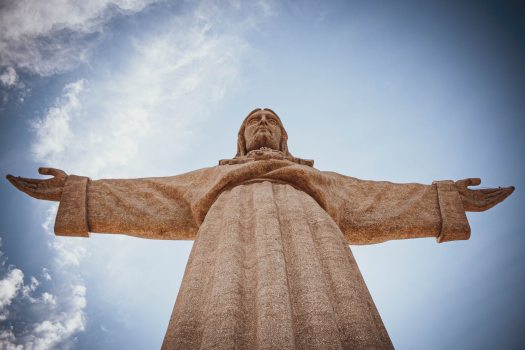
Photo by valérie faiola on Unsplash

A Psalm about the Nature of God

Psalm 90

1Lord, you have been our dwelling place

throughout all generations.

2Before the mountains were born

or you brought forth the earth and the world,

from everlasting to everlasting you are God.

3You turn men back to dust,

saying, “Return to dust, O sons of men.”

4For a thousand years in your sight

are like a day that has just gone by,

or like a watch in the night.

(Psalm 90:1-4, NLT)


The Daily DAVEotional

A.W. Tozer is famously quoted as saying, “what comes into our minds when we think about God is the most important thing about us.”

What do you think about when you think about God? What do you think God is like? How would you describe Him? What are some of his attributes?

How we think about God is extremely important. In fact, the second of the ten commandments says that we are not to fashion an idol in the form of an animal and worship it (see Exodus 20). This is because God is not an animal. Since God created all the animals, God is GREATER than any animal. Hence, it is demeaning to think of God as an animal – something that he actually created.

So what is God like?

The psalmist paints a partial picture of God with some incredible attributes, including the following:

    • “Before the creation of the world, you are God”. In other words, God existed before the world did, which means that He is distinct from His creation.
    • “For a thousand years in your sight are like a day that has just gone by.” What this means is that God is not subject to the same laws of time as we are. God is outside of time. Hence, a day is like a thousand years and a thousand years is like a day.

The psalmist is accurately describing the eternal first cause.

Philosophers understand that when thinking about the origin of the universe, there must be an eternal first cause or else you run into the problem of infinite regression.

What is infinite regression?

Infinite regression is when you find yourself caught in an infinite series of questions and responses concerning the creation. For example, suppose a 5-year old asks, “where did I come from?”

You answer, “from your parents.” He follows up by asking, “but where did they come from?”

You reply, “from their parents.”

He replies to your reply with the same question, “but where did they come from?” And you reply each time with the same response, “from their parents.”

This chain of questions and responses regarding origins could go on forever – to infinity, UNLESS you arrive at a first cause that was itself eternal and uncaused.

For years, scientists and philosophers assumed that the universe itself was eternal, that it has ALWAYS existed. In that case, when one asks, “but where did the universe come from?” the answer is that it didn’t come from anyone or anywhere. It has always existed. It has always been there. Since it has always existed, we do not need to answer the question, “where did it come from?”

The problem is that we now know scientifically that the universe is NOT eternal. We know that it had a beginning. In fact, the Big Bang states that all matter, energy, space AND TIME came into existence at a point about 13.7 billion years ago. This demonstrates that the universe itself is NOT eternal.

So we are back to the question, “where did the universe come from?”

According to the psalmist, the universe came from God, who existed BEFORE the universe was created and BEFORE the concept of time. Hence, two major attributes of God are that 1) He is outside of space (creation) and  2) He is outside of time.

There is much more that could be said about God and his attributes but these two characteristics of God are foundational to understanding who He is. If he is outside of creation (space) and outside of time, then God must be eternally self-existent and He must be infinitely greater than any of us can even imagine. This is why any attempt to depict him in a way that is finite, such as a created animal, is demeaning to God. It is an offense to His very nature.

Reflection

What is your concept of God? What words and phrases would you use to describe Him?

Tozer says that what we think about God is the most important thing about us. Do you agree? Why or why not?

What reasons would you give someone when explaining why it is wrong to worship a created image?

The Big Bang states that the universe came into existence about 13.7 billion years ago. How does this scientific fact provide evidence for God’s existence?


Photo by Greg Rakozy on Unsplash

The “Born Again” Redundancy

John 3

1After dark one evening, a Jewish religious leader named Nicodemus, a Pharisee, 2came to speak with Jesus. “Teacher,” he said, “we all know that God has sent you to teach us. Your miraculous signs are proof enough that God is with you.”

3Jesus replied, “I assure you, unless you are born again, you can never see the Kingdom of God.”

4“What do you mean?” exclaimed Nicodemus. “How can an old man go back into his mother’s womb and be born again?”

5Jesus replied, “The truth is, no one can enter the Kingdom of God without being born of water and the Spirit. 6Humans can reproduce only human life, but the Holy Spirit gives new life from heaven. 7So don’t be surprised at my statement that you must be born again. 8Just as you can hear the wind but can’t tell where it comes from or where it is going, so you can’t explain how people are born of the Spirit.” (John 3:1-8, NLT)


The Daily DAVEotional

One year, back in the 1970’s, my parents gave me a necklace for Christmas. It was a stainless steel chain with a large metal, rectangular tag hanging from it with the words “Born Again” stenciled in black. It looked something like the dog tags one might find a soldier wearing to identify themselves in the case of some tragic accident.

I never really wore the necklace too much for reasons I will allow Kevin McCallister to explain in the following short video clip:

The phrase “born again Christian” was quite popular back then as it served as a way to identify a certain segment of the Christian crowd.

If you’ve ever wondered where the term “born again Christian” came from or what it means, this is the passage.

The text says that Nicodemus came to Jesus by night. Nicodemus was a Pharisee and if you know anything about the Pharisees, they didn’t exactly get along with Jesus. But unlike most of his religious brethren, who were hard-hearted and saw Jesus as a threat, Nicodemus was open and spiritually curious. So he found a way to meet with Jesus in private where he acknowledged what most Pharisees were unwilling to even consider – that Jesus was indeed sent from God.

I’m sure Jesus’s reply was not what Nicodemus was expecting as he gives this rather strange response about the need for one to be “born again” to see the kingdom of God.

Nicodemus, like many people today, was confused by the phrase “born again”. He gives a bewildered response, “how can an old man go back into his mother’s womb and be born again?” as well as the equally puzzling, “will being born again give me TWO belly buttons?” Ok, I added that last phrase but both statements show a fundamental lack of understanding in what Jesus was communicating.

Jesus explains to Nicodemus that to enter the kingdom of heaven one must be born of water and of spirit. He continues by adding that “humans can reproduce only human life, but the Holy Spirit gives new life from heaven.”

So what’s he saying?

Everyone experiences a physical birth. In theological terms, we call that generation. There isn’t a person who’s ever lived who did not experience a physical birth. So, the first condition to making it into the kingdom of heaven is one must have experienced a physical birth.

But there is a second condition that’s required to make it into the kingdom of heaven. In addition to being born physically one must also experience a spiritual birth. This second birth is what Jesus is referring to when he says “you must be born again.”

The Bible tells us that even though people are alive physically, because of sin, we are dead spiritually (separated from God). Therefore, in order to be reconciled to God, we must become alive spiritually by experiencing a spiritual birth. We call this regeneration.

Regeneration is the role of the Holy Spirit and it occurs when a person receives the free gift of forgiveness that Jesus offers through His death on the cross.

Receiving this free gift is simply a matter of:

    1. Recognizing that I am a sinner
    2. Acknowledging that Jesus died on the cross for my sins
    3. Trusting Jesus to come into my life and provide forgiveness

When someone responds in faith to Jesus’s offer of forgiveness, an amazing thing happens. God’s Holy Spirit comes into that person’s life and gives them new spiritual life. This is the spiritual birth that Jesus is referring to and it’s what is meant by the term “born again.”

The thing is, it’s impossible to enter the kingdom of heaven unless you’re born again. In other words, you cannot be a Christian unless you are born again because being a Christian means you’ve accepted Jesus’s free gift and the Holy Spirit has come into your life to make you alive spiritually.

So the phrase “born again Christian” is a redundancy, akin to saying “I’m a Christian Christian.”

So why use the term “born again Christian” if it’s a redundancy?

The term became popular as a way for those who have accepted Jesus into their life to distinguish themselves from those who call themselves Christians but have never responded to Jesus’s offer. Many people identify as Christians simply because they go to church or they believe in the God of the Bible. But none of this means a person is a Christian. A person becomes a Christian the moment they experience this second birth, just as Jesus described to Nicodemus.

Reflection

Do you consider yourself a Christian? What is it that makes you a Christian?

Jesus said that a person must be “born again” to experience the kingdom of heaven. Have you experienced a “second birth”? What were the circumstances that led you to make that decision?

The term “born again Christian” is not as popular today as it was in the 1970’s, partly because many who are not Christians began to associate the term with religious fundamentalism and other caricatures of Christianity that most true Christians would reject. What terms do you currently use to identify your Christian faith and tradition to others?

The danger for many Christians is that we can become religious over time. What steps can you take to ensure your heart remains open and curious, like Nicodemus, instead of hard and callous like the other Pharisees?


Photo by Dave Lowe


Evidence that Jesus is God

John 10

22It was now winter, and Jesus was in Jerusalem at the time of Hanukkah. 23He was at the Temple, walking through the section known as Solomon’s Colonnade. 24The Jewish leaders surrounded him and asked, “How long are you going to keep us in suspense? If you are the Messiah, tell us plainly.”

25Jesus replied, “I have already told you, and you don’t believe me. The proof is what I do in the name of my Father. 26But you don’t believe me because you are not part of my flock. 27My sheep recognize my voice; I know them, and they follow me. 28I give them eternal life, and they will never perish. No one will snatch them away from me, 29for my Father has given them to me, and he is more powerful than anyone else. So no one can take them from me. 30The Father and I are one.”

31Once again the Jewish leaders picked up stones to kill him. 32Jesus said, “At my Father’s direction I have done many things to help the people. For which one of these good deeds are you killing me?”

33They replied, “Not for any good work, but for blasphemy, because you, a mere man, have made yourself God.” (John 10:22-33, NLT)

Acts 14

8While they were at Lystra, Paul and Barnabas came upon a man with crippled feet. He had been that way from birth, so he had never walked. 9He was listening as Paul preached, and Paul noticed him and realized he had faith to be healed. 10So Paul called to him in a loud voice, “Stand up!” And the man jumped to his feet and started walking.

11When the listening crowd saw what Paul had done, they shouted in their local dialect, “These men are gods in human bodies!” 12They decided that Barnabas was the Greek god Zeus and that Paul, because he was the chief speaker, was Hermes. 13The temple of Zeus was located on the outskirts of the city. The priest of the temple and the crowd brought oxen and wreaths of flowers, and they prepared to sacrifice to the apostles at the city gates.

14But when Barnabas and Paul heard what was happening, they tore their clothing in dismay and ran out among the people, shouting, 15“Friends, why are you doing this? We are merely human beings like yourselves! We have come to bring you the Good News that you should turn from these worthless things to the living God, who made heaven and earth, the sea, and everything in them. 16In earlier days he permitted all the nations to go their own ways, 17but he never left himself without a witness. There were always his reminders, such as sending you rain and good crops and giving you food and joyful hearts.” 18But even so, Paul and Barnabas could scarcely restrain the people from sacrificing to them. (Acts 14:8-18, NLT)


The Daily DAVEotional

A number of years ago, I had some conversations with two Jehovah’s Witnesses who came to my door seeking to proselytize me. I wrote about that encounter in a previous post here.

The Jehovah’s Witnesses are a religious group that has its roots in Christianity but is not Christian in their theology. That’s because they deny both the traditional Christian doctrine of the trinity, which they believe is rooted in paganism, and the doctrine of the divinity of Christ, which they assert was not the belief of the early church but was introduced as a false doctrine by Constantine at the Council of Nicea.

Jehovah’s Witnesses believe that Jesus is a created being and they argue that Jesus never claimed deity for himself and nowhere in Scripture does it even hint at this “false” teaching.

In my conversation with the Jehovah’s Witnesses who came to my door, I referenced this passage in John 10 and asked, “what do you make of John 10:30, where Jesus says, ‘I and the Father are one?’ Isn’t this an evidence of Jesus’ divinity?”

Their response was interesting. They said, “Jesus was only claiming to be one in purpose with God the Father. He was not claiming divinity.”

My response was, “the context doesn’t support your view. Look at verse 31. It says that the Jewish leaders picked up stones to kill him. Why would they want to kill him if he was simply stating that he was one in purpose with God the Father? Aren’t you one in purpose with God the Father?”

They responded by saying that the Jewish leaders had misunderstood what Jesus was saying. Yes, they picked up stones to kill him but it was because they THOUGHT that Jesus was asserting equality with God but he really wasn’t.

If this was really the case, that the leaders simply misunderstood what Jesus was saying, then why didn’t Jesus correct their false understanding?

Think about it.

Jesus makes a statement about being unified with God in purpose and suddenly a mob is trying to kill him. Jesus asks, “why are you trying to kill me?” and they tell him it’s for blasphemy…that he, being a mere man has made himself God!

If Jesus WASN’T God, as the Jehovah’s Witnesses assert, why did Jesus not correct their misunderstanding?

Interestingly, in Acts 14, Paul and Barnabas heal a crippled man and the crowd is so amazed at the miracle they had performed that they determined Paul and Barnabas must be gods in human form. They are prepared to make sacrifices to them at the city gates when Paul and Barnabas realize what’s happening. What do they do?

They don’t allow their misunderstanding about who they are to go uncorrected. They plainly and directly explain that they are NOT gods and that they should not be worshiped. Instead, they tell their audience that they are simply messengers sent to explain to them about the God they SHOULD worship – Jesus.

So the Jehovah’s Witness argument doesn’t make sense. They say that Jesus was only claiming to be one in purpose with God but the religious leaders misunderstood what Jesus meant and so they decided to stone him for blasphemy. If Jesus were not God he would have corrected their misunderstanding just as Paul and Barnabas did with those who mistook them for Greek gods. Yet Jesus didn’t correct their supposed misunderstanding. The simple explanation for why He didn’t is because they DIDN’T misunderstand what He was saying. He really was claiming equality with God the Father.

The context of this passage clearly communicates that Jesus believed He was equal with God and He communicated that belief to others. That is why the Jewish leaders picked up stones to kill him. They clearly didn’t believe Jesus was God but they clearly understood Jesus was making the claim. That is why they picked up stones to kill Him. They believed He was guilty of blasphemy.

To reach the Jehovah’s Witnesses understanding of this passage requires one to add details to the narrative that simply are not there. The text doesn’t say anywhere that the leaders had misunderstood Jesus. The Jehovah’s Witnesses though are forced to embrace this false narrative because it is the only way to hold to their preconceived view of Jesus – namely, their belief that Jesus is not God and never claimed to be.

The Jehovah’s Witness’s understanding and explanation of this passage fails. It fails because they deny what the passage clearly and plainly teaches and they add details that aren’t there in order to change the meaning of the passage  so that it fits their preconceived theological bias.


Did you enjoy this post? I’d love to hear your thoughts! Feel free to like, leave a comment below, and share it with your friends or on social media if you found it helpful or interesting. Your support keeps the conversation going!


Reflection

What do you think Jesus meant when He said “I and the Father are one”?

How likely do you think it is that the religious leaders simply misunderstood what Jesus was saying?

If Jesus was simply misunderstood. what reasons can you think of to explain why He didn’t correct this misunderstanding?

What is your view of Jesus? Do you believe He is God, as traditional Christianity teaches or do you think He is simply a created being as the Jehovah’s Witnesses teach?

Do you think it even matters what we believe about Jesus? Why do you think our understanding of the nature of Jesus is important? What difference do you think it makes?


Photo by Tim Hüfner on Unsplash

Is Christianity an Exclusive Religion?

1 Timothy 2

1I urge you, first of all, to pray for all people. As you make your requests, plead for God’s mercy upon them, and give thanks. 2Pray this way for kings and all others who are in authority, so that we can live in peace and quietness, in godliness and dignity. 3This is good and pleases God our Savior, 4for he wants everyone to be saved and to understand the truth. 5For there is only one God and one Mediator who can reconcile God and people. He is the man Christ Jesus. 6He gave his life to purchase freedom for everyone. This is the message that God gave to the world at the proper time. 7And I have been chosen—this is the absolute truth—as a preacher and apostle to teach the Gentiles about faith and truth. (1 Timothy 2:1-7, NLT)


The Daily DAVEotional

One of the criticisms I often hear when talking to others about Christ is that Christianity claims to be exclusive. These claims of exclusivity are seen as a negative in our culture, which values freedom of thought, and in the name of tolerance, often validates any and all views, no matter how outlandish or illogical.

It’s absolutely true that Christianity claims to be true and  on certain doctrinal matters it is exclusive.

In this passage of 1 Timothy 2, Paul is urging his audience to pray for everyone, including kings and those in authority. I previously wrote about the need to pray for our political rivals here.

Paul gives the reason why we should pray for others, even those who are in authority over us and with whom we might disagree – God wants everyone to be saved and understand the truth.

Two questions naturally follow: what does it mean “to be saved” and “what is the truth that people need to understand?”

When the Bible talks about being saved, it’s referring to being rescued from punishment. The picture is that we are on a trajectory that will lead to disaster but because of God’s help, our crisis is averted.

One of the questions that every religion seeks to answer is “how can people be reconciled to God?” Or another way of putting it is, “what must a person do in order to be accepted by God and enter into His presence?”

To be reconciled means to be brought back into a favorable relational status. What must I do to please God, to earn His favor and gain His acceptance?

Nearly every religion answers this question by providing a list of actions one must complete or avoid in order to gain favor. These actions form the basis for evaluating a person’s devotion to God and the quality or “goodness” of a person’s life, which in turn is used to determine their worthiness for entering God’s presence in the afterlife.

But here lies the problem. Nobody can follow all the rules that any religion might establish. These “rules” create a legal system for following God which people inevitably violate. One doesn’t have to read very far into the Old Testament to see that the Israelites were constantly abandoning God’s laws and rebelling against His statutes.

So what is the “truth” that God wants everyone to understand?

The truth is outlined in verses 5 and 6, which state:

For there is only one God and one Mediator who can reconcile God and people. He is the man Christ Jesus. He gave his life to purchase freedom for everyone. This is the message that God gave to the world at the proper time.

The truth is that the ONLY way to be reconciled to God is through Christ Jesus. His death on the cross purchased freedom for everyone.

So reconciliation to God does NOT occur by keeping a list of religious requirements. Instead, it comes by placing one’s faith in Jesus to make the payment for us.

Is it exclusive? YES and NO!

It’s exclusive in that Jesus is the ONLY one who has made a payment for sin. No other religious system even offers a solution to how imperfect people can make themselves righteous enough to enter into the presence of an infinitely holy God. Every other religious system keeps people trapped in the religious hamster wheel of endlessly attempting to make oneself “worthy” before God, only to experience moral failure through everyday sins.

Fortunately for us, Jesus rescues us from this religious trap and provides a way for us to actually be reconciled.

But it’s NOT exclusive in the sense that the freedom Jesus offers is available to EVERYONE, not just some select group. ANYONE can access God by coming to Jesus!

This is the truth that God wants EVERYONE to understand, which is why Paul urges us to pray for all people to ultimately understand this truth so that they might experience God’s mercy.


Did you enjoy this post? I’d love to hear your thoughts! Feel free to like, leave a comment below, and share it with your friends or on social media if you found it helpful or interesting. Your support keeps the conversation going!


Reflection

What is your view on how a person is “saved”? In other words, in your view, what does a person need to do in order to make it to heaven and live with God for eternity?

What is the basis for your answer in the previous question? In other words, what is the source of the views that you hold? 

People often say that Christians are too exclusive in their views. Do you agree that Christianity is exclusive? If so, why is this seen as a negative to people? Does being exclusive mean that it is automatically wrong? Why or why not?

The essence of Christianity’s exclusive claims is found in verse 6, which says, “He [Jesus] gave his life to purchase freedom for everyone.” How would you explain this concept to someone else? What does it mean that Jesus gave his life? What does it mean that he purchased freedom?


Photo by seabass creatives on Unsplash

What Makes Good Friday “Good”?

Given that it’s Good Friday, I dug up this post from the past, essentially asking the question, “what’s so good about Good Friday?”

Dave Lowe's avatarThe Lowedown

When you think of the full Easter story, it seems the good part is on Sunday, when Jesus is resurrected.
Photo by Bruno van der Kraan on Unsplash

Have you ever wondered why Christians refer to the Friday before Easter as Good Friday? I never quite understood that myself growing up as a kid even though I went to church and heard the Easter story every year.

Think about the Easter story as a movie. The good part is at the end, when Jesus comes out of the tomb, resurrected! It seems to me that Friday is bad, at least if you’re looking at Jesus as a hero figure. On Friday, he’s dead. How is that good?

To answer that, I want to first ask a different question. Why did Jesus have to die? To put it another way, what was the purpose of Jesus’s death?

It’s an honest question…

View original post 662 more words

Was it Immoral for God to Ask Abraham to Sacrifice His Son Isaac?

Genesis 22

1Later on God tested Abraham’s faith and obedience. “Abraham!” God called.

“Yes,” he replied. “Here I am.”

2“Take your son, your only son—yes, Isaac, whom you love so much—and go to the land of Moriah. Sacrifice him there as a burnt offering on one of the mountains, which I will point out to you.”

3The next morning Abraham got up early. He saddled his donkey and took two of his servants with him, along with his son Isaac. Then he chopped wood to build a fire for a burnt offering and set out for the place where God had told him to go. 4On the third day of the journey, Abraham saw the place in the distance. 5“Stay here with the donkey,” Abraham told the young men. “The boy and I will travel a little farther. We will worship there, and then we will come right back.”

6Abraham placed the wood for the burnt offering on Isaac’s shoulders, while he himself carried the knife and the fire. As the two of them went on together, 7Isaac said, “Father?”

“Yes, my son,” Abraham replied.

“We have the wood and the fire,” said the boy, “but where is the lamb for the sacrifice?”

8“God will provide a lamb, my son,” Abraham answered. And they both went on together.

9When they arrived at the place where God had told Abraham to go, he built an altar and placed the wood on it. Then he tied Isaac up and laid him on the altar over the wood. 10And Abraham took the knife and lifted it up to kill his son as a sacrifice to the LORD. 11At that moment the angel of the LORD shouted to him from heaven, “Abraham! Abraham!”

“Yes,” he answered. “I’m listening.”

12“Lay down the knife,” the angel said. “Do not hurt the boy in any way, for now I know that you truly fear God. You have not withheld even your beloved son from me.”

13Then Abraham looked up and saw a ram caught by its horns in a bush. So he took the ram and sacrificed it as a burnt offering on the altar in place of his son. 14Abraham named the place “The LORD Will Provide.” This name has now become a proverb: “On the mountain of the LORD it will be provided.” (Genesis 22:1-14, NLT)


The Daily DAVEotional

Genesis 22 is one of the most controversial and objectionable passages to critics of Christianity (and Judaism).

The big question people often have from this passage that can cause doubt and skepticism has to do with this: why would God ask Abraham to sacrifice his son? This seems immoral.

The problem with this thinking is that we are looking at it from the vantage point of our modern day morality. We KNOW that it’s wrong to sacrifice your own child. When we see or hear of religious groups or cults that practice this, we cringe in disgust, precisely BECAUSE we know that this is wrong.

But Abraham lived in a different time and a different culture than we do. Earlier in Genesis, we learn that Abraham came out of Ur of Chaldea. In this Ancient Near Eastern culture, child sacrifice was actually quite common as a means of appeasing various regional deities.

So when the Lord asks Abraham to sacrifice his only son, Abraham would not have had the same visceral reaction that we have today. From Abraham’s perspective, this was an expected act of allegiance to the deity.

So why does God do this if it’s wrong?

God does it precisely to show Abraham how different He is from other so-called gods. He asks Abraham to sacrifice his son as a test of faith and loyalty but then He shows Abraham that He is completely different from how the people in that culture perceived deities. Human sacrifice is not His way. God provides a substitute so that Isaac is spared. This encounter also foreshadows the gospel message – we are spared and an innocent lamb, Jesus, is sacrificed in our place.

In our current culture, God does not need to ask us to sacrifice our child to show our loyalty because He has already revealed His nature on this issue.

So if someone claims that God is asking them to sacrifice their child as a test of faith, or for any other reason, we can be certain that it is NOT the Lord who is making the request, but likely the devil himself!

For more on God’s view of human sacrifice as a form of worship and appeasement, see Jeremiah 19:4-5 and  Jeremiah 32:35.

Reflection

In the past, how have you reconciled or explained this passage to others who object to it as being “immoral”?

What would you say to someone who claims God is asking them to do something that seems to go against Biblical morals and ethics?

What questions or doubts do you have about God’s character or Biblical passages? How can you gain awareness and understanding of those “sticky” passages in order to strengthen your faith?


Photo by Rod Long on Unsplash

The Most Important Question to Ask Yourself

Mark 10

27Jesus and his disciples left Galilee and went up to the villages of Caesarea Philippi. As they were walking along, he asked them, “Who do people say I am?”

28“Well,” they replied, “some say John the Baptist, some say Elijah, and others say you are one of the other prophets.”

29Then Jesus asked, “Who do you say I am?”

Peter replied, “You are the Messiah.” 30But Jesus warned them not to tell anyone about him. (Mark 8:27-30, NLT)


The Daily DAVEotional

For the first half of the book of Mark, Jesus is revealing to His disciples WHO he is. He’s exposed his disciples to his teachings and many miracles, in which he demonstrates His power over nature, the physical realm and the spiritual realm. In Mark 8:27, Jesus asks the important question, “Who do people say I am?”

He follows up with an even more crucially important question: “Who do YOU say I am?”

When we’re engaging with others who don’t consider themselves followers of Jesus, it’s critically important that we help them come to a Biblical understanding of WHO Jesus is.

In Mark 8:28, Peter says that the main responses people often have about Jesus are “John the Baptist or Elijah, or one of the other prophets.”

People today have a lot of similar ideas about who Jesus is. Some say He’s a good teacher. Some, like Muslims, say He’s a prophet. Still others say He’s a great moral example to follow.

These do not hit the mark. Peter gives the proper response regarding who Jesus is….He is the Messiah (or “the Christ”).

The most important question you can ask yourself (or others)?

Who is Jesus?

As we engage with others regarding the Christian faith, we have to help people come to this understanding of Jesus’s identity. He is not merely a prophet. He is not just a good person or some moral example to follow.

He is God. He is the promised Messiah (the promised deliverer)!


For more information on the Biblical evidence for Jesus’ deity, see my short article “Is Jesus God?”


Did you enjoy this post? I’d love to hear your thoughts! Feel free to like, leave a comment below, and share it with your friends or on social media if you found it helpful or interesting. Your support keeps the conversation going!


Reflection

Who do you think Jesus is? Is He a good teacher? A revolutionary? A great moral example? What title or phrase would you use to describe Jesus to others?

What led you to the conclusion for how you view Jesus?

What do you think it means when Peter calls Jesus the Messiah? What does this say about Jesus?

How can you help others see Jesus’ true identity? 


Photo by Gift Habeshaw on Unsplash

Building a New Temple

The Dome of the Rock sits on the site where the Jewish Temple once stood and where some religious leaders expect a new temple to some day be built.
Photo by Dave Lowe

1 Peter

4Come to Christ, who is the living cornerstone of God’s temple. He was rejected by the people, but he is precious to God who chose him.

5And now God is building you, as living stones, into his spiritual temple. What’s more, you are God’s holy priests, who offer the spiritual sacrifices that please him because of Jesus Christ.  6As the Scriptures express it,

“I am placing a stone in Jerusalem, a chosen cornerstone, and anyone who believes in him will never be disappointed.”

(1 Peter 2:4-6, NLT)


The Daily DAVEotional

In this passage, Peter uses imagery of the temple, which would have been very familiar to his audience.

In the Old Testament, the temple was a place – a building made with stones, where God was worshiped.

Here Peter says that you, as Christians, are being built into a new temple, with Jesus as the cornerstone.

In masonry, the cornerstone is the most important stone in the building of a structure. The cornerstone is foundational. All other stones are set in reference to the cornerstone.

Peter is saying that God is building a new temple that’s not a physical temple, but a spiritual temple. It’s not made with physical stones but instead, it consists of spiritual stones made up of people. Jesus is the foundational stone and those who follow Jesus are the stones God is using to build this new spiritual temple.

The implications of what Peter is sharing are huge.  Instead of going to a place to worship God, you can worship God all the time, with your life, since you are the temple and God is with you all the time.

Additionally, in the Old Testament, the priest was integral to the act of worship. The priest administered the sacrifices on behalf of the worshiper.

Now that Christ has come, you are the priest. A mediator is no longer necessary.

Verse 5 says that we offer spiritual sacrifices that please him.

What are those sacrifices?

Our lives are the sacrifices. Go, therefore, and worship the Lord with your life!

Reflection

In your view, what does it mean to worship God and what is the way in which a person worships God?

Does your religious tradition utilize a priest? If so, what is your response to Peter’s assertion that you, as a follower of Christ, are a holy priest who offers spiritual sacrifices to God?

In what ways can you offer up your life to God as a spiritual sacrifice?

A Pivotal Council in the Early Church

Acts 15

While Paul and Barnabas were at Antioch of Syria, some men from Judea arrived and began to teach the Christians: “Unless you keep the ancient Jewish custom of circumcision taught by Moses, you cannot be saved.”  2Paul and Barnabas, disagreeing with them, argued forcefully and at length. Finally, Paul and Barnabas were sent to Jerusalem, accompanied by some local believers, to talk to the apostles and elders about this question.  3The church sent the delegates to Jerusalem, and they stopped along the way in Phoenicia and Samaria to visit the believers. They told them—much to everyone’s joy—that the Gentiles, too, were being converted.  4When they arrived in Jerusalem, Paul and Barnabas were welcomed by the whole church, including the apostles and elders. They reported on what God had been doing through their ministry.  5But then some of the men who had been Pharisees before their conversion stood up and declared that all Gentile converts must be circumcised and be required to follow the law of Moses.  6So the apostles and church elders got together to decide this question.  7At the meeting, after a long discussion, Peter stood and addressed them as follows: “Brothers, you all know that God chose me from among you some time ago to preach to the Gentiles so that they could hear the Good News and believe.  8God, who knows people’s hearts, confirmed that he accepts Gentiles by giving them the Holy Spirit, just as he gave him to us.  9He made no distinction between us and them, for he also cleansed their hearts through faith.  10Why are you now questioning God’s way by burdening the Gentile believers with a yoke that neither we nor our ancestors were able to bear?  11We believe that we are all saved the same way, by the special favor of the Lord Jesus.” (Acts 15:1-11, NLT)


The Daily DAVEotional

Acts 15 is perhaps the most important chapter in the entire book of Acts because it highlights an important dispute that arose in the early church.

The issue wasn’t just about the rite of circumcision. At issue was what was necessary to be saved. The dispute seemed to be led by some Pharisees who had been converted (see verse 5). These men believed that salvation was for the Jews and therefore, they believed that the only way a Gentile could become saved was to convert to Judaism. This meant adopting Jewish customs, including observance of the law.

Circumcision was really an outward representation that a person had converted to Judaism. So when these men from Judea began teaching that Gentiles needed to be circumcised in order to be saved, what they were really asserting was that Gentiles needed to become culturally Jewish before they could accept the Jewish Messiah.

So the question became: can Jesus save non-Jews, or do Gentiles need to adopt Jewish culture and become Jews before they can be saved by the Messiah?

Paul and Barnabas argued that Gentiles didn’t need to adopt Jewish customs, including circumcision, but only needed to receive Jesus by faith in order to be saved.

Peter also advocated for this position as he recalled his experience with Cornelius, the Roman centurion in Acts 10. Peter noted that Cornelius and his family, all Gentiles, had received the Holy Spirit just as the Jews had, on the basis of faith alone.

All of the church leaders agreed. The issue was settled, and from that point on, it was clear that the Jewish Messiah was not just for Jews but for all the peoples of the world. And more importantly, it was clear that the only requirement to receive the Jewish Messiah was faith. It was not necessary to become culturally Jewish.

There are important implications for us today as we seek to share Jesus with a dying world. The principle here is that when sharing the gospel with others, we want to help them become followers of Jesus, not adopt our culture. Sometimes, it’s easy to conflate the two. People need Jesus. They don’t need my culturalized version of Jesus.


Did you enjoy this post? I’d love to hear your thoughts! Feel free to like, leave a comment below, and share it with your friends or on social media if you found it helpful or interesting. Your support keeps the conversation going!


Reflection

In what ways has your culture influenced your view and understanding of Jesus? 

What examples can you think of in which a person’s invitation to come to Jesus might include unnecessary cultural expectations?

How can you ensure that when you share Jesus with others you are not taking a Pharisaical approach – injecting cultural requirements into the gospel message?