1As for you, you were dead in your transgressions and sins, 2in which you used to live when you followed the ways of this world and of the ruler of the kingdom of the air, the spirit who is now at work in those who are disobedient. 3All of us also lived among them at one time, gratifying the cravings of our sinful nature and following its desires and thoughts. Like the rest, we were by nature objects of wrath. 4But because of his great love for us, God, who is rich in mercy, 5made us alive with Christ even when we were dead in transgressions—it is by grace you have been saved. 6And God raised us up with Christ and seated us with him in the heavenly realms in Christ Jesus, 7in order that in the coming ages he might show the incomparable riches of his grace, expressed in his kindness to us in Christ Jesus. 8For it is by grace you have been saved, through faith—and this not from yourselves, it is the gift of God— 9not by works, so that no one can boast. 10For we are God’s workmanship, created in Christ Jesus to do good works, which God prepared in advance for us to do. (Ephesians 2:1-10, NIV)
The Daily DAVEotional
Ephesians 2 is one of my favorite passages. If I was creating a Mount Rushmore of favorite New Testament passages (an all-time top 4 list), this passage would definitely be in contention. It is rich with theological truths that are fundamental to understanding the depth of God’s love for us as well as the means and lengths He would go to save us.
A key word in these 10 verses is “grace”, which appears 3 times.
What do you think grace is? How would you define it?
I’ve asked that question to hundreds of people over the years as I’ve engaged in spiritual conversations.
The interesting thing about grace is that it’s a word that most people have heard hundreds of times but almost always have difficulty defining.
Some people, when they hear the word “grace”, think of a dinner time prayer, like Aunt Bethany in Christmas Vacation.
Others equate grace with beauty, like a graceful dancer, or an elegantly dressed celebrity.
To be sure, those are connotations that we may think of when we hear the word, but from a biblical standpoint, “grace” means none of those things.
The theological definition of grace is “unmerited favor” or “undeserved gift”.
I would often give this example of grace when talking to students, as it was a hypothetical, yet realistic situation they could imagine experiencing.
Imagine that you’re taking a class and it’s nearing the end of the semester. You have a big research paper due and it’s worth a hefty portion of your grade. You need to do well on this paper to pass the class.
The problem is that you are nowhere near being done. As the deadline nears, you approach the professor and ask for an extension.
Now would it be unfair if the professor were to decline your request? Would that be unjust?
No. The guidelines and deadlines were clearly communicated. You had ample opportunity to work on the paper and get it done. The professor would not be mean or unjust if he or she were to simply deny your request and tell you that any late papers would be severely penalized.
That is what the Bible calls justice – getting what you deserve. In this passage, what we deserve is God’s wrath. Paul says that we “followed the ways of the world”… “gratifying the craving of our sinful nature and following its desires and thoughts.” As a result, we were objects of God’s wrath, which simply means we were destined to be punished.
God would be perfectly just to give us what we deserve. That’s what justice is – getting what we deserve.
Your professor would also be just to say no to your request and give you exactly what you deserve.
But suppose your professor honors your request and decides to give you a one week extension with no late penalties – a “grace” period.
Your professor is not obligated to give you an extension but if he or she did, it would be an example of extending grace. Your professor is giving you something you don’t deserve – the gift of extra time. You didn’t earn an extension. You don’t deserve an extension. You receive the extension simply because your professor chooses to give it to you.
This is the situation with us and God. We don’t deserve to be saved. We did nothing to earn God’s favor. God is not obligated to save us, and yet, He chooses to extend grace to us. What that means is that we don’t get what we deserve, which is punishment. Instead, we get what we DON’T deserve – the gift of salvation.
Why would God choose to extend grace? Why would he not just punish us since that is what we deserve?
Verse 4 gives us the answer:
But because of his great love for us, God, who is rich in mercy, 5made us alive with Christ even when we were dead in transgressions—it is by grace you have been saved.
God chooses to save us because of His great love for us and the depth of His mercy.
What is mercy?
Mercy is NOT getting something you deserve.
Doctrinal Dictionary
Justice – getting what you deserve (punishment)
Mercy – Not getting something we deserve (as in avoiding punishment)
Grace – Getting something we don’t deserve (as in favor or blessing)
We deserve punishment but because of God’s love for us, he takes pity on us and desires to make a way so that we don’t have to experience the punishment we deserve.
As a result, God extends grace by sending His son to die in our place so that God’s justice would be satisfied and we could avoid experiencing His wrath.
Verses 8 and 9 are often quoted, as they summarize the essence of the gospel message:
8For it is by grace you have been saved, through faith—and this not from yourselves, it is the gift of God— 9not by works, so that no one can boast.
God gives us a gift we don’t deserve – He saves us. This is grace: getting something we don’t deserve. We didn’t earn this gift. It is freely given by God. Hence, we cannot boast in our salvation because we did nothing to get it. Yet God did everything to give it.
Verse 10 is often neglected but is important to understanding God’s motive and the ultimate outcome He desires of our lives:
For we are God’s workmanship, created in Christ Jesus to do good works, which God prepared in advance for us to do.
Some Bible versions, like the NLT, translate this verse to say that “we are God’s masterpiece.”
Think about that for a minute. God saves us because we are a masterpiece in His eyes. His desire is that we would be transformed into a physical work of art and that our lives would be a living testament to the depth of His love, the richness of His mercy and the boundlessness of His grace!
Did you enjoy this post? I’d love to hear your thoughts! Feel free to like, leave a comment below, and share it with your friends or on social media if you found it helpful or interesting. Your support keeps the conversation going!
Reflection
What has been your definition of grace before reading this post? How did you tend to think of it and define it?
What are some examples of when you experienced grace from another person – a gift that you didn’t deserve?
How would you explain to someone else the difference between justice, mercy and grace?
God says that you are his masterpiece, created for good works in Christ Jesus. What do you think it would look like if you really understood and believed that God sees you as his masterpiece? How would it change your life and your view of yourself?
What are the barriers or roadblocks that make it difficult for you to see yourself as God’s masterpiece?
1My little children, I am writing these things to you so that you may not sin. And if anyone sins, we have an Advocate with the Father, Jesus Christ the righteous; 2and He Himself is the propitiation for our sins; and not for ours only, but also for those of the whole world.
(1 John 2:1-2, NASB)
The Daily DAVEotional
In the first chapter of John’s first epistle, he shared a number of important principles regarding sin and experiencing fellowship with God. I wrote about that in my blog post, “Walking in the Light Simplified”.
Immediately following that passage, John says that our aim as believers should be to avoid sinning. But we also know that in our fallen humanity, we will inevitably still sin. In the first chapter, he outlined the importance of confessing our sin in order to maintain fellowship with God.
In this section, John stresses the fact that when we do sin (and we WILL sin) we have an Advocate in the person of Jesus Christ.
The picture here is of a defense attorney who pleads our case before the judge, the Father.
Jesus is uniquely qualified to be our advocate because He alone is the propitiation for the sins of the whole world.
What exactly does that mean?
If you’re unfamiliar with the word “propitiation”, it may be because the NIV and NLT, two of the most popular translations used today, don’t include this word in their translation of this passage. Instead, these versions translate the passage to say that Jesus is “the atoning sacrifice for our sins.”
It’s certainly true that Jesus is the atoning sacrifice for the sins of the world, but there’s an element of truth that John is communicating that is missed as a result of omitting the word “propitiation” from the translation.
The word “propitiation” means to appease wrath. The idea is that God is so just and holy, that sin is an infinite offense against God’s character. God’s righteous anger demands that sin be punished.
When it says that Jesus is the propitiation for sin, what it means is that Jesus, through His death on the cross, satisfied the payment that was required for sin. Hence, God’s wrath is appeased or satisfied.
Jesus is more than an atoning sacrifice for sins. He is the propitiation for sin. His death not only atones for sin, but it turns away God’s wrath so that no more punishment is required.
The Greek word for propitiation is “hilasterion” which is the same word for the Old Testament Hebrew word “mercy seat”.
The mercy seat was the cover of the Ark of the Covenant and was the place where the yearly blood sacrifice was made by the high priest. This sacrifice occurred only once a year in the Holy of Holies. On either side of the lid (or mercy seat) were two cherubim (angelic beings). They were facing each other and looked down at the lid.
Inside the ark were placed three significant artifacts: manna, representing the Jewish people’s rejection of God’s provision; Aaron’s rod, which represented man’s rejection of God’s leadership; and the broken pieces of the Ten Commandments, representing man’s rejection of God’s holiness.
When the cherub of Righteousness looked down on the symbols in the ark, it saw all the evidences of man’s rejection of God. When the cherub of Justice looked down, it saw that man was no longer like God’s righteousness and pronounced the death penalty on man. But on the Day of Atonement, the cherub of Justice looked down at the blood sacrifice covering on the lid and said, “I’m satisfied because the death penalty has been paid.” Similarly, Righteousness looked down and was no longer offended because the evidence of man’s sin was covered up and could not be seen.
Jesus’ death on the cross transforms the judgment seat, representing the judgment and punishment we deserve, into a mercy seat, representing the fact that His shed blood through His death on the cross, provides a covering for our sin. Atonement is made, once and for all, and therefore, there is no longer any punishment reserved for those who have placed their trust in Jesus.
Did you enjoy this post? I’d love to hear your thoughts! Feel free to like, leave a comment below, and share it with your friends or on social media if you found it helpful or interesting. Your support keeps the conversation going!
Reflection
What difference does it make to know that Jesus’ death and shed blood has appeased God’s wrath towards your sin?
What is your view and understanding of the holiness of God? Does it seem appropriate to you that God, in His infinite justice, must punish sin? Why or why not?
Is the lid of the ark of the covenant a judgment seat or a mercy seat for you? What is keeping you from putting your full trust in Jesus to cover your sins so that you experience God’s mercy instead of justice?
Photo of Ark of Covenant provided from the following website under Creative Commons License 4.0
21Listen to me, you who want to live under the law. Do you know what the law really says? 22The Scriptures say that Abraham had two sons, one from his slave-wife and one from his freeborn wife. 23The son of the slave-wife was born in a human attempt to bring about the fulfillment of God’s promise. But the son of the freeborn wife was born as God’s own fulfillment of his promise.
24Now these two women serve as an illustration of God’s two covenants. Hagar, the slave-wife, represents Mount Sinai where people first became enslaved to the law. 25And now Jerusalem is just like Mount Sinai in Arabia, because she and her children live in slavery. 26But Sarah, the free woman, represents the heavenly Jerusalem. And she is our mother. 27That is what Isaiah meant when he prophesied,
“Rejoice, O childless woman!
Break forth into loud and joyful song,
even though you never gave birth to a child.
For the woman who could bear no children
now has more than all the other women!”
28And you, dear brothers and sisters, are children of the promise, just like Isaac. 29And we who are born of the Holy Spirit are persecuted by those who want us to keep the law, just as Isaac, the child of promise, was persecuted by Ishmael, the son of the slave-wife.
30But what do the Scriptures say about that? “Get rid of the slave and her son, for the son of the slave woman will not share the family inheritance with the free woman’s son.” 31So, dear brothers and sisters, we are not children of the slave woman, obligated to the law. We are children of the free woman, acceptable to God because of our faith.
(Galatians 4:21-31, NLT)
The Daily DAVEotional
What do you think is required to get into heaven? How does God decide?
I’ve asked this question thousands of times as I’ve shared the message of Christ with people over the years.
What I’ve found is that people overwhelmingly think that getting into heaven when you die is a matter of being a “good” person. The prevailing view is that God will evaluate us based on what we’ve done and how we’ve lived our life. In other words, our HUMAN EFFORT.
I think that one aspect of our sinful nature is that we intrinsically want to make our eternal destiny about us. We become the central figures in our own story instead of God being the central figure as He should be.
This was the issue in the Galatian church. They started off strong, believing the message of the gospel that Paul preached and trusting in Jesus to pay for their sins, provide forgiveness and ultimately, eternal life.
But something happened along the way. Very quickly after placing their faith in Christ, these Galatian believers reverted back to their old way of life which emphasized adherence and obedience to the Law.
Paul is so surprised by their sudden spiritual shift that he asks them “who bewitched you?” I wrote about this previously in my post entitled, “I Put a Spell on You” and also, my post entitled, “Have you been Scammed?”
Paul tells the Galatians that if you want to live under the law, you’re voluntarily making yourself a slave again, which makes no sense.
He then gives an illustration from the Old Testament regarding Abraham and his two sons, Ishmael and Isaac, whose births are recorded in Genesis 16 and 21 respectively.
You may recall that Abraham was given a promise by God that he would be made into a great nation, through whom all the nations would be blessed.
This promise to Abraham was given in Genesis 12, was reaffirmed in Genesis 15 and is commonly referred to as the Abrahamic Covenant.
There was only one problem. Abraham didn’t have any children and he and Sarah were both getting very advanced in age. From a human perspective, it was difficult to see how this promise could come to be as Abraham had no heir.
So in their haste to bring about God’s promise, Sarah concocted a plan that would give Abraham an heir. She allowed Abraham to sleep with her servant Hagar, who conceived and bore him his first son, Ishmael.
Though this seemed like a reasonable course that would ensure the preservation of Abraham’s family line, it actually bypassed God’s promise, which was not only to Abraham but to Sarah as well.
So Ishmael was indeed Abraham’s son but he was not the son through whom God would deliver His promise to make Abraham into a great nation. This is because Ishmael was not Sarah’s son, he was the son born of a slave woman.
Paul’s point in this passage is that Abraham’s two sons represent two different approaches to receiving God’s promise. Ishmael was born out of Abraham and Sarah’s human effort to bring about God’s promise by creating a scenario where Abraham would have an heir.
Isaac, on the other hand, was born out of God’s sovereign and divine intervention which provided an heir to Abraham AND Sarah.
So Ishmael represents human effort to bring about God’s promise, whereas Isaac represents God’s promise being delivered solely by His divine power.
Paul says that Ishmael represents Mount Sinai while Isaac represents the New Jerusalem.
What exactly does that mean?
Remember that Mount Sinai was where Moses met God and received the Law. It was this divine encounter that instituted the Mosaic Law by which every Jew from Moses onward lived their life.
The Law represented a covenant that emphasized human effort to live righteously, according to God’s explicit standards. There were lots of rules and regulations and various processes for receiving forgiveness and atonement. The law demonstrated that man was sinful and wholly incapable of living up to God’s perfect standard.
Isaac, on the other hand, represents the heavenly Jerusalem. This is not an earthly city but a heavenly reality. Isaac, who was born from Abraham and Sarah well beyond their child-bearing years, was conceived and born completely because God Himself brought it about. His birth was not brought about through human effort but via God’s divine intervention.
In the same way, coming to Christ, receiving forgiveness and eternal life, is completely a work of God. There is no human effort involved. Those who accept Jesus become a part of God’s heavenly family with the promise of living forever with him in a heavenly Jerusalem. Isaac represents this group because just as he was born as a result of God’s divine provision, those of us who belong to God’s family were born into that family only because of what God has done, not because of anything we have done.
Ishmael was born of a slave-woman and he represents those who want to live under the law, which is a system of slavery.
Isaac was born of a free-woman and he represents those who want to live in freedom from slavery.
Given these two choices, Paul wonders why anyone would consciously and purposefully decide to go back to a system that enslaves them. It is better to remain free.
The reality is that many Christians do exactly what the Galatians were doing. After accepting Christ, receiving forgiveness and entering into a new relationship with God as His adopted child. we resort to living our lives under some impossible religious standard that essentially enslaves us.
We have a choice when it comes to how we approach God’s promise of eternal life. We can do what Sarah and Abraham did and seek to make our own path by our human efforts. This is the Ishmael approach which leads to being enslaved to a religious system.
The alternative is the Isaac approach, which is simply placing our trust in God to provide His promise providentially. This approach leads to freedom because it’s not based on our performance but on God’s power to deliver on His promise.
Which choice are you currently making?
Did you enjoy this post? I’d love to hear your thoughts! Feel free to like, leave a comment below, and share it with your friends or on social media if you found it helpful or interesting. Your support keeps the conversation going!
Reflection
Paul says that those who have “faith” are acceptable to God. Have you placed your faith in Jesus to pay for your sin and give you eternal life? If so, what were the circumstances that led to that decision?
Any Christian who has placed their faith in Jesus can revert to a rules-based religious lifestyle, just as the Galatians did. In what ways do you tend to live by rules and religion instead of faith?
Why do you think so many people choose to live in slavery instead of freedom? What are some of the reasons in your opinion?
What are some common ways you see Christians living in legalism and rules-based Christianity?
What are some things you can do to keep you from straying or drifting into a rules-based religious system?
1Now we know that if the earthly tent we live in is destroyed, we have a building from God, an eternal house in heaven, not built by human hands. 2Meanwhile we groan, longing to be clothed with our heavenly dwelling, 3because when we are clothed, we will not be found naked. 4For while we are in this tent, we groan and are burdened, because we do not wish to be unclothed but to be clothed with our heavenly dwelling, so that what is mortal may be swallowed up by life. 5Now it is God who has made us for this very purpose and has given us the Spirit as a deposit, guaranteeing what is to come.
6Therefore we are always confident and know that as long as we are at home in the body we are away from the Lord. 7We live by faith, not by sight. 8We are confident, I say, and would prefer to be away from the body and at home with the Lord. 9So we make it our goal to please him, whether we are at home in the body or away from it. 10For we must all appear before the judgment seat of Christ, that each one may receive what is due him for the things done while in the body, whether good or bad. (2 Corinthians 5:1-10, NIV)
The Daily DAVEotional
In this section of Paul’s second letter to the church at Corinth, he gives some theological perspective on what comes after this life.
Some people have the idea that when we die, we will just be spirits floating about from cloud to cloud, with our harps no doubt.
But this is not the picture Paul gives of the afterlife.
Paul compares our earthly bodies to a tent.
Why would he do that?
There is some imagery here that would have been obvious to Paul’s audience but may be more confusing to the modern reader.
People in ancient times often lived in tents – temporary structures that suited a nomadic lifestyle. In addition, the tabernacle, which is another word for “tent”, was the temporary structure in the Old Testament that signified the dwelling place of the Lord up until the more permanent temple was built.
When Paul says that our earthly bodies are like a tent, he means that our earthly bodies are temporary because our lives are temporary. While we are living in this life, we have mortal bodies that enable us to do things, like walk, talk, eat, work, play, think, etc. But our mortal bodies are temporary. They don’t last forever.
Paul says that while we are living in this life we are “away” from the Lord’s presence. He doesn’t mean that we have no access to the Lord in this life. He simply means that even if we are Christians, walking in the power of the Holy Spirit, engaged and active in pursuing God, we are never fully present with the Lord because we are not yet in heaven.
But something amazing will happen to us when we die. We will be given NEW bodies! That is great news for a lot of us whose bodies are beginning to fail us in numerous ways.
Given these facts, Paul says that his preference would be to be “away” from this body because that means he would be with the Lord.
But the reality for Paul was that he was still in his mortal body. He was living on this earth, which means he was not present with the Lord in heaven yet. That being the case, the goal is always to please the Lord in whatever we do.
The reason why Paul says we should make this our goal is because we all are going to appear before the judgement seat of Christ to give an account of our lives.
The idea that Christians will be judged may be confusing to some, especially since Scripture teaches that those who place their faith in Christ’s finished work on the cross are completely forgiven (Colossians 1:13-14) and there is no condemnation for those who are in Christ (Romans 8:1).
So what is this judgment that Paul is talking about?
The judgment that Paul is talking about here is a different kind of judgment. The Bible is clear that those who have placed their faith in Christ are saved. They will experience eternity with God in heaven.
But Christians will also give an account of how they’ve served Christ and how they have managed the resources God has entrusted to them.
The word for “judgment” in verse 10 is the greek word “Bema” (pronounced “bay-muh”). It represented a platform or an elevated seat from which an official would render an important decision.
In this context, Paul is saying that there is going to be a day when everyone, Christians included, will appear before the Lord and our lives will be evaluated. This “judgment” doesn’t determine whether we will make it into heaven or not; that has already been decided at the cross. This judgment will evaluate how we’ve lived our lives as Christians and how we have stewarded the resources (time, talent, treasure) that God has entrusted to us.
In this evaluation, those things that we have done that have glorified Jesus and advanced His kingdom purposes will be rewarded. We will receive no rewards for the things that have not been worthwhile to the cause of Christ.
It’s important to emphasize that this judgment does not include punishment. Christians will either be rewarded or they will not be rewarded.
One might ask, “if there’s no punishment, why should I care?”
Scripture is clear that on that day, those whose lives have not been stewarded well for God’s purposes – those who have not lived their lives in such a way that God was glorified – will experience extreme regret.
Jesus spoke of this accounting in Matthew 25:14 with the parable of the talents. The point of this parable is that God has given us talents, abilities and resources (money and material possessions) to manage on His behalf. The judgment Paul speaks about in 2 Corinthians 5:10 is a judgment where our lives will be evaluated based on how we have stewarded those resources. How well have we served Christ? Did we make our life count for His kingdom and His purposes?
Though we don’t know exactly what that day will look like, we know it’s coming and therefore, we should prepare ourselves.
Pastor Pete Briscoe has developed a dramatic presentation that depicts what that day could look like for someone. It’s a powerful monologue that is designed to move the believer to reflect on how they’ve lived their life and perhaps think about making changes in light of that day!
Did you enjoy this post? I’d love to hear your thoughts! Feel free to like, leave a comment below, and share it with your friends or on social media if you found it helpful or interesting. Your support keeps the conversation going!
Reflection
Were you aware that Christians will be judged and give an account of how they’ve lived their life for Christ?
What thoughts and emotions do you have when you think about appearing before Christ and having your actions evaluated in light of His commands and His purposes?
What changes do you think you need to make in your life to better ensure that God will say to you “well done good and faithful servant”?
What challenges do you face when you think about living your life completely for the Lord?
Most people believe in an afterlife, such as the Christian concept of heaven. But, assuming heaven exists, how does one get there?
In my thousands of conversations with people, I’ve found that people overwhelmingly believe that if they were to die, they would make it into heaven. However, when asked the question,
What is God’s criteria for deciding who makes it into heaven?
Most people I’ve conversed with don’t know.
To me, that’s a bit like studying for a final exam without having any idea what is going to be on the exam.
The Bible tells us that God’s plan from the beginning was that we would know Him and experience life in His presence. Man freely interacted with God and it was good.
Genesis 1:29-31 gives a picture of God’s initial creation:
27So God created man in his own image,
in the image of God he created him;
male and female he created them. 28God blessed them and said to them, “Be fruitful and increase in number; fill the earth and subdue it. Rule over the fish of the sea and the birds of the air and over every living creature that moves on the ground.” 29Then God said, “I give you every seed-bearing plant on the face of the whole earth and every tree that has fruit with seed in it. They will be yours for food. 30And to all the beasts of the earth and all the birds of the air and all the creatures that move on the ground—everything that has the breath of life in it—I give every green plant for food.” And it was so. 31God saw all that he had made, and it was very good.
POINT 1: GOD’S PLAN
GOD LOVES YOU AND CREATED YOU FOR A PURPOSE
God’s Love
The Bible is clear that one of God’s attributes is love.
1 John 4:8-9 says:
Whoever does not love does not know God, because God is love. This is how God showed his love among us: He sent his one and only Son into the world that we might live through him.
God demonstrated His love by sending His Son Jesus into the world to ultimately die on our behalf.
God’s Purpose
In John 10:10 (NLT), Jesus gives a glimpse into his purpose. He said:
The thief’s purpose is to steal and kill and destroy. My purpose is to give life in all its fullness.
Jesus came so that we might experience life in all its fullness – that we would begin to fulfill the purpose for which we’ve been created, which is to know Him and experience His presence in our lives.
REFLECT What do you think it means to experience life in all its fulness? What would that look like?
“Fullness of Life” Expanded
Here’s another way to think about it. When Jesus says that His purpose is to give “life” in all its fulness, He’s talking about giving eternal life.
In John 17:3 (NIV), Jesus said this:
Now this is eternal life: that they may know you, the only true God, and Jesus Christ, whom you have sent.
Jesus defines eternal life as knowing God – experiencing a relationship with Him. Therefore, when Jesus says His purpose to give life in all its fullness, what He’s saying is that He has come to offer people a relationship with Him (life) and He wants people to experience that relationship to the fullest extent possible.
REFLECT Why do you think people are not experiencing life in all its fullness? What keeps them from knowing God?
POINT 2: OUR PROBLEM
WE’VE REBELLED AGAINST GOD AND ARE THEREFORE SEPARATED FROM HIM. AS A RESULT, WE CANNOT EXPERIENCE HIS PURPOSE FOR OUR LIVES, WHICH IS TO KNOW HIM.
The Fall – the Original Rebellion
According the Bible, God’s good creation was distorted when man disobeyed God and was exiled from God’s presence. Genesis 3 tells the story of the fall of mankind (Read Genesis 3).
Adam and Eve freely interacted with God, who had given them free reign over the entire garden. They took care of it and they were given every seed-bearing plant for their food. However, there was one tree they were forbidden from eating – the fruit from the tree of the knowledge of good and evil.
Adam and Eve were deceived by the serpent (Satan) to eat this forbidden fruit. Because of their disobedience, God banished them from the garden.
Have you ever wondered why God forbade Adam and Eve from eating from that one particular tree? Was it random? Or was there a reason why that specific tree was off limits. Read this article (Why Did God Forbid this One Fruit?) to understand why this particular tree was off limits.
The rest of the Bible is the story of God’s plan to restore man’s relationship with Him and to reverse the curse that was inflicted upon creation as a result of this original sin.
The Results of Sin
It’s at this point that one might argue that we should not be punished for Adam and Eve’s rebellion. But the Bible is clear that EVERYONE has sinned against God.
Romans 3:23 says:
For all have sinned; all fall short of God’s glorious standard. (NLT) [Emphasis added]
But I’m a Good Person
In my experience, I’ve found that most people tend to think of themselves as “good”.
In our society goodness and badness are relative terms that are used in comparison to other people. I’ve found that most people consider themselves to be good because they compare themselves to others who, in their mind, have done more egregious and heinous acts. But comparing ourselves to other people is using the wrong standard of comparison.
The Bible says that only God is truly good. What this means is that God’s standard for goodness is perfect holiness and by this standard, He is the only one who is truly good.
Notice the diagram to the right. God is holy and man is sinful and there’s a great chasm that separates man from God. The arrows illustrate that man continually tries to reach God through various efforts, such as religion, good works, etc. But all of these efforts ultimately fall short because God is perfectly holy, and there is no amount of good works that will enable man to achieve God’s standard of perfection.
REFLECT How does your definition of goodness compare or contrast with what the Bible says about goodness?
What is Sin?
The word “sin” is one of those churchy, religious words that many people associate with behaviors that others don’t approve of but we think is no big deal. For example, you may see nothing wrong with drinking while some “uptight, religious people” think drinking is a “sin”.
REFLECT How do you define sin? What do you think sin is?
Sin not just a list of immoral or socially unacceptable behaviors. When Romans 3:23 says that “all have sinned”, the Greek word for sin is actually an archery term.
In a competition, the archer would shoot the arrow and the goal was to hit the bullseye on the target. If the archer missed the bullseye, even if it was only by a fraction of an inch, it was considered an imperfect mark, which was called a sin.
So when the Bible says we’ve all sinned, it means that no matter how hard you’ve tried and no matter how good you think you are, you (and all people) have missed the mark of God’s standard, which is perfect holiness.
That raises the bar quite a bit doesn’t it?
Things are complicated by the fact that God is not only perfectly holy, but He’s perfectly just, and as a result, He must punish sin. He cannot just overlook it or ignore it. Sin is a violation of the very nature and character of God and His goodness, so sin must be punished.
According to Romans 6:23, the punishment, or penalty for sin is DEATH!
For the wages of sin is death, but the free gift of God is eternal life through Christ Jesus our Lord.
You might be thinking, “well we’re all going to die so what does it matter?”
Death here refers to being separated from God. So, the result of sin, or the punishment for sin is that we will experience a separation from God, FOR ETERNITY! This is literally what hell is – the complete absence of God and everything good.
POINT 3: GOD’S PROVISION
JESUS CHRIST PROVIDES THE ONLY SOLUTION TO MAN’S SIN. Through Jesus, the barriers that kept us from experiencing God’s purpose have been removed – we now have access to God and can know Him.
If everyone has sinned and God, in His justice, must punish sin, then it seems as if there is no solution to our problem. We are all seemingly doomed to punishment!
But God, in His goodness, creates a solution that only He can provide. The solution is in His son Jesus.
Christ Died for Us
Romans 5:8 says,
But God showed his great love for us by sending Christ to die for us while we were still sinners.
REFLECT If God can forgive sin, why couldn’t he just declare it to be forgiven? Why do you think Jesus had to die to pay for sin?
Why did Jesus Have to Die?
Why do you think Jesus had to die in order to pay for sin?
Jesus had to die to pay for sin because God’s justice demands that the only valid payment for sin is death.
For the wages of sin is death…Romans 6:23
Jesus died in our place, thus paying the penalty that God’s justice demanded (death) but doing it in a way that allows humankind to avoid the penalty.
The reason that Jesus could do this is because He is God. As God, He has the very righteousness that God requires for those who wish to come into His presence. Through Jesus’ death, we can be forgiven for our sins and not only avoid the penalty for sin, but experience a relationship with God!
Colossians 1:13, 14 says,
For he has rescued us from the one who rules in the kingdom of darkness, and he has brought us into the Kingdom of his dear Son. God has purchased our freedom with his blood and has forgiven all our sins.
Christ Rose from the Dead
Not only did Jesus die for us, but the Bible says that He rose from the dead.
1 Corinthians 15:3-6 states:
For what I received I passed on to you as of first importance: that Christ died for our sins according to the Scriptures, that he was buried, that he was raised on the third day according to the Scriptures, and that he appeared to Peter, and then to the Twelve. After that, he appeared to more than five hundred of the brothers at the same time,
REFLECT If Jesus had never risen from the dead, would it make any difference? What do you think is the significance of the resurrection?
Read this article, He is Risen….Why Does it Matter? to understand the significance of the resurrection to the Christian message.
Jesus is the Only Way to God
In John 14: 6, Jesus says:
“I am the way and the truth and the life. No one comes to the Father except through me.”
Notice that He doesn’t say, “I’m one of the ways, I’m one of the truths, I’m one of the lives. There are lots of ways to get to the Father, but I’m a pretty good way, so check me out, I’m cool!”
NO!
He says, “I am the way, the truth, and the life; no one comes to the Father, but through Me.”
He could say this because He is the only one who has made a valid payment for sin. Hence, only Jesus can take away our sin.
The image above demonstrates that God realized that man could not bridge the gap that separated them because of man’s sin. The distance is too wide. If you think about it, God is infinitely holy so the gap between His holiness and man’s is an INFINITE gap!
Because we could not bridge the gap ourselves, God bridged the gap for us. He sent His son Jesus, who is INFINITELY holy and righteous. Jesus’ death bridges the gap and creates a path for people to come into God’s presence and experience a relationship with Him.
POINT 4: OUR RESPONSE
We each must receive the free gift that Jesus offers – His death as payment for our sins. Only then can we experience His purpose, which is to KNOW Him.
Knowing this information doesn’t make a person a Christian. Even if you agree with everything that has been outlined so far, it doesn’t mean you are a Christian.
What makes a person a Christian is when they respond to the invitation of Jesus to accept Him and His death as a free gift that pays for your sin and provides complete forgiveness.
John 1:12 (NLT) says,
But to all who believed him and accepted him, he gave the right to become children of God.
If you want to become a Christian (a child of God), then you must believe in Jesus and accept Him.
REFLECT What do you think it means to accept Jesus?
We Receive Christ Through Faith
Ephesians 2:8, 9 (NIV) says,
For it is by grace you have been saved, through faith—and this not from yourselves, it is the gift of God— not by works, so that no one can boast.
Accepting Him simply means you accept the free gift that He offers of being saved by His death on the cross. It means that you acknowledge that His death alone can pay for sin and you put your trust in His death to provide forgiveness instead of trusting in your own good works to earn favor with God.
We Receive Christ by Personal Invitation
In Revelation 3:20, Jesus gives this invitation:
Here I am! I stand at the door and knock. If anyone hears my voice and opens the door, I will come in and eat with him, and he with me.
REFLECT What do you think the door represents in this verse? How do you think a person opens the door?
Opening the Door
The door represents your heart (your will). Jesus is inviting you to open yourself up and let Him in. The way you do that is simply by putting your trust in Jesus and His death to save you instead of trusting in your own perceived goodness to “earn” your way into heaven.
KEY QUESTIONS:
Have you ever opened the door of your life and let Jesus in to begin a relationship with Him?
If so, when was that? What were the circumstances that led you to make that decision?
If not, do you want to open the door of your life to Jesus and begin a relationship with Him?
The key to opening the door is to decide to put your trust in Jesus instead of trusting yourself. One way you can express your faith to God is simply telling Him that you want to accept His free gift and you want Jesus to come into your life. We call this prayer. Take a minute right now to express your faith and desire for Jesus to come into your life by repeating the following prayer:
Lord Jesus, I need you. I acknowledge that I am a sinner and there is no way I can earn my way into heaven. I want to trust in Jesus and His death to pay the penalty for my sins and provide forgiveness. I open the door of my life now and I invite Jesus to come in so that I might begin a relationship with Him and know Him. Amen.
Things to Remember…
God’s criteria for who makes it into heaven is not how good you are but whether you have the Son (Jesus).
And this is the testimony: God has given us eternal life, and this life is in his Son. He who has the Son has life; he who does not have the Son of God does not have life. (1 John 5:11-12, NIV)
You can KNOW you have eternal life, if you have the Son.
Jesus defined eternal life as knowing Him (John 17:3). Hence, you can have eternal life if you have the Son – if you have a relationship with Him.
You can have the Son (Jesus), simply by accepting Him and the free gift that He offers – His death on the cross as a payment for all of your sins.
Jesus gives an invitation to everyone. He is standing at the door of each person’s heart. He’s knocking. He wants to come into your life and begin a relationship.
But we have to open the door.
Opening the door is a matter of choosing to put our trust in Jesus instead of trusting in our own goodness. It means that we acknowledge that we have sinned and we cannot earn our way to God. We recognize that Jesus ALONE can pay for sin and we accept the free gift of His death as a payment for our sins.
When we make that decision to open the door to Jesus, we experience complete forgiveness of sin and Jesus enters our life, establishing a relationship with us.
Once we have the Son (Jesus), we have the life, which is defined by Jesus as knowing Him.
QUESTIONS FOR REFLECTION
1. Did you open the door an invite Jesus into your life?
2. Where is Jesus right now in relation to you?
3. After a person receives Christ, what do you think a person has to do in order to keep Jesus in their life? What do you think is required?
4. What questions do you have about the Christian faith?
WHAT NOW?
If you prayed that prayer to invite Jesus into your life, the Bible says that you are a new creation. You are now a child of God!
You can request some free resources and next steps by going to our Prayer Page, giving us your name and writing in the box, “I received Christ and would like to know how to begin growing in my new faith.”
We will respond to you with some resources and help to take some next steps.
1Listen as wisdom calls out! Hear as understanding raises her voice! 2She stands on the hilltop and at the crossroads. 3At the entrance to the city, at the city gates, she cries aloud, 4“I call to you, to all of you! I am raising my voice to all people. 5How naive you are! Let me give you common sense. O foolish ones, let me give you understanding. 6Listen to me! For I have excellent things to tell you. Everything I say is right, 7for I speak the truth and hate every kind of deception. 8My advice is wholesome and good. There is nothing crooked or twisted in it. 9My words are plain to anyone with understanding, clear to those who want to learn.
10“Choose my instruction rather than silver, and knowledge over pure gold. 11For wisdom is far more valuable than rubies. Nothing you desire can be compared with it.
12“I, Wisdom, live together with good judgment. I know where to discover knowledge and discernment. 13All who fear the LORD will hate evil. That is why I hate pride, arrogance, corruption, and perverted speech. 14Good advice and success belong to me. Insight and strength are mine. 15Because of me, kings reign, and rulers make just laws. 16Rulers lead with my help, and nobles make righteous judgments.
17“I love all who love me. Those who search for me will surely find me. 18Unending riches, honor, wealth, and justice are mine to distribute. 19My gifts are better than the purest gold, my wages better than sterling silver! 20I walk in righteousness, in paths of justice. 21Those who love me inherit wealth, for I fill their treasuries.
22“The LORD formed me from the beginning, before he created anything else. 23I was appointed in ages past, at the very first, before the earth began. 24I was born before the oceans were created, before the springs bubbled forth their waters. 25Before the mountains and the hills were formed, I was born—26before he had made the earth and fields and the first handfuls of soil.
27“I was there when he established the heavens, when he drew the horizon on the oceans. 28I was there when he set the clouds above, when he established the deep fountains of the earth. 29I was there when he set the limits of the seas, so they would not spread beyond their boundaries. And when he marked off the earth’s foundations, 30I was the architect at his side. I was his constant delight, rejoicing always in his presence. 31And how happy I was with what he created—his wide world and all the human family!
32“And so, my children, listen to me, for happy are all who follow my ways. 33Listen to my counsel and be wise. Don’t ignore it.
34“Happy are those who listen to me, watching for me daily at my gates, waiting for me outside my home! 35For whoever finds me finds life and wins approval from the LORD. 36But those who miss me have injured themselves. All who hate me love death.” (Proverbs 8:1-36, NLT)
The Daily DAVEotional
When I was a high school senior, I took AP English. At one point we were studying poetry and we read a famous poem by Robert Frost, entitled, “The Road Not Taken”. The poem starts with the line:
Two roads diverged in a yellow wood,
and ends with the oft-quoted phrase:
Two roads diverged in a wood, and I—
I took the one less traveled by,
And that has made all the difference.
Our teacher asked the class what we thought the poem was about. A few people in the class who had a somewhat religious background, including myself, thought the poem was a metaphor for heaven and hell. After all, if you’re going to talk about two roads that diverge, you cannot get any more divergent than heaven and hell.
I remember our teacher graciously telling us that we were overthinking the poem. There was nothing in the poem that mentioned heaven or hell and the context of the poem was not about eternal destiny. There was really nothing about the poem that would indicate that it was religious in nature.
To my surprise, I learned that the plain meaning was usually the correct meaning, unless there was some compelling reason to believe that the writer was speaking metaphorically or allegorically.
In our case, the poem was simply about two different choices, both of which were appealing in their own way. Which one should I choose? How do you choose? The author is simply writing about the conflict that arises when we have to choose between two paths. That’s it.
What can happen though is that some people will naturally want to import their own views and perspectives into the poem. In my case, being a person who went to church and Sunday school and who had heard a lot about the two different life choices of heaven and hell, I saw “two paths” and immediately concluded “heaven and hell” without really thinking about whether that was what the author was really writing about.
The Jehovah’s Witnesses make a similar error in their understanding and explanation of Proverbs 8.
If you’ve ever had a discussion with a Jehovah’s Witness, you likely know that they do not believe that Jesus is God. Instead, they teach that Jesus is a created being. They believe that Jesus is God’s first created being, which makes him extra special, but in the end, he’s still a created being like you and me.
The Jehovah’s Witnesses theological viewpoints on Jesus are rooted in an ancient heresy known as Arianism. I wrote about their views in my blog post “A Modern Day Version of an Ancient Heresy” in which I discuss their views of the opening verses of John’s gospel.
When talking to a Jehovah’s Witness regarding their view that Jesus was a created being, they have a number of biblical “proof-texts” to support their theological stance. One of those passages is Proverbs 8.
According to the Jehovah’s Witness, Proverbs 8 provides ironclad evidence that the Bible teaches that Jesus is NOT God.
Verses 22-31, in particular, demonstrate that Jesus is created. The Jehovah’s Witness argument is that Jesus is speaking about how he was formed “before he created anything else.” Jesus was there at God’s side when He created everything.
To the Jehovah’s Witness, this fits perfectly with their view that Jesus was the first created “thing” and then God created everything else through Jesus.
There is only one problem with this reasoning – the subject of this passage is wisdom not Jesus.
The Jehovah’s Witnesses, in their haste to project their theological view of Jesus into any text that might have words or phrases that trigger their theological bias, have erred in much the same way I, and others in my high school English class, so quickly attributed a wrong context to Robert Frost’s famous poem.
Solomon, the author of Proverbs, is using a literary device known as personification to explain and highlight the importance of wisdom.
There is nothing in the context to suggest that Wisdom is really Jesus. Actually, when you really look at this passage, you realize that the text cannot be referring to Jesus. Here are a couple of reasons why:
First, wisdom in this passage is identified as a female, whereas Jesus is male.
Secondly, if wisdom is an actual person, then “good judgment” must also be a person because wisdom lives with good judgment according to verse 12. If wisdom is really Jesus, then who is this “good judgment” character?
Lastly, if you know anything about the broader context of Proverbs, it is a collection of sayings and instruction regarding wise living. This is made clear at the very outset of the book:
The purpose of these proverbs is to teach people wisdom and discipline, and to help them understand wise sayings. 3Through these proverbs, people will receive instruction in discipline, good conduct, and doing what is right, just, and fair. 4These proverbs will make the simpleminded clever. They will give knowledge and purpose to young people. (Proverbs 1:1-4, NLT – emphasis added)
Additionally, in this particular section of the book, Wisdom is personified as a female instructor. Proverbs 9 continues with this personified motif as Wisdom is contrasted with Folly, both of whom are given female personalities.
So if this passage isn’t speaking about Jesus, what is the point being made?
The point of this passage is summarized at the end, in verses 32-36, which state:
32“And so, my children, listen to me, for happy are all who follow my ways. 33Listen to my counsel and be wise. Don’t ignore it.
34“Happy are those who listen to me, watching for me daily at my gates, waiting for me outside my home! 35For whoever finds me finds life and wins approval from the LORD. 36But those who miss me have injured themselves. All who hate me love death.”
In short, the reader is encouraged to “listen to my counsel and be wise.”
In the end, the Jehovah’s Witnesses commit an error we call eisegesis, which occurs when one imports their own viewpoint or bias into the interpretation of the text. Good Bible interpretation will instead interpret the passage based on the plain meaning and the context while resisting the urge to make the passage say what the reader wants or hopes that it will say.
Did you enjoy this post? I’d love to hear your thoughts! Feel free to like, leave a comment below, and share it with your friends or on social media if you found it helpful or interesting. Your support keeps the conversation going!
Reflection
The error of eisegesis, where one interprets a text in such a way that it fits with their pre-conceived views, is not just a problem with Jehovah’s Witnesses. People everywhere commit this error. What are some views you have that you are more apt to try to find the text to support? In other words, what are some ways you have, or are tempted to commit this error of eisegesis?
Why do you think the Jehovah’s Witnesses are so committed to their view that Jesus is a created being?
What are some of the benefits of wisdom according to this passage?
What do you think are some good Bible study habits and techniques that will help you to interpret passages correctly, without importing your personal views into the interpretation of the passage?
17As Abram returned from his victory over Kedorlaomer and his allies, the king of Sodom came out to meet him in the valley of Shaveh (that is, the King’s Valley). 18Then Melchizedek, the king of Salem and a priest of God Most High, brought him bread and wine. 19Melchizedek blessed Abram with this blessing:
“Blessed be Abram by God Most High,
Creator of heaven and earth.
20And blessed be God Most High,
who has helped you conquer your enemies.”Then Abram gave Melchizedek a tenth of all the goods he had recovered. (Genesis 14:17-20, NLT)
. . . . . . . . . . . . .
Hebrews 7
1This Melchizedek was king of the city of Salem and also a priest of God Most High. When Abraham was returning home after winning a great battle against many kings, Melchizedek met him and blessed him. 2Then Abraham took a tenth of all he had won in the battle and gave it to Melchizedek. His name means “king of justice.” He is also “king of peace” because Salem means “peace.” 3There is no record of his father or mother or any of his ancestors—no beginning or end to his life. He remains a priest forever, resembling the Son of God.
4Consider then how great this Melchizedek was. Even Abraham, the great patriarch of Israel, recognized how great Melchizedek was by giving him a tenth of what he had taken in battle. 5Now the priests, who are descendants of Levi, are commanded in the law of Moses to collect a tithe from all the people, even though they are their own relatives. 6But Melchizedek, who was not even related to Levi, collected a tenth from Abraham. And Melchizedek placed a blessing upon Abraham, the one who had already received the promises of God. 7And without question, the person who has the power to bless is always greater than the person who is blessed.
8In the case of Jewish priests, tithes are paid to men who will die. But Melchizedek is greater than they are, because we are told that he lives on. 9In addition, we might even say that Levi’s descendants, the ones who collect the tithe, paid a tithe to Melchizedek through their ancestor Abraham. 10For although Levi wasn’t born yet, the seed from which he came was in Abraham’s loins when Melchizedek collected the tithe from him.
11And finally, if the priesthood of Levi could have achieved God’s purposes—and it was that priesthood on which the law was based—why did God need to send a different priest from the line of Melchizedek, instead of from the line of Levi and Aaron?
12And when the priesthood is changed, the law must also be changed to permit it. 13For the one we are talking about belongs to a different tribe, whose members do not serve at the altar. 14What I mean is, our Lord came from the tribe of Judah, and Moses never mentioned Judah in connection with the priesthood.
15The change in God’s law is even more evident from the fact that a different priest, who is like Melchizedek, has now come. 16He became a priest, not by meeting the old requirement of belonging to the tribe of Levi, but by the power of a life that cannot be destroyed. 17And the psalmist pointed this out when he said of Christ,
“You are a priest forever
in the line of Melchizedek.”
18Yes, the old requirement about the priesthood was set aside because it was weak and useless. 19For the law made nothing perfect, and now a better hope has taken its place. And that is how we draw near to God.
20God took an oath that Christ would always be a priest, but he never did this for any other priest. 21Only to Jesus did he say,
“The Lord has taken an oath
and will not break his vow:
‘You are a priest forever.’”22Because of God’s oath, it is Jesus who guarantees the effectiveness of this better covenant. (Hebrews 7:1-22, NLT)
The Daily DAVEotional
One of the great themes of the book of Genesis and really the whole Bible, is the Abrahamic covenant, which is introduced in Genesis 12 and is repeated again in Genesis 15. In this covenant, God promises to bless Abraham, so that he, through his descendants, would be a blessing to the nations. This promise sets the backdrop for God’s biblical redemptive plan, which unfolds throughout the Scriptures.
In the chapters that provide the filling for this Abrahamic Covenant sandwich (Genesis 13 and 14), Moses tells the story of how Abram and Lot decide to separate, mainly because they both had grown their personal wealth so much, there was no suitable land that could accommodate both of them with all of their flocks and herds.
Now that Lot is no longer under Abram’s protection, he finds himself the innocent victim of what amounts to a local political rebellion. The end result is that Lot, along with others, is taken captive by a local ruler who did not take kindly to the uprising of his subjects.
Abram gets wind of the situation and launches a rescue operation, which is highly successful. Not only does he get Lot back, but he retrieves ALL of those who have been captured, along with all of their possessions which had been looted.
On his way back from victory, Abram encounters a local king named Melchizedek. To the unschooled reader, Melchizedek seems like just another insignificant local political leader with a name that’s hard to pronounce. There really isn’t much reason to think this guy is that important to the overall biblical narrative, until of course, you get to the book of Hebrews.
Everything we know about Melchizedek comes from just 3 verses in Genesis 14. Here is what we know:
Melchizedek was the king of Salem, which means “king of peace.”
Melchizedek was also “king of righteousness” since the name “Melchizedek” means “my king is righteousness.”
Melchizedek was a priest of the most High God – he apparently followed the one true God.
Melchizedek blessed Abram
Abram gives Melchizedek a tenth of all the goods he recovered. He paid a tithe to Melchizedek.
Here’s a guy who gets a mere 3 verses of attention in Genesis but then later, is a major source of discussion for 3 chapters in the book of Hebrews. What is really going on here?
If you know anything about the book of Hebrews, the theme is the idea of “Better”. The author advances a series of arguments to show how Jesus is better.
Better than what?
Better than everything!
Jesus is better than angels. Jesus is better than Moses. Jesus is a better priest because He belongs to a better priesthood. Jesus offers a better sacrifice because Jesus’ sacrifice is built on better blood.
Everything about Jesus is better. Including the fact that Jesus is the guarantor of a better covenant.
Hebrews was written to Jewish Christians who were beginning to forsake their new faith in Christ in favor of reverting back to their Jewish religious practices. The author pens his letter to demonstrate why that is not advisable. I’ve written about that in my blog post “Better Than…” as well as another post “A Better Sacrifice”.
In this section of Hebrews, the writer uses Melchizedek as an illustration to make the argument that Jesus is the author of a better covenant.
How exactly does he make his case?
The author first demonstrates that Melchizedek was greater than Abram. He does this by pointing out that Melchizedek blessed Abram and also received a tithe from Abram. He argues that the person who blesses is always greater than the person being blessed and the person who receives a tithe generally has a higher status than the person paying the tithe. Hence, Melchizedek is greater than Abram.
If Melchizedek is greater than Abram, then he’s also greater than Levi, who came from Abram. The writer points out that even though Levi, who is the basis for the Old Testament priesthood, was not yet born, his seed was within Abram when Abram paid the tithe to Melchizedek.
We know also that Melchizedek was a priest of the most high God just as Levi was. But since the Levitical priesthood had not even been implemented yet, Melchizedek’s priesthood must be of a different order. This order is different in one very obvious respect – this priesthood allowed kings to function as priests. This was not allowed in the Levitical priesthood which kept the roles of priests, who were the mediators, separate from the roles of kings, who were the rulers. (See my post, “Whatever Became of Sin?” to see an example of what happens when a king tries to perform priestly functions in the Levitical priesthood system.)
The author then gives another reason for the superiority of Melchizedek’s priesthood over Levi’s – Melchizedek’s priesthood is eternal while Levi’s was temporary.
The author reasons that alhough Melchizedek was a real person, his genealogy is not mentioned anywhere. We don’t know where he came from and there is no mention of him after these few verses in Genesis 14. It’s as if he never died.
The writer uses this as an analogy of sorts. Melchizedek appears on the scene out of nowhere and since we have no record of his death, it’s as if he lives on forever. Melchizedek, therefore, is a priest forever.
The argument then is that Jesus’ priesthood is more like Melchizedek’s priesthood than it is like Levi’s. How?
Jesus descends from Judah, not from Levi. Therefore, Jesus is not even eligible to be a priest within the Levitical system.
Also, Jesus is a priest AND a king, just as Melchizedek was.
Finally, Jesus’ priesthood is eternal, just like Melchizedek’s appeared to be. Unlike Levitical priests, who died and had to be replaced by new priests, Jesus lives on forever and therefore is NEVER replaced.
We’ve already established that Melchizedek is greater (better) than Levi and since Jesus’ priesthood resembles Melchizedek’s not Levi’s, it logically follows that Jesus’ priesthood is better than Levi’s.
And because Jesus’ priesthood is better, the covenant which He introduces must also be better. So why would you then go back to the Old Covenant which was clearly inferior?
So there you have it. Melchizedek, who is just a blip on the screen in the Old Testament, becomes a central figure of the New Testament.
In theological terms, we say that Melchizedek is a “type” of Christ, which simply means that his existence and what we know of him figuratively resembles what we know to be true of Jesus. Hence, even though it may seem, on the surface, like Melchizedek is just a hired extra in the background of a major Hollywood movie scene, he turns out to be much more important than that. His mention is made to prefigure the coming of Jesus.
Now you know.
Did you enjoy this post? I’d love to hear your thoughts! Feel free to like, leave a comment below, and share it with your friends or on social media if you found it helpful or interesting. Your support keeps the conversation going!
Reflection
What has been your understanding of Melchizedek before reading this blog? Who did you think he was and what importance did you think he had to the overall message of Scripture?
What do you think are some of the reasons the audience of the book of Hebrews may have been forsaking their faith? What are some things that can tend to draw you away from the faith and back into your former lifestyle?
Of the characteristics of Melchizedek that resemble Jesus, which one stands out to you the most and why?
Jesus is the author of a better covenant. The old covenant was based on the Law. How would you explain to another person that the new covenant is better than the old covenant? What are some of the ways that it is better?
AI image of Abram paying a tithe to Melchizedek created by Grok
1“I am the true vine, and my Father is the gardener. 2He cuts off every branch in me that bears no fruit, while every branch that does bear fruit he prunes so that it will be even more fruitful. 3You are already clean because of the word I have spoken to you. 4Remain in me, and I will remain in you. No branch can bear fruit by itself; it must remain in the vine. Neither can you bear fruit unless you remain in me.
5“I am the vine; you are the branches. If a man remains in me and I in him, he will bear much fruit; apart from me you can do nothing. 6If anyone does not remain in me, he is like a branch that is thrown away and withers; such branches are picked up, thrown into the fire and burned. 7If you remain in me and my words remain in you, ask whatever you wish, and it will be given you. 8This is to my Father’s glory, that you bear much fruit, showing yourselves to be my disciples. (John 15:1-8, NIV)
The Daily DAVEotional
Have you ever wondered what the Christian life is all about? For many people, living as a Christian has been reduced to a series of religious activities, such as attending church, being in a bible study and serving in various ministry capacities.
While these activities aren’t bad, Jesus is clear that the goal of the Christian life is to “bear much fruit, showing yourselves to be my disciples.”
So how exactly does one “bear fruit”? HINT – it doesn’t happen because of our religious activities.
In John 15, Jesus gives a picture of fruitfulness by describing the relationship between a vine and its branches.
Being in a more agrarian society, Jesus’ audience likely would have understood the analogy in greater depth than we might, given that most of us probably didn’t grow up on a farm and may never have had much experience with vines or vineyards.
Nevertheless, it’s not a complicated concept to understand. Similar to a tree trunk, which gets its nourishment from a well-developed root system and then delivers it to the branches, a vine is the source of nourishment for the branches that are connected to it.
The key to bearing fruit for a branch is staying connected to the vine. If a branch is disconnected from the vine somehow, it will not produce fruit. Jesus emphasizes this point with the phrase “remain in me”, which he repeats six times in these eight verses.
What does Jesus mean when He says to “remain in me”?
The greek word used here is the word “meno”, the primary meaning of which is to stay in a given place, state or relation. Other words that help define the word “meno” are abide, continue, dwell, endure, be present, remain, and stand.
To remain in Jesus means we are to stay relationally present with Him. That word “dwell” evokes an image of Jesus being present with me in my living room, in my car when I’m driving, at my work place, when I’m out and about, when I’m hanging out with the guys or when I’m alone with no one around me to see what I’m doing. In short, I’m aware of Jesus’ presence in my life wherever I’m at and whatever I’m doing.
You don’t have to be a viticulturalist to know that the natural outcome of a branch that is connected to a vine is fruit. If there is no fruit, you know there is a problem somewhere. The same is true in our spiritual lives. If there is no fruit in your spiritual life, there is a problem.
So what are the problems that might result in a lack of fruit?
Verse 2 says that He “cuts off” branches that don’t produce fruit, while He “prunes” some branches that do bear fruit so that they will be more fruitful.
The Greek word that is translated as “cuts off” in the NIV, and “takes away” in the NASB is the Greek word “airo” which literally means “to lift up”.
In a vineyard, some branches would end up on the ground and would not have access to sunlight. These branches would grow but they wouldn’t produce grapes. Jesus is saying that branches that were lying on the ground would be “lifted up” so that they would have access to sunlight and thus would be able to bear fruit.
It’s easy to think we’re connected to Jesus because our lives are filled with religious activities, but remaining with Jesus means that I understand that He is the onlysource of spiritual life. He is the true vine.
As part of our fallen nature, we all try to fill the needs and cravings in our life in inauthentic ways, whether it’s work, hobbies, money, entertainment, sex or whatever. None of these avenues can truly satisfy us. Only Jesus can provide TRUE spiritual life and nourishment that satisfies and fulfills.
So if you’re not bearing fruit, perhaps it’s because you’re not depending on Jesus alone as your true source of spiritual nourishment and fulfillment. Jesus wants to lift you up out of the dirt and bring you into the light of His word and His truth so that you can begin to bear fruit.
Another possible reason we may be experiencing a lack of fruit is that we need to be “pruned”. Jesus says that He (God the Father) prunes every branch that does bear fruit so that it will bear more fruit.
The word that is translated “prune” is the greek word “kathairo” which means “to cleanse, to prune.” Vinedressers would routinely clean and wash the branches on the vine to rid them of pests that might destroy the leaves and interrupt the fruit-bearing process.
If you’re lacking fruit in your life, perhaps you need Jesus to cleanse you. In other words, maybe there is a sin issue that is keeping you from being fully dependent on Jesus and as a result, is negatively impacting your ability to bear fruit in your life.
Are you starting to get the picture? Jesus wants us to bear fruit, just as a branch connected to a vine would produce fruit.
But we are unable to produce fruit on our own. Only Jesus can produce fruit. We bear fruit if we simply stay connected to Him in a dependent relationship.
If we are lacking fruit, it is likely because we are depending on something apart from Jesus to provide fulfillment in our lives.
Did you enjoy this post? I’d love to hear your thoughts! Feel free to like, leave a comment below, and share it with your friends or on social media if you found it helpful or interesting. Your support keeps the conversation going!
Reflection
What are some of the inauthentic ways you seek to fulfill the needs and cravings in your life?
Describe a time when you realized that you were not producing fruit? What was happening in your life? What caused you to realize that you were not fruitful?
What are some practical ways you can seek to remain in Jesus? How do you demonstrate your dependence on Him?
What do you think spiritual fruit is? How do you define it? What does it look like in your life to produce “fruit”?
What are the religious activities you are regularly involved in? In what ways are these activities helping you grow in your dependence on Jesus? How can you avoid falling into the trap of thinking that these religious activities alone will produce “fruit” in your life?
1In the year King Uzziah died, I saw the Lord. He was sitting on a lofty throne, and the train of his robe filled the Temple. 2Hovering around him were mighty seraphim, each with six wings. With two wings they covered their faces, with two they covered their feet, and with the remaining two they flew. 3In a great chorus they sang, “Holy, holy, holy is the LORD Almighty! The whole earth is filled with his glory!” 4The glorious singing shook the Temple to its foundations, and the entire sanctuary was filled with smoke.
5Then I said, “My destruction is sealed, for I am a sinful man and a member of a sinful race. Yet I have seen the King, the LORD Almighty!”
6Then one of the seraphim flew over to the altar, and he picked up a burning coal with a pair of tongs. 7He touched my lips with it and said, “See, this coal has touched your lips. Now your guilt is removed, and your sins are forgiven.”
8Then I heard the Lord asking, “Whom should I send as a messenger to my people? Who will go for us?”
And I said, “Lord, I’ll go! Send me.”
(Isaiah 6:1-8, NLT)
The Daily DAVEotional
Have you noticed that sin is not talked about that much anymore? It’s almost like it’s a dirty word – too offensive to mention to those outside of a church setting.
In 1973, Psychologist Karl Menninger published an important work, “Whatever Became of Sin?” in which he reflected on the diminishing concept of sin in our modern culture. His thesis was that the concept of sin as immoral behavior was being replaced by medical and psychological labels that reduced moral responsibility.
Though Menninger draws upon Christian as well as other religious traditions to support his thesis, his book is not a biblical exposition on the subject. Still, his thoughts on this issue, which were printed over 50 years ago, now seem prophetic in nature.
So whatever became of sin? Why has the concept diminished in our culture and what are the reasons for its demise?
The 6th chapter of Isaiah provides an answer for us. This chapter marks a pivotal moment in the life and calling of the prophet. In this chapter, Isaiah has a vision of the Lord in all of His splendor and glory.
The opening verse gives us a time stamp to date the events that follow. Uzziah had been the king of Israel for 52 years, a full life-time for many of his subjects. While Uzziah was one of the better kings of Judah early on, things did not end well for him. Toward the end of his reign, he stubbornly tried to enter the temple and perform rites that were reserved only for the priests, and as a result, he contracted leprosy and was forced to finish out his days in exile.
At Uzziah’s death, with no king to rule, Isaiah goes to the temple and experiences a vision of the true king, the Lord God Himself. Isaiah catches a rare glimpse of God as He really is, a picture of His absolute holiness.
What’s interesting about this encounter is the text says that when Isaiah sees the Lord in His holiness, he cries out, “my destruction is sealed, for I am a sinful man and a member of a sinful race.”
Some translations use the word “ruined” or “undone” to describe Isaiah’s emotional response.
Isaiah, when confronted with the perfect righteousness of God almighty, is brought to his knees as he recognizes his own sinfulness in light of holy God.
One of the reasons sin is not talked about much these days is because we don’t talk about God’s holiness so much these days. These two concepts are intertwined and interdependent – we don’t see sin so much if we don’t see God as holy and righteous.
Over the last 50 years or more, our culture has done all that it can to soften God’s divine attributes to make Him more palatable to our own personal preferences. In short, we’ve made God less like God and more like us.
For the atheist, dismissing God altogether means that there is no objective anchor or standard by which actions can be judged or labeled as “sin”.
“Who are you to tell me that my behaviors are wrong?” is a common refrain.
In many Christian circles, especially among progressives, God is not so much eliminated as much as He’s recreated or reimagined in a way that better fits the person’s lifestyle choices and behaviors.
One of the ways we often see this is in the elevation of the kind-hearted, compassionate New Testament version of God that we see in Jesus while dismissing or diminishing the “judgmental, ego-maniacal” Old Testament picture of God that seems too harsh and exacting. Some may go so far as to claim that the Bible describes two completely different Gods. I wrote recently about this in my blog post, “Is the Old Testament God a Bloodthirsty, Genocidal Psychopath?”
In light of the stark differences between the Old Testament perception of God and the New Testament portrayal of God in the person of Jesus, one inevitably chooses the deity that is more preferable and less restrictive to their own life choices.
The problem with this approach, as I outlined in my blog post, “Can You Make the Bible an Idol?”is it essentially results in a form of idol worship, where my image of God is created according to my personal choices and inclincations instead of forming a picture of God that represents the fullness of how He has been revealed to us through His holy word.
If we want to talk about sin and the need for a savior, we must highlight God’s absolute holiness and righteousness. If a person doesn’t see God as infinitely holy, they’re more likely to overlook or dismiss their sinfulness as mere character flaws or innocent mistakes. If sin is not seen as an egregious offense against God’s very nature, there is less likelihood of coming to the realization that we are utterly lost and in need of a divine savior.
So whatever became of sin? It fell out of favor, just as God’s holiness has.
Did you enjoy this post? I’d love to hear your thoughts! Feel free to like, leave a comment below, and share it with your friends or on social media if you found it helpful or interesting. Your support keeps the conversation going!
Reflection
Describe a time when you encountered the power and presence of God in your life as Isaiah did. In other words, when have you had an “Isaiah” moment with God? What was that like emotionally?
What is your concept of sin? How would you define it? In what ways have you seen our culture minimize sin and personal responsibility?
In what ways have you created an image of God that is not fully reflective of how God has revealed Himself in both the Old and New Testaments?
How can. you ensure that your view of God is not just a personal image that you created to suit your own preferences?
16But I say, walk by the Spirit, and you will not carry out the desire of the flesh. 17For the flesh sets its desire against the Spirit, and the Spirit against the flesh; for these are in opposition to one another, so that you may not do the things that you please. 18But if you are led by the Spirit, you are not under the Law. 19Now the deeds of the flesh are evident, which are: immorality, impurity, sensuality, 20idolatry, sorcery, enmities, strife, jealousy, outbursts of anger, disputes, dissensions, factions, 21envying, drunkenness, carousing, and things like these, of which I forewarn you, just as I have forewarned you, that those who practice such things will not inherit the kingdom of God. 22But the fruit of the Spirit is love, joy, peace, patience, kindness, goodness, faithfulness, 23gentleness, self-control; against such things there is no law. 24Now those who belong to Christ Jesus have crucified the flesh with its passions and desires.
25If we live by the Spirit, let us also walk by the Spirit. 26Let us not become boastful, challenging one another, envying one another.
(Galatians 5:16-26, NASB)
The Daily DAVEotional
The letter to the Galatians was written to a church that was struggling with Jewish legalism. Some Pharisees who had accepted Jesus as the Messiah were telling the Galatians that it wasn’t enough to believe in Jesus to be saved; they were teaching these recent Gentile converts that they must also adopt all of the Jewish legal rituals as well. Basically, they were telling them that they needed to convert to Judaism if they wanted the Jewish Messiah to be valid for them.
This was a huge controversy in the early church. The issue revolved around what is necessary to be saved. The essential question that needed to be answered was, “do Gentiles have to become Jewish in order to accept Jesus as their Messiah?”
This controversy became so polarizing that the early church convened a Council to address the issue and decide on the matter. I wrote about that in my blog post “A Pivotal Council in the Early Church”. The summary is that the early church leaders unanimously agreed that Gentile converts did not need to become Jewish in order to be saved. Jesus was enough and adherence to all of the Old Testament rituals and legal requirements was not necessary.
That didn’t stop these false teachers though from infiltrating churches and spreading their skewed version of the gospel, which was not really good news at all.
In this section of his letter, Paul is expounding on his argument that following the Law could never save anyone, which is why Jesus came in the first place.
We really have only two choices when it comes to salvation. We can seek to gain God’s favor through our own human efforts, our flesh, or we can seek God’s favor by following the Spirit. Paul says that these two options are diametrically opposed to one another and they yield completely different results.
In fact, the only way one can experience real transformation is by following the Spirit, or, as Paul puts it, walking in the Spirit. What exactly does it mean to walk in the Spirit?
There are three words and phrases in this passage that give clarity to the idea of walking in the spirit.
In verse 16, Paul says that if we “walk by the Spirit” we “will not carry out the desire of the flesh.” The NIV translation is slightly different, encouraging us to “live by the Spirit”.
What comes to your mind when you think about going on a walk? Typically, I think about a relaxing walk in nature or on the beach or in a serene location with my wife or a trusted friend. The idea is that there is a connection and a reliance on God when we are walking with Him.
The second word that gives clarity to walking in the spirit is in verse 18, which says “if you are led by the Spirit, you are not under the Law.”
The Holy Spirit is a guide. He leads us. I think about being on a hike in a national park where there is an experienced guide leading us along a path. Because they are familiar with the terrain and all of the trails, they serve as a leader, showing us the way to our destination while alerting us to dangers and pitfalls along the way.
The third word that gives clarity to “walking in the Spirit” is in verse 25, which says, “If we live by the Spirit, let us also walk by the Spirit.” Interestingly, the word “walk” in this verse is not the same word used for “walk” in verse 16. The NIV translates it this way:
Since we live by the Spirit, let us keep in step with the Spirit.
This word translated “walk” in the NASB is translated “keep in step” by the NIV. The word is really a military term that describes soldiers as they are marching together.
If you’ve ever seen a military parade, or even a marching band, you know that there is a leader, a drill sergeant or a drum major, who is giving commands that others follow. There is a rhythm and a synchronicity that exists between the leader and the followers.
Walking in the Spirit is a conscious act whereby we, as followers, willingly put ourselves in a subservient position, taking our cues from the Lord as our companion and guide. We don’t resist or question His orders and directives, but we keep in step and rhythm with where He’s going and what He’s doing.
Paul says that the natural result of walking in the spirit is that we will bear the fruit of the Spirit – our character will begin to transform, taking on God’s selfless character instead of the selfish, ungodly character that our flesh produces.
Reflection
How is life like a walk?
Think about a time you went on a relaxing walk. Who was with you? Where were you? What words would describe your emotions and your demeanor. What made it so refreshing?
What does it mean to be led by someone? What is required on our part in order to be led by someone else?
What characterizes soldiers as they march? How do you think you can “march” in step with the Spirit?


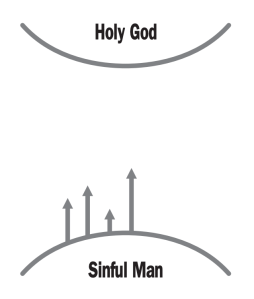 The Bible says that only God is truly good. What this means is that God’s standard for goodness is perfect holiness and by this standard, He is the only one who is truly good.





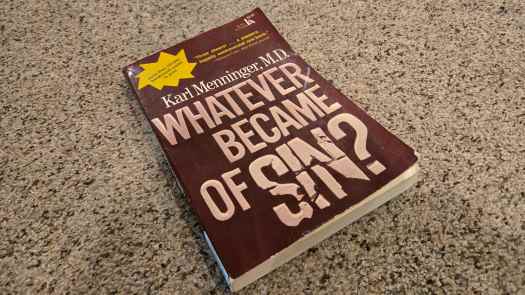

 The Lowedown