How Do We Experience Peace?

Colossians 3

15Let the peace of Christ rule in your hearts, since as members of one body you were called to peace. And be thankful. 16Let the word of Christ dwell in you richly as you teach and admonish one another with all wisdom, and as you sing psalms, hymns and spiritual songs with gratitude in your hearts to God. 17And whatever you do, whether in word or deed, do it all in the name of the Lord Jesus, giving thanks to God the Father through him. (Colossians 3:15-17, NIV)


The Daily DAVEotional

If you haven’t noticed, we are experiencing an epidemic of anxiety in our country. The American Psychiatric Association’s annual mental health poll indicated a sharp rise in anxiety levels among American adults.

Young adults are even more likely to report high levels of anxiety these days according to a Pew survey cited in this article.

There’s even been a popular book written about “The Anxious Generation.” In this book, author Jonathan Haidt argues that smartphones, social media, and helicopter parenting has contributed to an increased level of anxiety and depression among today’s youth.

Experiencing peace seems as elusive as sighting a unicorn.

So how exactly can we experience peace?

In his letter to the Colossians, Paul gives some insight into experiencing peace.

The first thing he says is that we should let peace “rule” in our hearts. The Greek word for “rule” means “arbitration”. The idea is that peace should govern our hearts.

Ok. But how do we do that? It’s not like most people can turn peace on and off like a light switch.

Fortunately, there are some key words in this passage that help us to understand a potential pathway to peace.

Three times in this passage, Paul uses the similar words “thankful” (verse 15), “gratitude” (verse 16), and “thanks” (verse 17).

Philippians 4:6-7 is perhaps the most oft-quoted passage regarding peace. Paul says,

6Do not be anxious about anything, but in everything, by prayer and petition, with thanksgiving, present your requests to God. 7And the peace of God, which transcends all understanding, will guard your hearts and your minds in Christ Jesus.

It’s interesting to note that in this passage, Paul also talks about thanksgiving. When we share our anxieties with God, and we do it with an attitude of thanksgiving, Paul says that we will experience the peace of God in a way that transcends our understanding.

I might not be able to manufacture peace on demand. But I can choose my attitude and what I will allow my mind to dwell on.

Paul tells us to be thankful  and to offer up our anxieties to the Lord in prayer with an attitude of thanksgiving and gratitude.

Something happens when we choose to be grateful. You see, we can’t be grateful unless we stop and think about the things we should be grateful for. Doing this refocuses our attention on God’s goodness and it gets our minds off of the negative thoughts that are the root of our anxieties.

My wife and I recently saw the movie “Soul on Fire”, which is the real-life story of John O’Leary, who, as a child, suffered burns over his entire body when he accidentally set his family’s house on fire. It’s a powerful story of identity, redemption and forgiveness.

As an adult, John decides he can use his story to make a difference in the lives of others as a motivational speaker.

In one of his first speaking engagements he finds himself talking to a group of hardened criminals in a state prison. His main message is about the importance of gratitude. He then invites the prisoners to share something they’re grateful for.

At first, nobody speaks. They’re mostly skeptical and wondering what they’re even doing there. Finally, one prisoner stands up and says:

“I’m grateful for prison, because if I wasn’t here, I’d be dead. And here’s what else I’m grateful for:

    • Heat in the winter.
    • Air-conditioning in the summer.
    • Three square meals a day—no cooking, no dishes.
    • A clean bed every night.
    • Laundry service—I never had that on the outside.
    • Medical care, even if it’s basic.
    • A library full of books I never read before.
    • Time to think, really think about my life.
    • Brothers here who get it, who share my struggles.
    • Letters from my kids—I miss ’em, but they keep comin’.
    • The chaplain who prays with us.
    • Fresh coffee in the morning.
    • Outdoor rec time—blue sky, even behind fences.
    • A job, Payin’ a little, but it’s honest work.
    • No bills pilin’ up.
    • Safety from the streets I ran on
    • Programs to learn skills, like anger management.
    • Holidays with visits from family.
    • Music on the radio—reminds me of better days.
    • Clean water, hot showers.
    • Counselors who listen without judgin’.
    • The chance to apologize to folks I hurt.
    • Faith groups—Bible study saved my soul.
    • Exercise yard—keeps me strong.
    • Mail call—somethin’ to look forward to.
    • No more chasin’ highs that wrecked me.
    • Rules that keep me from hurtn’ others.
    • Dreams at night—hope for what’s next.
    • Laughter with the guys—ain’t nothin’ like it.
    • This talk today—remindin’ me gratitude changes everything.
    • And God… for second chances.”

Later in the movie, John is struggling, feeling sorry for himself and the situation he’s in. He can motivate others through his speaking but, like us, he often struggles to apply the principles of his own TED talk.

There’s a scene where he visits his family. His dad is in a wheel chair, suffering from the effects of advanced Parkinson’s disease. And yet, his father is joyful, positive and at peace.

John asks his father, “How can you be so positive?”

His dad responds “John, how can I complain when my life is so good, when I’m just so blessed?”

John is confused. He’s thinking, “how can you see yourself as blessed when you’re in this horrible condition?” It’s really a victim mentality. And we all can tend towards this, can’t we?

His dad then elaborates on his gratitude, listing reasons like the extra time he has for reflection, the deeper family bonds he’s developed, his appreciation for caregivers and the empathy he’s developed for the struggles of others. Gratitude has enabled him to transform his limitations and potential sources of anxiety into sources of joy and peace.

There is no doubt that we live in a complex and chaotic world that’s filled with challenges that can produce anxieties of all kinds – health, job, finances and family issues, just to name a few.

However, even though we can’t produce peace in our hearts on demand, we can choose to be thankful and grateful for the good things that God has provided for us. If we make this our regular pattern, our lives will be less anxious and we’ll begin to experience more peace in our hearts.


By the way, you can read my review of the movie Sarah’s Oil here.


Did you enjoy this post? I’d love to hear your thoughts! Feel free to like, leave a comment below, and share it with your friends or on social media if you found it helpful or interesting. Your support keeps the conversation going!


Reflection

What are the things creating anxiety in your life right now? What keeps you from sharing those things with the Lord?

What have you found helpful in your own life to get your mind off of your problems and anxieties and onto the positive things in your life?

If you were to create a list of things you’re grateful for, like the prisoner did, what would be on your list? What are the things in your life that you can express gratitude for?


Photo by Tom Shakir on Unsplash

Why Don’t Christians Pray?

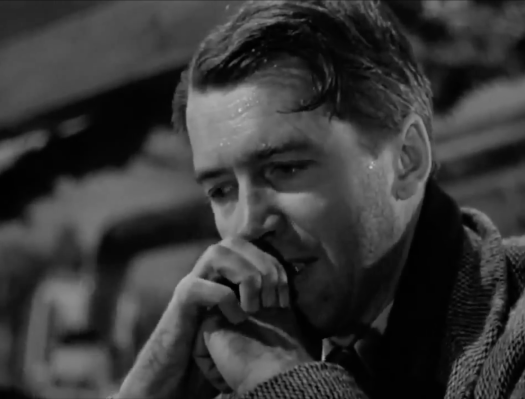
In the classic Christmas movie, “It’s a Wonderful Life”, George Bailey, played by Jimmy Stewart, is portrayed as a moral, selfless family man and a pillar of the community, who alone stands against the greedy and ruthless town banker, Henry Potter, a selfish opportunist who seeks to control the town of Bedford Falls through his wealth and financial might.

Through no fault of his own, George finds himself in a desperate financial situation. Though he’s portrayed as an upright man of moral character, he’s not a particularly religious person.

Yet, in a moment of absolute despair, George Bailey turns to God and utters this prayer: “Dear God…dear Father in heaven…I’m not a praying man but if you’re up there and you can hear me, show me the way. I’m at the end of my rope. Show me the way God.”

For many, this is exactly how they tend to think of prayer – as a desperate cry for help when all personal efforts have failed and every other conceivable avenue for addressing an issue has been exhausted. It’s a last-ditch effort to change an undesired situation by appealing to “the man upstairs”.

This view of prayer is rooted in a fundamental misconception and misunderstanding of the nature of God. This view sees God as all-powerful but distant. The God of “hail-Mary” prayers is not intimate and close; He’s impersonal and far away, too busy to be concerned with insignificant people and inconsequential matters.

But Christianity doesn’t view God as distant and impersonal. In fact, one of the major differences between Christianity and all other religions and philosophies is the idea that God is personal and He wants you to KNOW Him.

As John 1:14 states:

“And the Word became flesh and DWELT among us.”

And yet, even though Christianity sees God as intimate and personal, many Christians don’t pray regularly.

Renowned British Preacher Leonard Ravenhill penned it this way:

“The church has many organizers, but few agonizers;
many who pay, but few who pray;
many resters, but few wrestlers;
many who are enterprising, but few who are interceding.
People who are not praying and praying.
The secret of praying is praying in secret.
A worldly Christian will stop praying and a praying Christian will stop worldliness.
Tithes may build a church, but tears will give it life.
That is the difference between the modern church and the early church.
In the matter of effective praying, never have so many left so much to so few.”

As Christians, we recognize that prayer is an essential part of the Christian life; we know it’s “important”, yet we don’t pray. Why is that?

One reason, undoubtedly, is that we’re influenced by our culture to be self-reliant and self-sufficient, which probably explains why people turn to God only when they’re unable to handle their issues and problems on their own.

However, I think another reason why Christians don’t pray is that we don’t understand the many benefits of prayer.

What exactly are the benefits of prayer?

 Prayer is Our Primary Means of Developing Intimacy with God.

First of all, prayer is the primary means by which we maintain our intimacy with God. James 4:8 says,

“Draw near to God and He will draw near to you.”

How, exactly, do we draw near to God? Through prayer. Prayer is an extremely personal exercise. When you pray, you’re communicating with the sovereign God of the Universe, who desires to spend time with you.

Prayer enables you to build intimacy with Jesus so that

“Christ may dwell in your heart through faith; and that you, being rooted and grounded in love, may be able to comprehend with all the saints what is the breadth and length and height and depth, and to know the love of Christ which surpasses knowledge, that you may be filled up to all the fullness of God.” (Ephesians 3:17-19)

Prayer is also the chief means by which we maintain our fellowship with God. For those times when we’ve done something we know isn’t right, or when we’ve moved away from that intimate relationship with God, prayer is how we get back on track. 1 John 1:9 says,

“If we confess our sins, He is faithful and righteous to forgive us our sins and to cleanse us from all unrighteousness.”

Prayer enables us to confess our sin and experience God’s forgiveness, resulting in continued fellowship with God.

Prayer Helps Us Overcome Temptation

A second benefit of prayer is that it helps us overcome temptation. Just before Jesus was arrested, he told his disciples in Mark 14 that they would all fall away because of Him. Peter’s response is probably one that I would be inclined to give. He emphatically says, “I won’t fall away. Even if everyone else abandons you, I won’t.”

Later, Jesus is in the Garden of Gethsemane praying. His disciples are all with Him, including Peter. They’re supposed to be keeping watch, but instead, they’re sleeping. In vs. 38 Jesus says:

“Keep watching and praying, that you may not come into temptation; the spirit is willing, but the flesh is weak.”

Jesus understood the dichotomy that exists between the sinful nature and the spiritual nature. When we pray, our focus is on God, whose power enables us to overcome sin. The disciples didn’t understand this. So instead of praying that they might not come into temptation and fall away, they slept. As a result of Christ’s arrest. v. 50 says:

“And they all left Him and fled.”

Prayer helps us overcome temptation. Even as you’re facing a temptation, getting your eyes off the temptation long enough to talk to God, can bring His help right when you need it.

Prayer Helps Us Determine God’s Will

A third benefit of prayer is that it helps us determine God’s will. In Luke chapter 6, Jesus spends all night praying to God about who He should choose to be His disciples. The next day, Jesus chose 12 men to be with Him. Jesus understood the benefit of prayer in helping to determine God’s will.

When you pray to God, you’re consulting someone who knows everything there is to know about your situation. Not only that, but He’s in complete control of your situation. Doesn’t it make sense to consult Him when you make decisions in your life?

When I was growing up, my dad was a private pilot, licensed to fly small aircraft, but only in visual flying conditions. On a cross country trip to visit some relatives in another state, we were following a two-lane highway below. From my view high above I could see the many cars and trucks traveling along the road below. In some cases, I noticed cars that were impeded by larger, slower-moving trucks in front of them. It occurred to me that if the drivers of these cars could see things from my perspective, it would be much easier for them to know when and where it would be safe to enter the lane of on-coming traffic to pass the trucks that were blocking their way.

God, of course, has a perspective that is even more expansive than my view was. He sees the complete picture of any situation we may be facing. His perfect knowledge is exactly what we need to guide our life. As we pray to God, and as we learn to listen to Him, we’ll find the direction we seek.

Prayer Allows Us to Intercede for Others

Still another benefit of prayer is that it allows us to intercede for others. Did you know that through prayer, we have the opportunity to impact the lives of others?

Jesus, in John 17, prayed for his disciples. Paul, likewise, in Ephesians 1:15-19 and Colossians 1:9-12 prayed for the young believers in those fledgling churches. We too can pray for others, and our prayers can have a powerful effect.

A story from World Christian Digest illustrates this point. Two missionaries in Malaysia had to go to the nearest town across some pretty rough country to collect some money which had come through for them at the bank there. It was a considerable distance away so they set off on foot early in the morning, hoping to return the same day.

They arrived at the town, collected the money and then set off again on their return trek, only to find that they were too tired and too far away to reach their station that night. So they set up camp on a hillside and, committing themselves to God, they fell asleep.

When morning came, they were surprised that they hadn’t been disturbed by bandits or wild animals. They went on their way without incident and arrived safely at their mission station later that day.

A few weeks later, a man came into the hospital for treatment. He stared at the missionary who attended him and said, “I’ve seen you before.”

“I don’t think we’ve met,” the missionary replied.

“No, I’m sure we have,” said the man. “You were camping on the hillside at such and such a place a few weeks back.”

“That’s right,” said the missionary. “How did you know? We didn’t see anyone.”

“I followed you with some others from the town. We had seen you in the bank and we knew you had money on you. We waited until dark to sneak up on you. We were intending to rob you, but we didn’t attack because of the soldiers.”

“Soldiers?” The missionary laughed. “There were no soldiers with us, my friend.”

The bandit was adamant. “There were – we counted them. There were sixteen of them, and they had swords too.”

The missionary humored the man and passed it off as a hallucination.

Sometime later, when he came home on furlough to England, the missionary was sharing the incident at a gathering in his home town. After the meeting, a man came up to him.

“What was the date that you camped on the hillside?”

Looking at his journal, the missionary said, “It was on such and such a night.”

The questioner also looked at his journal. “That night,” he said, “we had our weekly prayer meeting. Your name was brought forward by someone for prayer and,” he paused, “there were sixteen of us at the meeting.” [1]

Just like the 16 people who prayed for the missionaries, we too, through prayer, can enter into the spiritual battle and intercede on the behalf of others.

So why don’t Christians pray?

One reason is that we don’t see the many benefits of prayer. But there’s another reason why Christians often don’t pray.

The Power of Prayer

For many Christians, prayer is simply a mindless, rote activity. Many Christians don’t really believe that there is power in prayer.

It’s easy for us to be like the man who got lost deep in the woods while hiking alone. Later, in describing the experience, he shared about how frightened he was and how he had prayed to God to rescue him. “Did God answer your prayer?” someone asked. “Oh, no!” he replied. “Before God had a chance, a guide came along and showed me the path.” [2]

There’s an old story about some Christians who were upset that a tavern was being built in their small village. Up until then, the town had been dry. These concerned believers began an all-night prayer meeting, asking God to intervene.

As it happened, not long after, lightning struck the tavern building, and it burned to the ground. The owner brought a lawsuit against the church, claiming they were responsible. The Christians hired a lawyer, claiming that they weren’t responsible. The judge, in reviewing the case said, “No matter how this case comes out, one thing is clear. The tavern owner believes in prayer and the Christians do not.” [3]

Many of us don’t really believe that prayer makes a difference. Often, when God does meet our needs, we don’t attribute it to prayer, but instead to mere coincidence and circumstance.

The fact is, of course, that God is capable of handling any problem we could bring him. Creating planets isn’t much of a problem for him. Nothing is too difficult for God to handle – but He’s waiting for us to recognize his power and ask for his help. God DOES answer prayer.

Howard Hendricks, the long-time professor of theology at Dallas Theological Seminary, shares an amazing story of how God answered prayer. Shortly after Dallas Seminary was founded in 1924, it came to the point of bankruptcy. All the creditors were going to foreclose at noon on a certain day. That morning, the founders of the school met in the president’s office to pray that God would provide. One of the men in that prayer meeting was Harry Ironside. When it was his turn to pray, Dr. Ironside prayed in his characteristically refreshing manner: “Lord, we know that the cattle on a thousand hills are yours. Please sell some of them and send us the money.”

While they were still praying, a tall Texan came into the business office and said, “I just sold two carloads of cattle in Fort Worth. I’ve been trying to make a business deal go through and it won’t work, and I sense that God is compelling me to give this money to the Seminary. I don’t know if you need it or not, but here’s the check.”

A secretary took the check and, knowing something of the financial seriousness of the hour, went to the door of the prayer meeting and timidly tapped. When she finally got a response, Dr. Lewis Chafer took the check out of her hand; it was for the exact amount of the debt. When he looked at the signature, he recognized the name of the cattle rancher. Turning to Dr. Ironside, he said, “Harry, God sold the cattle!” [4]

God is the same yesterday, today, and forever. The same God who parted the Red Sea, the same God who caused the sun to stand still while Joshua and the Israelites routed their enemies, the same God who fed the 5000; this same God is able to handle all of your problems today. He is completely able. We simply need to go to Him in prayer.

Here are a few closing suggestions. Put prayer time into your schedule or you’ll never do it. Start small, but be consistent. Keep a journal of answered prayer. Your faith will increase as you see God answer your prayers, and as a result, you’ll be motivated to pray more.


[1] Naismith, Archibald. 2400 Outlines, Notes, Quotes and Anecdotes for Sermons. vol. 2 – Notes, Quotes and Anecdotes, Baker Book House, 1991. p. 182.

[2] Illustrations for Biblical Preaching. Edited by Michael P. Green, Baker Book House, 1991. p. 282.

[3] Illustrations for Biblical Preaching. Edited by Michael P. Green, Baker Book House, 1991. p. 275.

[4] Hendricks, Howard. “Selling Cattle.” Bible.Org, 20 Jul. 2009, bible.org/illustration/selling-cattle. Accessed 30 Aug. 2025 – (Dr. Howard Hendricks, Stories of the Heart, compiled by Alice Gray, Portland, Multnomah Press, 1996, p. 272)


Photo: Screenshot by Dave Lowe from the movie “It’s a Wonderful Life”

What is Prayer?

Not long ago I was at a military commencement event where a chaplain was invited to come to the podium and offer an opening prayer. With a deep and commanding voice, the chaplain spoke a scripted series of poetically eloquent words and phrases directed to God but also aimed at drawing the audience into a reflective moment.

It was a beautiful oratory performance that sounded like it could be a monologue from a Broadway play.

If I wasn’t a Christian, or if I was new to the Christian faith, I might conclude that this is what prayer is.

I would be incorrect.

Don’t get me wrong. I don’t mean to denigrate the chaplain’s prayer. It was a legitimate prayer and it was moving. It’s just that his prayer wasn’t necessarily representative of what prayer is. What I mean is, one doesn’t have to be a thespian in order to pray.

So what then is prayer?

The simplest definition is that prayer is talking to God.

That’s it. Prayer is simply talking to God in a conversational way just as you might talk with your friend.

It’s unlikely that you normally talk to your friends and co-workers like you’re auditioning for a role in a Shakespearean play, which is why the chaplain’s prayer, as beautiful and stirring as it was, is not typical or representative of what prayer is, nor is it the ideal example of how we should pray.

I encounter people all the time who are confused by prayer. To some, prayer seems mystical and mysterious, complicated and confusing, the sort of thing that is left to the professional minister.

But prayer isn’t complicated and it shouldn’t be confusing. There’s no mystery to prayer. You simply talk to God the way you might talk to a trusted friend.

Your prayer doesn’t need to be eloquent. It doesn’t need to be polished. It can be simple. It can be short. It can be long. It can be written out or it can be off the cuff. It can be audible or silent. It can be formal or informal. It can be scheduled or unscheduled, offered up in a group or individual setting. One can pray in public or in private. You can pray while standing, sitting or lying down. You can pray with your eyes closed or your eyes opened, hands clasped or not. There aren’t a lot of rules to prayer.

The only real requirement for prayer is that you are honest. God knows your thoughts and your motivations anyway, so there is no point in faking your way through it.

Many years ago, when I was a new staff member with Cru at San Jose State University, we held a prayer night for our on-campus ministry.

Huddled in the living room of the guys’ house where I lived were 25-30 students, giving up their Friday evening in order to spend some time praying. I happened to be in a small group with a guy I’ll call Nick. Nick was a brand-new believer, an athlete who had just recently come to faith in Christ.

Nick had no prior religious background and no prior influence or bias to inform him of what prayer was supposed to look like.

As we took turns in our small prayer group, lifting up our thoughts and concerns to God, I was surprised to hear Nick jump in with a prayer of his own. In my experience, I often find that people are hesitant to pray in groups, precisely for the reasons we’ve already mentioned – they’re often afraid that their prayers will not sound polished or professional; they don’t want to embarrass themselves in front of others by saying something wrong.

Nick didn’t care about any of that. He simply had no preconception to inform him that there might be a right way to pray and a “wrong” way to pray.

So, in his innocent and refreshing way, he offered up his honest thoughts to God, “God, thank you for saving me, and I want to wish you the best of luck.”

Those of us in the group chuckled internally because God, of course, doesn’t need luck. Theologically, Nick’s prayer was not completely accurate. But it didn’t matter. Nick shared what he was thinking, and from his heart he talked to God. It was perhaps the most honest and genuine prayer I’ve ever heard because unlike I can so often be, Nick was unconcerned with impressing those around him, and he wasn’t worried about embarrassing himself by uttering something theologically “incorrect”.

Prayer isn’t a performance and it’s not about impressing those around us with our theological knowledge and eloquent ways of creating word pictures. It’s not an oratory competition, nor is there a standard template for what constitutes a legitimate prayer.

Prayer is simply a conversation with the God of the universe, who loves you and wants you to come to Him with your concerns, anxieties, confessions, petitions and your praises, talking to Him in your own words and your own style.

Prayer is an activity that anyone can do and everyone should do. If you want to know God, prayer is essential. Prayer is not hard, but we often complicate it and though it’s easy, we often avoid it.

Do you pray? If not, what are you waiting for? Give it a go, and as you get started, I want to wish you the best of luck!


Photo by Ben White on Unsplash

What Does it Mean to “Pray Without Ceasing”?

1 Thessalonians 5

16Rejoice always; 17pray without ceasing; 18in everything give thanks; for this is God’s will for you in Christ Jesus.

(1 Thessalonians 5:16-18, NASB)


The Daily DAVEotional

I don’t know about you but even though I grew up going to church, as a kid, I was intimidated by prayer. To me, praying seemed like an exercise in giving an ornate speech.

I never really witnessed people praying in normal, everyday language. Instead, prayer always seemed to be a well-prepared, dramatic reading from up front.

As an example, I was recently at a breakfast for the National Day of Prayer. A police chaplain was asked to give the opening prayer. It was a wonderful prayer, but the entire prayer sounded like a carefully-crafted poem or work of prose rather than off the cuff  thoughts you might share if you were conversing with your friend.

My point is NOT to critique the professionally sounding prayers. I actually love hearing people who have given great thought to what they want to say and pray to God. I also think there is great value in thinking deeply and writing out exactly what you want to say to God. I heartily encourage this practice.

However, if that is our only example of what prayer is, and it’s what I mostly heard growing up when I went to church, it can make prayer intimidating for those who haven’t spent much personal time in conversing with the Almighty.

My contention is that while prayer CAN BE an ornate, well-crafted poetic expression to God, it doesn’t have to be.

In these few short verses from 1 Thessalonians 5, Paul gives a number of admonitions as he closes out his letter.

Sandwiched in between the exhortations to “rejoice always” and “in everything give thanks”, Paul commends his audience to “pray without ceasing.”

Have you ever thought of what that means?

If praying is the ornate prayer that I usually heard on Sunday mornings or the pre-planned, written out oration from the National Prayer breakfast, then most everyday people might mistakenly think that prayer doesn’t apply to them.

After all, if that is what prayer is, how can one possibly do that “without ceasing.” One would literally be walking around 24/7 trying to create poetic speeches directed toward God. We would all become full-time, amateur psalmists.

Fortunately, I don’t think that is what Paul means when he commands us to “pray without ceasing.”

What does it mean then?

It means that your thinking becomes a praying process and your praying becomes a thinking process. 

Prayer does not have to be a spoken verbal speech that others hear. Prayer can be a thought that is directed toward God, or an acknowledgement that God is present, or an invitation for God to provide wisdom and clarity.

A great example of this is found in Nehemiah 2. Nehemiah is asked a question by the king and Nehemiah, before responding, PRAYS to God. I wrote about this passage in my blog post, “The Shortest (Non) Prayer in the Bible.”

Clearly in that moment, Nehemiah didn’t pause and go through a formal prayer process while the king was waiting for him to respond to his request. Instead, the prayer was internal and instantaneous – an invitation for God to provide wisdom and favor in the stressful situation in which Nehemiah found himself.

Praying without ceasing means that no matter what I’m doing, I’m aware of God’s presence in my life. It means that I’m acknowledging God’s sovereignty in my life. It means that I’m aware that God has endowed me with the mind of Christ, enabling me to think and reason in a way that honors Him. And most of all, it means that I’m inviting Him into my inner thought chamber and decision-making process.

Ultimately, it means that I’m living in my identity – acknowledging that I am His child, that He’s with me, and that He has pre-eminence in my life.

Praying without ceasing does not mean we are permanently relegated to a pew in a church somewhere offering endless petitions towards an altar placed in front of a stain-glassed window. Instead, praying without ceasing means that my whole life, as much as possible, is oriented around the reality that God is with me and I am in a constant state of awareness and acknowledgment of that fact – whether I am in a church or not, whether I’m attending a religious event or just going about my normal, everyday routine.


Reflection

What has been your experience with prayer?

Do you find prayer difficult or easy? What are the factors that led you to your response?

What do you think it means to “pray without ceasing”?

What are some things you can do to implement Paul’s command to “pray without ceasing?” What specific action steps can you take?


Spiritual Practice

Steve Douglass was the second president of Cru. He shared in a talk one time about an exercise that he did to train his mind to constantly be aware of God’s presence in his life.

He set his watch alarm to beep at regular intervals (every few minutes maybe….I can’t remember the exact frequency). Every time the watch would beep, it would remind him to think about and acknowledge God. That simple activity trained him to always be aware of God no matter what was happening around him.

Think about setting an alarm on your phone or watch to go off at regular intervals. When it goes off, simply acknowledge and think about God. This is one step to begin to train yourself to “pray without ceasing.”


Photo by Arina Krasnikova: https://www.pexels.com/photo/woman-praying-in-church-5417912/

A Psalm that Doubles as a Responsive Reading

Psalm 136

1Give thanks to the LORD, for he is good!
His faithful love endures forever
2Give thanks to the God of gods.
His faithful love endures forever
3Give thanks to the Lord of lords.
His faithful love endures forever
4Give thanks to him who alone does mighty miracles.
His faithful love endures forever
5Give thanks to him who made the heavens so skillfully.
His faithful love endures forever
6Give thanks to him who placed the earth on the water.
His faithful love endures forever
7Give thanks to him who made the heavenly lights—
His faithful love endures forever
8the sun to rule the day,
His faithful love endures forever
9and the moon and stars to rule the night.
His faithful love endures forever
10Give thanks to him who killed the firstborn of Egypt.
His faithful love endures forever
11He brought Israel out of Egypt.
His faithful love endures forever
12He acted with a strong hand and powerful arm.
His faithful love endures forever
13Give thanks to him who parted the Red Sea
His faithful love endures forever
14He led Israel safely through,
His faithful love endures forever
15but he hurled Pharaoh and his army into the sea.
His faithful love endures forever
16Give thanks to him who led his people through the wilderness.
His faithful love endures forever
17Give thanks to him who struck down mighty kings.
His faithful love endures forever
18He killed powerful kings—
His faithful love endures forever
19Sihon king of the Amorites,
His faithful love endures forever
20and Og king of Bashan.
His faithful love endures forever
21God gave the land of these kings as an inheritance—
His faithful love endures forever
22a special possession to his servant Israel.
His faithful love endures forever
23He remembered our utter weakness.
His faithful love endures forever
24He saved us from our enemies.
His faithful love endures forever
25He gives food to every living thing.
His faithful love endures forever
26Give thanks to the God of heaven.
His faithful love endures forever

(Psa.lm 136: 1-26, NLT)


The Daily DAVEotional

I grew up attending a traditional Protestant church, complete with Sunday school for kids and adults, followed by a worship service for the whole family.

We didn’t have a worship band like you find in many churches today. Instead, we had a choir director who also led the congregation in singing. In those days, “praise and worship songs” were considered folk songs that were reserved for singing around a campfire. They were not appropriate for the Sunday morning worship service.

For the worship service, we sang hymns from a hymnal that you could grab from the pew rack in front of you.

One of the more interesting elements of those old Sunday morning worship services was the occasional “responsive reading”. These were usually found in the back of the hymnal and consisted of two parts – the part that was recited by the worship director (usually in normal type), followed by the part that the congregation recited in unison (often depicted in bold type).

I always enjoyed those responsive readings, even though we did them only occasionally. As a kid, I think I liked being able to show off my reading skills, but as I grew older, I liked the opportunity this element provided to participate in the service in a different way. It was engaging, in a unique sort of way.

In today’s modern worship services, I rarely encounter a responsive reading. Today’s worship services often place a higher emphasis on creating an encounter for the congregants through a highly produced worship event rather than helping the attender to encounter God through this more simplistic reflection device.

I don’t mean to denigrate current worship styles as I very much appreciate the atmosphere and aura that a worship team can create through the amazing talents of ordinary people. The Sunday morning worship experience has certainly come a long way over the last 50 years. But I do think that there is tremendous value in some of these “older” Scriptural reflection elements that have sadly fallen out of style and favor.

What’s interesting to me is that the responsive reading is actually a biblical invention, as seen clearly in this psalm of thankfulness.

Twelve times in these 26 verses the psalmist makes the statement to “Give thanks” followed by a reason to give thanks. The first 9 verses detail God’s power in creation. In verses 10 through 16, the psalmist gives thanks for God’s deliverance of His people from the Egyptians.

In verses 17 through 24, the psalmist gives thanks for God leading the Israelites to their promised land and allowing His people to conquer and destroy their enemies.

Finally, the psalmist gives thanks for God’s general provision and sovereignty.

Interlaced between each of these statements of thankfulness is the repeated phrase, “His faithful love endures forever”, which is repeated 26 times. I’m getting the impression that the psalmist wants to say something about God’s faithful love enduring forever!

Think for a moment about the statement, “His faithful love endures forever.”

What do you think it means? Why do you think the psalmist chose that statement to be repeated in each verse?

The Hebrew word that is translated as “love” in this verse is the word “hesed” which has been translated as “loyal love”, “lovingkindness”, “steadfast love” and “faithful love.” It has also been translated as mercy, as in Ephesians 2:4:

4But God is so rich in mercy, and he loved us so very much, 5that even while we were dead because of our sins, he gave us life when he raised Christ from the dead.

The conclusion is that everything God has done, whether related to His miraculous work of creation or His mighty acts of deliverance, was ultimately rooted in and motivated by His great love.

God is love and He loved us so much that died for us. He is faithful, which means we can trust Him. His love and His faithfulness endure forever, which means the same God we read about in the Bible is the same God who lives today. He has not changed and His love and faithfulness will not run out. As a result, we can trust Him with our lives today just as the psalmist did 3000 years ago.

Reflection

What do you think it means that God’s faithful love endures forever? When you think and reflect on that statement about God, what comes to your mind?

What are some of the mighty acts God has accomplished in your life? Think about specific things that have happened in your life for which you are thankful.

What are some things you are thankful for related to your spiritual life and your new life as a believer?

Spiritual Exercise

Take a moment to write your own psalm of thanksgiving to God. Think about specific things in your past you are thankful to God for. Think also about the many spiritual blessings you have as a result of knowing Jesus.

Write out each of those statements on a lined sheet of paper, leaving a blank line between each written statement.

Now, after each statement, write the following in the blank line:

His faithful love endures forever.

After you have written your own personal psalm of thanksgiving, read it aloud, placing special emphasis on the phrase, “His faithful love endures forever.”

What thoughts, feelings and emotions did you experience while reading your personal psalm? 

What can you do to ensure that you don’t forget or ignore all of the good deeds and mighty miracles God has done in your own life?

Photo by Skyler Gerald on Unsplash

Does Jesus Really Give us the Strength to do ANYTHING?

Philippians 4

10How grateful I am, and how I praise the Lord that you are concerned about me again. I know you have always been concerned for me, but for a while you didn’t have the chance to help me. 11Not that I was ever in need, for I have learned how to get along happily whether I have much or little. 12I know how to live on almost nothing or with everything. I have learned the secret of living in every situation, whether it is with a full stomach or empty, with plenty or little. 13For I can do everything with the help of Christ who gives me the strength I need. 14But even so, you have done well to share with me in my present difficulty. (Phillippians 4:10-14, NLT)


The Daily DAVEotional

When my sons were in high school, they ran Cross Country and Track. I was at the school for all their meets taking photos for the team and as a result, I made a number of observations about the high schoolers of today compared to when I was in high school.

One thing that hasn’t changed since I was in high school is the letterman’s jacket. Donned with a myriad of patches and inscriptions, many of the athletes I observed proudly wore their jackets, even in scorching temperatures, as a testament to their many accomplishments.

Some jackets had the name of the athlete stitched on the back. Occasionally, I would see a jacket that had a Bible verse reference stitched on the jacket somewhere. One of the most popular verses I saw referenced was Philippians 4:13, in which Paul says:

I can do all things through Christ who strengthens me. (World English Bible)

For many athletes, Philippians 4:13 has become somewhat of a personalized mantra, a slogan repeated and memorized to help realize their athletic performance goals.

Is it true? Does Jesus really give us the strength to accomplish ANYTHING we might put our minds to? If I want to run faster, become stronger or perform better, can I invoke this biblical axiom to help me achieve my desired potential?

Unfortunately, this is not what Paul was talking about when he penned these words.

A few months ago, Christian apologist and author Clay Jones tweeted the following screenshot on X, creating some discussion and debate around the meaning and understanding of this very verse:

According to this post on X from Dustin Benge, Paul’s words have nothing to do with sports or fulfilling personal dreams. Instead, Paul was speaking about endurance in the midst of suffering.

This post created quite a bit of discussion amongst people who were confused about how and when we might invoke these words that Paul penned for our own circumstances.

Is it out of bounds to talk about how Christ gives one strength for a sporting event? Or is one only allowed to refer to the strength of Christ if and when we are sitting in a prison, as Paul was? Since most of us probably won’t ever find ourselves in the exact situation Paul was in, it seems a bit narrow to say that one can only refer to or appeal to the strength of Christ for that specific situation.

So what is Paul saying? What is the meaning of this verse and how does it apply to us today?

I think the point of the original tweeter (@DustinBenge) and the re-tweeter (@ClayBJones) is that this verse is often taken out of context and appropriated by people for their own selfish goals and ambitions. To understand and know how I might apply this verse for myself, I must understand the context in which Paul was speaking. Once I know the context and the general spiritual principle, I can then apply that general principle to my own situations where appropriate.

So what is the context and what is the principle?

We’ve already noted that Paul was in prison. The broader context of the letter to the Philippians is that Paul was expressing joy and thankfulness to the Philippian church for a financial gift that they had sent.

In this passage, Paul says that he knows the secret of living in every situation. Paul is talking about his need. He learned to deal with situations where he had nothing to eat as well as situations where he had plenty.

Paul had learned from experience that no matter what situation he faced, particularly regarding his physical circumstances, Christ was the one who was ultimately sustaining him. Essentially, Paul is talking about contentment and experiencing joy despite the circumstances.

The question for us then, is how does this verse apply to us? In what situations might we appropriate these words without taking the verse out of context?

First of all, it should be obvious that this verse is not an axiom that one might invoke to achieve some personal goal or achievement.

Instead, these words are an acknowledgement that ultimately, Jesus is the one who sustains us, physically as well as spiritually. Hence, any situation we might find ourselves in where we are struggling or perhaps doubting, we can acknowledge Jesus as our source of strength and life.

No, Jesus does not strengthen us with super-human abilities or capacities to accomplish any selfish endeavor one might imagine. But Jesus does provide strength to enable us to deal with our struggles, whether they’re physical, emotional or spiritual. Jesus sustains us when we are lonely, anxious, weary, fearful, insecure, hungry, thirsty, angry, etc. Jesus also provides strength to enable us to resist temptation and walk in humility.

And yes, those feelings of inadequacy, helplessness and all the others mentioned can occur while competing in a sporting event, or engaging in some other personal endeavor. Hence, Jesus sustains us and can provide strength in endeavors of all kinds.

Reflection

What has been your understanding of Paul’s words that “I can do all things through Christ who strengthens me”?

In what situations have you found yourself appealing to this verse? What kinds of situations might you feel compelled to acknowledge your need for Christ to strengthen you.

Do you agree with the original tweeter (Dustin Benge in the screenshot) who states that this verse has NOTHING to do with sports, personal dreams, being a champion, overcoming obstacles or building self-esteem? Why or why not?

What do you think it looks like for Christ to give you strength?


Photo by Dave Lowe


Why Some Christians Never Grow

2 Peter 1

3His divine power has given us everything we need for life and godliness through our knowledge of him who called us by his own glory and goodness. 4Through these he has given us his very great and precious promises, so that through them you may participate in the divine nature and escape the corruption in the world caused by evil desires.

5For this very reason, make every effort to add to your faith goodness; and to goodness, knowledge; 6and to knowledge, self-control; and to self-control, perseverance; and to perseverance, godliness;  7and to godliness, brotherly kindness; and to brotherly kindness, love.  8For if you possess these qualities in increasing measure, they will keep you from being ineffective and unproductive in your knowledge of our Lord Jesus Christ.  9But if anyone does not have them, he is nearsighted and blind, and has forgotten that he has been cleansed from his past sins. (2 Peter 1:3-9, NIV)


The Daily DAVEotional

Have you ever wondered why some people who have been Christians for a long time never seem to get past the initial stages of Christian development?  Perhaps you count yourself in this group. Maybe you’ve been a consistent church-goer for years and even attended the occasional small group, but you’ve never felt like you were really progressing as a Christian.

I think a lot of people get to this point and begin to wonder if there isn’t something more to the Christian life. Some who are discontented may half-heartedly trudge along in their Christian experience, while others choose to walk away, assuming that their spiritual “experiment” was just a phase.

In this passage of 2 Peter, the author (Peter) gives the reason why people are not growing and developing in their spiritual lives.

But first notice that in verses 3-4, Peter tells his audience that God has already given them everything they need to live the Christian life and experience godliness. There’s no special enlightenment or advanced teaching a person needs in order to experience the Christian life as it was meant. This means that no matter where you are at, whether you are brand new in the faith or if you’ve been a believer for many years, you already possess everything you need to experience all Christ wants for you.

What is it that Christ wants for you?

Starting in verse 5, Peter reels off a list of virtues that we’re to add to our character. It’s easy to look at this list and get overwhelmed, thinking there is a lot of pressure to manufacture these qualities in our lives. But don’t get overwhelmed. In fact, I want you to take a deep breath as we look at this list a bit differently than maybe you’ve looked at it before.

What is the starting point of the list?

Faith.

If you’re a Christian, you already have faith, so you’re good. All believers start with a basic faith in God and Jesus.

What is the ending point of the list?

Love.

The goal of all Christian growth is to learn to love God and others more deeply and effectively. Everything in between Faith and Love in this list is simply a process of growing character qualities that helps us to become more loving people.

In verse 8, Peter says that if you possess these qualities and they are increasing (i.e. you’re growing in them or developing them in your life), you’ll be productive and effective in your knowledge of the Lord.

In other words, if you’re growing in these character qualities, you’ll become a more loving person towards God and others and you’ll therefore have the kind of influence and impact God desires for you. You won’t be stagnant or ineffective and you won’t be wondering, as so many immature Christians do, why the Christian life is not as exciting and adventurous as you thought it would be when you first came to Christ.

So why is it that some people never grow?

Peter addresses this in verse 9. He says that the person who is lacking these qualities, the person who is not growing in these character qualities and not becoming a more loving person, is near-sighted and blind. Peter then explains that what makes them near-sighted and blind is that they have forgotten that they’ve been cleansed from their past sins.

The reason so many Christians aren’t experiencing growth is sin!

I’m sorry to disappoint you if you were hoping for or expecting something more profound. But it really is that simple.

Look, we all sin, even the most mature believers. Sin is simply a thought, a word or action that is in rebellion toward God and His values. When we sin, we are choosing to go our own way, and as a result, we are disconnecting ourselves from God, who is the source of spiritual life. The moment any living thing becomes disconnected from its life source, it begins to experience decay.

The person who is growing is the person who, when they do sin, always remembers that Jesus has died for that sin and has paid for that sin. The person who is consistently growing remembers what Jesus has done for them and whenever they sin, they take that sin to the cross, claiming the forgiveness that Jesus has already provided and repenting in their heart for their thoughts, words or actions.

The biblical term for this process is confession. By actively confessing sin whenever you are aware of it, you’re admitting that you need to experience Jesus’ forgiveness every day, not just the one time you decided to become His follower. The net result is that you stay connected to Jesus, the source of spiritual life.

By engaging with Jesus every day, you’ll become more aware of the areas of your life that don’t reflect Him so well and you’ll invite Him to change you in those areas. Before you know it, you’ll be developing those character qualities that Peter lists in verses 5-7 and the end result is you’ll be a more loving person who is thriving spiritually and experiencing genuine transformation.

Reflection

What has been your understanding and view of what it means to grow as a Christian? How have you generally viewed the goal of Christian growth? In other words, what has been your past standard for measuring and evaluating growth as a Christian?

What has been your experience as a Christian with growth? If you were talking to someone who asked you to chronicle your life as a Christian, highlighting the growth and development you’ve experienced since you became a Christian, what would you say? 

When you look at the list of qualities Peter mentions, what is your response or reaction? Does the list create excitement or anxiety? Explain.

What are practical steps you can take to become a more loving person? Who do you know who can be a resource or mentor as you seek to grow as a Christian?


Photo by Silvestri Matteo on Unsplash


Is Healthier Social Media Possible?

Last week, I was scrolling through my Facebook feed and came across a post from a friend who was announcing they were taking a break from Facebook mainly because of all the misinformation, politicizing and negative interactions.

Many people are taking a break or Sabbath from social media because of the negative interactions and anxiety it causes
Photo by Thought Catalog on Unsplash

I feel ya! Going on social media these days can feel like entering the gladiator ring. You never know what political viewpoint is going to be thrown at you or who is going to challenge your ideology or what news article is going to pop up in your feed.

You innocently start off with a desire to see “What’s up?” with some of your friends and before you know it you’re engaged in a heated debate with a person you never met about some political policy on which you disagree. It’s easy to get worked up and riled up.

One of my favorite authors, John Ortberg, describes his book The Life You’ve Always Wanted as “Spiritual Disciplines for Dummies”, and says that the purpose of spiritual disciplines is really to train ourselves to love God and love others more.

Ortberg suggests that sleep could be a spiritual discipline, reasoning that If lack of sleep causes you to be grumpy and irritable, then a good night’s sleep could help us become more loving people! Photo by Daniele Levis Pelusi on Unsplash

In one of the chapters, Ortberg makes the case that for some people, the most important discipline they could practice is getting a good night’s sleep. His reasoning is that if being sleep deprived makes you moody and grumpy, then the best thing you can do to love God and others is to ensure you are well rested.

Maybe Ortberg is on to something! Given the polarizing nature of social media these days, it’s easy to see why so many people are deciding to take a break from it. The sad part about it though is that in this season where we’re sheltering at home and not physically able to connect with others, we could use the benefits of social media now more than ever. Is healthier social media even possible?

A friend of mine thinks so. Mike was a student I discipled years ago during my early days with Cru at San Jose State. Years later we’re still in touch and Mike and his family are living in Kansas City. After working as a graphic designer for most of his career, Mike has teamed up with a couple of believers who not only think that healthier social media is possible, they’ve created an app that aims to prove it.

Mike DeVincenzi is one of the developers of The Jump, a new app that seeks to provide a healthier social media ecosystem. Go to: thejump.com for more info. Photo courtesy of thejump.com

The Jump is an app that markets itself as “Healthier Social Media” with a mission of “bringing together authentic community, robust tools and a positive culture to create a better ecosystem.”

How are they doing that?

You can learn more at thejump.com but here are a few benefits:

For one, there are no ads, so you won’t be endlessly bombarded with posts urging you to buy an item that you happened to search for online last week.

Second, there are no algorithms. Tech giants like Facebook and Twitter use sophisticated algorithms to push content to you that THEY think you want, instead of just letting you determine what you want to see for yourself.

Additionally, in our high tech world, privacy is always a concern. Who has my data and what are they doing with it? The developers of The Jump are just as concerned about privacy as you are and pledge not to sell your data to third parties.

Last year I spent some time using The Jump app with my boys Cross Country team and was really impressed with how it functions. It seems to work especially well for teams and groups.

Check Out My Jump “The Lowedown” by clicking the image or the following link:
https://plm4.app.link/XH0QcDNap5

Personally, I love the idea of social media enabling me to stay connected with the people who are important to me, but much of the current social media culture is toxic and polarizing. The Jump may just be the alternative we’ve all been looking for.

I’ve created a Jump (group) on the app for those who want to stay connected to us and our ministry (Group icon is shown at left).

I invite you to try it out by texting 54293 to (913) 828-0100. You’ll receive a personal invitation to download the app and join our Jump.

In these crazy, uncertain times, now more than ever, we need a way to stay connected to encourage and support one another. Please let us know, in whatever fashion works for you (text, e-mail, snail-mail, The Jump, or whatever), how you’re doing and how we can pray for you!

We are so grateful for you and we pray that the Lord is protecting you and meeting you in the midst of this global crisis!