Why Do Jews Reject Jesus as Their Messiah?

Isaiah 53

1Who has believed our message and to whom has the arm of the LORD been revealed?

2He grew up before him like a tender shoot, and like a root out of dry ground. He had no beauty or majesty to attract us to him, nothing in his appearance that we should desire him.

3He was despised and rejected by men, a man of sorrows, and familiar with suffering. Like one from whom men hide their faces he was despised, and we esteemed him not.

4Surely he took up our infirmities and carried our sorrows, yet we considered him stricken by God, smitten by him, and afflicted.

5But he was pierced for our transgressions, he was crushed for our iniquities; the punishment that brought us peace was upon him, and by his wounds we are healed.

6We all, like sheep, have gone astray, each of us has turned to his own way; and the LORD has laid on him the iniquity of us all.

7He was oppressed and afflicted, yet he did not open his mouth; he was led like a lamb to the slaughter, and as a sheep before her shearers is silent, so he did not open his mouth.

8By oppression and judgment he was taken away. And who can speak of his descendants? For he was cut off from the land of the living; for the transgression of my people he was stricken.

9He was assigned a grave with the wicked, and with the rich in his death, though he had done no violence, nor was any deceit in his mouth.

10Yet it was the LORD’s will to crush him and cause him to suffer, and though the LORD makes his life a guilt offering, he will see his offspring and prolong his days, and the will of the LORD will prosper in his hand.

11After the suffering of his soul, he will see the light and be satisfied; by his knowledge my righteous servant will justify many, and he will bear their iniquities.

12Therefore I will give him a portion among the great, and he will divide the spoils with the strong, because he poured out his life unto death, and was numbered with the transgressors. For he bore the sin of many, and made intercession for the transgressors. (Isaiah 53:1-12, NIV)


The Daily DAVEotional

I saw a post on X.com recently where an influential user listed what he considered the most significant in human history.

Who would you put at the top of that list?

Regardless of your religious views, I think it’s hard to argue against Jesus being the most important figure in all of human history. Incidentally, this user listed Genghis Khan first. Jesus was second on his list.

Jesus and his teachings have literally changed the world. And yet, the Jewish people, his own people, largely reject him. Why is that?

If you happened to be an Israelite living in first century Palestine, you eagerly expected and longed for the Messiah.

The nation of Israel was hundreds of years past its glory days, when it was an independent and respected nation. Now, it was merely one of the many provinces that were subject to Roman rule.

The prophets had foretold of a Messiah, who would one day come and deliver his people and restore the nation to its former glory. At least that was the hope.

Unfortunately, the biblical version of the Messiah did not match the expectations of most Jewish people, who were hoping for a political and military leader who would drive out the Romans, just as the many judges had driven out their oppressors in the early years of their nation’s formation.

This passage in Isaiah 53 gives a much different picture and description of the Messiah compared to the peoples’ expectations.

According to Isaiah, the coming Messiah would not be a person who would stand out. There was nothing physical about the Messiah that would draw people to him. He would be decidedly “normal”.

While the people were expecting a William Wallace type military hero to rally the troops and drive out their Gentile occupiers, this passage shows that the Messiah’s mission would be much different.

Yes, the Messiah would deliver his people; he just wouldn’t deliver them from the enemy they were thinking he would.

Verse 6 lays out the issue – we ALL have gone astray. As a result, the purpose of the Messiah would be to take the iniquity of people upon Himself.

Verse 10 is key because it explicitly states that the Messiah would be a guilt offering. Every Israelite knew that they had to make regular offerings at the temple in order to make atonement for sin. This verse indicates that it’s the Messiah himself whose life would be a guilt offering for the people.

There are a number of verses in this passage that explicitly point to Jesus.

Verse 5 provides one of the clearest references to Jesus’ brutal execution when it says that he was “pierced” for our transgressions. In John’s description of Jesus’ death, we learn that the Roman soldiers were eager to hasten the death of their victims because of the impending Sabbath (see John 19:31-34). It was common to break the legs of those being crucified, rendering it impossible for them to push themselves up to expand their lungs and breathe. Hence, the breaking of the legs brought a swift end to the slow tortures of crucifixion as the victim would immediately die of asphyxiation.

In the case of Jesus. the centurion realized that Jesus was already dead so there was no need to break his legs. Instead, he decided to take his spear and pierce Jesus’ side.

Verse 9 indicates that the Messiah would be assigned a grave for the wicked and the rich. In Jesus’ case, his body was set to be dumped in a pit with other common criminals. But instead, a rich person, Joseph of Arimathea, petitioned Pilate for the body of Jesus, whom he buried in a tomb that he had recently purchased.

Other prophecies in this passage are also fulfilled by Jesus. Verse 7 indicates that the Messiah would be silent when confronted by his accusers. All of the gospel accounts indicate that Jesus, when pressed by Pilate and the authorities, did not defend himself, but chose to willingly give himself up in order to go to the cross to be crucified.

To this day, the Jewish people largely reject Jesus as their Messiah, despite the fact that he fulfills all of the prophecies about the coming Messiah. In fact, there are a number of prophecies concerning the Messiah that only Jesus could have fulfilled.

If you don’t understand the mission of the Messiah, you will reject him.

The Jewish people reject Jesus as their Messiah because he doesn’t fit their hope and expectation of what the Messiah’s purpose would be. Instead of delivering his people from their political oppressors and restoring the glory of their nation, the Messiah’s purpose was first and foremost, to deliver people from the penalty of sin.

Non-Jews reject Jesus simply because they fail to see their need for a Savior. In this case, you may see Jesus as a significant figure in human history, but not as significant as someone like Genghis Khan who wielded tremendous political and military power to conquer the entire known world.

We would all do well to heed the words of Isaiah 53:6:

6We all, like sheep, have gone astray, each of us has turned to his own way; and the LORD has laid on him the iniquity of us all.


Did you enjoy this post? I’d love to hear your thoughts! Feel free to like, leave a comment below, and share it with your friends or on social media if you found it helpful or interesting. Your support keeps the conversation going!


Reflection

What is your understanding of the purpose of the Messiah?

In what ways do you see Jesus matching the description that prophets like Isaiah gave of the coming Messiah?

Who do you know that rejects Jesus as their Messiah and Savior? What are their reasons for rejecting Jesus ?

Why do you think Jewish people, by and large, still reject Jesus, despite clear passages like Isaiah 53 that show Jesus to be a “Suffering Servant” instead of a military conqueror?


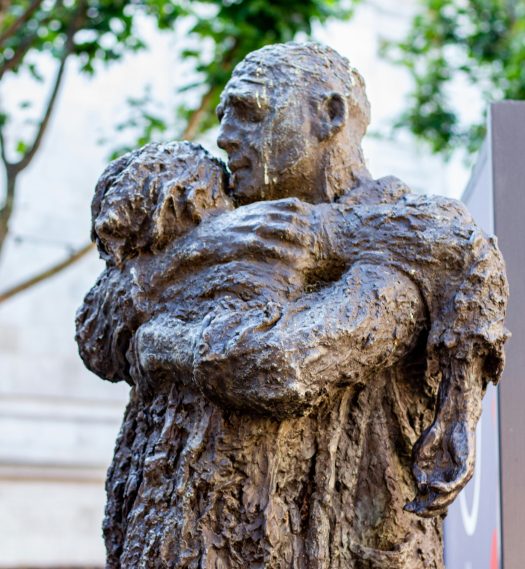
Photo by MBVisign: https://www.pexels.com/photo/genghis-khan-statue-in-close-up-photography-6466768/

Grace Anatomy

Ephesians 2

1As for you, you were dead in your transgressions and sins, 2in which you used to live when you followed the ways of this world and of the ruler of the kingdom of the air, the spirit who is now at work in those who are disobedient. 3All of us also lived among them at one time, gratifying the cravings of our sinful nature and following its desires and thoughts. Like the rest, we were by nature objects of wrath. 4But because of his great love for us, God, who is rich in mercy, 5made us alive with Christ even when we were dead in transgressions—it is by grace you have been saved. 6And God raised us up with Christ and seated us with him in the heavenly realms in Christ Jesus, 7in order that in the coming ages he might show the incomparable riches of his grace, expressed in his kindness to us in Christ Jesus. 8For it is by grace you have been saved, through faith—and this not from yourselves, it is the gift of God— 9not by works, so that no one can boast. 10For we are God’s workmanship, created in Christ Jesus to do good works, which God prepared in advance for us to do. (Ephesians 2:1-10, NIV)


The Daily DAVEotional

Ephesians 2 is one of my favorite passages. If I was creating a Mount Rushmore of favorite New Testament passages (an all-time top 4 list), this passage would definitely be in contention. It is rich with theological truths that are fundamental to understanding the depth of God’s love for us as well as the means and lengths He would go to save us.

A key word in these 10 verses is “grace”, which appears 3 times.

What do you think grace is? How would you define it?

I’ve asked that question to hundreds of people over the years as I’ve engaged in spiritual conversations.

The interesting thing about grace is that it’s a word that most people have heard hundreds of times but almost always have difficulty defining.

Some people, when they hear the word “grace”, think of a dinner time prayer, like Aunt Bethany in Christmas Vacation.

Others equate grace with beauty, like a graceful dancer, or an elegantly dressed celebrity.

To be sure, those are connotations that we may think of when we hear the word, but from a biblical standpoint, “grace” means none of those things.

The theological definition of grace is “unmerited favor” or “undeserved gift”.

I would often give this example of grace when talking to students, as it was a hypothetical, yet realistic situation they could imagine experiencing.

Imagine that you’re taking a class and it’s nearing the end of the semester. You have a big research paper due and it’s worth a hefty portion of your grade. You need to do well on this paper to pass the class.

The problem is that you are nowhere near being done. As the deadline nears, you approach the professor and ask for an extension.

Now would it be unfair if the professor were to decline your request? Would that be unjust?

No. The guidelines and deadlines were clearly communicated. You had ample opportunity to work on the paper and get it done. The professor would not be mean or unjust if he or she were to simply deny your request and tell you that any late papers would be severely penalized.

That is what the Bible calls justice – getting what you deserve. In this passage, what we deserve is God’s wrath. Paul says that we “followed the ways of the world”… “gratifying the craving of our sinful nature and following its desires and thoughts.” As a result, we were objects of God’s wrath, which simply means we were destined to be punished.

God would be perfectly just to give us what we deserve. That’s what justice is – getting what we deserve.

Your professor would also be just to say no to your request and give you exactly what you deserve.

But suppose your professor honors your request and decides to give you a one week extension with no late penalties – a “grace” period.

Your professor is not obligated to give you an extension but if he or she did, it would be an example of extending grace. Your professor is giving you something you don’t deserve – the gift of extra time. You didn’t earn an extension. You don’t deserve an extension. You receive the extension simply because your professor chooses to give it to you.

This is the situation with us and God. We don’t deserve to be saved. We did nothing to earn God’s favor. God is not obligated to save us, and yet, He chooses to extend grace to us. What that means is that we don’t get what we deserve, which is punishment. Instead, we get what we DON’T deserve – the gift of salvation.

Why would God choose to extend grace? Why would he not just punish us since that is what we deserve?

Verse 4 gives us the answer:

But because of his great love for us, God, who is rich in mercy, 5made us alive with Christ even when we were dead in transgressions—it is by grace you have been saved. 

God chooses to save us because of His great love for us and the depth of His mercy.

What is mercy?

Mercy is NOT getting something you deserve.


Doctrinal Dictionary

Justice – getting what you deserve (punishment)

Mercy – Not getting something we deserve (as in avoiding punishment)

Grace – Getting something we don’t deserve (as in favor or blessing)


We deserve punishment but because of God’s love for us, he takes pity on us and desires to make a way so that we don’t have to experience the punishment we deserve.

As a result, God extends grace by sending His son to die in our place so that God’s justice would be satisfied and we could avoid experiencing His wrath.

Verses 8 and 9 are often quoted, as they summarize the essence of the gospel message:

8For it is by grace you have been saved, through faith—and this not from yourselves, it is the gift of God— 9not by works, so that no one can boast.

God gives us a gift we don’t deserve – He saves us. This is grace: getting something we don’t deserve. We didn’t earn this gift. It is freely given by God. Hence, we cannot boast in our salvation because we did nothing to get it. Yet God did everything to give it.

Verse 10 is often neglected but is important to understanding God’s motive and the ultimate outcome He desires of our lives:

For we are God’s workmanship, created in Christ Jesus to do good works, which God prepared in advance for us to do.

Some Bible versions, like the NLT, translate this verse to say that “we are God’s masterpiece.”

Think about that for a minute. God saves us because we are a masterpiece in His eyes. His desire is that we would be transformed into a physical work of art and that our lives would be a living testament to the depth of His love, the richness of His mercy and the boundlessness of His grace!


Did you enjoy this post? I’d love to hear your thoughts! Feel free to like, leave a comment below, and share it with your friends or on social media if you found it helpful or interesting. Your support keeps the conversation going!


Reflection

What has been your definition of grace before reading this post? How did you tend to think of it and define it?

What are some examples of when you experienced grace from another person – a gift that you didn’t deserve?

How would you explain to someone else the difference between justice, mercy and grace?

God says that you are his masterpiece, created for good works in Christ Jesus. What do you think it would look like if you really understood and believed that God sees you as his masterpiece? How would it change your life and your view of yourself?

What are the barriers or roadblocks that make it difficult for you to see yourself as God’s masterpiece?


Photo above is an edited image of a photo by Zhifei Zhou on Unsplash

and another Photo by Helena Lopes on Unsplash

Judgment Seat or Mercy Seat?

1 John 2

1My little children, I am writing these things to you so that you may not sin. And if anyone sins, we have an Advocate with the Father, Jesus Christ the righteous; 2and He Himself is the propitiation for our sins; and not for ours only, but also for those of the whole world.

(1 John 2:1-2, NASB)


The Daily DAVEotional

In the first chapter of John’s first epistle, he shared a number of important principles regarding sin and experiencing fellowship with God. I wrote about that in my blog post, “Walking in the Light Simplified”.

Immediately following that passage, John says that our aim as believers should be to avoid sinning. But we also know that in our fallen humanity, we will inevitably still sin. In the first chapter, he outlined the importance of confessing our sin in order to maintain fellowship with God.

In this section, John stresses the fact that when we do sin (and we WILL sin) we have an Advocate in the person of Jesus Christ.

The picture here is of a defense attorney who pleads our case before the judge, the Father.

Jesus is uniquely qualified to be our advocate because He alone is the propitiation for the sins of the whole world.

What exactly does that mean?

If you’re unfamiliar with the word “propitiation”, it may be because the NIV and NLT, two of the most popular translations used today, don’t include this word in their translation of this passage. Instead, these versions translate the passage to say that Jesus is “the atoning sacrifice for our sins.”

It’s certainly true that Jesus is the atoning sacrifice for the sins of the world, but there’s an element of truth that John is communicating that is missed as a result of omitting the word “propitiation” from the translation.

The word “propitiation” means to appease wrath. The idea is that God is so just and holy, that sin is an infinite offense against God’s character. God’s righteous anger demands that sin be punished.

When it says that Jesus is the propitiation for sin, what it means is that Jesus, through His death on the cross, satisfied the payment that was required for sin. Hence, God’s wrath is appeased or satisfied.

Jesus is more than an atoning sacrifice for sins. He is the propitiation for sin. His death not only atones for sin, but it turns away God’s wrath so that no more punishment is required.

The Greek word for propitiation is “hilasterion” which is the same word for the Old Testament Hebrew word “mercy seat”.

The mercy seat was the cover of the Ark of the Covenant and was the place where the yearly blood sacrifice was made by the high priest. This sacrifice occurred only once a year in the Holy of Holies. On either side of the lid (or mercy seat) were two cherubim (angelic beings). They were facing each other and looked down at the lid.

Inside the ark were placed three significant artifacts: manna, representing the Jewish people’s rejection of God’s provision; Aaron’s rod, which represented man’s rejection of God’s leadership; and the broken pieces of the Ten Commandments, representing man’s rejection of God’s holiness.

When the cherub of Righteousness looked down on the symbols in the ark, it saw all the evidences of man’s rejection of God. When the cherub of Justice looked down, it saw that man was no longer like God’s righteousness and pronounced the death penalty on man. But on the Day of Atonement, the cherub of Justice looked down at the blood sacrifice covering on the lid and said, “I’m satisfied because the death penalty has been paid.” Similarly, Righteousness looked down and was no longer offended because the evidence of man’s sin was covered up and could not be seen.

Jesus’ death on the cross transforms the judgment seat, representing the judgment and punishment we deserve, into a mercy seat, representing the fact that His shed blood through His death on the cross, provides a covering for our sin. Atonement is made, once and for all, and therefore, there is no longer any punishment reserved for those who have placed their trust in Jesus.


Did you enjoy this post? I’d love to hear your thoughts! Feel free to like, leave a comment below, and share it with your friends or on social media if you found it helpful or interesting. Your support keeps the conversation going!


Reflection

What difference does it make to know that Jesus’ death and shed blood has appeased God’s wrath towards your sin?

What is your view and understanding of the holiness of God? Does it seem appropriate to you that God, in His infinite justice, must punish sin? Why or why not?

Is the lid of the ark of the covenant a judgment seat or a mercy seat for you? What is keeping you from putting your full trust in Jesus to cover your sins so that you experience God’s mercy instead of justice?


Photo of Ark of Covenant provided from the following website under Creative Commons License 4.0

https://skfb.ly/6TpDB

Sons of Abraham: Slavery vs. Freedom

Galatians 4

21Listen to me, you who want to live under the law. Do you know what the law really says? 22The Scriptures say that Abraham had two sons, one from his slave-wife and one from his freeborn wife. 23The son of the slave-wife was born in a human attempt to bring about the fulfillment of God’s promise. But the son of the freeborn wife was born as God’s own fulfillment of his promise.

24Now these two women serve as an illustration of God’s two covenants. Hagar, the slave-wife, represents Mount Sinai where people first became enslaved to the law. 25And now Jerusalem is just like Mount Sinai in Arabia, because she and her children live in slavery. 26But Sarah, the free woman, represents the heavenly Jerusalem. And she is our mother. 27That is what Isaiah meant when he prophesied,

“Rejoice, O childless woman!

Break forth into loud and joyful song,

even though you never gave birth to a child.

For the woman who could bear no children

now has more than all the other women!”

28And you, dear brothers and sisters, are children of the promise, just like Isaac. 29And we who are born of the Holy Spirit are persecuted by those who want us to keep the law, just as Isaac, the child of promise, was persecuted by Ishmael, the son of the slave-wife.

30But what do the Scriptures say about that? “Get rid of the slave and her son, for the son of the slave woman will not share the family inheritance with the free woman’s son.” 31So, dear brothers and sisters, we are not children of the slave woman, obligated to the law. We are children of the free woman, acceptable to God because of our faith.

(Galatians 4:21-31, NLT)


The Daily DAVEotional

What do you think is required to get into heaven? How does God decide?

I’ve asked this question thousands of times as I’ve shared the message of Christ with people over the years.

What I’ve found is that people overwhelmingly think that getting into heaven when you die is a matter of being a “good” person. The prevailing view is that God will evaluate us based on what we’ve done and how we’ve lived our life. In other words, our HUMAN EFFORT.

I think that one aspect of our sinful nature is that we intrinsically want to make our eternal destiny about us. We become the central figures in our own story instead of God being the central figure as He should be.

This was the issue in the Galatian church. They started off strong, believing the message of the gospel that Paul preached and trusting in Jesus to pay for their sins, provide forgiveness and ultimately, eternal life.

But something happened along the way. Very quickly after placing their faith in Christ, these Galatian believers reverted back to their old way of life which emphasized adherence and obedience to the Law.

Paul is so surprised by their sudden spiritual shift that he asks them “who bewitched you?” I wrote about this previously in my post entitled, “I Put a Spell on You” and also, my post entitled, “Have you been Scammed?”

Paul tells the Galatians that if you want to live under the law, you’re voluntarily making yourself a slave again, which makes no sense.

He then gives an illustration from the Old Testament regarding Abraham and his two sons, Ishmael and Isaac, whose births are recorded in Genesis 16 and 21 respectively.

You may recall that Abraham was given a promise by God that he would be made into a great nation, through whom all the nations would be blessed.

This promise to Abraham was given in Genesis 12, was reaffirmed in Genesis 15 and is commonly referred to as the Abrahamic Covenant.

There was only one problem. Abraham didn’t have any children and he and Sarah were both getting very advanced in age. From a human perspective, it was difficult to see how this promise could come to be as Abraham had no heir.

So in their haste to bring about God’s promise, Sarah concocted a plan that would give Abraham an heir. She allowed Abraham to sleep with her servant Hagar, who conceived and bore him his first son, Ishmael.

Though this seemed like a reasonable course that would ensure the preservation of Abraham’s family line, it actually bypassed God’s promise, which was not only to Abraham but to Sarah as well.

So Ishmael was indeed Abraham’s son but he was not the son through whom God would deliver His promise to make Abraham into a great nation. This is because Ishmael was not Sarah’s son, he was the son born of a slave woman.

Paul’s point in this passage is that Abraham’s two sons represent two different approaches to receiving God’s promise. Ishmael was born out of Abraham and Sarah’s human effort to bring about God’s promise by creating a scenario where Abraham would have an heir.

Isaac, on the other hand, was born out of God’s sovereign and divine intervention which provided an heir to Abraham AND Sarah.

So Ishmael represents human effort to bring about God’s promise, whereas Isaac represents God’s promise being delivered solely by His divine power.

Paul says that Ishmael represents Mount Sinai while Isaac represents the New Jerusalem.

What exactly does that mean?

Remember that Mount Sinai was where Moses met God and received the Law. It was this divine encounter that instituted the Mosaic Law by which every Jew from Moses onward lived their life.

The Law represented a covenant that emphasized human effort to live righteously, according to God’s explicit standards. There were lots of rules and regulations and various processes for receiving forgiveness and atonement. The law demonstrated that man was sinful and wholly incapable of living up to God’s perfect standard.

Isaac, on the other hand, represents the heavenly Jerusalem. This is not an earthly city but a heavenly reality. Isaac, who was born from Abraham and Sarah well beyond their child-bearing years, was conceived and born completely because God Himself brought it about. His birth was not brought about through human effort but via God’s divine intervention.

In the same way, coming to Christ, receiving forgiveness and eternal life, is completely a work of God. There is no human effort involved. Those who accept Jesus become a part of God’s heavenly family with the promise of living forever with him in a heavenly Jerusalem. Isaac represents this group because just as he was born as a result of God’s divine provision, those of us who belong to God’s family were born into that family only because of what God has done, not because of anything we have done.

Ishmael was born of a slave-woman and he represents those who want to live under the law, which is a system of slavery.

Isaac was born of a free-woman and he represents those who want to live in freedom from slavery.

Given these two choices, Paul wonders why anyone would consciously and purposefully decide to go back to a system that enslaves them. It is better to remain free.

The reality is that many Christians do exactly what the Galatians were doing. After accepting Christ, receiving forgiveness and entering into a new relationship with God as His adopted child. we resort to living our lives under some impossible religious standard that essentially enslaves us.

We have a choice when it comes to how we approach God’s promise of eternal life. We can do what Sarah and Abraham did and seek to make our own path by our human efforts. This is the Ishmael approach which leads to being enslaved to a religious system.

The alternative is the Isaac approach, which is simply placing our trust in God to provide His promise providentially. This approach leads to freedom because it’s not based on our performance but on God’s power to deliver on His promise.

Which choice are you currently making?


Did you enjoy this post? I’d love to hear your thoughts! Feel free to like, leave a comment below, and share it with your friends or on social media if you found it helpful or interesting. Your support keeps the conversation going!


Reflection

Paul says that those who have “faith” are acceptable to God. Have you placed your faith in Jesus to pay for your sin and give you eternal life? If so, what were the circumstances that led to that decision?

Any Christian who has placed their faith in Jesus can revert to a rules-based religious lifestyle, just as the Galatians did. In what ways do you tend to live by rules and religion instead of faith?

Why do you think so many people choose to live in slavery instead of freedom? What are some of the reasons in your opinion?

What are some common ways you see Christians living in legalism and rules-based Christianity?

What are some things you can do to keep you from straying or drifting into a rules-based religious system?


Photo by JOHN TOWNER on Unsplash

Can You Make the Bible an Idol?

Psalm 119

16I delight in your decrees; I will not neglect your word.

20My soul is consumed with longing for your laws at all times.

24Your statutes are my delight; they are my counselors.

40How I long for your precepts! Preserve my life in your righteousness.

43Do not snatch the word of truth from my mouth, for I have put my hope in your laws.

47for I delight in your commands because I love them.

48I lift up my hands to your commands, which I love, and I meditate on your decrees.

70Their hearts are callous and unfeeling, but I delight in your law.

72The law from your mouth is more precious to me than thousands of pieces of silver and gold.

77Let your compassion come to me that I may live, for your law is my delight.

92If your law had not been my delight, I would have perished in my affliction.

97Oh, how I love your law! I meditate on it all day long.

103How sweet are your words to my taste, sweeter than honey to my mouth!

111Your statutes are my heritage forever; they are the joy of my heart.

113I hate double-minded men, but I love your law.

119All the wicked of the earth you discard like dross; therefore I love your statutes.

120My flesh trembles in fear of you; I stand in awe of your laws.

127Because I love your commands more than gold, more than pure gold,

129Your statutes are wonderful; therefore I obey them.

140Your promises have been thoroughly tested, and your servant loves them.

143Trouble and distress have come upon me, but your commands are my delight.

159See how I love your precepts; preserve my life, O LORD, according to your love.

163I hate and abhor falsehood but I love your law.

165Great peace have they who love your law, and nothing can make them stumble.

167I obey your statutes, for I love them greatly.

174I long for your salvation, O LORD, and your law is my delight.

(Psalm 119 – selected verses, NLT)

NOTE: Psalm 119 is the longest chapter in the entire Bible. I’ve included selected verses that reflect the content of this blog post


The Daily DAVEotional

A while back, I read a social media post from a person with a sizable following in which he exhorted people, “Don’t make the Bible an idol.”

My first thought was, “what does that even mean?”

Is it possible to make the Bible an idol? What would that even look like?

I immediately thought about this Psalm (119), which is the longest chapter in the entire Bible and is an extended discourse on the wonders and virtues of God’s word. I’ve written about this Psalm before in my post “The Endless Virtues of God’s Word.”

It’s well worth your time to read the entire Psalm but due to the sheer length of the text, I’ve only included selected verses that highlight the devotion, awe and love that the psalmist has for God’s word.

If ever someone might be accused of worshiping God’s Word and making it an idol, it would be the author of Psalm 119. Notice some of the language he uses to express his feelings about God’s laws, statutes and precepts.

Words like delight, love, long, hope, consumed, sweet, joy, precious and awe are all used to describe how the psalmist feels about God’s laws.

There is clearly a reverence and respect and a deep LOVE for God’s word. But does that equate to idol worship?

To answer that question, we need to understand what idol worship is.

I wrote in a previous blog post, “A Discourse on the Foolishness of Idols” that an idol can be thought of as a substitutionary object of trust. Instead of trusting in God as your deliverer, your provider, your protector, your source of life, your savior, etc, you transfer that trust to something or someone else.

But you can also think of an idol as anything that takes priority or precedence in your heart over God.

So how about this Psalmist? Is he guilty of idol worship? Is it possible to elevate the Bible to a position over God in our lives?

I suppose that if I were to worship the physical book of the Bible as if it were a deity itself, I could be accused of idol worship. But I don’t think that is what’s happening with the psalmist.

The word of the Lord – his law, precepts, ordinances and statutes – are all merely an extension of God Himself. They are not God, but they are a revelation of the character of the true God.

When the psalmist says he loves God’s law, and he delights in His word, he’s making a statement about God’s character. He’s acknowledging that God’s word is a source of revelation about God’s nature and in it, God has provided wisdom and instruction for righteous living.

God’s word tells us who He is and how we’re to live. The psalmist simply acknowledges these facts. Moreover, he’s speaking directly to God when he makes these statements. Therefore, the praise and adoration is directed toward God and not some inanimate scroll.

Think of it this way – let’s say you read a book that you really loved. Then one day you meet the author at a book signing. While you’re at the table, you go on and on about how much you loved the book. You share that the character development, plot lines and context were all relatable and engrossing. Do you think the author will be offended because you praised his/her work and not the author directly? No, the book is an extension of them and it is obvious to all that your praise is directed toward the author.

That is exactly what is happening in this psalm. The psalmist is simply recognizing that God’s laws and statutes are righteous and life-giving.

So why would this online social media influencer bark out that we should not make the Bible an idol? Why is this even a concern?

My desire to answer this question led me down an online rabbit hole. This particular influencer, and others who also warn that we should not make the Bible an idol, belongs to a strain of religious faith that is known as Progressive Christianity.

Progressive Christianity uses the word “Christianity” but it is hardly Christian. While they utilize the same language and reference the same characters as traditional Christianity, they redefine the meaning of words, concepts and even characters in order to suit their own theological preferences.

Progressive Christians occupy a broad spectrum of beliefs but there are some things that tend to be common among most who identify themselves as being a part of this camp.

Perhaps the hallmark value of Progressive Christianity is their view that God is always evolving. Hence, there is an emphasis on searching and questioning, while those claiming to know truth may be labeled as unenlightened or immature.

Progressive Christianity tends to be very ecumenical, embracing all faith religions and ideologies as equally valid and helpful. Loving others means you shouldn’t offend others by telling them that their beliefs might be wrong. Hence, Jesus has been recast from His role as exclusive Savior of the world to that of a moral teacher whose example we’re to follow.

Standing in contrast to Progressive Christianity is Orthodox Christianity, which teaches that God can be known because He has revealed Himself to us through His word and through the person of Jesus.

In addition, orthodox Christianity teaches that God is NOT evolving. He has laid out for us in His word what His standards are for living and because God doesn’t change, the standards and statutes set forth in His word apply to us today.

Perhaps you are starting to see the problem. If God doesn’t change, then that means His moral code and His rules for righteous living are not optional and must be obeyed today.

The Progressive Christian attempts to get around this by doubling down on the assertion that God IS evolving while adding the caveat that the Bible is not written by God.

Their claim is that the Bible we have is simply a record of writings by fallible men; they are NOT God’s spoken words. While the Bible may be helpful and inspiring, it is only a tool that you may choose to use; it is NOT authoritative for our lives. If the Bible lacks authority, then it logically follows that I don’t have to abide by all of its restrictive and antiquated rules and regulations.

This is where the rubber meets the road. For the evangelical (orthodox) believer, the Bible is authoritative, for it reveals God’s very nature to us and it contains His laws, statutes, precepts and ordinances for righteous living. This is what the psalmist was extolling in Psalm 119.

The Progressive Christian denies that God is the author of Scripture and so for anyone who believes in the authority of Scripture, they are told by the Progressive Christian, “Don’t make the Bible an idol.”

So you see that this whole argument is based on a completely different foundational view of God’s nature and how he reveals Himself to mankind. The Progressive Christian denies that the Bible is an authoritative tome that accurately reflects God’s nature and provides rules and guidance for living. To them, there are many other ways God may communicate to us apart from the Bible, including other faith traditions.

This denigration of the authority of Scripture allows the Progressive Christian to decide for himself which of the statutes in the Bible are valid for today and which ones aren’t. Conveniently, this allows the Progressive Christian to formulate a view of God that matches their preferences and proclivities exactly, which, strangely, is exactly the definition of forming an idol.

Amazingly, we’ve come full circle. The Progressive Christian tells us not to make the Bible an idol because doing so limits God and restricts our view of Him to how He is portrayed in Scripture.

Meanwhile, the Progressive Christian untethers themselves from the shackles of Biblical revelation of God as an immutable template for representing who God is, opting instead for the freedom to develop an image of God that is highly influenced by their own experiences and preferences.

Ironically, that sounds like idol worship to me.


To learn more about Progressive Christianity and what they believe, watch this 12 minute video from apologist Alisa Childers


Reflection

What is your view of the Bible? Do you see it as God’s word or a collection of writings written by fallible men?

What is the source of your information about God? How can you know if your view of God is accurate to who God really is rather than just an image you developed about Him that suits your preferences?

Do you think that the commands of the Bible are valid for people today or are they optional? What are the reasons for your position?

What has been your experience with Progressive Christianity? Do you think Progressive Christianity is compatible with traditional, orthodox Christianity? Why or why not?

Why do you think people opt for a Progressive version of Christianity instead of traditional, orthodox Christianity? What do you think are some of the main reasons and driving forces?


Photo by Pixabay on Pexels.com

I Put a Spell on You

Deuteronomy 21

22“If someone has committed a crime worthy of death and is executed and then hanged on a tree, 23the body must never remain on the tree overnight. You must bury the body that same day, for anyone hanging on a tree is cursed of God. Do not defile the land the LORD your God is giving you as a special possession. (Deuteronomy 21:22-23, NLT)

Galatians 3

1Oh, foolish Galatians! What magician has cast an evil spell on you? For you used to see the meaning of Jesus Christ’s death as clearly as though I had shown you a signboard with a picture of Christ dying on the cross. 2Let me ask you this one question: Did you receive the Holy Spirit by keeping the law? Of course not, for the Holy Spirit came upon you only after you believed the message you heard about Christ. 3Have you lost your senses? After starting your Christian lives in the Spirit, why are you now trying to become perfect by your own human effort? 4You have suffered so much for the Good News. Surely it was not in vain, was it? Are you now going to just throw it all away?

5I ask you again, does God give you the Holy Spirit and work miracles among you because you obey the law of Moses? Of course not! It is because you believe the message you heard about Christ.

6In the same way, “Abraham believed God, so God declared him righteous because of his faith.” 7The real children of Abraham, then, are all those who put their faith in God.

8What’s more, the Scriptures looked forward to this time when God would accept the Gentiles, too, on the basis of their faith. God promised this good news to Abraham long ago when he said, “All nations will be blessed through you.” 9And so it is: All who put their faith in Christ share the same blessing Abraham received because of his faith.

10But those who depend on the law to make them right with God are under his curse, for the Scriptures say, “Cursed is everyone who does not observe and obey all these commands that are written in God’s Book of the Law.” 11Consequently, it is clear that no one can ever be right with God by trying to keep the law. For the Scriptures say, “It is through faith that a righteous person has life.” 12How different from this way of faith is the way of law, which says, “If you wish to find life by obeying the law, you must obey all of its commands.” 13But Christ has rescued us from the curse pronounced by the law. When he was hung on the cross, he took upon himself the curse for our wrongdoing. For it is written in the Scriptures, “Cursed is everyone who is hung on a tree.” 14Through the work of Christ Jesus, God has blessed the Gentiles with the same blessing he promised to Abraham, and we Christians receive the promised Holy Spirit through faith. (Galatians 3:1-14, NLT)


The Daily DAVEotional

In 1956, Jalacy “Screamin’ Jay” Hawkins recorded his most famous song, “I Put a Spell on You.” The song (which you can listen to here) became a cult classic that’s been covered by a number of artists over the years, including Nina Simone, Annie Lennox and Alan Price.

For me, I grew up listening to the Creedence Clearwater Revival Rendition of the song. It was classic rock at its best.

To have a spell put on you means that you’re completely held by something, whether a person or an idea. Dictionary.com describes it as “a state of being enchanted, entranced or fascinated.”

In this 3rd chapter of Paul’s letter to the Galatians, Paul is asking the question, “who put a spell on you?” Paul is so dumbfounded by the change he has seen in how the Galatians are living out the Christian life that it’s as if they have been put in a trance by an evil trickster posing as a servant of Christ.

The issue that Paul was addressing is highlighted in verse 3 where Paul says, “Have you lost your senses? After starting your Christian lives in the Spirit, why are you now trying to become perfect by your own human effort?” [emphasis added]

This problem is one that is actually pretty commonplace among believers even today. Many Christians place their faith in Christ to BEGIN the Christian life, and then resort to a works based system in order to MAINTAIN the Christian life.

Paul is saying that this approach to the Christian life is so contrary to the actual gospel message that it’s EVIL.

Twice in the first 5 verses Paul asks the question: did you receive the Holy Spirit by keeping the Law? The question is rhetorical in nature, but Paul answers it anyway with an emphatic NO!

How does a person receive the Holy Spirit?  Through belief, or “by faith”.

If you are a Christian, you came to Christ by placing your faith, or trust, in Jesus to pardon your debt of sin and provide forgiveness through His death on the cross. This is why Paul, in the very first verse, references the cross of Christ. Every Christian who has ever existed has come to Christ in the same way, by believing in Jesus and His death on the cross as a payment for personal sin.

According to Ephesians 1:13, at the moment of belief in Christ, all Christians receive the promised Holy Spirit, who comes to live inside the life of the new believer.

The problem for many Christians is what follows that initial conversion experience. After beginning the Christian life by placing their faith in Christ, many Christians fail to continue the Christian life in faith, empowered by the Spirit. Instead, they opt for a rules-based approach in which they seek to please God through their “human effort” (see verse 3).

This was not just a problem with the Galatians. Paul also addressed this issue in Romans 4. I wrote about it in my blog post, “How Good Do You Have to Be to Be Saved?”

This problem persists today as well.

In our rebelliousness, we desire to make ourselves the center of the universe. Most religions are man-centered, meaning that the religion is centered around human effort and good deeds.

Biblical Christianity, on the other hand, is God-centered. It is the ONE major religion or philosophy that does not depend on what man DOES but is instead ordered around what God DID via Christ’s death on the cross.

The issue with the Galatians was that while they began the Christian life in the Spirit by faith, they sought to maintain their standing with God by following the Law, the Jewish religious code.

Paul reasons that if you didn’t come to Christ by adhering to the Law, why are you trying to maintain your relationship with God by adhering to the Law?

Essentially, Paul is saying that you can’t mix and match these two approaches. They started out with a God-centered approach based on faith but then shifted to a man-centered approach based on human effort. This makes no sense. If you want to base it it on adhering to the Law, you will have to obey the whole Law. Otherwise, you are under a curse.

The other option is to base your approach on faith, which is preferable, because in this approach, Jesus was a curse for us via his death on the cross (see verse 13).

By switching from a God-centered approach back to a man-centered religion (the Law) as a means of seeking God’s approval, you are invalidating the whole reason why Christ was necessary in the first place, which is why Paul asks the Galatians, “Are you now going to just throw it all away?”

The Christian life is a life of faith. We don’t just come to Christ by faith. We live the Christian life by faith as well. In this way, God is the center at all times.

If you are under the impression that we come to Jesus by placing our faith in Him but then we must follow some sort of religious moral code in order to keep our standing with God, well then Paul’s question to the Galatians extends to you – who put a spell on you? That is not just a minor misunderstanding or small theological difference of opinion. Paul says this ideology is evil and man-centered, designed to keep people living as slaves instead of living in freedom and experiencing true transformation.

Reflection

What is your reaction to the idea that we are under the curse of the Law, but Jesus, by hanging on a tree, became a curse for us? What imagery does this create in your mind? What thoughts and emotions does it provoke?

What do you think are the reasons why Paul calls the Galatians approach to the Christian life evil?

What are some examples you can think of in which people tend to make Christianity man-centered instead of faith-based and centered on God?

What do you think it looks like practically to continue the Christian life in faith instead of human effort?


Photo by Dollar Gill on Unsplash


What is Your Definition of Truth?

John 14

1“Don’t be troubled. You trust God, now trust in me. 2There are many rooms in my Father’s home, and I am going to prepare a place for you. If this were not so, I would tell you plainly. 3When everything is ready, I will come and get you, so that you will always be with me where I am. 4And you know where I am going and how to get there.”

5“No, we don’t know, Lord,” Thomas said. “We haven’t any idea where you are going, so how can we know the way?”

6Jesus told him, “I am the way, the truth, and the life. No one can come to the Father except through me.”

(John 14:1-6, NLT)


The Daily DAVEotional

What is truth?

I think the best way of defining truth is “that which corresponds to reality.”

We live in a time and culture where many people are not too concerned with truth, especially as it relates to religious beliefs.

The predominant view regarding religion today is that of pluralism, the idea that there is no ONE right view or true religion. Most people think that whatever works best for you is good for you. If you think about it, this totally fits our postmodern culture.

Postmodernism is a reaction or a rejection to the philosophy of modernism, which is also known as naturalism. While naturalism emphasized logic and repeated observation and experience to arrive at truth (seen most notably in modern science and the scientific method), postmodernism emphasizes one’s own experience as the basis for truth.

Hence, for most people, there is not ONE truth, but there can be many truths, because truth is whatever your experience tells you it is.

Enter Jesus in John 14. Jesus is interacting with his disciples shortly before he is arrested and crucified. In preparing his disciples for what they will soon encounter with his death, resurrection and ascension, he tells them that he’s going to prepare a place for them. He also tells them that they know the way to get to where he’s going.

The disciples are confused. “We don’t know where you’re going….so how could we know how to get there?”

In typical fashion, the disciples are perplexed because Jesus is talking about a spiritual reality while the disciples are thinking only about the physical reality they’re currently in.

Jesus’ response to his disciples is profound and has far-reaching implications. He says:

“I am the way, the truth, and the life. No one can come to the Father except through me.”

Jesus uses three separate terms to describe himself:

I am the way – Jesus defines himself as THE way, not “a” way. In our diverse world of religious pluralism, Jesus does not describe himself as one alternative path among many. Jesus is not an option that suits some people while Buddha, Mohammad or Confucius might be more preferable for others. Jesus is not a preference. Jesus is THE option.

I am the truth – Jesus says that he is THE truth. If truth is that which corresponds to reality, then Jesus is saying that he is the ultimate reality. His life and His words accurately depict what is real. What this means is that Jesus’ words are not mere suggestions to consider. Instead, they are the basis of reality for everyone, not just those people who prefer Jesus over some other religious leader or humanistic ideology.

I am the life – Jesus also describes himself as THE LIFE. Jesus is not just a way to experience a better life as if he is a self-help guru. He is the source of all life itself. John says this about Jesus in the introductory words of his gospel:

He created everything there is. Nothing exists that he didn’t make. 4Life itself was in him, and this life gives light to everyone. (John 1:3-4, NLT)

Perhaps you have heard the analogy that getting to God is like a trek to the top of a mountain. While God is at the top, there are many routes that one might traverse in order to get to the top and reach God.

This analogy adequately illustrates what many believe today. God is whatever or however you might define him and your path to getting to him is whatever path you might choose to take.

Jesus stands in stark contrast to this way of thinking. God is not whatever or whomever you might want him to be. Making God out to be whoever you might prefer him to be is what the Bible calls idol worship and it’s an egregious sin. Israel’s engagement in idol worship is a main theme in the Old Testament and was the primary reason for their punishment and exile at the hands of foregien powers. (See my blog posts “Are You an Idol Worshiper” and “A Discourse on the Foolishness of Idols”).

Jesus says that if you want to get to God the Father, you MUST go through Him. Contrary to what our modern day religious pluralism says, Jesus IS the only way. Jesus can make that claim because He’s the only one who has made a valid payment for sin. No other religious leader or ideology even offers a solution to the problem of sin before a holy God. Jesus is the only one who does, and therefore, His claims are exclusive.

Christianity does not fit well in today’s religious pluralistic culture because it makes exclusive claims about God and salvation. Jesus himself claimed to be the ONLY way to God and this view was supported by his disciples and the New Testament writings (see my blog post “Is Christianity an Exclusive Religion?“)

We live in a pluralistic society and as a result, we’re tolerant of others and their views and beliefs. However, tolerance is not truth. Tolerance says that we respect the rights of others to hold views and beliefs that are different than ours. It doesn’t mean that we agree that their views are right. Truth is that which corresponds to reality. Jesus is truth. His words are truth. He is the only one who has paid the price for sin and therefore, He indeed is the only way to get to God.

Reflection

How would you define truth?

What is your response to those who say all religions are basically the same? How would you go about distinguishing Christianity from other religions and ideologies?

How do you respond to those who object to Christianity’s exclusive claims? 

Do you think that Christianity is intolerant because it teaches that there is only ONE way to reach God? Why or why not? How do you define tolerance?


Photo by Brett Jordan on Unsplash