2 Chronicles 1
1Solomon, the son of King David, now took firm control of the kingdom, for the LORD his God was with him and made him very powerful. 2He called together all Israel—the generals and captains of the army, the judges, and all the political and clan leaders. 3Then Solomon led the entire assembly to the hill at Gibeon where God’s Tabernacle was located. This was the Tabernacle that Moses, the LORD’s servant, had constructed in the wilderness. 4David had already moved the Ark of God from Kiriath-jearim to the special tent he had prepared for it in Jerusalem. 5But the bronze altar made by Bezalel son of Uri and grandson of Hur was still at Gibeon in front of the Tabernacle of the LORD. So Solomon and the people gathered in front of it to consult the LORD. 6There in front of the Tabernacle, Solomon went up to the bronze altar in the LORD’s presence and sacrificed a thousand burnt offerings on it.
7That night God appeared to Solomon in a dream and said, “What do you want? Ask, and I will give it to you!”
8Solomon replied to God, “You have been so faithful and kind to my father, David, and now you have made me king in his place. 9Now, LORD God, please keep your promise to David my father, for you have made me king over a people as numerous as the dust of the earth! 10Give me wisdom and knowledge to rule them properly, for who is able to govern this great nation of yours?”
11God said to Solomon, “Because your greatest desire is to help your people, and you did not ask for personal wealth and honor or the death of your enemies or even a long life, but rather you asked for wisdom and knowledge to properly govern my people, 12I will certainly give you the wisdom and knowledge you requested. And I will also give you riches, wealth, and honor such as no other king has ever had before you or will ever have again!” 13Then Solomon returned to Jerusalem from the Tabernacle at the hill of Gibeon, and he reigned over Israel. (2 Chronicles 1:1-13, NLT)
The Daily DAVEotional
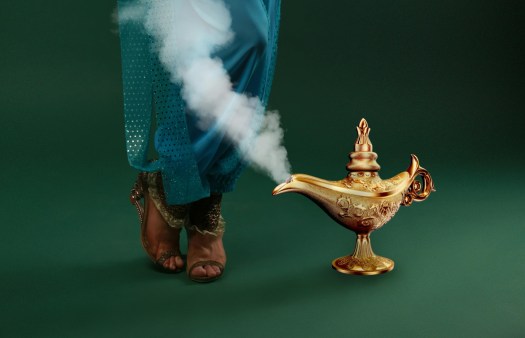
Imagine that you acquire an old lamp like the one from the movie Aladdin.
You rub the lamp and out pops a genie, who grants you one wish.
What would you wish for?
There’s an old Twilight Zone episode whose story follows this very premise.
A couple is barely making ends meet as the owners of a second-hand thrift shop. A woman comes in needing money, offering to sell an old wine bottle she found. Though financially strapped themselves, they buy the worthless bottle out of pity and compassion for the woman.
Wanting to recoup his money, the man attempts to clean up the bottle so he can put it on the shelf and sell it. While rubbing the bottle to clean it up, out pops a genie, who grants the couple four wishes.
The first wish is used to fix the broken glass of their main display case, thus proving the genie’s power and ability to grant wishes.
The couple decides to use their 2nd wish on money and they instantly have a million dollars in cash (valued in 1960). They promptly give thousands away to their friends and begin living the good life. But then the IRS shows up, demanding their cut. In the end, the couple has only $5 left of the million they had wished for.
The owner decides that maybe power would be a better thing to wish for, so he asks to be an all-powerful dictator who cannot be voted out of his position.
He’s instantly transformed into Hitler and it’s the final days of World War II. An officer enters the bunker where he’s hiding and offers him a vial of cyanide to commit suicide. At that moment, the shop-owner-turned-Hitler wishes for his old lifestyle back.
The man is instantly transformed back to his shop where things are pretty much exactly like they were before they met the genie, except their display cabinet glass is still intact from the first wish. A few moments later, while sweeping up in front of the display case, the broom handle accidentally hits the case and the glass breaks.
The moral of this episode is “be careful what you wish for” because what we think will bring meaning, purpose and fulfillment often has unforeseen consequences that bring trouble and pain.
It turns out that Solomon, the successor to King David, was faced with this exact scenario early in his reign.
God (not a genie) appears to Solomon in a dream and asks him “what do you want? Ask, and I will give it to you.”
Solomon isn’t given four wishes. He’s given only one wish. Having only one wish heightens the drama as it forces the person to choose from the array of things they desire. What you ultimately wish for is a reflection of your deepest desire and what is most important to you.
What would you have asked for?
If you’re like most people, you probably would have asked for riches, allowing you to quit working and ensuring that you would be financially set for life. Others might ask for fame, enabling them to be loved and adored by millions, feeding their egos and massaging their insecurities.
Still others would ask for long life or power, guaranteeing that their rule would be firmly established for many years.
But Solomon asks for none of these things.
Instead, Solomon asks God to give him wisdom so that he could rule the people under his authority properly, with fairness and justice.
God is so impressed with Solomon’s selfless request that he not only grants his wish. but he also gives him the things he didn’t ask for, namely, riches, power and fame.
Why would God give Solomon what he didn’t ask for?
God gave Solomon what he didn’t ask for because He knew he could be trusted to steward those resources for God’s purposes. Solomon could be trusted because his heart was inclined toward others and not himself.
In man’s mind, the most important commodities are money and power. We think that if we can acquire these things our lives will be better and things will go well for us.
But in God’s economy, wisdom is better than riches or fame. This truth is repeated and emphasized over and over by Solomon throughout Proverbs and Ecclesiastes.
Wisdom is not just knowing things. Wisdom is knowing how to apply and implement what you know in a way that is righteous and god-honoring.
Being wise doesn’t guarantee that you’ll become rich, powerful and famous, as Solomon did. But it does greatly improve your chances at a rich and meaningful lifestyle as your choices will follow God’s pattern instead of your own selfish desires. God’s pattern for living is more likely to bring ultimate satisfaction as you avoid the pitfalls that selfish and reckless behavior so often brings.
So what do you think? If you had one wish, what would you wish for?
If you said wisdom, then congratulations are in order. The good news is that you don’t have to wish for it. You can ask for wisdom and God will give it to you. In fact, He has already provided a master-class on wisdom in His word, the Bible.
He promises that if you study this book (the Bible), your life will be on the right path and you will experience His blessings.
If your one wish is for something else, like money, fame, power or an indestructible lifestyle, then be careful what you wish for as the things we think will bring ultimate meaning, purpose and fulfillment often come with unforeseen consequences, liabilities and obligations that lead to struggle and pain.
Did you enjoy this post? I’d love to hear your thoughts! Feel free to like, leave a comment below, and share it with your friends or on social media if you found it helpful or interesting. Your support keeps the conversation going!
Reflection
When growing up and faced with the prospect of three wishes (you can’t wish for more wishes) what were the things you typically wished for?
What do you think is the difference between wisdom and knowledge?
What are some reasons why wisdom would be preferable to have instead of wealth, or fame?
What are the ways you are seeking to become a wise person? How do you think a person acquires wisdom?
Photo by Vika Glitter: https://www.pexels.com/photo/woman-posing-in-arabic-clothing-with-genie-lamp-15499799/





 Fortunately, there was still plenty of Leonardo’s original image still intact when all of the extraneous layers were removed. At that point, what was left underwent an extensive 25 year restoration process to ensure that the image would not experience further decay. In fact, our guide told us that Leonardo’s masterpiece should remain intact for another 500 years!