
Did Jesus Die on the Cross or Merely Faint?

John 19

28Jesus knew that everything was now finished, and to fulfill the Scriptures he said, “I am thirsty.” 29A jar of sour wine was sitting there, so they soaked a sponge in it, put it on a hyssop branch, and held it up to his lips. 30When Jesus had tasted it, he said, “It is finished!” Then he bowed his head and gave up his spirit.

31The Jewish leaders didn’t want the victims hanging there the next day, which was the Sabbath (and a very special Sabbath at that, because it was the Passover), so they asked Pilate to hasten their deaths by ordering that their legs be broken. Then their bodies could be taken down. 32So the soldiers came and broke the legs of the two men crucified with Jesus. 33But when they came to Jesus, they saw that he was dead already, so they didn’t break his legs. 34One of the soldiers, however, pierced his side with a spear, and blood and water flowed out. 35This report is from an eyewitness giving an accurate account; it is presented so that you also can believe. 36These things happened in fulfillment of the Scriptures that say, “Not one of his bones will be broken,” 37and “They will look on him whom they pierced.” (John 19:28-37, NLT)


The Daily DAVEotional

Christianity stands or falls on one event – the resurrection.

Over the years, critics of Christianity have promoted a number of theories to argue that the resurrection never actually happened. If Jesus didn’t actually rise from the dead, Christianity is nothing more than another moral code.

One of the more novel theories to explain away a supernatural resurrection is the Swoon theory, which suggests that Jesus never actually died on the cross but merely fainted. Later, after he was buried, the cool air of the tomb revived him. He emerged from the tomb alive and people mistakenly believed that he had resurrected.

There are numerous problems with this theory.

First of all, if Jesus did indeed faint and then was revived, how is it that he had the strength to move a 2-ton boulder that covered the tomb entrance and then overcome the armed battalion that guarded the tomb?

Jesus was brutally whipped and scourged before he was even nailed to the cross. He was so weak from the lashes and the beating at the hands of the Roman soldiers that he wasn’t even able to carry his own cross to the crucifixion site.

He then hung on a cross for hours, which undoubtedly weakened him further. Even if he did not die, he was in critical condition. Yet this theory wants us to believe that a person in his condition was able to unravel himself from 75 pounds of grave clothes, then move a 2-ton boulder out of the way, fend off a contingency of elitely trained and armed Roman guards so that he could later appear to his followers and declare himself to be the resurrected Messiah. This would take more faith than believing in an actual resurrection.

Secondly, as C.S. Lewis has argued, if Jesus merely fainted and then emerged alive, declaring himself to be the resurrected Messiah, he would more aptly be compared to the devil than to God. Why is that?

In this scenario, Jesus would have foisted the greatest scam on people in the history of the world. Jesus, knowing he wasn’t God, would’ve had to have deceptively convinced people to give their lives for something that was a bold-faced lie.

As Lewis argued in Mere Christianity, this line of reasoning does not align with what we know about Jesus the man, namely that he was the greatest moral teacher the world has ever known.


Click here to see a A Comprehensive List of Blog Posts Based on Bible Passage Reference


Yet the Swoon theory forces us to believe that Jesus was not really a moral teacher as much as he was the best snake oil salesman who ever lived. He was so good, in fact, that most people still don’t realize they’ve been scammed.

Those are the philosophical reasons to reject the Swoon theory. However, there is evidence from this passage in John 19 that refutes the very basis of the Swoon theory.

The Swoon theory rests on the premise that Jesus didn’t actually die. Yet this passage provides convincing proof that Jesus indeed DID die.

How so?

Verse 31 tells us that the Jewish leaders didn’t want the crucified victims to be hanging on the cross during the Sabbath which was quickly approaching. The legs of crucifixion victims were often broken in order to hasten death. Essentially, the victims would no longer be able to push themselves up on the cross to inhale and they would suffocate rather quickly after their legs were broken. The text says that the soldiers broke the legs of the other two men who were crucified with Jesus. However, with Jesus, the soldiers saw that he was already dead, so there was no need to break his legs.

This is strong evidence that Jesus was already dead, contrary to those who might claim that he had only fainted or passed out.

There is another, even more convincing piece of evidence from this passage that demonstrates that Jesus was definitely dead when he came off that cross.

After the soldiers decided NOT to break Jesus’ legs, the text says that one of the soldiers took a spear and pierced Jesus’ side. There is no explanation as to why he decided to do that. What is interesting though is the description of what happened next. It says that “blood and water flowed out.”

The description of “blood and water” is significant. The author would not have had a medical understanding at that time that this was evidence of death. Blood and water would not have separated if Jesus were still alive but the fact that it WAS visibly separated PROVES that Jesus was dead.

Since this medical understanding was unknown in Jesus’ time, one cannot claim that the author deceptively described it this way in order to promote a false risen savior narrative.

One may still be unconvinced that Jesus resurrected, but one thing is certain, Jesus DID die. The idea that he fainted but then somehow emerged and declared himself to be the resurrected Messiah takes more faith than believing in the resurrection.

What this reveals is that for many, facts and rational explanations are not necessary in order to reject Jesus. All that’s necessary is a hardened heart.


Did you enjoy this post? I’d love to hear your thoughts! Feel free to like, leave a comment below, and share it with your friends or on social media if you found it helpful or interesting. Your support keeps the conversation going!


Reflection

Do you think the Swoon theory is an adequate explanation for Jesus’ death on the cross? Why or why not?

If Jesus did only faint on the cross instead of actually dying, how do you explain a) the soldiers not breaking his legs, b) the description of water and blood flowing from the pierced side, c) Jesus’ ability to move the stone that covered the entrance and d) his ability to fend off the armed soldiers who guarded the tomb?

Do you agree with C.S. Lewis, that Jesus could not be considered a good moral teacher if he in fact KNEW that he hadn’t died and had not resurrected but yet convinced people that he DID resurrect? How does Lewis’s argument bolster the case for a supernatural resurrection?

Why do you think someone would believe this alternate explanation which requires a number of logical leaps instead of just believing what the text claims, which is that Jesus was resurrected?


Photo by Nik Shuliahin 💛💙 on Unsplash

Early Christianity and the Role of Women

Luke 24

1But very early on Sunday morning the women came to the tomb, taking the spices they had prepared. 2They found that the stone covering the entrance had been rolled aside. 3So they went in, but they couldn’t find the body of the Lord Jesus. 4They were puzzled, trying to think what could have happened to it. Suddenly, two men appeared to them, clothed in dazzling robes. 5The women were terrified and bowed low before them. Then the men asked, “Why are you looking in a tomb for someone who is alive? 6He isn’t here! He has risen from the dead! Don’t you remember what he told you back in Galilee, 7that the Son of Man must be betrayed into the hands of sinful men and be crucified, and that he would rise again the third day?”

8Then they remembered that he had said this. 9So they rushed back to tell his eleven disciples—and everyone else—what had happened. 10The women who went to the tomb were Mary Magdalene, Joanna, Mary the mother of James, and several others. They told the apostles what had happened, 11but the story sounded like nonsense, so they didn’t believe it. 12However, Peter ran to the tomb to look. Stooping, he peered in and saw the empty linen wrappings; then he went home again, wondering what had happened. (Luke 24:1-12, NLT)


The Daily DAVEotional

In this last chapter of the gospel of Luke, the good doctor gives his account of the empty tomb.

It’s fascinating to consider some of the details of his account, which yields several interesting (at least to me) observations.

First of all, this chapter stands as a powerful defense against the argument that the resurrection is a fabricated event. For if the resurrection never happened, but you were determined to concoct a story for the purpose of gaining some kind of power and influence over others, you would never construct the story in such a way that the first people to discover the empty tomb were women.

The truth is that women in that culture did not have the same power, authority or voice to create the kind of instant credibility that would have been necessary to get people to believe your false narrative.

In other words, the most probable reason that Luke shares the details he does, in which a group of women are the first ones on the scene to discover the empty tomb, and in which these same women are the ones to deliver the message of Jesus’ resurrection to the eleven disciples, is because that is exactly how the events happened.

Secondly, the angel’s response to the women leads to an interesting conclusion about the role women played in the ministry of Jesus.

If you’re like me, you tend to think of Jesus roaming around teaching, preaching, healing and performing miracles among the masses, all with a small band of 12 men at his side.

The reality is that Jesus had a lot more than 12 men who followed him. More than that, the group of Jesus-followers was not exclusively men. The angel’s response confirms this. The angel questions the women:

“Why are you looking in a tomb for someone who is alive? 6He isn’t here! He has risen from the dead! Don’t you remember what he told you back in Galilee, 7that the Son of Man must be betrayed into the hands of sinful men and be crucified, and that he would rise again the third day?” (Luke 24:6, 7)

Did you catch that?

The angel reminds them of something Jesus had taught regarding his arrest, crucifixion and resurrection. Clearly, the women cannot be reminded of something UNLESS they were there when it was originally taught.

This just underscores an often overlooked detail of Jesus’ ministry and the make-up of his cast of followers. They weren’t all men! There were most assuredly women, some of whom are mentioned in this encounter with the angel at the empty tomb. In fact, not only were there a number of women among Jesus’ followers, but according to Luke 8:1-3, many of these women were supporting Jesus and his disciples through their own resources.

It’s easy for some to dismiss the validity and authority of Scripture because of a dissatisfaction with how women in the Ancient Near East culture were portrayed. However, there is no denying that Jesus substantially elevated the role and prominence of women relative to the culture of the time. Not only were women among some of His most devoted followers but it is women, not men, who initially discover the empty tomb and announce the resurrected Jesus to the rest of His followers.

Reflection

How would you go about defending the resurrection to someone who disputed it?

What do you think is the reason why women were the first ones to discover the empty tomb?

What are some of the issues in the Bible that challenge your belief that it is God-inspired?

What difference does it make to you to know that women were part of Jesus’ followers and were exposed to his teaching, healing and miracles, just as the 12 disciples were? In what ways does this change or impact your understanding of Jesus and the role women play in ministry?


Image by Ken Williams from Pixabay

He is Risen….Why Does it Matter?

Mark 16

1The next evening, when the Sabbath ended, Mary Magdalene and Salome and Mary the mother of James went out and purchased burial spices to put on Jesus’ body. 2Very early on Sunday morning, just at sunrise, they came to the tomb. 3On the way they were discussing who would roll the stone away from the entrance to the tomb. 4But when they arrived, they looked up and saw that the stone—a very large one—had already been rolled aside. 5So they entered the tomb, and there on the right sat a young man clothed in a white robe. The women were startled, 6but the angel said, “Do not be so surprised. You are looking for Jesus, the Nazarene, who was crucified. He isn’t here! He has been raised from the dead! Look, this is where they laid his body. 7Now go and give this message to his disciples, including Peter: Jesus is going ahead of you to Galilee. You will see him there, just as he told you before he died!” 8The women fled from the tomb, trembling and bewildered, saying nothing to anyone because they were too frightened to talk. (Mark 16:1-6, NLT)


The Daily DAVEotional

Today Christians around the world celebrate Easter Sunday, the day Jesus rose from the dead. But what if Jesus never rose from the dead? Would it really matter?

Many years ago, when I was a new staff member with Cru, we decided to organize an outreach event that we called “Christianity on Trial.” It was a mock trial designed to present the evidence for the resurrection. The hope was to demonstrate that the resurrection isn’t some mythical, fairy tale, but that it was a real, historical event which is supported by a tremendous amount of evidence. Hence, it is rational to believe.

As we thought about how to advertise and promote this event, we had the idea to publicize it within the religious studies department. After all, it seemed logical that students in this major would be interested in an event that highlighted the climactic moment from the world’s largest religion.

We set up an appointment to meet with one of the religious studies professors, hoping that he might give a shout-out to our event and mention it to his students. If we were really lucky, he’d make our event an assignment for his students or maybe even offer extra credit for attending the event.

But when we met with the professor, who was also an ordained minister, his response to our event was not what I expected. I remember him commenting that he was not sure why we were bothering with our event. He said, “if archaeologists unearthed a body that had a toe tag that said ‘Jesus of Nazareth’, it would not change my faith one bit. My faith is not dependent on the resurrection at all.”

I was a bit surprised, as I had always thought that the Christian faith was centered around the resurrection. It seemed to me that if the resurrection never happened, then Christianity could not be true. But here was a professor, and an ordained minister to boot, telling me that it didn’t matter.

Was he right? Does it really matter? If Jesus never raised from the dead, would it really change Christianity? According to this professor, it wouldn’t change his faith, which was more rooted in the teachings and life example of Jesus. According to him, there was nothing special about a resurrection and therefore, it doesn’t really matter if it happened.

Actually, nothing could be further from the truth.

Paul, in 1 Corinthians 15:16-19 said:

If there is no resurrection of the dead, then Christ has not been raised. 17And if Christ has not been raised, then your faith is useless, and you are still under condemnation for your sins. 18In that case, all who have died believing in Christ have perished! 19And if we have hope in Christ only for this life, we are the most miserable people in the world.

According to Paul, a resurrection-less faith is a useless faith because it means that our sins have not been forgiven and we are still under condemnation.

I’ve had hundreds of conversations with people regarding the death and resurrection of Jesus and I have often shared this illustration to emphasize the importance of the resurrection to the Christian faith.

Imagine that you owe someone a million dollars. You don’t have the money to pay them and so they tell you that you have 24 hours to pay the debt or else they are going to send some goons after you – and you’re not going to like what they may do to you.

You’re feeling kind of down when your friend comes along, notices your dejectedness and asks you what the problem is. After explaining your situation, your friend tells you that he wants to help. He pulls out his checkbook and writes you a check for $1 million dollars. He insists that you consider it a free gift and that you will not owe him anything. You gratefully accept his generous offer. You then you go and sign the check over to the guy to whom you owe the money. Here’s the question: Is your debt to that person now paid?

It depends. The debt will only be paid if the check is good. If there is enough money in the bank account, then the check will “clear” demonstrating that the check was valid. If there is not enough money in the account, then the check will “bounce”, showing that the check wasn’t good. Even though your friend had good intentions, the check is not good unless the money is there to cover the check.

Whenever you owe a debt you can’t pay, the only person who can help you is someone who has no debt and actually has the resources to cover your debt.

Now consider God. Everyone owes a debt to God. The debt is sin. The debt is so huge that you are unable to pay it yourself (because God is so righteous). The only person who can pay your debt of sin is someone who is sinless. The only person who can pay for everyone’s debt of sin is someone who is both sinless and infinitely righteous. By definition, only God is both sinless and infinitely righteous.

The Bible says that Jesus’ death accomplished several things, including securing forgiveness through His shed blood on the cross. I’ve written about this in my post “What Makes Good Friday ‘Good’?”

When Jesus rose from the dead, it demonstrated that He is God. Therefore, it also demonstrates that Jesus’ death actually pays for sin. It was a valid payment. Jesus’ resurrection was like the check “clearing” the bank, showing that a valid payment was made.

So on Good Friday, Jesus wrote the check that paid for sin and secured our forgiveness. Good Friday is indeed “good” because Jesus made a payment for sin.

But on Easter Sunday, Jesus rose from the dead, proving that He was indeed the Son of God by overcoming death. This proves that He was sinless and therefore His death was a valid payment for sin.

If Jesus did not raise from the dead then it means He was subject to the penalty of death Himself because of sin. This means that He was not sinless and therefore could not offer Himself up as a perfect substitute for the sins of the world. That means that His death was no different than any of the endless Old Testament sacrifices that were offered up daily as a means of atoning for sin.

Hence, if Jesus was not raised from the dead, our sin has NOT BEEN PAID FOR. We are NOT forgiven and we are still under condemnation. According to Paul,  a Jesus who has not resurrected is a Jesus who is not able to save us.

This is why Pauls says in 1 Corinthians 15:19 that “If only for this life we have hope in Christ, we are to be pitied more than all men.”

If you need evidence to support the fact of the resurrection, check out my post “He is Risen Indeed!”


Did you enjoy this post? I’d love to hear your thoughts! Feel free to like, leave a comment below, and share it with your friends or on social media if you found it helpful or interesting. Your support keeps the conversation going!


Reflection

In your opinion, what is the significance of the resurrection? Do you agree with the professor that it does not matter whether or not Jesus was actually raised from the dead? Why or why not?

If Jesus was not resurrected, how does that change the Christian faith?

What do you think are some reasons why people don’t believe in the resurrection? Why would someone deny it?

What do you think is the strongest evidence to support the resurrection?


Photo by Cody Hiscox on Unsplash

What Makes Good Friday “Good”?

Given that it’s Good Friday, I dug up this post from the past, essentially asking the question, “what’s so good about Good Friday?”

Dave Lowe's avatarThe Lowedown

When you think of the full Easter story, it seems the good part is on Sunday, when Jesus is resurrected.
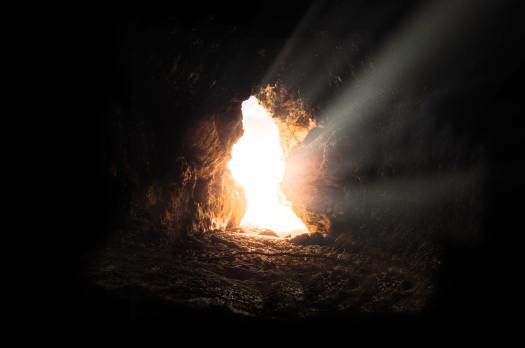
Photo by Bruno van der Kraan on Unsplash

Have you ever wondered why Christians refer to the Friday before Easter as Good Friday? I never quite understood that myself growing up as a kid even though I went to church and heard the Easter story every year.

Think about the Easter story as a movie. The good part is at the end, when Jesus comes out of the tomb, resurrected! It seems to me that Friday is bad, at least if you’re looking at Jesus as a hero figure. On Friday, he’s dead. How is that good?

To answer that, I want to first ask a different question. Why did Jesus have to die? To put it another way, what was the purpose of Jesus’s death?

It’s an honest question…

View original post 662 more words

What Makes Good Friday “Good”?

When you think of the full Easter story, it seems the good part is on Sunday, when Jesus is resurrected.

Have you ever wondered why Christians refer to the Friday before Easter as Good Friday? I never quite understood that myself growing up as a kid even though I went to church and heard the Easter story every year.

Think about the Easter story as a movie. The good part is at the end, when Jesus comes out of the tomb, resurrected! It seems to me that Friday is bad, at least if you’re looking at Jesus as a hero figure. On Friday, He’s dead. How is that good?

To answer that, I want to first ask a different question. Why did Jesus have to die? To put it another way, what was the purpose of Jesus’s death?

It’s an honest question, really. If Jesus is God, as he claimed, why couldn’t He just declare sins to be forgiven?

I’ve posed this question to many people over the years as I’ve engaged in conversations about Jesus and some people respond that Jesus’s death is an example to us.

I suppose that could be true, but how exactly is it an example?

Perhaps Jesus’s death was simply a demonstration of his love
Photo by Neal E. Johnson on Unsplash

Well, you might respond by pointing to the verse where Jesus says, “Greater love has no one than this, that he lay down his life for his friends.” (John 15:13, NIV)

Yes, it’s true that Jesus’s death does demonstrate the depth of His love for us. But what does that do for us?

Some people have responded to that question (Why did Jesus have to die?) by saying that Jesus’s death was a sacrifice.

Agreed. But what does it mean that His death was a sacrifice? In what way was it a sacrifice?

The simple answer to “Why did Jesus have to die?” is that God’s justice required it.

Romans 6:23 says that “the wages of sin is death.” Since the penalty of sin is death, the only way Jesus could pay for our sin was to die. He couldn’t just declare sin to be paid for because death is required.

I often share this illustration with people when talking about the importance of Jesus’s death on the cross….

In New Testament times people who owed a debt were often thrown into debtors prison until they could pay their debt or until their sentence was complete
Photo by Ashim D’Silva on Unsplash

In New Testament times, when a person committed a crime, the authorities would throw the offender in the dungeon until he made restitution or until his sentence was completed.

On the door of his cell they would list the crimes that he had committed. When he had completed his sentence or paid for his crime, they took the list and wrote ‘tetelestai’ across it, which in greek means “it is finished”, or “paid in full”.

The person would then use this document as a receipt that those specific crimes had been paid for. He could not be accused of those crimes again.

We are separated from God because of the debt that we owe as a result of our sin. The debt we owe for our sin must be paid for.

Now think about the Easter story again. Jesus is arrested, tried and crucified. The last words Jesus uttered before dying were, “it is finished” (tetelestai).

Here’s what Paul said to the Colossians about the importance of Jesus’s death:

He forgave us all our sins, having canceled the written code, with its regulations,  that was against us and that stood opposed to us; he took it away, nailing it to the cross. (Colossians 2:13-14)

Why did Jesus have to die?
Photo by Jon Tyson on Unsplash

The picture here is that Jesus had a written list of all of your sins and all of my sins and He nailed that list of all of our iniquities to the cross. Just before He died, He uttered “it is finished”, meaning that sin had been “paid in full”.

It’s as if Jesus, in his last dying breath was taking a big rubber stamp to that list and stamping it “PAID” so that we would know that sin was paid for and therefore forgiveness could be granted.

So when you think of the full Easter story, it doesn’t appear that Friday is good. It seems rather bad, if you are looking from the perspective of Jesus as the hero.

But if you realize what Jesus meant to accomplish – the redemption of mankind, the forgiveness of sins – through that lens, it’s clear that Good Friday is indeed good. Actually, it’s rather GREAT for us! Sin is paid for. We are forgiven!

Good Friday is indeed GOOD! And, that’s not even the end of the story….