How Jesus Responds to Doubts

Matthew 11

1When Jesus had finished giving these instructions to his twelve disciples, he went off teaching and preaching in towns throughout the country.

2John the Baptist, who was now in prison, heard about all the things the Messiah was doing. So he sent his disciples to ask Jesus, 3“Are you really the Messiah we’ve been waiting for, or should we keep looking for someone else?”

4Jesus told them, “Go back to John and tell him about what you have heard and seen—5the blind see, the lame walk, the lepers are cured, the deaf hear, the dead are raised to life, and the Good News is being preached to the poor. 6And tell him: ‘God blesses those who are not offended by me. ’”

7When John’s disciples had gone, Jesus began talking about him to the crowds. “Who is this man in the wilderness that you went out to see? Did you find him weak as a reed, moved by every breath of wind? 8Or were you expecting to see a man dressed in expensive clothes? Those who dress like that live in palaces, not out in the wilderness. 9Were you looking for a prophet? Yes, and he is more than a prophet. 10John is the man to whom the Scriptures refer when they say,

‘Look, I am sending my messenger before you, and he will prepare your way before you.’

11“I assure you, of all who have ever lived, none is greater than John the Baptist. Yet even the most insignificant person in the Kingdom of Heaven is greater than he is! 12And from the time John the Baptist began preaching and baptizing until now, the Kingdom of Heaven has been forcefully advancing, and violent people attack it. 13For before John came, all the teachings of the Scriptures looked forward to this present time. 14And if you are willing to accept what I say, he is Elijah, the one the prophets said would come. 15Anyone who is willing to hear should listen and understand! (Matthew 11:1-15, NLT)


The Daily DAVEotional

Matthew 11 contains a very strange passage about John the Baptist. While Jesus is preaching and teaching in towns throughout the country, John the Baptist hears about all the things Jesus is doing and then he sends his disciples to go and ask Jesus if he’s really the Messiah.

What’s going on here? If anyone should know the true identity of Jesus, you would think it would be John the Baptist. Remember back in Matthew 3 John was out in the desert baptizing people and he told the crowds that while he baptized with water, one would come after him who would baptize with the Holy Spirit. John said this person would be so much greater than him that he would be unworthy to even be this person’s slave.

Immediately after that, Jesus shows up and is baptized by John, after which the Holy Spirit descends upon Jesus in the form of a dove while the voice of the Father affirms Jesus’ identity as the Son of God. I previously wrote about this baptism event here.

John had been born for the purpose of preparing the way for the Messiah. He had prepared his whole life for that moment of introducing the Messiah to a lost and dying world. He had known Jesus since birth and Jesus’ identity and mission had been confirmed to him and all those present at Jesus’ baptism.

So why is John the Baptist suddenly asking Jesus whether He really is the Messiah? If you think about it, you have to wonder why this passage was even included in the text at all. It doesn’t appear to add any new information of value to what we already know about Jesus. What then is the purpose of this odd interaction?

I think this passage demonstrates a universal phenomenon that we all deal with.

Doubt.

Imagine that. John the Baptist, the cousin of Jesus, the way-maker appointed for preparing a path for the coming Messiah, the one who first identified Jesus as the Messiah and the Lamb of God to the crowds, the one who baptized Jesus and was a witness to the affirmation of Jesus by the Father and the Holy Spirit, is suddenly doubting whether Jesus really is the Messiah.

Why would he doubt?

I think a couple of things are happening that might help us understand.

First of all, John the Baptist had been arrested fairly soon after Jesus was baptized. In Matthew 4, Jesus goes out into the desert after His baptism and undergoes 40 days of temptation. The text says that after Jesus heard John was arrested, he began to preach (Matthew 4:12-17). So Jesus really doesn’t even begin his public ministry until after John is arrested.

Being in prison means that John cannot be a personal witness to the things Jesus is doing.

The bottom line for John is that things are not going the way he expected. He was not expecting to be imprisoned and he likely was also not counting on being sidelined while others had a front row seat as eyewitnesses to the many miracles and the public teaching of the Messiah.

When life doesn’t turn out the way we expect or hope, doubt can set in. Doubt can be so powerful that even the most stable, fundamental truths to which we’ve always held can suddenly be questioned.

Jesus’ response to John’s doubt is quite revealing.

Notice that Jesus doesn’t get angry or impatient. If it were me, I’d probably respond with a derisive, “Really bro? You know me. We grew up together. You were there when I was baptized. Remember that? And don’t you remember the dove descending and the voice from heaven? Why you gotta be a hater? C’mon man!”

Jesus is not upset and he’s not rattled. He simply responds to John’s disciples by quoting from Isaiah 29, Isaiah 35, and Isaiah 61, passages which describe what the ministry of the Messiah would look like. It just so happens, these are the exact things that Jesus is doing in His ministry.

Notice too that after John’s disciples leave, Jesus speaks glowingly to the crowds of John the Baptist and his ministry, calling him the greatest of all the prophets who had ever lived.

Jesus is not phased by John’s doubt. Jesus is not threatened or concerned by John’s doubt. Jesus does not use John’s doubt against him.

If Jesus can handle the doubt of a guy he called the greatest prophet who ever lived and who knew Jesus personally, He can certainly handle my doubt and your doubt.

It’s ok to doubt. Doubt is an expected response to unforeseen and unexpected circumstances.

But like John the Baptist, we shouldn’t wallow in our doubt. Instead, we should seek Jesus out, share our doubt with Him and allow Him to lovingly remind us of all the ways in which He has demonstrated who He is by the things He’s done in our lives and in the lives of others!

Reflection

What are some common reasons or circumstances that you think cause people to doubt?

What is a time in your spiritual journey where you doubted? What were the circumstances? How did you deal with that doubt?

What has been your response to others you know who have doubted God or Jesus or Christianity?

What are some helpful resources or steps you could provide to someone who is experiencing doubts in their faith?

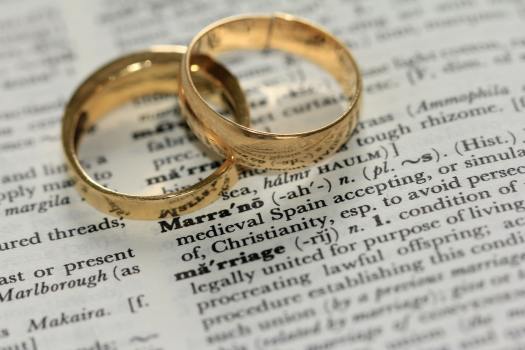
 

Photo by Nathan Cowley from Pexels

Was it Immoral for God to Ask Abraham to Sacrifice His Son Isaac?

Genesis 22

1Later on God tested Abraham’s faith and obedience. “Abraham!” God called.

“Yes,” he replied. “Here I am.”

2“Take your son, your only son—yes, Isaac, whom you love so much—and go to the land of Moriah. Sacrifice him there as a burnt offering on one of the mountains, which I will point out to you.”

3The next morning Abraham got up early. He saddled his donkey and took two of his servants with him, along with his son Isaac. Then he chopped wood to build a fire for a burnt offering and set out for the place where God had told him to go. 4On the third day of the journey, Abraham saw the place in the distance. 5“Stay here with the donkey,” Abraham told the young men. “The boy and I will travel a little farther. We will worship there, and then we will come right back.”

6Abraham placed the wood for the burnt offering on Isaac’s shoulders, while he himself carried the knife and the fire. As the two of them went on together, 7Isaac said, “Father?”

“Yes, my son,” Abraham replied.

“We have the wood and the fire,” said the boy, “but where is the lamb for the sacrifice?”

8“God will provide a lamb, my son,” Abraham answered. And they both went on together.

9When they arrived at the place where God had told Abraham to go, he built an altar and placed the wood on it. Then he tied Isaac up and laid him on the altar over the wood. 10And Abraham took the knife and lifted it up to kill his son as a sacrifice to the LORD. 11At that moment the angel of the LORD shouted to him from heaven, “Abraham! Abraham!”

“Yes,” he answered. “I’m listening.”

12“Lay down the knife,” the angel said. “Do not hurt the boy in any way, for now I know that you truly fear God. You have not withheld even your beloved son from me.”

13Then Abraham looked up and saw a ram caught by its horns in a bush. So he took the ram and sacrificed it as a burnt offering on the altar in place of his son. 14Abraham named the place “The LORD Will Provide.” This name has now become a proverb: “On the mountain of the LORD it will be provided.” (Genesis 22:1-14, NLT)


The Daily DAVEotional

Genesis 22 is one of the most controversial and objectionable passages to critics of Christianity (and Judaism).

The big question people often have from this passage that can cause doubt and skepticism has to do with this: why would God ask Abraham to sacrifice his son? This seems immoral.

The problem with this thinking is that we are looking at it from the vantage point of our modern day morality. We KNOW that it’s wrong to sacrifice your own child. When we see or hear of religious groups or cults that practice this, we cringe in disgust, precisely BECAUSE we know that this is wrong.

But Abraham lived in a different time and a different culture than we do. Earlier in Genesis, we learn that Abraham came out of Ur of Chaldea. In this Ancient Near Eastern culture, child sacrifice was actually quite common as a means of appeasing various regional deities.

So when the Lord asks Abraham to sacrifice his only son, Abraham would not have had the same visceral reaction that we have today. From Abraham’s perspective, this was an expected act of allegiance to the deity.

So why does God do this if it’s wrong?

God does it precisely to show Abraham how different He is from other so-called gods. He asks Abraham to sacrifice his son as a test of faith and loyalty but then He shows Abraham that He is completely different from how the people in that culture perceived deities. Human sacrifice is not His way. God provides a substitute so that Isaac is spared. This encounter also foreshadows the gospel message – we are spared and an innocent lamb, Jesus, is sacrificed in our place.

In our current culture, God does not need to ask us to sacrifice our child to show our loyalty because He has already revealed His nature on this issue.

So if someone claims that God is asking them to sacrifice their child as a test of faith, or for any other reason, we can be certain that it is NOT the Lord who is making the request, but likely the devil himself!

For more on God’s view of human sacrifice as a form of worship and appeasement, see Jeremiah 19:4-5 and  Jeremiah 32:35.

Reflection

In the past, how have you reconciled or explained this passage to others who object to it as being “immoral”?

What would you say to someone who claims God is asking them to do something that seems to go against Biblical morals and ethics?

What questions or doubts do you have about God’s character or Biblical passages? How can you gain awareness and understanding of those “sticky” passages in order to strengthen your faith?


Photo by Rod Long on Unsplash

What Does it Look Like to Follow Jesus?

Luke 9

57As they were walking along someone said to Jesus, “I will follow you no matter where you go.”

58But Jesus replied, “Foxes have dens to live in, and birds have nests, but I, the Son of Man, have no home of my own, not even a place to lay my head.”

59He said to another person, “Come, be my disciple.”

The man agreed, but he said, “Lord, first let me return home and bury my father.”

60Jesus replied, “Let those who are spiritually dead care for their own dead. Your duty is to go and preach the coming of the Kingdom of God.”

61Another said, “Yes, Lord, I will follow you, but first let me say good-bye to my family.”

62But Jesus told him, “Anyone who puts a hand to the plow and then looks back is not fit for the Kingdom of God.” (Luke 9:57-62, NLT)


The Daily DAVEotional

At the end of Luke chapter 9, someone tells Jesus he will follow Him wherever He goes. Jesus then lays out some requirements for truly following Him.

The first thing he says, in verse 58, is that “Foxes have dens to live in, and birds have nests, but I, the Son of Man, have no home of my own, not even a place to lay my head.”

What’s he saying? Jesus is saying that following Him may be uncomfortable and will require sacrifice. Are you willing to give up a life of comfort and ease in order to follow me?

Another person responded to Jesus’s call to discipleship by saying he wanted to first go home and bury his father. Jesus responds, in verse 60, saying “Let those who are spiritually dead care for their own dead. Your duty is to go and preach the coming of the Kingdom of God.”

Is Jesus against family responsibilities?

No. It’s unlikely the person’s father was already dead for if he was, the man would not likely have been there in the first place to interact with Jesus. What the man was really saying is that he would follow Jesus at a later date, when life circumstances are different. Jesus responds by saying that following Him means making Him a priority over everything else, including family.

Finally, a third person says he will follow Jesus but only after saying goodbye to his family.

Jesus responds by saying, “Anyone who puts a hand to the plow and then looks back is not fit for the Kingdom of God.”

Again, Jesus is not against families. He’s merely pointing out that following Him means enduring to the end.

If you think about it, following Jesus is like a marriage.

What does this have to do with marriage?

Well, if you’ve ever been to a wedding ceremony, it’s traditional for the officiant to lead the bride and groom in an exchange of vows. Usually, the official will ask each participant if they will commit themselves to the other person and stay committed through a variety of life’s conditions, including:

    • For richer for poorer (sacrifice)
    • In sickness and in health (priority)
    • ’til death do us part (endurance)

Notice that these conditions are the same conditions that Jesus set forth as necessary to be His follower. If you want to follow Jesus, it will take sacrifice; He must be your priority and you must endure to the end.

If you think about it, Jesus is asking us to marry Him. Not literally, of course. But to be a follower of Jesus carries that same level of commitment, dedication and intentionality.

Reflection

What do you think about the idea that when Jesus invites you to follow Him, it’s like He’s asking you to marry Him?

Which of the three conditions Jesus lays out for following Him do you struggle with the most?

What would keep you from committing yourself to Jesus in the way He invites His true followers?


Photo by Sandy Millar on Unsplash

Hope and The Shawshank Redemption

Here’s a simple litmus test to tell if a movie deserves to be in your Top 10 list of favorites.

Imagine you’re channel surfing and you see a movie playing that you have to watch, even though you’ve seen it dozens of times before. That movie, which you find yourself tuning into any time you see it on the TV is likely one of your favorites.

I have several movies that fit that category for me, including Braveheart, Tommy Boy and The Shawshank Redemption.

“The Shawshank Redemption” is one of those movies I find myself watching any time I see it playing on broadcast TV.

Recently, Pastor Rick Warren gave a sermon on “Experiencing Hope During Difficult Times.” I was reminded of The Shawshank Redemption, since one of the main themes in that movie is “hope”.

The Shawshank Redemption is based on a short story by Steven King (yes, that Steven King), but it’s not a horror movie. It’s a movie about prison. Some have dubbed it the greatest prison movie of all time.

The story centers around Andy Dufresne (played by Tim Robbins) who is wrongly convicted of double murder and sent to the notorious Shawshank prison to serve back to back life sentences.

Dufresne quickly befriends Ellis “Red” Redding, played by Morgan Freeman, a murderer who has already served 20 years of a life sentence, and though he sees the error of his foolish teenage act, nevertheless, sees no hope of ever being paroled.

There’s a critical scene about midway through the movie. Andy receives an unexpected shipment of books and vinyl records for the prison library and decides to blare music from an opera record to the entire prison population via the prison loudspeaker system.

This infuriates the warden, who punishes Andy with two weeks in “the hole” – solitary confinement in a room with no light source.

When Andy emerges from confinement his inmate friends are amazed to see him so upbeat after such a harsh punishment.

“Easiest time I ever did” is Andy’s response. “I had Mr. Mozart to keep me company.”

Fear Can Hold You Prisoner.
Hope Can Set You Free.

Andy’s prison-mates are understandably confused. Andy explains that Mozart is inside…in his mind and in his soul and then he declares, “there are places internally that they can’t touch.”

Andy’s friend Red asks, “What are you talking about?”

“Hope”, Andy replies.

Red gets a stern look on his face and says, “Listen here friend. Let me tell you something about hope. Hope is a dangerous thing. Hope can drive a man insane. It’s got no use on the inside. You better get used to that idea.”

Pastor Rick, in his sermon, stated that we can have hope because we know that the situation we’re in is temporary….it will pass. He encouraged us to focus on that which is eternal instead of things that are temporary.

This is certainly good advice, but sometimes hard to implement. It’s difficult to focus on “eternal” things when there are so many immediate needs staring at you in the face, and often screaming for your attention.

We personally know people who have lost their jobs, are struggling financially, have lost their housing, have lost loved ones, are scrambling to figure out childcare and schooling options for the fall, are dealing with major health concerns with limited access to doctors, and many more issues that are magnified and amplified in this current Covid environment.

How exactly do we experience hope when there is so much pain and struggle in our lives?

I think Andy Dufresne provides a clue. Hope is something internal, rather than external.

Hebrews 6:19, speaking of Jesus, says,

“We have this hope as an anchor for the soul, firm and secure.” (emphasis mine)

The context of this passage is that Jesus is our High Priest. Through His death, He provided atonement for sinful humanity, making it possible for us to experience a relationship with Him.

For the Christian, Jesus is our anchor. He alone provides hope and meaning because He alone can provide ultimate fulfillment and purpose in life.

Where is your hope anchored?
Photo by Ron Smith on Unsplash

But what about all of the tremendous struggles we are facing? They seem overwhelming!

As we navigate life’s current realities, I realize how important the body of Christ is. We need others who can come alongside us when we’re struggling and offer real, tangible, material help, while reminding us of God’s goodness and pointing us to the hope that only Jesus can provide.

At the end of The Shawshank Redemption, Andy writes these fitting words to Red – “Remember Red, hope is a good thing, maybe the best of things. And no good thing ever dies.”

How are you doing in this current crisis? Are you more like Red – tired, disillusioned and lacking hope?

Or are you more like Andy, with a hope anchored to an internal, immovable source (Jesus).

Whatever your situation, let us know how we can pray for you! (Just click the Prayer tab at the top of the page)

Personally, we are grateful to our family and many friends who have been a source of encouragement and hope to us through the many struggles and trials we’ve faced over the past few months and years. You have helped us to continue to keep our hope anchored in Jesus!

The Third Target – Book Review

The Third Target (J.B. Collins, #1)The Third Target by Joel C. Rosenberg
My rating: 5 of 5 stars

The Third Target is the first in a series of political thrillers by Joel Rosenberg with journalist JB Collins as his central character.

Rosenberg draws on his years in the political arena and his extensive understanding of the current Middle East political climate as he weaves a story that draws on historical facts to create a possible modern scenario that is plausibly believable, emotionally engaging and action packed.

Rosenberg is an evangelical Christian whose novels often contain spiritual elements without being overly preachy or dogmatic. His characters are real. Rosenberg doesn’t give you the James Bond or Jack Bauer type, which you might think is required for a political spy thriller novel. Instead, he gives you characters who experience the kind of emotions you might experience if you were faced with the scenarios created in the story. His characters are faced with moral dilemmas and they think about deeper issues of identity, meaning and purpose.

Rosenberg continues to churn out novels that are a mix of modern day politics coupled with intrigue, action and suspense. The Third Target will keep you engaged and glued to the pages until the final page, at which point you will be shaking your fist at Rosenberg for creating a scenario that forces you to reach for the next book in the series!

You can find The Third Target on Amazon and other book seller websites.

View all my reviews

The West Point-French Connection!

Jen and I visited Paris for a few days in 2018 to celebrate our 25th anniversary.
Photo by Dave Lowe

I don’t speak French.

And though I’ve been to France once, I don’t really know anyone who lives there.

So imagine my surprise when I was tagged in an Instagram post last week by someone I’ve never met who lives in France.

A couple of months ago, I started an account on Unsplash. If you’re not familiar with Unsplash, it’s a site that allows photographers to post their photos for the purpose of making them freely available for anyone to use.

It’s a popular site for bloggers because everyone who blogs is always looking for photos that fit their latest posts. I’ve been using Unsplash for a number of years and I decided to make some of my own photos available for others to download and freely use.

Among the photos I posted were a number of shots I took 2 summers ago when our boys were attending a week-long leadership experience at West Point.

One of the most scenic views of historic West Point is a view of the Hudson River from Trophy Point.
Photo by Dave Lowe

At West Point, there is an area known as Trophy Point with absolutely stunning views overlooking the Hudson River. Situated among the trees and paths of Trophy Point are a number of concrete benches for people to relax, converse, or just take in the scenery.

I noticed that on the sides of all of these benches are stamped words that reflect certain character virtues. Words like “Responsibility”, “Trust”, “Discipline” and “Compassion”.

I didn’t think much of it but it turns out that these photos are among the most viewed and downloaded of the 60 photos I’ve uploaded to Unsplash so far.

Last week, an Instagram user from France, who goes by the name @s.ch.blog tagged me to alert me that they had downloaded one of my photos to use on their blog.

The Instagram user @s.ch.blog used my “Compassion” photo from West Point to introduce their poem titled “Compassion”
Original photo by Dave Lowe
Image edited by S.Ch.

It was a nice gesture because Unsplash does not require that users alert photographers when their photos are downloaded. Nor is it required to credit the photographer when their photo is being used (though I always try to credit artists when I use their photos in my own posts).

The blogger who tagged me wanted to use my “Compassion” photo because they had written a poem, entitled “Compassion” and they thought my photo would fit well with their post.

The poem is a beautiful reflection on the concept of Compassion. You can read the entire poem (in French, Spanish or English) at the following link: https://www.histoiresdaujourdhui.com/post/compassion

It’s interesting how connected the world is these days and I find it humbling to know the Lord is somehow using a photo I took at West Point to connect with people half-way around the world!

Covid-19 Photo Gallery

Two weeks ago, I attended the Q Virtual conference (qideas.org). Q is an organization started a few years ago by Gabe Lyons that seeks to “equip strategically positioned Christian influencers to renew the way they believe, think and act in regard to culture.”

Jen and I attended a live Q conference in Nashville 6 years ago and it was there that Jen first experienced issues that initially led to an overnight stay in the local ER, followed by an eventual diagnosis of vasculitis, a rare auto-immune disorder. We missed most of that conference and have not had an opportunity to return, until this year.

This was my view for two days attending the Q Virtual Conference

The speaker lineup this year was packed with a range of cultural and theological leaders, including Tim Keller, Andy Crouch and Francis Chan.

However, one presenter, Sissy Goff, a mental health professional, spoke about “The Psychological Impact of Social Distancing”.

One of the many salient points Goff made regarding our emotional well-being was that in this time of sheltering in place and social distancing, we need to do one brave thing each day. She then asked, “what is one thing you’ve done in COVID that has required bravery?”

For me, I’ve been trying to be more intentional about slowing down, reflecting, and noticing things around me and capturing those moments with my camera. I’ve taken some steps to stretch myself and grow in my photography skills, including taking an online course and submitting some of my photos on unsplash.com. What follows are a number of images that give a glimpse into what we’ve been experiencing these past 7 weeks of the Covid-19 crisis…

When the shutdown first occurred, I was surprised to show up at our local Wal-mart just after 6:00 in the morning, only to be greeted by a long line of people ahead of me, waiting to get in.

The first time I went shopping during the Covid-19 crisis, I thought I would outsmart everyone by getting up early and getting in and out before the rush. Turns out, everyone else had the same idea and I was greeted to a long line just to get into the store.

In addition to long lines, I found the store to be quite barren of products. Most of the fruits and vegetable bins were completely empty as well as pretty much all dried goods (beans, pasta, rice, etc.) as well as meats, bread and dairy products. I found myself grabbing the most random items as substitutes for the items we really needed. In the end, I had to go to three stores just to get some semblance of groceries for the week.
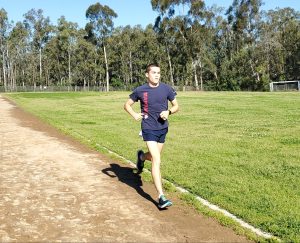
Training never stops for those in the military!

Did I mention that our boys are home? They are still training and they are still eating…A LOT. That has magnified the grocery issues. After the Wal-Mart incident, Jen decided to start ordering stuff online, but that was hit and miss. Then she started using a grocery service, which worked well for about a week, maybe two, at which point, it became harder and harder to find time slots to get groceries delivered.

We finally got a grocery slot one week but we were told that groceries could be delivered any day between Tuesday and Sunday (which was Easter). No groceries came on Tuesday, Wednesday, Thursday, Friday or Saturday. Finally, on Easter Sunday we were expecting our food to be delivered and boy did we need it. We had gone nearly 2 weeks without shopping.

Have I mentioned that my boys are home during this crisis? Have I mentioned how much they eat?

About mid-day, we got a message from the shopper saying that the store we had ordered food from was closed. They canceled our order and we were left with nothing substantial in the house for Easter dinner. It felt a lot like one of those cooking shows where they give each chef 6 random food items and ask them to make a gourmet meal out of it. Hmmm…what can we make with a can of sardines, a box of gluten-free spaghetti, a lemon from the tree outside, two eggs, a box of granola and a jar of salsa? GO!

This dirt track has been the only place locally that works for a timed workout. Hopefully, high school tracks will open soon!

Speaking of training, Jacob is a member of the Naval Academy Cross Country and Track teams. Though the season has been canceled, the athletes are all expected to keep working out in order to maintain their conditioning and long-term training cycle. There really is no break for distance runners.

It has been increasingly harder for Jacob to find places to do his workouts. He needs a track about once or twice a week in order to time his workouts. Other days are casual runs anywhere. Most local high schools are shut down with security keeping people from using the facilities. We were fortunate to find this dirt track locally that is not too crowded and has enabled Jacob to continue his training.

Local park playground structures have been closed off with this caution tape, even though parks in general are open

Initially we thought the lockdown might last just a few weeks or maybe a month. Our boys’ return to their academies was delayed by two weeks but then became indefinite.

As things progressed, businesses began to close and park playgrounds were shut down. We were told masks didn’t work and then a few weeks later, we were told we should wear masks. At first, we were told that social distancing was the primary step to curb the virus, but then the lockdown came and people whose jobs were not considered “essential” were urged to stay at home.

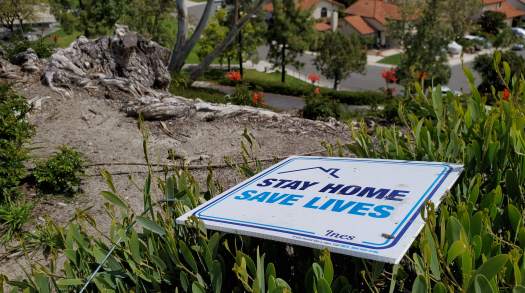
One day, while outside getting exercise, I found this sign laying on the ground in our neighborhood. Im not sure if it fell over on its own or if it was removed by someone protesting the lockdown.
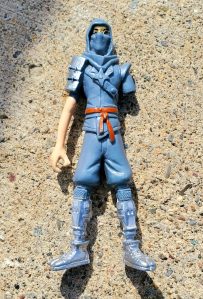
One day while walking the dog, I spotted this small action figure lying on the sidewalk. It turns out that during Covid-19, even Action figures are wearing masks!

One of the things we have tried to do regularly to maintain some kind of routine is walk the dog. Most every day, Jen and I will try to get out in the afternoon to take the dog out. We pretty much walk the same route every day. One day while walking the dog, I spotted this small action figure lying on the sidewalk. It turns out that during Covid-19, even action figures are wearing masks!

It’s been interesting to slow down and try to notice things that I never noticed before. It’s amazing how much beauty and creativity is around us that we don’t pay attention to.  Now that it’s spring time, we’re starting to see flowers blooming and plants coming alive.

As I’ve ventured out daily with the dog and my camera, I’m trying to notice the things around me that demonstrate life and bring hope during this challenging season.

Flowers are in bloom, the air is clear and the mountains are majestic.

A few weeks ago, in order to avoid an oncoming dog walker and maintain our distance, we darted to the other side of the street. I was walking down the same street but on the other side, and this gave me a slightly different perspective. Had I not gone to the other side, I would have missed the sidewalk chalk message – “Always Stop and smell the Flowers.” Our dog Scout decided to take the advice!

The chalk message says “Always Stop and smell the Flowers.” Our dog is so smart, he complied with the message!

Attending church activities has been different. We are still able to attend our home group and men’s and women’s groups but everything is online now through Zoom and other video platforms.

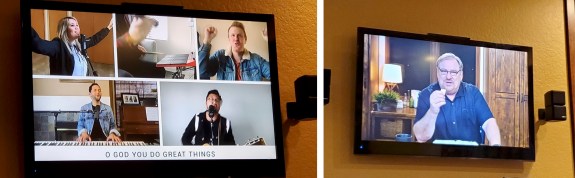
All small groups and the weekly worship service are all meeting online for the forseeable future

We’re able to worship as a family by watching the sermon online every Saturday beginning at 4:00 p.m. at Saddleback.org. The worship team records all of their parts separately and the worship is edited and spliced together to give the feeling of a full live worship set. It’s pretty amazing what technology is enabling us to do. Pastor Rick Warren then gives his sermon online as well.

Signs like this, commemorating major milestones, can be found throughout our neighborhood.

There is so much loss during this crisis. I think about all the high school seniors who have missed out on prom as well as all their other senior traditions, including commencement.

College seniors are also missing one of the biggest days in their lives. We know of weddings that have been postponed or canceled, vacation trips that have been delayed or lost altogether.

In addition, I think about all of the spring sports that have been canceled and all of the athletes who had no idea that their seasons were going to be cut short.

What have you lost as a result of this crisis? What are you grieving?

I think about my friends Jim and Charlotte Van Steenbergen, whom I’ve known for many years. Jim has been in declining health in recent months and I just learned that he passed away peacefully on Cinco de Mayo. Normally, I would have loved to visit and honor my friend in his last days. Unfortunately, that was not possible in this current environment. I grieve that lost opportunity to say goodbye and to thank him for the ministry he’s had in my life over the years.

What have you learned from this crisis? What have you found?

Being forced to slow down has its advantages. All those things you wished for in the past that you never had time for are suddenly available. And yet, I’ve learned that I am not always taking advantage of the extra time to do the things I’ve said I would do IF there was more time. I’ve learned that my heart is not always intentional and honest about my true desires and motivations.

While cleaning out our office closet, I found this box that was the container for my Samsung watch.

I’ve learned to see more of the hidden treasures in life.

Recently, Jen undertook the long desired task of cleaning out the office. There’s a lot of stuff that we don’t use but is taking up space. Interestingly, as we’ve cleared out cabinets and purged the overstocked closet, we’ve actually “found” things we didn’t remember we had.

One of the things I “found” was the box to my Samsung smartwatch that I bought a few years ago. About 6 months ago, the band on the watch broke and I had to buy a new one online. I was planning to throw the box away, thinking I really didn’t need it anymore. But I decided to open it to see if there was anything inside. Low and behold, there was a spare watch band. I had the spare watch band all along but I didn’t realize it was there, so I needlessly bought a new band from an online seller.

I had completely forgotten that when I purchased my watch it came with a replacement band. It was a hidden treasure in my closet

We found many more of these kinds of hidden “treasures” while cleaning out our office. It’s a reminder to me that there are hidden treasures everywhere around us, evidence of God’s creation, power and beauty. I just need to slow down and look around to notice.

Like many of you, we are still able to work from our home. We have been working from home for a number of years so the shift wasn’t too radical for us. However, we were used to meeting people at various places throughout Orange County and beyond. In addition, we have conferences and other events we would typically travel to. All of those things have been either canceled or suspended and the bulk of what we are doing now is finding ways to minister to people online.

Dave connecting with the UCLA Cru director and two of their seniors to talk about the benefits of coaching. Dave was able to coach each senior in a short 15 minute preview session.

We continue to coach folks but we do it virtually instead of in person. We continue to lead groups and host groups online. Training and development conferences we are a part of have been converted to webinars and Zoom discussion groups. We’ve pivoted in a number of ways already but we’re actively seeking new ways to minister to people online in this current environment.

We are grateful for you, our friends, family and partners who have supported and encouraged us to press on, especially as Jen has been immuno-compromised due to a vasculitis flare she’s been experiencing.

We would greatly appreciate your continued prayers for Jen and her health and for us as we continue to navigate life and ministry in this new climate of social distancing, working from home and sheltering in place.

Just as I’ve been more intentional about seeking to recognize the things around us that may easily go unnoticed, please pray that we would “recognize” the ministry opportunities God is placing before us.


What Makes Good Friday “Good”?

When you think of the full Easter story, it seems the good part is on Sunday, when Jesus is resurrected.

Have you ever wondered why Christians refer to the Friday before Easter as Good Friday? I never quite understood that myself growing up as a kid even though I went to church and heard the Easter story every year.

Think about the Easter story as a movie. The good part is at the end, when Jesus comes out of the tomb, resurrected! It seems to me that Friday is bad, at least if you’re looking at Jesus as a hero figure. On Friday, He’s dead. How is that good?

To answer that, I want to first ask a different question. Why did Jesus have to die? To put it another way, what was the purpose of Jesus’s death?

It’s an honest question, really. If Jesus is God, as he claimed, why couldn’t He just declare sins to be forgiven?

I’ve posed this question to many people over the years as I’ve engaged in conversations about Jesus and some people respond that Jesus’s death is an example to us.

I suppose that could be true, but how exactly is it an example?

Perhaps Jesus’s death was simply a demonstration of his love
Photo by Neal E. Johnson on Unsplash

Well, you might respond by pointing to the verse where Jesus says, “Greater love has no one than this, that he lay down his life for his friends.” (John 15:13, NIV)

Yes, it’s true that Jesus’s death does demonstrate the depth of His love for us. But what does that do for us?

Some people have responded to that question (Why did Jesus have to die?) by saying that Jesus’s death was a sacrifice.

Agreed. But what does it mean that His death was a sacrifice? In what way was it a sacrifice?

The simple answer to “Why did Jesus have to die?” is that God’s justice required it.

Romans 6:23 says that “the wages of sin is death.” Since the penalty of sin is death, the only way Jesus could pay for our sin was to die. He couldn’t just declare sin to be paid for because death is required.

I often share this illustration with people when talking about the importance of Jesus’s death on the cross….

In New Testament times people who owed a debt were often thrown into debtors prison until they could pay their debt or until their sentence was complete
Photo by Ashim D’Silva on Unsplash

In New Testament times, when a person committed a crime, the authorities would throw the offender in the dungeon until he made restitution or until his sentence was completed.

On the door of his cell they would list the crimes that he had committed. When he had completed his sentence or paid for his crime, they took the list and wrote ‘tetelestai’ across it, which in greek means “it is finished”, or “paid in full”.

The person would then use this document as a receipt that those specific crimes had been paid for. He could not be accused of those crimes again.

We are separated from God because of the debt that we owe as a result of our sin. The debt we owe for our sin must be paid for.

Now think about the Easter story again. Jesus is arrested, tried and crucified. The last words Jesus uttered before dying were, “it is finished” (tetelestai).

Here’s what Paul said to the Colossians about the importance of Jesus’s death:

He forgave us all our sins, having canceled the written code, with its regulations,  that was against us and that stood opposed to us; he took it away, nailing it to the cross. (Colossians 2:13-14)

Why did Jesus have to die?
Photo by Jon Tyson on Unsplash

The picture here is that Jesus had a written list of all of your sins and all of my sins and He nailed that list of all of our iniquities to the cross. Just before He died, He uttered “it is finished”, meaning that sin had been “paid in full”.

It’s as if Jesus, in his last dying breath was taking a big rubber stamp to that list and stamping it “PAID” so that we would know that sin was paid for and therefore forgiveness could be granted.

So when you think of the full Easter story, it doesn’t appear that Friday is good. It seems rather bad, if you are looking from the perspective of Jesus as the hero.

But if you realize what Jesus meant to accomplish – the redemption of mankind, the forgiveness of sins – through that lens, it’s clear that Good Friday is indeed good. Actually, it’s rather GREAT for us! Sin is paid for. We are forgiven!

Good Friday is indeed GOOD! And, that’s not even the end of the story….