Why Do Jews Reject Jesus as Their Messiah?

Isaiah 53

1Who has believed our message and to whom has the arm of the LORD been revealed?

2He grew up before him like a tender shoot, and like a root out of dry ground. He had no beauty or majesty to attract us to him, nothing in his appearance that we should desire him.

3He was despised and rejected by men, a man of sorrows, and familiar with suffering. Like one from whom men hide their faces he was despised, and we esteemed him not.

4Surely he took up our infirmities and carried our sorrows, yet we considered him stricken by God, smitten by him, and afflicted.

5But he was pierced for our transgressions, he was crushed for our iniquities; the punishment that brought us peace was upon him, and by his wounds we are healed.

6We all, like sheep, have gone astray, each of us has turned to his own way; and the LORD has laid on him the iniquity of us all.

7He was oppressed and afflicted, yet he did not open his mouth; he was led like a lamb to the slaughter, and as a sheep before her shearers is silent, so he did not open his mouth.

8By oppression and judgment he was taken away. And who can speak of his descendants? For he was cut off from the land of the living; for the transgression of my people he was stricken.

9He was assigned a grave with the wicked, and with the rich in his death, though he had done no violence, nor was any deceit in his mouth.

10Yet it was the LORD’s will to crush him and cause him to suffer, and though the LORD makes his life a guilt offering, he will see his offspring and prolong his days, and the will of the LORD will prosper in his hand.

11After the suffering of his soul, he will see the light and be satisfied; by his knowledge my righteous servant will justify many, and he will bear their iniquities.

12Therefore I will give him a portion among the great, and he will divide the spoils with the strong, because he poured out his life unto death, and was numbered with the transgressors. For he bore the sin of many, and made intercession for the transgressors. (Isaiah 53:1-12, NIV)


The Daily DAVEotional

I saw a post on X.com recently where an influential user listed what he considered the most significant in human history.

Who would you put at the top of that list?

Regardless of your religious views, I think it’s hard to argue against Jesus being the most important figure in all of human history. Incidentally, this user listed Genghis Khan first. Jesus was second on his list.

Jesus and his teachings have literally changed the world. And yet, the Jewish people, his own people, largely reject him. Why is that?

If you happened to be an Israelite living in first century Palestine, you eagerly expected and longed for the Messiah.

The nation of Israel was hundreds of years past its glory days, when it was an independent and respected nation. Now, it was merely one of the many provinces that were subject to Roman rule.

The prophets had foretold of a Messiah, who would one day come and deliver his people and restore the nation to its former glory. At least that was the hope.

Unfortunately, the biblical version of the Messiah did not match the expectations of most Jewish people, who were hoping for a political and military leader who would drive out the Romans, just as the many judges had driven out their oppressors in the early years of their nation’s formation.

This passage in Isaiah 53 gives a much different picture and description of the Messiah compared to the peoples’ expectations.

According to Isaiah, the coming Messiah would not be a person who would stand out. There was nothing physical about the Messiah that would draw people to him. He would be decidedly “normal”.

While the people were expecting a William Wallace type military hero to rally the troops and drive out their Gentile occupiers, this passage shows that the Messiah’s mission would be much different.

Yes, the Messiah would deliver his people; he just wouldn’t deliver them from the enemy they were thinking he would.

Verse 6 lays out the issue – we ALL have gone astray. As a result, the purpose of the Messiah would be to take the iniquity of people upon Himself.

Verse 10 is key because it explicitly states that the Messiah would be a guilt offering. Every Israelite knew that they had to make regular offerings at the temple in order to make atonement for sin. This verse indicates that it’s the Messiah himself whose life would be a guilt offering for the people.

There are a number of verses in this passage that explicitly point to Jesus.

Verse 5 provides one of the clearest references to Jesus’ brutal execution when it says that he was “pierced” for our transgressions. In John’s description of Jesus’ death, we learn that the Roman soldiers were eager to hasten the death of their victims because of the impending Sabbath (see John 19:31-34). It was common to break the legs of those being crucified, rendering it impossible for them to push themselves up to expand their lungs and breathe. Hence, the breaking of the legs brought a swift end to the slow tortures of crucifixion as the victim would immediately die of asphyxiation.

In the case of Jesus. the centurion realized that Jesus was already dead so there was no need to break his legs. Instead, he decided to take his spear and pierce Jesus’ side.

Verse 9 indicates that the Messiah would be assigned a grave for the wicked and the rich. In Jesus’ case, his body was set to be dumped in a pit with other common criminals. But instead, a rich person, Joseph of Arimathea, petitioned Pilate for the body of Jesus, whom he buried in a tomb that he had recently purchased.

Other prophecies in this passage are also fulfilled by Jesus. Verse 7 indicates that the Messiah would be silent when confronted by his accusers. All of the gospel accounts indicate that Jesus, when pressed by Pilate and the authorities, did not defend himself, but chose to willingly give himself up in order to go to the cross to be crucified.

To this day, the Jewish people largely reject Jesus as their Messiah, despite the fact that he fulfills all of the prophecies about the coming Messiah. In fact, there are a number of prophecies concerning the Messiah that only Jesus could have fulfilled.

If you don’t understand the mission of the Messiah, you will reject him.

The Jewish people reject Jesus as their Messiah because he doesn’t fit their hope and expectation of what the Messiah’s purpose would be. Instead of delivering his people from their political oppressors and restoring the glory of their nation, the Messiah’s purpose was first and foremost, to deliver people from the penalty of sin.

Non-Jews reject Jesus simply because they fail to see their need for a Savior. In this case, you may see Jesus as a significant figure in human history, but not as significant as someone like Genghis Khan who wielded tremendous political and military power to conquer the entire known world.

We would all do well to heed the words of Isaiah 53:6:

6We all, like sheep, have gone astray, each of us has turned to his own way; and the LORD has laid on him the iniquity of us all.


Did you enjoy this post? I’d love to hear your thoughts! Feel free to like, leave a comment below, and share it with your friends or on social media if you found it helpful or interesting. Your support keeps the conversation going!


Reflection

What is your understanding of the purpose of the Messiah?

In what ways do you see Jesus matching the description that prophets like Isaiah gave of the coming Messiah?

Who do you know that rejects Jesus as their Messiah and Savior? What are their reasons for rejecting Jesus ?

Why do you think Jewish people, by and large, still reject Jesus, despite clear passages like Isaiah 53 that show Jesus to be a “Suffering Servant” instead of a military conqueror?


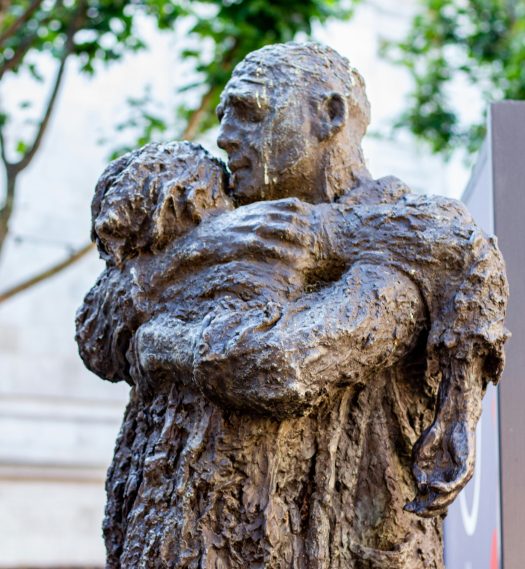
Photo by MBVisign: https://www.pexels.com/photo/genghis-khan-statue-in-close-up-photography-6466768/

Filling a God-Shaped Hole

Ecclesiastes 2

1I said to myself, “Come now, let’s give pleasure a try. Let’s look for the ‘good things’ in life.” But I found that this, too, was meaningless. 2“It is silly to be laughing all the time,” I said. “What good does it do to seek only pleasure?” 3After much thought, I decided to cheer myself with wine. While still seeking wisdom, I clutched at foolishness. In this way, I hoped to experience the only happiness most people find during their brief life in this world.

4I also tried to find meaning by building huge homes for myself and by planting beautiful vineyards. 5I made gardens and parks, filling them with all kinds of fruit trees. 6I built reservoirs to collect the water to irrigate my many flourishing groves. 7I bought slaves, both men and women, and others were born into my household. I also owned great herds and flocks, more than any of the kings who lived in Jerusalem before me. 8I collected great sums of silver and gold, the treasure of many kings and provinces. I hired wonderful singers, both men and women, and had many beautiful concubines. I had everything a man could desire!

9So I became greater than any of the kings who ruled in Jerusalem before me. And with it all, I remained clear-eyed so that I could evaluate all these things. 10Anything I wanted, I took. I did not restrain myself from any joy. I even found great pleasure in hard work, an additional reward for all my labors. 11But as I looked at everything I had worked so hard to accomplish, it was all so meaningless. It was like chasing the wind. There was nothing really worthwhile anywhere.

12So I decided to compare wisdom and folly, and anyone else would come to the same conclusions I did. 13Wisdom is of more value than foolishness, just as light is better than darkness. 14For the wise person sees, while the fool is blind. Yet I saw that wise and foolish people share the same fate. 15Both of them die. Just as the fool will die, so will I. So of what value is all my wisdom? Then I said to myself, “This is all so meaningless!” 16For the wise person and the fool both die, and in the days to come, both will be forgotten.

17So now I hate life because everything done here under the sun is so irrational. Everything is meaningless, like chasing the wind. 18I am disgusted that I must leave the fruits of my hard work to others. 19And who can tell whether my successors will be wise or foolish? And yet they will control everything I have gained by my skill and hard work. How meaningless!

20So I turned in despair from hard work. It was not the answer to my search for satisfaction in this life. 21For though I do my work with wisdom, knowledge, and skill, I must leave everything I gain to people who haven’t worked to earn it. This is not only foolish but highly unfair. 22So what do people get for all their hard work? 23Their days of labor are filled with pain and grief; even at night they cannot rest. It is all utterly meaningless.

24So I decided there is nothing better than to enjoy food and drink and to find satisfaction in work. Then I realized that this pleasure is from the hand of God. 25For who can eat or enjoy anything apart from him? 26God gives wisdom, knowledge, and joy to those who please him. But if a sinner becomes wealthy, God takes the wealth away and gives it to those who please him. Even this, however, is meaningless, like chasing the wind. (Ecclesiastes 2:1-26, NLT)


The Daily DAVEotional

Blaise Pascal, the famous 17th century French mathematician and inventor, is often credited with saying,

​There is a God-shaped vacuum in the heart of every man which cannot be filled by any created thing, but only by God, the Creator, made known through Jesus Christ.

Interestingly, Pascal never actually said this exact quote, though he did express the sentiment when he said,

“What else does this craving, and this helplessness, proclaim but that there was once in man a true happiness, of which all that now remains is the empty print and trace? This he tries in vain to fill with everything around him, seeking in things that are not there the help he cannot find in those that are, though none can help, since this infinite abyss can be filled only with an infinite and immutable object; in other words by God himself”

As it turns out, this sentiment from Pascal, which has been shortened into the pithy quote that we all see today, was probably derived from Solomon, who explored the nature of meaning and fulfillment in this second chapter of Ecclesiastes.

So what exactly does Solomon say?

It’s important to understand the context on which Ecclesiastes 2 rests. In chapter 1, Solomon is trying to derive meaning and purpose to our existence. His initial position, based on observations and lived experience, is that life is meaningless.

It’s a sad existence indeed if there is absolutely no purpose or meaning in life. Yet that is what Solomon initially concludes.

In this chapter of Ecclesiastes, we’re subjected to a bit of Solomon’s ontological journey.

The first thing he says is that he tried to find meaning and fulfillment in pleasure, or what we call hedonism. But physical pleasure provides no lasting satisfaction. The exhilarating rush that pleasure brings quickly fades, leaving one grasping for the next opportunity to experience that physical and emotional high.

Solomon then turns his attention to the pursuit of materialism. Perhaps acquiring lots of stuff, overseeing grand construction projects or building tremendous wealth could ascribe meaning and value to life. But Solomon found that lacking as well. The allure that extreme wealth promises is never quite  achieved. John Rockefeller, who was the richest person to ever live, was once asked, “how much is enough?” His response was “just a little bit more.” He apparently did not subscribe to Solomon’s conclusion that extreme wealth does not ultimately satisfy.

Perhaps fame and taking pride in one’s work could provide the kind of satisfaction that pleasure and materialism couldn’t. But Solomon ultimately realized the utter futility of that pursuit. Fame is fleeting and whatever work we may accomplish is forgotten as quickly as we are when we die.

Solomon reasoned that hard work and wealth are ultimately meaningless because we all die. What good are those things after you die? Someone else will take possession of and oversee all that we’ve worked to produce. That hardly seems fair. You work your tail off to produce wealth and build an empire only to leave it to someone else who did nothing to earn or produce what you’ve left?

None of this makes sense on the surface. What is the point?

Solomon gives a glimpse into the ultimate purpose in verses 24-25, when he says,

24So I decided there is nothing better than to enjoy food and drink and to find satisfaction in work. Then I realized that this pleasure is from the hand of God. 25For who can eat or enjoy anything apart from him?

Is pleasure, wealth, fame and work all meaningless? Apart from God, the answer is yes. But with God, all of these things are meaningful because they are gifts from God, the ultimate gift-giver!

So we’re back to our opening line that is often attributed to Pascal. There is something inside each person that is searching and striving for meaning and purpose. Man, in his fallenness, seeks to satiate this inner desire with all kinds of things – pleasure, power, wealth and fame. But none of these things bring true satisfaction or fulfillment. That’s because God is the only one who can ultimately fulfill our basic human need for meaning and purpose. It’s part of His design.

Apart from God there is no ultimate meaning and purpose. As Christian philosopher and apologist Frank Turek says, we are just “moist robots” who appear one day and then one day we’re gone.

If that is the case, then Solomon’s initial assessment is true – life is indeed meaningless. But with God, life not only has purpose and meaning but work, pleasure and wealth all make sense.


Did you enjoy this post? I’d love to hear your thoughts! Feel free to like, leave a comment below, and share it with your friends or on social media if you found it helpful or interesting. Your support keeps the conversation going!


Reflection

What do you turn to in order to experience purpose and meaning in life?

Which of the following do you struggle with the most: the pursuit of pleasure, wealth, power or fame?

What do you think are the reasons you or people in general pursue other things to satisfy their inner needs rather than pursuing God Himself?

In what ways can you turn to God as your source of true satisfaction and fulfillment?


Photo by Sincerely Media on Unsplash

Notre Dame has Taken their Toys and Exited the Sandbox

My Thoughts on the Aftermath of the College Football Selection Process

As a life-long USC football fan, the team I dislike the most is Notre Dame. And yet, in the week leading up to the College Football Playoff selection, I found myself stumping for Notre Dame in online discussions with BYU fans.

BYU fans were arguing that their one loss (at the time) against highly-ranked Texas Tech, made them more worthy for a slot in the college football playoff field than Notre Dame, which had TWO losses.

My argument was that while Notre Dame did have two losses, those losses came early in the season (the first two games) by a combined 4 points to top-ranked teams. The loss to Texas A&M was actually a one-point loss in overtime. Notre Dame had reeled off 10 straight victories since, all by double-digit margins.

By contrast, BYU’s one loss was a blowout. I further argued that BYU had a chance at revenge in the Big 12 championship game against the very team they had lost to and this time, the game would be played at a neutral site (though arguably the Texas location still favored Texas Tech). “Win and you’re in”, I argued. My argument didn’t seem to convince any BYU fans.

Ironically, the argument about who was more deserving between BYU and Notre Dame for a playoff spot turned out to be moot as the playoff committee snubbed both programs in favor of 3-loss Alabama and 2-loss Miami, who had beaten Notre Dame by 3 points in the opening game for both teams.

Notre Dame’s reaction to being left out of the playoff field has been meme-worthy to say the least. Picture the Michael Jackson eating popcorn meme.

In what I can only suppose is considered some kind of act of defiance, Notre Dame’s athletic director said that Notre Dame would not consider playing in a bowl game, given the fact that they were unfairly mistreated.

“We’ll show you!”, they seem to be saying.

Essentially, Notre Dame has decided that they are going to gather up all their toys and leave the sandbox. They suppose that this reaction will draw attention to the inequity and unfairness of the situation. I think, however, that it may have the opposite effect.

Is Notre Dame really being treated unfairly? I don’t think so.

Consider that Notre Dame is the only major college football program that doesn’t play in a conference. They’re independent. That means that they can schedule whomever they want and they don’t ever have to worry about conference championship games.

Yet even though they don’t belong to a conference, they get treated as a Power 4 program.

Notre Dame has their own TV deal, which makes slightly less than what Big 10 teams make but it provides them more flexibility in the scheduling of their games.

Additionally, when Notre Dame went to the playoffs last year, they didn’t have to share any of their playoff money with other conference members as other teams do. Last year’s payout for Notre Dame was about $20 million (more when you consider each round teams are given additional money for travel expenses). This was 3 times more than what Ohio State, the eventual champion, took home.

Notre Dame’s athletic director, Pete Bevacqua, the former chairman of NBC sports, blasted the ACC earlier this week, stating that the conference had done “irreparable damage” to their relationship.

Bevacqua was upset that the ACC had seemingly been stumping for Miami over Notre Dame to the college football playoff committee.

Why would Bevacqua be upset about this? Notre Dame is not a part of the ACC conference in football. Yes, they are in the ACC for all other sports and they do have an agreement to schedule games against 5 ACC opponents each year, but Notre Dame refuses to join the conference for football. They want the benefits of being an independent but they also want the benefits of being affiliated with a conference when it suits them.

You can’t have it both ways. It was entirely appropriate for the commissioner of the ACC to stump for Miami over Notre Dame to the playoff committee. After all, Miami is an ACC member. Notre Dame is not. The conference benefits financially when its members make the playoff field. They don’t when Notre Dame makes the field. If there is only one slot and it’s between Notre Dame and Miami, what logical reason would Pete Bevacqua have to EXPECT the ACC commissioner to promote Notre Dame over Miami?

Notre Dame is a legacy program, no doubt. They have national appeal and name brand recognition. But that doesn’t mean they should get favored treatment. The truth is that teams get snubbed all the time. Just ask the 2023 Florida State team. It happens. Deal with it.

What kind of message are you teaching your team and your fans when you whine about the outcome you didn’t like and decide that “we’re not going to play in your stupid bowl game”? It’s exactly the kind of response I expect from a spoiled elementary school kid. It’s not the response I’d expect from mature adults.

I spent the whole week extolling Notre Dame as being more deserving than BYU for a playoff spot and to be honest, the reaction I got from a number of BYU fans actually gave me, a life-long Notre Dame hater, a reason to like Notre Dame.

But with Notre Dame throwing their tantrum and exiting the Bowl selection process, while BYU has chosen to play Georgia Tech in the Pop Tarts Bowl, Notre Dame has once again given me and the entire college football world, every reason to dislike them.


Sarah’s Oil – Movie Review

Sarah’s Oil – a Kingdom Story Movie
My Rating: 5 of 5 stars

Last night, my wife and I attended a pre-screening for a new movie, Sarah’s Oil, that will release in theaters on November 7th.

The movie is inspired by the true life story of Sarah Rector, a young African-American girl living in rural Oklahoma in the early 1900s, who received a grant of 160 acres of land as a reparation payment because her ancestors had been enslaved by a local native tribe.

Because most of the people who received such land grants could not afford the yearly property tax fee, they sold their land to avoid losing it outright.

Sarah believed that her land had oil on it so instead of selling and making a small profit, which certainly would have been a lot of money to her family at the time, she was determined to keep her land and realize its full potential.

The movie centers around the struggle to keep her land from a greedy and unscrupulous oil company that threatens her at every turn. But it’s more than just a story of good vs. evil. The story explores themes of racism, justice, greed, forgiveness and perseverance.

The plot is engaging and the acting is professional. It has moments of tension, heartache and suspense, as well as the occasional comedic relief line.

This movie is the latest entry by Kingdom Story, a faith-based production company that’s responsible for movies like, “I Can Only Imagine”, “American Underdog” and “Jesus Revolution”.

Zachary Levi, who has appeared in a number of Kingdom Story movies, is excellent as B.B. “Bert” Smith, Sarah’s wildcat business partner who helps her in her quest to find oil on her land, while Naya Desir-Johnson gives a standout performance as the young Sarah Rector.

I thoroughly enjoyed this film and would highly recommend it to moviegoers. This movie is inspiring. You’ll laugh, cry, shake your fist and cheer at different points in the movie.

Ultimately, this movie feels like a throwback to the way movies used to be made. A lot of what gets churned out in Hollywood these days feels like recycled, uninspired junk, but this movie is clean, well-produced and is rich with positive moral themes. It’s a movie you can take your kids to see and have a meaningful discussion about afterwards.

I’m not a movie critic per se and I don’t write a lot of movie reviews. But this is a movie that I can heartily endorse and I encourage all to see this movie when it hits the theaters.

You may know that movies can have a short life-span in the theaters, based on how well they do initially. This is a movie, and Kingdom Story is a company, that deserves your support. Kingdom Story continues to produce high quality, faith and family-oriented films that not only entertain, but inspire.


Watch the trailer for Sarah’s Oil:

Watch “The Story Behind Sarah’s Oil”:

Watch an interview with John Shepherd, producer of Sarah’s Oil:

https://www.godtube.com/watch/?v=E11E11NU


How Do We Experience Peace?

Colossians 3

15Let the peace of Christ rule in your hearts, since as members of one body you were called to peace. And be thankful. 16Let the word of Christ dwell in you richly as you teach and admonish one another with all wisdom, and as you sing psalms, hymns and spiritual songs with gratitude in your hearts to God. 17And whatever you do, whether in word or deed, do it all in the name of the Lord Jesus, giving thanks to God the Father through him. (Colossians 3:15-17, NIV)


The Daily DAVEotional

If you haven’t noticed, we are experiencing an epidemic of anxiety in our country. The American Psychiatric Association’s annual mental health poll indicated a sharp rise in anxiety levels among American adults.

Young adults are even more likely to report high levels of anxiety these days according to a Pew survey cited in this article.

There’s even been a popular book written about “The Anxious Generation.” In this book, author Jonathan Haidt argues that smartphones, social media, and helicopter parenting has contributed to an increased level of anxiety and depression among today’s youth.

Experiencing peace seems as elusive as sighting a unicorn.

So how exactly can we experience peace?

In his letter to the Colossians, Paul gives some insight into experiencing peace.

The first thing he says is that we should let peace “rule” in our hearts. The Greek word for “rule” means “arbitration”. The idea is that peace should govern our hearts.

Ok. But how do we do that? It’s not like most people can turn peace on and off like a light switch.

Fortunately, there are some key words in this passage that help us to understand a potential pathway to peace.

Three times in this passage, Paul uses the similar words “thankful” (verse 15), “gratitude” (verse 16), and “thanks” (verse 17).

Philippians 4:6-7 is perhaps the most oft-quoted passage regarding peace. Paul says,

6Do not be anxious about anything, but in everything, by prayer and petition, with thanksgiving, present your requests to God. 7And the peace of God, which transcends all understanding, will guard your hearts and your minds in Christ Jesus.

It’s interesting to note that in this passage, Paul also talks about thanksgiving. When we share our anxieties with God, and we do it with an attitude of thanksgiving, Paul says that we will experience the peace of God in a way that transcends our understanding.

I might not be able to manufacture peace on demand. But I can choose my attitude and what I will allow my mind to dwell on.

Paul tells us to be thankful  and to offer up our anxieties to the Lord in prayer with an attitude of thanksgiving and gratitude.

Something happens when we choose to be grateful. You see, we can’t be grateful unless we stop and think about the things we should be grateful for. Doing this refocuses our attention on God’s goodness and it gets our minds off of the negative thoughts that are the root of our anxieties.

My wife and I recently saw the movie “Soul on Fire”, which is the real-life story of John O’Leary, who, as a child, suffered burns over his entire body when he accidentally set his family’s house on fire. It’s a powerful story of identity, redemption and forgiveness.

As an adult, John decides he can use his story to make a difference in the lives of others as a motivational speaker.

In one of his first speaking engagements he finds himself talking to a group of hardened criminals in a state prison. His main message is about the importance of gratitude. He then invites the prisoners to share something they’re grateful for.

At first, nobody speaks. They’re mostly skeptical and wondering what they’re even doing there. Finally, one prisoner stands up and says:

“I’m grateful for prison, because if I wasn’t here, I’d be dead. And here’s what else I’m grateful for:

    • Heat in the winter.
    • Air-conditioning in the summer.
    • Three square meals a day—no cooking, no dishes.
    • A clean bed every night.
    • Laundry service—I never had that on the outside.
    • Medical care, even if it’s basic.
    • A library full of books I never read before.
    • Time to think, really think about my life.
    • Brothers here who get it, who share my struggles.
    • Letters from my kids—I miss ’em, but they keep comin’.
    • The chaplain who prays with us.
    • Fresh coffee in the morning.
    • Outdoor rec time—blue sky, even behind fences.
    • A job, Payin’ a little, but it’s honest work.
    • No bills pilin’ up.
    • Safety from the streets I ran on
    • Programs to learn skills, like anger management.
    • Holidays with visits from family.
    • Music on the radio—reminds me of better days.
    • Clean water, hot showers.
    • Counselors who listen without judgin’.
    • The chance to apologize to folks I hurt.
    • Faith groups—Bible study saved my soul.
    • Exercise yard—keeps me strong.
    • Mail call—somethin’ to look forward to.
    • No more chasin’ highs that wrecked me.
    • Rules that keep me from hurtn’ others.
    • Dreams at night—hope for what’s next.
    • Laughter with the guys—ain’t nothin’ like it.
    • This talk today—remindin’ me gratitude changes everything.
    • And God… for second chances.”

Later in the movie, John is struggling, feeling sorry for himself and the situation he’s in. He can motivate others through his speaking but, like us, he often struggles to apply the principles of his own TED talk.

There’s a scene where he visits his family. His dad is in a wheel chair, suffering from the effects of advanced Parkinson’s disease. And yet, his father is joyful, positive and at peace.

John asks his father, “How can you be so positive?”

His dad responds “John, how can I complain when my life is so good, when I’m just so blessed?”

John is confused. He’s thinking, “how can you see yourself as blessed when you’re in this horrible condition?” It’s really a victim mentality. And we all can tend towards this, can’t we?

His dad then elaborates on his gratitude, listing reasons like the extra time he has for reflection, the deeper family bonds he’s developed, his appreciation for caregivers and the empathy he’s developed for the struggles of others. Gratitude has enabled him to transform his limitations and potential sources of anxiety into sources of joy and peace.

There is no doubt that we live in a complex and chaotic world that’s filled with challenges that can produce anxieties of all kinds – health, job, finances and family issues, just to name a few.

However, even though we can’t produce peace in our hearts on demand, we can choose to be thankful and grateful for the good things that God has provided for us. If we make this our regular pattern, our lives will be less anxious and we’ll begin to experience more peace in our hearts.


By the way, you can read my review of the movie Sarah’s Oil here.


Did you enjoy this post? I’d love to hear your thoughts! Feel free to like, leave a comment below, and share it with your friends or on social media if you found it helpful or interesting. Your support keeps the conversation going!


Reflection

What are the things creating anxiety in your life right now? What keeps you from sharing those things with the Lord?

What have you found helpful in your own life to get your mind off of your problems and anxieties and onto the positive things in your life?

If you were to create a list of things you’re grateful for, like the prisoner did, what would be on your list? What are the things in your life that you can express gratitude for?


Photo by Tom Shakir on Unsplash

Signs of Spiritual Renewal

“Christianity has an image problem.”

These are the opening words from “UnChristian”, the 2007 book by David Kinnaman, President of Barna Research Group, and Gabe Lyons, founder and president of THINQ Media. The purpose of of the book was to highlight the perceptions of the church from those who are unchurched, in order to give meaning and understanding to the decades-long decline in the influence of the church on the culture at large.

In 2011, Kinnaman published “You Lost Me”, which sought to explain why so many Young Adults who had grown up in the church were leaving the church.

For those of us who are older and have been Christians a long time, it’s been obvious that the church’s influence has been waning for years, perhaps even decades. But recently, we’ve seen that lack of influence breach the barrier of the church, as hoards of young people have been leaving the church for one reason or another.

Recently, however, there have been signs of a spiritual renewal in the U.S. and beyond.

You may recall that in February 2023, a routine chapel service at Asbury College in Kentucky turned into a 16-day outpouring of spiritual renewal that impacted nearly 50,000 people, mostly young adults. (See article here)

Many Christians pointed to that event as a possible starting point for the greater spiritual awakening that we’ve spent decades praying for.

Since then, signs indicating a spiritual renewal here in the U.S. and beyond have amplified. We hear reports of new people attending church for the first time and people returning to church after a long absence.

Since the tragic assassination of Charlie Kirk, renewed interest in church and Christianity has seemingly increased even more, in the U.S. and beyond.

You may know that Jen has been a part-time student at Talbot Seminary for the past several years, pursuing a degree in Spiritual Formation.

This semester she’s taking an online Theology course and one of the other participants is from the UK. The professor asked the UK student if the rumors he has heard about an increase in church attendance in the UK are true. The student confirmed that from what he’s seen, church attendance definitely seems to be on the rise.

Still, it’s sometimes hard to know the actual substance of what we’re hearing.

Are these reports merely anecdotal, or are they actually reflective of a larger trend of spiritual renewal?

It appears that these stories are not just isolated events but are actually mirroring a larger trend of renewal.

Earlier today, I saw a post on X.com with an image that showed that Bible sales in the U.S. have increased by over 40% in the last 3 years. Downloads of spiritual apps and Christian music are also way up.

Barna research confirms that there are signs of a spiritual awakening in the U.S. The surprising aspect of their research is that this awakening is being fueled by Young Adults!

According to a Barna report released in April 2025, there has been an increase in the number of Young Adults who claim to have made a commitment to Jesus. At the same time, many of those who say they’ve made a commitment might not identify themselves as “Christian”.

While this may seem contradictory, it actually reflects how the younger generation is attracted to the person of Jesus (at least their understanding of Him) but are often skeptical and wary of institutional religion.

A more recent report from Barna in September 2025 indicates that there has been a resurgence recently in church attendance and it has largely been led by Young Adults.

What’s surprising is that contrary to past experience, young adults are going to church more frequently than older generations.

Even more surprising is that young adult men are outpacing women in their spiritual interest.

While there are many reasons to rejoice and be hopeful, there are still challenges. Kinnaman notes that even though Young adults are attending church more frequently, they still are only attending less than 2 times per month and “churchgoing alone does not in itself create devoted disciples…there is still the challenge of shaping hearts and minds to live out their faith beyond church participation.”

This is why we are focused on Young Adults. We seek to fill in that gap – to provide coaching, mentoring and discipleship for Young Adults to help them thrive spiritually and live with purpose.

Thank you for your partnership in ministering to this vital community. Please pray for us and with us, that a spiritual renewal would continue across the U.S. and beyond and that young adults would continue to turn to Jesus as the only one who can fulfill their core needs and desires!

What Does it Mean to be Unequally Yoked?

2 Corinthians 6

14 Do not be unequally yoked with unbelievers. For what partnership has righteousness with lawlessness? Or what fellowship has light with darkness? 15 What accord has Christ with Belial? Or what portion does a believer share with an unbeliever? 16What agreement has the temple of God with idols? For we are the temple of the living God; as God said, (2 Corinthians 6:14-16, ESV)


The Daily DAVEotional

Not long ago, I was conversing with a Young adult who was interested in pursuing a relationship. He was under the impression though that this person he was interested in was “off limits” because of Paul’s command in this passage that believers should “not be unequally yoked.”

As we talked further, it was clear to me that his understanding of what Paul was teaching in this passage was not quite accurate. It made me wonder how many Christians misunderstand what this passage is saying.

To properly understand this passage, one has to know something about the function and purpose of a yoke.

A yoke is a tool used by farmers and in the New Testament, which was primarily an agrarian society, the meaning of Paul’s command would have been less confusing than it is to the modern reader who may have never even seen a farm, much less understood a farming term.

A yoke is a wooden bar or collar that fits around a pair of animals (such as oxen) for the purpose of pairing them together to pull a load. Often the yoke had a plow attached to the center of the bar and was used for tilling a plow line.

When pairing two animals to a yoke, it is important that the animals be of equal size and strength. This allows for the plow line to be straight. If the size and strength of the animals yoked together is unequal, you will have the unfortunate situation of one animal overpowering the other, which will cause your plow line to veer or even move in a circular pattern instead of a straight line.

Paul is using this everyday farming illustration that his audience was quite familiar with in order to explain a spiritual reality.

When he says that a believer should not be unequally yoked with an unbeliever, he’s saying that believers should not be united with those who don’t have the same views and values. If you have different beliefs and values, it will be more difficult to move in the same direction and with the same purpose.

This passage is often referenced in the context of dating and marital relationships to show a believer that God doesn’t want them to pursue relationships with non-believers. However, this command is not exclusive to marriage. It applies to other types of relationships as well, such as business partnerships, etc.

The idea is really simple actually. You are trying to plow in a straight line. But if you have two animals that are unequally yoked, that is, not of the same size and strength, you end up with a non-straight plow line. Two animals of equal size and strength will work together more easily. Two animals that are “unequal” are more likely to work against each other. The objective of plowing that straight line becomes increasingly more difficult, if not impossible.

Now let’s relate this to relationships. What is Paul saying?

A Christian has a set of beliefs about God and a core set of values about how to live life. A non-Christian has a completely different set of beliefs and values. When you’re in a marriage relationship, or even a business partnership, it is difficult to move forward and in the same direction if the two partners have different and competing beliefs and values.

In a marriage relationship, this gets even more complicated when kids are involved. Questions like, “how will we raise the kids?”, “what faith tradition will we practice?”, “how will we administer discipline?”, and other important questions must be addressed. These issues often become the source of great conflict as each partner seeks to exert their beliefs, values and preferences.

It’s quite common in marriage for partners to compromise and change their views over time in order to achieve marital harmony and minimize conflict. In a situation with one believing spouse and one unbelieving spouse, the danger is that the believing spouse will compromise their beliefs and values in order to accommodate the unbelieving spouse.

This tendency to be influenced over time by the beliefs and values of non-believers is exactly why God, in the Old Testament, warned and even commanded the Israelites against marrying foreigners. The danger was that the pagan foreigners would negatively influence their spouse to drift away from worship of the true God. In the most extreme case, the believer might forsake God altogether and begin worshiping foreign gods and pagan deities.

This is exactly what happened with Solomon later in life. Countless other biblical examples could be cited that demonstrate the dangers of which Paul is warning.

So what does it mean when Paul commands believers not to be unequally yoked?

It means don’t align yourself or permanently partner yourself with someone who does not have the same biblical beliefs and spiritual values. If you do, you will likely find yourself with plenty of conflict and disharmony as each person seeks to control the direction of the relationship or partnership according to their beliefs and values. The pursuit of God is likely to become minimized or eliminated altogether.

One final note on this passage. In explaining his reasons for not being unequally yoked, Paul says, “what accord does Christ have with Belial?”

The term “Belial” was understood as a euphemism for “Satan”. This is a strong statement. Paul is saying that the unbeliever’s beliefs and values are following Satan. He does NOT mean that unbelievers are Satan worshipers. But just as Jesus, in John 8, told the Pharisees that they were unwittingly, and unknowingly following the devil, the father of lies, because they were rejecting him, so Paul is saying that those who are unbelievers, as wholesome, nice and moral as they may appear, are unwittingly and unknowingly following Satan, who will use any tool or method at his disposal to create chaos, disorder and conflict in order to render a believer in Christ ineffective and useless.

So if you’re a follower of Christ and you’re thinking about entering into a relationship with someone who is NOT a follower of Christ, THINK AGAIN!

(For more on Jesus’ exchange with the Pharisees in John 8, which included his proclamation that they were following their father, Satan, see my blog post, “Who’s Your Daddy?”)

Reflection

What examples have you seen that show the dangers of being unequally yoked, either in marriage or a business partnership? 

What advice would you give a person who is thinking of pursuing a dating relationship with someone who does not share their Christian faith? How would you counsel this person?

If being equally yoked means sharing the same beliefs and values, how would you go about determining whether the other person’s beliefs and values are “equal” to yours?

As a Christian, what beliefs and values do you think are essential to include in your list to evaluate whether the other person is “equally yoked”.


Photo by Paul Jai on Unsplash

Theological Lessons from the Movie “Trading Places”

Psalm 51

1Be gracious to me, O God, according to Your lovingkindness;

According to the greatness of Your compassion blot out my transgressions.

2Wash me thoroughly from my iniquity

And cleanse me from my sin.

3For I know my transgressions,

And my sin is ever before me.

4Against You, You only, I have sinned

And done what is evil in Your sight,

So that You *[Or may be in the right]are justified when You speak

And blameless when You judge.

5Behold, I was brought forth in iniquity,

And in sin my mother conceived me.

6Behold, You desire truth in the innermost being,

And in the hidden part You will make me know wisdom.

7Purify me with hyssop, and I shall be clean;

Wash me, and I shall be whiter than snow.

8Make me to hear joy and gladness,

Let the bones which You have broken rejoice.

9Hide Your face from my sins

And blot out all my iniquities.

10Create in me a clean heart, O God,

And renew a steadfast spirit within me.

11Do not cast me away from Your presence

And do not take Your Holy Spirit from me.

12Restore to me the joy of Your salvation

And sustain me with a willing spirit.

13Then I will teach transgressors Your ways,

And sinners will be converted to You. (Psalm 51:1-13, NASB)


The Daily DAVEotional

In the 1980’s movie Trading Places, two wealthy, elderly brothers (the Duke brothers) engage in the age old debate concerning the nature of man. One brother argues that man is corrupted by nature, while the other brother believes that the corruption of man is the result of environmental factors (nurture).

With each brother equally convinced that his position is correct, they agree to an experiment to decide the matter once and for all. With a $1 bet as incentive, they embark on a plan to completely ruin the life and reputation of their sophisticated Wall Street executive assistant played by Dan Akroyd. At the same time, they exalt a crooked street bum, played by Eddie Murphy, to Akroyd’s former position. Only after seeing how each person responds can they settle the bet and the debate.

Not long after being promoted to a position well beyond his education, Murphy begins to become the sophisticated, educated person that his position requires. At the same time, Akroyd, having lost it all, begins to turn into the common criminal that Murphy once was.

The movie ends up portraying a view of man that is commonly believed in society today—that man is basically a product of the negative forces in his environment. Yet this view is in stark opposition to what the Bible teaches about the nature of man.

The Bible says that man was originally created in the image of God (see Genesis 1:26, 27). The phrase “image of God” refers to man’s ability to reveal and represent what God is like. Exactly how man reveals the image of God has been debated over the years. However, many believe that two categories that reflect God’s image in man are man’s ability to make moral decisions, and the dominion that was given to man by God.

Before Adam and Eve sinned, the “image of God” in man was perfect. Man walked with God, had dominion over the earth and every decision man made was morally representative of God’s nature. This is because man was completely dependent on God for moral direction and guidance.

However, when Adam & Eve sinned, this image became corrupted. Specifically, man was corrupted in several ways:

1. Intellectually, man’s mind became depraved.

21 For even though they knew God, they did not honor Him as God, or give thanks; but they became futile in their speculations, and their foolish heart was darkened.22 Professing to be wise, they became fools,…28 And just as they did not see fit to acknowledge God any longer, God gave them over to a depraved mind, to do those things which are not proper, (Romans 1:21,22,28, NASB)

2. Emotionally, man became perverted.

24 Therefore God gave them over in the lusts of their hearts to impurity, that their bodies might be dishonored among them…26 For this reason God gave them over to degrading passions; for their women exchanged the natural function for that which is unnatural (Romans 1:24, 26, NASB)

3. Volitionally, man’s will became enslaved to sin.

17 For the flesh sets its desire against the Spirit, and the Spirit against the flesh; for these are in opposition to one another, so that you may not do the things that you please. (Galatians 5:17, NASB)

Though none of these verses demonstrate man’s condition when he’s born, the Bible clearly communicates that man is morally depraved from birth.

In Psalm 51, David is confessing and repenting of his egregious sin of adultery with Bathsheba followed by the cover-up murder of her husband, Uriah the Hittite.

In his confession, David reveals an important truth about the nature of man when he says in verse 5:

“Behold, I was brought forth in iniquity, and in sin did my mother conceive me.”

Similarly, in Psalm 58:3, David said,

“the wicked go astray from the womb, they err from their birth, speaking lies.”

The apostle Paul agrees when he says in Ephesians 2:3,

“we are by nature children of wrath”

These verses all clearly teach that man is born with a sin nature, which produces in him a propensity toward sin.

Conversely, if one holds to the position that corruption, or sin is simply the product of one’s negative environment, how does one explain David’s reprehensible actions? He had everything he could want and certainly wasn’t in a position of need or desperation. It’s hard to argue that his environment “forced” him to do what he did. It’s more reasonable to explain his behavior as selfishness resulting from an inner compulsion towards evil.

It is obvious then, that the progressive’s idealistic Star Trek world where man’s goodness evolves over time is but a myth. The Bible clearly teaches that man was originally created in God’s image. However, that image was corrupted when Adam and Eve sinned.

Every person since Adam and Eve, with the exception of Jesus, has inherited a corrupted sin nature that exists within the person from birth. To argue otherwise is simply to deny the clear teaching of the Word of God.


Did you enjoy this post? I’d love to hear your thoughts! Feel free to like, leave a comment below, and share it with your friends or on social media if you found it helpful or interesting. Your support keeps the conversation going!


Reflection

Do you think man is basically good, and only does bad things because of the negative impact of his environment, or do you think man is innately bad, having been corrupted by his sin nature? What are the reasons for the position you hold?

For those who argue that man is only bad because of the negative effects of his environment, how do you explain the negative environment? In other words, how do you think the environment became negative in the first place?

What do you think it means that man was created in the “image of God”?

If man’s nature was perfect before sin, how exactly did their nature become corrupted? (See my blog post, “Why Did God Forbid This One Fruit?”

Why do you think this issue of nature vs. nurture is important? What are the implications of each position over the other? 


Photo: Screenshot from the movie “Trading Places”


Fact-Checking and Misinformation in the New Testament

Acts 17

10That very night the believers sent Paul and Silas to Berea. When they arrived there, they went to the synagogue. 11And the people of Berea were more open-minded than those in Thessalonica, and they listened eagerly to Paul’s message. They searched the Scriptures day after day to check up on Paul and Silas, to see if they were really teaching the truth. 12As a result, many Jews believed, as did some of the prominent Greek women and many men. (Acts 17:10-12, NLT)


The Daily DAVEotional

The advent of social media has completely changed the landscape of how information is disseminated to the masses. Prior to social media, people relied primarily on what is now known as “legacy media” – national broadcast news networks and major metropolitan newspapers.

But now with social media, anyone and everyone can be a journalist, investigative reporter, podcaster or blogger. Competing ideas and opinions abound, making it increasingly more difficult to separate fact from fiction.

With such an affluence of free-flowing information, two terms have been introduced into the mainstream cultural vernacular in recent years – misinformation and disinformation. These terms have primarily been used by politicians and pundits on both sides of the aisle to label the speech and narratives of their opponents as false. Alarmingly, our own government has cited “misinformation” as a basis for seeking to censor the speech and thus limit the reach of those whose ideas and beliefs are not aligned with the official position of the party in power.

This effort to limit speech has been evident in the last few political cycles, through an increased effort to put pressure on social media platforms to limit and even censor speech that is deemed as “misinformation”.

But who exactly determines what is misinformation?

Social media outlets have employed “fact-checkers” to determine what information is accurate and what should be labeled as “misinformation”.

A fact-checker is someone who evaluates the truthfulness of a statement and then renders a judgment. These fact-checkers are expected to be neutral but the problem, as we’ve seen, is that they’re rarely unbiased. Who then fact-checks the fact-checkers?

In this segment of Acts 17, the Bereans are commended for their ability to fact-check the information that was being promoted.

Paul was a missionary who traveled throughout Asia Minor proclaiming the message of Christ and planting churches among those who believed his message.

But just like today, there was no shortage of ideological grifters and religious charlatans traveling from village to village looking for a market to sell their ideological snake oil.

With so many traveling religious preachers, how does one determine who, if anyone, is telling the truth?

The Bereans were commended because they “fact-checked” Paul’s message by “searching the Scriptures” to determine it’s veracity.

“The Scriptures” in this case refers to the Old Testament. The Bereans listened intently at Paul’s message and “day after day” they checked the message and compared it to what they already knew was true – the Old Testament Scriptures.

Fact-checking is a good thing, as long as the facts are being checked honestly against an objective, truthful standard. As we’ve seen recently, people are often biased, meaning they are rarely objective and often will stretch the truth, or in some cases, even deny the truth in order to fit their own biases.

But God’s word is both objective and true because it is the very word of God, who is by definition, truth.

So if you really want to check your facts, be sure they are not misaligned with what the Scriptures say. If they are, you can be certain that your facts are indeed “misinformation”.


Did you enjoy this post? I’d love to hear your thoughts! Feel free to like, leave a comment below, and share it with your friends or on social media if you found it helpful or interesting. Your support keeps the conversation going!


Reflection

What are some beliefs and ideas that you may tend to hold more because of your own personal  bias than the fact that it is true?

What is the standard that you use to determine if a religious statement is true or not?

What examples have you seen in your own experience of fact-checkers who were too biased to be trusted?

How do you think it’s possible that two different people can evaluate the same “facts” and arrive at completely different conclusions?

How can you ensure that you are not being misled and falling for misinformation when it comes to some of the ideological narratives that are being promoted in our culture?


Photo by Samuel Regan-Asante on Unsplash

Wrestling Against Evil

Ephesians 6

10Finally, be strong in the Lord and in the strength of his might. 11Put on the whole armor of God, that you may be able to stand against the schemes of the devil. 12For we do not wrestle against flesh and blood, but against the rulers, against the authorities, against the cosmic powers over this present darkness, against the spiritual forces of evil in the heavenly places. 13Therefore take up the whole armor of God, that you may be able to withstand in the evil day, and having done all, to stand firm. 14Stand therefore, having fastened on the belt of truth, and having put on the breastplate of righteousness, 15and, as shoes for your feet, having put on the readiness given by the gospel of peace. 16In all circumstances take up the shield of faith, with which you can extinguish all the flaming darts of the evil one; 17and take the helmet of salvation, and the sword of the Spirit, which is the word of God, 18praying at all times in the Spirit, with all prayer and supplication. (Ephesians 6:10-18, ESV)


The Daily DAVEotional

Last week, on Wednesday, I took my car to my mechanic for service. When I picked it up later that day, my mechanic told me that Charlie Kirk had been shot and killed while speaking on a campus in Utah.

Honestly, I was shocked. What in the world is going on?

I think it’s been obvious for quite some time that our culture is divided. It might be tempting for one to explain these divisions as mere differences in political views and policy preferences.

But to me, the assassination of Charlie Kirk underscores the fact that what divides us aren’t trivial differences of opinion. No. The issues that divide us aren’t political, or even religious. What we’re experiencing is a spiritual battle.

There’s a spiritual component at play in our culture and it’s more intense than at any time I’ve ever experienced in my lifetime.

Paul talks about the nature of this battle here in this Ephesians 6:10-18 passage. I chose the ESV translation for a reason.

Most versions of this passage say that our “struggle” is not against flesh and blood. Some versions say our “battle” is not against flesh and blood. But the ESV, along with the King James version, uses the word “wrestle” . I like that rendering because when I was in high school, I was a wrestler. If you’re familiar with “wrestling” I think it will help you understand more fully the nature of the spiritual battle that Paul’s describing.

A lot of people are unfamiliar with real competitive wrestling. Their only concept of wrestling is what they see on TV with the WWE. But that’s not real wrestling. Mostly, that’s staged entertainment with a heavy dose of masculine bravado.

High school, collegiate and Olympic style wrestling is different from the staged spectacle that is marketed as entertainment.

Competitive wrestling is a grueling combat sport that combines strength, skill, stamina and strategy. The goal: each wrestler seeks to subjugate his opponent.

The word subjugate means to dominate or control.

Hence, the goal of wrestling is to control or dominate your opponent.

So when Paul says that we “wrestle” against the spiritual forces of EVIL, that means there are spiritual forces that are seeking to subjugate or control you….seeking to control how you think, how you act, even how you perceive ultimate reality.

These forces are evil, so these forces are intent on controlling you for EVIL.

Think about that for a moment. Spiritual forces are seeking to control you FOR EVIL.

We live in a culture that is obviously very divided. But unlike any other time in my lifetime, we are living in a moment where both sides of the political divide think the other side is evil. The Charlie Kirk assassination clearly illustrates this.

Charlie Kirk was murdered in cold blood while speaking to a crowd on a university campus. There can be no doubt and no debate that what happened to Charlie Kirk was a heinous act of EVIL.

And yet, in the days following this tragic event, many either cheered, excused or even rationalized this evil act by saying that Charlie Kirk was himself promoting evil.

My point here is not to get into the details of what Charlie thought, taught or believed. Nor am I going to discuss the killer’s personal views and motivations. There are plenty of people who have already done that.

My point is simply that you have an evil act on one side and on the other side,  you have people portraying the victim of that evil act as a person of evil.

Since each side is calling the other side “evil”, this tells me that what is happening is spiritual in nature. For how can both sides be evil? That makes no sense as Jesus himself said that “a house divided against itself cannot stand” (see Matthew 12:25).

It seems abundantly clear that a large number of people are completely deceived regarding their understanding of what is fundamentally good and what is inherently evil.

That’s the nature of the battle. It’s spiritual in nature and it’s a battle for control. Ultimately, it’s a battle regarding the nature of good and evil.


Did you enjoy this post? I’d love to hear your thoughts! Feel free to like, leave a comment below, and share it with your friends or on social media if you found it helpful or interesting. Your support keeps the conversation going!


Reflection

What are some examples you can cite that illustrate that we’re in a spiritual battle?

In what ways do you see spiritual forces seeking to control you or the culture?

What do you think are some of the schemes the devil employs in order to control people?

What practical steps can you take to “wrestle” against the spiritual forces of evil?


Photo by Chris Chow on Unsplash